Multipitch Atlas

El Somni de Quimfer

Roca dels Arcs · Vilanova de Meià (Roca dels Arcs) · Spain

Bail not documentedBolting confidence: medium

Four long, steep pitches on the left side of the Roca dels Arcs, sustained at 6a on good holds and not yet polished above the first pitch. The third pitch is the event: a reachy bulge to start, 30 m of gently overhanging strata, and a hard boulder move off a ledge to finish that most people grade 6c. That last move can be avoided by belaying on the neighbouring route.

The Roca dels Arcs (right) and Roca Alta (left) above Vilanova de MeiàPhoto: FMJ · CC BY-SA 3.0

Photo

The Roca dels Arcs (right) and Roca Alta (left) above Vilanova de MeiàPhoto: FMJ · CC BY-SA 3.0
Hardest pitch
6b+
Pitches
4
Length
160 m
Approach
–
Aspect
SE
South-east-facing
Rope
1×60 m
walk-off; pitches up to 40 m

The route

Overview

A short but intense route, typical of Vilanova: every pitch is 35 to 40 m, vertical to gently overhanging, on horizontal strata with good but sometimes hidden holds. Pitches 1 and 2 are sustained 6a with a roof to pass on the second. Pitch 3 carries the grade, with a morphological boulder problem at the start, a long pumpy wall and a second boulder problem above a ledge at the very end. The last pitch is an enjoyable 5c to the terrace. With 21 logged ascents on camptocamp it is one of the most repeated bolted routes on the wall. It caused some controversy when opened for overlapping the older Montse Pueyo route on its first two pitches.

The climbing

Pitch by pitch

Pitches of El Somni de Quimfer
PitchGradeLengthNotes
P16a35 mA technical move at the start, then fine, vertical, sustained climbing that depends on body position. Belay below the roof. Slightly polished: several parties find it as hard as pitch 2 or harder, around 6a+.
P26a40 mLeave the belay leftwards to turn the roof, then climb diagonally right up a gently overhanging wall on good, sometimes hidden holds to a belay on a ledge. Given 6a+ by some. A superb pitch.
P36b+40 mUp to the right over a bulge with a reachy, powerful move, then straight up about 30 m of sustained, slightly overhanging strata. At a ledge with one bolt the pitch finishes with a short step that is a hard boulder problem (6b bloc on camptocamp, 6c or harder in several reports) with the ledge below you. You can skip it by belaying at the Passatgers del Vent belay on the right of the ledge.
P45c40 mA typical Vilanova V+: enjoyable but you have to stay alert. Ends at the terrace.

Getting there

Approach

To the parking

Drive to Vilanova de Meià (Lleida) and take the road north out of the village to the parking below the Roca dels Arcs (camptocamp access point 'Vilanova de Meià - N', about 900 m). No source used here describes the road in more detail.

On foot

Take the good path that runs along below the cliff. Pass the red roofs and, on reaching the left part of the wall, aim for the last big corner of the cliff (the Montse Pueyo corner). The route starts a few metres right of that corner, directly below a roof, just left of Passatgers del Vent, among bushes. The letters 'SQ' at the foot are hard to read. Other routes on the wall are given as 15 to 20 min from the parking; one party took 3.5 hours car to car.

Finding the route · 1 photo

  • OverviewThe Roca dels Arcs from the approach track. The two red arrows mark the top and bottom of the Montse Pueyo corner at the left end of the wall; El Somni de Quimfer starts a few metres right of it.Photo: Jérôme Bergougnan · CC BY-NC-ND 3.0

Approach photo

Map of the walk-in

  • Crag
  • Parking

Loading map

The point marks the crag, not the exact start of the route.

Coordinates · crag

42.02356, 1.02974

Parking

42.02250, 1.03485

camptocamp access waypoint 551854 (Vilanova de Meià - N)

Point from camptocamp waypoint 41409

For your phone or watch

Download GPX

Contains the route point and parking. Opens in most mapping apps and GPS watches.

Points are compiled from published sources, with the precision stated above. They were not surveyed on the ground: check them against a current topo.

Getting down

Descent

From the terrace reach the top of the wall by the easiest line (a short scramble to the crest). Follow the path leftwards, which brings you back to the foot of the route in about 20 min.

Retreat

Bailing off the route

Bail not documented

No source describes retreating from this route. The normal exit is to walk off the top. The belays are presumably bolted like the rest of the route, and the neighbouring Tierra de Nadie is described as abseilable, but that tells you nothing certain about these belays.

Retreat from
Not documented.
Point of no return
Not documented. The wall overhangs gently on pitches 2 and 3, which would complicate an abseil.
Carry
If you want the option, climb on two ropes (pitches are 35 to 40 m) and carry maillons.
Basis
Inferred from the route factsNeither camptocamp nor the blogs mention abseiling this route; the rope advice comes from the pitch lengths.

Partly inferred from the route facts

Safety

Hazards

  • The final boulder move of pitch 3 is above a ledge: a fall there means hitting the ledge. One leader aided it; another stopped at the neighbouring belay.
  • Pitch 3 is under-graded at 6b+ in the view of several parties (6c, even 6c+).
  • The first pitch is somewhat polished.
  • Belay hardware and the age of the bolts are not documented; they date from 1997 as far as is known.

Sun and weather

Conditions

South-east to south facing at about 900 to 1,000 m and in the sun all day. Climbed in comfort in late November and in February and March; reports stop in May. Too hot in summer except late in the day (one party climbed it on an August evening).

Usual season · Feb to May, Oct to Nov

Sun on the wall · SE-facing

Working out the sunlit hours for this month.

  • January: not yet worked out
  • February (usual season): not yet worked out
  • March (usual season): not yet worked out
  • April (usual season): not yet worked out
  • May (usual season): not yet worked out
  • June: not yet worked out
  • July: not yet worked out
  • August: not yet worked out
  • September: not yet worked out
  • October (usual season): not yet worked out
  • November (usual season): not yet worked out
  • December: not yet worked out

Sun on the wallDaylight, wall in shade● Usual season

Estimated from the wall's aspect only. Ignores surrounding terrain, gullies and the wall's exact shape. Clock times are local to the wall (Central European time), for the 15th of each month.

Climate figures for Vilanova de Meià (Roca dels Arcs) are not available yet

What to carry

Gear

15 quickdraws. A single 60 m rope is enough since the descent is on foot. One 2017 photo shows a small cam placed on the route, which that author puts down to circumstances on the day. Helmet.

Checklist

Quickdraws
15
Rope
1×60 m (walk-off; pitches up to 40 m)
Helmet
One each
Maillons or spare karabiners
To leave behind if you retreat

Derived from the route data; check it against a current topo

From climbers

Reader reports

Reader reports are not being collected yet. Until they are, check a current topo and the local club or guidebook publisher for recent changes to El Somni de Quimfer.

Worth knowing

Tips

  • Allow 2 to 3 hours on the route.
  • Take plenty of quickdraws and save some strength for the last move of pitch 3.
  • If the last move of pitch 3 worries you, use the Passatgers del Vent belay on the ledge and start pitch 4 from there.
  • A Donde Vas Vicente and Tierra de Nadie are nearby if you want a second route.

Open questions

Where sources disagree

  • Pitch 3: 6b/c on camptocamp, 6b+ in the route title used by most blogs, 6c in several trip reports and 'more like 6c+ or easy 7a' in one 2019 report. The atlas lists 6b+ and flags it as stiff.
  • Pitch 2: 6a on camptocamp, 6a+ in the 2010 blog (35 m against 40 m).
  • Length: 200 m in the camptocamp header, 160 m in the 2010 blog; the pitch lengths add up to 155 m.
  • Date: camptocamp gives 1997 for the equipping; the Romàntic Guerrer post of 2017 speaks of the route's fifteenth anniversary, counting from the author's 2002 repeat.

Provenance

Sources

Around 6b+ · about 4 pitches

Similar elsewhere

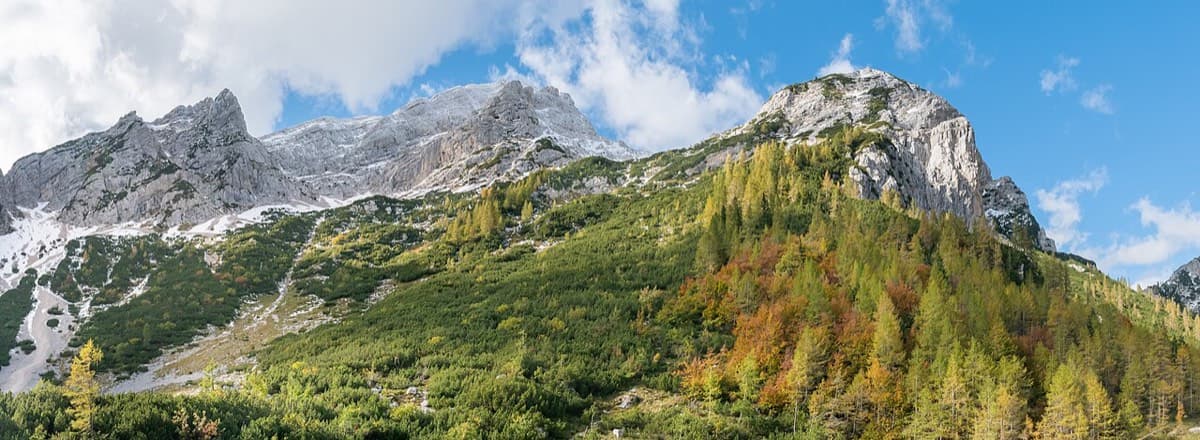
Mala Mojstrovka (left) and Nad Šitom glava (right) seen from the Vršič Pass

Slovenia · Vršič Pass (Julian Alps)

Črni panter

Sustained slab climbing up a striking black streak, clearly visible from the pass, on surprisingly good rock for this face. The crux is a move from slab into a corner on P2.

6b+4 pitches105 m

Read the cautions
No photo yet

Austria · Ötztal

Caipirinha

A mix of slabs and steep, juggy passages in the Sonnenblume sector, mostly around 5b to 5c+. The one hard move is a small roof on pitch 4 (6b+), which goes easily on aid.

6b+5 pitches170 m

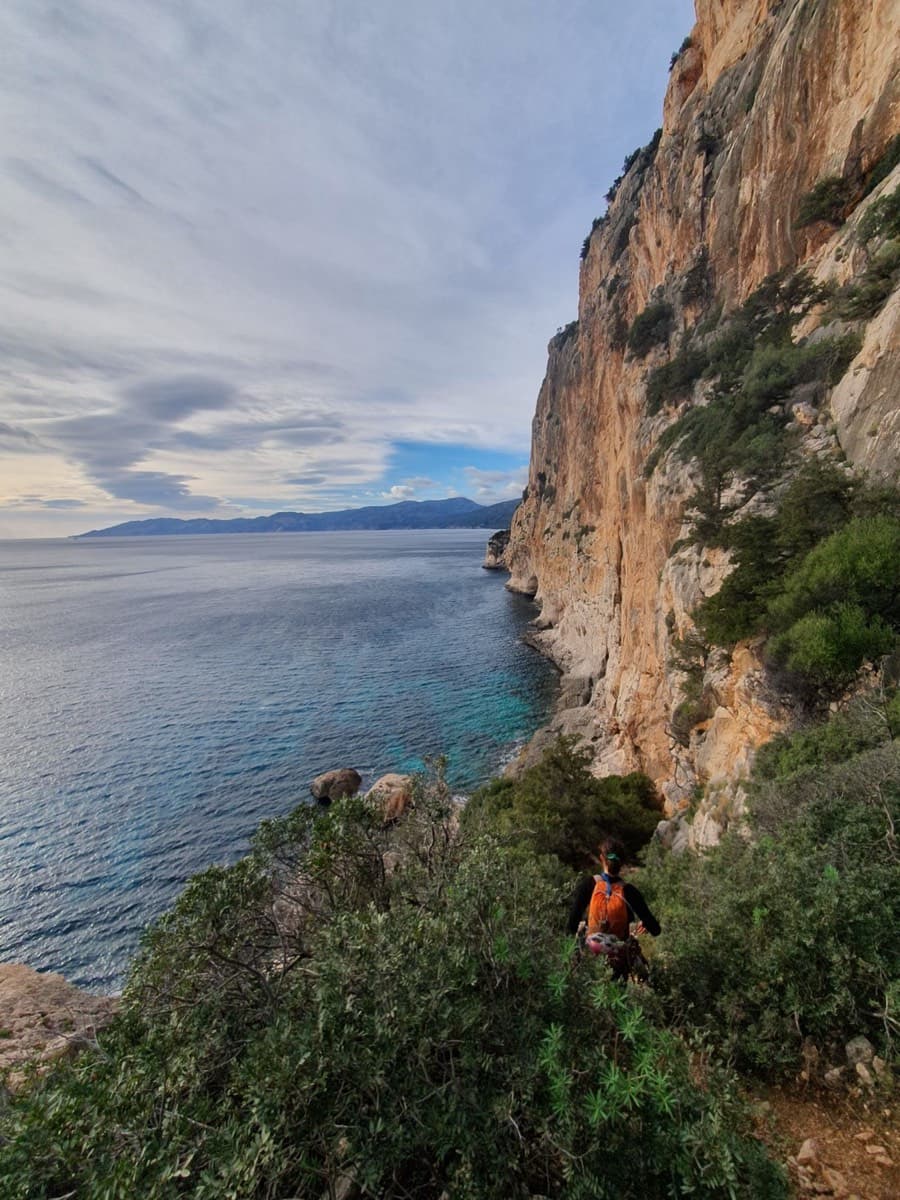
The Biddiriscottai sea cliff north of Cala Gonone, seen from the approach path to Oceano Mare

Italy · Sardinia

Oceano Mare

Five steep, sustained pitches at 6b to 6b+ straight out of the sea on new titanium bolts, on abrasive, pocketed limestone. Bulges, a smooth roof, a corner and a thin finishing crack, with a cave belay after pitch 1.

6b+5 pitches160 m

No photo yet

Austria · Zillertal

Schwarzer Teufel

A slab route on the left side of the Wiegelwand with steep passages on small edges; UIAA 7/7+ at the crux on pitch 3, 6 to 6+ obligatory. The easier pitches are a bit grassy. Often wet, so look from below first.

6b+5 pitches110 m

Compiled from published sources and last verified October 2026. Bolts, anchors and access change. Climbing is dangerous and you are responsible for your own decisions: check a current topo and read the disclaimer.