Menu

Une seconde, la vie

Dent de Crolles – south-west face · Chartreuse (Dent de Crolles) · France

Read the cautionsBail with caveats

Two routes in one: a long rising traverse right across technical grey slabs, then, above the Sangle de Barrère ledge, steep athletic climbing on big holds through overhangs to a final crack under the big roof. Very good rock and equipment.

Climbing mode: Big type, screen kept awake, tick pitches as you go.

The final 6c crack of Une seconde, la vie on the Dent de CrollesPhoto: Daniel Farge · CC BY-SA 3.0
Hardest pitch
6c6c
Pitches
8
Length
150 m
Approach
45 min
Aspect
SW
South-west-facing
Rope
–

Highest point 2000 m above sea level (camptocamp route 360969).

Rock
limestone
Season
Jun to Oct
Bolting confidence
High
Last verified
October 2026 · Aggregated by AI from published sources
Read before you go

Modern, well-placed bolting and good rock, but the obligatory level on the traverses is about 6b and falls there swing.

Photo

Climbing modeBig type, screen kept awake, tick pitches as you go.

Overview

Une seconde, la vie climbs the south-west face of the Dent de Crolles in two tiers. The lower tier is a long, technical traverse rightwards on grey slabs and successive steps, with crux slab moves; the upper tier, above the Sangle de Barrère ledge, is steeper and more athletic, finishing up an overhang on very big holds and a near-horizontal crack in the last roof. Parties praise the rock and the bolting and find it more varied than its neighbours.

Worth knowing

  • About 5 hours car to car.
  • The Sangle de Barrère after pitch 6 gives an easy escape if the weather turns.

Pitch by pitch

The atlas doesn't show topos: they are the work of the people who bolt and document these routes. See the topo in Escalades Choisies en Vercors, Chartreuse et Dévoluy.

Pitches of Une seconde, la vie
PitchGradeNotes
P15c20 to 25 m of slab, then walk up the grassy ledge.
P26b+Start of the long traverse right, along a more or less sloping shelf.
P36cA slabby crux, then a steeper section over successive steps, still traversing.
P46b+/6cTwo overhangs. One bolt line goes straight up at about the third or fourth bolt, but the route keeps traversing right. Extend the bolt below the first overhang to reduce drag.
P56b+/6cStart right (thread), then slightly left to an overhang taken by weaving. Out onto a small ledge.
P66bTwo steep walls, then a fine exit onto a prow. Belay on top of the block.
P76b+First a transition onto the Sangle de Barrère, an easy escape ledge: go up it slightly rightwards. The upper pitches start about 20 m right of the previous belay, below the left side of the huge roof 40 m higher (cairn). Then a fine varied pitch, rising right and then straight up.
P86cAn athletic overhang on very big holds, quite playful, to the almost horizontal crack in the last roof. A variant on the left near the end is about 6b.

Approach

To the parking

Drive from Grenoble to the Col du Coq (about 40 minutes).

On foot · about 45 min

About 45 minutes. Camptocamp starts from the col des Ayes: follow the path to the Trou du Glaz, which passes below the face. Just before it starts to descend, where it almost touches the cliff, leave it and follow the marked trail right (south) along the foot. The start is a 20 m slab (5c) leading to the second ledge, with a small cairn against the cliff; Pour qui sonne le glas starts 2 m to the left. A rockfall in winter 2025-2026 changed the approach: a September 2026 party passed above a small rock band on a chamois trail just before the new scree.

Map of the walk-in

Parking

45.30250, 5.83667

camptocamp waypoint 104295 (Col du Coq)

DirectionsDriving directions

Point from camptocamp route 360969 (same point as Kilukru)

For your phone or watch

Download GPX

Contains the route point and parking.

Points from published sources, not surveyed.

Descent

From the top, descend on foot either left by the Trou du Glaz or right by the Pas de l'Oeille, about 1 hour back to the Col du Coq.

Bailing off the route

Bail with caveats

The Sangle de Barrère, reached after pitch 6, is an easy escape ledge off the face. Below it the line traverses right, which makes abseiling awkward; how the belays are rigged for abseiling is not documented.

Retreat from
The Sangle de Barrère after pitch 6.
Point of no return
Not documented.
Carry
Not documented.
Basis
Part stated, part inferredThe ledge escape is stated on camptocamp; the difficulty of abseiling the traverse is inferred.

France

In an emergency

In an emergency · France

112Emergency; sends PGHM or CRS mountain rescue

Call 112

Emergency; sends PGHM or CRS mountain rescue

Position of the crag

45.30529, 5.84600

Marks the crag, not the route: give route and pitch.

Say what happened, how many are hurt, and where you are. Checked October 2026 (source).

Hazards

  • Rope drag on the traversing lower pitches.
  • The approach changed after a 2025-2026 winter rockfall; the start can be hard to find and one party started a ledge too low.
  • The traversing pitches 2 to 4 give pendulum falls, some pitches start above ledges, and a 2015 party found the bolting a little airy in places; the hard sections are closely bolted.

Gear

12 quickdraws plus belay gear. Rope length not stated.

Checklist

Quickdraws
12
Rope
Not given
Helmet
One each

Conditions

Reader reports

No reports yet.

Report a problem with this route

Say what and where. Reports are checked before they appear; no name or email is stored.

Bolts and history

Bolting
Equipped by Philippe Mussatto in 2011 and 2012 and bolted throughout; recent parties report very good equipment and rock. Belays are bolted; one thread is in place at the start of pitch 5.
History
Equipped by Philippe Mussatto in 2011 and 2012.
Guidebook
Escalades depuis Grenoble – Le topo doux (Garibal and Audigé, 2025); Promo-Grimpe news item; the opener's blog. Buy from kletterfuehrer.net.

Where sources disagree

  • Pitch 8: 6c direct, or about 6b with the left-hand variant at the end.

Sources

Around 6c · about 8 pitches

Similar elsewhere

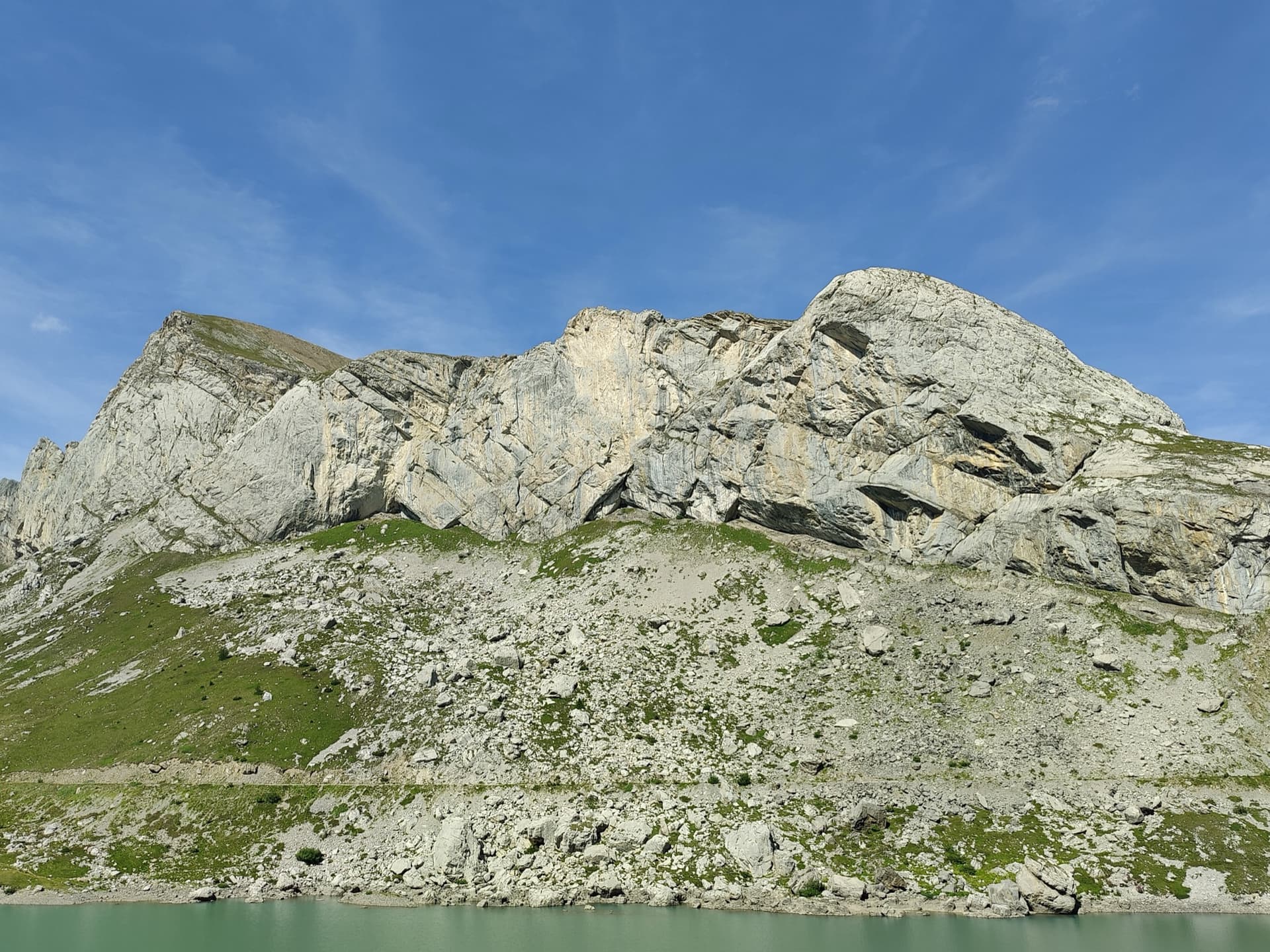
The limestone wall of Les Montons above the Lac de Sénin at the Sanetsch.

Switzerland · Sanetsch

Follomi

The classic introduction to the Sanetsch at 6c: eight varied pitches up a pillar of superb rough limestone, with the hard climbing packed into a few well-bolted metres on each pitch. A steep corner mantel, a balancy wall, a fine slab and an airy exit from a niche. Tops out on grassy slopes with a walk-off.

6c6c8 pitches250 m

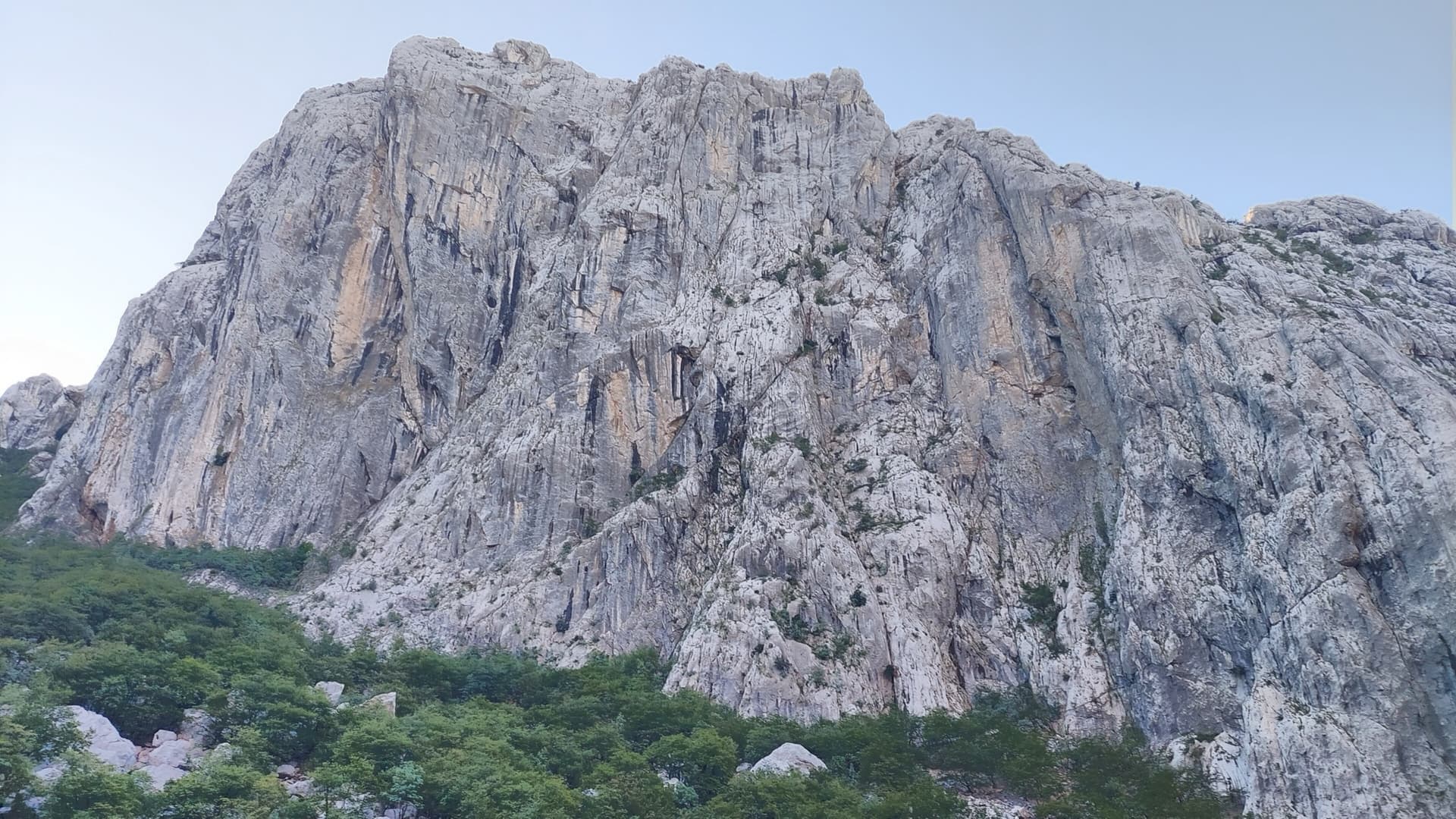
Anića kuk seen from the north-west across the head of the Velika Paklenica canyon, with the north face on its left-hand side; the exact line is not marked.

Croatia · Paklenica

Alive

Seven sustained pitches of 6a to 6c on the shady north face of Anića kuk, then an easy scramble out. A poor first pitch gives way to a steep ramp, a slightly overhanging 6c wall, an off-width and a fine finishing slab. The rock improves with every pitch.

6c6c8 pitches220 m

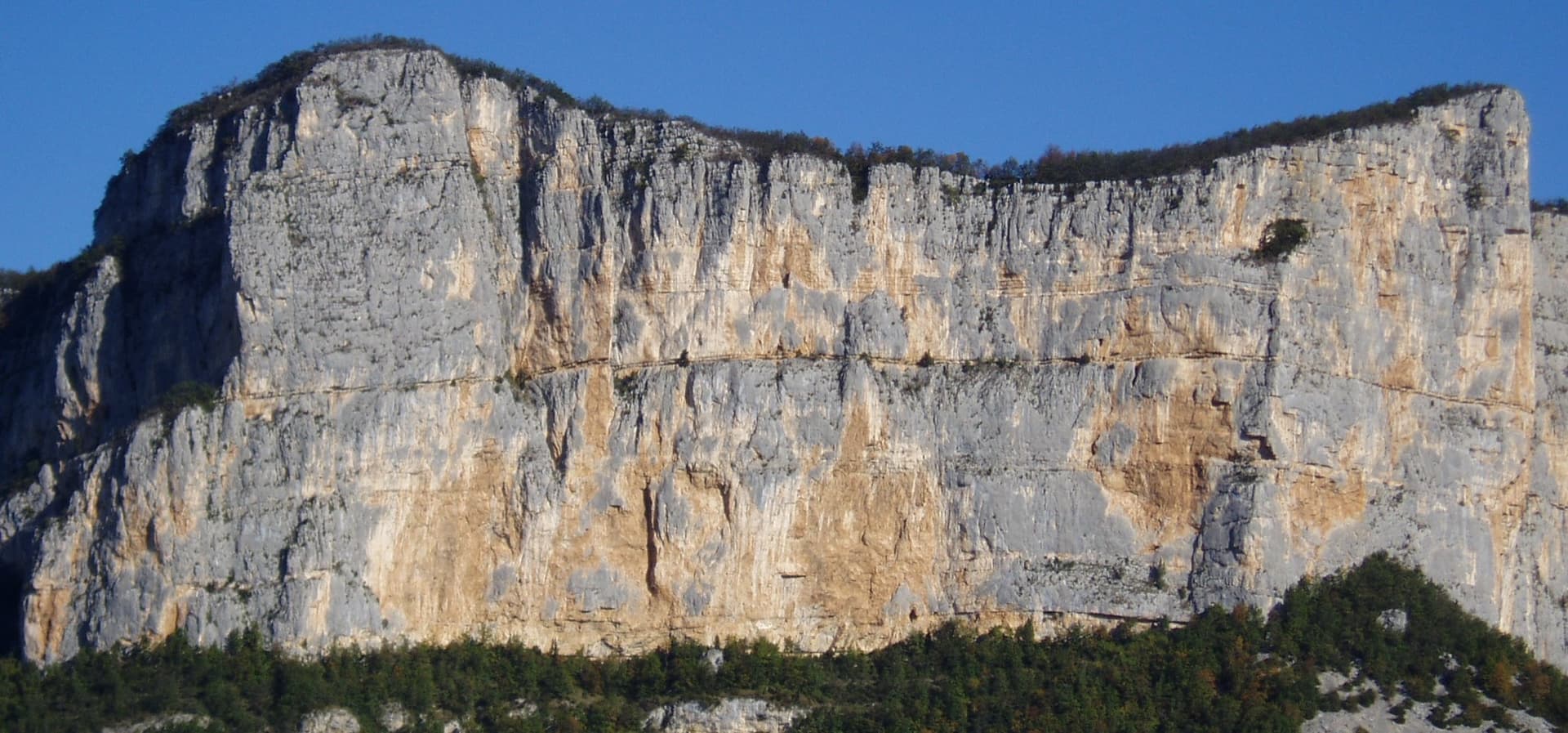
The Buis and Chrysanthèmes sectors of the Presles cliffs

France · Presles (Vercors)

Conod-Clère revisitée

A historic 1966 line at Presles, revived by VTNO in 2019 as an eight-pitch combination on varied, mostly unpolished limestone. Steep juggy walls, a technical 6c corner-crack and a magnificent 45 m dihedral are the highlights, with a couple of weaker pitches on poorer rock. Sustained and stiffly graded: obligatory 6b.

6c6c8 pitches250 m

Read the cautions

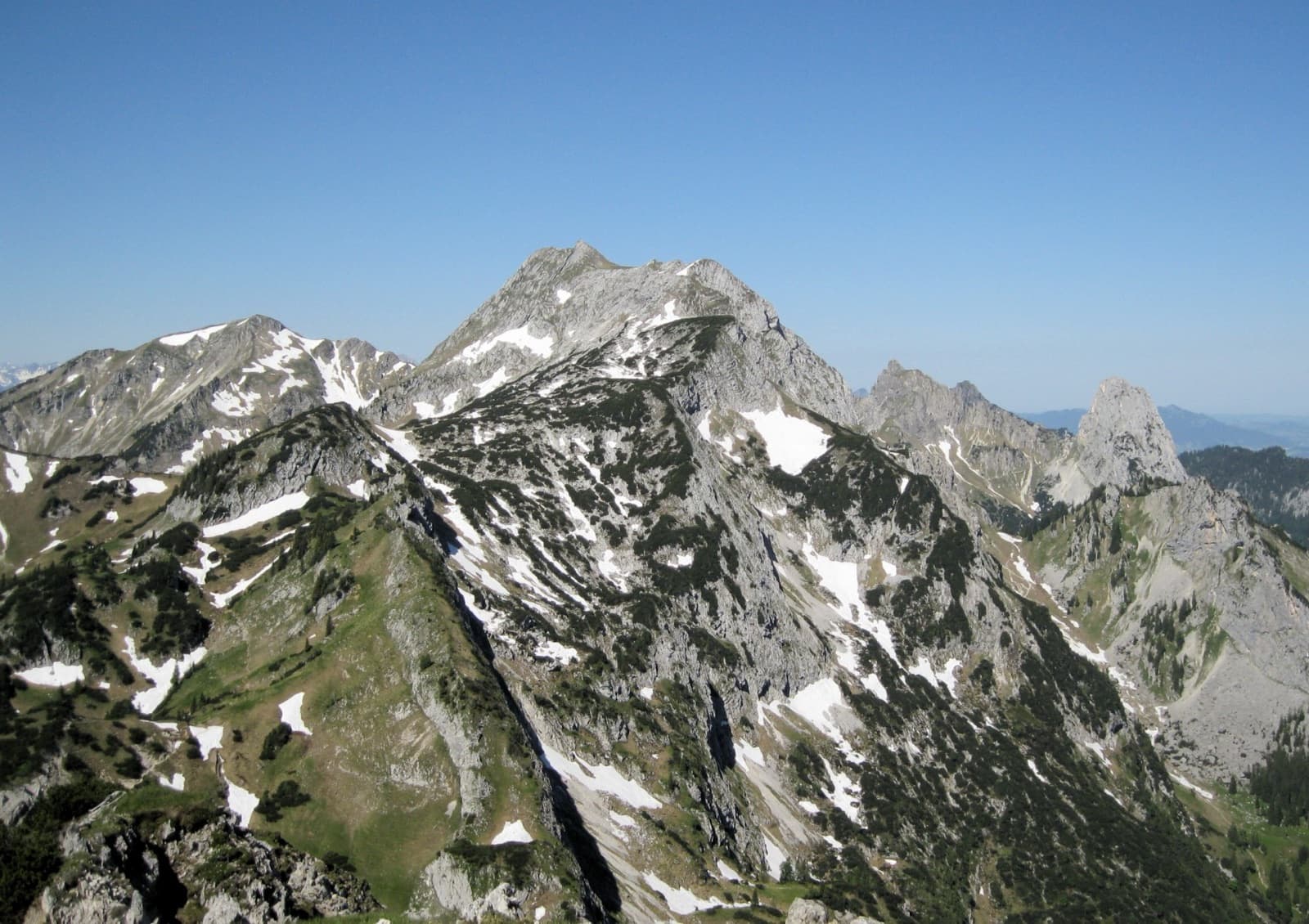
A view of the region, not this route's wall. The Hochplatte in the Ammergau Alps seen from the east in early summer; the Schlössel crag is on this side of the massif but cannot be picked out.

Germany · Ammergauer Alpen

Knöchelbruch

A steep line up the compact west wall of the Kleiner Säuling, ten minutes from the Säulinghaus. Wall and corner climbing on small pockets and edges, mostly UIAA 6+ to 7- (about 6a+ to 6b), with a crux that is 7 to 7+ free or 6 with a pull on the bolts. Belays on ledges and an abseil descent make it a low-commitment day once you have walked up.

6c6c8 pitches180 m

Researched and aggregated by AI from published sources, last compiled October 2026. It can be wrong, and bolts, anchors and access change: check a current guidebook and read the disclaimer.