Multipitch Atlas

L'Air du Temps

La Fusée – L'Air du Temps · Gorges de la Jonte · France

Read the cautionsBail not documentedBolting confidence: medium

One of the longest routes in the gorge and the line that names its sub-sector: six varied pitches with a steep grey wall of holds at 6a and a slabbier 6b where the holds thin out at the top. Grades are stiff and you climb between the bolts.

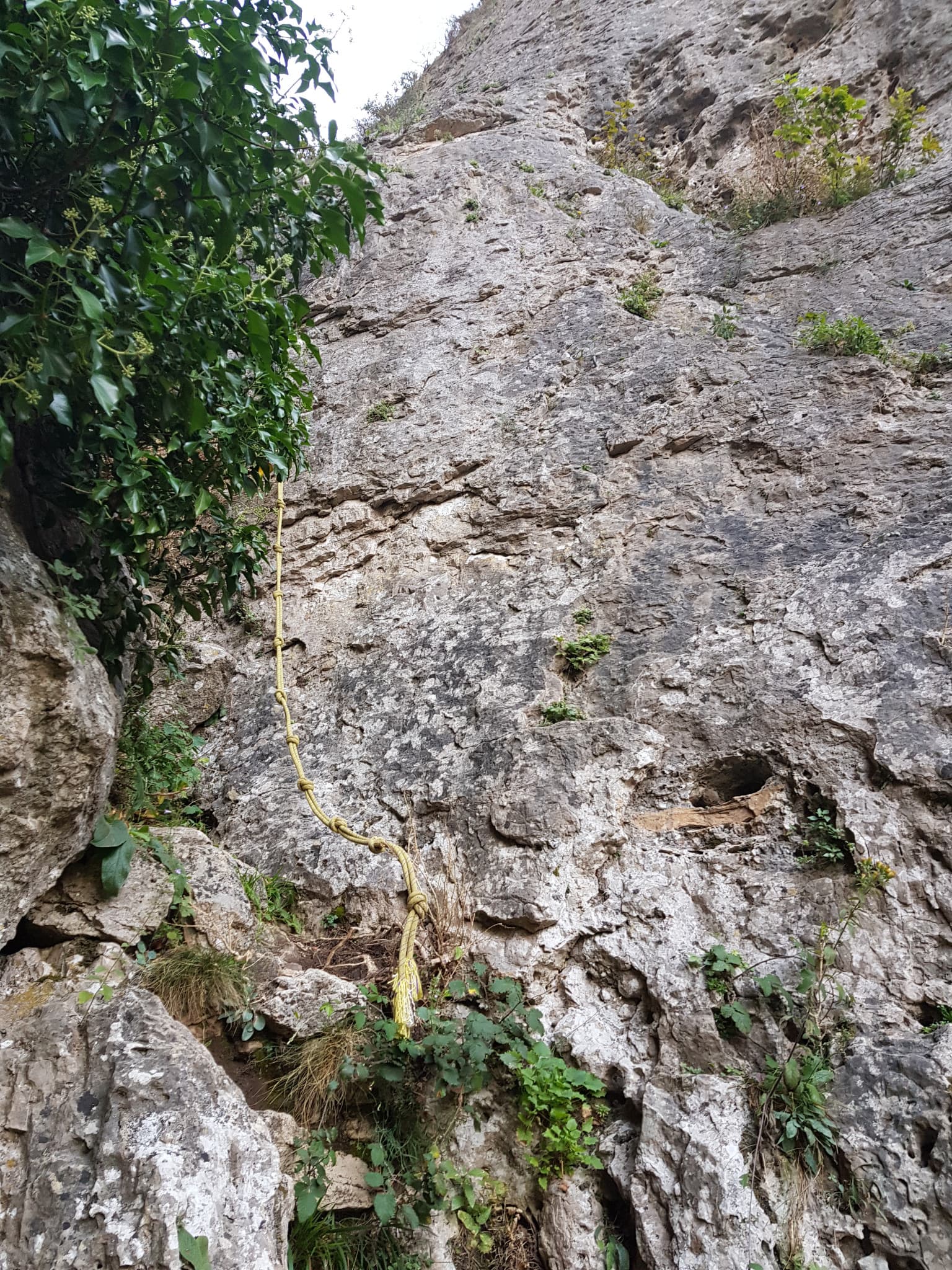
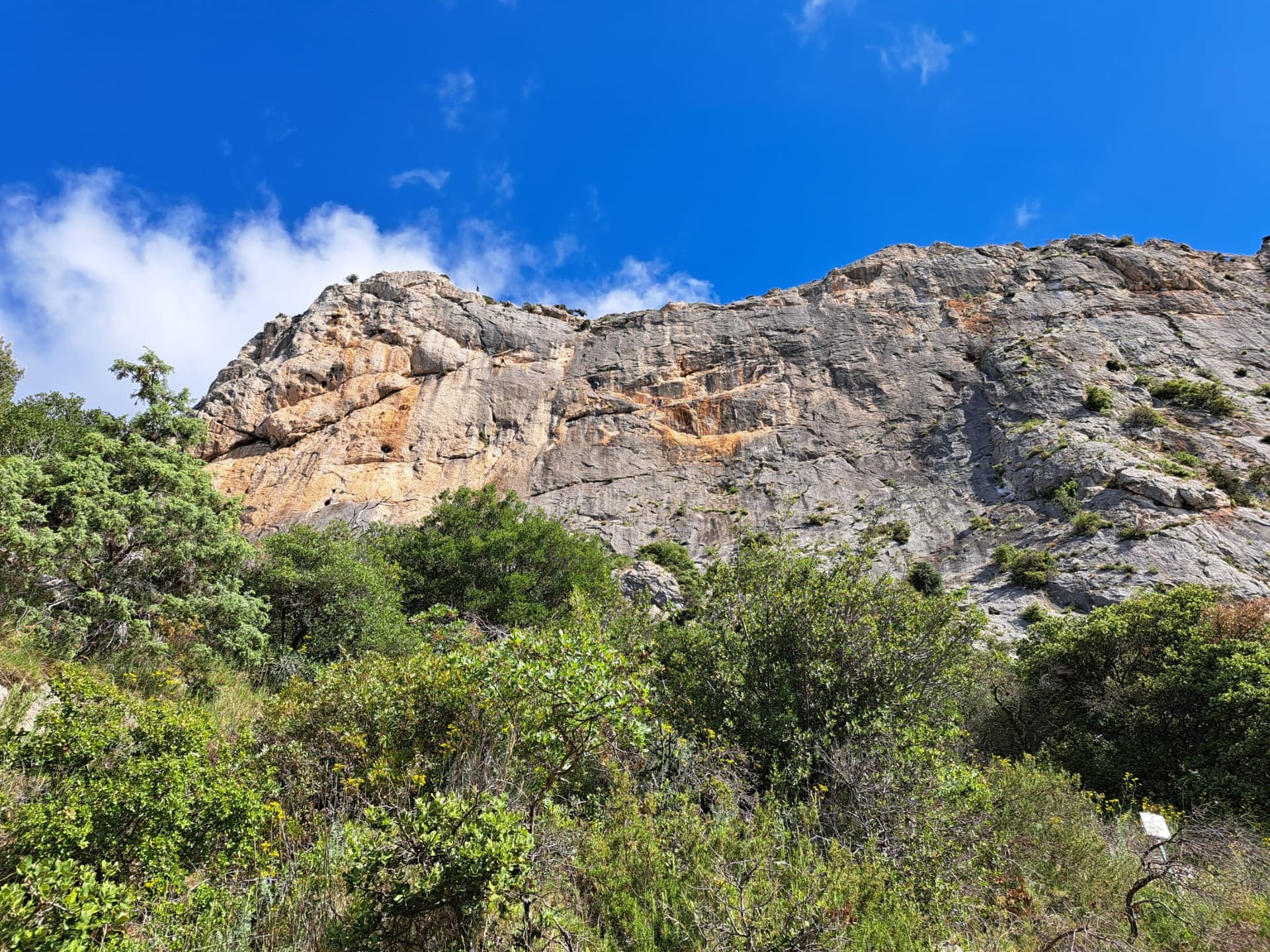
Looking up the upper pitches of L'Air du Temps towards the fifth belayPhoto: Palpa Vertical · CC BY-NC-ND 3.0

Photo

Looking up the upper pitches of L'Air du Temps towards the fifth belayPhoto: Palpa Vertical · CC BY-NC-ND 3.0
Hardest pitch
6b
Pitches
6
Length
130 m
Approach
20 min
Aspect
S
South-facing
Rope
2×50 m
Read before you go

Glue-in bolts throughout, but spaced in the Jonte style with obligatory 6a to 6b climbing between them.

The route

Overview

L'Air du Temps starts about 30 m left of the Fusée and climbs the full height of the wall in six pitches. The first pitch is awkward from cold, the second is a friendly grey slab, and the third and fourth are the best: a crack and steep wall on big holds, then a wall that leans back while the holds shrink, with the crux near the belay. A short chimney and an exposed traverse finish the route. Camptocamp calls it superb and recent parties agree, while warning that it is sustained and serious for the grade.

The climbing

Pitch by pitch

Pitches of L'Air du Temps
PitchGradeNotes
P15cAn awkward crack, a mantel and a technical traverse; sustained. Three recent parties felt it was 6a or 6a+ when climbed cold.
P25bA pleasant grey slab on good holds.
P36aA crack, then a steep grey wall covered in holds. The pitch most people pick as the best.
P46bThe wall leans back but the holds become scarce towards the top. Sustained, with a crux at the end that a 2025 party found obligatory.
P55aA short chimney.
P66aA very exposed traverse, then a good wall with an awkward mantel.

Getting there

Approach

To the parking

The Jonte gorge starts at Le Rozier, about 20 km east of Millau: drive via Aguessac and the lower Tarn gorge to Le Rozier, then take the D996 towards Meyrueis. The main car park is a few kilometres past Le Rozier, on both sides of the road beside an SOS phone post; smaller lay-bys further up the road are closer to the Bitard and Fusée paths. Spaces are limited, so park nose-in. Le Rozier and Peyreleau have campsites, gîtes, shops and a cash machine, some of them seasonal; Meyrueis has services all year. Wild camping is banned in the gorge.

On foot · about 20 min

Take the well-marked, cairned path that climbs directly below the Fusée. The start is about 30 m left of the foot of the Fusée, left of the route 'Eosine', whose name is written in red at its base. A September 2025 party took about 20 minutes on foot at an easy pace; the tourism sheet gives 5.

Map of the walk-in

  • Crag
  • Parking

Loading map

The point marks the crag, not the exact start of the route.

Coordinates · crag

44.19537, 3.23996

Parking

44.19180, 3.23766

Roadside parking for the Fusée sector on the D996 (coordinates from the Tourisme Occitanie sector sheet)

Point from camptocamp waypoint 103645 (La Jonte - Fusée)

For your phone or watch

Download GPX

Contains the route point and parking. Opens in most mapping apps and GPS watches.

Points are compiled from published sources, with the precision stated above. They were not surveyed on the ground: check them against a current topo.

Getting down

Descent

From the top follow a small path to the right to the chained abseil line of 'Eosine' and make three long abseils. A 2026 party with 2×60 m counted four stations and linked the last two (about 52 m). You can also avoid the abseils: a faint track climbs about 50 m from the top to the hiking path along the rim.

Retreat

Bailing off the route

Bail not documented

Retreat from part-way up is not documented. The route's own belays are not described as chained, and the abseil line used for the descent is on the neighbouring route and reached from the top.

Retreat from
Not known. The first two pitches total about 50 m, so the ground is within reach of two ropes from the second belay if you leave gear (inferred).
Point of no return
Not documented; the last pitch begins with an exposed traverse.
Carry
Two 50 m ropes, and slings or maillons to leave.
Basis
Inferred from the route factsCamptocamp describes only the descent from the top by the Eosine chains or on foot.

Partly inferred from the route facts

Safety

Hazards

  • Spacing: two 2024 reports describe the equipment as sparse in places, with obligatory climbing; a 6b leader with little margin will find pitch 4 committing.
  • The first pitch is harder than its grade suggests and comes with no warm-up.
  • Abseil length on Eosine is not stated beyond 'long'; one party measured about 52 m for two linked sections. Knot the rope ends.

Sun and weather

Conditions

South-facing limestone between about 550 and 800 m. The local club says you can climb here all year with some planning, but summer is very hot and the gorge is best avoided in a strong south-east wind. In September the wall went into shade in late afternoon from the second belay up. In February the sun was slow to arrive.

Usual season · Mar to Jun, Sep to Nov

Sun on the wall · S-facing

Working out the sunlit hours for this month.

  • January: not yet worked out
  • February: not yet worked out
  • March (usual season): not yet worked out
  • April (usual season): not yet worked out
  • May (usual season): not yet worked out
  • June (usual season): not yet worked out
  • July: not yet worked out
  • August: not yet worked out
  • September (usual season): not yet worked out
  • October (usual season): not yet worked out
  • November (usual season): not yet worked out
  • December: not yet worked out

Sun on the wallDaylight, wall in shade● Usual season

Estimated from the wall's aspect only. Ignores surrounding terrain, gullies and the wall's exact shape. Clock times are local to the wall (Central European time), for the 15th of each month.

Climate figures for Gorges de la Jonte are not available yet

What to carry

Gear

15 quickdraws (2025 report). Two 50 m ropes for the abseils. Managing drag, you can link pitches 1 and 2 (50 m), 3 and 4 (40 m) and 5 and 6 (40 m). Helmet.

Checklist

Quickdraws
15
Rope
2×50 m
Helmet
One each
Abseil device and prusik
The descent or the retreat involves abseiling
Slings
Mentioned for retreat
Maillons or spare karabiners
To leave behind if you retreat

Derived from the route data; check it against a current topo

From climbers

Reader reports

Reader reports are not being collected yet. Until they are, check a current topo and the local club or guidebook publisher for recent changes to L'Air du Temps.

Worth knowing

Tips

  • Many parties climb this and 'Eosine' (6c) in the same day, using the same abseils.
  • Allow 2 to 2 h 30 for the climbing and about 20 minutes for the abseils.
  • If the abseils are busy or it is windy, walk up to the rim path instead.

Open questions

Where sources disagree

  • Protection: a September 2025 report says 'well equipped' and camptocamp rates it P1; reports from September and October 2024 say the equipment is airy or sparse in places.
  • Pitch 1: 5c on camptocamp, 6a to 6a+ according to three recent parties.
  • Abseils on Eosine: three according to camptocamp, four stations according to a 2026 party.
  • Approach: 5 minutes on the tourism sheet, about 20 minutes in a trip report. Pitch lengths are published only as linked totals.

Provenance

Sources

Same area

More in Gorges de la Jonte

All routes in Gorges de la Jonte
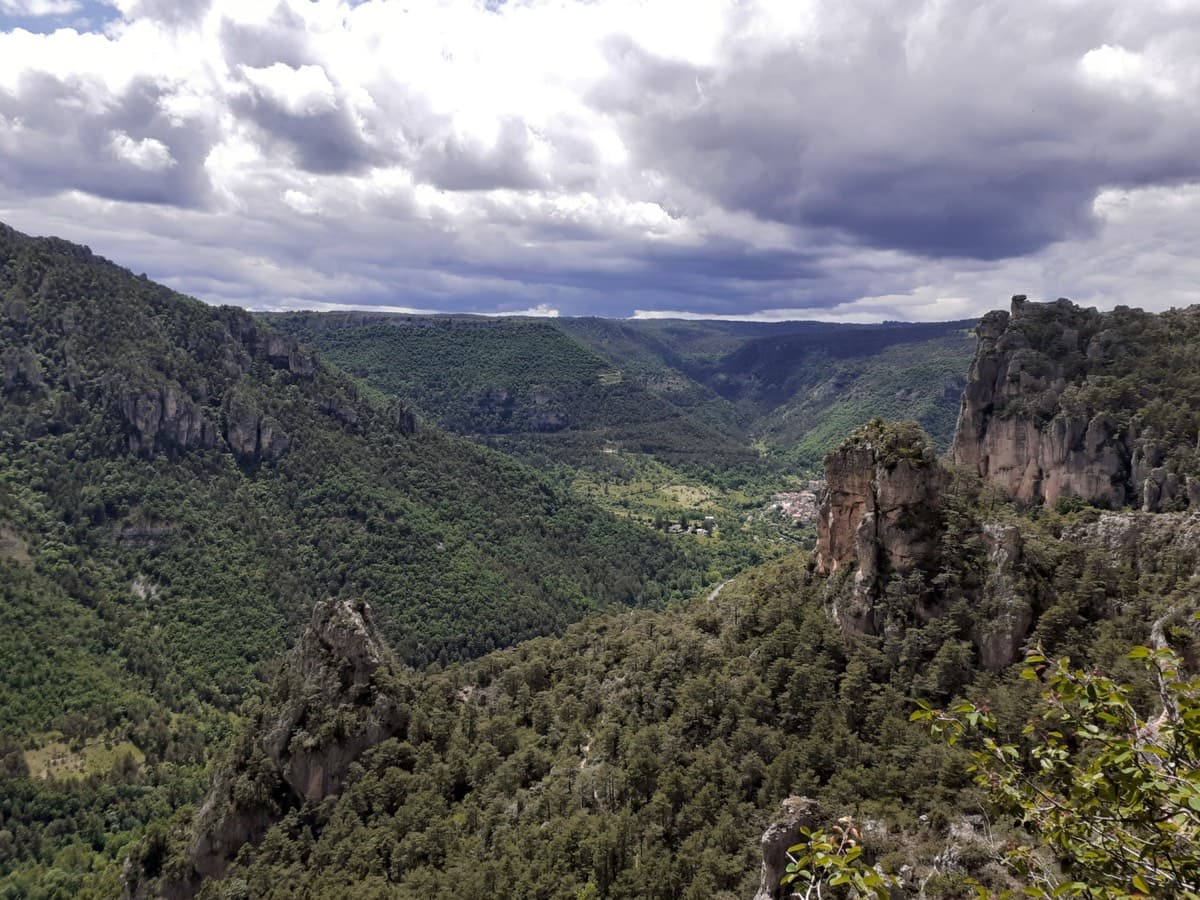
Looking down the Jonte gorge towards Le Rozier from the Ravin des Échos, photographed from Zébulon

France · Gorges de la Jonte

Zébulon

Probably the most approachable multipitch in the Jonte: four pitches of grade 3 and 4 on excellent, juggy rock up the right side of a pillar, with solid chained belays where leader and second stay in sight. Vultures circle past by late morning. The walk-off needs a little care.

4c4 pitches100 m
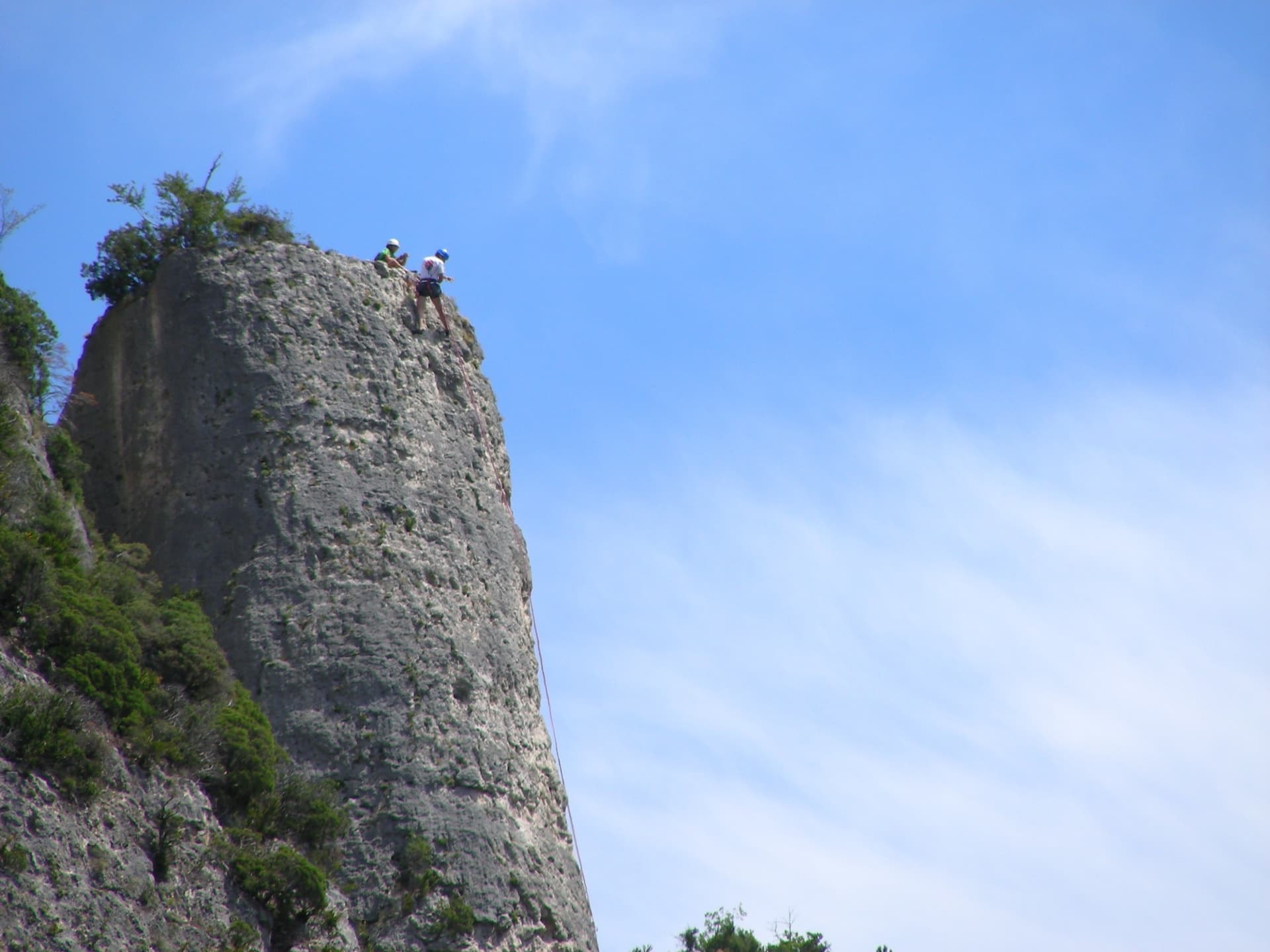
Climbers on the flat summit of the Bitard pillar, Gorges de la Jonte

France · Gorges de la Jonte

Le Bitard

The pillar that gives the sector its name, climbed in four short pitches on grey, well-featured rock. The third pitch is a sustained vertical crack and the best of the route. It is the usual first multipitch for visitors because the bolts are closer than elsewhere in the gorge.

5c4 pitches100 m

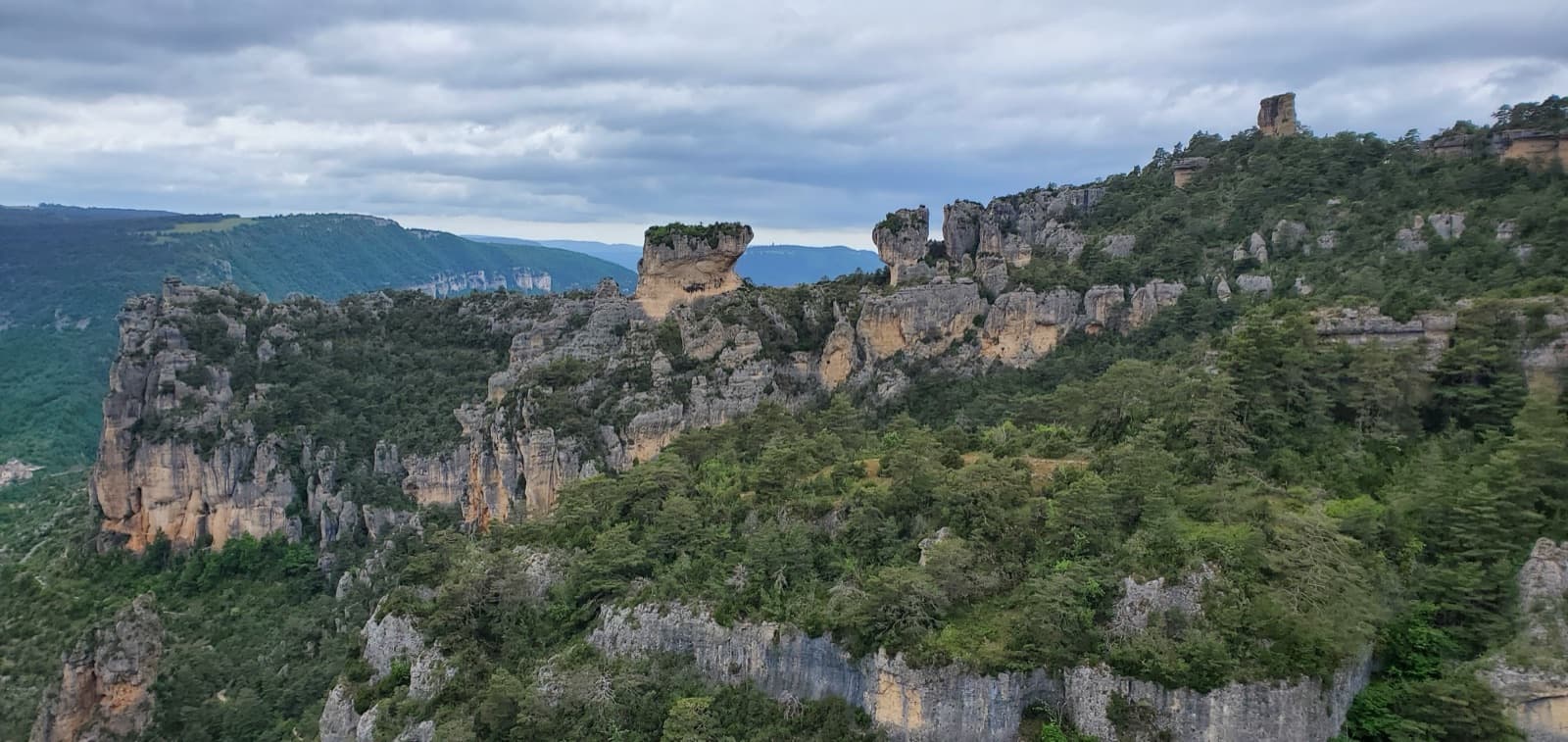
A view of the region, not this route's wall. The cliffs and rock towers of the Jonte gorge seen from the top of Zébulon.

France · Gorges de la Jonte

Le Jardin Enchanté

A four-pitch face route in the Bitard sector that starts easily and then asks for careful footwork on a traversing slab and a steeper wall of flakes. Freshly rebolted in 2022, but you still climb between the bolts. Very popular with groups.

5c4 pitches130 m

Read the cautions

The start of La canicule t'emballe ?, just before the yellow fixed rope in the ravine

France · Gorges de la Jonte

La canicule t'emballe ?

A recent five-pitch route with unusually generous bolting for the Jonte. A long, fairly vertical 5c+ wall is followed by a traverse, a gully and an optional squeeze through a horizontal slot to a belay in a cave. Shaded in the morning and again from mid-afternoon.

5c+5 pitches110 m

Around 6b · about 6 pitches

Similar elsewhere

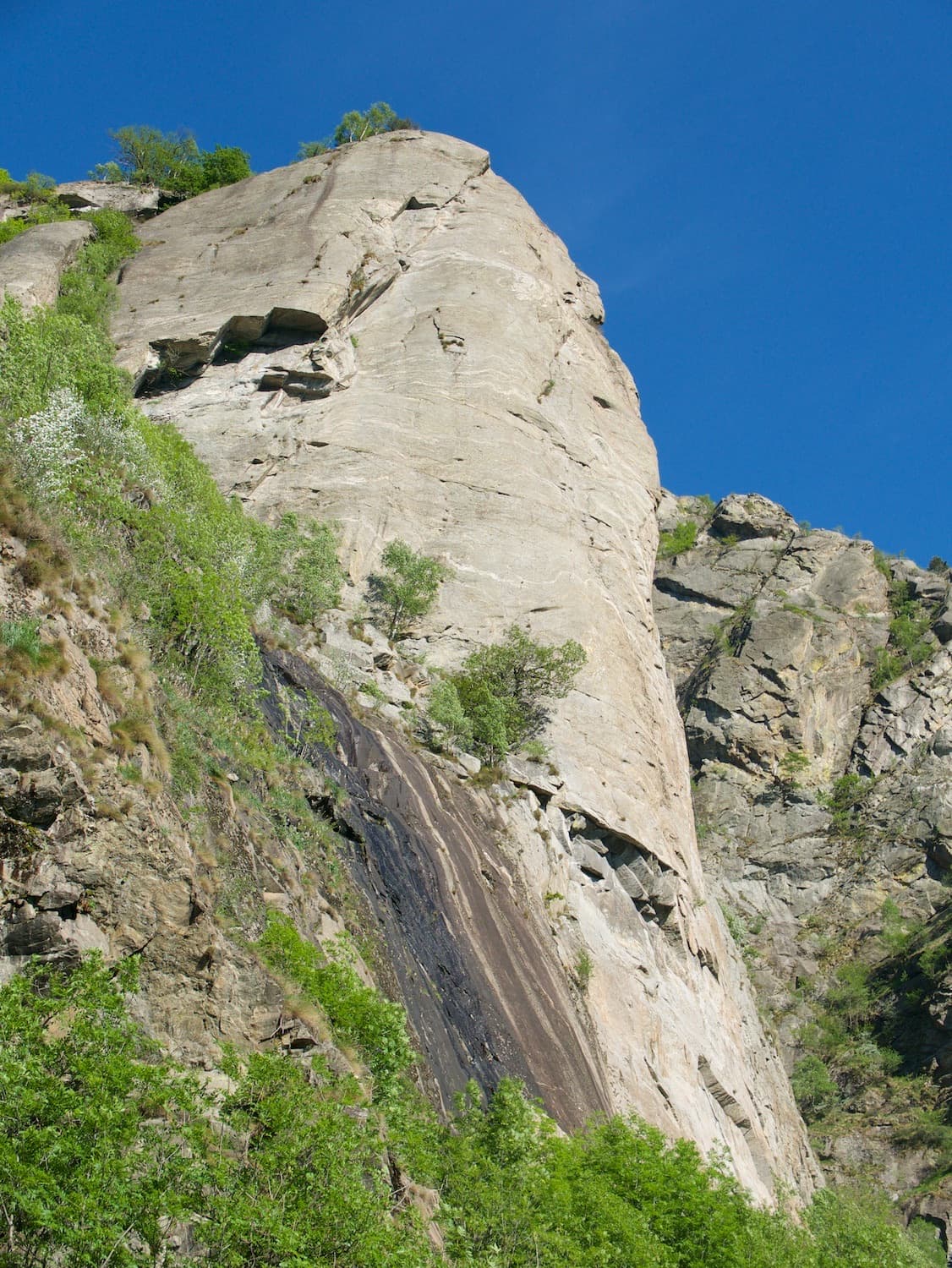
The compact gneiss of the Pilastro Lomasti above Arnad, seen from below

Italy · Aosta Valley

La Rossa e il Vampirla

The easiest line on the Pilastro Lomasti and still a serious step up from the neighbouring Paretone: six pitches of steep, technical slab on pockets and small edges, never below 6a. The fourth pitch follows a fine diagonal crack. The rock is exceptional and the grades are firm.

6b6 pitches190 m

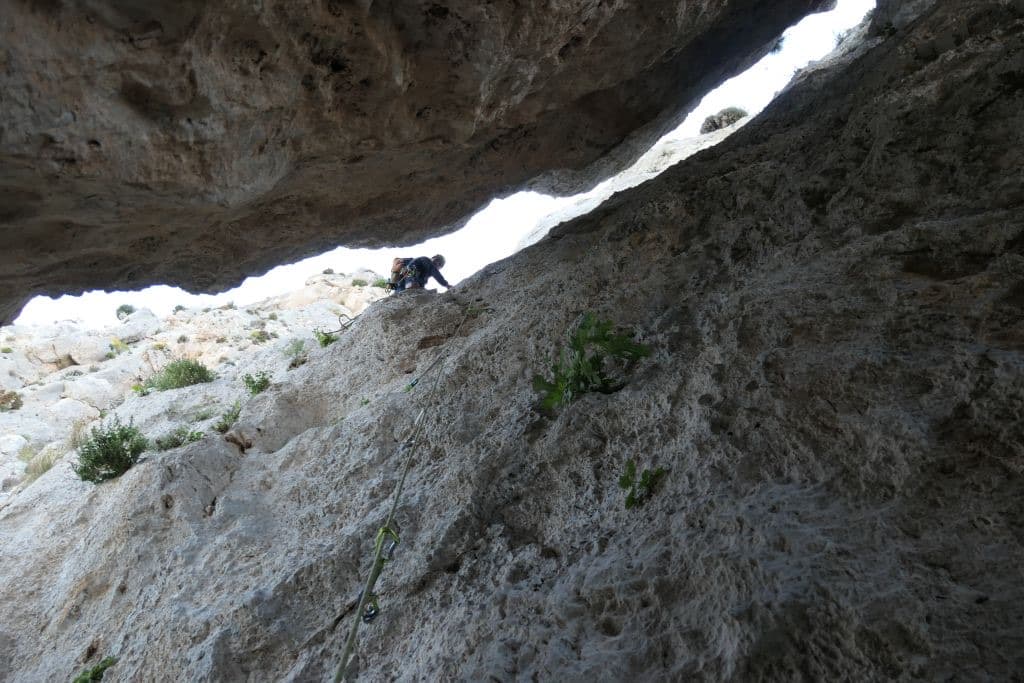
The hidden cleft of pitch 2 on Albatros, Trois Ilots

Greece · Kalymnos & Telendos

Albatros

Technical and sustained, with five varied climbing pitches of 6a+ to 6b: a pocketed slab, a surprising chimney hidden behind a pillar, a thin vertical pillar and a long steepening wall to a bulge. Quiet compared with the single pitches below, and in shade until about 12:30.

6b6 pitches160 m

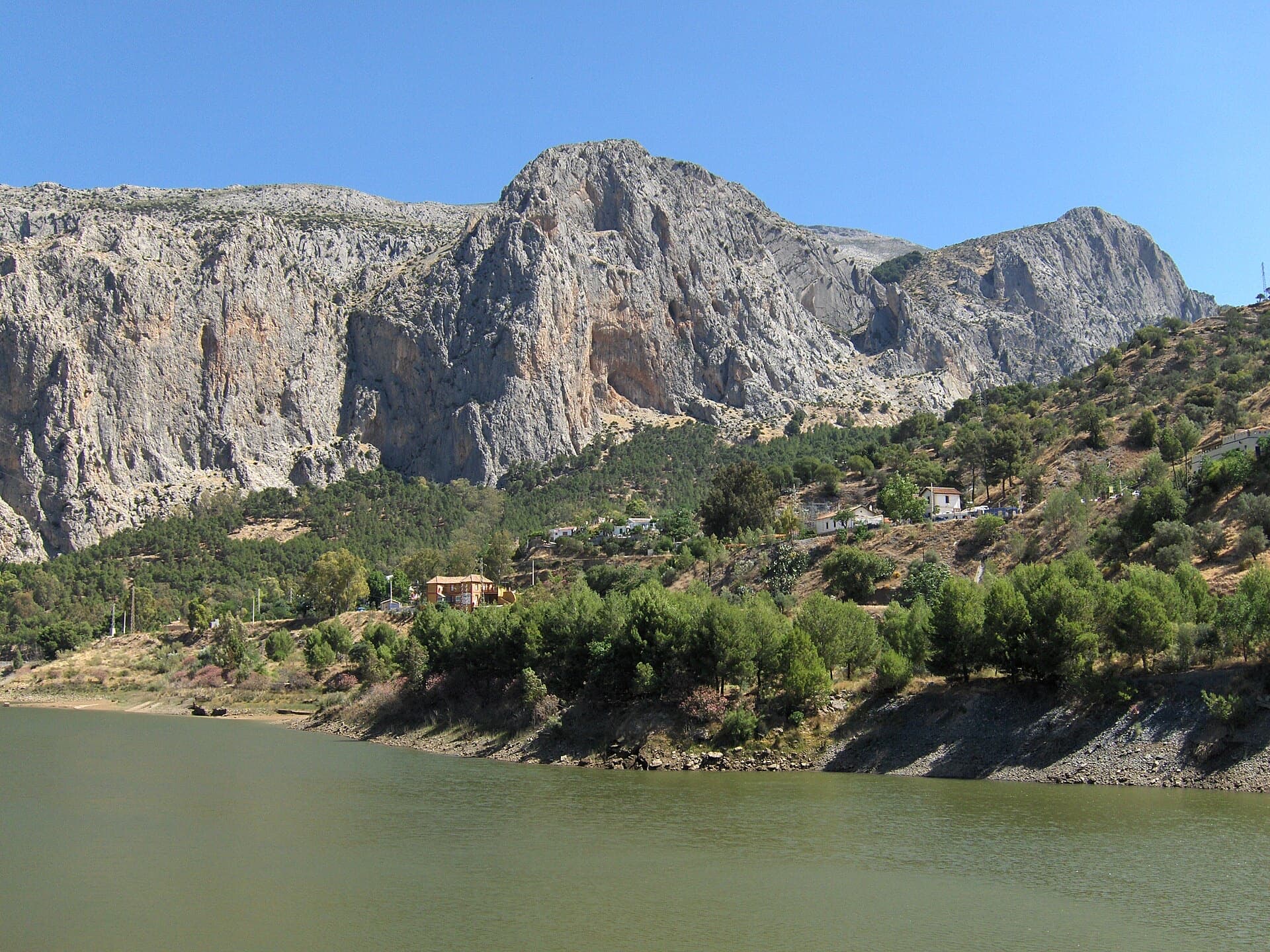
The Frontales cliffs above El Chorro seen across the Tajo de la Encantada reservoir, with the big Poema de Roca cave at the foot of the central dome. The Austria sector lies on the right-hand part of the cliff; the line is not marked.

Spain · El Chorro

Bombay Sapphire

A good continuation above Nitti. Highlights are a short, thin 6b slab on P4 and a pumpy steep start to the final 6a+ pitch.

6b6 pitches138 m

Read the cautions

The south face of the Chaîne du Clapis above the Vistemboir sector, photographed from the approach by a party on the Diagonale des Vires Rouges, which slants left across the orange-streaked upper wall. The line is not marked.

France · Dentelles de Montmirail

La Diagonale des Vires Rouges

The best long outing on the Clapis south face: six pitches that start up easy slabs beside Vistemboir and then slant left across the orange ledges of the upper wall, with a horizontal crack traverse, a thin traverse on rough 'pebbledash' rock and a short, fierce 6b to finish. Technical climbing on very sculpted rock with plenty of atmosphere for a 150 m wall.

6b6 pitches150 m

Compiled from published sources and last verified October 2026. Bolts, anchors and access change. Climbing is dangerous and you are responsible for your own decisions: check a current topo and read the disclaimer.