Multipitch Atlas

La Rossa e il Vampirla

Pilastro Lomasti (Machaby, Arnad) · Aosta Valley · Italy

Easy to bailBolting confidence: high

The easiest line on the Pilastro Lomasti and still a serious step up from the neighbouring Paretone: six pitches of steep, technical slab on pockets and small edges, never below 6a. The fourth pitch follows a fine diagonal crack. The rock is exceptional and the grades are firm.

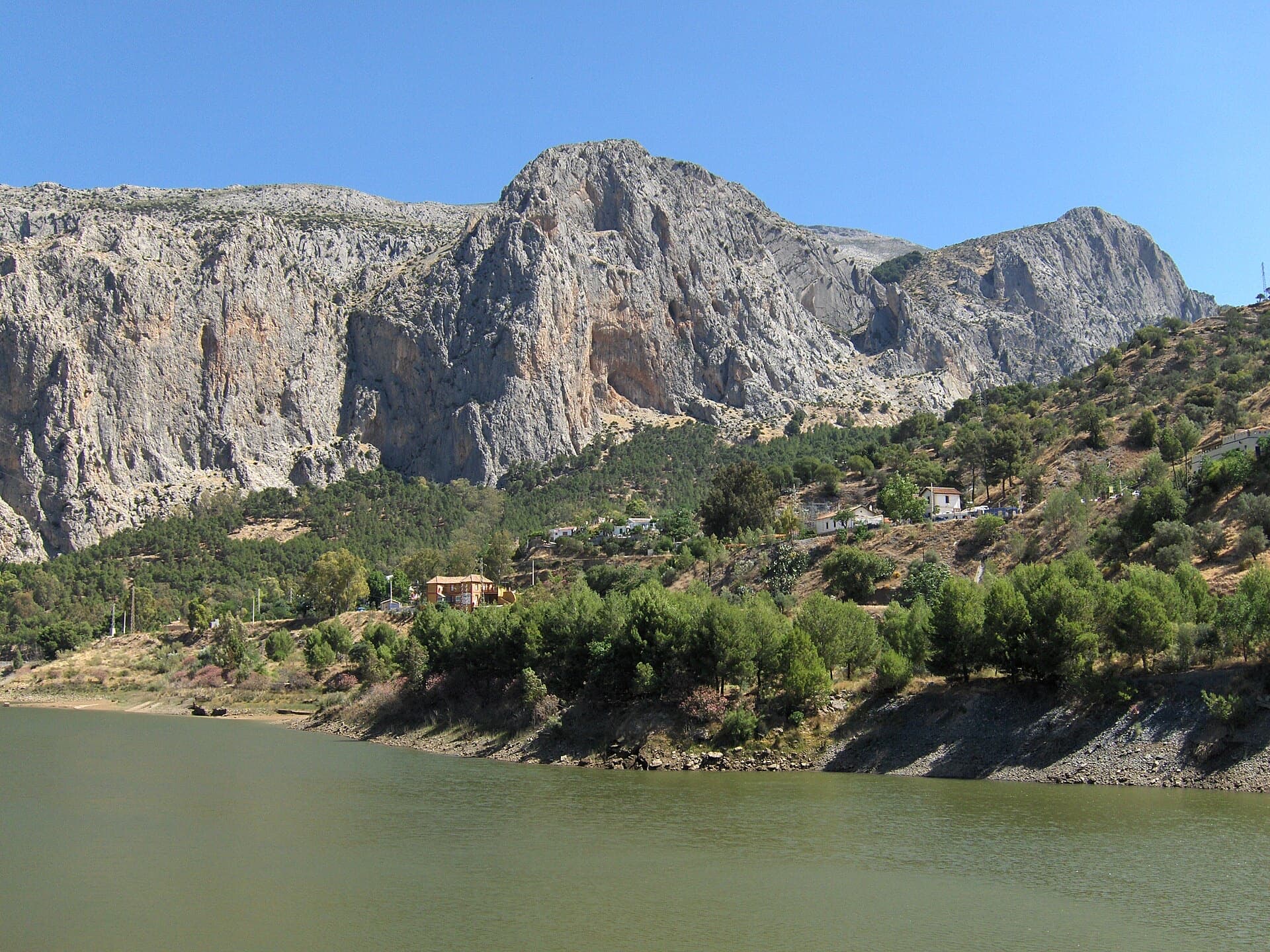
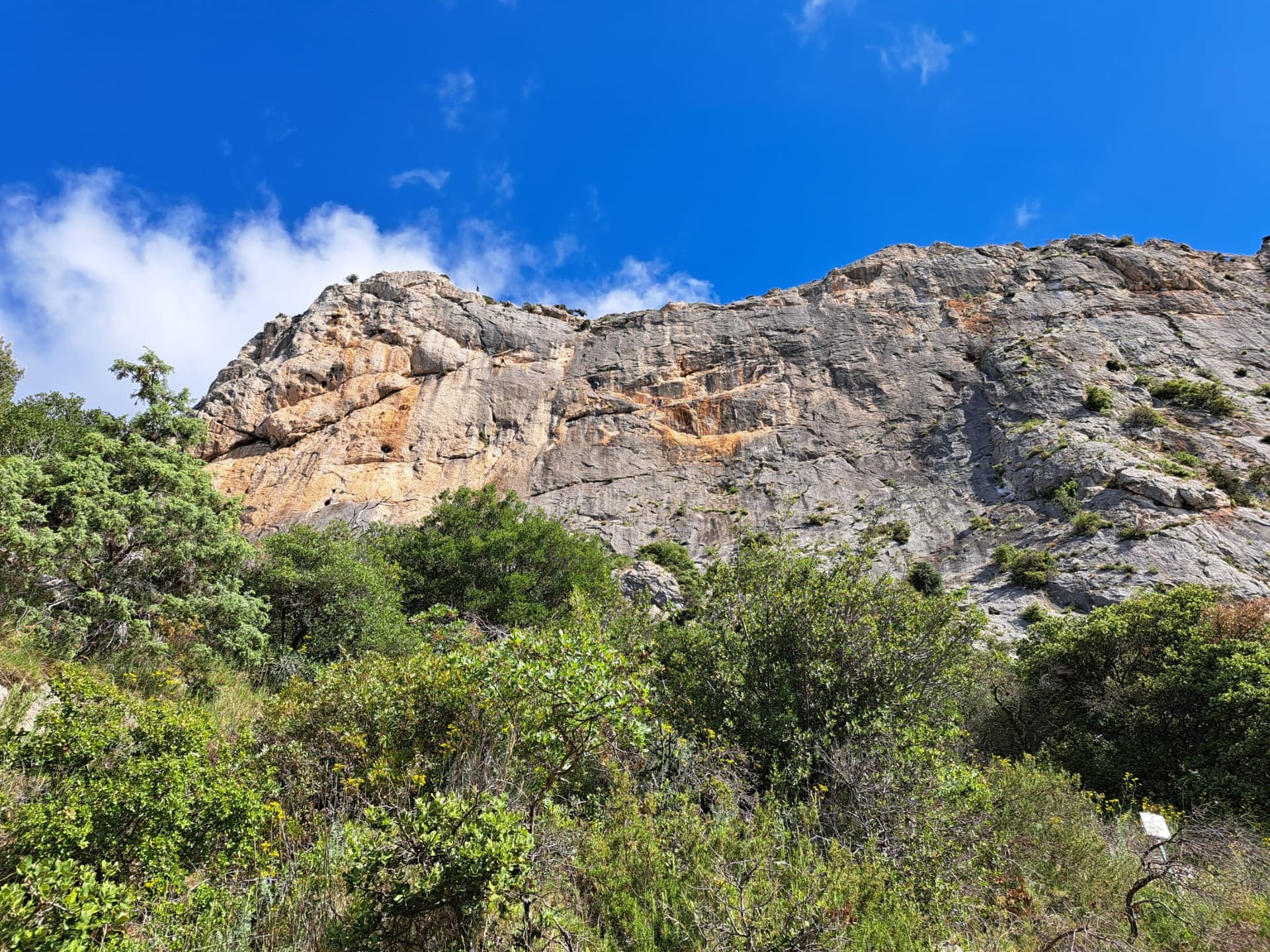
The compact gneiss of the Pilastro Lomasti above Arnad, seen from belowPhoto: alexduchablais · CC BY-SA 3.0

Photo

The compact gneiss of the Pilastro Lomasti above Arnad, seen from belowPhoto: alexduchablais · CC BY-SA 3.0
Hardest pitch
6b
Pitches
6
Length
190 m
Approach
45 min
Aspect
SW
South-west-facing
Rope
2×50 m

The route

Overview

The Pilastro Lomasti is the smooth 200 m pillar of gneiss on the hillside east of the Paretone di Arnad. La Rossa e il Vampirla starts on its left side and is the route to do first here: every other line on the pillar except Via del 94 is clearly harder. It gives six pitches of footwork-dependent slab and wall climbing between 6a and 6b, on rock with pockets that feel almost like limestone. Camptocamp warns that the grades are stiffer than on the Paretone. You abseil the route.

The climbing

Pitch by pitch

Pitches of La Rossa e il Vampirla
PitchGradeLengthNotes
P16a50 mA slab on small edges with three close bolts, then a sloping ledge and a delicate move left. Easier ground leads left and back right towards a dirty corner; stay on the bolts outside it, with a long reach to a hidden hold, then follow the edge and cross left onto easier slabs. A long pitch. There is a belay by a tree and another a few metres higher; a 2026 party found the first pitch a little wet.
P26a+30 mA flake above the belay, past an intermediate belay, then compact slab diagonally right to the low point of a short wall. The route turns a small roof on the right and then follows a flake leftwards and up; the bolts are further apart on the flake. Three belays are visible at the top: use the right-hand one.
P36b30 mCompact slab to a big pocket, where the bolts look far apart from below. A technical wall leads left and then back right to a vertical, slightly overhanging step on good pockets that are hard to see from below. Leave it on the left.
P46b20 mThe obvious crack slanting up right. It pushes you off balance but is well bolted and can be partly aided. A flake leads left, then a short delicate wall to a comfortable ledge.
P56a40 mCompact slab with a few pockets to a steeper wall, best taken on the left. Then go diagonally left across an edge and up a ramp to a belay at the edge of a large terrace.
P66a20 mAn athletic bulge on big holds straight above the belay, then an easy-angled slab to the top of the pillar.

Getting there

Approach

To the parking

From the A5 motorway (exit Verrès or Pont-Saint-Martin) follow the main road to Arnad and take the side road signed for Machaby and the agriturismo Lo Dzerby. After about 2 km the tarmac ends at a car park below the Machaby sanctuary. You can also walk up from the parking places at the foot of the Paretone on the main road, which takes longer.

On foot · about 45 min

About 45 min from the Machaby car park (camptocamp's Italian page and a 2026 party say an hour). Cross the bridge over the stream and walk up the cobbled military road past the sanctuary to the hamlet and agriturismo of Machaby. Continue on the dirt road, which passes a building and bends left, and follow it through some hairpins for about 30 min from the car. At a bend, a yellow sign marked 'Lomasti' points right onto a narrow, almost level path that reaches the foot of the pillar in 15 min. The route starts up and left as you arrive, from a ledge with trees: the name is painted in large letters and there is a metal plaque. All routes on the pillar are named on plaques.

Map of the walk-in

  • Crag

Loading map

The point marks the crag, not the exact start of the route.

Coordinates · crag

45.62916, 7.74492

Point from camptocamp waypoint 39749

For your phone or watch

Download GPX

Contains the route point. Opens in most mapping apps and GPS watches.

Points are compiled from published sources, with the precision stated above. They were not surveyed on the ground: check them against a current topo.

Getting down

Descent

Abseil the route. Camptocamp gives four abseils with two 50 m ropes. Scuola Guido della Torre describes five: two long ones skipping the intermediate belays, then two short ones, the second of which should finish at the better-placed anchor to the right (facing in) of the tree at the top of pitch 1, and a last long abseil to within a few metres of the start. A 2026 party took 45 min. Gulliver.it notes you can also abseil the neighbouring routes Vertigine or Via del 94.

Retreat

Bailing off the route

Easy to bail

Abseiling the route is the normal descent and the belays are equipped for it with chains, so you can retreat from any stance. You need two ropes for the long first pitch.

Retreat from
Any belay. Above pitch 1 use the anchor to the right of the tree (facing in), which gives a cleaner last abseil.
Point of no return
None.
Carry
Two 50 m ropes.
Basis
Stated in the sourcesCamptocamp, Scuola Guido della Torre and gulliver.it all describe abseiling the route as the descent.

Safety

Hazards

  • Sustained and stiffly graded: both members of a July 2026 party rested on the rope on the 6b passages. Be solid at 6a on slabs before you come.
  • Several lines of bolts cross the pillar. Gulliver.it warns that above the first slabs the newer route Bambi continues straight up where this route follows the bolts to the right. Follow the topo, not the nearest bolt.
  • On pitch 2 the bolts are spaced along the flake.
  • Abseils with two ropes down a slab with trees and ledges low down: take care that the ropes run clear, and use the right-hand anchor above pitch 1.

Sun and weather

Conditions

South-west facing, between about 650 and 850 m. The pillar gets the sun mainly in the afternoon, so there is no point starting early: about 12:00 to 12:30 in autumn. It is climbable for much of the year if you choose the time of day to suit the temperature, with spring and autumn best. A September 2022 party climbed in fleeces in a breeze. Allow 3 to 5 hours on the route.

Usual season · Mar to Jun, Sep to Nov

Sun on the wall · SW-facing

Working out the sunlit hours for this month.

  • January: not yet worked out
  • February: not yet worked out
  • March (usual season): not yet worked out
  • April (usual season): not yet worked out
  • May (usual season): not yet worked out
  • June (usual season): not yet worked out
  • July: not yet worked out
  • August: not yet worked out
  • September (usual season): not yet worked out
  • October (usual season): not yet worked out
  • November (usual season): not yet worked out
  • December: not yet worked out

Sun on the wallDaylight, wall in shade● Usual season

Estimated from the wall's aspect only. Ignores surrounding terrain, gullies and the wall's exact shape. Clock times are local to the wall (Central European time), for the 15th of each month.

Monthly climate averages for Aosta Valley, 1991-2020
MeasureJanFebMar (usual season)Apr (usual season)May (usual season)Jun (usual season)JulAugSep (usual season)Oct (usual season)Nov (usual season)Dec
Mean daily high °C−20371117202016103−1
Mean daily low °C−8−8−5−148111172−4−8
Rain days 1 mm or more121112131616151312121312

● marks the usual climbing season. Averages for 1991-2020 at about 1489 m. Area climate from Open-Meteo reanalysis. Temperatures are adjusted to the height of the crag; rain comes from a grid cell of about 10 to 25 km, and summer highs on sea cliffs can read a few degrees low. The wall and valley can differ. Data: Open-Meteo, CC BY 4.0.

What to carry

Gear

15 quickdraws (gulliver.it says 13 are needed on the first pitch) and two 50 m ropes for the abseils. No trad gear is required; the Scuola mentions that one or two small to medium cams could be placed on pitch 2 but are not needed. Helmet.

Checklist

Quickdraws
15
Rope
2×50 m
Helmet
One each
Abseil device and prusik
The descent or the retreat involves abseiling

Derived from the route data; check it against a current topo

From climbers

Reader reports

Reader reports are not being collected yet. Until they are, check a current topo and the local club or guidebook publisher for recent changes to La Rossa e il Vampirla.

Worth knowing

Tips

  • The crack on pitch 4 can be partly aided on the bolts.
  • Climbers who have done both say this is far finer than its grade neighbours on the Paretone; a 2022 party called it a gem.
  • tvmountain filmed the route in April 2025; the video is embedded on the camptocamp page.
  • The agriturismo at Machaby, on the approach, is open at weekends.

Open questions

Where sources disagree

  • Number of pitches: six on camptocamp and at Scuola Guido della Torre (used here); seven on gulliver.it, which splits the long first pitch at the belay added in 2023 and grades the pitches 6a, 5c, 6a, 6a+, 6b, 6a, 6a.
  • Hardest pitches: camptocamp gives 6b for both pitch 3 and pitch 4; the Scuola gives 6a+ for pitch 3 and 6b for pitch 4; gulliver.it has a single 6b pitch (the crack).
  • Obligatory grade: 6a+ on camptocamp, 6a at the Scuola and on gulliver.it.
  • Length: camptocamp's pitch lengths add up to 190 m and its header says 200 m; the Scuola gives about 180 m.
  • Abseils: four (camptocamp) or five (Scuola).
  • Approach: 45 min (Scuola, gulliver.it) or one hour (camptocamp Italian page and a 2026 party).

Provenance

Sources

Same area

More in Aosta Valley

All routes in Aosta Valley
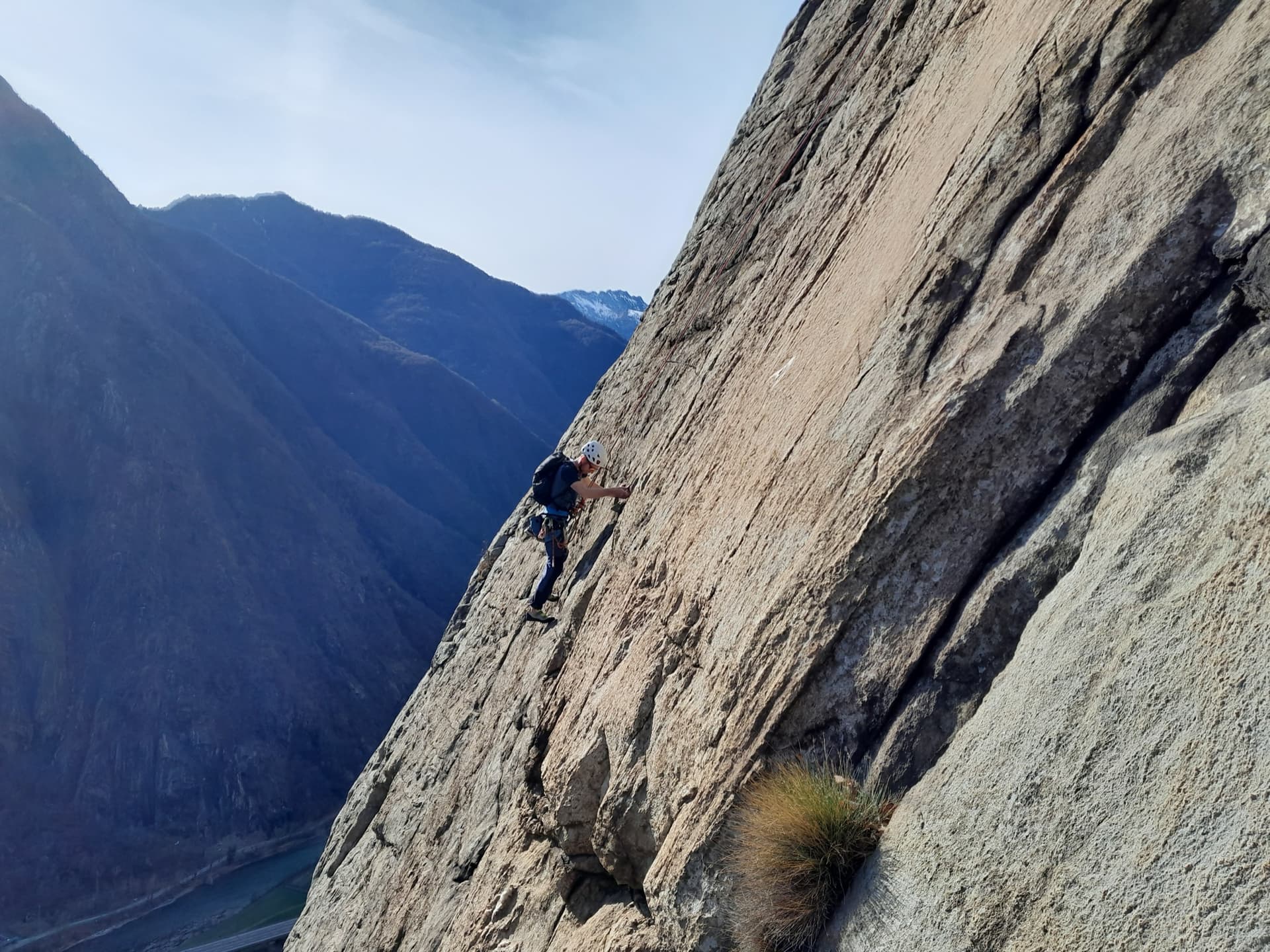
A climber on the sweeping gneiss slab of Bucce d'Arancia on the Paretone di Arnad (Corma di Machaby), with the Dora Baltea valley in shadow far below.

Italy · Aosta Valley

Bucce d'Arancia

This is the most-climbed route on the Paretone. It gives sustained, varied slab and crack climbing on good gneiss, and the hardest moves are a fine crack on P2, a slanting corner and a punchy wall. Queues are common on good days. The Mani Nude guidebook grades it stiffly; camptocamp's Italian page calls it sustained at 5b–5c+ with a single 6a.

6a10 pitches290 m

Read the cautions
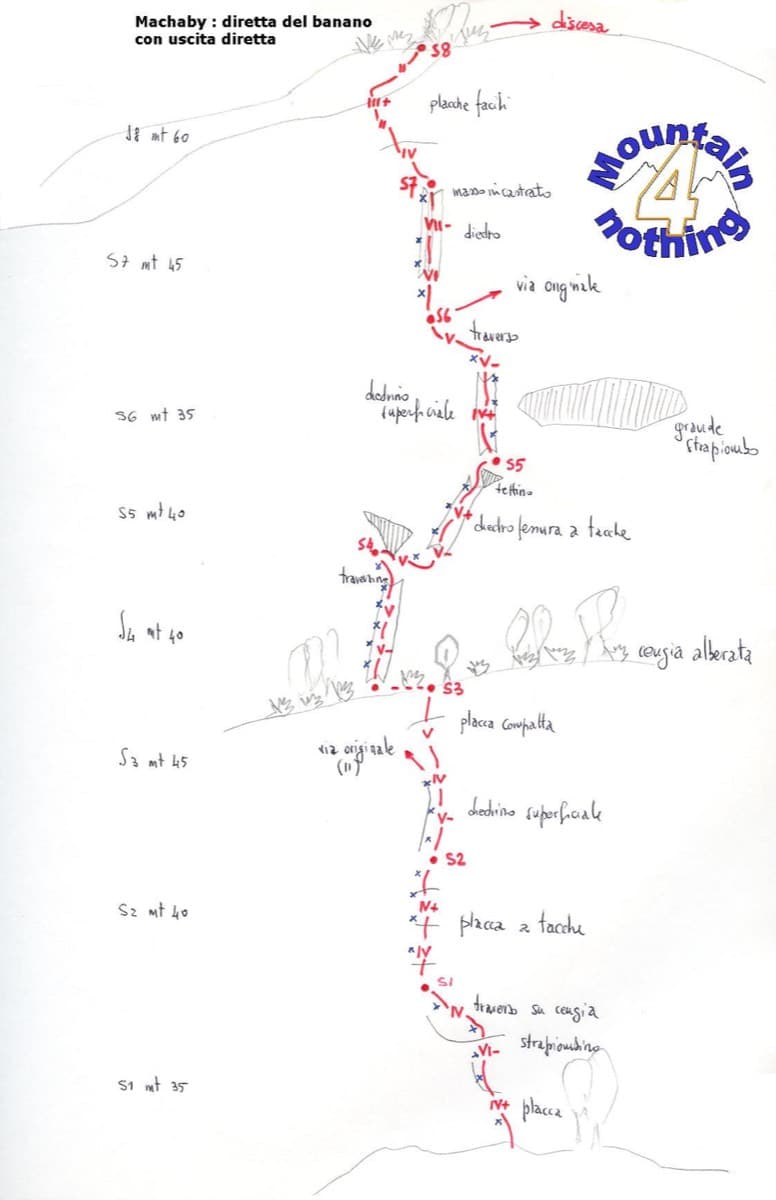
Hand-drawn topo of Diretta al Banano (direct finish), Corma di Machaby

Italy · Aosta Valley

Diretta al Banano

Along with Bucce d'Arancia this is the Paretone's other great classic (first ascent 1977, later retro-bolted). It climbs big, juggy, non-athletic slabs on beautiful rock up the centre of the wall to near the summit. Expect a few metres above the last bolt in places.

5c+9 pitches250 m

Read the cautions

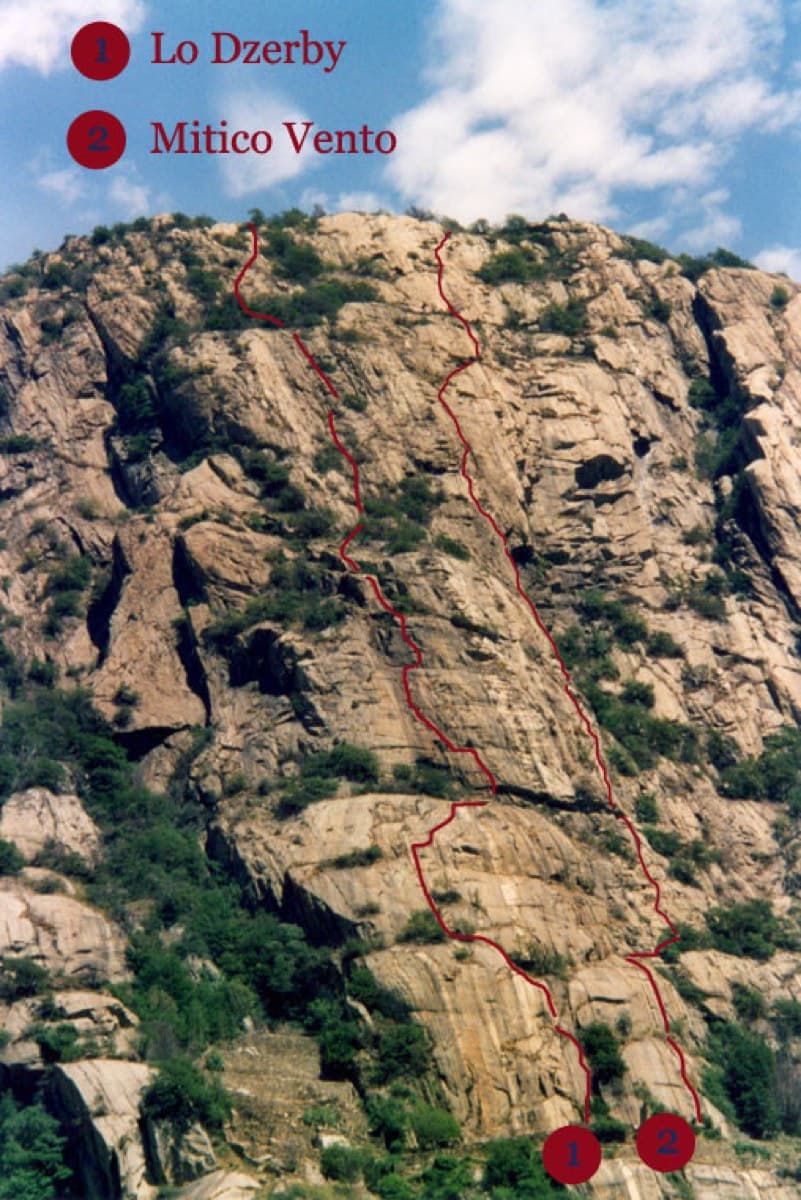
Topo of Lo Dzerby (line 1) and Mitico Vento on the Corma di Machaby, Arnad

Italy · Aosta Valley

Lo Dzerby

A long, easy-angled outing up the full height of the Paretone. A steeper lower half with an exposed pillar on P5 leads to sculpted slabs and broken steps higher up. It's a good first big multipitch.

5c13 pitches400 m

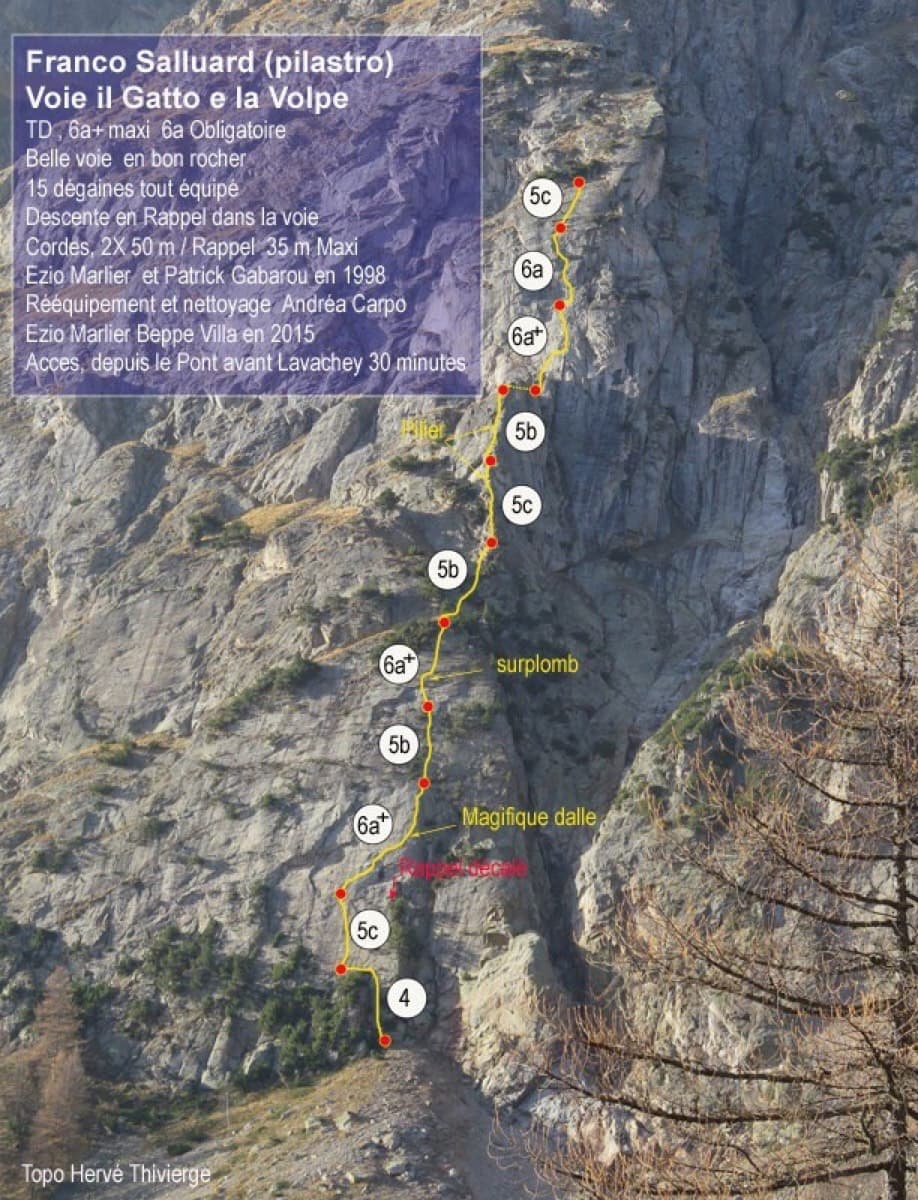
Topo of Il Gatto e la Volpe on the Pilier Franco Salluard, Val Ferret

Italy · Aosta Valley

Il Gatto e la Volpe

Rated 'great' on camptocamp: a wild setting with a short, easy approach from Lavachey. It climbs edgy granite slabs and a pillar crest, with a three-star exposed slab on P9.

6a+11 pitches350 m

Around 6b · about 6 pitches

Similar elsewhere

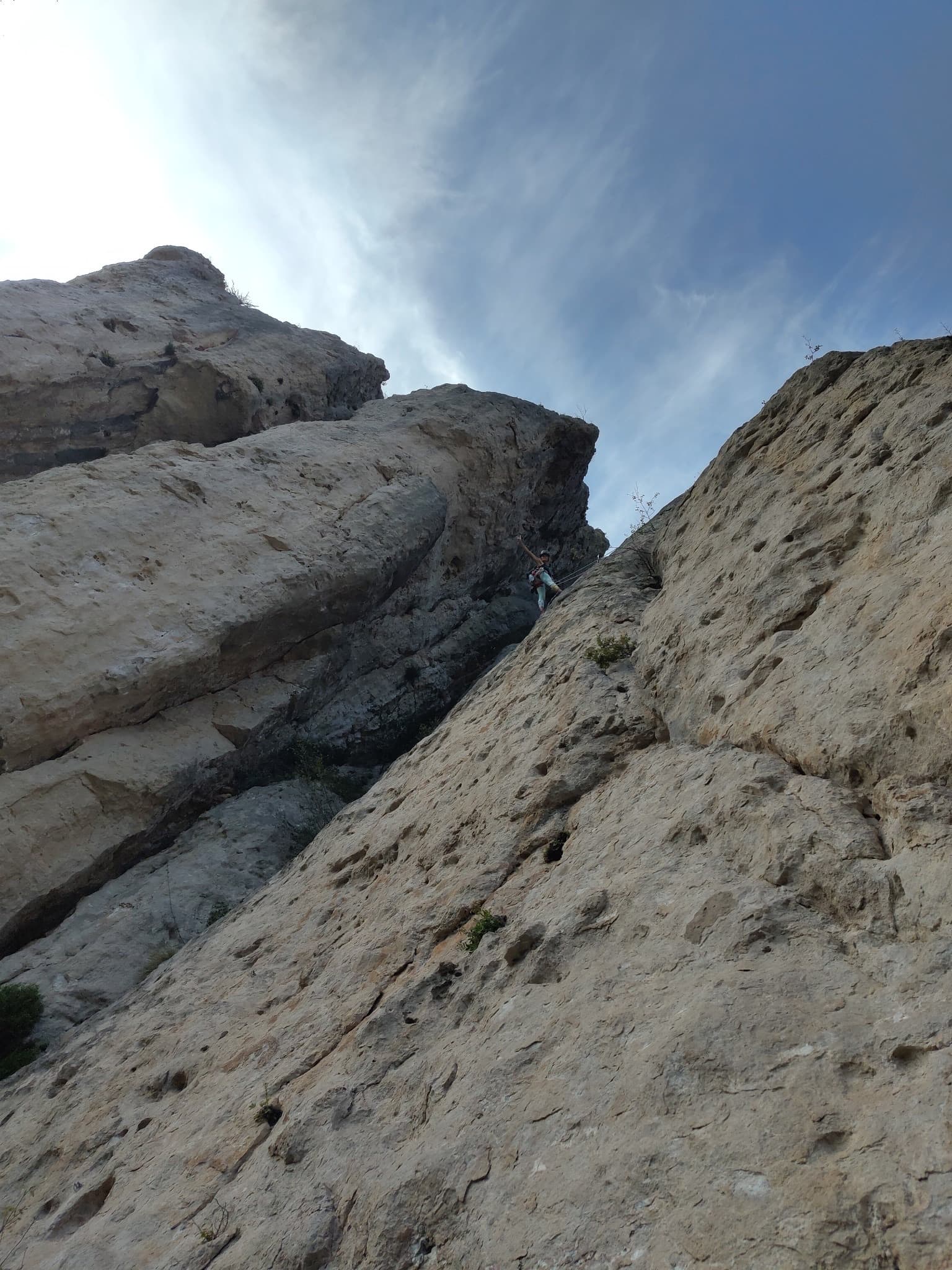
Looking up the upper pitches of L'Air du Temps towards the fifth belay

France · Gorges de la Jonte

L'Air du Temps

One of the longest routes in the gorge and the line that names its sub-sector: six varied pitches with a steep grey wall of holds at 6a and a slabbier 6b where the holds thin out at the top. Grades are stiff and you climb between the bolts.

6b6 pitches130 m

Read the cautions

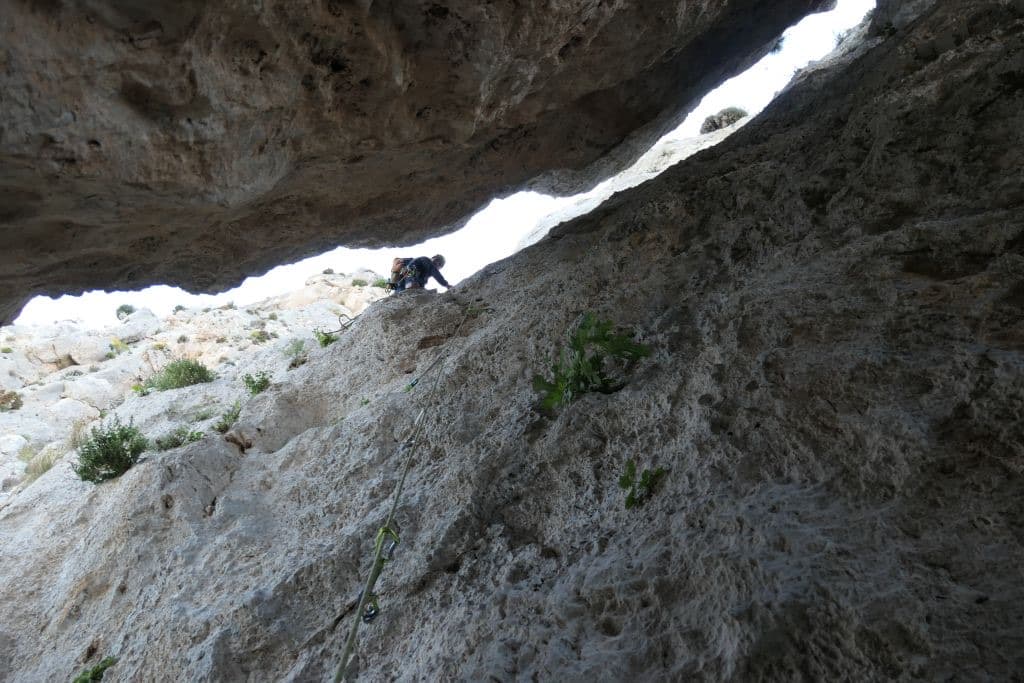
The hidden cleft of pitch 2 on Albatros, Trois Ilots

Greece · Kalymnos & Telendos

Albatros

Technical and sustained, with five varied climbing pitches of 6a+ to 6b: a pocketed slab, a surprising chimney hidden behind a pillar, a thin vertical pillar and a long steepening wall to a bulge. Quiet compared with the single pitches below, and in shade until about 12:30.

6b6 pitches160 m

The Frontales cliffs above El Chorro seen across the Tajo de la Encantada reservoir, with the big Poema de Roca cave at the foot of the central dome. The Austria sector lies on the right-hand part of the cliff; the line is not marked.

Spain · El Chorro

Bombay Sapphire

A good continuation above Nitti. Highlights are a short, thin 6b slab on P4 and a pumpy steep start to the final 6a+ pitch.

6b6 pitches138 m

Read the cautions

The south face of the Chaîne du Clapis above the Vistemboir sector, photographed from the approach by a party on the Diagonale des Vires Rouges, which slants left across the orange-streaked upper wall. The line is not marked.

France · Dentelles de Montmirail

La Diagonale des Vires Rouges

The best long outing on the Clapis south face: six pitches that start up easy slabs beside Vistemboir and then slant left across the orange ledges of the upper wall, with a horizontal crack traverse, a thin traverse on rough 'pebbledash' rock and a short, fierce 6b to finish. Technical climbing on very sculpted rock with plenty of atmosphere for a 150 m wall.

6b6 pitches150 m

Compiled from published sources and last verified October 2026. Bolts, anchors and access change. Climbing is dangerous and you are responsible for your own decisions: check a current topo and read the disclaimer.