Multipitch Atlas

Puto Paseo Ecológico

Peñón de Ifach, south-west face (Costa Blanca pillar) · Costa Blanca (Peñón de Ifach) · Spain

Read the cautionsBail not documentedBolting confidence: medium

A sustained sport line up the pillar between Costa Blanca and the Diedro UBSA, on rock that has escaped the polish of the older classics. Five of the seven pitches are 6b+ or harder and both 7a sections go at A0. Parties single out the finger-lock crack of pitch 3 and the pillar edge of pitch 4.

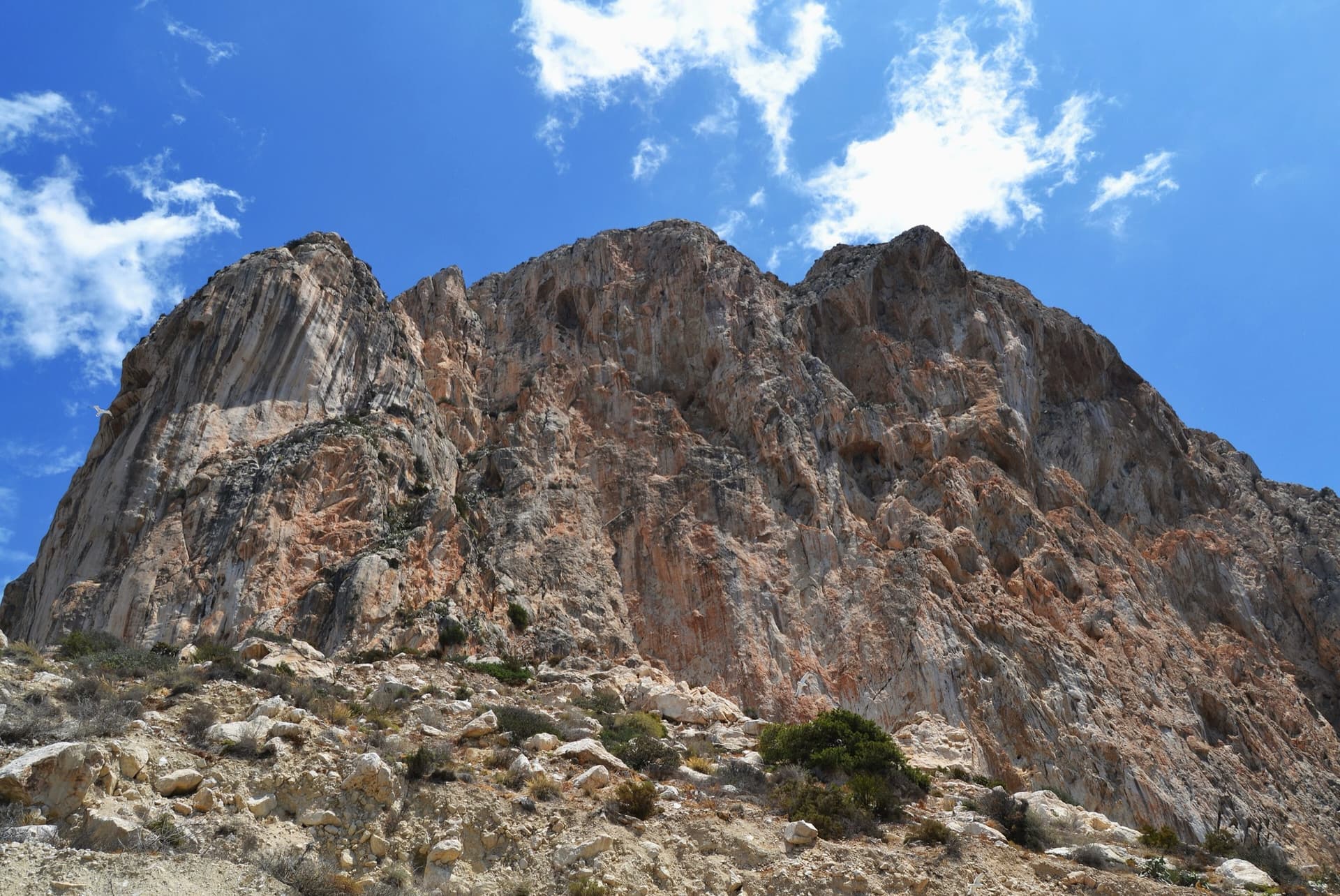
The Peñón de Ifach seen from the coast at Calp. The line of the route is not marked.Photo: Rafa Esteve · CC BY-SA 4.0

Photo

The Peñón de Ifach seen from the coast at Calp. The line of the route is not marked.Photo: Rafa Esteve · CC BY-SA 4.0
Hardest pitch
7a
Pitches
7
Length
250 m
Approach
15 min
Aspect
SW
South-west-facing
Rope
Not stated in sources
walk-off; pitches up to 45 m
Read before you go

Rebolted according to a 2026 report, but the start is unbolted easy ground, 6c is obligatory, and the official sheet still suggests nuts for the last pitch.

The route

Overview

Puto Paseo Ecológico, listed as P.P. Ecológico in the official guide, is one of the last sport routes equipped on the Peñón. It climbs the pillar shared with Costa Blanca, between that route and the Diedro UBSA, in seven sustained pitches. The official sheet gives it three stars and 6c+/A0; camptocamp gives 7a free with 6c obligatory. The rock is excellent and barely polished, which is rare on this wall. Allow 4 to 6 hours.

The climbing

Pitch by pitch

Pitches of Puto Paseo Ecológico
PitchGradeLengthNotes
P17a45 mAbout 15 m of unbolted steps at III+, then 6b climbing with one much harder boulder move over an overhang, 7a free or A0. Goes at 6b/A0.
P26c+30 mA slab followed by a sustained wall.
P36b+35 mA small overhang, a slab, then a very good finger-lock crack.
P46b+25 mUp the very edge of the pillar.
P55+30 mTraverse right with a step across the void, then a crack and rounded holds. Parties find one move far harder than the grade suggests.
P66c+35 mSteepens steadily and is very exposed.
P77a35 m7a free or 6c/A0. Includes the crack where the official sheet says a few nuts can help.

Getting there

Approach

To the parking

Calp is on the N-332; from the AP-7 take exit 64 (Altea/Calp) and follow the N-332 towards Calp. For the south face follow signs to the harbour (Puerto) and park there. The provincial guide gives the harbour-side parking as 38°38'16"N, 0°04'19"E.

On foot · about 15 min

10 to 20 minutes. From the parking at the far end of the marina, follow the seafront promenade (Paseo Príncipe de Asturias) to its end, then take the path that climbs to the foot of the wall and follow the cliff to the start. The route is on the Costa Blanca pillar, between Costa Blanca and the Diedro UBSA. A slightly easier variant (6b+, 6c) exists to the right of pitches 1 and 2.

Map of the walk-in

  • Crag
  • Parking

Loading map

The point marks the crag, not the exact start of the route.

Coordinates · crag

38.63389, 0.07611

Parking

38.63778, 0.07194

Harbour-side parking for the south face (Senderos de la Roca guide)

Point from camptocamp waypoint 249782 (Peñón de Ifach)

For your phone or watch

Download GPX

Contains the route point and parking. Opens in most mapping apps and GPS watches.

Points are compiled from published sources, with the precision stated above. They were not surveyed on the ground: check them against a current topo.

Getting down

Descent

Walk off. From the summit a footpath goes down the north side of the rock; the official guide calls it attractive and slippery. It leads back to the park visitor centre on the north side, so allow time to walk round to the harbour.

Retreat

Bailing off the route

Bail not documented

No source describes abseiling the route. One party left it above pitch 5 by crossing to Los Miserables and using the 15 m abseil at the exit of the Diedro UBSA, then finishing by easier, well-bolted ground. Below that point retreat is not documented.

Retreat from
Above pitch 5 (the 5+ traverse) you can cross to the Los Miserables exit.
Point of no return
Not documented. Pitch 5 traverses, which would complicate an abseil retreat from above it.
Carry
Not documented. Pitches are up to 45 m, so a retreat by abseil would need two ropes.
Basis
Part stated, part inferredThe escape via Los Miserables is from a 2016 camptocamp report; the rope advice is inferred from pitch lengths.

Partly inferred from the route facts

Safety

Hazards

  • The first 15 m of pitch 1 are unbolted grade III+ steps.
  • 6c is obligatory according to camptocamp, and the last two pitches are steep and very exposed.
  • The 5+ pitch has a move that several parties call much harder than 5+, on a traverse.
  • Stonefall from parties on neighbouring routes: a 2019 party on the next pillar was nearly hit by a block from above.
  • Climbing on the Peñón is forbidden in April, May and June for nesting birds.

Sun and weather

Conditions

South-west facing and low above the sea, so a winter route. The Peñón turns greasy in humid weather. A March 2016 party found it hot at the base and cool and windy higher up.

Usual season · Jan to Mar, Oct to Dec

Sun on the wall · SW-facing

Working out the sunlit hours for this month.

  • January (usual season): not yet worked out
  • February (usual season): not yet worked out
  • March (usual season): not yet worked out
  • April: not yet worked out
  • May: not yet worked out
  • June: not yet worked out
  • July: not yet worked out
  • August: not yet worked out
  • September: not yet worked out
  • October (usual season): not yet worked out
  • November (usual season): not yet worked out
  • December (usual season): not yet worked out

Sun on the wallDaylight, wall in shade● Usual season

Estimated from the wall's aspect only. Ignores surrounding terrain, gullies and the wall's exact shape. Clock times are local to the wall (Central European time), for the 15th of each month.

Monthly climate averages for Costa Blanca (Peñón de Ifach), 1991-2020
MeasureJan (usual season)Feb (usual season)Mar (usual season)AprMayJunJulAugSepOct (usual season)Nov (usual season)Dec (usual season)
Mean daily high °C141516182126282926221815
Mean daily low °C881012151821222016129
Rain days 1 mm or more666652137876

● marks the usual climbing season. Averages for 1991-2020 at about 132 m. Area climate from Open-Meteo reanalysis. Temperatures are adjusted to the height of the crag; rain comes from a grid cell of about 10 to 25 km, and summer highs on sea cliffs can read a few degrees low. The wall and valley can differ. Data: Open-Meteo, CC BY 4.0.

What to carry

Gear

Quickdraws only according to the official sheet, which adds that a set of nuts can be useful for the crack on the last pitch. Camptocamp says the same. Neither source gives a quickdraw count or a rope length; the longest pitch is 45 m.

Checklist

Quickdraws
Number not given in the sources
Rope
Not stated in sources (walk-off; pitches up to 45 m)
Helmet
One each

Derived from the route data; check it against a current topo

From climbers

Reader reports

Reader reports are not being collected yet. Until they are, check a current topo and the local club or guidebook publisher for recent changes to Puto Paseo Ecológico.

Worth knowing

Tips

  • If the last two pitches look too much, you can leave the route above the 5+ pitch, join Los Miserables and use the 15 m abseil of the Diedro UBSA exit, as a 2016 party did.
  • The 7a moves on pitches 1 and 7 can both be aided on the bolts.

Open questions

Where sources disagree

  • Grade: 6c+/A0 on the official sheet, 7a (6c obligatory, A0) on camptocamp.
  • State of the bolts: camptocamp's route text still says 'ageing but usable in 2016' and a 2016 report mentions corrosion; the January 2026 report says the route has since been re-equipped. The 2026 report is followed.
  • Length: 250 m officially; the camptocamp pitch lengths add up to 235 m.

Provenance

Sources

Same area

More in Costa Blanca (Peñón de Ifach)

All routes in Costa Blanca (Peñón de Ifach)
The south face of the Peñón de Ifach from the path below the cliffs, Calpe: 300 m of orange and grey limestone. Costa Blanca climbs this wall.

Spain · Costa Blanca (Peñón de Ifach)

Costa Blanca

The sport classic of the Peñón: a thin slab, a corner crack that steepens into an overhang, a pillar, then a wild exit from a big cave 200 m above the sea. Sustained at 6b with a 6c fifth pitch on polished slopers and a 6c+ last pitch whose crux can be pulled through on a bolt.

6c+7 pitches220 m
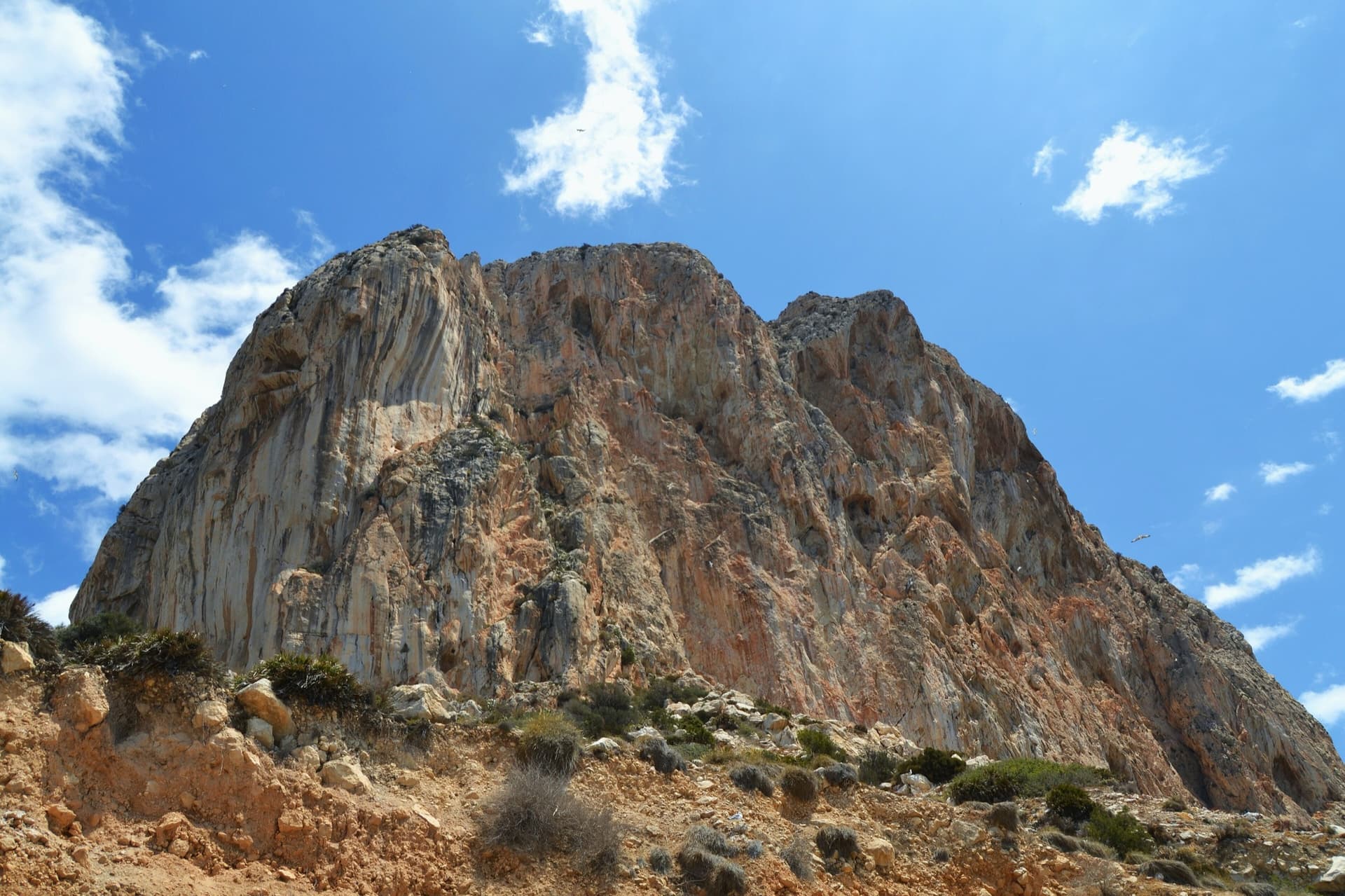
The south face of the Peñón de Ifach seen from the foot of the wall, Calpe. Mare Nostrum takes the right-hand side of this face.

Spain · Costa Blanca (Peñón de Ifach)

Mare Nostrum

Nine steep pitches up the wildly sculpted right side of the south face, overhanging almost throughout. Two long 7a pitches open the route and a third comes near the top, and even the 6a+ pitches are athletic. The rock is covered in holds and much less polished than the classics to the left.

7a9 pitches310 m

Read the cautions

Around 7a · about 7 pitches

Similar elsewhere

The start of Alfredo Alfredo at the foot of the east face of Monte Oddeu

Italy · Sardinia

Alfredo Alfredo

Two pitches of bridging up a 60 m corner hung with tufas and stalactites (6c+, 6c), then grey water-drop walls and a short roof at 7a that goes in three moves of aid. Seven pitches of varied climbing on perfect, unpolished rock.

7a7 pitches220 m

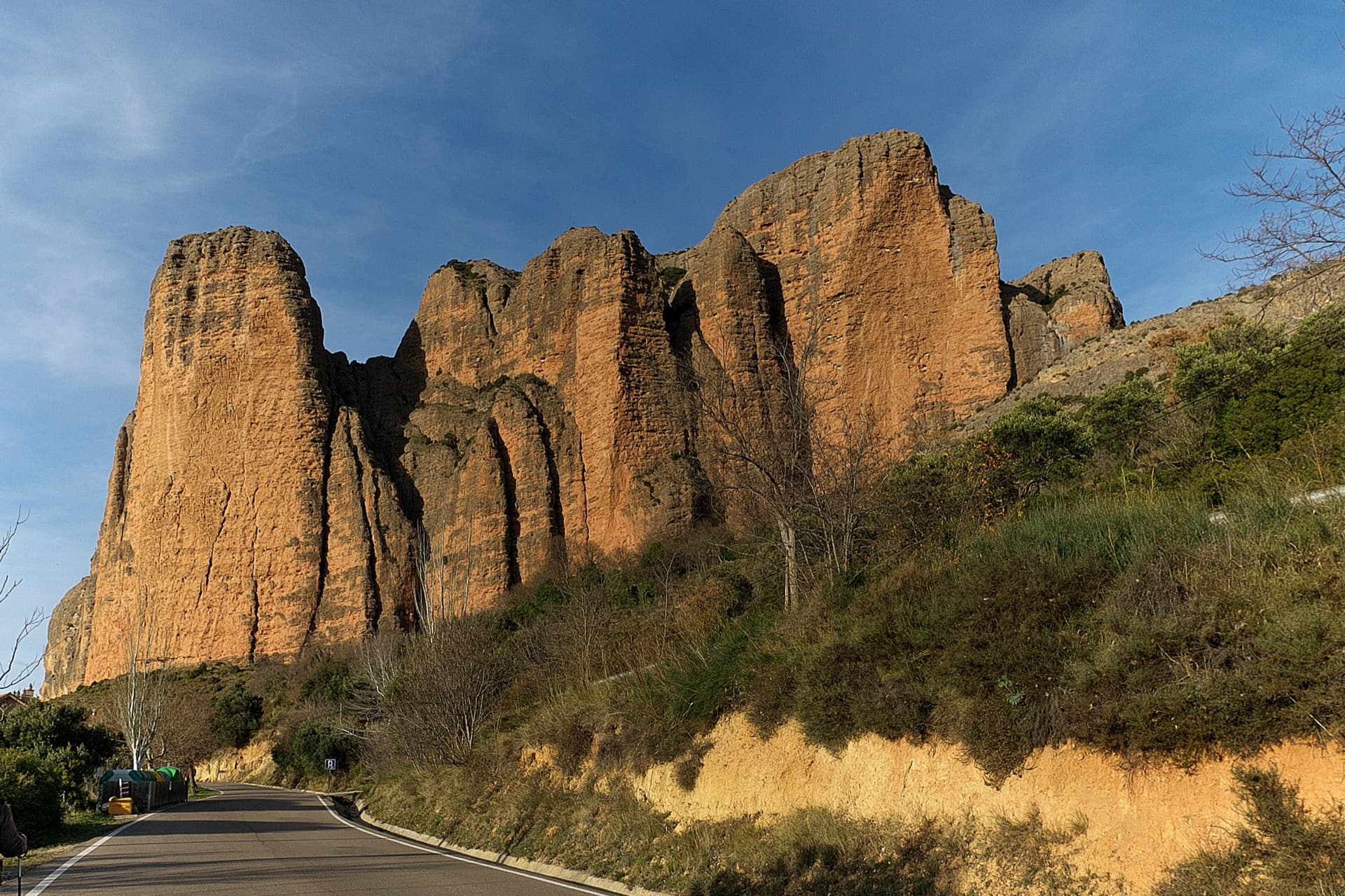
The south faces of the main Riglos wall in low sun, seen from the road into the village: Mallo Pisón on the left and the wall running right towards Mallo Frechín and La Visera at the right-hand end.

Spain · Riglos & Agüero (Mallos)

Zulú Demente

The other great line of the Visera, on a concave wall that leans further out the higher you go. Six pitches at 6a to 6b on big cobbles lead to the vulture ledge, then one short, very overhanging crux pitch above enormous exposure. That last pitch is about 7a free, or roughly 6b to 6c with rests on its closely spaced bolts.

7a7 pitches250 m

Read the cautionsCommitting

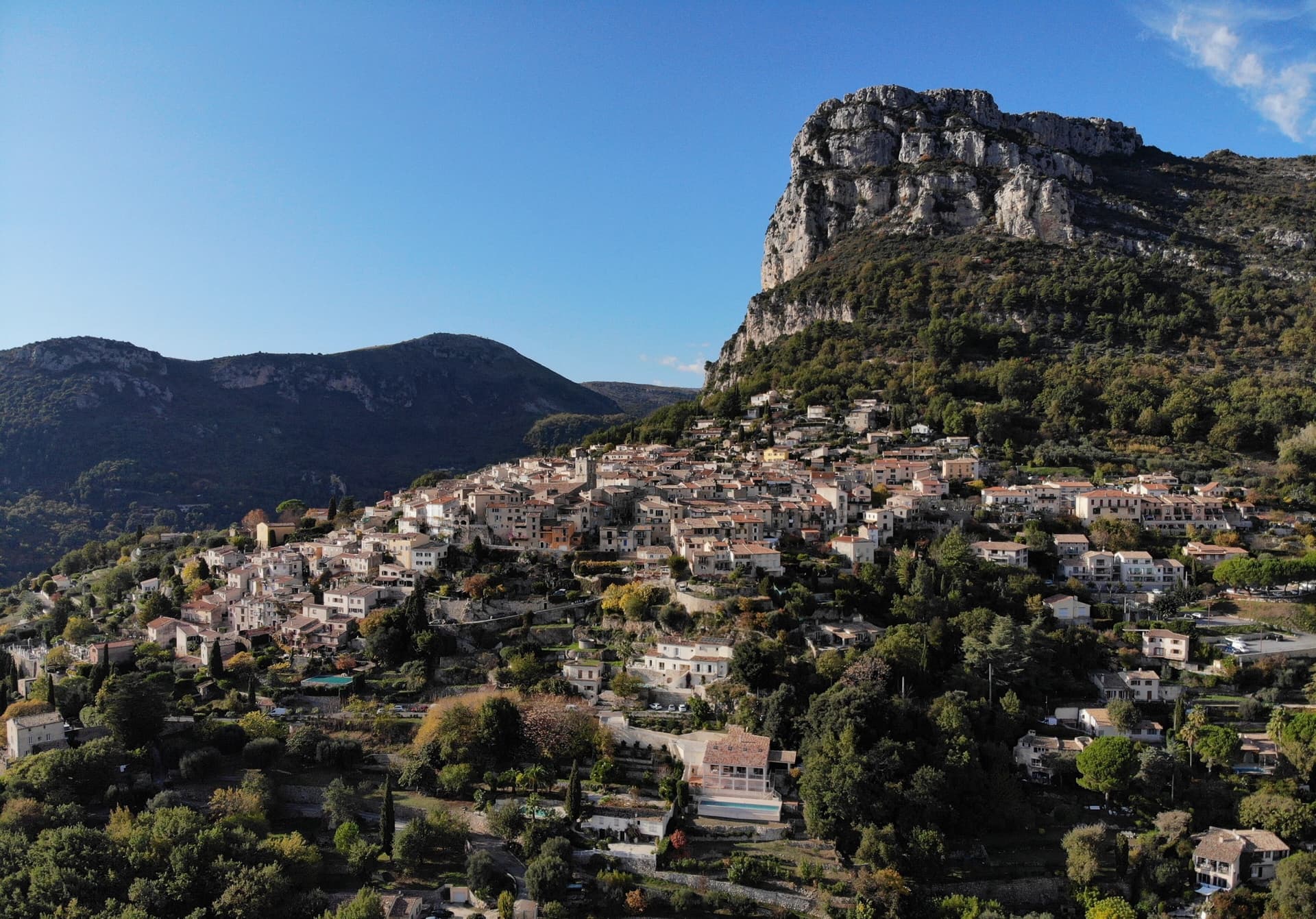
The village of Saint-Jeannet beneath the main cliff of the Baou de Saint-Jeannet; Jardins secrets is on this Grande Face, the exact line is not marked.

France · Baou de Saint-Jeannet

Jardins secrets

One of the essential long routes of the Baou: seven pitches that hardly drop below the sixth grade, each with a different problem, from thin slab to a steep bulge and a superb layback corner at 6c. The single 7a section on pitch 2 is closely bolted and can be aided. Expect a few loose blocks and a scrappy link pitch across the Vernet ledge.

7a7 pitches200 m

Read the cautions

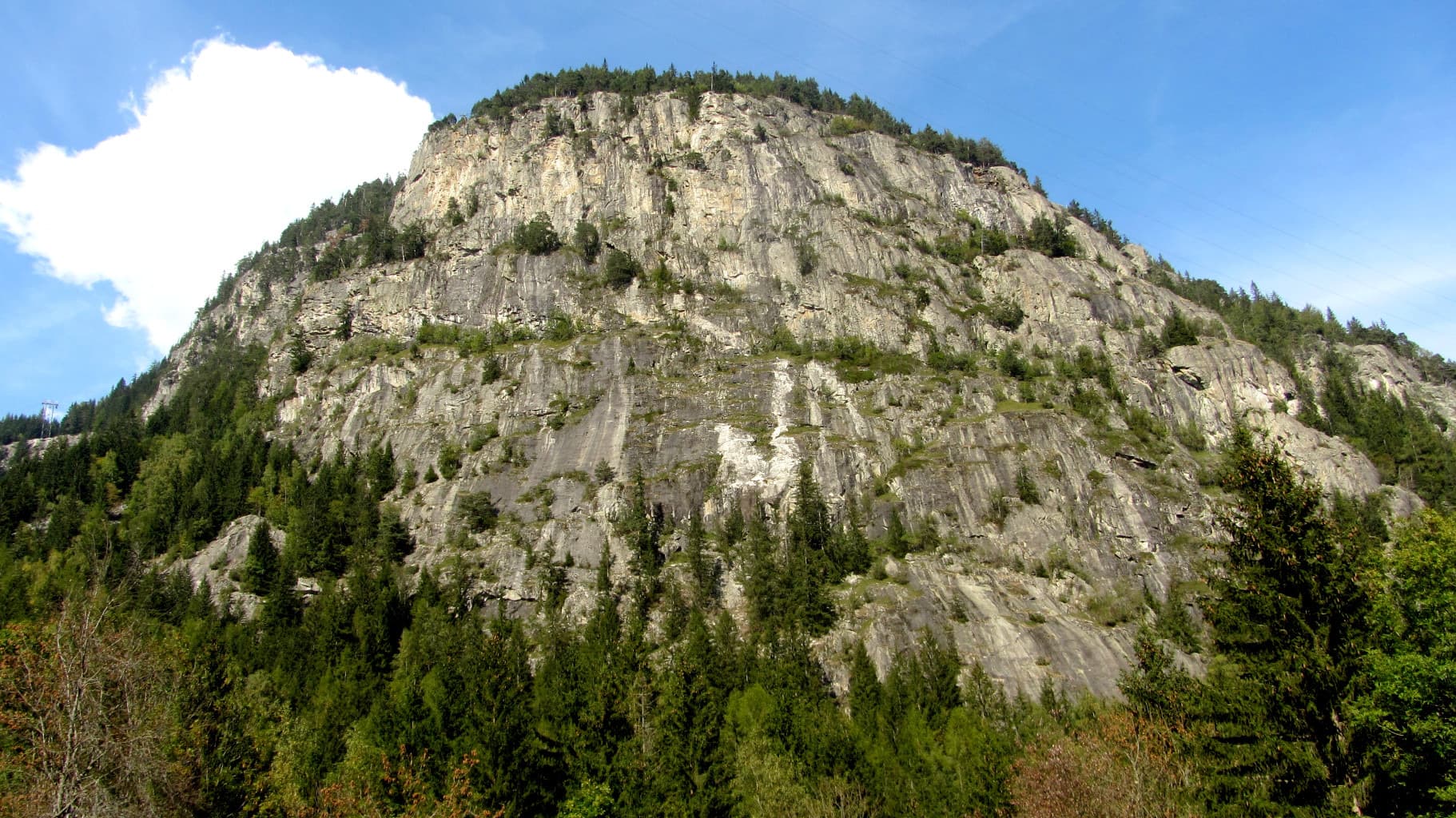
The Barberine cliff above the spruce forest at Vallorcine; Méduse climbs this wall, the line is not marked.

France · Chamonix valley

Méduse

A direct line up the big south-facing slabs of Barberine: three pitches of friction slab to warm up, then steeper, technical walls on small holds. The two top pitches are graded 6b+ and 6c+ if you step round the bolts and 7a if you climb straight up them; 6c is obligatory.

7a7 pitches230 m

Compiled from published sources and last verified October 2026. Bolts, anchors and access change. Climbing is dangerous and you are responsible for your own decisions: check a current topo and read the disclaimer.