Multipitch Atlas

Via del Verme

Zucco dell'Angelone – Primo Sperone (Barzio) · Lecco & Valsassina · Italy

Read the cautionsEasy to bailBolting confidence: high

A short, varied introduction to the Angelone on the first spur, the closest to the car park. A friction slab, an easy traverse, a featured wall and then a small overhang and a fine cracked slab that is harder than old topos suggest. Quick to do and quick to abseil.

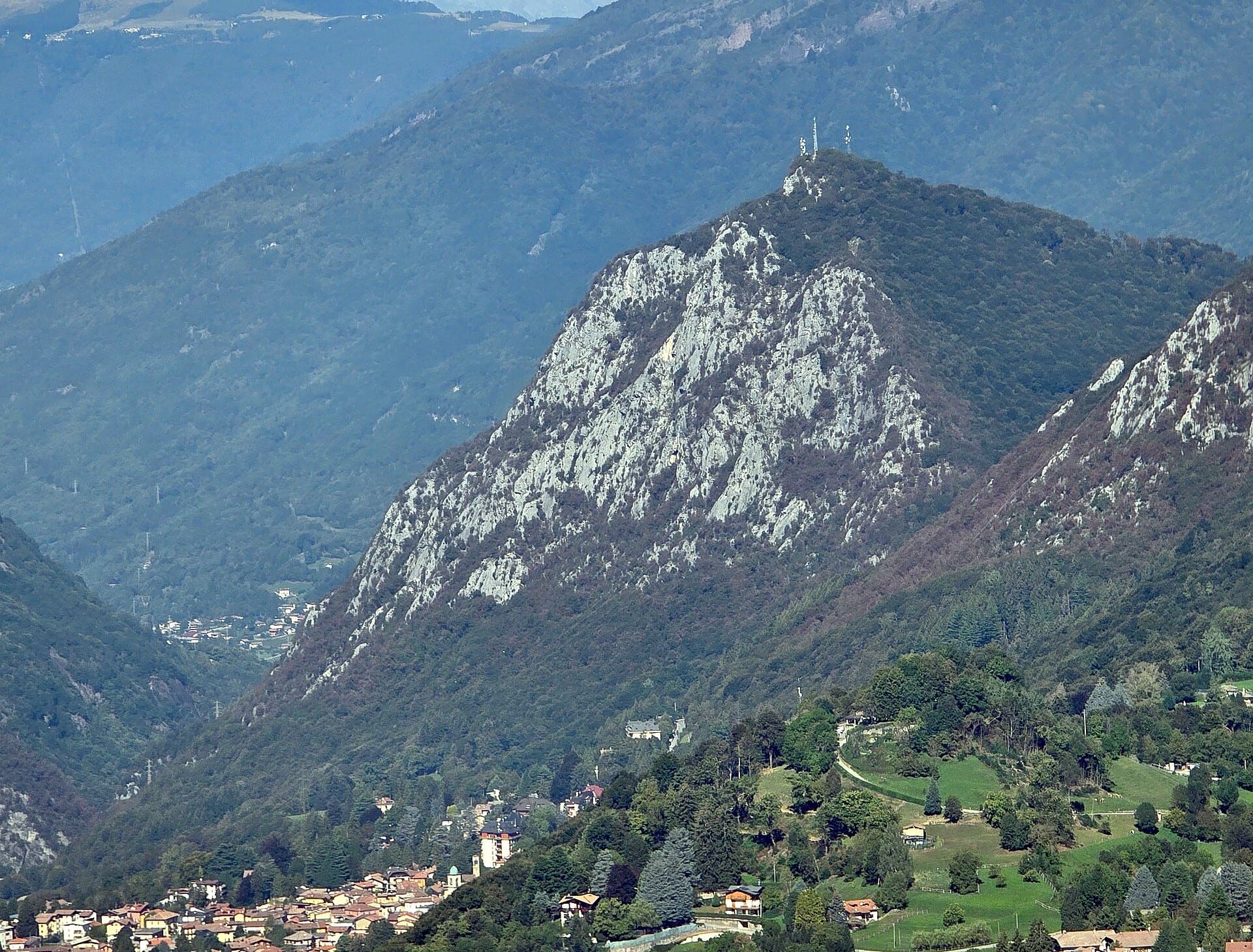
The Zucco dell'Angelone above the Valsassina, seen from Pasturo, with the antenna on its summit. The climbing spurs are the pale limestone ribs on the sunny side of the mountain above Barzio; individual spurs and routes are not marked.Photo: Ysogo · CC BY-SA 4.0

Photo

The Zucco dell'Angelone above the Valsassina, seen from Pasturo, with the antenna on its summit. The climbing spurs are the pale limestone ribs on the sunny side of the mountain above Barzio; individual spurs and routes are not marked.Photo: Ysogo · CC BY-SA 4.0
Hardest pitch
5c
Pitches
4
Length
80 m
Approach
15 min
Aspect
S
South-facing
Rope
2×50 m
Read before you go

A well-bolted plaisir route with chained belays; caution is only for loose stones on the traverse above a busy crag and the unconfirmed status of the 2025 closure ordinance.

The route

Overview

Via del Verme is a four-pitch route on the Primo Sperone of the Zucco dell'Angelone, fifteen minutes from the cable car car park at Barzio. It starts with a pure friction slab at 4b, crosses easy ledges, and finishes with two steeper pitches, the last through a small overhang onto a beautiful cracked slab. That last pitch was once graded 4c; a rockfall seems to have changed it and it is now given 5c, with the overhang aidable. Glue-ins and chained belays make it a quickdraws-only outing, well suited to a short day or a first multipitch for a confident second.

The climbing

Pitch by pitch

Pitches of Via del Verme
PitchGradeLengthNotes
P14b25 mA very slabby and at times delicate pitch on small footholds. You rarely climb straight up the line of bolts; weave left and right for edges and rough patches and take your time. The bolts are not close. The line of bolts just right is easier, about 4a. Belay on two bolts with a chain and ring.
P22b15 mGo up past a couple of bolts, then slant well right along easy ledges and steps. There are loose stones here: take great care if people are below. Belay on bolts and chain.
P35a20 mClimb straight up on the left on excellent holds, then follow an easy-angled crack and exit left to a comfortable terrace, just below a large white rockfall scar.
P45c20 mGo up left, surmount a first step and then a small overhang, following the bolts or keeping slightly right; it can be aided. Ignore a bare stud without a hanger on the left. Above, a magnificent slab: follow a crack rising to the right and then flowstone features to the belay. Polished at the crux.

Getting there

Approach

To the parking

From Lecco drive up the Valsassina to Barzio and follow signs to the Piani di Bobbio cable car, parking in the large car park at the lower station. The car park is paid and often full on winter days when the ski lifts run; parties then park in one of the free car parks in Barzio and take the skiers' shuttle or walk about 20 minutes. Reports from May and June 2026 found the lift closed for works and reached the path by stepping past a gate or fence beside the station.

On foot · about 15 min

About 15 minutes. From the car park take the path into the wood (a board shows a map of the Angelone sectors) and follow signs for 'Primo sperone'; a plaque marks the foot of the spur. The routes are not named on the rock. According to the guidebook the start is the fourth line of bolts from the left, looking in: cross the base of the wall down to the gully on the left and count the lines as you come back up. The Gulliver author places the start in the centre of the wall opposite a dead tree shaped like a Y.

Map of the walk-in

  • Crag
  • Parking

Loading map

The point marks the crag, not the exact start of the route.

Coordinates · crag

45.96009, 9.46039

Parking

45.95560, 9.46452

Barzio - Piazzale funivia (camptocamp access point 112436)

Point from camptocamp waypoint 41720

For your phone or watch

Download GPX

Contains the route point and parking. Opens in most mapping apps and GPS watches.

Points are compiled from published sources, with the precision stated above. They were not surveyed on the ground: check them against a current topo.

Getting down

Descent

Two abseils of 45 to 50 m. Abseiling straight down from the top brings you to a station about ten metres left, looking in, of the second belay; it seems to serve only the descent and gives a fairly direct line, with a large bush to avoid about ten metres above it. A second abseil reaches the ground. The Gulliver page describes instead abseiling about 50 m from the top to the first belay and then to the ground.

Retreat

Bailing off the route

Easy to bail

Abseiling is the normal descent and the belays have chains and abseil rings. You can retreat from any stance.

Retreat from
Any belay; the first belay is 25 m above the ground.
Point of no return
None.
Carry
Two 50 m ropes for the described abseils; a single rope reaches the ground only from the first belay.
Basis
Stated in the sourcesBoth sources describe the abseil descent and the chained belays with rings.

Safety

Hazards

  • Access: after rockfalls on 23 May and 6 June 2025 the Comune di Barzio closed the Angelone path and banned climbing until further notice. The collapse was on the left side of the crag (Placca del Pistolino); the first, second and third spurs were not damaged. Trip reports from December 2025 to June 2026 describe people climbing here again and a sign warning of rockfall, but no source read confirms that the ordinance was lifted. Check locally before you go. A June 2025 report notes that the first spur is well away from the 2025 rockfall zone.
  • Loose stones on the traverse of pitch 2, directly above the base of a busy crag. Avoid the route when the spur is crowded.
  • The first slab is not closely bolted and relies on friction.
  • Several lines of bolts cross the route and nothing is labelled; a December 2025 party notes a choice of lines for the first and third pitches.
  • The crux of the last pitch is hard for the grade and a little polished.

Sun and weather

Conditions

South facing at about 900 to 1150 m and in the sun for most of the day. Local sources call the Angelone climbable all year but advise against summer because the limestone gets hot. Winter days are common, although the car park fills with skiers. A June 2025 party notes it can be climbed in summer in the first hours of the morning.

Usual season · Jan to May, Sep to Dec

Sun on the wall · S-facing

Working out the sunlit hours for this month.

  • January (usual season): not yet worked out
  • February (usual season): not yet worked out
  • March (usual season): not yet worked out
  • April (usual season): not yet worked out
  • May (usual season): not yet worked out
  • June: not yet worked out
  • July: not yet worked out
  • August: not yet worked out
  • September (usual season): not yet worked out
  • October (usual season): not yet worked out
  • November (usual season): not yet worked out
  • December (usual season): not yet worked out

Sun on the wallDaylight, wall in shade● Usual season

Estimated from the wall's aspect only. Ignores surrounding terrain, gullies and the wall's exact shape. Clock times are local to the wall (Central European time), for the 15th of each month.

Climate figures for Lecco & Valsassina are not available yet

What to carry

Gear

Quickdraws (no count is published) and two 50 m ropes for the abseils. Cams are not needed. Helmet, mainly for the loose traverse and other parties.

Checklist

Quickdraws
Number not given in the sources
Rope
2×50 m
Helmet
One each
Abseil device and prusik
The descent or the retreat involves abseiling

Derived from the route data; check it against a current topo

From climbers

Reader reports

Reader reports are not being collected yet. Until they are, check a current topo and the local club or guidebook publisher for recent changes to Via del Verme.

Worth knowing

Tips

  • Allow about 1.5 hours.
  • The Gulliver author links the middle of the route into a single 35 m second pitch, passing an intermediate belay, and climbs it in three pitches.

Open questions

Where sources disagree

  • Pitches: four in the Scuola Guido Della Torre description (4b 25 m, 2b 15 m, 5a 20 m, 5c 20 m); the Gulliver description runs the middle together (4b 25 m, 4c 35 m, then 20 m at 5c) and labels its third pitch 'L4'.
  • Grade of the last pitch: 4c in old topos, 5c in recent ones; the Gulliver author suggests about V+.
  • Length: 80 m or 75 m.
  • Abseil line: the two sources describe different intermediate stations.

Provenance

Sources

Same area

More in Lecco & Valsassina

All routes in Lecco & Valsassina
The south side of the Zucco dell'Angelone above Barzio, seen from the Zucco della Croce: the pale limestone spurs (speroni) that hold the multipitch routes run down from the antenna-topped summit. Condorpass is on the fourth spur; individual spurs are not labelled here.

Italy · Lecco & Valsassina

Condorpass

The first route opened on the Zucco dell'Angelone, following the natural line of the fourth spur by corners, cracks, a chimney and friction slabs. Eight varied pitches at 5a to 5b with an easy crest to finish. Never hard but never trivial either.

5b8 pitches220 m
The Zucco dell'Angelone above the Valsassina, seen from Pasturo, with the antenna on its summit. The climbing spurs are the pale limestone ribs on the sunny side of the mountain above Barzio; individual spurs and routes are not marked.

Italy · Lecco & Valsassina

La Lumaca di Vetro

A 1979 Ivan Guerini line up the big slab of the second spur: friction climbing on compact limestone with a few steeper steps, a fine third pitch and a corner to finish. Grades are even, around 5a to 5c, and the bolts are far enough apart that slab confidence matters. You abseil off.

5c6 pitches120 m

Read the cautions

The Zucco dell'Angelone above the Valsassina, seen from Pasturo, with the antenna on its summit. The climbing spurs are the pale limestone ribs on the sunny side of the mountain above Barzio; individual spurs and routes are not marked.

Italy · Lecco & Valsassina

Foto di Gruppo con Signorine

Three friendly pitches up a striking arched flake and compact slabs, then a short wall with one hard, reachy move that most people pull through. A 1980 route by the Savonittos and Alessandro Gogna, and the usual first half of a link-up with Gli Schiavi della Pietra on the spur above.

6b+4 pitches90 m

Read the cautions

The Zucco dell'Angelone above the Valsassina, seen from Pasturo, with the antenna on its summit. The climbing spurs are the pale limestone ribs on the sunny side of the mountain above Barzio; individual spurs and routes are not marked.

Italy · Lecco & Valsassina

La Striscia della Citrosodina

The harder companion to La Lumaca di Vetro on the second spur. Delicate slabs with spaced bolts lead to cracks and flakes, then a strenuous last pitch through an overhanging corner and a bulge that goes at 6b+ or mostly on aid. Varied and less travelled than its neighbours.

6b+6 pitches145 m

Read the cautions

Around 5c · about 4 pitches

Similar elsewhere

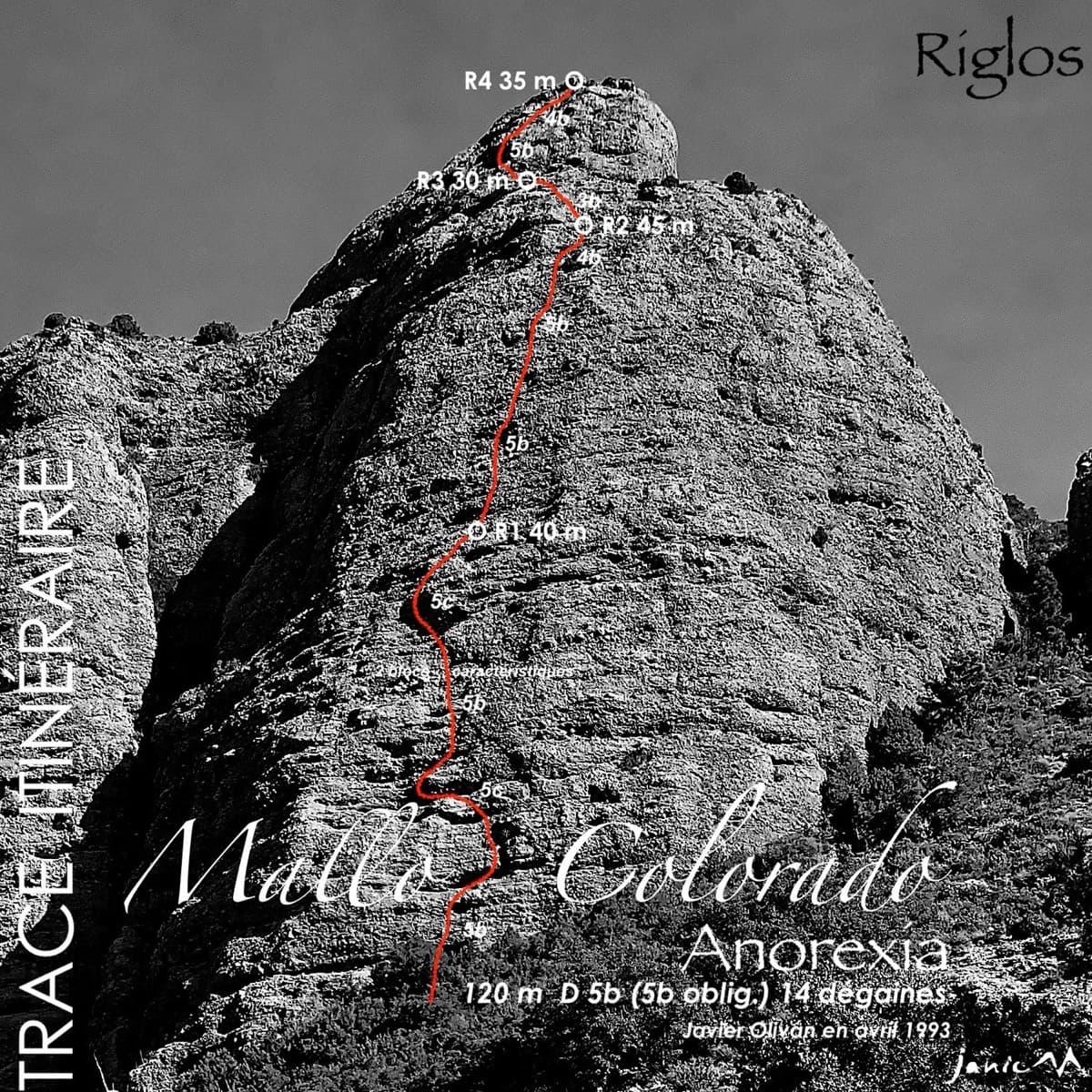
Topo of Anorexia on Mallo Colorado, Riglos

Spain · Riglos & Agüero (Mallos)

Anorexia

The best-known route on the Mallo Colorado. Two steep, juggy panza pitches have a well-protected boulder move, giving a short taste of real Riglos steepness at a friendly grade.

5c4 pitches150 m

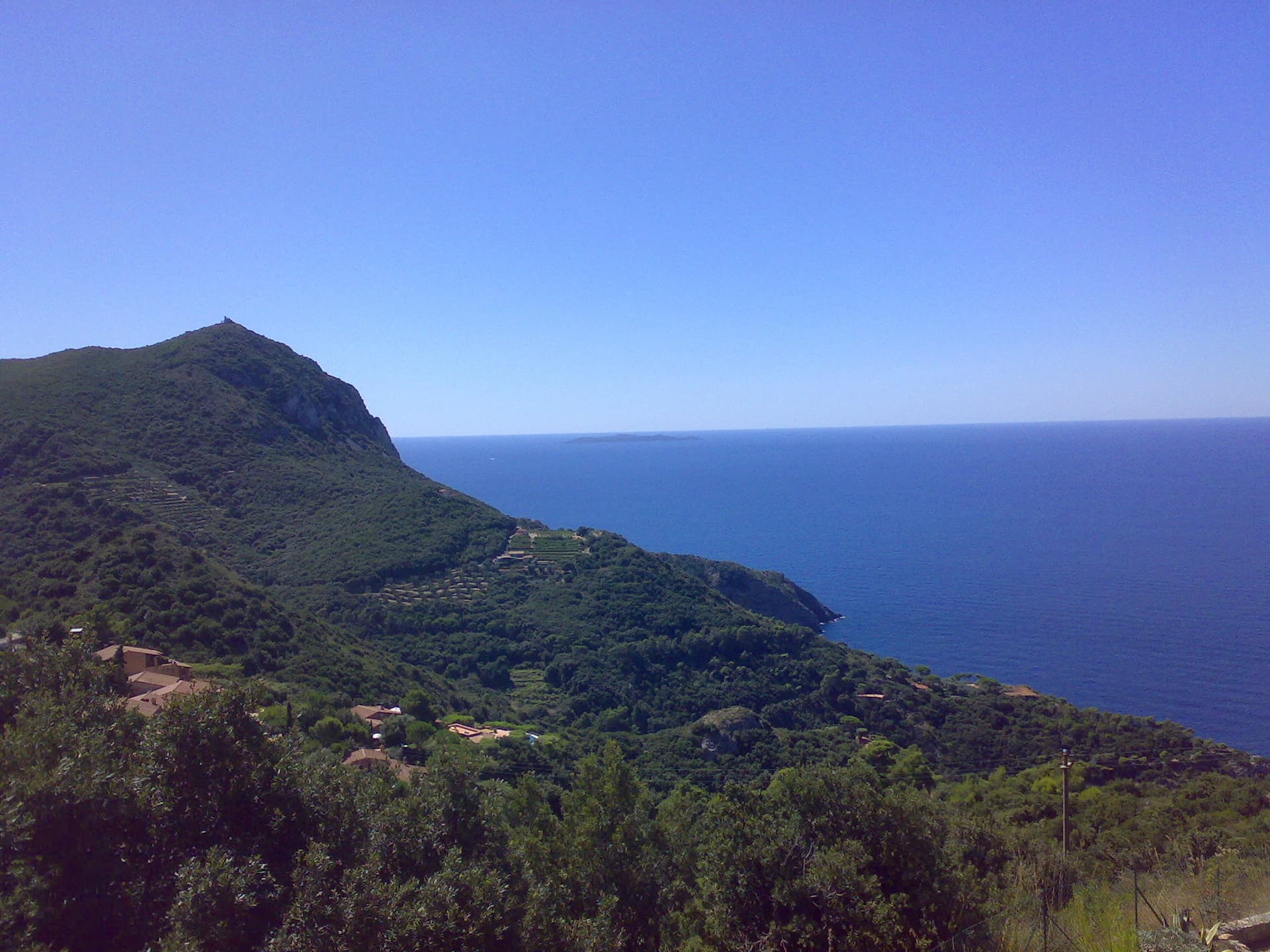
The headland of Capo d'Uomo on Monte Argentario with its watchtower on top, and the island of Giannutri on the horizon. The multipitch wall drops towards the sea below the tower; the routes are not visible in this view.

Italy · Monte Argentario

Maria Mare

Four pitches on the sea-facing wall of Capo d'Uomo: a featured slab, an easy linking pitch, and two vertical, athletic pitches on sculpted grey limestone to the crest below the old watchtower. The final wall is the highlight. The lower pitches need care with holds.

5c4 pitches110 m

Read the cautions

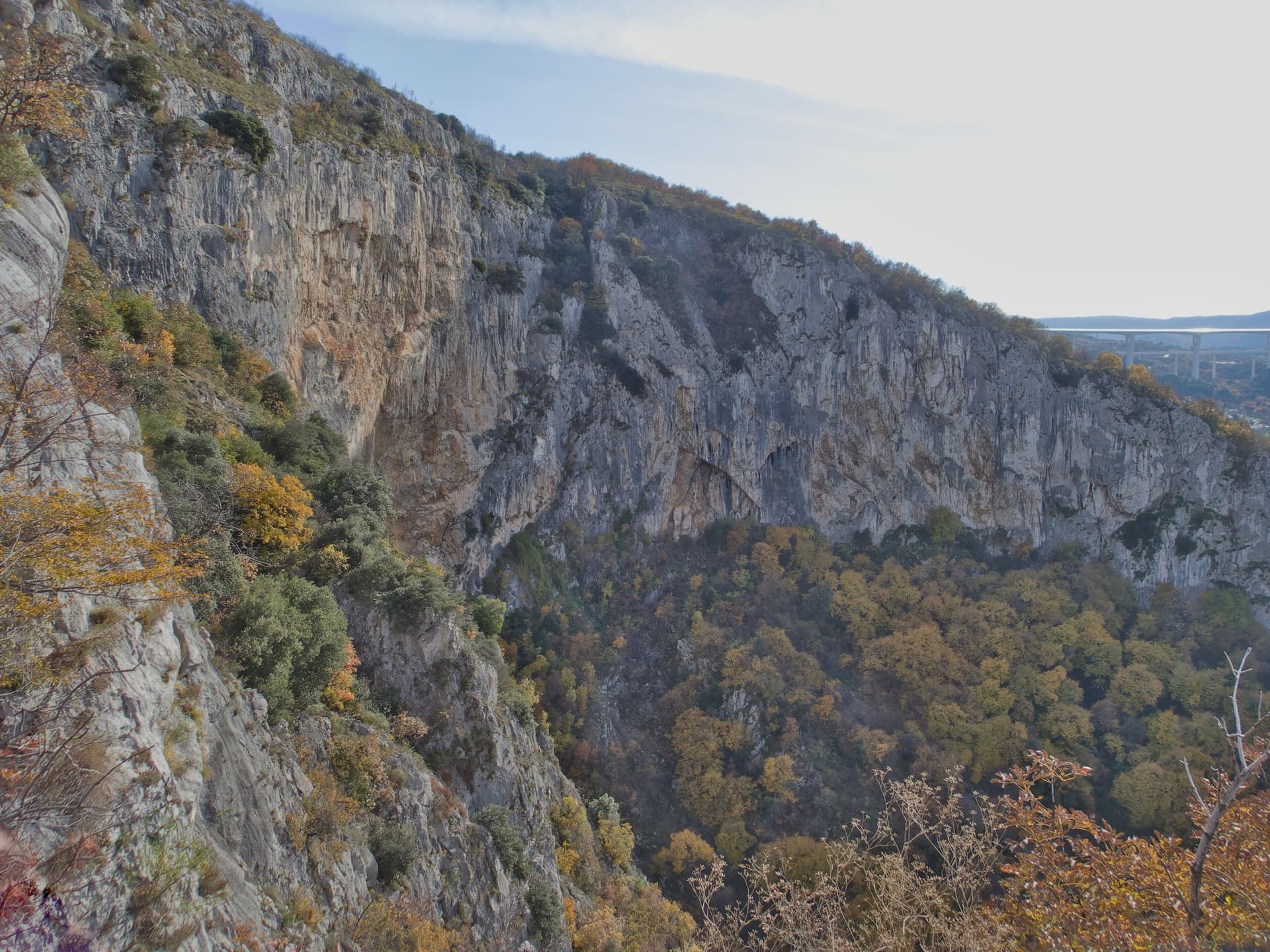
The Velika stena, the big wall of the Osp collapse doline, seen along its length from the rim in autumn; Medo is on the right side of this wall.

Slovenia · Osp

Medo

The easiest line on Osp's famous overhanging Big Wall, following an obvious right-slanting ramp, the only non-overhanging part of the face. It is in shade until about 11:30 in July.

5c4 pitches110 m

Read the cautions

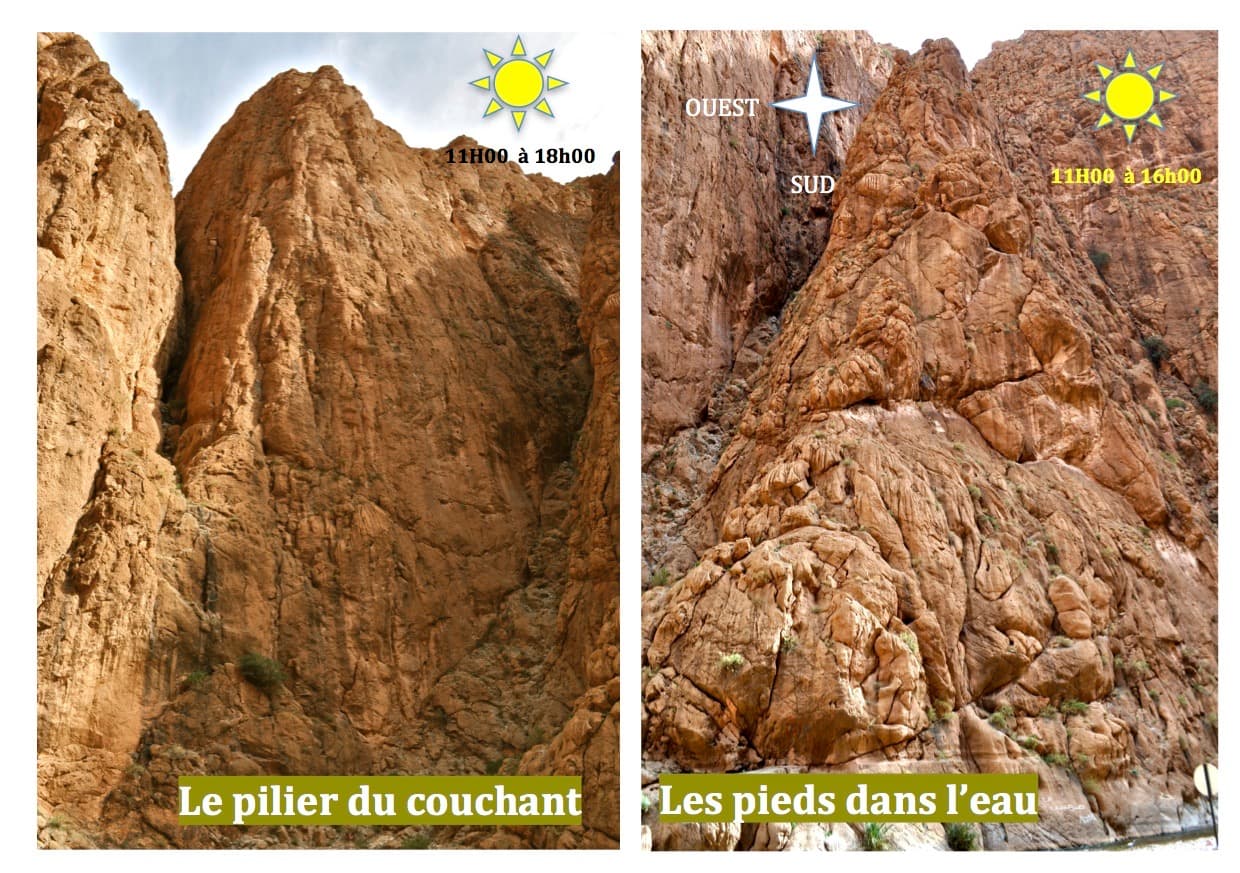
The Pilier du Couchant (left panel) and the Pieds dans l'eau needle (right panel) in the Todra Gorge (image from the local topo team)

Morocco · Todra Gorge (Todgha)

Pierre et le loup

Four pitches of steady 5c up the needle beside the Pilier du Couchant, in the heart of the gorge. A short easy first pitch, a crux a few metres below the second belay, a crack pitch and an athletic finish.

5c4 pitches167 m

Compiled from published sources and last verified October 2026. Bolts, anchors and access change. Climbing is dangerous and you are responsible for your own decisions: check a current topo and read the disclaimer.