Multipitch Atlas

Alexandra

Contrefort de Punta Rossa (Punta Biciartula) · Bavella · France

Read the cautionsBail with caveatsBolting confidence: high

A concentrate of Bavella on orange granite: long pitches alternating pure friction slabs, walls and roofs of huge tafoni, a cracked corner and a final sequence of technical bulges. Sustained at 6a and 6a+ with rests on big ledges. Maurizio Oviglia calls it one of the most approachable and most recommendable routes in the massif.

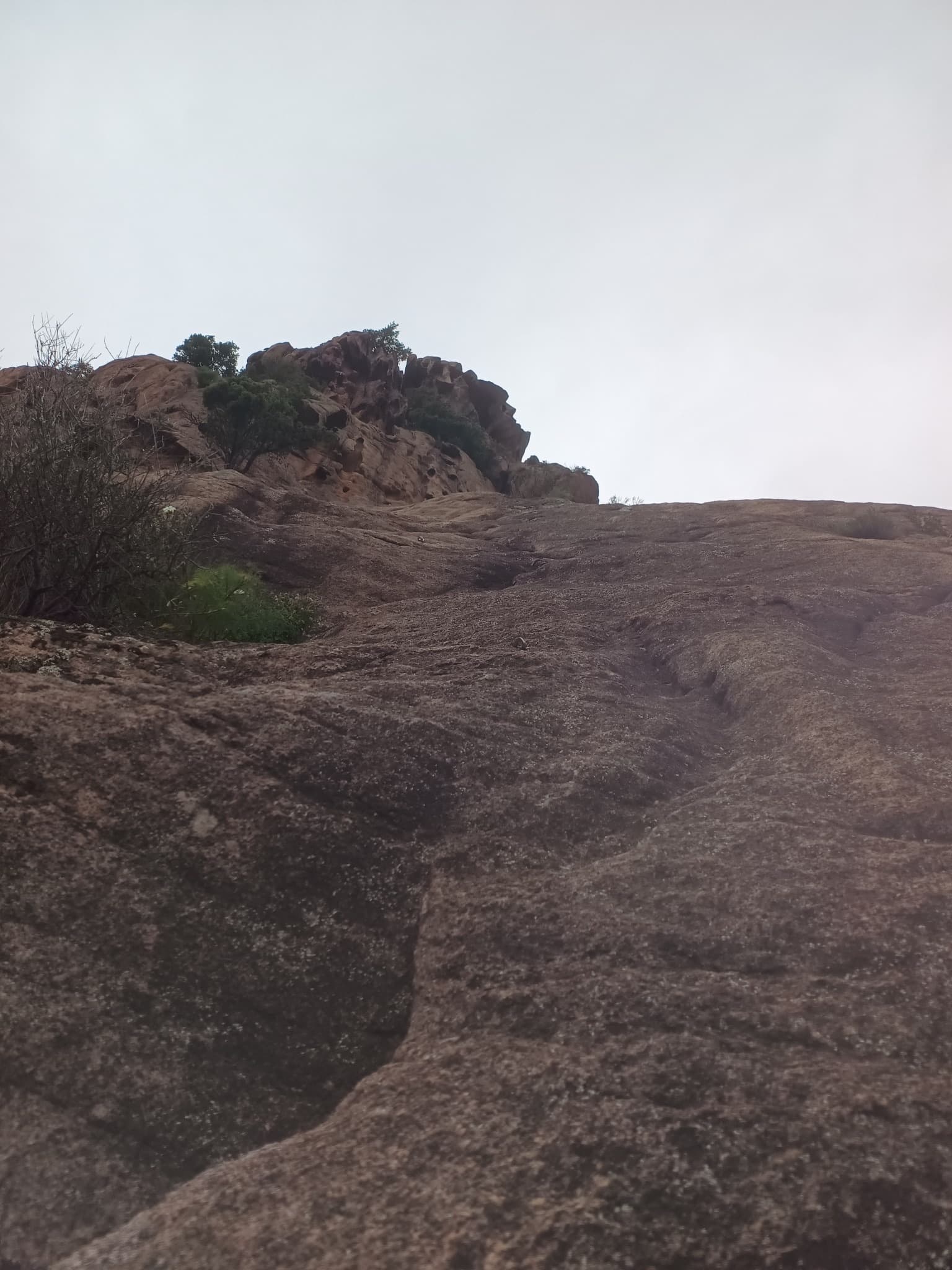
The buttress below Punta Rossa coming into view on the approach to Alexandra, October 2024Photo: tcholpon · CC BY-NC-ND 3.0

Photo

The buttress below Punta Rossa coming into view on the approach to Alexandra, October 2024Photo: tcholpon · CC BY-NC-ND 3.0
Hardest pitch
6b
Pitches
5
Length
220 m
Approach
35 min
Aspect
SE
South-east-facing
Rope
2×50 m
Read before you go

Stainless bolts and chained abseils, but this is friction climbing with 4 to 5 m between bolts and moves you cannot aid.

The route

Overview

The buttress below Punta Rossa, named Punta Biciartula ('lizard') on the map, is a 250 m spur of red-orange granite above the D268 between the Renaghju and Polischellu bridges. Alexandra, opened in 2000, is the easiest of its equipped routes and one of the most travelled sport multipitches at Bavella. Four pitches of 40 to 48 m lead from a slabby wall behind a tree through a cave of tafoni, a corner and crack, and more friction slabs, to a short crux pitch over tafoni and rounded bulges. The route proper ends at a belay shared with Canal inattendu; a transition and an easy 4b pitch lead on to the summit if you want it.

The climbing

Pitch by pitch

Pitches of Alexandra
PitchGradeLengthBoltsNotes
P16a+48 m9 boltsA fine slabby wall with a hard move at the start, a friction slab to a zone of tafoni, then a second friction slab to a belay on a big flake inside an immense tafoni cave: a luxurious stance.
P26a45 m11 boltsLeave leftwards round the edge, climb a corner then a friction slab to a crack, follow it, and finish up slabs slanting left to a belay on a step. The start is a water streak and is wet after rain.
P36a+45 m10 boltsLeft across a slab to a laid-back cracked corner, up it, then a friction slab and a steeper zone to a belay on a small vegetated platform. The belay is on the left and is preceded by a bolt that is easy to miss: two parties went the wrong way here. Many people's best pitch.
P46a40 m8 boltsSlightly right to the tafoni directly above the belay, then a friction slab rightwards to a band of tafoni. Continue slanting left over slabs and bulges to a belay under a wall of tafoni. A 2025 party measured this pitch at about 25 m.
P56b30 m6 boltsPass the tafoni wall on its left, then go right through a succession of technical bulges, with an awkward mantel on slopers that is easier for the tall, to the belay shared with Canal inattendu. A missed mantel means landing back on the ledge. The start seeps after rain. Graded 6a or 6a+ by the Italian sources.

Getting there

Approach

To the parking

The D268 links Zonza and the Col de Bavella with Solenzara on the east coast. From Bastia follow the coast road south to Solenzara and turn up the D268; from Ajaccio drive via Aullène, Quenza and Zonza to the col and descend the east side. From the Col de Bavella descend about 9.5 km towards Solenzara. Pass the Renaghju bridge and park about 200 m further on the left, on a stretch of the old road in a bend, roughly 500 m before the Polischellu bridge. The place is marked Renaju on the map but not signposted.

On foot · about 35 min

35 to 45 min. Take the cairned path up through the maquis. On leaving the wood, traverse left following cairns to a streambed, dry except after rain, and follow it up to the foot of the wall. The start is behind a small tree with an old cord on it, with stainless hangers above. Counting from the right, the first route (starting about 15 m below the ledge) is A tempesta, then Canal inattendu with its obvious water groove above the first tafoni, then Alexandra; La célébration du lézard and Kallisté are further left. A 2024 party went too far up the gorge before realising they had passed the start.

Map of the walk-in

  • Crag
  • Parking

Loading map

The point marks the crag, not the exact start of the route.

Coordinates · crag

41.82083, 9.24278

Parking

41.81688, 9.25438

Renaghju pull-in on a stretch of old road beside the D268 (camptocamp waypoint 142099)

Point from camptocamp waypoint 41696 (Contrefort de Punta Rossa, named Punta Biciartula on the IGN map)

For your phone or watch

Download GPX

Contains the route point and parking. Opens in most mapping apps and GPS watches.

Points are compiled from published sources, with the precision stated above. They were not surveyed on the ground: check them against a current topo.

Getting down

Descent

Most parties abseil Canal inattendu, whose line starts about 6 m right of the last belay: R6 to R5, well to the right facing the wall, 25 m; R5 to R4, slightly left, 25 m; R4 to R2, straight down, 48 m; R2 to an abseil station on a small ledge slightly right, 40 m, watching for tafoni that trap the rope; then 35 m to the ground. Alternatively continue to the summit by a moving-together transition and a 4b pitch, then find the station in a niche on the far left above the void, facing Punta Rossa (the exit of Kallisté): a free-hanging abseil of 45 m into a gully, a careful descent of 20 m to a second station, a 40 m abseil (avoidable by ledges on the right) into the ravine on the west side, down to a huge jammed block passed by a 10 to 15 m abseil from a tree, and easy scrambling to the foot of the routes. Parties took 50 min by the route and up to 2 h via the summit.

Retreat

Bailing off the route

Bail with caveats

Camptocamp says you can abseil the route itself or Canal inattendu, and parties have retreated down the line from the top without trouble in strong wind. The pitches are 40 to 48 m, so two ropes are essential, and the tafoni and trees catch ropes. Which of Alexandra's own belays carry abseil rings is not stated; the chained stations belong to Canal inattendu.

Retreat from
Any belay with two ropes; the stance in the tafoni cave at R1 is large and comfortable.
Point of no return
None stated.
Carry
Two 50 m ropes, and maillons in case a belay on Alexandra itself has no rings.
Basis
Part stated, part inferredAbseiling the route or its neighbour is stated on camptocamp and confirmed by 2023 and 2024 parties; the note about rings on Alexandra's own belays is an inference from the lack of detail.

Partly inferred from the route facts

Safety

Hazards

  • Run-outs on the friction slabs: the bolts are 4 to 5 m apart on average and the climbing between them is obligatory.
  • Ropes jam in tafoni and on trees during the abseils and on the 4b pitch to the summit.
  • The summit descent is hard to find in wind; one party ended up abseiling the route instead, another took a wrong 25 m abseil and a loose gully.
  • The bolt before the R3 belay is easy to miss.

Sun and weather

Conditions

South-east facing, on a buttress whose summit is at about 970 to 990 m, sheltered from west and north-west wind, which then hits you on the summit. Hot in the sun: a late-June party started at 14:45 to climb in the shade. After rain the approach streambed runs and wet streaks persist at the starts of pitches 2 and 5, though parties climbed past them. Spring and autumn are best.

Usual season · Apr to Jun, Sep to Oct

Sun on the wall · SE-facing

Working out the sunlit hours for this month.

  • January: not yet worked out
  • February: not yet worked out
  • March: not yet worked out
  • April (usual season): not yet worked out
  • May (usual season): not yet worked out
  • June (usual season): not yet worked out
  • July: not yet worked out
  • August: not yet worked out
  • September (usual season): not yet worked out
  • October (usual season): not yet worked out
  • November: not yet worked out
  • December: not yet worked out

Sun on the wallDaylight, wall in shade● Usual season

Estimated from the wall's aspect only. Ignores surrounding terrain, gullies and the wall's exact shape. Clock times are local to the wall (Central European time), for the 15th of each month.

Climate figures for Bavella are not available yet

What to carry

Gear

12 quickdraws (inferred from the 11 bolts on pitch 2; SummitPost says 10), two slings for the tafoni, and two 50 m ropes for the abseils. Camptocamp lists a 60 m abseil rope and says nuts and cams are useless; SummitPost suggests a few small cams. Helmet.

Checklist

Quickdraws
12
Rope
2×50 m
Helmet
One each
Abseil device and prusik
The descent or the retreat involves abseiling
Maillons or spare karabiners
To leave behind if you retreat

Derived from the route data; check it against a current topo

From climbers

Reader reports

Reader reports are not being collected yet. Until they are, check a current topo and the local club or guidebook publisher for recent changes to Alexandra.

Worth knowing

Tips

  • Allow about 3 h for the five pitches.
  • Stop at the top of pitch 5 and abseil Canal inattendu unless you particularly want the summit.
  • A GPS track for the wooded start of the approach helped one party.

Open questions

Where sources disagree

  • Crux grade: 6b for pitch 5 on camptocamp; planetmountain gives 6a for that pitch and 6a+ overall, and SummitPost gives 6a+ with 6a obligatory.
  • Number of pitches: five on camptocamp and planetmountain; SummitPost counts seven by including the transition and the 4b exit to the summit.
  • Protection gear: camptocamp says nuts and cams are useless and a 2024 party agrees; SummitPost suggests some small cams.
  • Approach time: 35 min on camptocamp, 45 min on planetmountain and SummitPost.
  • Descent: SummitPost and planetmountain describe only the summit descent, with abseils of 25 or 45 m, 30 or 40 m and 15 or 20 m; camptocamp adds the now usual abseil line down Canal inattendu.
  • Height: 220 m on all three sources, while camptocamp's five pitch lengths add up to 208 m.

Provenance

Sources

Same area

More in Bavella

All routes in Bavella
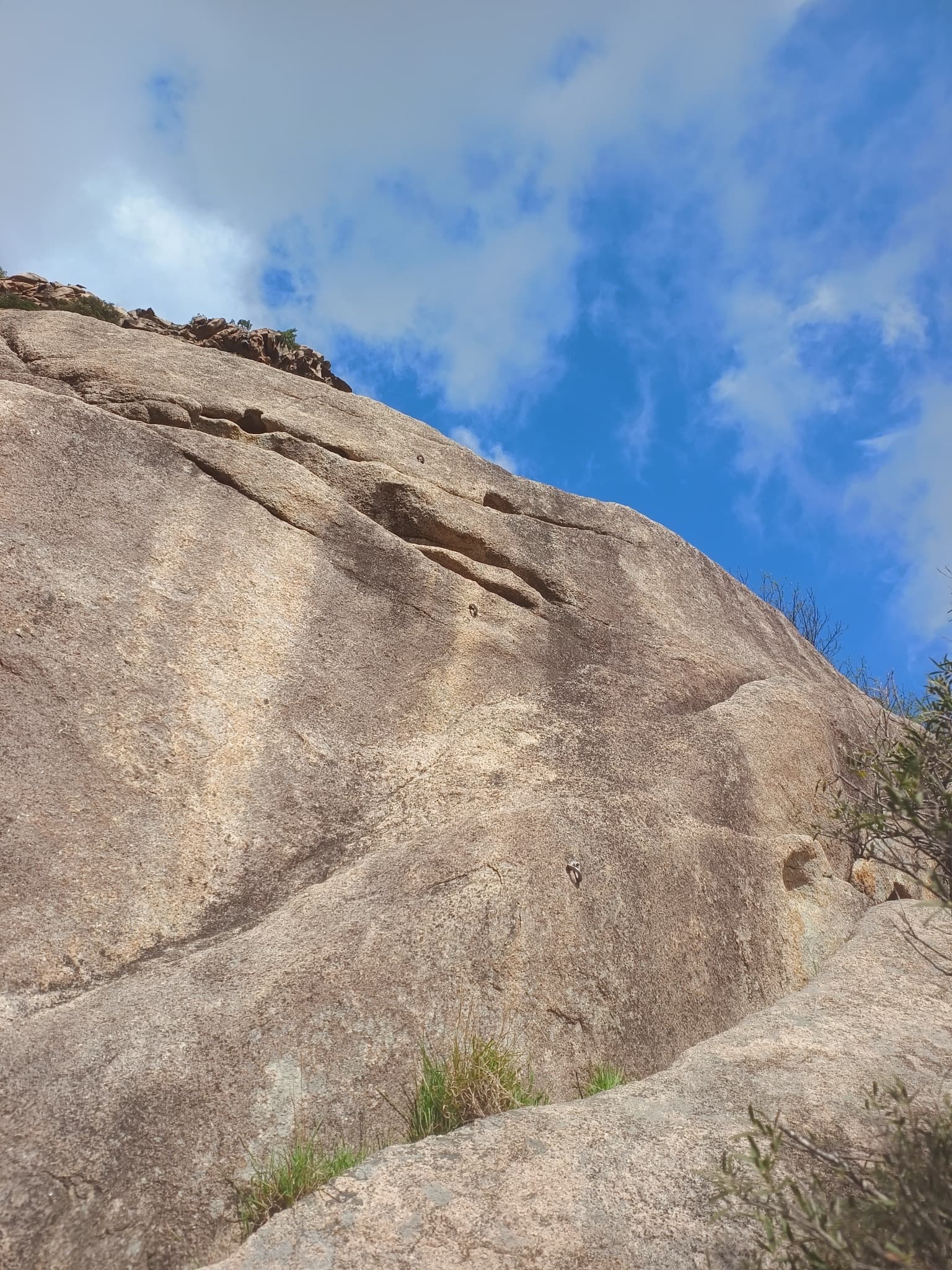
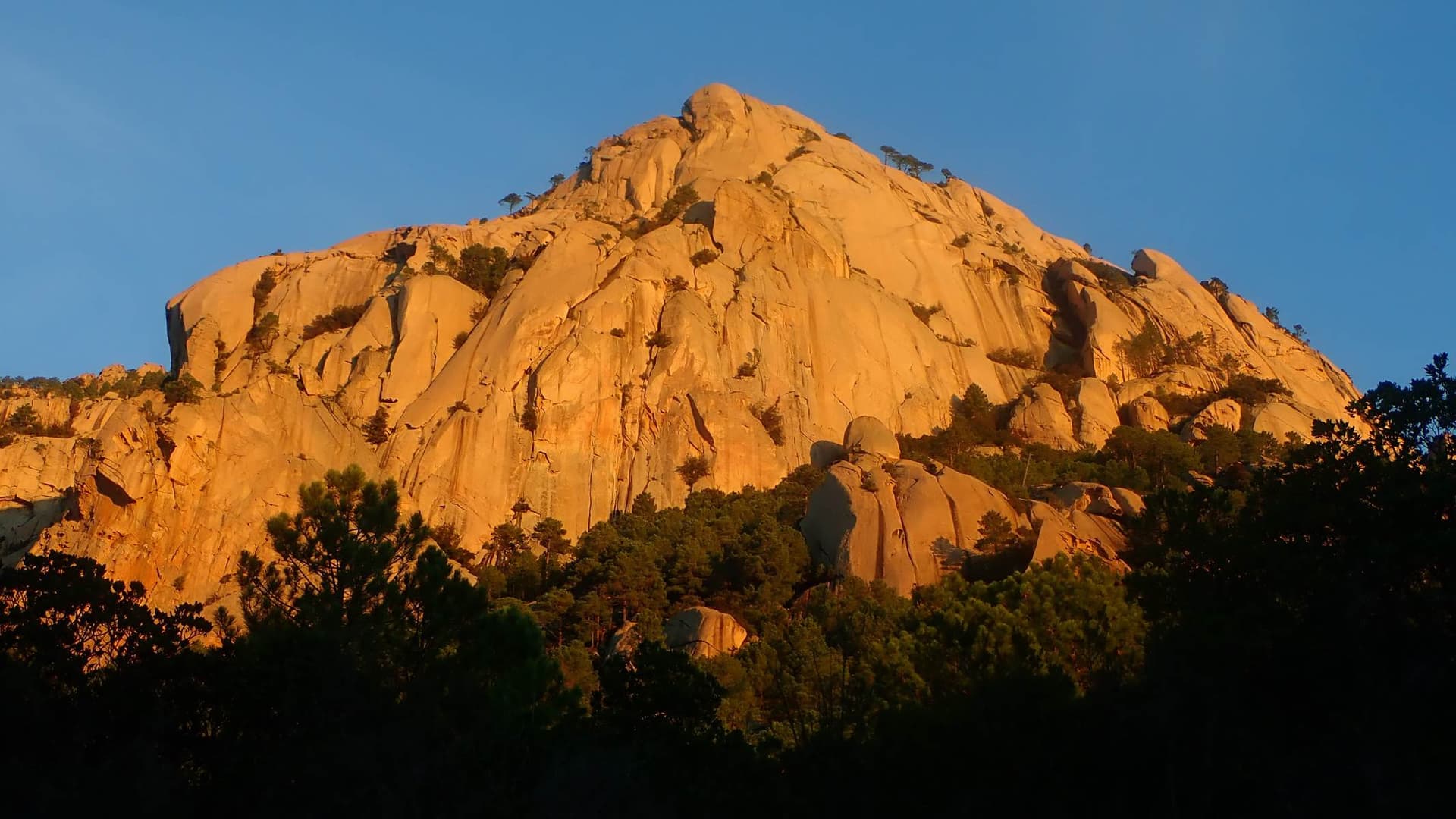
The granite dome of Teghie Lisce glowing at sunrise above the pines of Bavella; Acqua in bocca climbs its slabs, the line is not marked.

France · Bavella

Acqua in bocca

A sampler of everything Bavella granite does: a technical 7a wall, layback and jamming cracks, an off-width, a squeeze slot behind a tree, and three pitches of pure friction slab to finish. Bolted well enough to climb on quickdraws, which is rare here. The wide pitches are awkward and bruising if you are not used to the style.

7a10 pitches300 m

Read the cautions
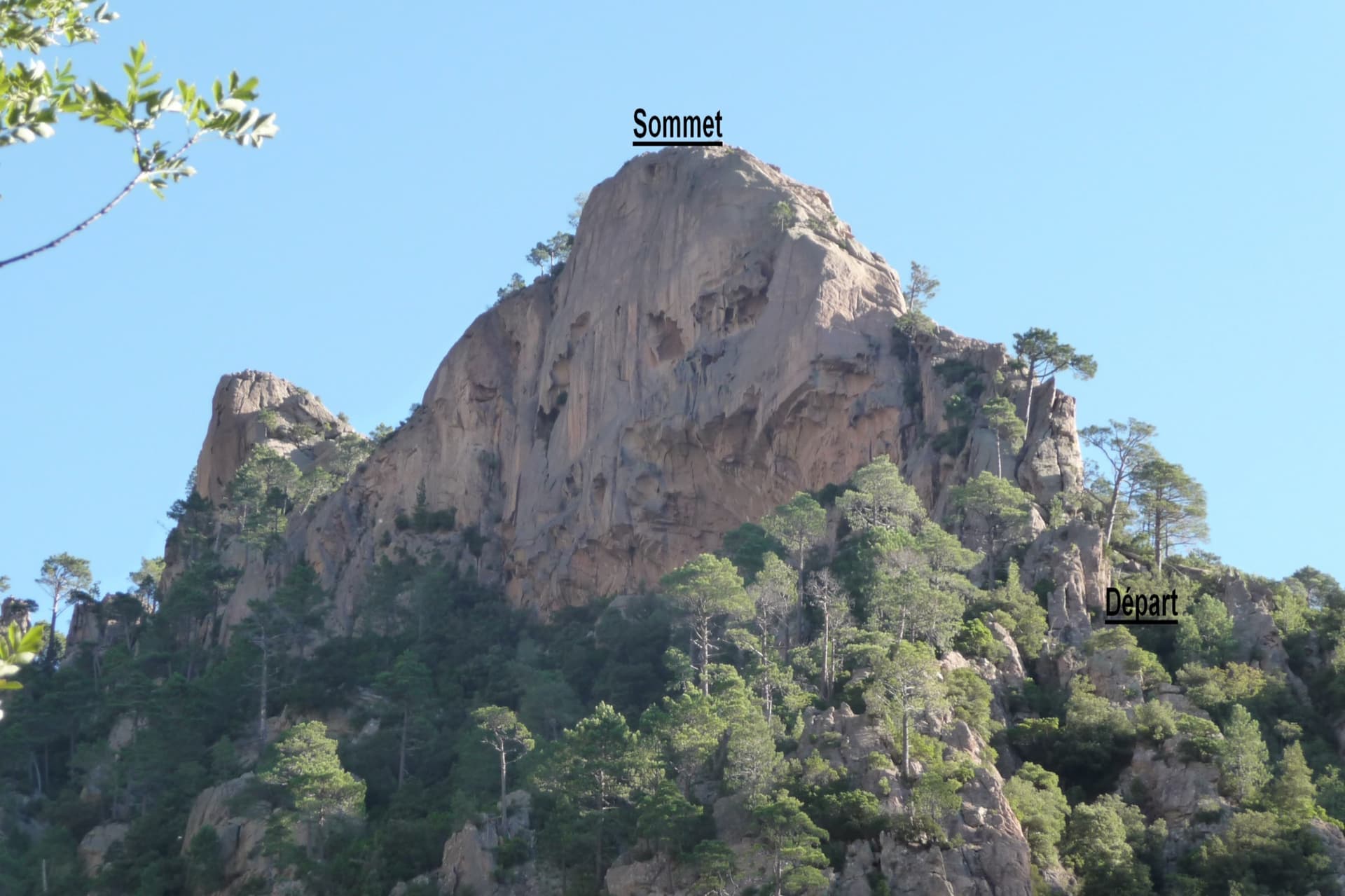
The Dente di a Purcaraccia above the Purcaraccia valley, with the start and summit of the south arête marked

France · Bavella

Iznogoud (Arête S)

An easy friction-slab route up the south arête of a small granite tooth above the Purcaraccia cascades: a slab and corner, a walk, then two pitches of clean, airy slab climbed mostly on your feet, and a scramble to a summit with a huge view. Parties find the grades generous. The approach is a long, beautiful walk past the pools, with a rougher finish through maquis.

5c+5 pitches130 m

Read the cautions

Looking up the slabs of the Punta d'Arghjavara, photographed on an ascent of Patience dans l'azur in April 2026

France · Bavella

Patience dans l'azur

The gentlest introduction to Bavella granite: twenty minutes from the road, well bolted by Corsican standards, and varied. An easy stepped first pitch, a holdless friction slab, a tafoni groove, a steep boulder start and traverse under overhangs, then a finish weaving through big tafoni. In the shade from mid-afternoon.

6a+5 pitches120 m

The lower friction slabs of the Punta d'Arghjavara, photographed on an ascent of Altore in April 2026

France · Bavella

Altore

Two long, easy friction slabs with a boulder move off the ground, then three pitches through steep tafoni with a long rising traverse and a choice of finish at 6a or 6b. Close to the road, sheltered from the west wind and a classic choice for uncertain weather. Sound rock; some find the slabs too easy to be memorable.

6b5 pitches150 m

Read the cautions

Around 6b · about 5 pitches

Similar elsewhere

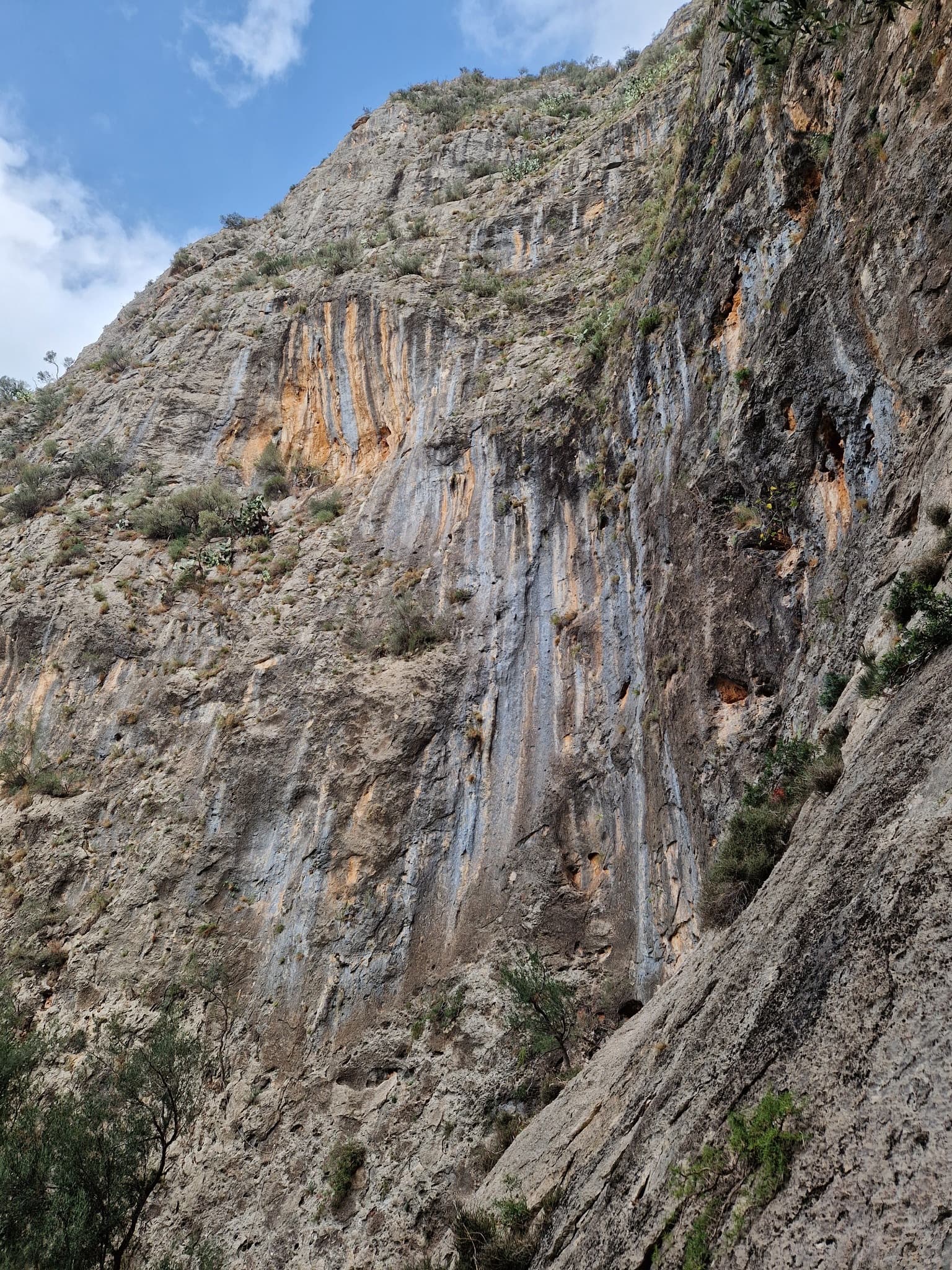
The back wall of the Princesa sector at Sa Gubia, looking left from the start of Sol Solet in October 2024. Princesa climbs this wall immediately left of Sol Solet; the line is not marked.

Spain · Mallorca (Sa Gubia)

Princesa

The route that gives the sector its name: five long, sustained and homogeneous pitches up the full height of the back wall of the bay, left of the vast orange scoop. Pockets, a technical fingery wall, a jug-covered bulge and a long traverse right near the top. Two of the lower belays are hanging stances.

6b5 pitches148 m

Read the cautions

Aerial view over Kematen to the south face of the Martinswand, with Zirl on the left. The Vorbau routes are on the lower slabs at the right-hand (eastern) end of the wall; the line is not marked.

Austria · Karwendel (Innsbruck Nordkette)

Beam me up Scotty

The harder twin of Flying Grass, climbing straight up from the same start. Delicate, polished slab low down with a short overhang on pitch 1, then steeper slab on good holds in the middle, and a shared finish.

6b5 pitches150 m

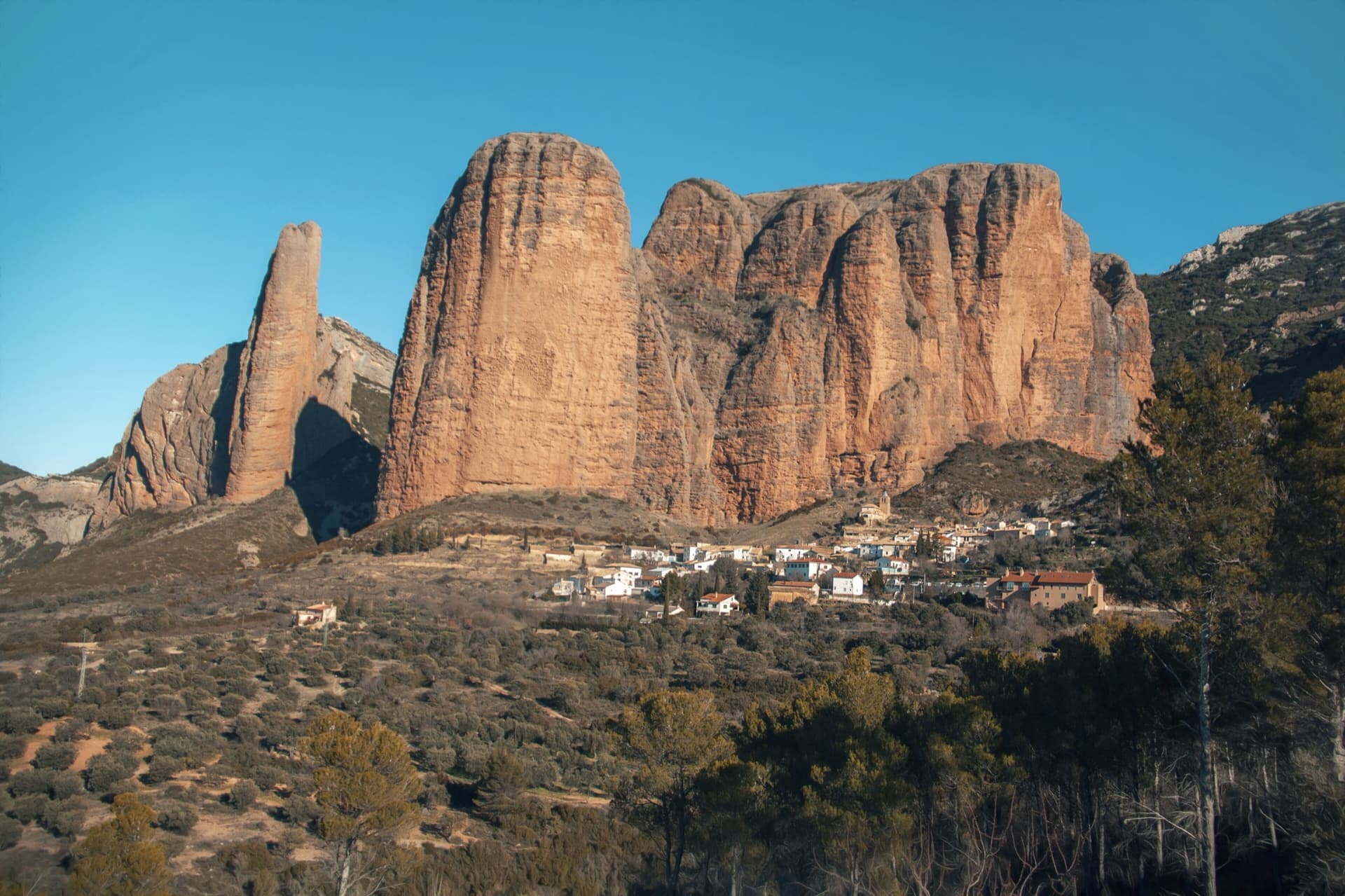
The classic view of Riglos from the south-west: the slender pinnacle of El Puro on the left, the great dome of Mallo Pisón beside it, and the main wall running right to La Visera above the village.

Spain · Riglos & Agüero (Mallos)

Chopper

A fine short route on the right edge of the Pisón, ending on a big terrace at half height. A vertical wall on small holds on pitch 3 and two hard moves on the last pitch.

6b5 pitches150 m

Read the cautions

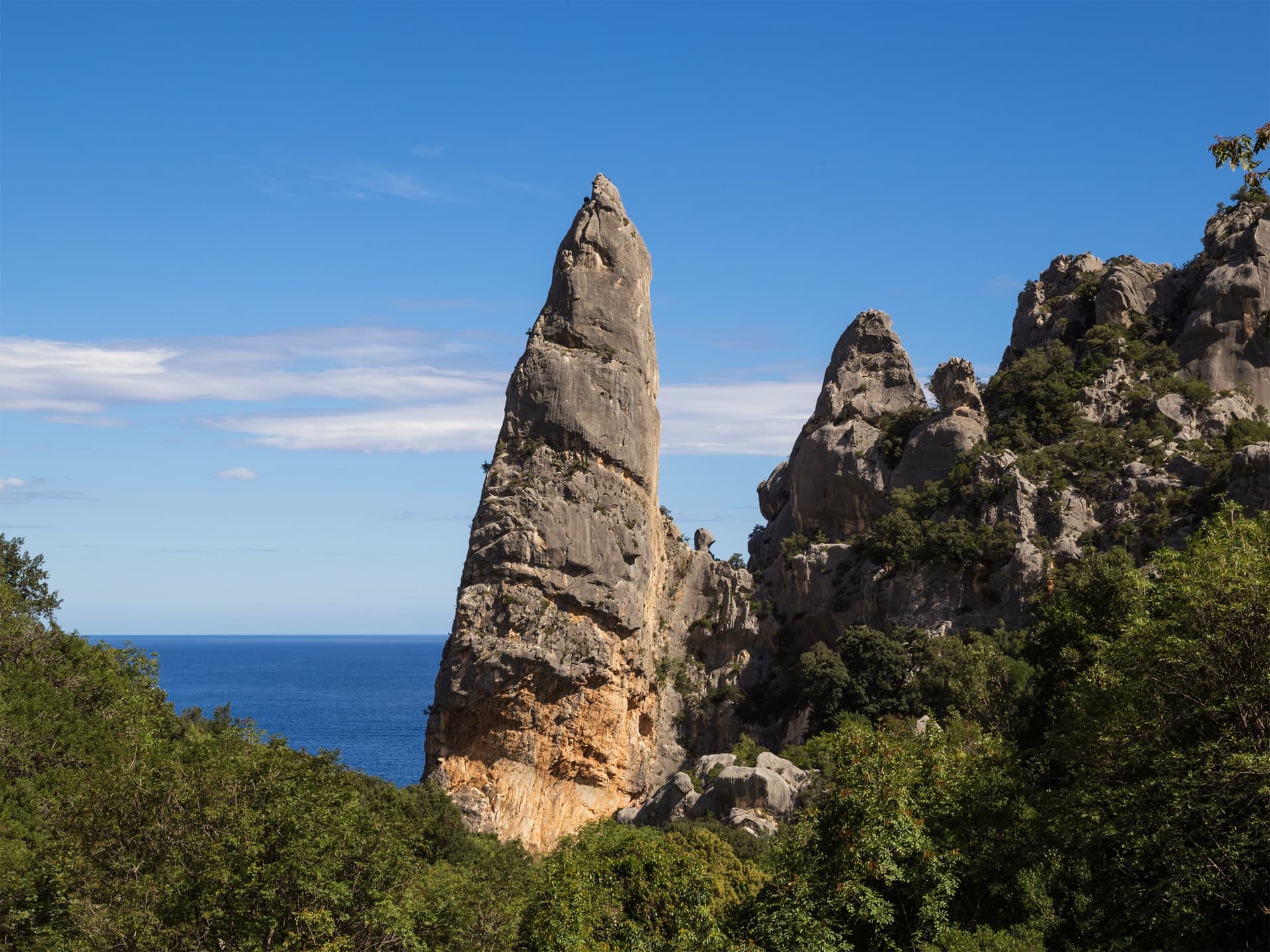
The Aguglia di Goloritzè, the 140 m limestone spire above Cala Goloritzè, seen from the approach path with the Gulf of Orosei behind.

Italy · Sardinia

Easy Gymnopédie

This is the easiest way to the top of Sardinia's iconic 140 m pinnacle above Cala Goloritzè. Short technical bulges and walls lead to a fine slab finish, and the harder overhangs can be aided. Gulliver splits it into 4 pitches; camptocamp gives 5. Check seasonal access rules for Cala Goloritzè before going.

6b5 pitches150 m

Read the cautions

Compiled from published sources and last verified October 2026. Bolts, anchors and access change. Climbing is dangerous and you are responsible for your own decisions: check a current topo and read the disclaimer.