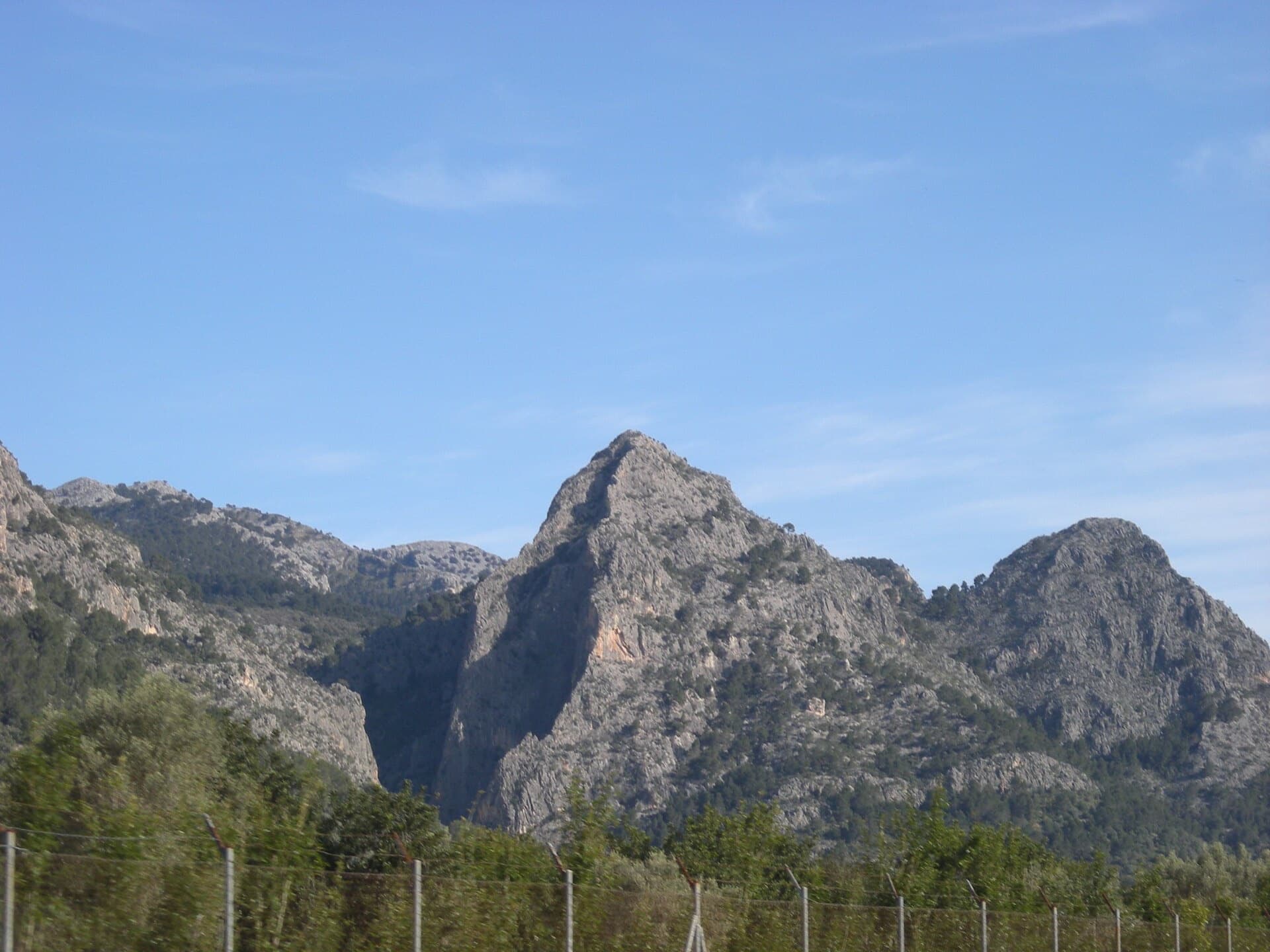
Spain · Mallorca (Sa Gubia)
Via Llum de Lluna
Technical, sustained wall climbing on positive holds up the left side of the Princesa wall, ending in a memorable powerful finish.
6b5 pitches216 m
Read the cautions
Sa Gubia – Sector Princesa · Mallorca (Sa Gubia) · Spain
Read the cautionsBail with caveatsBolting confidence: medium
The route that gives the sector its name: five long, sustained and homogeneous pitches up the full height of the back wall of the bay, left of the vast orange scoop. Pockets, a technical fingery wall, a jug-covered bulge and a long traverse right near the top. Two of the lower belays are hanging stances.
A bolted classic, recently rebolted at the crux, but with old first protection, hanging belays, awkward abseils and reported stonefall in wind.
The route
Princesa climbs the whole back wall of the Sa Gubia amphitheatre, starting on grey slabs below and left of the big orange scoop, in the middle of the single-pitch routes. It is in Rockfax's top 50 for the island and has 79 logged ascents on UKC. The second pitch used to go direct with one very hard move at 6c; the line now moves left past the steep section and a 2024 party found the rebolted crux climbs better at about 6a. Above, the climbing stays sustained on long pitches. Camptocamp's author judged the top of the route clean, with less stonefall risk than neighbouring lines.
The climbing
| Pitch | Grade | Notes |
|---|---|---|
| P1 | 6a | Straight up easy ground past a rusty stake and an old bolt (a sling on a tree in between is welcome) to the foot of the steep wall, then up pockets to a hanging belay below a steeper section. |
| P2 | 6b | Sustained, technical and fingery. Move left past the steep section and continue to a second hanging belay. The old direct line was 6c; the rebolted crux, slightly left, was found to be about 6a in 2024. |
| P3 | 5c | Superb climbing straight up. You soon pass a first hanging belay; a good ledge with trees about 15 m higher is far more comfortable. |
| P4 | 6a | A bulge on jugs, straight past the overhang to a ledge (optional stance), then traverse right to a small stance below a corner and overhang. |
| P5 | 5c | Traverse well right, about 8 m and well protected, to a belay on a ledge, then straight up a bulge on good pockets and left to the final belay at the clifftop. |
Getting there
From Palma drive north on the Ma-11 towards Sóller. Shortly after the junction where the Ma-2010 leaves for Bunyola there is a large car park by a restaurant, the usual parking for Sa Gubia. Mountain Project reports regular car break-ins: leave nothing in the car.
About 30 to 45 minutes from the car. Cross the road, walk back past the roundabout and take the small road that leaves the Ma-2010 past houses. The tarmac turns to dirt; just after a house with stables a dry stream bed crosses the track. Turn right up it and follow the cairns. Right-hand forks lead in turn to the Silicona, Excalibur, Isla Bonita, Princesa and Bomberos sectors, then Albahida. Princesa is on the back wall of the bay. Start on the grey slabs below and left of the orange scoop; belay at the tree line or scramble up to where the wall steepens. Sol Solet is the line of bolts immediately to the right.
Loading map
The point marks the crag, not the exact start of the route.
Point from Mountain Project sector point (Princesa, Sa Gubia), about 125 m from camptocamp waypoint 820495
Contains the route point. Opens in most mapping apps and GPS watches.
Points are compiled from published sources, with the precision stated above. They were not surveyed on the ground: check them against a current topo.
Coordinates: 39.69414, 2.67379 (crag)
Getting down
Abseil. Rockfax, single 70 m rope minimum: abseil from the top of Sol Solet to the belay it shares with Princesa, continue down Princesa to the tree-ledge stance, then to the top of the second pitch, then two more abseils to the ground. Camptocamp's author warns that a 60 m rope only just reaches R3 from above and that the rope can jam there; a ledge above and right of R3 has an anchor that belongs to another route. Parties on Sol Solet next door made three abseils of exactly 50 m with two ropes.
Retreat
Bail with caveats
Abseiling the route is the normal descent, so every stance can be used to retreat. The caveats are the rope: a 60 m single only just reaches between some stances and has jammed, and Rockfax asks for 70 m at least.
Safety
Sun and weather
West-facing. Rockfax says the crag is in shade most of the day; a May 2022 party found this route comes into the sun at about 13:30 to 14:00. The cirque can be windy.
Sun on the wall · W-facing
Working out the sunlit hours for this month.
Sun on the wallDaylight, wall in shade● Usual season
Estimated from the wall's aspect only. Ignores surrounding terrain, gullies and the wall's exact shape. Clock times are local to the wall (Central European time), for the 15th of each month.
| Measure | Jan (usual season) | Feb (usual season) | Mar (usual season) | Apr (usual season) | May (usual season) | Jun | Jul | Aug | Sep | Oct (usual season) | Nov (usual season) | Dec (usual season) |
|---|---|---|---|---|---|---|---|---|---|---|---|---|
| Mean daily high °C | 12 | 12 | 14 | 17 | 21 | 25 | 28 | 29 | 24 | 20 | 15 | 13 |
| Mean daily low °C | 7 | 7 | 8 | 10 | 14 | 17 | 20 | 21 | 18 | 15 | 11 | 8 |
| Rain days 1 mm or more | 7 | 7 | 6 | 6 | 5 | 3 | 2 | 3 | 7 | 9 | 9 | 8 |
● marks the usual climbing season. Averages for 1991-2020 at about 400 m. Area climate from Open-Meteo reanalysis. Temperatures are adjusted to the height of the crag; rain comes from a grid cell of about 10 to 25 km, and summer highs on sea cliffs can read a few degrees low. The wall and valley can differ. Data: Open-Meteo, CC BY 4.0.
What to carry
Quickdraws and a few slings (camptocamp); no nuts or cams. A 70 m rope at least, or two ropes. Helmet.
Derived from the route data; check it against a current topo
From climbers
Reader reports are not being collected yet. Until they are, check a current topo and the local club or guidebook publisher for recent changes to Princesa.
Worth knowing
Open questions
Provenance
Same area
Spain · Mallorca (Sa Gubia)
Technical, sustained wall climbing on positive holds up the left side of the Princesa wall, ending in a memorable powerful finish.
6b5 pitches216 m
Read the cautions
Spain · Mallorca (Sa Gubia)
A steady 6a sport line, the first bolt line right of the open-book corner on the Bomberos wall. A harder P2 variation ('Sonrisa Vertical') is available.
6a6 pitches152 m
Spain · Mallorca (Sa Gubia)
Steep walls of beautifully sculpted grey and orange limestone immediately right of Princesa, even at 6b from bottom to top. Rockfax calls it more adventurous than its neighbour. Several belays are hanging, and the pitches can be split or linked in many ways.
6b+5 pitches200 m
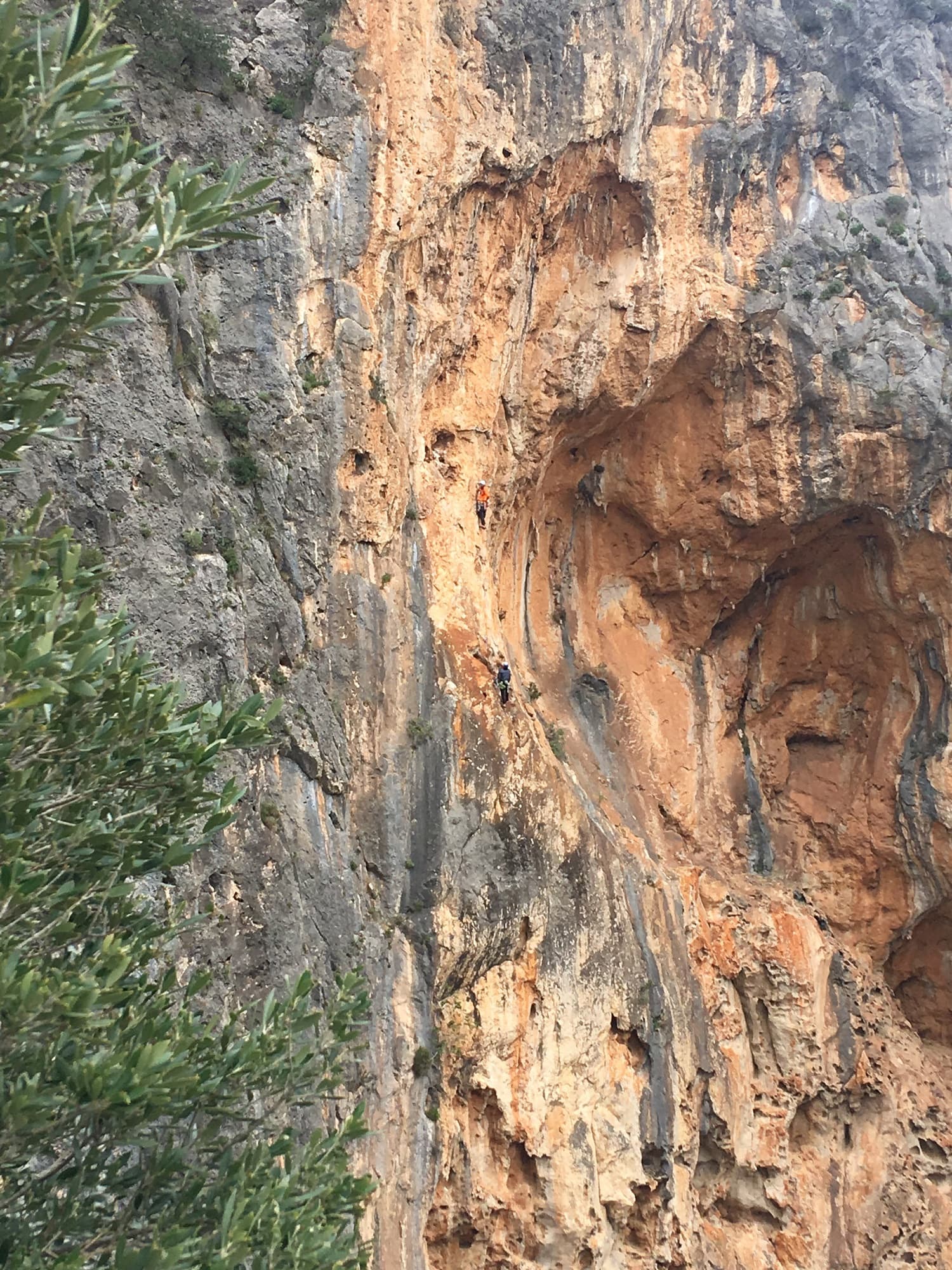
Spain · Mallorca (Sa Gubia)
The best line of clean rock up the huge left wall of the Sa Gubia amphitheatre, and a Rockfax top-50 route. Four long pitches, sustained at 6a to 6b but never desperate, starting up a big white tufa, with fine positions at the stances. The route stops below the ridge and you abseil.
6b4 pitches135 m
Around 6b · about 5 pitches
France · Bavella
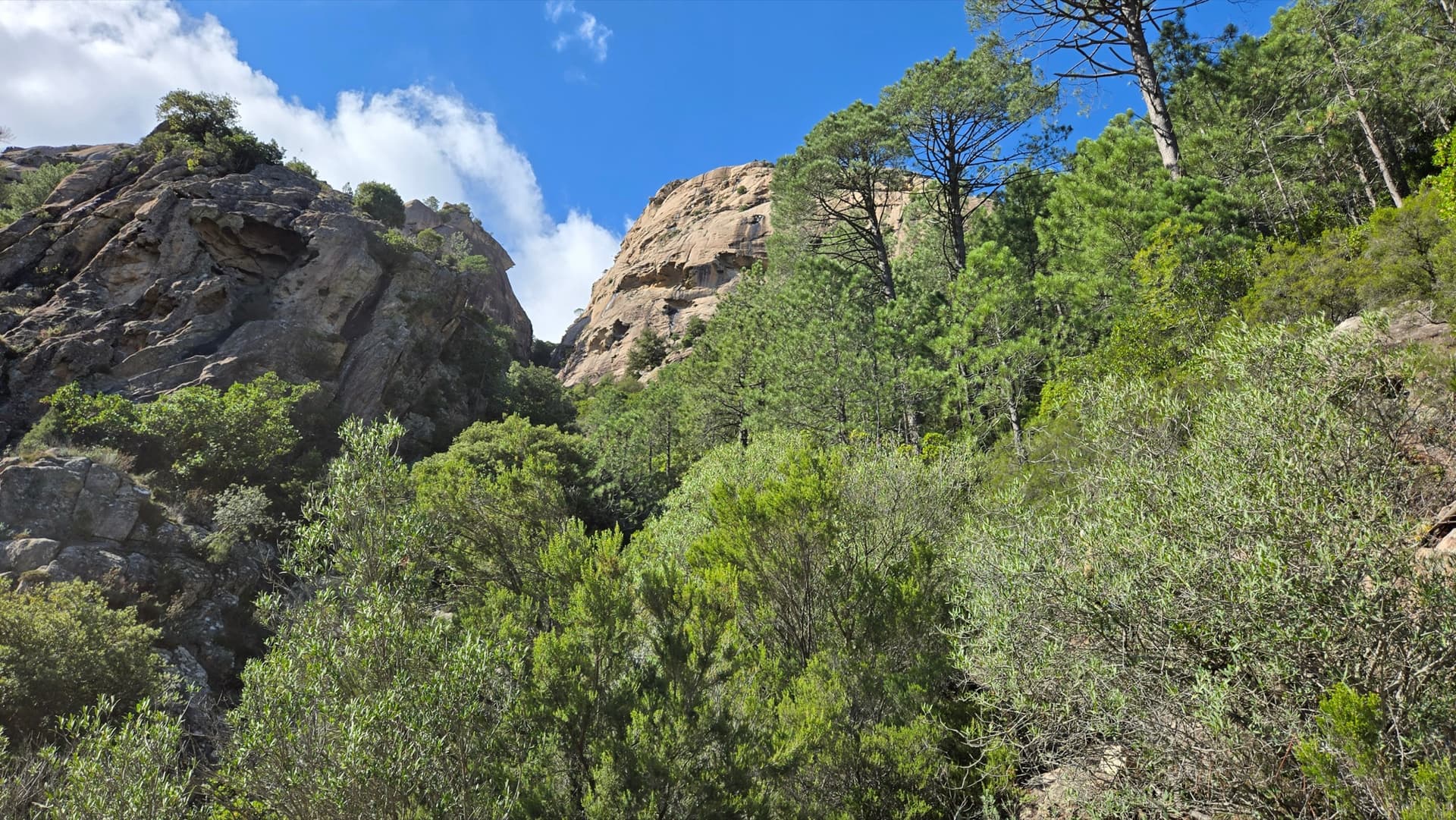
A concentrate of Bavella on orange granite: long pitches alternating pure friction slabs, walls and roofs of huge tafoni, a cracked corner and a final sequence of technical bulges. Sustained at 6a and 6a+ with rests on big ledges. Maurizio Oviglia calls it one of the most approachable and most recommendable routes in the massif.
6b5 pitches220 m
Read the cautions
Austria · Karwendel (Innsbruck Nordkette)
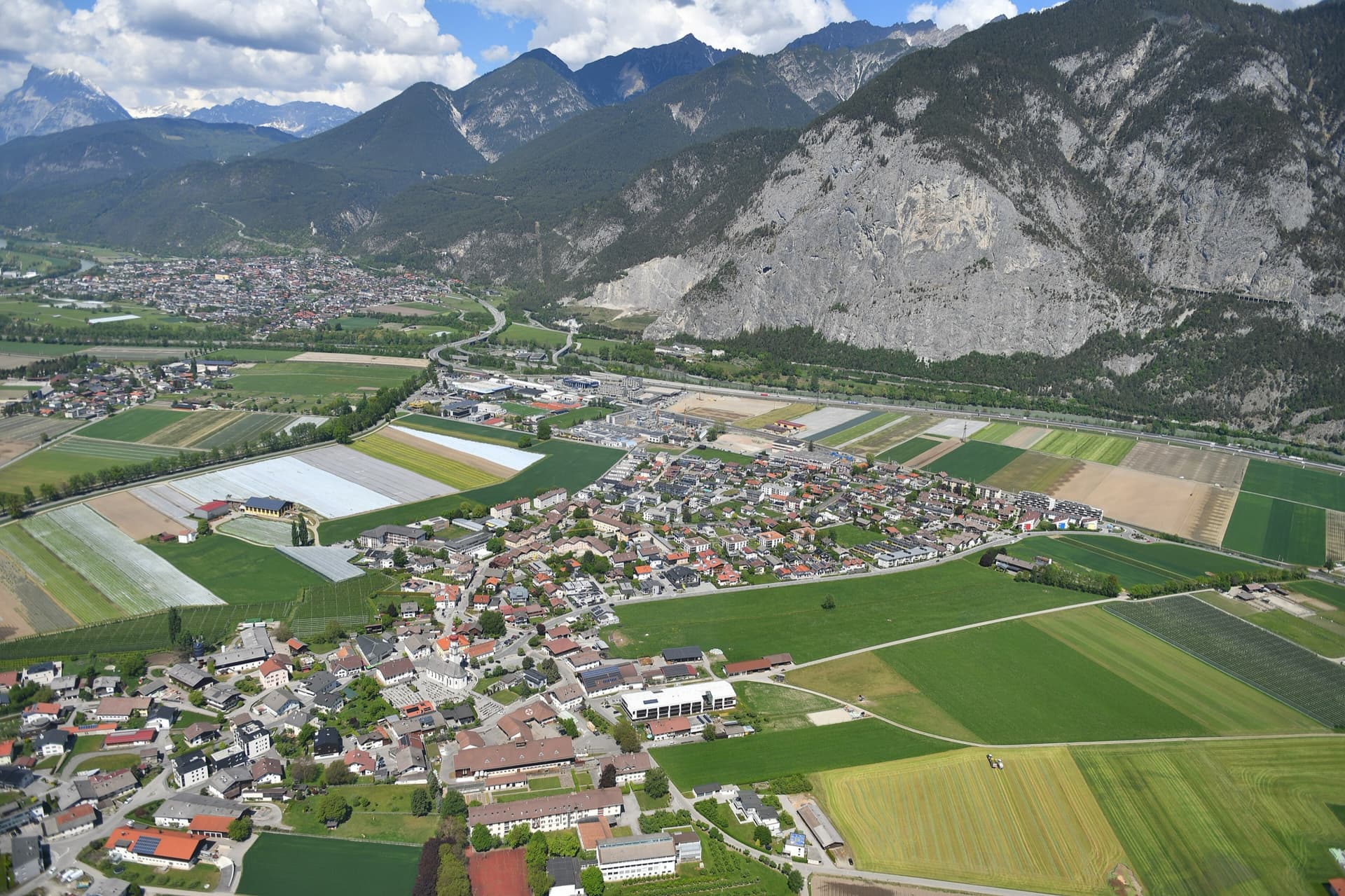
The harder twin of Flying Grass, climbing straight up from the same start. Delicate, polished slab low down with a short overhang on pitch 1, then steeper slab on good holds in the middle, and a shared finish.
6b5 pitches150 m
Spain · Riglos & Agüero (Mallos)
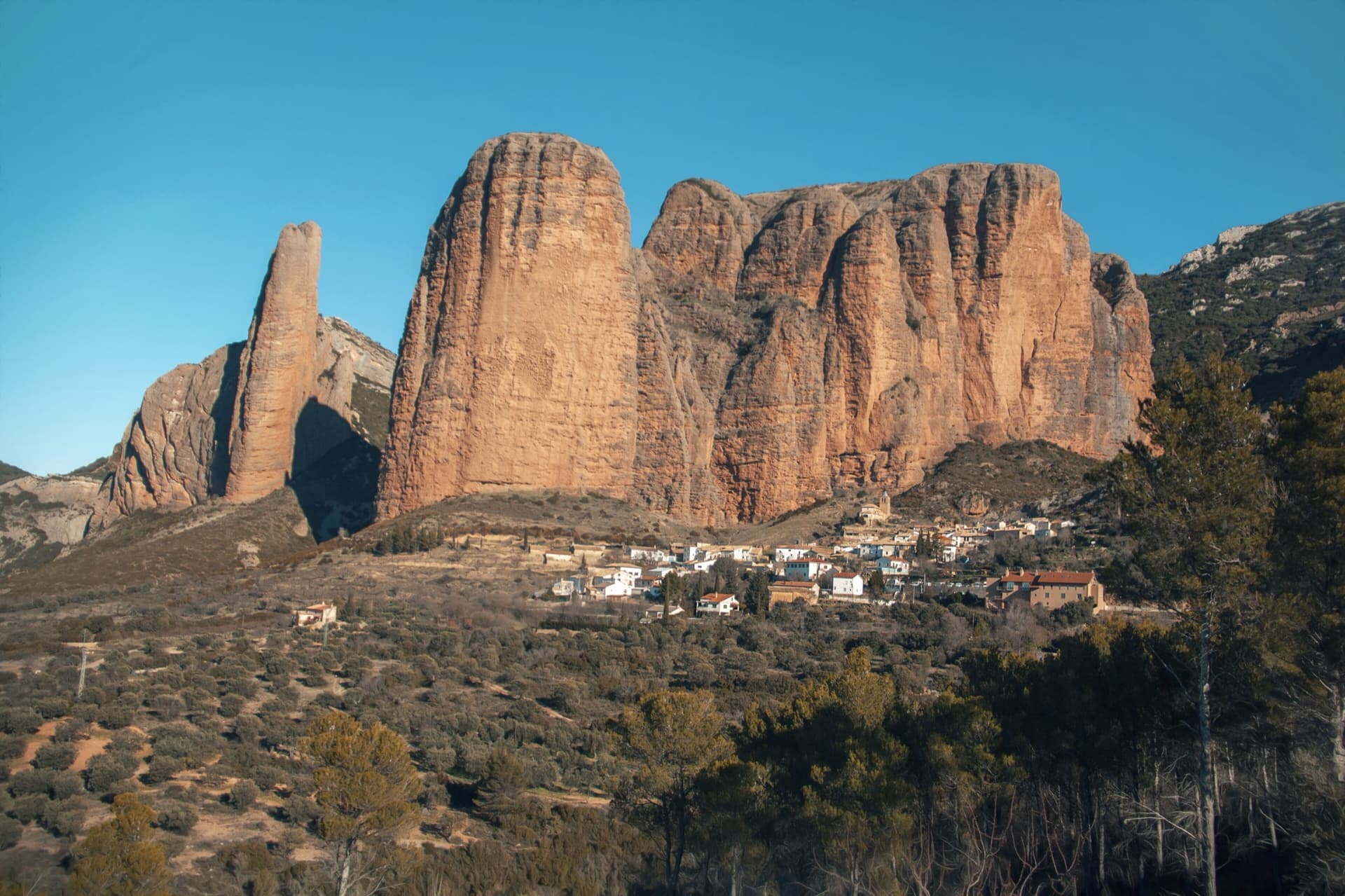
A fine short route on the right edge of the Pisón, ending on a big terrace at half height. A vertical wall on small holds on pitch 3 and two hard moves on the last pitch.
6b5 pitches150 m
Read the cautions
Italy · Sardinia
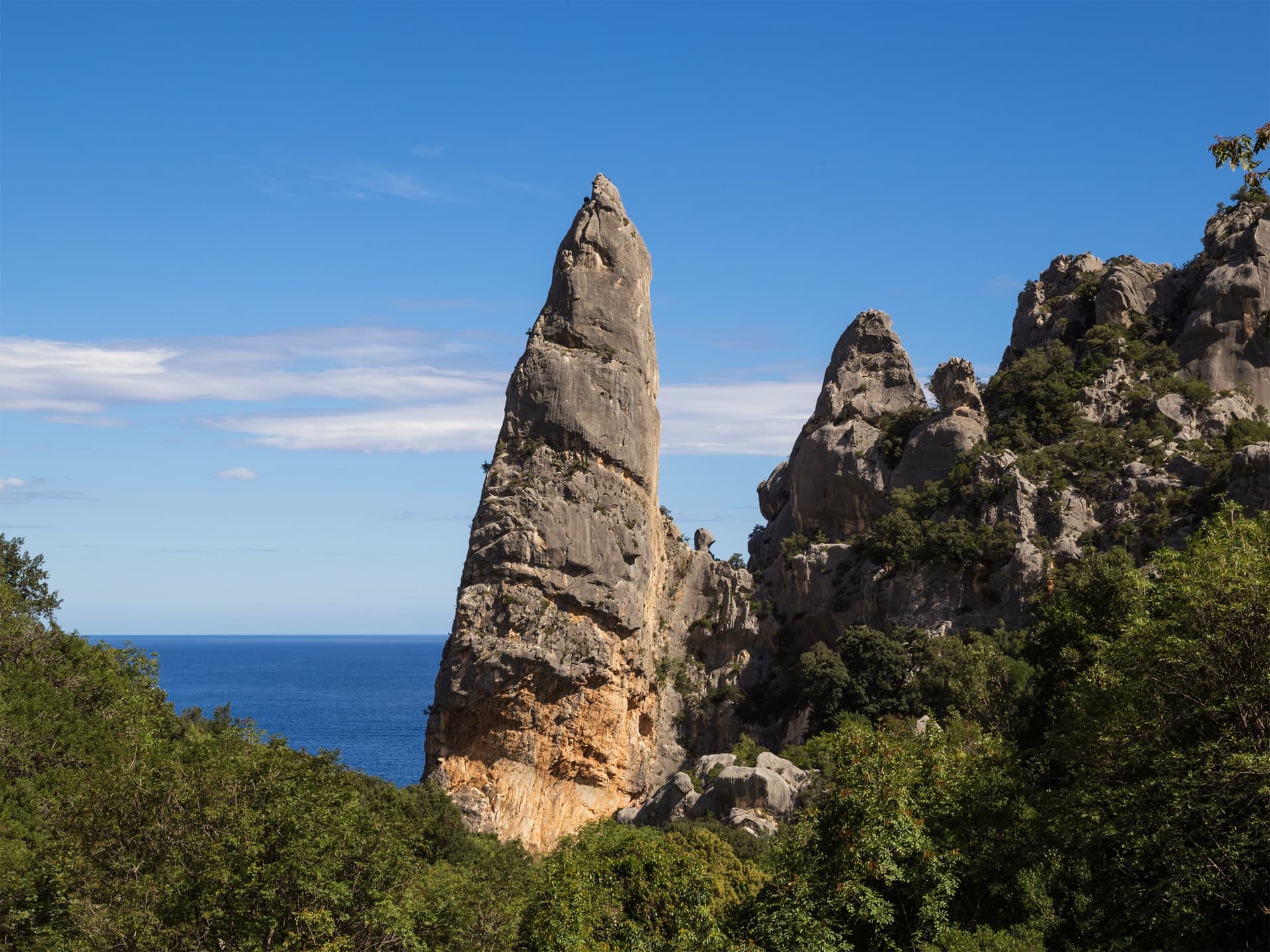
This is the easiest way to the top of Sardinia's iconic 140 m pinnacle above Cala Goloritzè. Short technical bulges and walls lead to a fine slab finish, and the harder overhangs can be aided. Gulliver splits it into 4 pitches; camptocamp gives 5. Check seasonal access rules for Cala Goloritzè before going.
6b5 pitches150 m
Read the cautions
Compiled from published sources and last verified October 2026. Bolts, anchors and access change. Climbing is dangerous and you are responsible for your own decisions: check a current topo and read the disclaimer.