
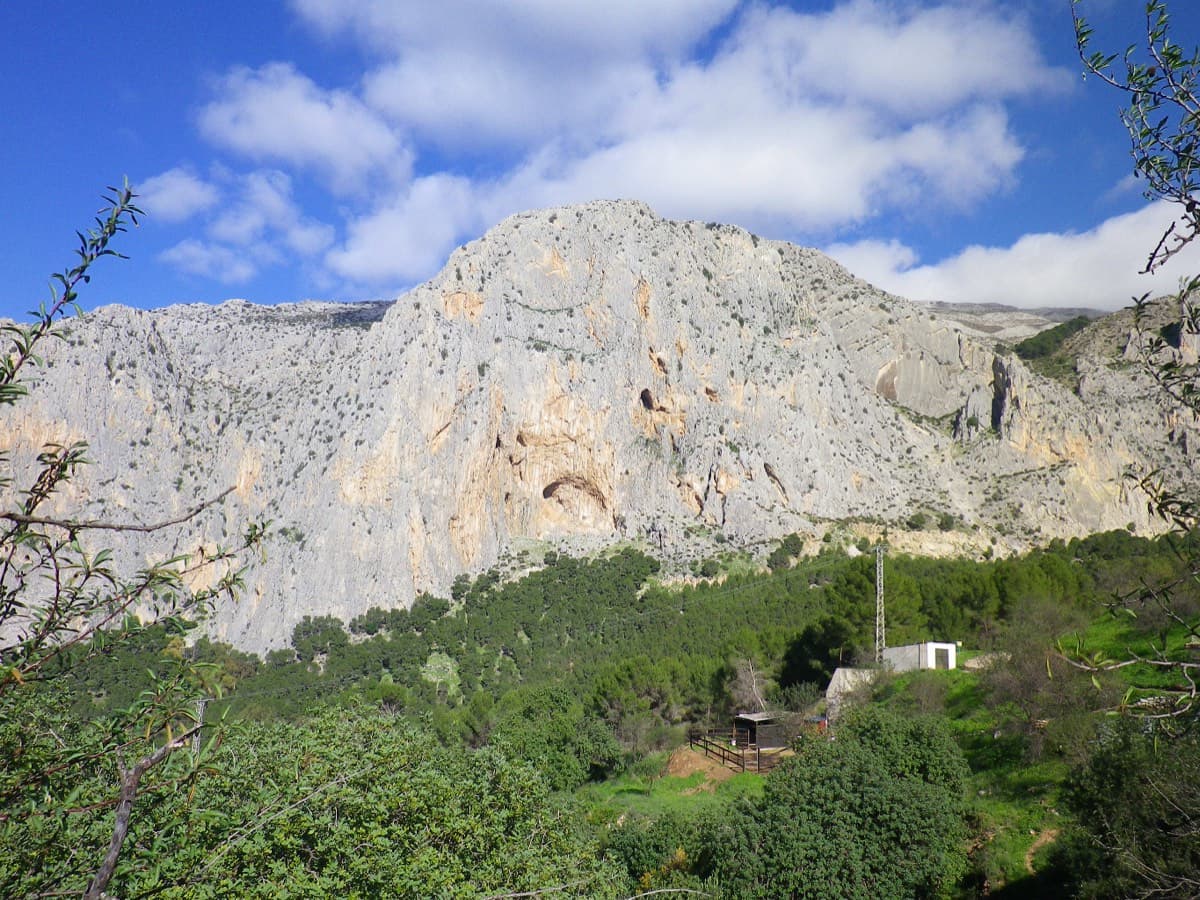
Spain · El Chorro
Estrella Polar
Ten varied pitches on good rock in a superb position: a roof, slabs, a tenuous traverse by a cave and a steep corner. Several pitches feel stiff for the grade, especially the P2 crux.
6b10 pitches279 m
Frontales (Amptrax sector) · El Chorro · Spain
Bail with caveatsBolting confidence: high
The absolute El Chorro classic: a physical, sustained line that feels tough for the grade, with a 6a traverse right under the roof. Polished in places from heavy traffic.
The route
Amptrax is the classic multipitch of the Frontales wall above El Chorro: nine pitches, about 180 m, with three 6a pitches in the middle and an exposed rightward traverse on P6. The climbing is physical and sustained and widely felt to be tough for 6a, and the popular lower pitches are polished. Older descriptions say you needed wires above the fifth pitch; current topos say it is now fully bolted to the top of P8, with the anchors replaced in 2020. Most parties abseil from P8 rather than do the loose final scramble and long walk-off.
The climbing
| Pitch | Grade | Length | Notes |
|---|---|---|---|
| P1 | 3 | 34 m | Scramble up and left on a ramp to the top of the pillar and a two-bolt belay below a big white streak. |
| P2 | 5+ | 30 m | Straight up through small corners with strenuous, unobvious moves, then traverse right to a two-bolt belay. Often linked with P3 using long slings. |
| P3 | 5+ | 15 m | Good jugs to a large ledge on the left with a bolted belay. |
| P4 | 6a | 15 m | Steepening white limestone on holds that are not always obvious, to a small bolted stance. Often linked with P5. A 2024 comment reports a possible loose block on this section of the route. |
| P5 | 6a | 24 m | Up and slightly left, then through a small bulge on positive edges. Often named the hardest and best pitch. This was the old sport-only high point. |
| P6 | 6a | 24 m | The exposed traverse right under the roof to a bolted stance. |
| P7 | 5+ | – | Up and right towards a big orange alcove and across it to a bolted stance. A 2012 description records no fixed gear and loose rock here; current topos say the route is now bolted to P8. |
| P8 | 4+ | – | Easier climbing to the anchor where Ebola arrives. Abseil from here or continue. |
| P9 | 3 | – | Optional. A steep unbolted scramble with a lot of loose stones to the top of the wall. |
Getting there
El Chorro village is the base, about 45 minutes from Málaga. A hire car is the easiest option; trains run often from Málaga María Zambrano to Álora and about once a day to El Chorro itself. For Frontales, park at the reservoir below the village, at Los Albercones (poor road) or at Las Encantadas. Do not drive or park inside the nature park where signs forbid it.
About 30 minutes on foot from the village. All Frontales sectors are reached by the road through the nature park and the path that runs along the base from Castrojo to Placas de la Cantera. For Amptrax, scramble up to the left-hand of the two big ledges (bays) of the sector; this bay holds Amptrax and Ebola. The scramble involves a few moves, so it is not ideal with children.
Loading map
The point marks the crag, not the exact start of the route.
Point from Mountain Project area 107107946 (Amptrax)
Contains the route point. Opens in most mapping apps and GPS watches.
Points are compiled from published sources, with the precision stated above. They were not surveyed on the ground: check them against a current topo.
Coordinates: 36.91342, -4.76039 (crag)
Getting down
Usual descent: from the P8 anchor abseil the line of Ebola (6b+), which was originally set up as the abseil line. Sources give 4 x 35 m abseils to the ground and say a single 70 m rope is enough and necessary. You can also abseil the route itself. Walk-off: top out via P9, scramble up and right to a notch in the skyline on poor rock, then either cross into the next valley and follow the stream bed down to a path back to the railway and village, or follow the ridge right to the Escalera Árabe. The path is not obvious; theTopo advises following its GPS trail, and a 2024 comment mentions walking left to a clearing and an abseil point marked with yellow paint.
Retreat
Bail with caveats
Yes, you can retreat by abseil, but it is not equally clean from every stance. Sources say the route itself can be abseiled on a single 70 m rope, and the usual descent from the P8 anchor is the Ebola abseil line (4 × 35 m). The exposed rightward traverse under the roof on P6 is the awkward part: abseiling from the stances around it will not follow the line you climbed.
Partly inferred from the route facts
Safety
Sun and weather
South-facing and sunny, so best from October to May and on cooler or cloudy days; too hot in summer. Dries quickly after rain. December to March is the busiest period and this is the most popular route on the wall, so expect queues and parties above.
Sun on the wall · S-facing
Working out the sunlit hours for this month.
Sun on the wallDaylight, wall in shade● Usual season
Estimated from the wall's aspect only. Ignores surrounding terrain, gullies and the wall's exact shape. Clock times are local to the wall (Central European time), for the 15th of each month.
Climate figures for El Chorro are not available yet
What to carry
Single 70 m rope. About 14 quickdraws is the usual El Chorro rack; take several long slings or extendable draws if you plan to link P2+P3 and P4+P5. Helmet. No trad gear needed below P8 according to current topos.
Derived from the route data; check it against a current topo
From climbers
Reader reports are not being collected yet. Until they are, check a current topo and the local club or guidebook publisher for recent changes to Amptrax.
Worth knowing
Open questions
Provenance
Same area
Spain · El Chorro
Ten varied pitches on good rock in a superb position: a roof, slabs, a tenuous traverse by a cave and a steep corner. Several pitches feel stiff for the grade, especially the P2 crux.
6b10 pitches279 m
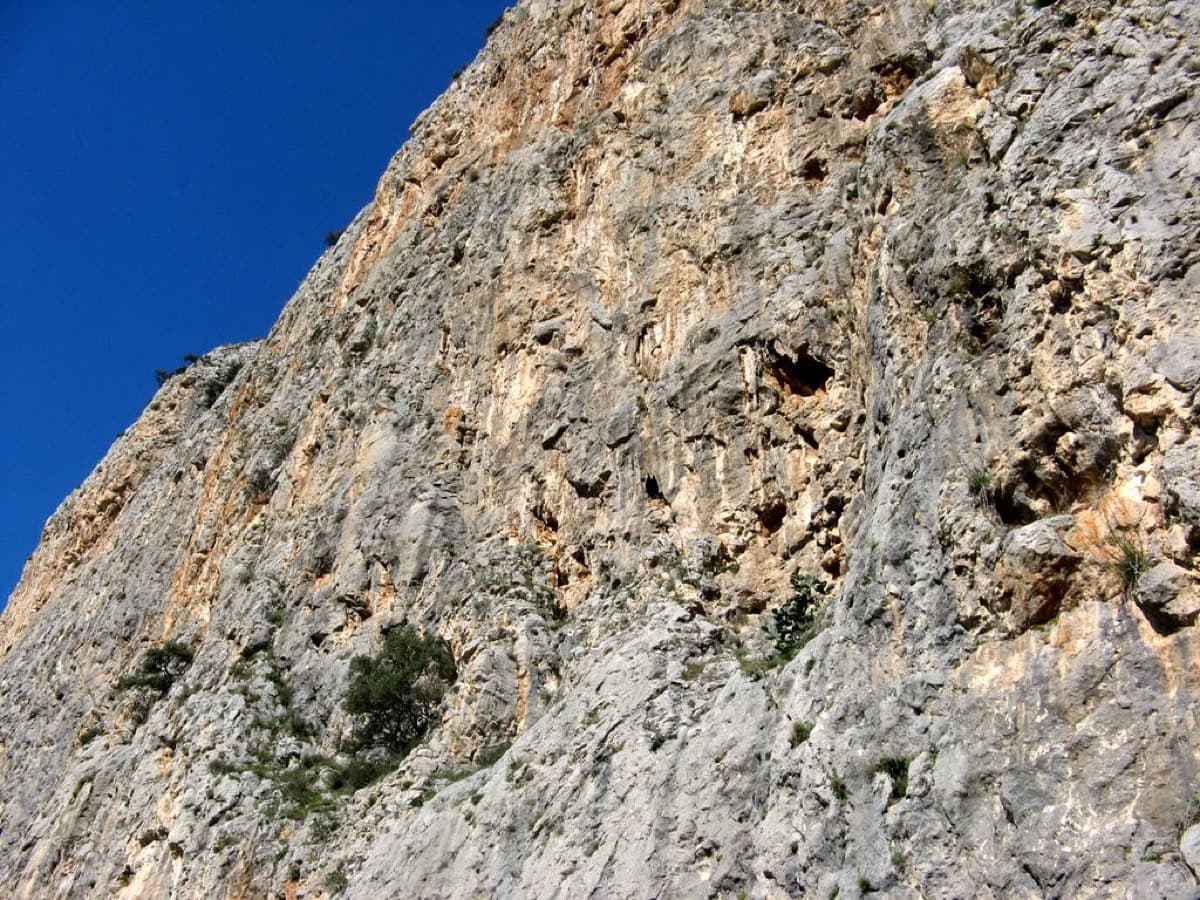
Spain · El Chorro
An airy, exposed adventure on clean, solid rock: the best long easy route on the Frontales and an ideal first big multipitch.
5+8 pitches251 m
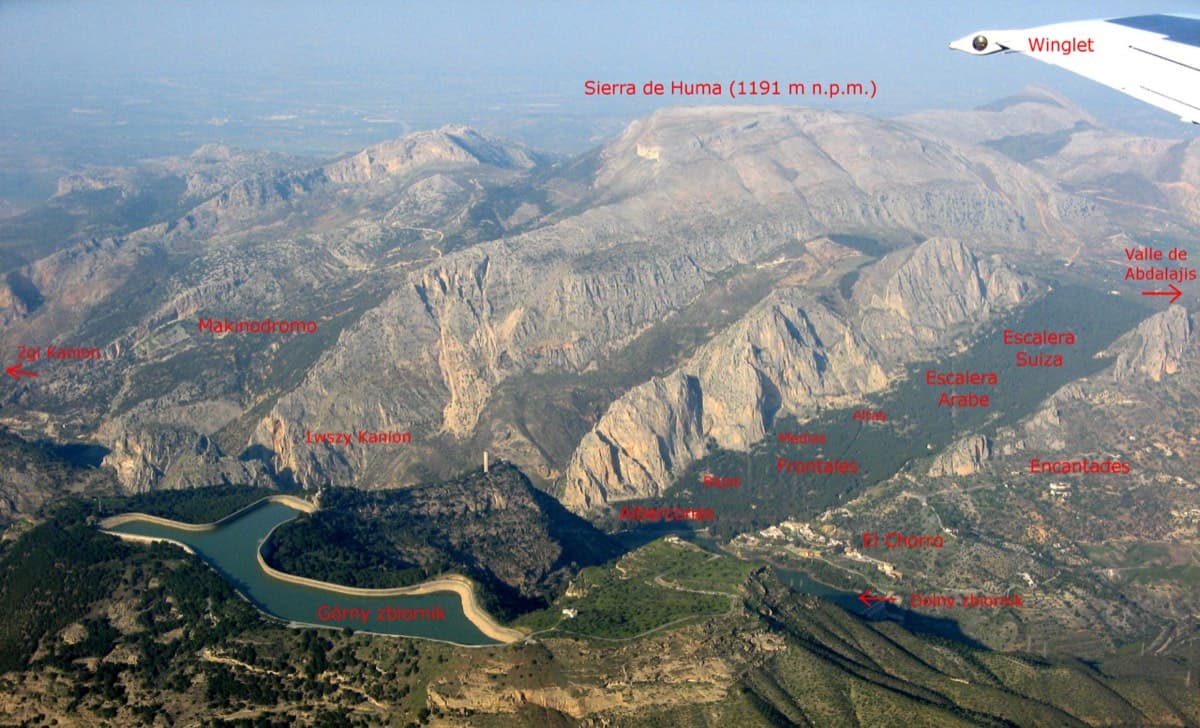
Spain · El Chorro
The longest easy line in El Chorro. It starts up a broken corner-ramp, then climbs a steeper wall trending right to the top. It's uncommitting and easy to link pitches, with some loose rock to watch for.
5c12 pitches310 m
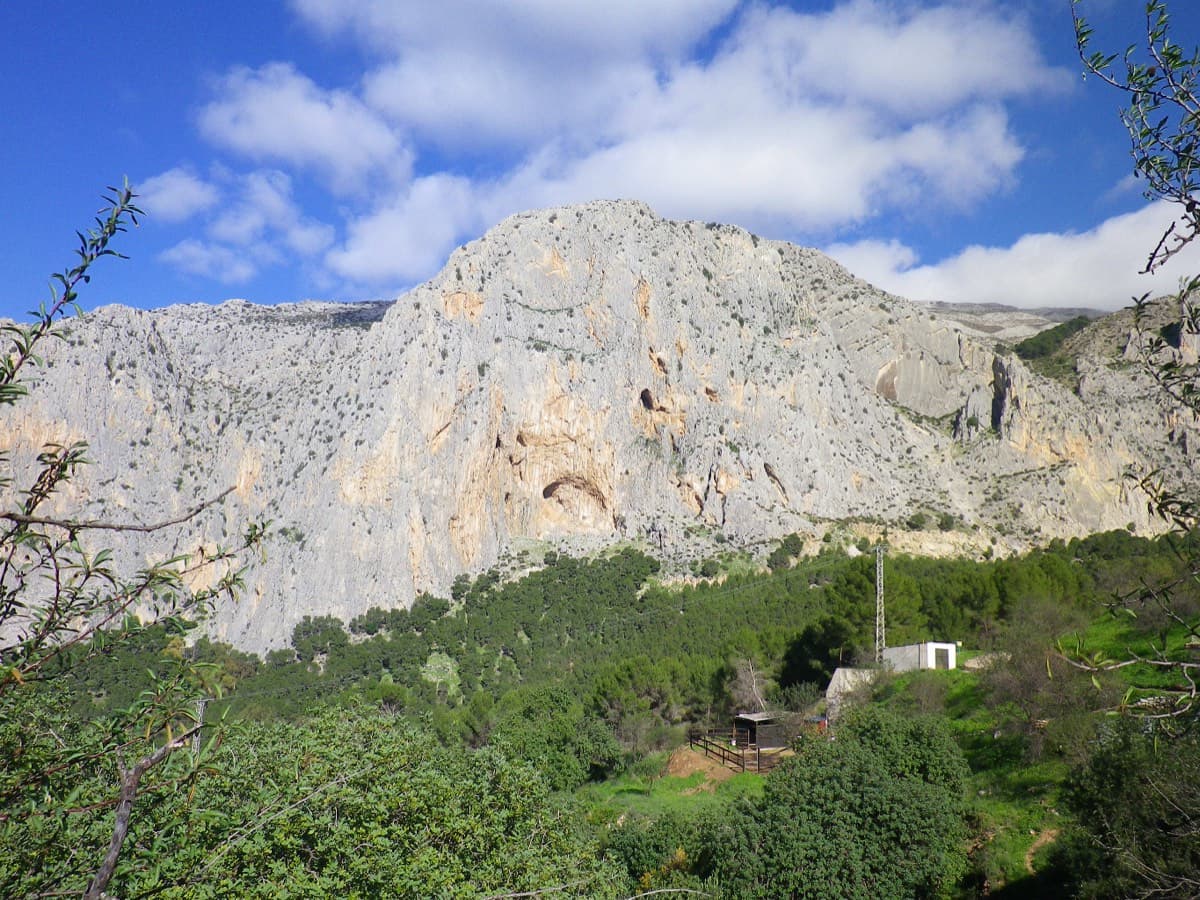
Spain · El Chorro
A good continuation above Nitti. Highlights are a short, thin 6b slab on P4 and a pumpy steep start to the final 6a+ pitch.
6b6 pitches138 m
Read the cautions
Around 6a · about 9 pitches
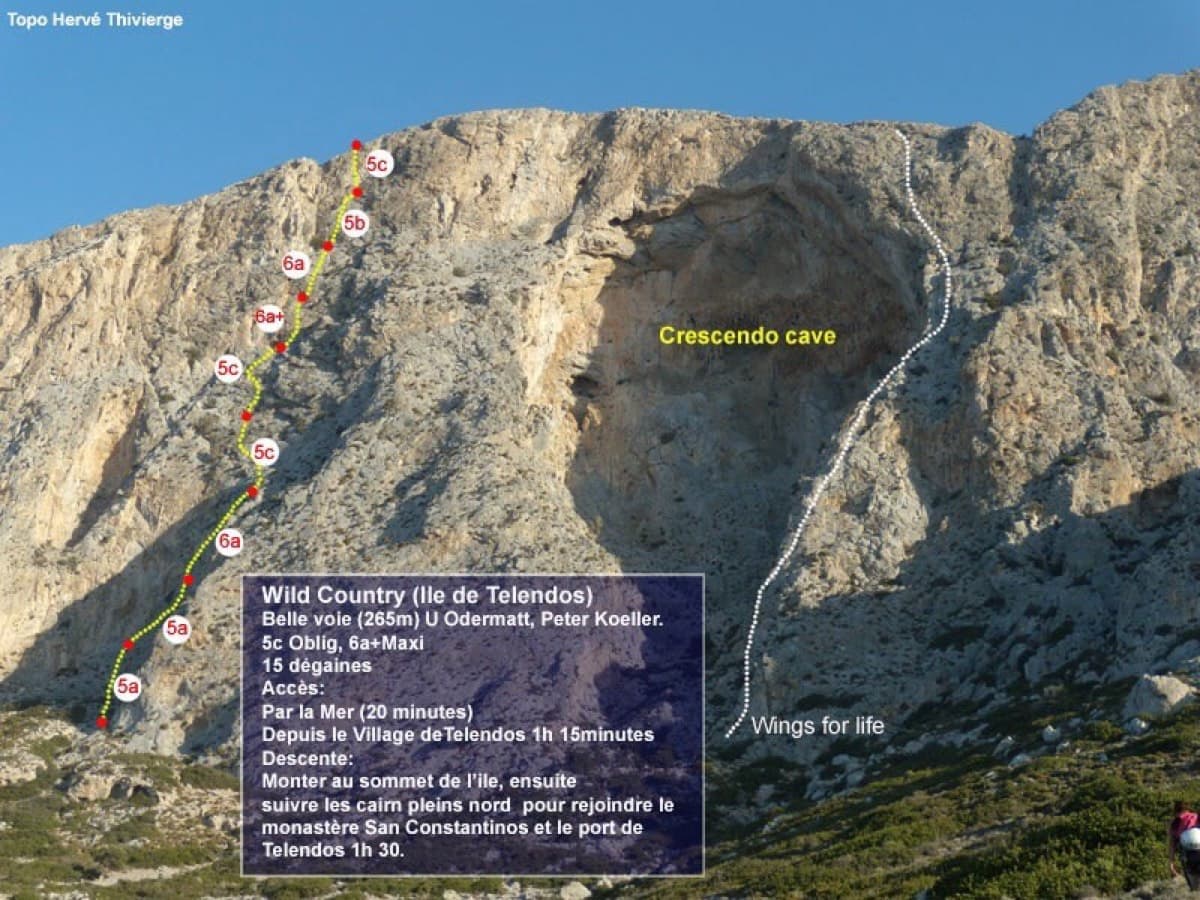
Greece · Kalymnos & Telendos
A sustained, varied line on sculpted limestone. It starts with an easy slab and builds to slightly overhanging jugs with huge exposure on the top pitch. Mountain Project and camptocamp grade the crux 6a+ (Rockfax says 6a). With a 70 m rope you can link several pairs of pitches.
6a9 pitches265 m
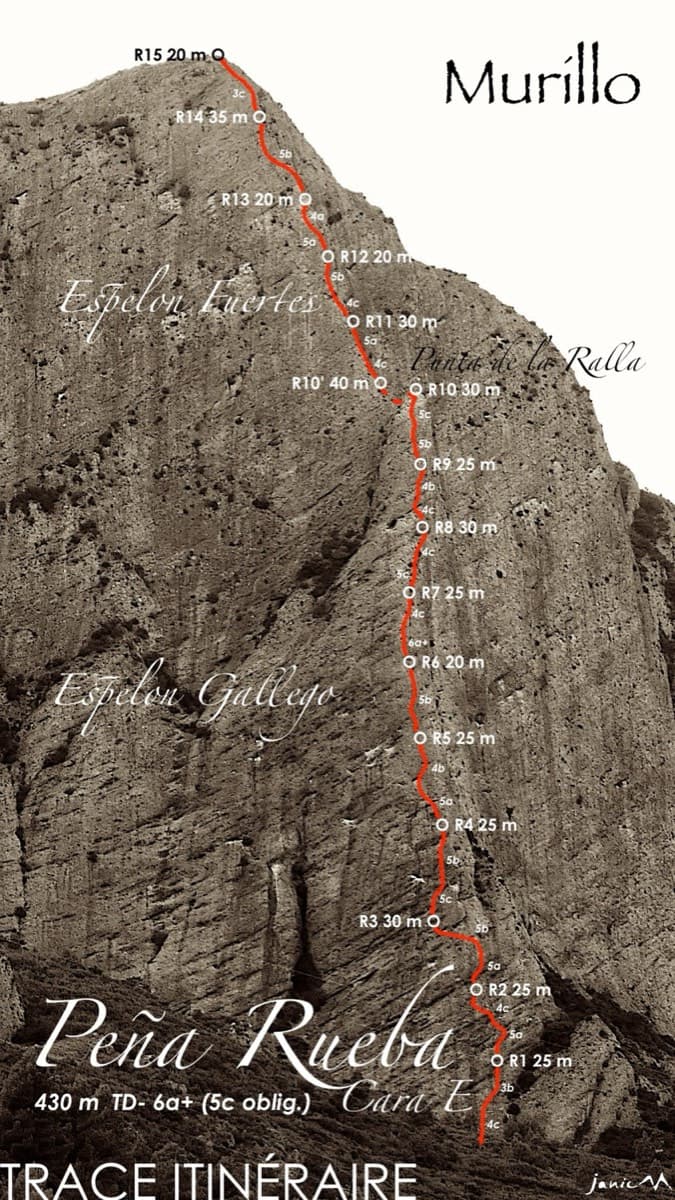
Spain · Riglos & Agüero (Mallos)
An airy spur with sustained 5b–5c climbing, a single 6a step on pitch 7, and big views over the Mallos de Riglos and the Pyrenees.
6a9 pitches230 m
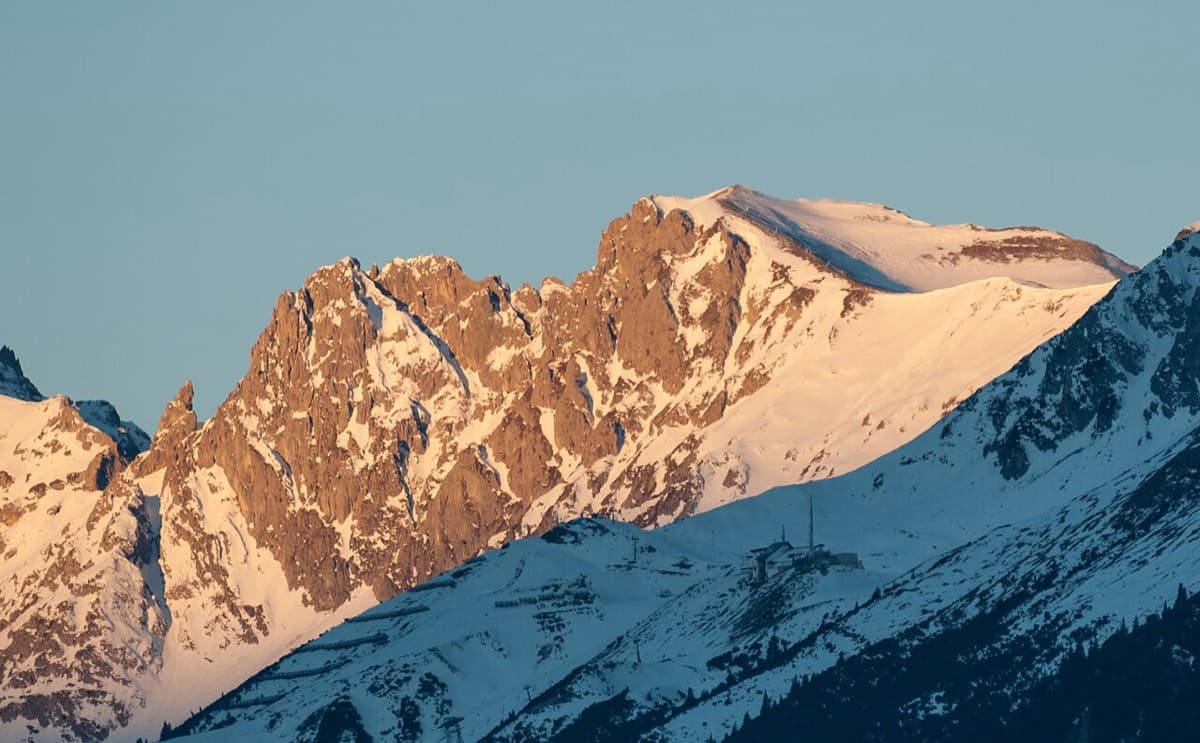
Austria · Karwendel (Innsbruck Nordkette)
A plaisir line straight above Innsbruck, reached by cable car. Two pitches are UIAA 6-/6 (5+/A0) and the rest is mostly grade 4–5. The upper pitches are grassy, so avoid it when wet.
6a9 pitches300 m
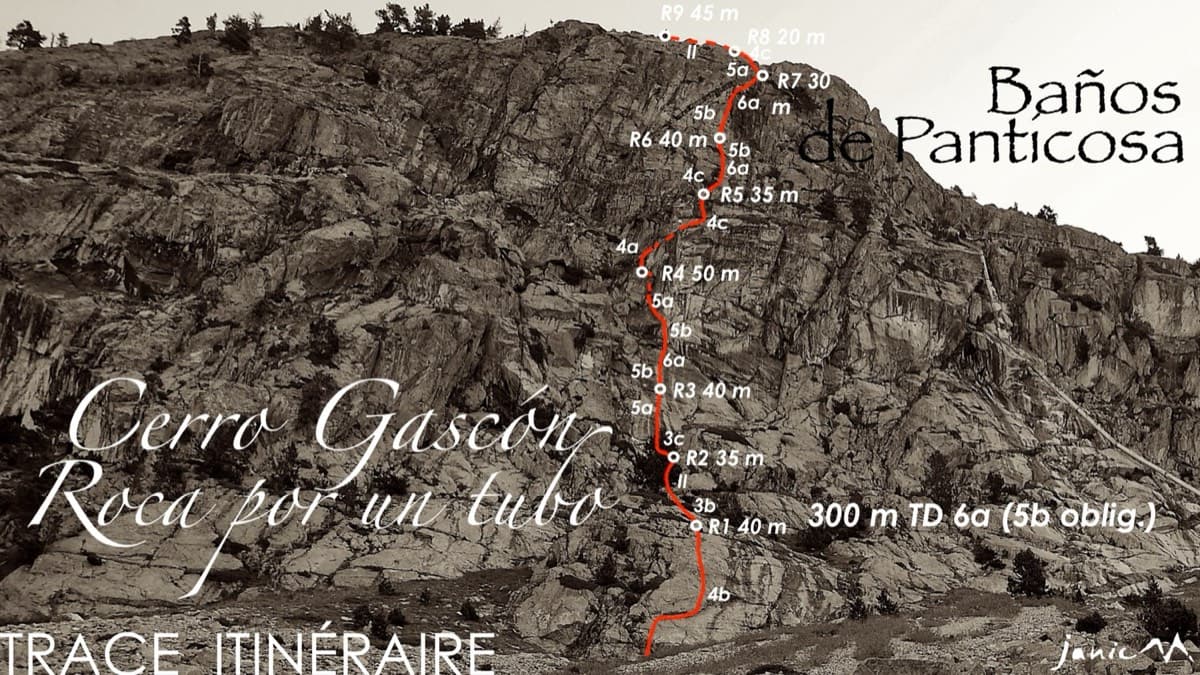
Spain · Aragonese Pyrenees (Tena & Canfranc valleys)
High-mountain granite slabs and dihedrals above the Panticosa spa. Three 6a cruxes mix friction slab with a short flaky roof on pitch 7.
6a9 pitches300 m
Read the cautions
Compiled from published sources and last verified October 2026. Bolts, anchors and access change. Climbing is dangerous and you are responsible for your own decisions: check a current topo and read the disclaimer.