Multipitch Atlas

Aramis

Kokkinovrachos (right-hand part of the main wall) · Leonidio & Kyparissi · Greece

Easy to bailBolting confidence: high

Six sustained pitches up the red wall above Leonidio, four of them 6c. The climbing is steep and on good holds, with a 3 m boulder problem on the last pitch and a long 6a+ to start. The bolts are close enough to let you concentrate on the moves.

Hardest pitch
6c
Pitches
6
Length
200 m
Approach
30 min
Aspect
S
South-facing
Rope
2×50 m

The route

Overview

Aramis takes the right-hand part of the main Kokkinovrachos wall, starting exactly where the approach path meets the cliff. It is homogeneous: after a long 6a+ first pitch every pitch is 6b or 6c on steep red and grey limestone. The route was put up by Yves Remy and Christophe Simeon and is bolted throughout, with parties in 2019 and 2022 both rating the rock and the equipment as excellent. You should be solid at 6b between bolts; camptocamp gives 6b as the obligatory grade.

The climbing

Pitch by pitch

Pitches of Aramis
PitchGradeLengthBoltsNotes
P16a+48 m14 boltsEasy start on grey rock, then quickly steep on good holds. Finish slightly left.
P26c25 m–Sustained. Starts with a 2 m traverse right.
P36b45 m14 boltsA few easy metres horizontally left, then a long left-trending diagonal. Sustained without a distinct hard move.
P46c25 m–Starts on fragile rock, with one harder move.
P56c25 m–A steep wall of water-drop pockets, then big sculpted holds.
P66c40 m12 boltsA 3 m bouldery 6c section, then continuous climbing on orange rock. The best pitch.

Getting there

Approach

To the parking

Base yourself in Leonidio, on the east coast of the Peloponnese. Kokkinovrachos is the red wall directly above the town. You can walk from the village following the signs for Kokkinovrachos, or use the Douvari parking on the Vaskina road and traverse right along the foot of the wall.

On foot · about 30 min

Approach from below as for the Douvari sector, then head right along the foot of the wall. The route starts exactly where the path reaches the cliff, and the name is painted in red at the base. Parties walking from the village to neighbouring routes report 30 to 40 min. You can also reach the route from the plateau by abseiling it or a neighbour; the route names are painted on the rock at the top.

Finding the route · 2 photos

Approach photo

Map of the walk-in

  • Crag

Loading map

The point marks the crag, not the exact start of the route.

Coordinates · crag

37.17236, 22.85832

Point from OpenStreetMap node 13450285322 (Ramisi rock, Kokkinovrachos)

For your phone or watch

Download GPX

Contains the route point. Opens in most mapping apps and GPS watches.

Points are compiled from published sources, with the precision stated above. They were not surveyed on the ground: check them against a current topo.

Getting down

Descent

The route can be abseiled directly. camptocamp lists the stations from the top as R6, R5, R4 and so on, and asks for two ropes of at least 50 m. A March 2019 party chose to walk instead: go right along the top to a line of two abseils, then a path. They warn that the second of those abseils is 40 m, not the 30 m printed in their topo. Mazi parties use Aramis as their abseil line as well, so expect company.

Retreat

Bailing off the route

Easy to bail

Abseiling the route is a normal descent and it is also used as the abseil line for the neighbouring route Mazi, so every belay is set up for it. You need two ropes of at least 50 m.

Retreat from
Any belay, according to camptocamp's description of the abseil line from R6 downwards.
Point of no return
None documented.
Carry
Two ropes of at least 50 m.
Basis
Stated in the sourcescamptocamp states the descent is by abseil down the route and a 2019 party confirms the route can be abseiled directly. The individual abseil lengths are not published.

Safety

Hazards

  • Pitch 4 starts on fragile rock.
  • If you walk off and use the two-abseil line to the right, the second abseil is 40 m; a 2019 party found their guidebook topo gave 30 m.
  • Other parties may abseil the line while you climb, including parties descending from Mazi.

Sun and weather

Conditions

South facing and low (the crag is at about 420 m), so this is a winter-sun wall: the crag record lists November to March. A party on 1 March 2019 found it hot at the base with a breeze from pitch 1 upwards. A May 2022 party climbed it in fine weather without comment on heat, but neighbouring routes on this wall are reported as too hot from late morning even in November.

Usual season · Jan to Apr, Oct to Dec

Sun on the wall · S-facing

Working out the sunlit hours for this month.

  • January (usual season): not yet worked out
  • February (usual season): not yet worked out
  • March (usual season): not yet worked out
  • April (usual season): not yet worked out
  • May: not yet worked out
  • June: not yet worked out
  • July: not yet worked out
  • August: not yet worked out
  • September: not yet worked out
  • October (usual season): not yet worked out
  • November (usual season): not yet worked out
  • December (usual season): not yet worked out

Sun on the wallDaylight, wall in shade● Usual season

Estimated from the wall's aspect only. Ignores surrounding terrain, gullies and the wall's exact shape. Clock times are local to the wall (Greek time), for the 15th of each month.

Climate figures for Leonidio & Kyparissi are not available yet

What to carry

Gear

15 quickdraws and two ropes of at least 50 m (camptocamp). No trad gear is mentioned by any source. Helmet.

Checklist

Quickdraws
15
Rope
2×50 m
Helmet
One each
Abseil device and prusik
The descent or the retreat involves abseiling

Derived from the route data; check it against a current topo

From climbers

Reader reports

Reader reports are not being collected yet. Until they are, check a current topo and the local club or guidebook publisher for recent changes to Aramis.

Worth knowing

Tips

  • A May 2022 party logged about 5 hours for the round trip.
  • The first and third pitches are 45 to 48 m, so 15 quickdraws are not excessive.
  • Start early in warm weather; the wall concentrates the sun.

Open questions

Where sources disagree

  • Pitch count and grades: the French camptocamp text gives six pitches (6a+, 6c, 6b, 6c, 6c, 6c). The older Spanish text gives five (6a+, 6b, 6b, 6b+, 6c). The French text is more detailed and is followed here.
  • First ascent year: 2015 (French text) against 2014 (Spanish text).
  • Pitch lengths add up to 208 m; camptocamp's headline height is 200 m.

Provenance

Sources

Same area

More in Leonidio & Kyparissi

All routes in Leonidio & Kyparissi
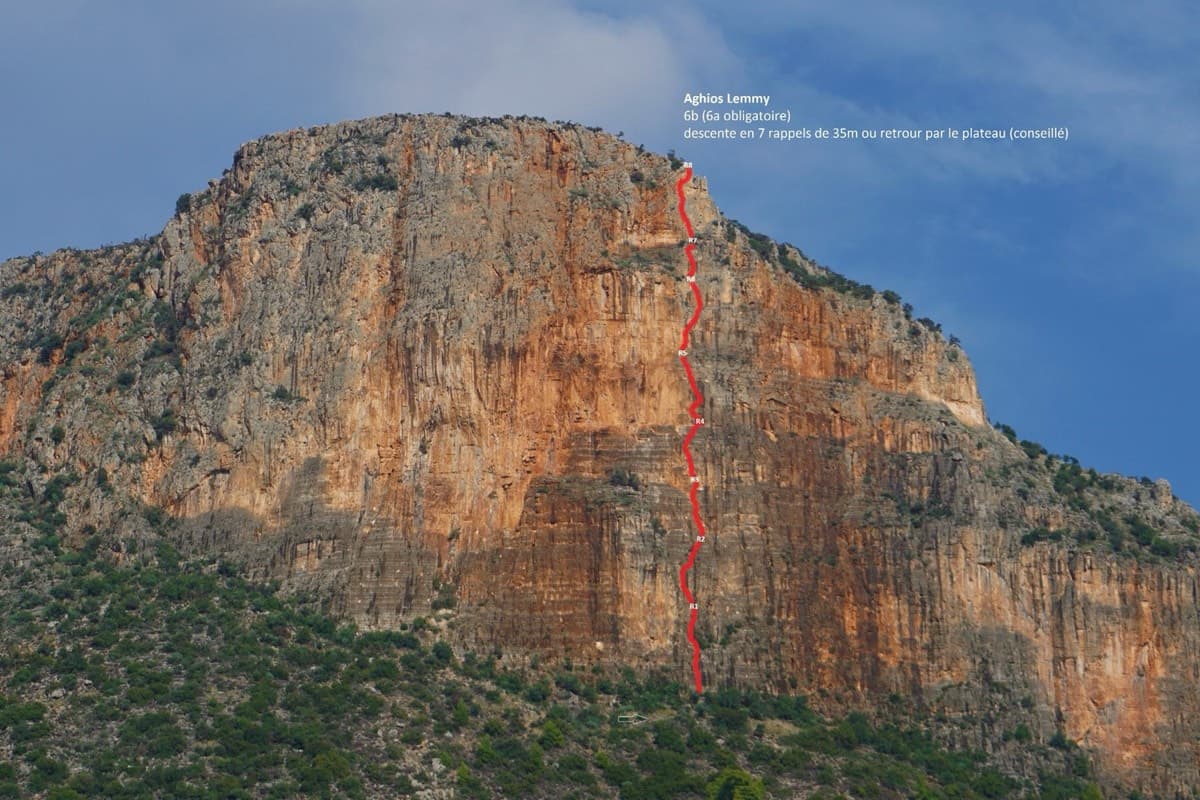
Topo of Mignonette on the Kokkinovrachos pillar, Leonidio

Greece · Leonidio & Kyparissi

Mignonette

The easiest multi-pitch on Kokkinovrachos, following the easy-angled arête and pillar above Leonidio, with tufas, crimpy walls and a great view of the town. Rock is good apart from the scrappy P2–P3.

5c+7 pitches175 m
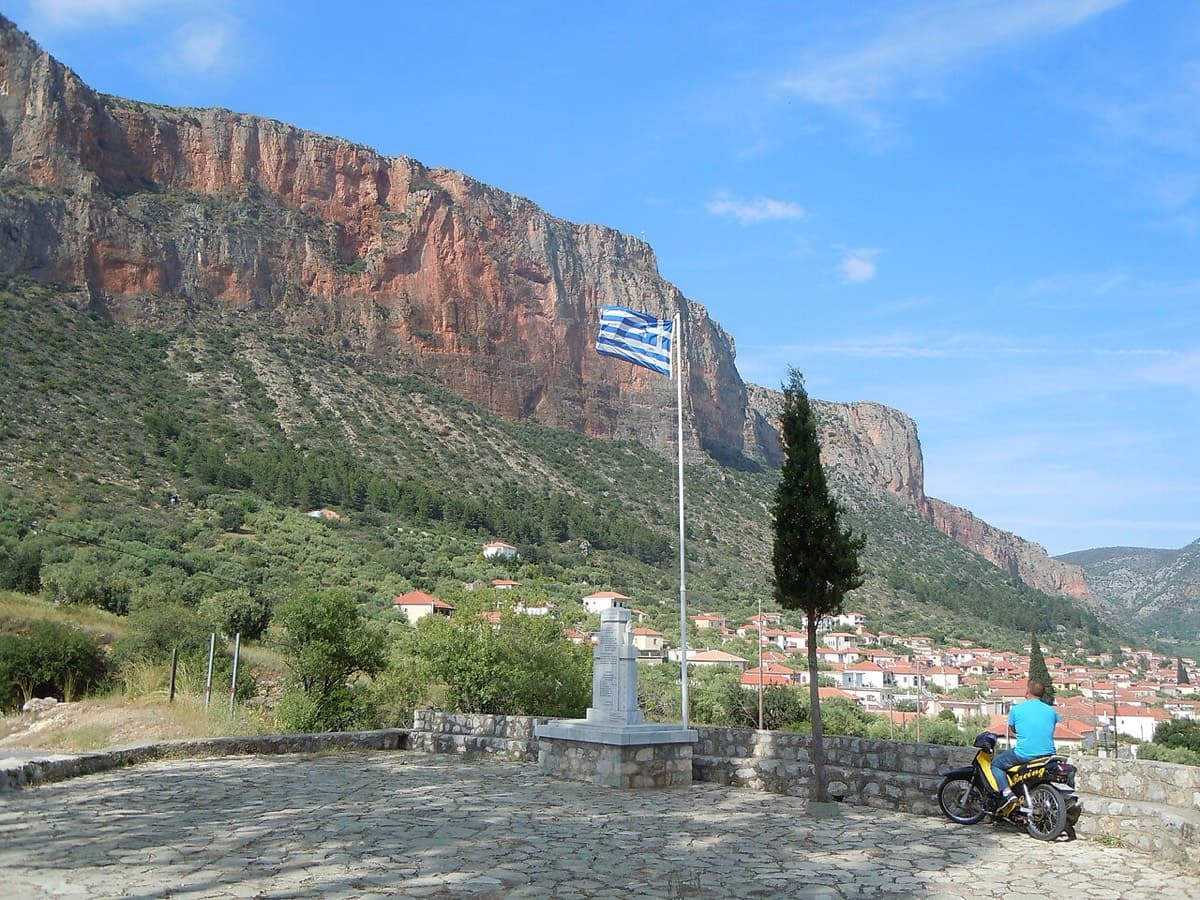
The Kokkinovrachos cliffs above Leonidio, seen from Agios Nektarios

Greece · Leonidio & Kyparissi

Kapi Reborn

A newer pillar line with a pretty 45 m slab to start, a single interesting 6a+ crux on P4, and a final orange corner. It makes a good step up from Mignonette.

6a+7 pitches180 m

Topo of Aghios Lemmy on Kokkinovrachos (Hospital / Red Rock), Leonidio

Greece · Leonidio & Kyparissi

Aghios Lemmy

Short, mostly vertical pitches on beautiful multi-coloured limestone with varied climbing. It is sustained at 6a+/6b from P2 to the top. The route name is written at its base.

6b8 pitches160 m

The Kokkinovrachos cliffs above Leonidio, seen from Agios Nektarios

Greece · Leonidio & Kyparissi

Mira

Steep climbing on good holds through grey and then orange rock, including a fine steep crack and a sustained bulge out of the big orange niche you can see from town. For the last pitch take the 6b middle exit or the 5c traverse into Mignonette. The direct 'dead wall' exit is 6c+, much harder than the rest of the route.

6b7 pitches200 m

Around 6c · about 6 pitches

Similar elsewhere

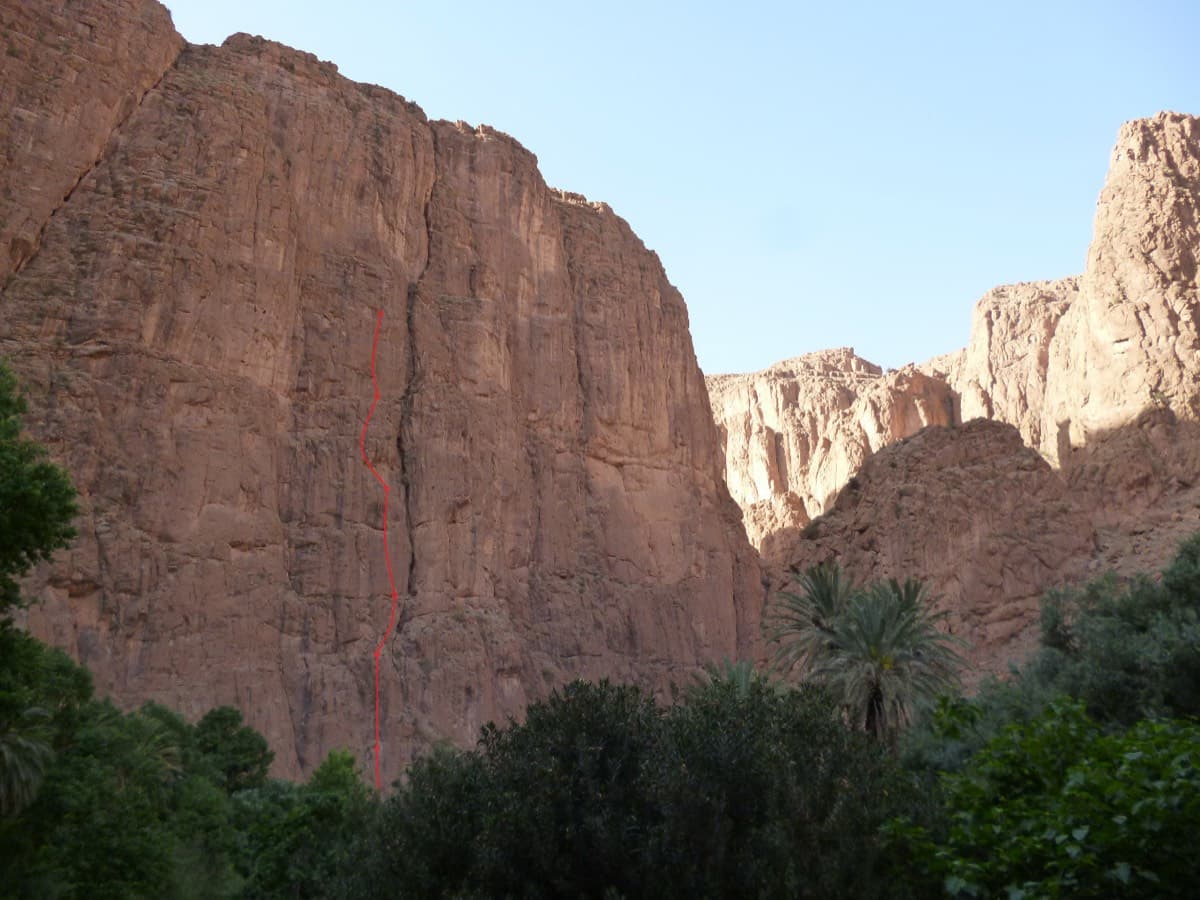
The line of Cœur de Palmier on the Mansour wall at the entrance to the Todra Gorge

Morocco · Todra Gorge (Todgha)

Cœur de Palmier

Six pitches of technical wall and corner climbing one minute from the gorge-entrance guesthouses. Easy pitches alternate with three hard ones, and the 6b+ fourth pitch and the 6c last pitch are precise, footwork-heavy climbing on very rough rock. The route stops in the middle of the wall and you abseil off.

6c6 pitches160 m

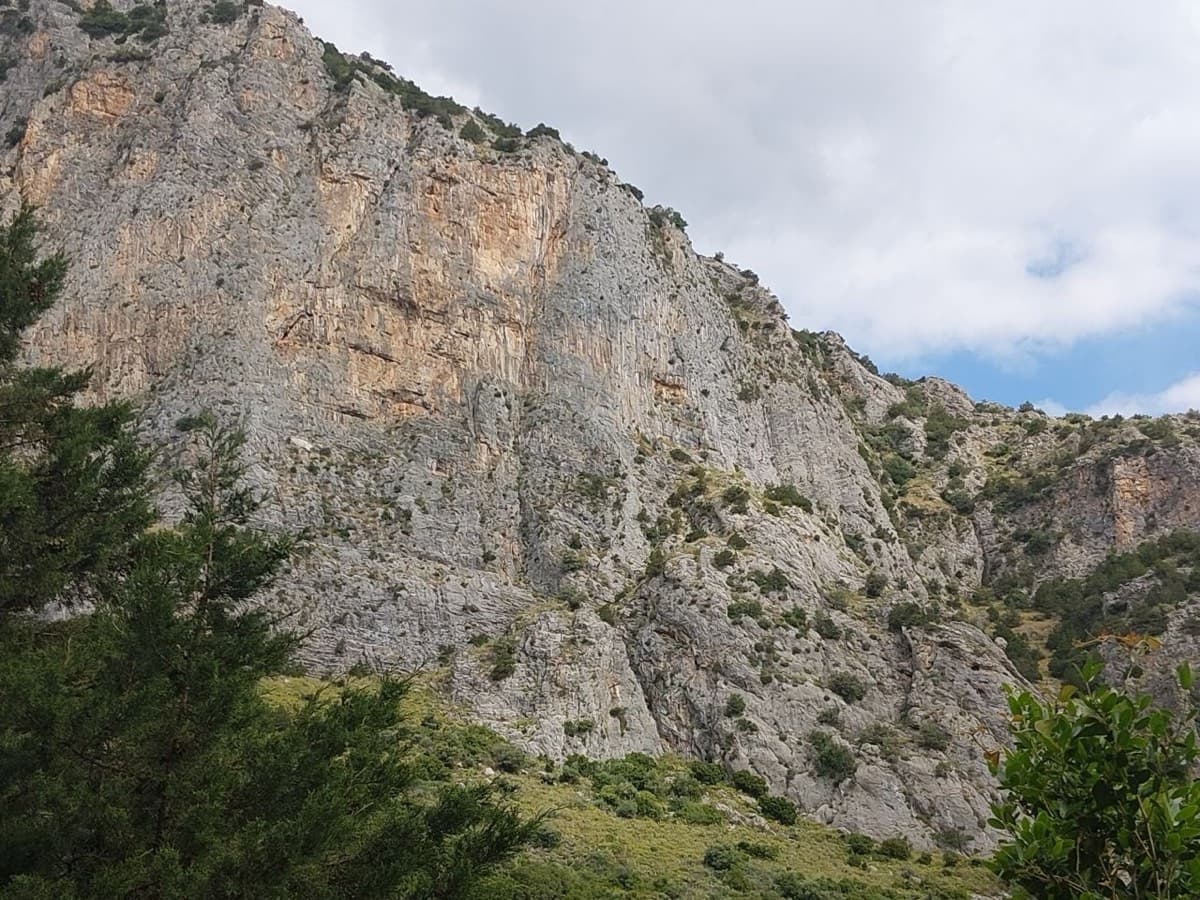
Limestone walls at Manikia, photographed on the day of a May 2026 ascent of To monopáti ton Chelonón

Greece · Manikia (Evia)

To monopáti ton Chelonón

A varied route in two tiers: two pitches of pocketed wall and sculpted slab, a walk across a big ledge, then four longer pitches up the main wall. The upper wall holds the 6c and a superb 40 m pitch of continuous vertical climbing. A quiet valley with a gentle walk down through meadow.

6c6 pitches200 m

Looking down the first hard pitch of El Geonauta to the ledges at the foot of the Taoujdad's west face

Morocco · Taghia

El Geonauta

A less-travelled neighbour of Au nom de la Réforme: a sustained 6b crack pitch, an unusual 6c that climbs through a hole and out left with one bouldery move, then three long pitches of 6a to 6a+ up a pillar. Getting off cleanly means either the sparsely bolted summit pitches or a short traverse to the Réforme abseils.

6c6 pitches190 m

Read the cautions

No photo yet

Spain · El Chorro

Apocalipsis

Seven pitches up a steep south face at Frontales, sustained, physical and technical on very rough, unpolished limestone. The fifth pitch (6b+) is a thin slab and the sixth (6c) has a strenuous start and a crux on grey rock. It is one of the few 6c multipitch lines here with a clean abseil descent.

6c7 pitches195 m

Compiled from published sources and last verified October 2026. Bolts, anchors and access change. Climbing is dangerous and you are responsible for your own decisions: check a current topo and read the disclaimer.