Menu

Kimera

Parete Striata · Muzzerone (Portovenere) · Italy

Bail with caveats

The best-known multipitch on the Parete Striata, straight above the sea near Portovenere. Technical slabs and corners on varied grey and yellow limestone lead to a steep, juggy 6b+ crux on pitch 4, then an easy link pitch and a last 6a wall. Short approach by abseil, walk-off descent.

Climbing mode: Big type, screen kept awake, tick pitches as you go.

The start of the 6b+ fourth pitch of Kimera on the Parete Striata, MuzzeronePhoto: Miguel&Miguelita · CC BY-NC-ND 3.0
Hardest pitch
6b+6b+
Pitches
6
Length
220 m
Approach
15 min
Aspect
S
South-facing
Rope
2×60 m half ropes
also needed for the abseil approach

Highest point about 450 m above sea level (estimate: terrain height at the mapped point plus the height of the route).

Rock
limestone
Season
Jan to Apr, Oct to Dec
Bolting confidence
High
Last verified
October 2026 · Aggregated by AI from published sources

Photo

Climbing modeBig type, screen kept awake, tick pitches as you go.

Overview

Kimera climbs the left side of the Parete Striata, the wild sea cliff below the Muzzerone fort near Portovenere. It is six pitches: three of technical slab and corner climbing at 6a to 6a+, a steep crux pitch through overhangs, a short scrambling link along a fixed rope and a final 6a wall. The bolting is modern stainless steel and every belay is chained, so you can abseil from any stance. Repeaters consistently describe it as the best line on the wall, with superb rock and big exposure above the sea; the 6a pitches are not given away.

Worth knowing

  • Allow about 3 to 3.5 hours on the route.
  • Pitches 5 and 6 can be linked.
  • Visit the small cemetery by the castle in Portovenere, where Walter Bonatti is buried.

Pitch by pitch

The atlas doesn't show topos: they are the work of the people who bolt and document these routes. See the topo at thetopo – Muzzerone, or in Muzzerone - Falesie e vie moderne.

Pitches of Kimera
PitchGradeLengthNotes
P16a45 mTechnical slab that needs reading, to a comfortable belay slightly left of the start. Ignore the rusty old bolts and anchor about 5 m to the right. Camptocamp gives 5c.
P26a+40 mHard fingery wall straight off the belay, then technical slab and an awkward mantel left over a short roof or arête. The route passes through a tree above the belay. Two ledges early on make a fall unpleasant.
P36a35 mTechnical leaning corner, then delicate slab to a belay below overhanging juggy tufas.
P46b+40 mThe crux: a hard start on slopers, a short overhang with a boulder move, a flared technical corner and a juggy bulge. Keep right in the crack and follow the bolts. Belay shared with Marinai Spit e Guai. A 2026 party thought it 6c.
P53a20 mLink pitch: follow a fixed rope across a short earthy band, then easily left to the next belay.
P66a40 mShort steps, then right and more short technical steps to a juggy bulge at the exit. Camptocamp and Mountain Project give about 5c.

Approach

To the parking

Drive from La Spezia towards Portovenere and turn right before Le Grazie (signed), then follow the narrow road up towards the Muzzerone fort and park at the last hairpin before the fort. Bus 11P runs from La Spezia to Portovenere if you prefer to walk up the ridge path 1a from the village (about 30 minutes to the crag).

On foot · about 15 min

Most parties now approach by abseil. From the car park walk up past the fort (picnic tables), leave the bunker with the antennas on your right and descend the ridge path; after 100 to 200 m a path on the right with crosses leads towards the old marble workings, where new stainless abseil anchors start. Three or four abseils of 30 to 40 m reach the base of the wall (gulliver says four abseils with a 70 m rope, the first exactly 35 m; camptocamp parties in 2025 and 2026 did three of 30 to 40 m). The alternative is a traverse on cables and fixed ropes from the Pilastro del Bunker, which is reported to be in poor condition. Walk left along the base almost to the left end of the wall; the name is painted at the start, below an easy-looking slab with the first bolt about 5 m up.

Map of the walk-in

Point from Mountain Project route GPS for Kimera (Parete Striata sector); the camptocamp Muzzerone waypoint 359849 is a general point about 1.5 km away

For your phone or watch

Download GPX

Contains the route point.

Points from published sources, not surveyed.

Descent

From the top a faint path leads uphill to the bunker and the fort car park in about 5 minutes. You can also abseil the route from any belay.

Bailing off the route

Bail with caveats

Every belay is chained and gulliver says you can abseil from any of them. Abseiling only returns you to the base of the wall above the sea, though, and the way out from there is the fixed-rope and cable traverse towards the Pilastro del Bunker, reported in poor condition, or reascending the abseil approach.

Retreat from
Any belay, on two half ropes.
Point of no return
None as such; above pitch 4 it is quicker to finish (pitches 5 and 6 are 3a and 6a) and walk off.
Carry
Two ropes for abseiling; be ready for the exposed fixed-rope traverse out from the base.
Basis
Part stated, part inferredAbseil from any belay is stated by gulliver and camptocamp; the exit from the base is inferred from the approach descriptions.

Italy

In an emergency

In an emergency · Italy

112Emergency, where the single number is in service

Call 112

Emergency, where the single number is in service

Where 112 is not yet the single number, call 118 and ask for CNSAS.

Position of the crag

44.05530, 9.82700

Marks the crag, not the route: give route and pitch.

Say what happened, how many are hurt, and where you are. Checked October 2026 (source).

Hazards

  • The approach involves abseils above the sea or old cables and fixed ropes; parties describe the fixed-rope option as in poor condition.
  • Two ledges early on pitch 2 make a fall there dangerous.
  • A big loose block ('masso di Damocle') sits near the neighbouring route Marinai Spit e Guai; stay on Kimera's line.
  • Several neighbouring routes on the wall (Supernova, Marinoï) still have rusting bolts and belays; thetopo advises climbing only routes bolted in 316L or A4 stainless steel.

Gear

14 quickdraws. Two 60 m half ropes are recommended (gulliver); the abseil approach needs a rope long enough for a 35 m abseil. Helmet.

Checklist

Quickdraws
14
Rope
2×60 m half ropes (also needed for the abseil approach)
Helmet
One each
Abseil device and prusik
For abseiling

Conditions

Reader reports

No reports yet.

Report a problem with this route

Say what and where. Reports are checked before they appear; no name or email is stored.

Bolts and history

Bolting
Bolted ground-up in 2007 with modern stainless bolts and plates; belays are chained and set up for abseiling. Recent parties (2017 to 2026) call the bolting good, though a 2024 party found a few placements awkward early on pitch 2, above two ledges you must not fall onto.
History
Opened ground-up in 2007 by Roberto Vigiani and Luisa Siliani.
Guidebook
Davide Battistella, 'Muzzerone e Levante Ligure' (Versante Sud, 2008). Buy from versantesud.it.

Where sources disagree

  • Pitch grades: gulliver gives 6a, 6a+, 6a, 6b+, 3a, 6a; camptocamp gives 5c, 6a, 6a, 6b+, 3/4b, 6a; Mountain Project gives about 6a, 6a+, 6a, 6b+, walk, 5c; a 2026 camptocamp party found it 6a, 6a+, 6a+, 6c, 3, 5c. Gulliver grades are used.
  • Length: 220 m on camptocamp and gulliver, 152 m on Mountain Project.
  • Abseil approach: four abseils with a 70 m rope (gulliver) against three of 30 to 35 m (camptocamp 2025 and 2026).

Sources

Around 6b+ · about 6 pitches

Similar elsewhere

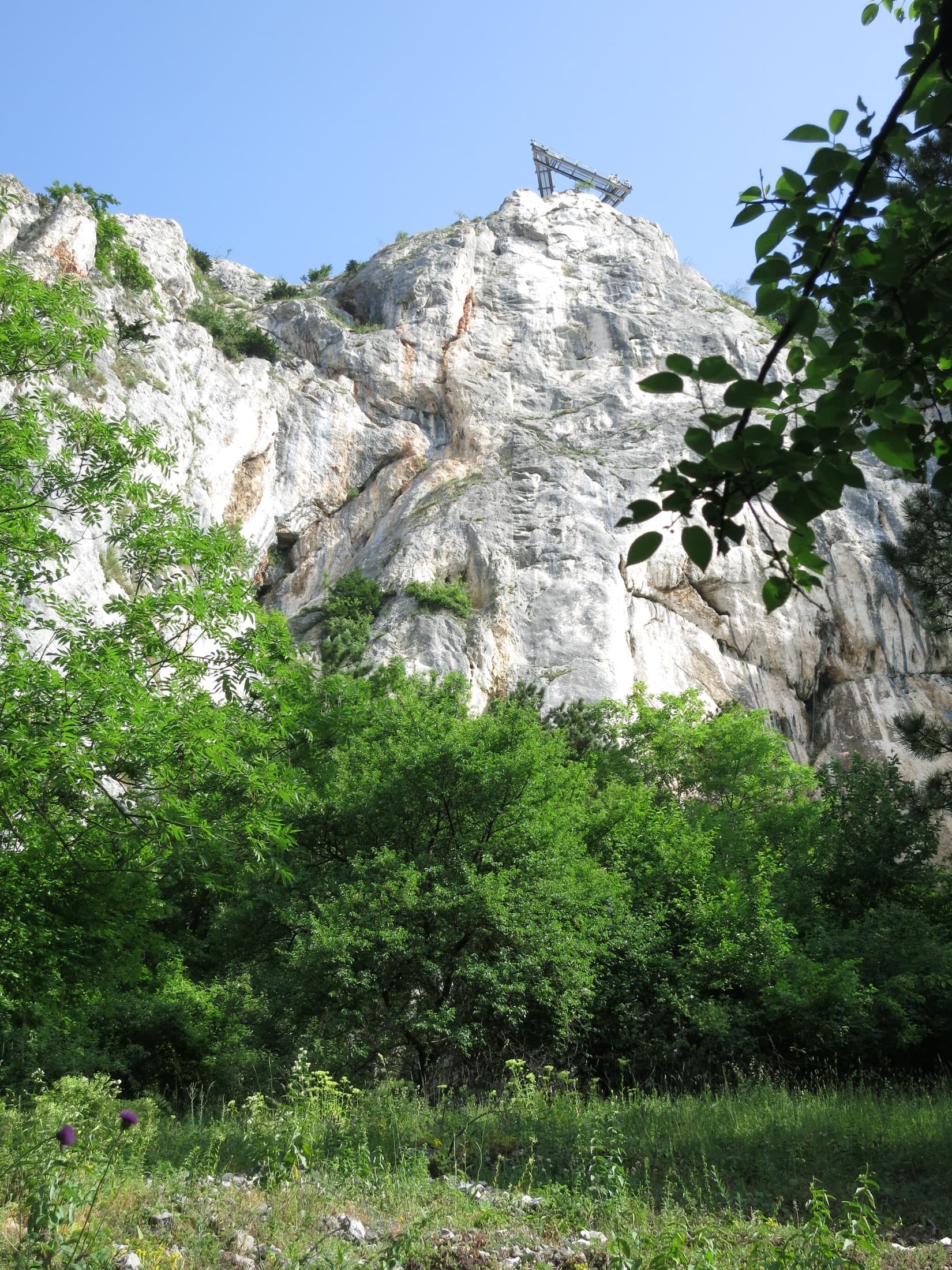
The Sonnenuhrwand on the Hohe Wand, with the Skywalk viewing platform at the top

Austria · Hohe Wand

Zukunftsweiser

Steep slabs and a fine corner on very solid rock on the Hohe Wand's steepest wall, sustained around UIAA VI. bergsteigen.com counts it among the best routes in eastern Austria; with A0 on the crux it goes at about 6a+.

6b+6b+6 pitches195 m

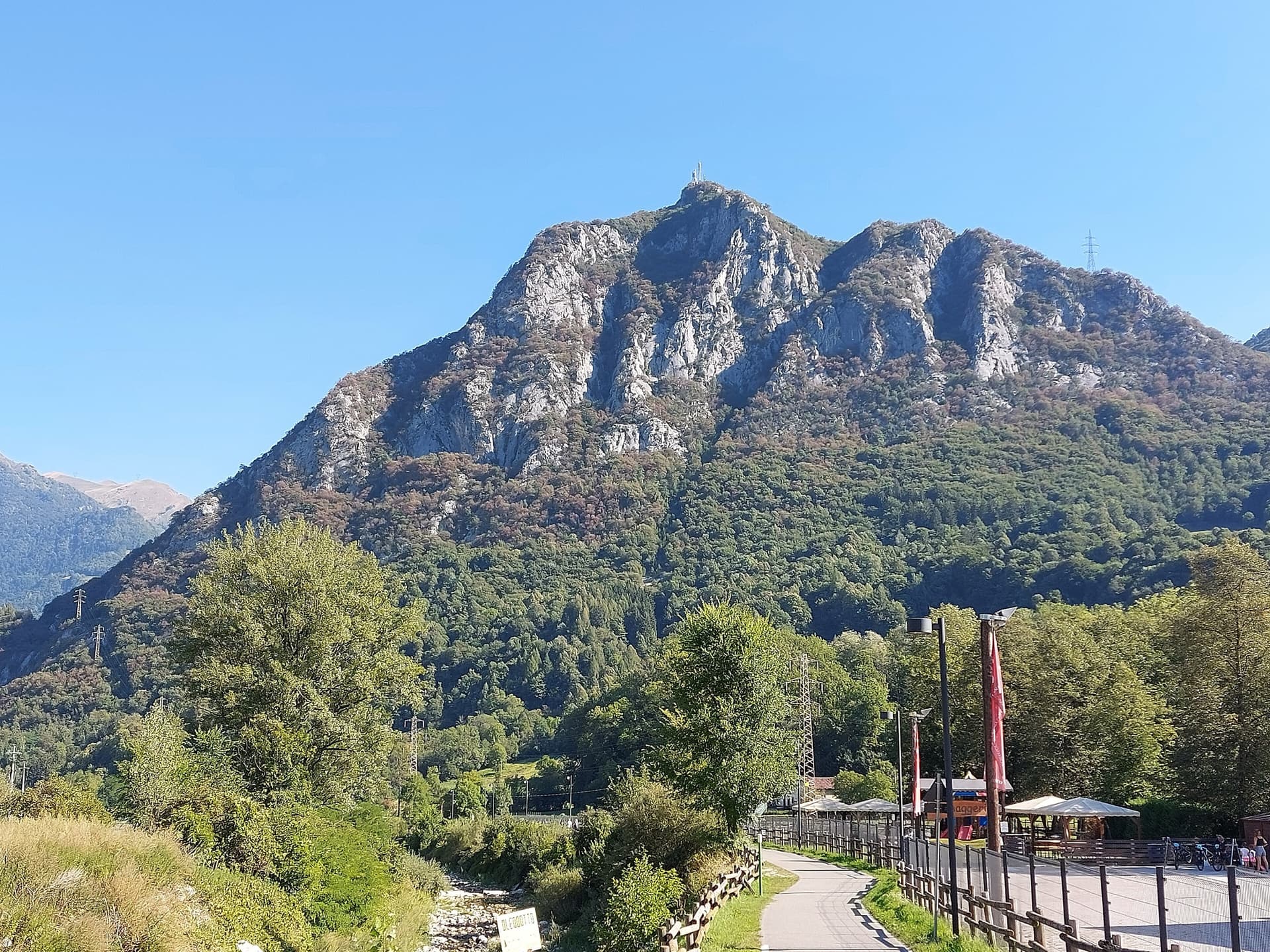
The Zucco dell'Angelone above the Valsassina, seen from Pasturo, with the antenna on its summit. The climbing spurs are the pale limestone ribs on the sunny side of the mountain above Barzio; individual spurs and routes are not marked.

Italy · Lecco & Valsassina

La Striscia della Citrosodina

The harder companion to La Lumaca di Vetro on the second spur. Delicate slabs with spaced bolts lead to cracks and flakes, then a strenuous last pitch through an overhanging corner and a bulge that goes at 6b+ or mostly on aid. Varied and less travelled than its neighbours.

6b+6b+6 pitches145 m

Read the cautions

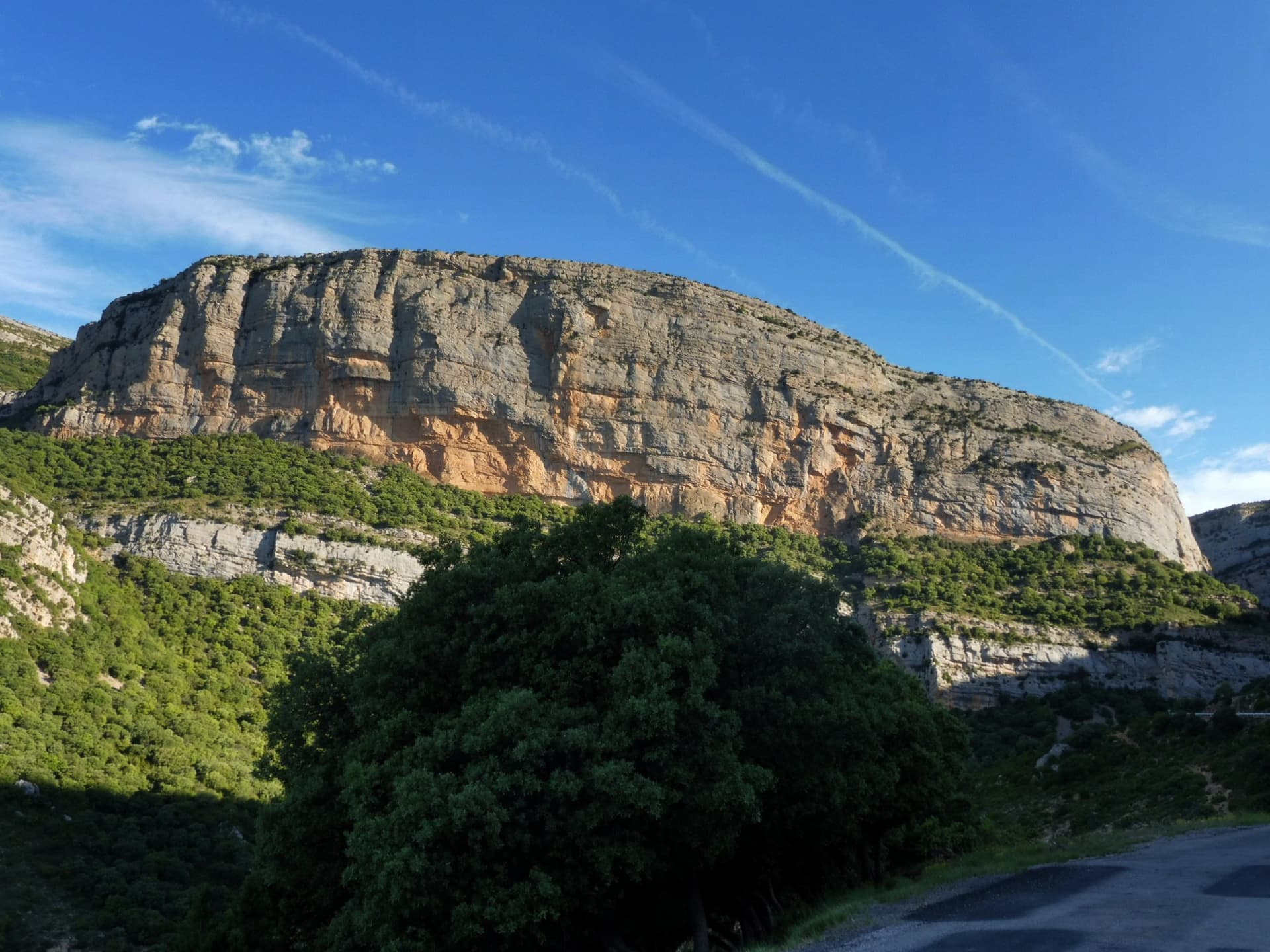
A view of the region, not this route's wall. The south-east face of the Roca dels Arcs above the road from Vilanova de Meià, in the Montsec de Rúbies.

Spain · Vilanova de Meià (Roca dels Arcs)

Tierra de Nadie

Six steep, physical pitches on the right-hand side of the Roca dels Arcs, with a hard pull or two on every one: bouldery starts, big overhangs on jugs and little difference in effort between the 6a and the 6b pitches. Sport-bolted, which is unusual on this wall. Grades feel tight.

6b+6b+6 pitches170 m

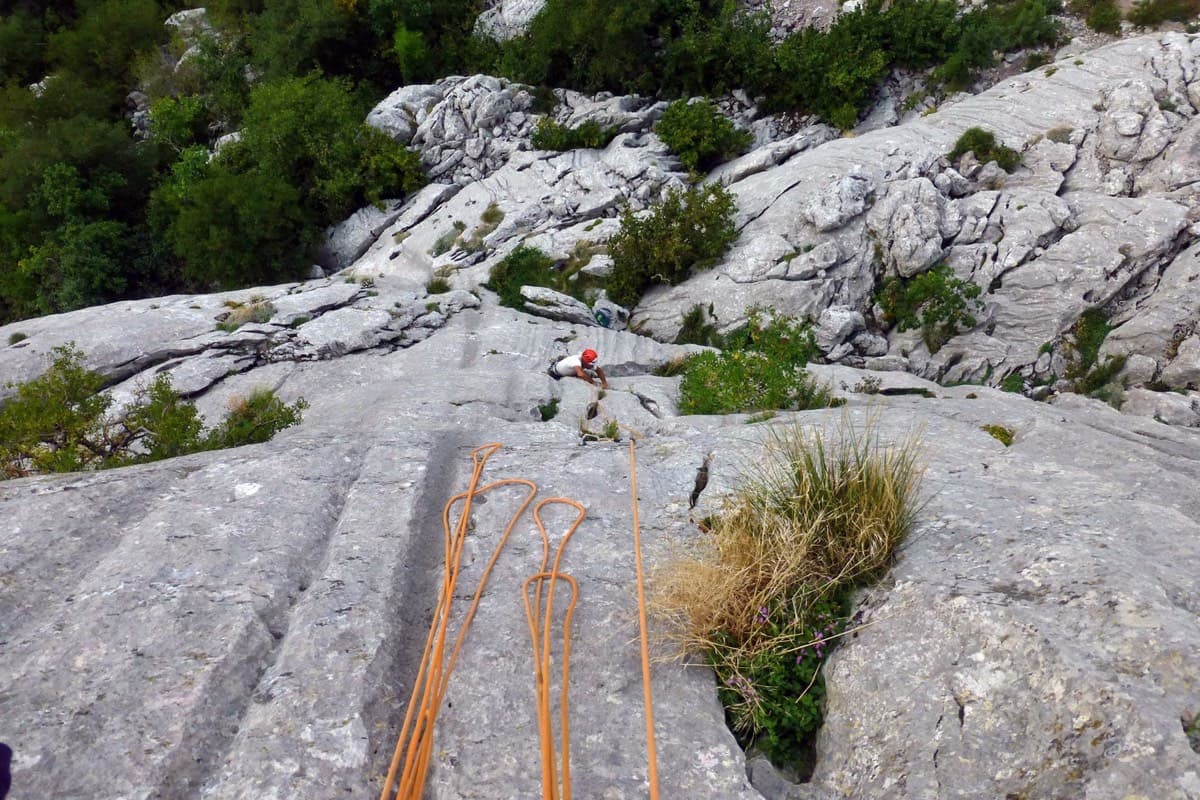
Looking down the lower part of Via Manuela on Rujičin kuk, August 2019

Croatia · Dabarski kukovi (Velebit)

Via Manuela

Four steep and technical pitches of 6a to 6b+ followed by two easy ones up the water-runnelled top of Rujičin kuk. The hard climbing is on compact, less featured rock than Paklenica and relies on footwork, including two delicate traverses. A quiet inland crag that is far cooler than the coast in summer.

6b+6b+6 pitches145 m

Read the cautions

Researched and aggregated by AI from published sources, last compiled October 2026. It can be wrong, and bolts, anchors and access change: check a current guidebook and read the disclaimer.