Menu

Zukunftsweiser

Sonnenuhrwand (below the Skywalk), Stollhof · Hohe Wand · Austria

Bail not documented

Steep slabs and a fine corner on very solid rock on the Hohe Wand's steepest wall, sustained around UIAA VI. bergsteigen.com counts it among the best routes in eastern Austria; with A0 on the crux it goes at about 6a+.

Climbing mode: Big type, screen kept awake, tick pitches as you go.

The Sonnenuhrwand on the Hohe Wand, with the Skywalk viewing platform at the topPhoto: Aushelfer · CC BY-SA 3.0 AT
Hardest pitch
6b+6b+
Pitches
6
Length
195 m
Approach
15 min
Aspect
SE
South-east-facing
Rope
1×50 m

Highest point 850 m above sea level (camptocamp route 1241105).

Rock
limestone
Season
Mar to Nov
Bolting confidence
Medium
Last verified
October 2026 · Aggregated by AI from published sources

Photo

Climbing modeBig type, screen kept awake, tick pitches as you go.

Overview

The Sonnenuhrwand drops 150 m sheer from the Skywalk viewing platform and is the steepest wall on the Hohe Wand. Zukunftsweiser, a route combination put up by Thomas Behm in 2008, is the surprise way up it: homogeneous climbing around UIAA VI on steep pocketed slabs and a compact corner, with a single hard move at the top of the red corner on pitch 5 that is easy to aid. The rock is very solid apart from pitch 2, and you top out right beside the Skywalk.

Worth knowing

  • Pull on the bolts at the pitch-5 crux and the rest is about 6a.

Pitch by pitch

The atlas doesn't show topos: they are the work of the people who bolt and document these routes. See the topo in Alpinkletterführer Hohe Wand.

Pitches of Zukunftsweiser
PitchGradeLengthNotes
P13c40 mThe easy starting ridge (UIAA III+) to the first belay.
P26a30 mThe difficulties begin; the rock may not look completely stable.
P36a30 mA superb compact slab with water pockets.
P46a30 mA fine corner on compact rock.
P56b+ (A0)35 mThe crux: a red, steep corner with a hard move at the top and a traverse right. Easily aided (bergsteigen.com gives UIAA VII+ free, VI+/A0).
P66a30 mSome climbing on a small tower left of the anchor, then about 15 m of scrambling to finish right next to the Skywalk platform.

Approach

To the parking

Drive via the A2 to Wöllersdorf, then through Dreistetten to Stollhof and up the Hohe Wand toll road to the large car park at the first hairpin (the 'Sonnenuhr' car park, fee).

On foot · about 15 min

From the first hairpin go up to the path along the foot of the wall and right past the ÖTK via ferrata to below the Sonnenuhrwand. Soon after the via ferrata, faint paths lead up left from the wall-foot path, partly along old fixed ropes, to a notch by a rock head; the ridge to the first belay starts here, near a small tower. About 15 min.

Map of the walk-in

Coordinates · route base

47.82990, 16.04850

Parking

47.82780, 16.05050

Sonnenuhr car park at the first hairpin of the Hohe Wand toll road above Stollhof (bergsteigen.com marker)

DirectionsDriving directions

Point from bergsteigen.com start marker

For your phone or watch

Download GPX

Contains the route point and parking.

Points from published sources, not surveyed.

Descent

From the top walk to the hang-gliding launch beside the Skywalk and descend the marked Völlerin path back to the car park at the first hairpin.

Bailing off the route

Bail not documented

Retreat is not described. The route is bolted with belays at each pitch and the pitches are 30 to 40 m, so lowering or abseiling on a single 50 m rope would mostly need two abseils per pitch or leaving gear; the normal descent is the walk down from the top.

Retreat from
Not documented.
Point of no return
Not documented.
Carry
Consider a second rope if you want a retreat option.
Basis
Inferred from the route factsInferred from the pitch lengths; neither source mentions abseiling.

Austria

In an emergency

In an emergency · Austria

140Mountain rescue (Bergrettung)

Call 140

Mountain rescue (Bergrettung)

Position of the route base

47.82990, 16.04850

Say what happened, how many are hurt, and where you are. Checked October 2026 (source).

Hazards

  • Visitors on the Skywalk above can drop objects: wear a helmet.
  • The approach path is partly on old fixed ropes.

Gear

14 quickdraws, a single 50 m rope and a helmet.

Checklist

Quickdraws
14
Rope
1×50 m
Helmet
One each

Conditions

Reader reports

No reports yet.

Report a problem with this route

Say what and where. Reports are checked before they appear; no name or email is stored.

Bolts and history

Bolting
Bolted with Bühler glue-in bolts (standard glue-ins on pitch 1) and rated very good by bergsteigen.com. The crux at the end of the red corner on pitch 5 is easy to aid, so the obligatory grade is about 6a+ (UIAA 6+).
History
Put together by Thomas Behm in 2008.
Guidebook
Free topo overview on bergsteigen.com (Sonnenuhrwand); local Hohe Wand guidebooks. Buy from kletterfuehrer.net.

Where sources disagree

  • Crux grade: 6b+ (camptocamp) against UIAA VII+ free / VI+ A0 (bergsteigen.com); the overall grade on bergsteigen.com is VII+ (about 6c).
  • Bolt counts per pitch are not published in a free source.

Sources

Around 6b+ · about 6 pitches

Similar elsewhere

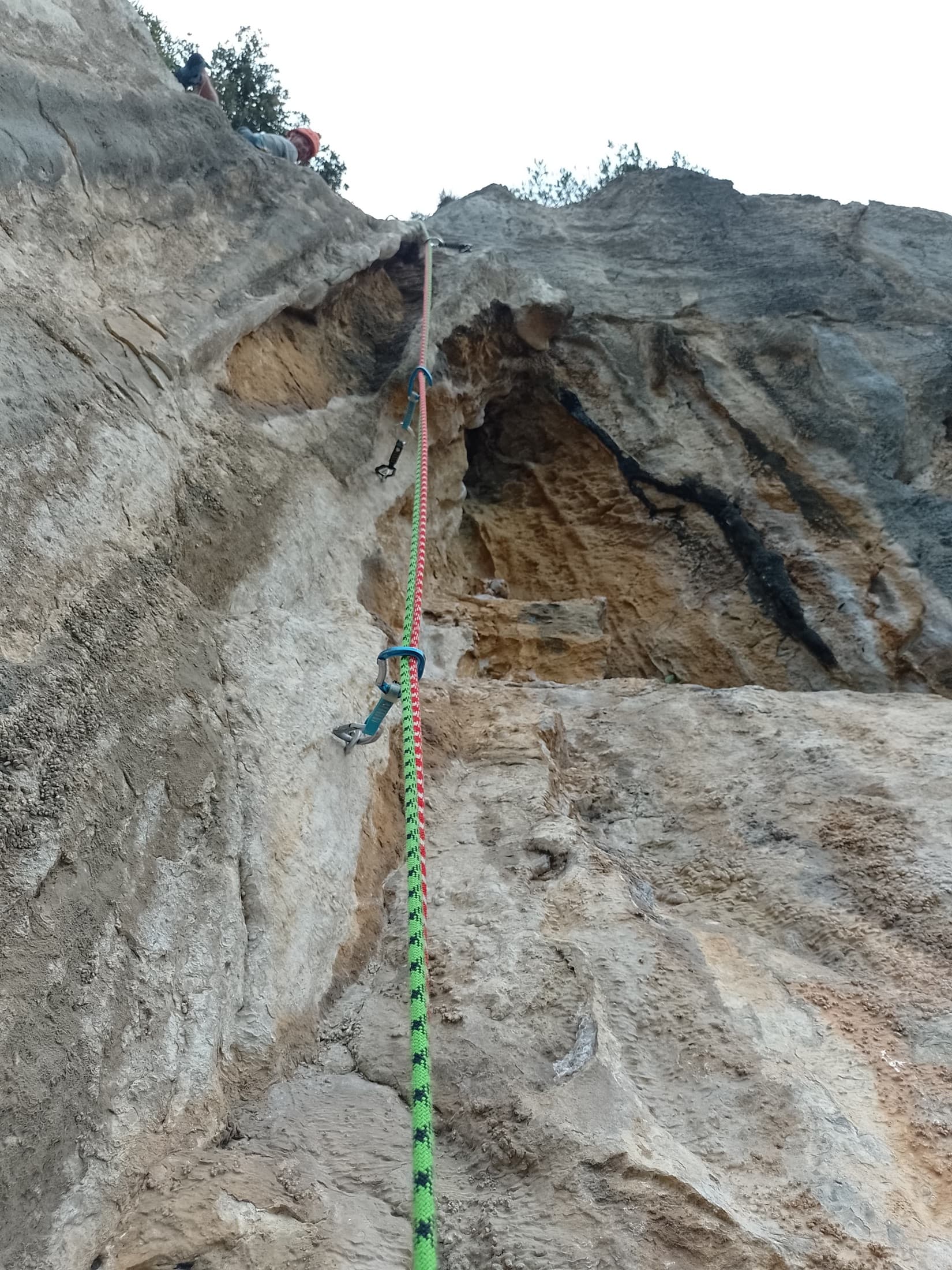
The start of the 6b+ fourth pitch of Kimera on the Parete Striata, Muzzerone

Italy · Muzzerone (Portovenere)

Kimera

The best-known multipitch on the Parete Striata, straight above the sea near Portovenere. Technical slabs and corners on varied grey and yellow limestone lead to a steep, juggy 6b+ crux on pitch 4, then an easy link pitch and a last 6a wall. Short approach by abseil, walk-off descent.

6b+6b+6 pitches220 m

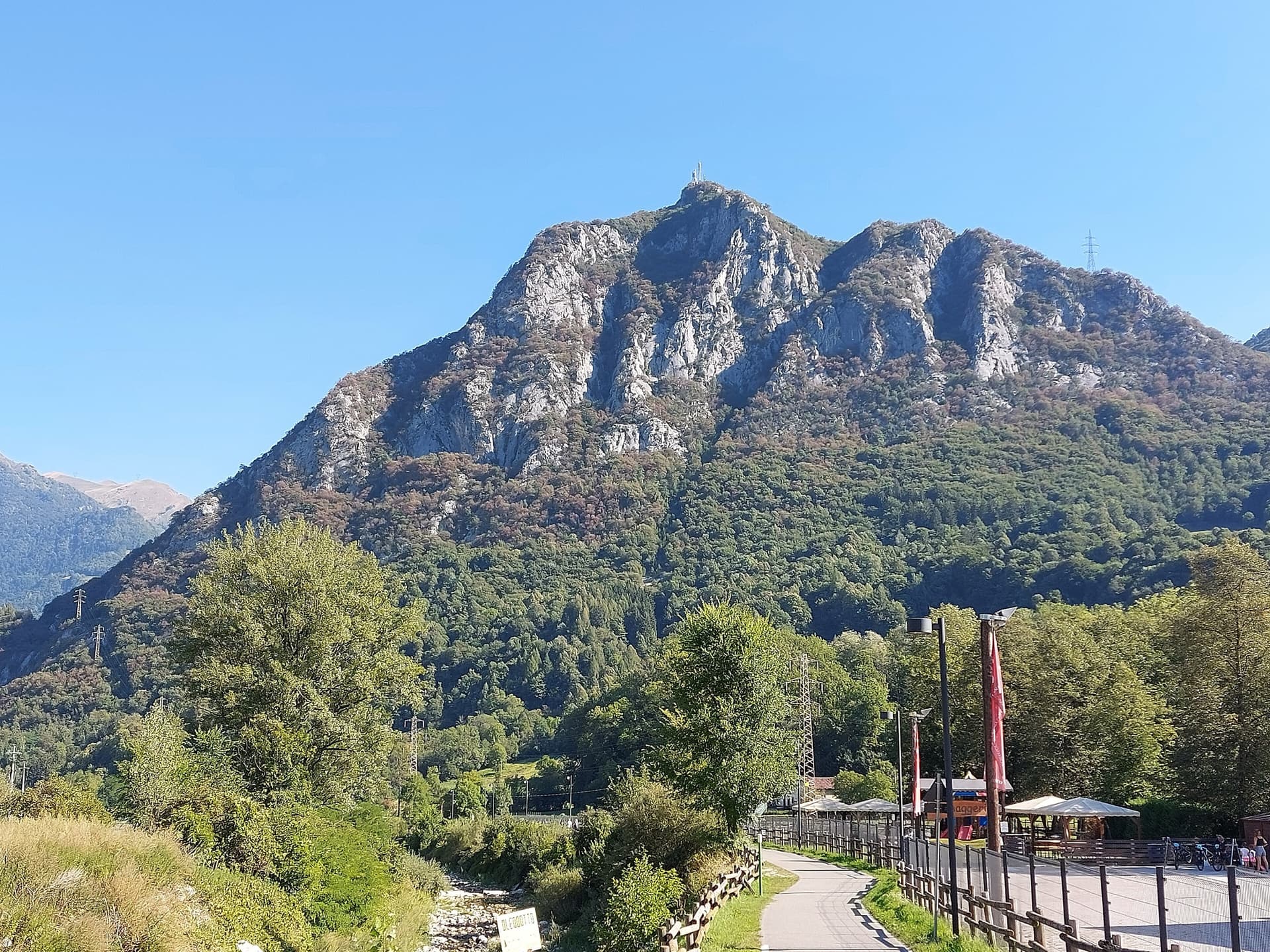
The Zucco dell'Angelone above the Valsassina, seen from Pasturo, with the antenna on its summit. The climbing spurs are the pale limestone ribs on the sunny side of the mountain above Barzio; individual spurs and routes are not marked.

Italy · Lecco & Valsassina

La Striscia della Citrosodina

The harder companion to La Lumaca di Vetro on the second spur. Delicate slabs with spaced bolts lead to cracks and flakes, then a strenuous last pitch through an overhanging corner and a bulge that goes at 6b+ or mostly on aid. Varied and less travelled than its neighbours.

6b+6b+6 pitches145 m

Read the cautions

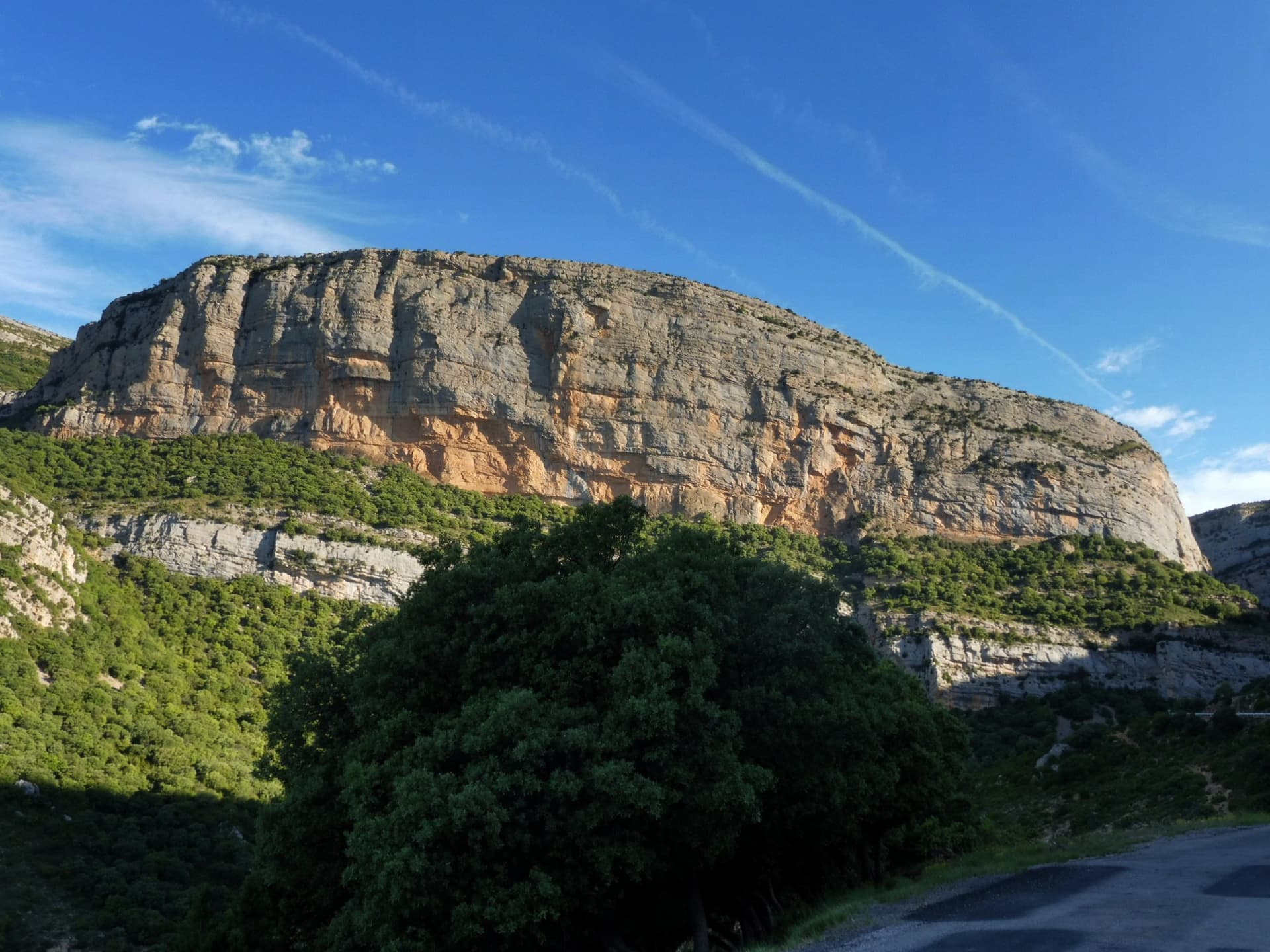
A view of the region, not this route's wall. The south-east face of the Roca dels Arcs above the road from Vilanova de Meià, in the Montsec de Rúbies.

Spain · Vilanova de Meià (Roca dels Arcs)

Tierra de Nadie

Six steep, physical pitches on the right-hand side of the Roca dels Arcs, with a hard pull or two on every one: bouldery starts, big overhangs on jugs and little difference in effort between the 6a and the 6b pitches. Sport-bolted, which is unusual on this wall. Grades feel tight.

6b+6b+6 pitches170 m

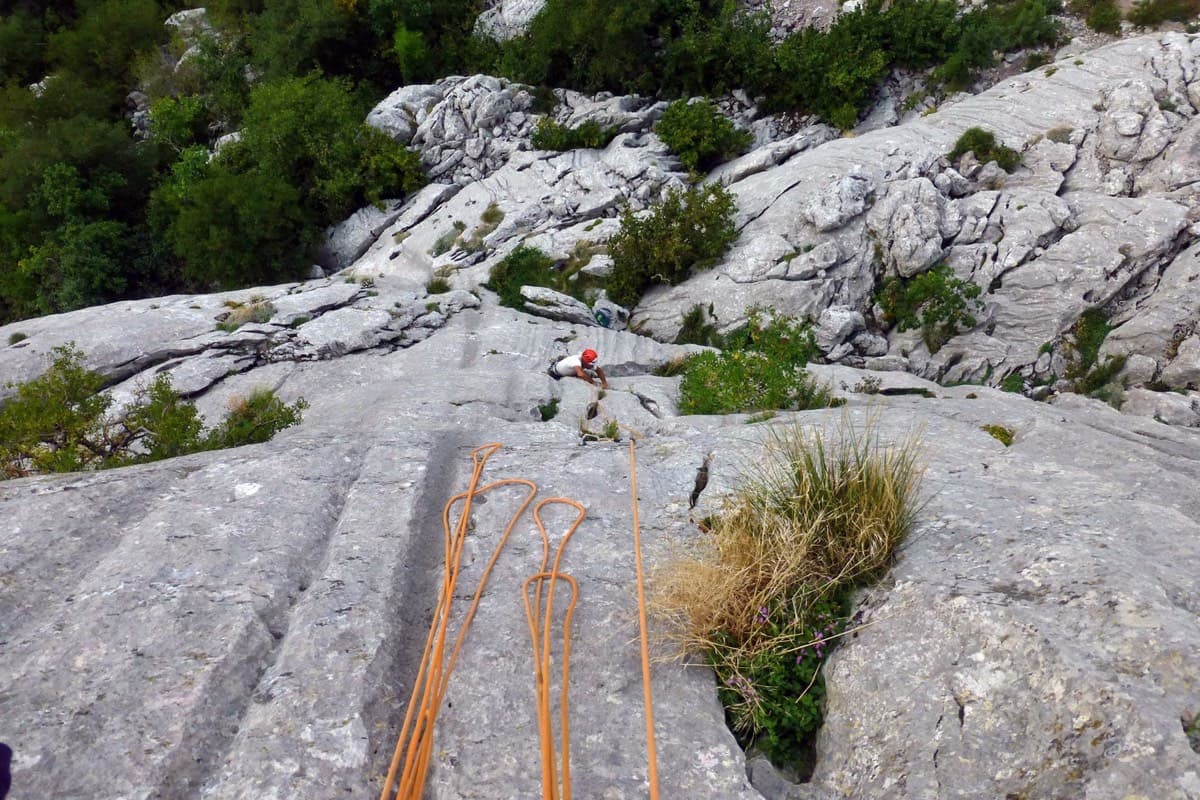
Looking down the lower part of Via Manuela on Rujičin kuk, August 2019

Croatia · Dabarski kukovi (Velebit)

Via Manuela

Four steep and technical pitches of 6a to 6b+ followed by two easy ones up the water-runnelled top of Rujičin kuk. The hard climbing is on compact, less featured rock than Paklenica and relies on footwork, including two delicate traverses. A quiet inland crag that is far cooler than the coast in summer.

6b+6b+6 pitches145 m

Read the cautions

Researched and aggregated by AI from published sources, last compiled October 2026. It can be wrong, and bolts, anchors and access change: check a current guidebook and read the disclaimer.