Multipitch Atlas

L'Ombra della Mia Mano

Punta Cusidore, north-west pillar (Oliena) · Sardinia · Italy

Read the cautionsBail with caveatsBolting confidence: high

A 300 m pillar on the 'Dolomite of Sardinia': a hard, smooth first pitch in a north-facing gully, long grey slabs and walls, a demanding technical crux on pitch 6, then exposed climbing on the crest of the pillar on big sculpted holds. Mountain atmosphere with sport protection.

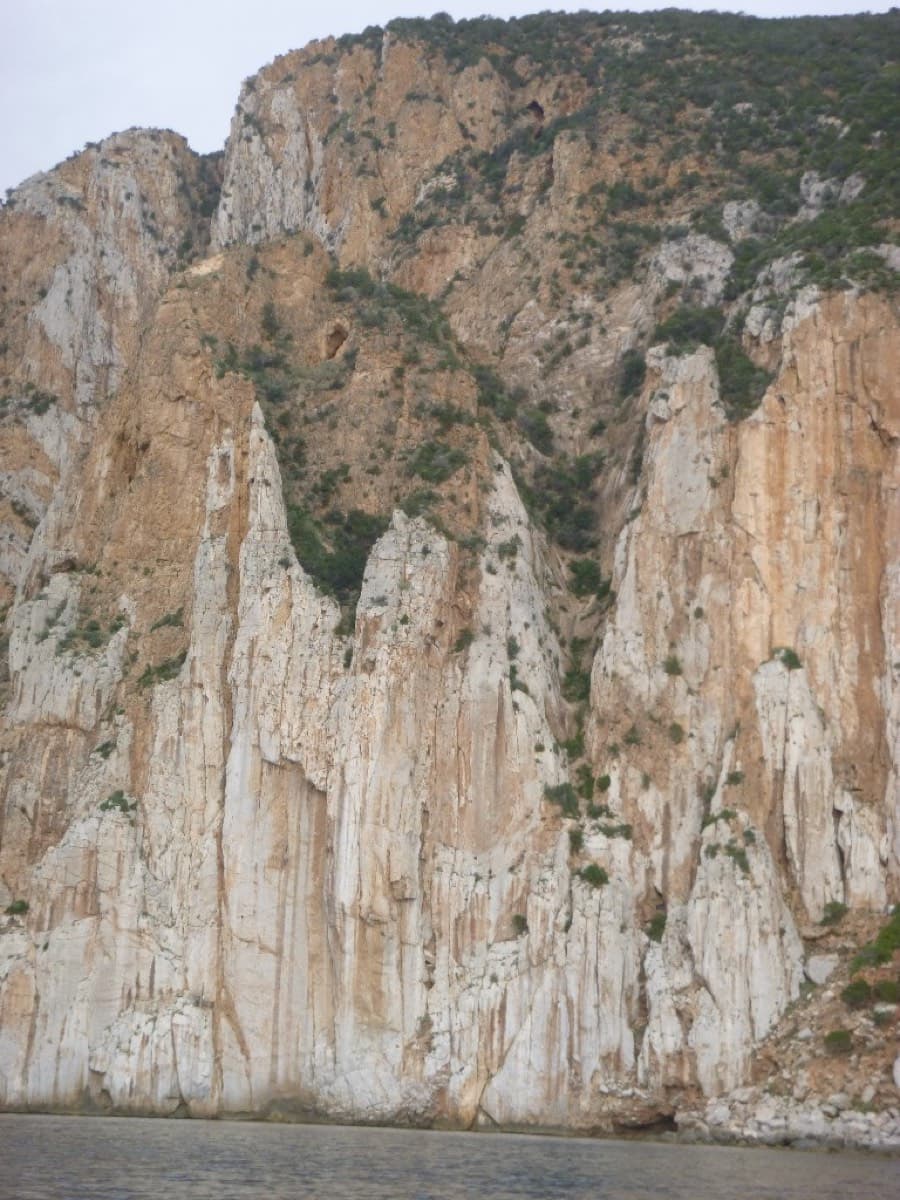
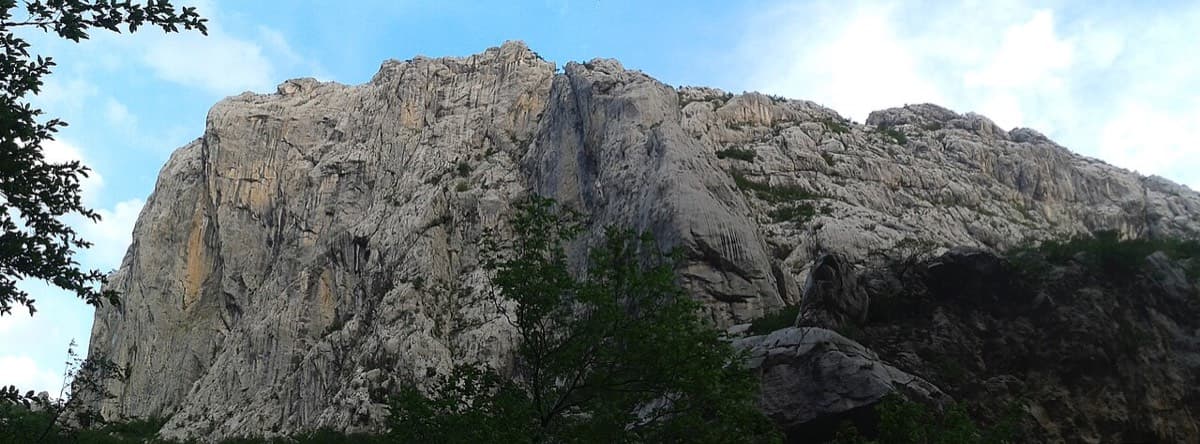
The north-west side of Punta Cusidore at dawn, seen from the approach above OlienaPhoto: JYF · CC BY-NC-ND 3.0

Photo

The north-west side of Punta Cusidore at dawn, seen from the approach above OlienaPhoto: JYF · CC BY-NC-ND 3.0
Hardest pitch
6c
Pitches
9
Length
300 m
Approach
60 min
Aspect
NW
North-west-facing
Rope
2×60 m
Read before you go

Newly re-bolted in stainless with chained belays, but long, hard for its original grade and bolted at the original, obligatory spacing.

The route

Overview

L'Ombra della Mia Mano climbs the first pillar of the north-west face of Punta Cusidore, the 1147 m limestone peak above Oliena. Cecilia Marchi, Maurizio Oviglia and Antonello Pala opened it ground-up in 1996 and added bolts on the way down to give it a sport character. It was originally graded 6b+, but PlanetMountain now says you should be comfortable at 6c: both the first pitch and the slab on pitch 6 are hard for the grade. The route was entirely re-bolted in May 2025. It ends on the pillar; the summit is a further long stretch of easy but only partly equipped climbing.

The climbing

Pitch by pitch

Pitches of L'Ombra della Mia Mano
PitchGradeLengthNotes
P16c30 mLeft in the back of the gully: a blind crack with small holds and poor, slippery footholds on north-face rock, then a step of traverse. Hard but well bolted. Originally 6b+; PlanetMountain now gives 6c.
P25b15 mA short pitch with a thin slab start (harder than 5b for some), then easy.
P36a+35 mSlab, then a steep, slightly overhanging section on pockets with an awkward clip, and an easier exit on slightly fragile rock to a large ledge. A 2025 party thought 6b.
P46a+50 mA long, sustained pitch on beautiful grey rock with a marked slab move in the middle, finishing with a long rising traverse right to an airy belay. Camptocamp gives 6a.
P56a30 mOn the pillar, with a few delicate moves. Camptocamp lists it as 6b.
P66c40 mThe crux: a crack, an awkward mantel, a delicate move right, then a very technical slab on small holds, easier ground on pockets, and a steep wall turned on the right before a physical finish. The last step is obligatory and has rope drag. PlanetMountain gives 6b+; parties in 2025 and 2026 say 6c or more.
P76a40 mOut right to an exposed pillar, over a bulge and up the pillar.
P85c15 mVery short, with one bouldery move round the pillar. Often linked with pitch 7.
P96a40 mBack on the crest to a fine cracked corner, swing round to the right side in a big position and finish more easily. One of the best pitches.

Getting there

Approach

To the parking

From Oliena drive to Preda 'e Littu (also written Pedra 'e Lithu, 335 m, 40.27065°N 9.46059°E), a huge limestone boulder in the woods at the foot of the mountain. How far you can drive beyond depends on the vehicle; tracks cross with no signs, and parties recommend looking at the approach the day before.

On foot · about 60 min

45 minutes to 1 hour 10. From Preda 'e Littu follow the road on the left steeply uphill to its end, or a path with cairns and white marks towards the peak, to join a well-kept, waymarked hiking path that leads almost to the foot of the route (it continues to the col). The path goes right over scree and round the arête; the route starts in a small amphitheatre or gully, close to Supercrack and just after the Spigolo NW, whose name is painted. The first bolt is clearly visible.

Map of the walk-in

  • Route base
  • Parking

Loading map

The point marks the base of the route.

Coordinates · route base

40.26418, 9.45624

Parking

40.27617, 9.46628

Preda 'e Littu (camptocamp access point)

Point from PlanetMountain route page (start coordinates)

For your phone or watch

Download GPX

Contains the route point and parking. Opens in most mapping apps and GPS watches.

Points are compiled from published sources, with the precision stated above. They were not surveyed on the ground: check them against a current topo.

Getting down

Descent

By abseil. PlanetMountain gives the descent as abseils down the route, with new, very long and exposed abseils on the west face as a discouraged alternative. An October 2025 party used a brand-new direct line of four abseils from R9 down Supercrack: three of 50 m and a last one of 60 m (with 50 m ropes you land on ledges and downclimb; an April 2026 party on 50 m ropes had to stop at a tree). Allow about 40 minutes for the abseils and an hour to walk out.

Retreat

Bailing off the route

Bail with caveats

Abseiling the route is a documented descent and the belays have been chained since May 2025, so you can retreat from any belay. It is laborious: a June 2025 party found abseiling the line hot and slow, pitch 4 is 50 m with a long traverse, and you need two long ropes.

Retreat from
Any belay. A 2024 party went down from R8 by a short abseil to the Supercrack line.
Point of no return
None stated; the higher you are, the longer the retreat (up to nine abseils down the route).
Carry
Two 60 m ropes.
Basis
Stated in the sourcesPlanetMountain (abseil down the route, 2×60 m) and camptocamp reports; the pitch 4 caveat is inferred from its length and line.

Safety

Hazards

  • Obligatory climbing. The re-bolt kept the 1996 spacing, so expect moves above the bolt on the slabs and wider spacing on easier ground.
  • Abseil lengths: the rebolters' new line needs 60 m ropes for the last abseil, and the older topo warns the abseils are exactly 50 m.
  • Reports from before May 2025 describe rusty bolts, rotten threads and doubtful chains on this route and on the old Supercrack abseil line. Check that any description you use postdates the re-bolt.
  • A long route with an hour's approach: a 2024 party climbing on a single 50 m rope could only get down with another team's help.
  • The continuation to the summit is not a couple of easy pitches: it is long, around grade 3 to 4c with pegs and occasional bolts, and needs cams (a 2025 party took 1 hour 45).

Sun and weather

Conditions

North-west to west facing. In shade until late morning or midday: sun reached mid-route at about 12:30 in June and pitch 6 at about 11:00 in mid-November. Parties climbed it comfortably in a June heatwave and found the first pitches cold in November.

Usual season · Apr to Jun, Sep to Oct

Sun on the wall · NW-facing

Working out the sunlit hours for this month.

  • January: not yet worked out
  • February: not yet worked out
  • March: not yet worked out
  • April (usual season): not yet worked out
  • May (usual season): not yet worked out
  • June (usual season): not yet worked out
  • July: not yet worked out
  • August: not yet worked out
  • September (usual season): not yet worked out
  • October (usual season): not yet worked out
  • November: not yet worked out
  • December: not yet worked out

Sun on the wallDaylight, wall in shade● Usual season

Estimated from the wall's aspect only. Ignores surrounding terrain, gullies and the wall's exact shape. Clock times are local to the wall (Central European time), for the 15th of each month.

Climate figures for Sardinia are not available yet

What to carry

Gear

15 quickdraws and two 60 m ropes (PlanetMountain). No nuts or cams are needed according to PlanetMountain and Climbing Italy; several parties since the re-bolt still carried a few small cams for the easier sections. Helmet.

Checklist

Quickdraws
15
Rope
2×60 m
Helmet
One each
Abseil device and prusik
The descent or the retreat involves abseiling

Derived from the route data; check it against a current topo

From climbers

Reader reports

Reader reports are not being collected yet. Until they are, check a current topo and the local club or guidebook publisher for recent changes to L'Ombra della Mia Mano.

Worth knowing

Tips

  • Allow 4 to 5 hours on the route.
  • Pitches 7 and 8 link well.
  • The first three pitches can be bypassed by a ramp from a big old tree to reach pitch 4, according to a Climbing Italy logbook entry.
  • Fattoria McKenzie, further right, is of similar grade and has a walk-off.

Open questions

Where sources disagree

  • Grade: 6b+ maximum in the original topo, on Climbing Italy and in the re-bolting report; 6c on camptocamp and on PlanetMountain's route page (pitch 1). Pitch 6 is 6b+ on PlanetMountain and 6c on camptocamp.
  • Pitch count: nine on camptocamp and the PlanetMountain route page, ten in the re-bolting report.
  • Start coordinates: PlanetMountain gives 40.26418°N 9.45624°E; the camptocamp route point (40.26928°N 9.46269°E) lies about 700 m to the north-east, on the approach. The PlanetMountain point is used.
  • Descent: PlanetMountain advises abseiling the route and discourages the long west-face abseils; a 2025 party recommends the new direct line down Supercrack.
  • Cams: not needed (PlanetMountain, Climbing Italy); 'a few can reassure' (four camptocamp reports in 2025).

Provenance

Sources

Same area

More in Sardinia

All routes in Sardinia
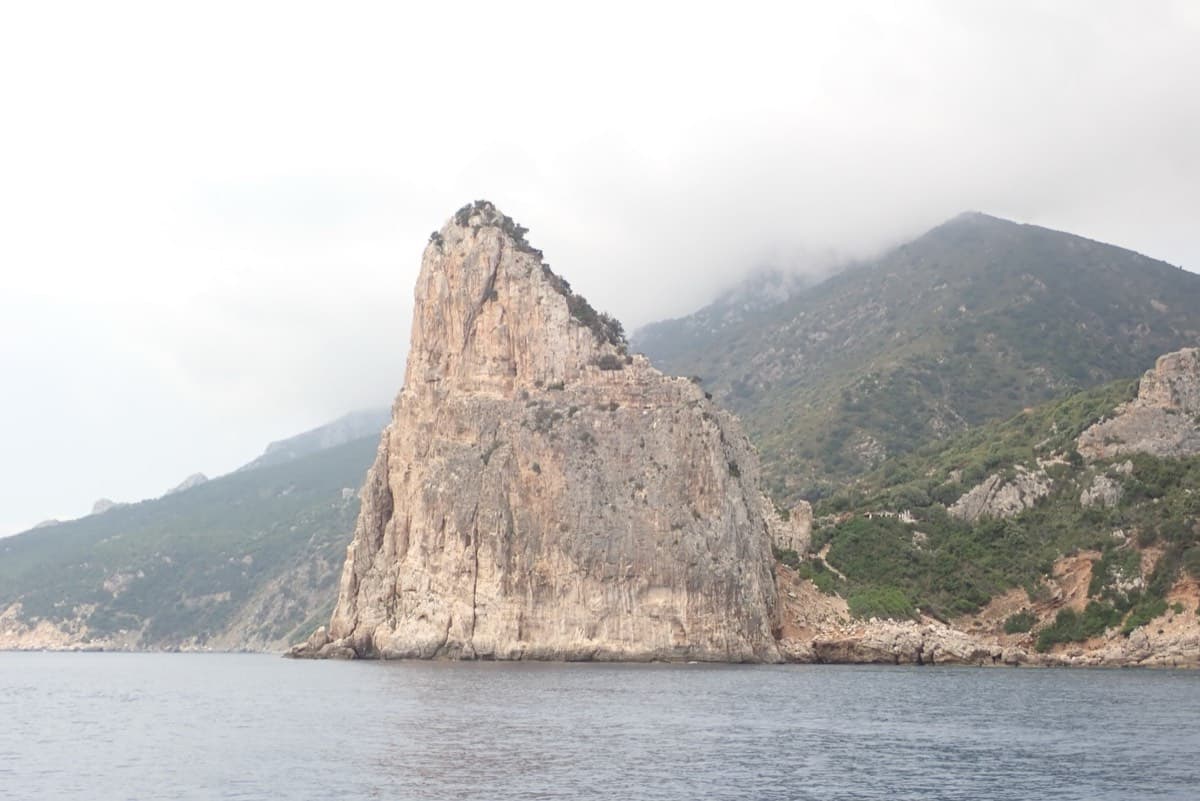
Pedra Longa, Baunei, seen from the sea

Italy · Sardinia

Marinaio di Foresta

An airy, mostly left-rising traverse that spirals round the Pedra Longa sea stack to its summit, on water-runnelled grey walls and pocketed white rock right above the sea. It has become one of the most popular routes in Sardinia, so expect queues.

6a+7 pitches190 m

Committing
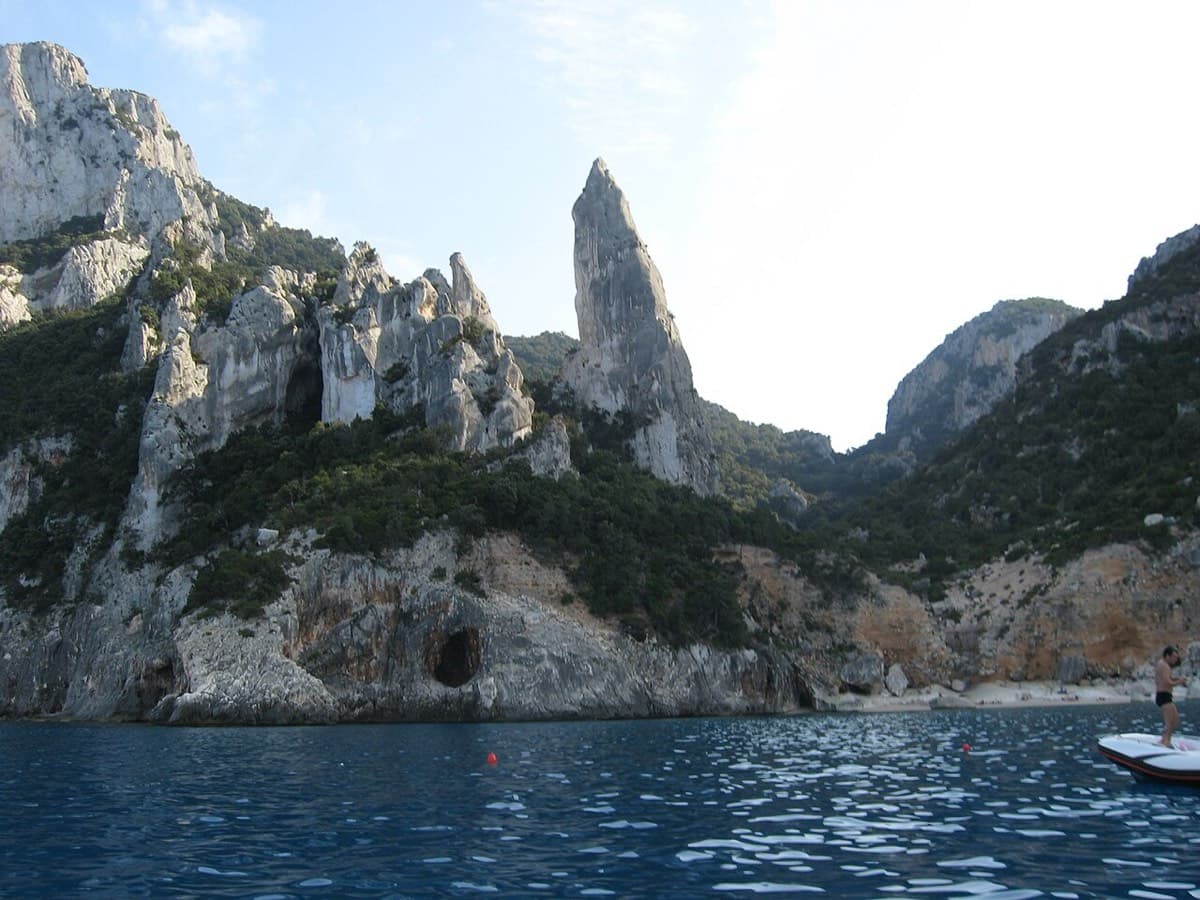
The Aguglia di Goloritzè above Cala Goloritzè, seen from the sea

Italy · Sardinia

Easy Gymnopédie

This is the easiest way to the top of Sardinia's iconic 140 m pinnacle above Cala Goloritzè. Short technical bulges and walls lead to a fine slab finish, and the harder overhangs can be aided. Gulliver splits it into 4 pitches; camptocamp gives 5. Check seasonal access rules for Cala Goloritzè before going.

6b5 pitches150 m

Read the cautions

The Masua sea cliffs seen from the water

Italy · Sardinia

L'Italia Liberata

A short but superb sea-cliff route on beautifully sculpted limestone in an incredible setting near Pan di Zucchero. Corners and an airy pillar lead to a steep, rounded 6a wall. Camptocamp rates it 'great'.

6a4 pitches120 m

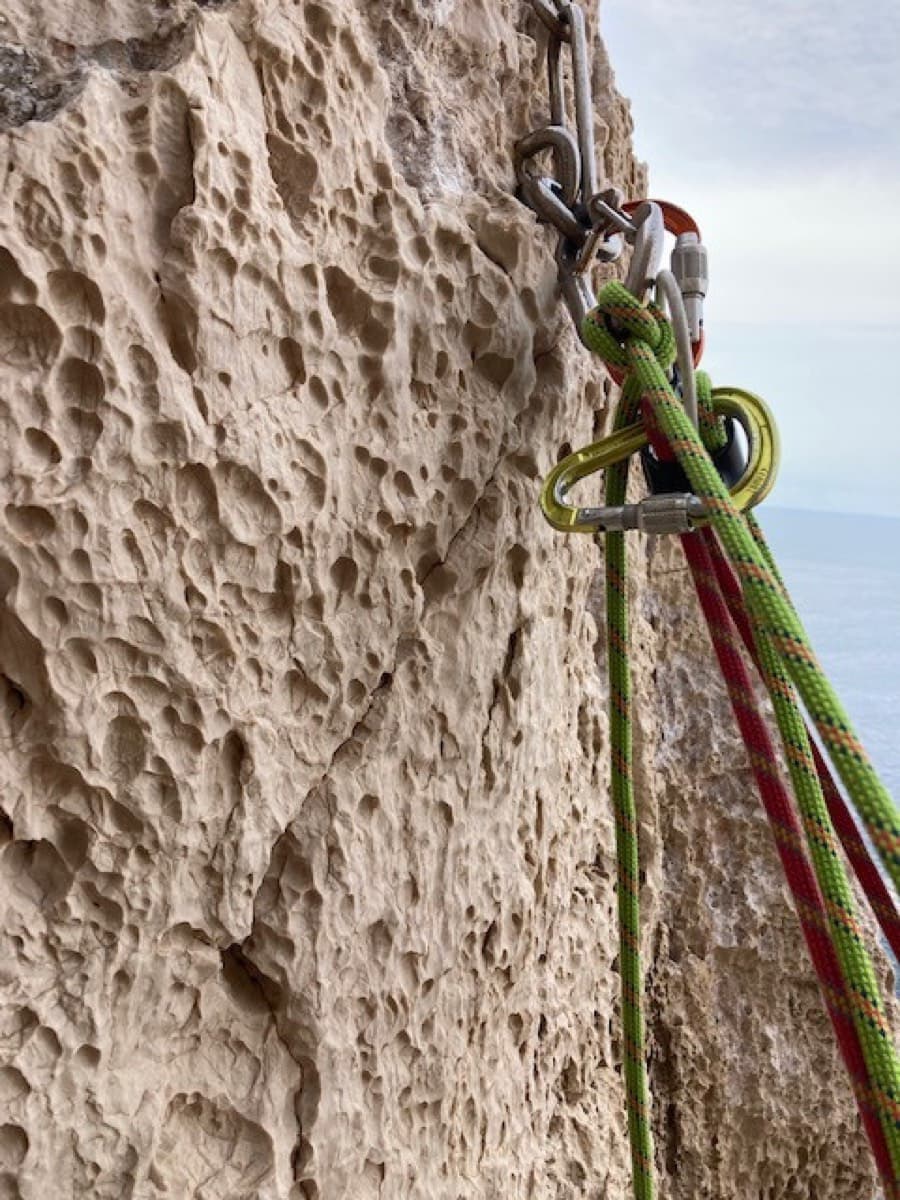
A chained belay on the pocketed limestone of Powaqqatsi, Capo Caccia

Italy · Sardinia

Powaqqatsi

The easiest line on the Capo Caccia sea cliff: six pitches of 4b to 4c on pocketed, sharply sculpted limestone above the open sea. You abseil in from the top and climb out. The first two pitches are vegetated; the climbing proper starts on the pitch 3 slab.

4c6 pitches145 m

Read the cautionsCommitting

Around 6c · about 9 pitches

Similar elsewhere

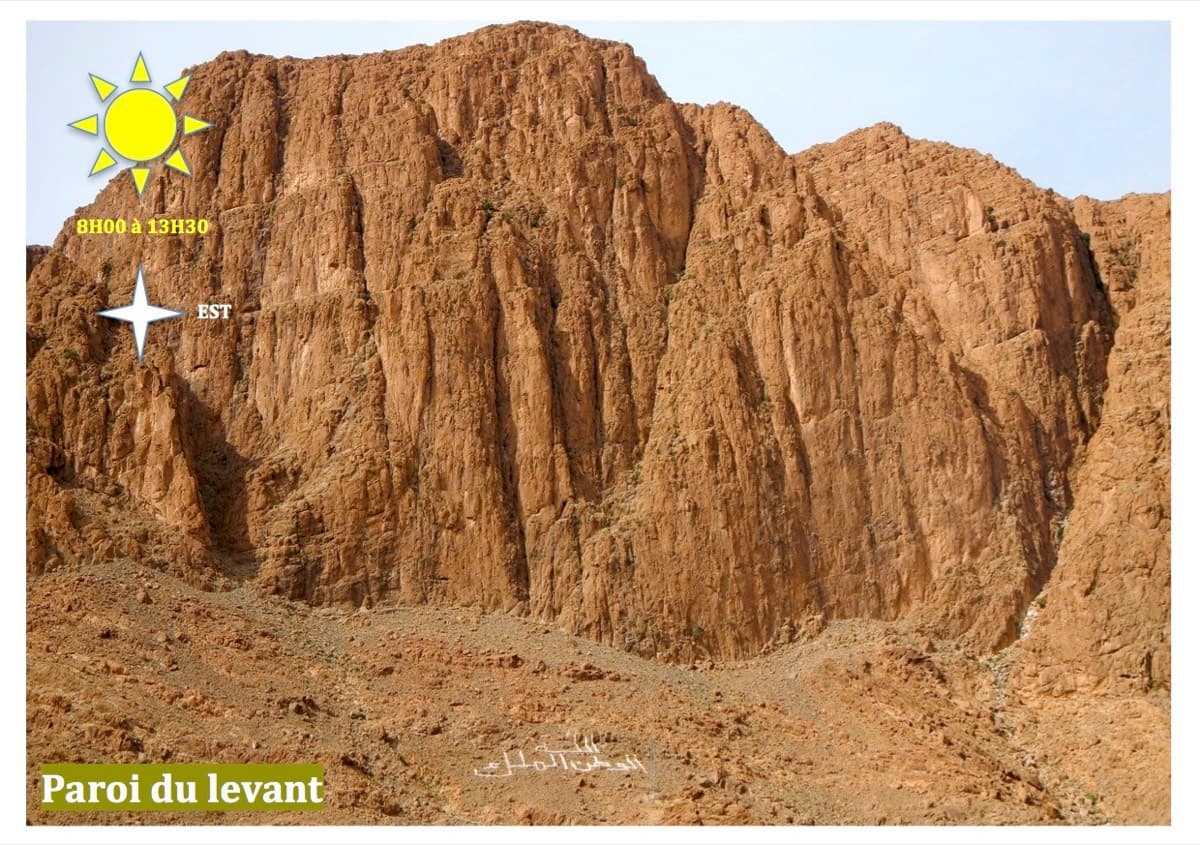
The Paroi du Levant above Tizgui, with the sun hours for the wall; Voie Tifégha is at its left end

Morocco · Todra Gorge (Todgha)

Voie Tifégha

A wandering nine-pitch line up the left end of the big wall above Tizgui, mostly 5b to 6a with a superb steep corner on pitch 6. Well bolted but with a mountain feel: it is little travelled, the rock is very abrasive and not fully cleaned, and the belays and the walk-off take some finding.

6c9 pitches250 m

Read the cautions

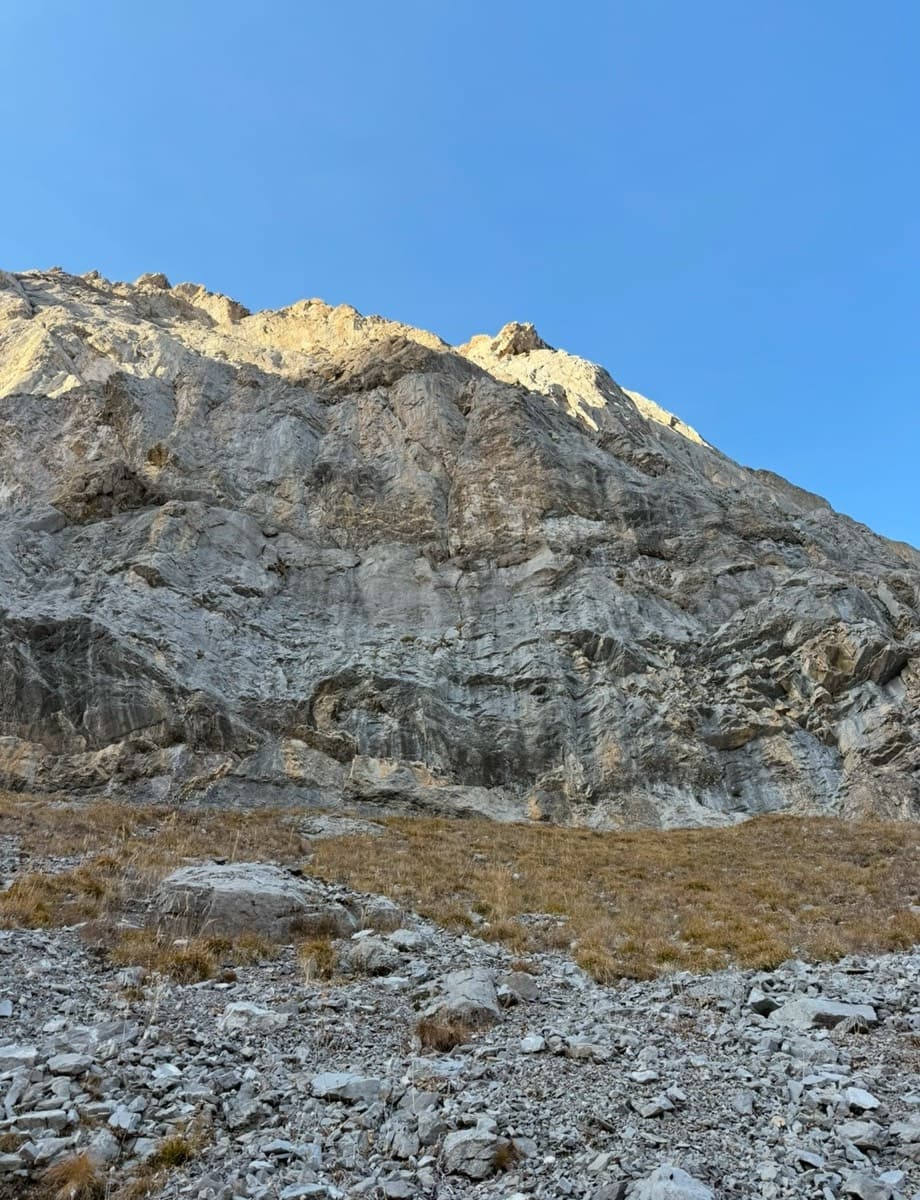
The wall of Les Montons taken by Follomi, seen from the approach

Switzerland · Sanetsch

Follomi

The classic introduction to the Sanetsch at 6c: eight varied pitches up a pillar of superb rough limestone, with the hard climbing packed into a few well-bolted metres on each pitch. A steep corner mantel, a balancy wall, a fine slab and an airy exit from a niche. Tops out on grassy slopes with a walk-off.

6c8 pitches250 m

The north face of Anića kuk, Paklenica, where Alive climbs

Croatia · Paklenica

Alive

Seven sustained pitches of 6a to 6c on the shady north face of Anića kuk, then an easy scramble out. A poor first pitch gives way to a steep ramp, a slightly overhanging 6c wall, an off-width and a fine finishing slab. The rock improves with every pitch.

6c8 pitches220 m

No photo yet

Austria · Ötztal

Linas Traumreise

Steep, exposed gneiss left of the Reinhard Schiestl via ferrata, finding a way between huge roofs. The cruxes are the steep slabs of pitches 5 and 6 (6c). Stiffly graded, and the abseil descent is not for everyone.

6c8 pitches195 m

Compiled from published sources and last verified October 2026. Bolts, anchors and access change. Climbing is dangerous and you are responsible for your own decisions: check a current topo and read the disclaimer.