Multipitch Atlas

Skandal um Rosi

Gelbeck east face (Drusenfluh) · Rätikon (Montafon) · Austria

Easy to bailBolting confidence: medium

Five homogeneous pitches of fine, varied limestone climbing on the Gelbeck east face, almost always between UIAA 6 and 7 and hardly ever easier. An overhanging arête on the last pitch is the tricky bit.

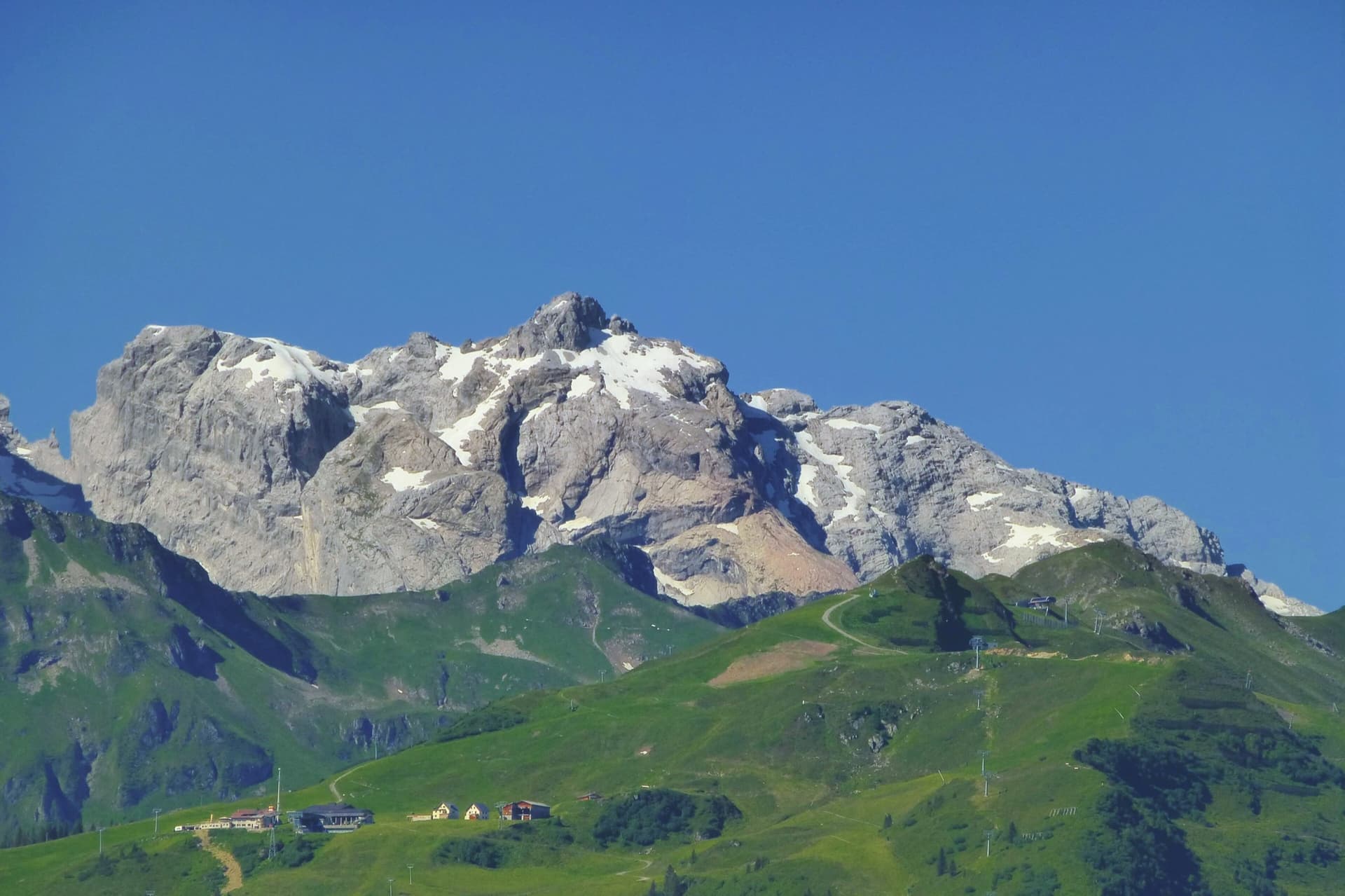
The Drusenfluh massif from the north, seen from Rellseck above Bartholomäberg. The Gelbeck is a buttress low on this side of the mountain above the Gauertal; the wall and the line are not identified in this view.Photo: Reinhard Müller · CC BY-SA 4.0

Photo

The Drusenfluh massif from the north, seen from Rellseck above Bartholomäberg. The Gelbeck is a buttress low on this side of the mountain above the Gauertal; the wall and the line are not identified in this view.Photo: Reinhard Müller · CC BY-SA 4.0
Hardest pitch
6b+
Pitches
5
Length
220 m
Approach
210 min
Aspect
E
East-facing
Rope
2×60 m

The route

Overview

A sustained companion to Kabarett Drusenfluh, first climbed a month later in 2003. Every pitch is UIAA 7- or 7, with an obligatory grade of 6, so it suits climbers who are solid at 6b. The climbing is varied and the hut calls it very well protected. In wet conditions it can be combined with Kabarett Drusenfluh on the right or Una Musica Brutale on the left. A short variant is marked on the fourth pitch of the topo.

The climbing

Pitch by pitch

Pitches of Skandal um Rosi
PitchGradeNotes
P16a+/6bUIAA 7-, starting at the water runnel. Grade read from the hut's photo-topo; no pitch description is published.
P26b/6b+UIAA 7. The topo marks the Kabarett Drusenfluh line passing close to the first belay. Grade read from the hut's photo-topo; no pitch description is published.
P36a+/6bUIAA 7-. Grade read from the hut's photo-topo; no pitch description is published.
P46b/6b+UIAA 7. A variant is marked on the topo.
P56b/6b+UIAA 7, with an overhanging arête that is a little tricky.

Getting there

Approach

To the parking

Turn off towards the Montafon at Bludenz and drive to Tschagguns, then right up to Latschau and the car park at the Lünerseewerk power station by the Golmerbahn valley station (about 990 m). By public transport, take bus line 1 from Tschagguns railway station to Latschau Golmerbahn Talstation. From there walk up the Gauertal to the Lindauer Hütte (1744 m), about 2.5 hours; most parties stay at the hut.

On foot · about 210 min

From the Lindauer Hütte take the path towards the Öfapass. After the first steep step turn left towards the Eistobel and follow faint tracks, partly cairned, to the foot of the Gelbeck east face, which rises on your right. Go as for Rätikon Lyrics and Kabarett Drusenfluh, then continue left around the corner and a little uphill into the angle of the rock. The start is on the right at a very obvious water runnel. About 1 hour from the hut.

Map of the walk-in

  • Route base
  • Parking

Loading map

The point marks the base of the route.

Coordinates · route base

47.03290, 9.80897

Parking

47.07256, 9.87418

Car park at the Lünerseewerk, Latschau

Point from Start coordinates published on the Lindauer Hütte route page

For your phone or watch

Download GPX

Contains the route point and parking. Opens in most mapping apps and GPS watches.

Points are compiled from published sources, with the precision stated above. They were not surveyed on the ground: check them against a current topo.

Getting down

Descent

Abseil the Kabarett Drusenfluh line (55 m free-hanging, 45 m, 60 m) or, alternatively, the route itself.

Retreat

Bailing off the route

Easy to bail

The hut describes abseiling either the route itself or the adjacent Kabarett Drusenfluh line, which has plenty of belays. The top abseil on the Kabarett line is 55 m and free-hanging.

Retreat from
Any belay, on the route or across to the Kabarett Drusenfluh belays.
Point of no return
None documented.
Carry
Two ropes; 60 m for the standard three abseils.
Basis
Stated in the sourcesBoth abseil options are stated on the Lindauer Hütte route page.

Safety

Hazards

  • The first abseil on the Kabarett Drusenfluh line is 55 m and free-hanging; you need a slight swing to reach the belay.
  • Alpine setting at over 2100 m, about three hours from the road: weather changes, storms and a long way down if something goes wrong.
  • Only one detailed source exists for this route, written by one of the first ascensionists; no independent trip reports were found.

Sun and weather

Conditions

An east to north-east facing limestone wall starting at about 2100 m, so a high-summer route with morning sun (season inferred from altitude and aspect; the sources give no months). The hut pages note that water runs down parts of the Gelbeck after rain and suggest combining pitches of neighbouring routes when one line is wet. Expect snow at the foot of the wall early in the season and afternoon thunderstorms in summer (inferred).

Usual season · Jul to Sep

Sun on the wall · E-facing

Working out the sunlit hours for this month.

  • January: not yet worked out
  • February: not yet worked out
  • March: not yet worked out
  • April: not yet worked out
  • May: not yet worked out
  • June: not yet worked out
  • July (usual season): not yet worked out
  • August (usual season): not yet worked out
  • September (usual season): not yet worked out
  • October: not yet worked out
  • November: not yet worked out
  • December: not yet worked out

Sun on the wallDaylight, wall in shade● Usual season

Estimated from the wall's aspect only. Ignores surrounding terrain, gullies and the wall's exact shape. Clock times are local to the wall (Central European time), for the 15th of each month.

Monthly climate averages for Rätikon (Montafon), 1991-2020
MeasureJanFebMarAprMayJunJul (usual season)Aug (usual season)Sep (usual season)OctNovDec
Mean daily high °C−6−4−137111414106−0−5
Mean daily low °C−15−14−10−7−31340−4−9−14
Rain days 1 mm or more131316162121201816131314

● marks the usual climbing season. Averages for 1991-2020 at about 2092 m. Area climate from Open-Meteo reanalysis. Temperatures are adjusted to the height of the crag; rain comes from a grid cell of about 10 to 25 km, and summer highs on sea cliffs can read a few degrees low. The wall and valley can differ. Data: Open-Meteo, CC BY 4.0.

What to carry

Gear

16 quickdraws, extendable slings, helmet. Two 60 m ropes are useful for the abseils.

Checklist

Quickdraws
16
Rope
2×60 m
Helmet
One each
Abseil device and prusik
The descent or the retreat involves abseiling

Derived from the route data; check it against a current topo

From climbers

Reader reports

Reader reports are not being collected yet. Until they are, check a current topo and the local club or guidebook publisher for recent changes to Skandal um Rosi.

Worth knowing

Tips

  • Pitches are up to 55 m: 16 quickdraws are needed and long slings cut the rope drag.
  • Allow 3 to 4 hours on the route.
  • Una Musica Brutale (UIAA 8) starts just left; make sure you are on the right line at the water runnel.

Open questions

Where sources disagree

  • Conversion: UIAA 7 is given as 6b/6b+ and the card uses 6b+, matching the atlas entry for Sorgafresser on the same wall; no source gives a French grade.
  • Individual pitch lengths are not published; the page says five pitches of up to 55 m and about 220 m of wall.

Provenance

Sources

Same area

More in Rätikon (Montafon)

All routes in Rätikon (Montafon)
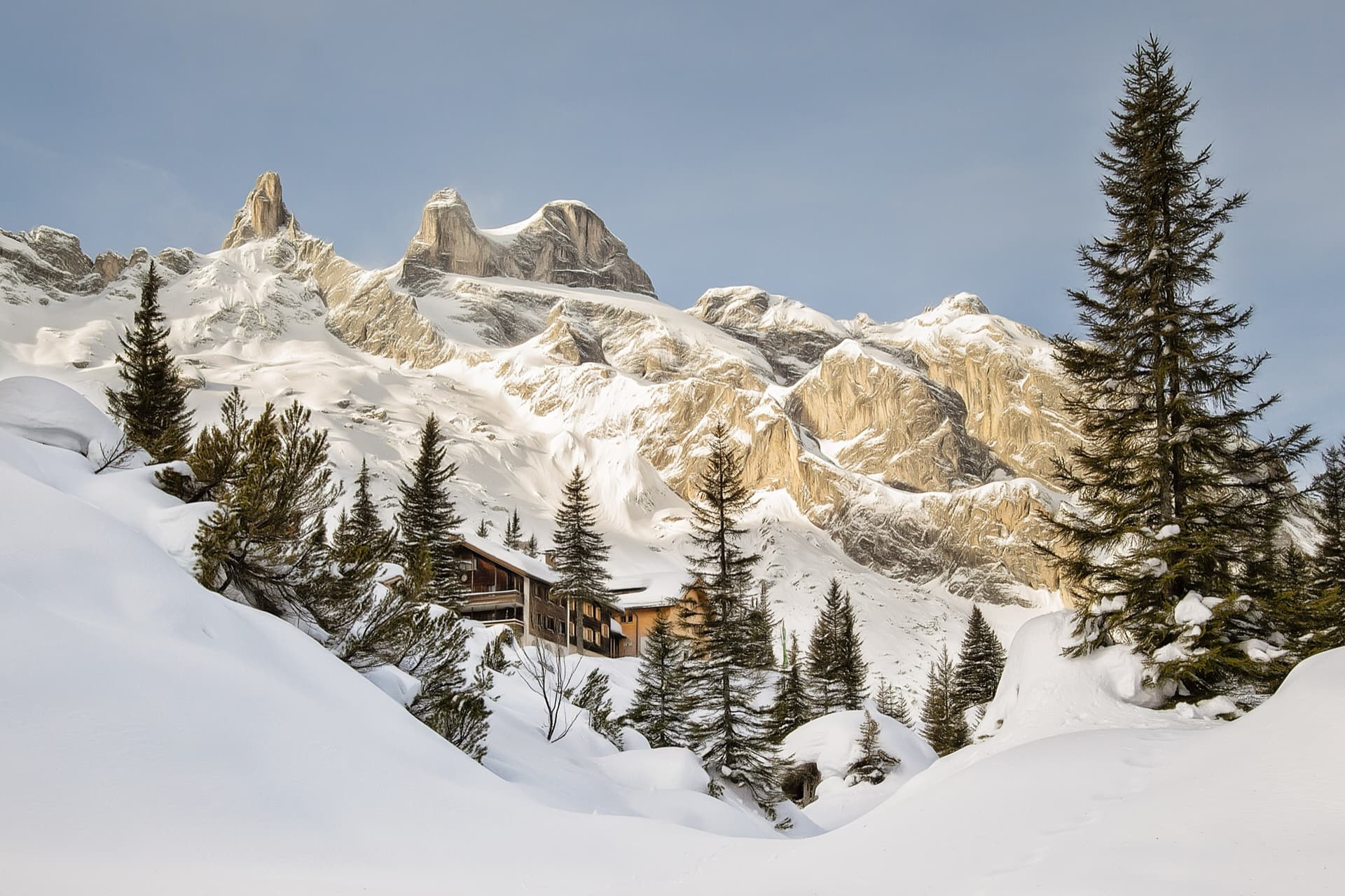
The Lindauer Hütte in winter beneath the Drei Türme; the sunlit yellow buttress on the right, north of the towers, is where the route coordinates place the Gelbeck. The exact line is not marked.

Austria · Rätikon (Montafon)

Sorgafresser

Seven long pitches of varied climbing on mostly very good Rätikon limestone above the Lindauer Hütte, UIAA 7 with 7- obligatory. The last two pitches are very athletic and exposed. Well bolted, but the setting is high and remote.

6b+7 pitches300 m
The Drusenfluh massif from the north, seen from Rellseck above Bartholomäberg. The Gelbeck is a buttress low on this side of the mountain above the Gauertal; the wall and the line are not identified in this view.

Austria · Rätikon (Montafon)

Kabarett Drusenfluh

One of the first modern routes on the front, lower part of the Gelbeck east face: five long pitches of varied, often athletic and exposed limestone climbing. The last two pitches are on heavily water-eroded rock full of drip features.

6b5 pitches220 m

The Drusenfluh massif from the north, seen from Rellseck above Bartholomäberg. The Gelbeck is a buttress low on this side of the mountain above the Gauertal; the wall and the line are not identified in this view.

Austria · Rätikon (Montafon)

Rätikon Lyrics

A sporty 2020 line of cracks, corners, pillars and water-eroded slabs up to mid-height, then spectacular, steep and airy climbing to the top belay it shares with Kabarett Drusenfluh. Two pitches of UIAA 7+, with a few aid points on the last.

6c6 pitches170 m

The Drusenfluh massif from the north, seen from Rellseck above Bartholomäberg. The Gelbeck is a buttress low on this side of the mountain above the Gauertal; the wall and the line are not identified in this view.

Austria · Rätikon (Montafon)

Alchemist

Starts up an inclined slab at the lowest point of the Gelbeck, climbs three long, easier pitches through the front spur to a sloping ledge, then finishes with two very steep wall pitches on sharp solution pockets that most parties climb with a few aid moves.

6c5 pitches200 m

Around 6b+ · about 5 pitches

Similar elsewhere

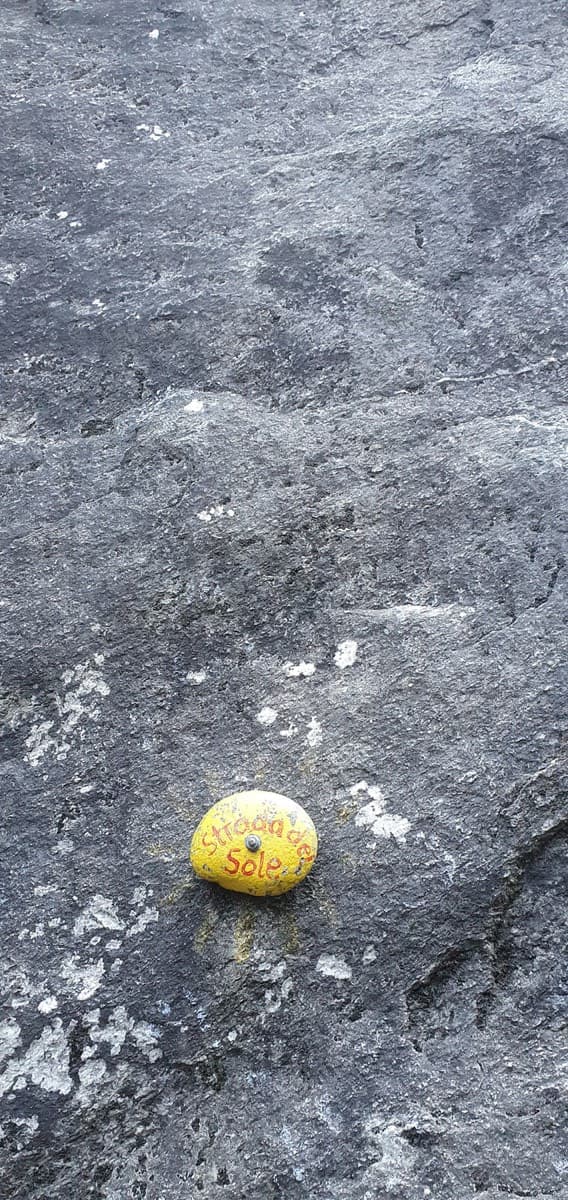
A view of the region, not this route's wall. The painted stone that marks the start of Strada del Sole at the foot of the Nösslachwand

Austria · Ötztal

Caipirinha

A mix of slabs and steep, juggy passages in the Sonnenblume sector, mostly around 5b to 5c+. The one hard move is a small roof on pitch 4 (6b+), which goes easily on aid.

6b+5 pitches170 m

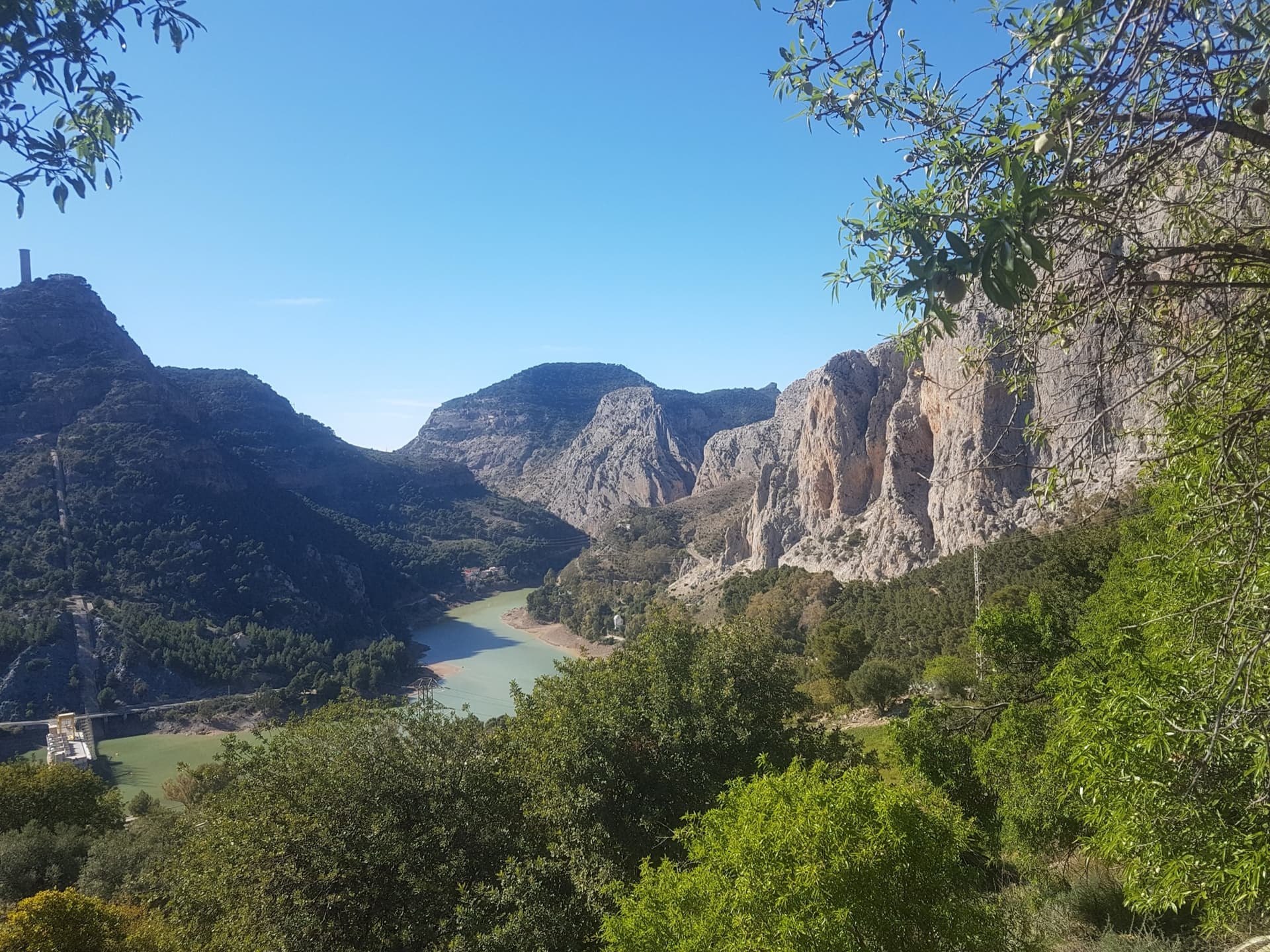
El Chorro: the reservoir and the limestone walls above it, seen from the hillside. A general view of the area; the route is not marked.

Spain · El Chorro

Ébola

The direct line just right of Amptrax, following what used to be that route's abseil descent. Two easy pitches lead to two good ones that each start with a bulge out of a cave: a 6a+ and then the 6b+ crux, short and powerful before a vertical grey wall on good holds. The rock is compact and the belays are comfortable.

6b+5 pitches155 m

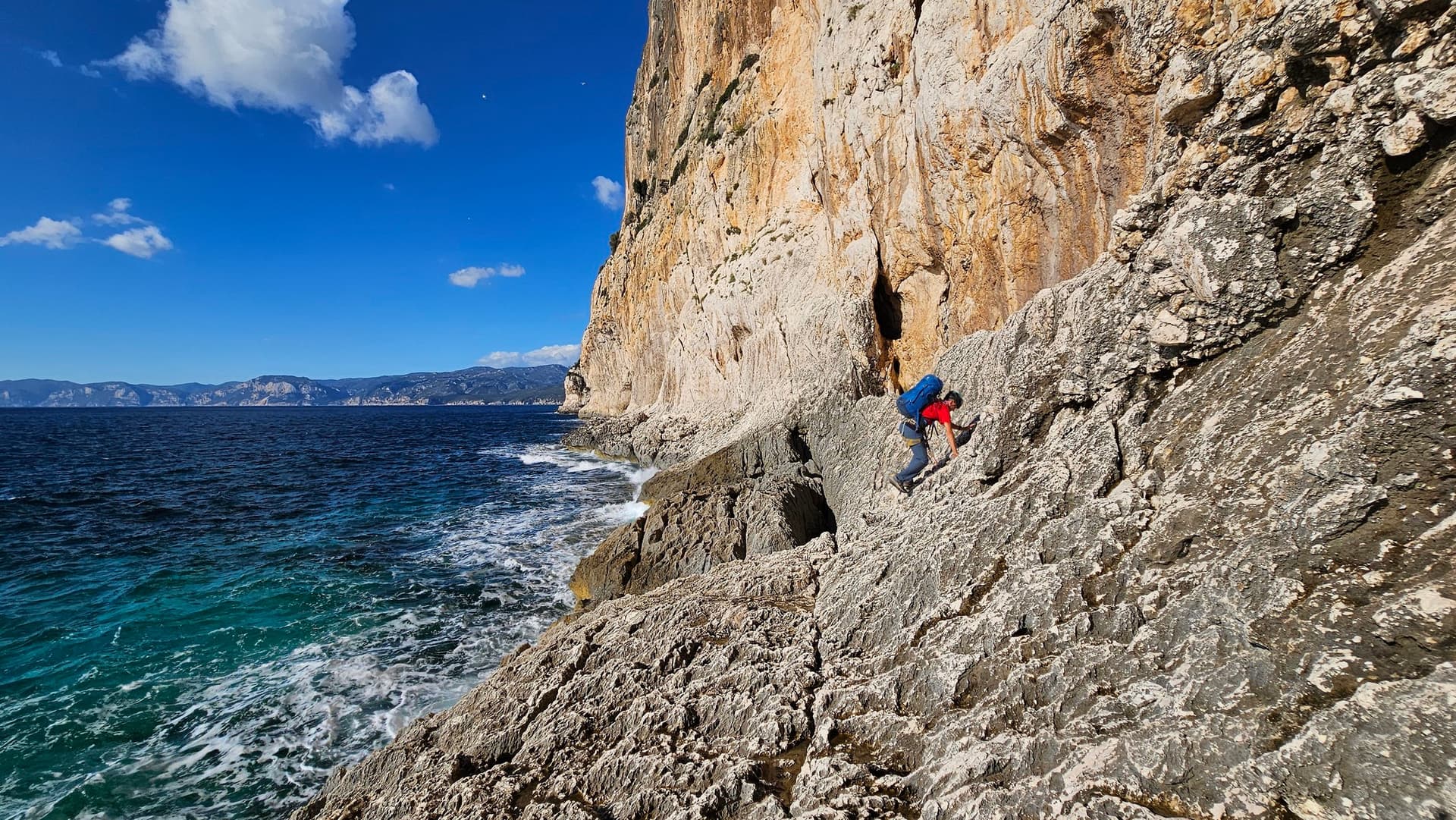
The Biddiriscottai sea cliff north of Cala Gonone, seen from the scramble along its foot on the approach to Oceano Mare.

Italy · Sardinia

Oceano Mare

Five steep, sustained pitches at 6b to 6b+ straight out of the sea on new titanium bolts, on abrasive, pocketed limestone. Bulges, a smooth roof, a corner and a thin finishing crack, with a cave belay after pitch 1.

6b+5 pitches160 m

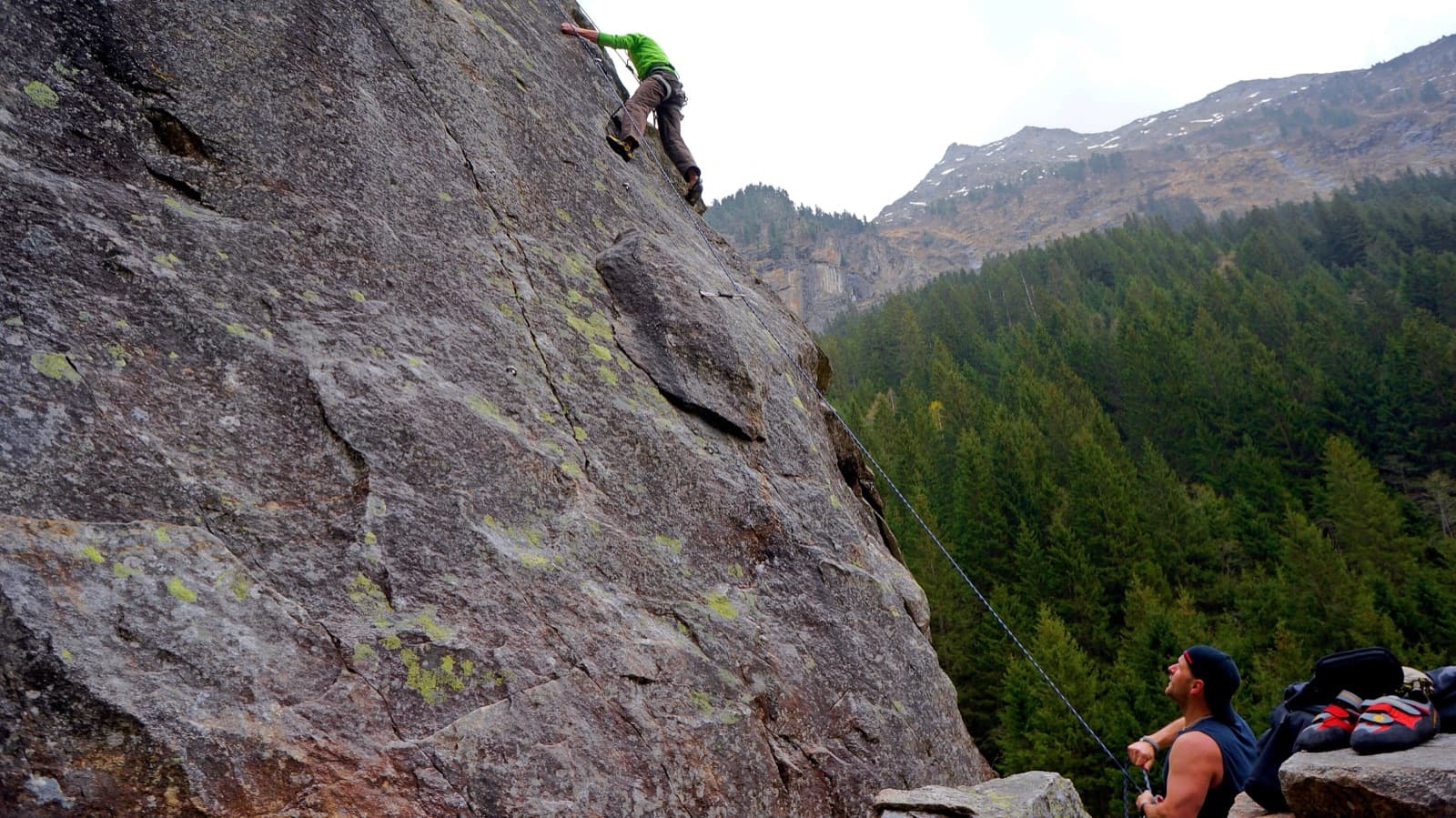
Slab climbing at the Ewige Jagdgründe crag near Ginzling in the Zillertal; the Wiegelwand is the wall above this sector and is not in the picture.

Austria · Zillertal

Schwarzer Teufel

A slab route on the left side of the Wiegelwand with steep passages on small edges; UIAA 7/7+ at the crux on pitch 3, 6 to 6+ obligatory. The easier pitches are a bit grassy. Often wet, so look from below first.

6b+5 pitches110 m

Compiled from published sources and last verified October 2026. Bolts, anchors and access change. Climbing is dangerous and you are responsible for your own decisions: check a current topo and read the disclaimer.