Spain · El Chorro
Amptrax
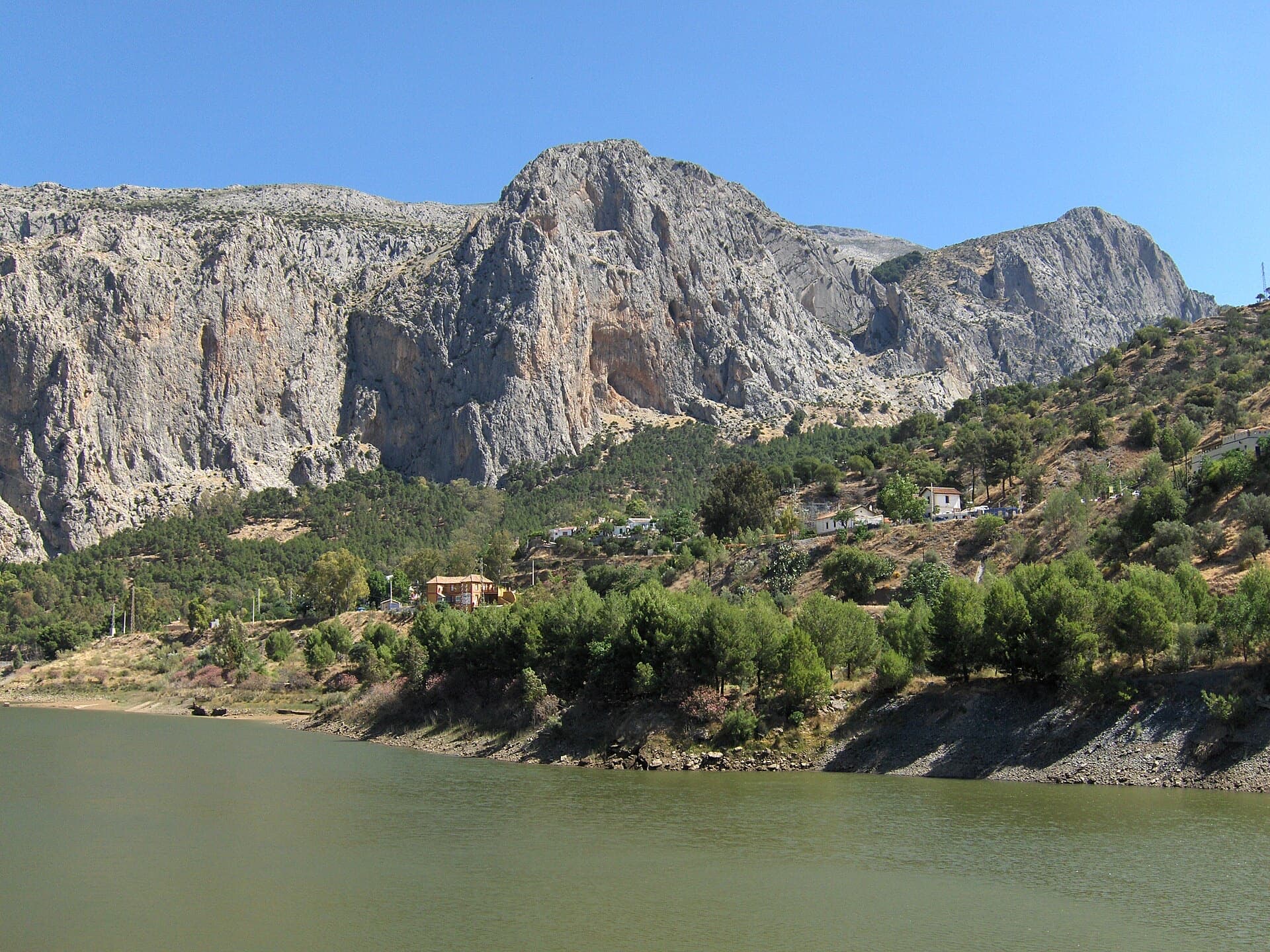
The absolute El Chorro classic: a physical, sustained line that feels tough for the grade, with a 6a traverse right under the roof. Polished in places from heavy traffic.
6a9 pitches182 m
Frontales (Amptrax sector) · El Chorro · Spain
Easy to bailBolting confidence: medium
The direct line just right of Amptrax, following what used to be that route's abseil descent. Two easy pitches lead to two good ones that each start with a bulge out of a cave: a 6a+ and then the 6b+ crux, short and powerful before a vertical grey wall on good holds. The rock is compact and the belays are comfortable.
The route
Ébola is a five-pitch sport route on the Frontales, immediately right of the classic Amptrax and a little harder. It uses the belays of Amptrax's original abseil line, so you climb and descend by the same anchors. The difficulty is concentrated in short, well-defined cruxes at the start of pitches 3 and 4. The equipper describes generally compact rock, comfortable ledge belays and grey slabs that steepen in short steps.
The climbing
| Pitch | Grade | Notes |
|---|---|---|
| P1 | 4+ | IV+. An access pitch up the left side of a small buttress to a chained belay beside a bush. Shared with the neighbouring route Z Mapp. |
| P2 | 5+ | V+. Take the right-hand, more direct of two bolt lines, going straight up rather than up and left. More technical, on better rock, to a belay in an alcove a few metres left of a big bush. |
| P3 | 6a+ | Move left and up out of the cave over a bulge, the crux of the pitch, then straight up a technical slab on sound rock to another alcove. |
| P4 | 6b+ | The hardest and best pitch. Left and up out of the alcove, then right over the bulge with a pinch and a layback rib, then a vertical grey wall where the holds get bigger. One long horizontal reach higher up. |
| P5 | 5 | V. Straight up as the angle eases to meet Amptrax at the top. The equipper also lists a short grade III section above. |
Getting there
El Chorro village is the base, about 45 minutes from Málaga by car. Trains run often from Málaga to Álora and about once a day to El Chorro itself. Do not drive or park inside the nature park where signs forbid it. For the Frontales, park at the reservoir below the village, at Los Albercones (poor road) or at Las Encantadas.
About 30 minutes on foot from the village, as for Amptrax. Scramble up to the bay that holds Amptrax; the scramble has a few moves. Ébola starts up a small buttress to the right of Amptrax, with the first belay (bolts and a chain) visible from the ground just left of a bush. Higher up, a big brown cave above a corner on the right is the landmark: the route passes just left of it.
Loading map
The point marks the crag, not the exact start of the route.
Point from Mountain Project sector point (Frontales, Amptrax)
Contains the route point. Opens in most mapping apps and GPS watches.
Points are compiled from published sources, with the precision stated above. They were not surveyed on the ground: check them against a current topo.
Coordinates: 36.91342, -4.76039 (crag)
Getting down
Abseil the route from the same belays. The equipper gives the longest abseil as 35 m and says a single 70 m rope is enough; Mountain Project says a 70 m rope is necessary. The alternative is the long walk-off described for Amptrax.
Retreat
Easy to bail
Abseiling the route is the normal descent and uses the same bolted belays you climb past, so you can turn round from any of them. The longest abseil is 35 m and a single 70 m rope covers it.
Safety
Sun and weather
South-facing. The equipper gives autumn, winter and spring as the season. Expect company: Amptrax next door is the most popular multipitch on the wall, and its parties used to abseil this line.
Sun on the wall · S-facing
Working out the sunlit hours for this month.
Sun on the wallDaylight, wall in shade● Usual season
Estimated from the wall's aspect only. Ignores surrounding terrain, gullies and the wall's exact shape. Clock times are local to the wall (Central European time), for the 15th of each month.
| Measure | Jan (usual season) | Feb (usual season) | Mar (usual season) | Apr (usual season) | May (usual season) | Jun | Jul | Aug | Sep | Oct (usual season) | Nov (usual season) | Dec (usual season) |
|---|---|---|---|---|---|---|---|---|---|---|---|---|
| Mean daily high °C | 14 | 15 | 17 | 20 | 24 | 29 | 32 | 32 | 27 | 23 | 17 | 15 |
| Mean daily low °C | 5 | 6 | 8 | 10 | 13 | 17 | 20 | 20 | 17 | 14 | 9 | 7 |
| Rain days 1 mm or more | 7 | 7 | 7 | 7 | 6 | 2 | 0 | 1 | 4 | 7 | 8 | 7 |
● marks the usual climbing season. Averages for 1991-2020 at about 321 m. Area climate from Open-Meteo reanalysis. Temperatures are adjusted to the height of the crag; rain comes from a grid cell of about 10 to 25 km, and summer highs on sea cliffs can read a few degrees low. The wall and valley can differ. Data: Open-Meteo, CC BY 4.0.
What to carry
18 quickdraws and a single 70 m rope (Mountain Project). Helmet: this wall is busy and Amptrax parties are directly alongside.
Derived from the route data; check it against a current topo
From climbers
Reader reports are not being collected yet. Until they are, check a current topo and the local club or guidebook publisher for recent changes to Ébola.
Worth knowing
Open questions
Provenance
Same area
Spain · El Chorro
The absolute El Chorro classic: a physical, sustained line that feels tough for the grade, with a 6a traverse right under the roof. Polished in places from heavy traffic.
6a9 pitches182 m
Spain · El Chorro
Ten varied pitches on good rock in a superb position: a roof, slabs, a tenuous traverse by a cave and a steep corner. Several pitches feel stiff for the grade, especially the P2 crux.
6b10 pitches279 m
Spain · El Chorro
An airy, exposed adventure on clean, solid rock: the best long easy route on the Frontales and an ideal first big multipitch.
5+8 pitches251 m
Spain · El Chorro
The longest easy line in El Chorro. It starts up a broken corner-ramp, then climbs a steeper wall trending right to the top. It's uncommitting and easy to link pitches, with some loose rock to watch for.
5c12 pitches310 m
Around 6b+ · about 5 pitches

Austria · Ötztal
A mix of slabs and steep, juggy passages in the Sonnenblume sector, mostly around 5b to 5c+. The one hard move is a small roof on pitch 4 (6b+), which goes easily on aid.
6b+5 pitches170 m
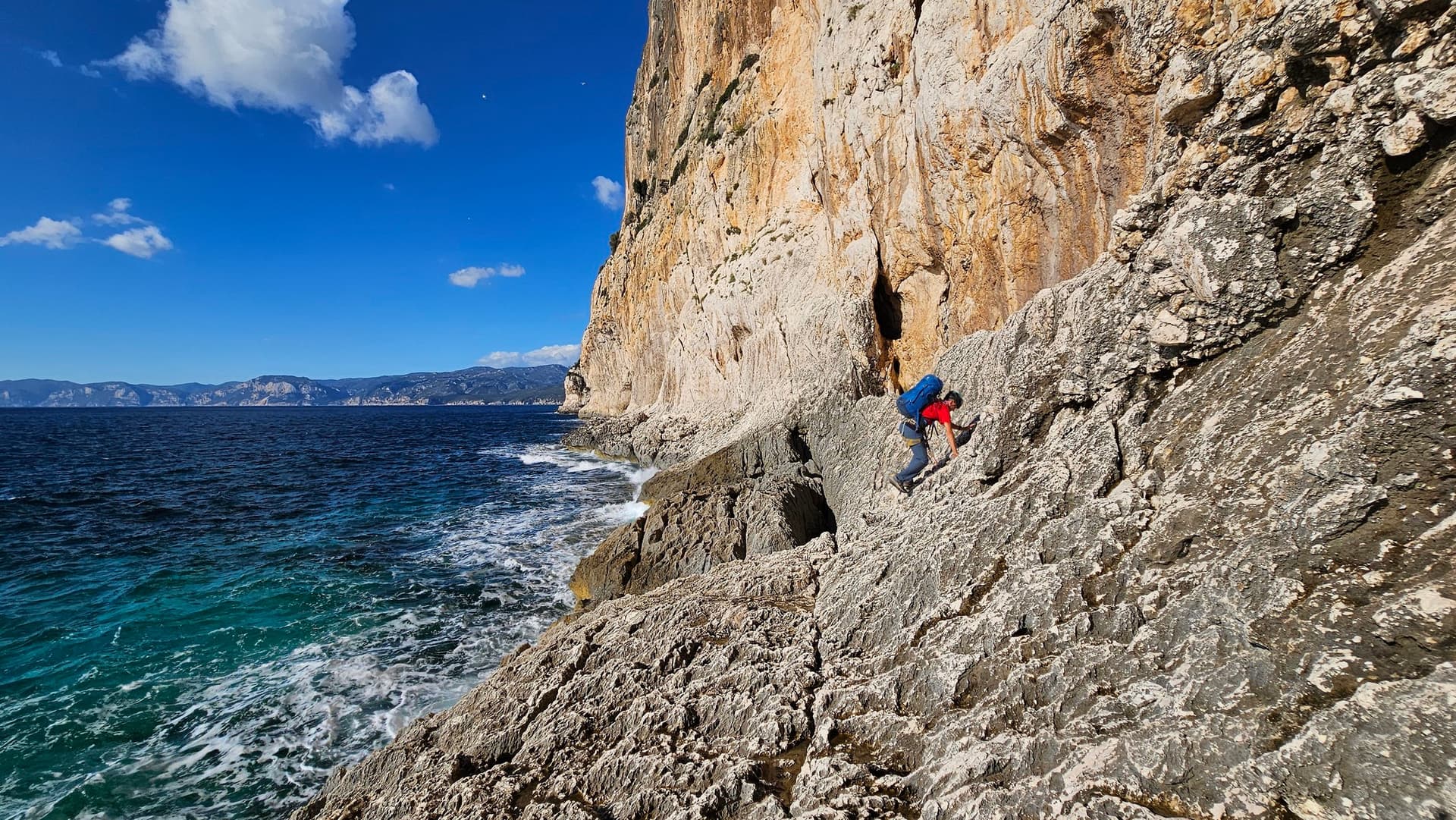
Italy · Sardinia
Five steep, sustained pitches at 6b to 6b+ straight out of the sea on new titanium bolts, on abrasive, pocketed limestone. Bulges, a smooth roof, a corner and a thin finishing crack, with a cave belay after pitch 1.
6b+5 pitches160 m
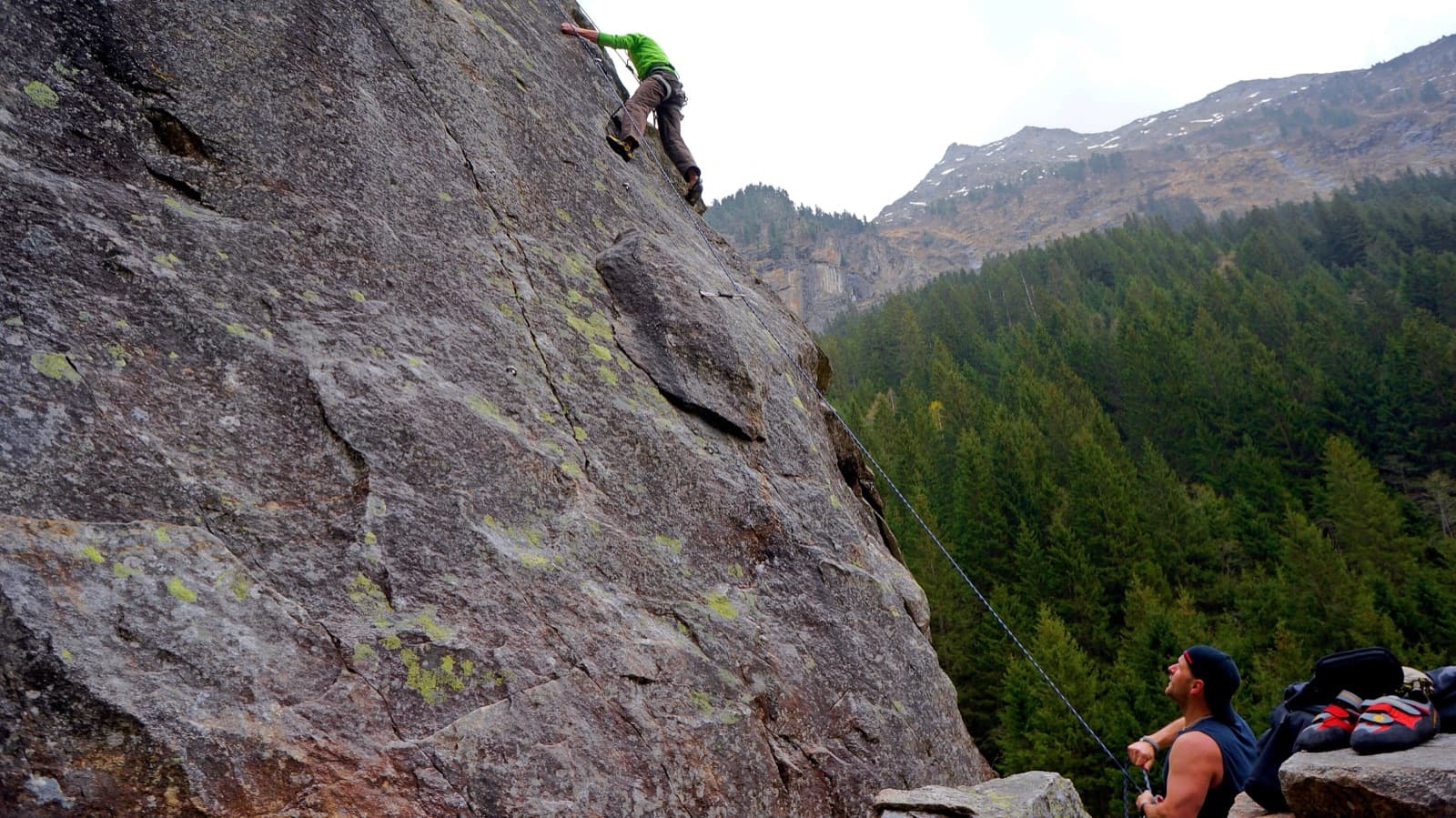
Austria · Zillertal
A slab route on the left side of the Wiegelwand with steep passages on small edges; UIAA 7/7+ at the crux on pitch 3, 6 to 6+ obligatory. The easier pitches are a bit grassy. Often wet, so look from below first.
6b+5 pitches110 m
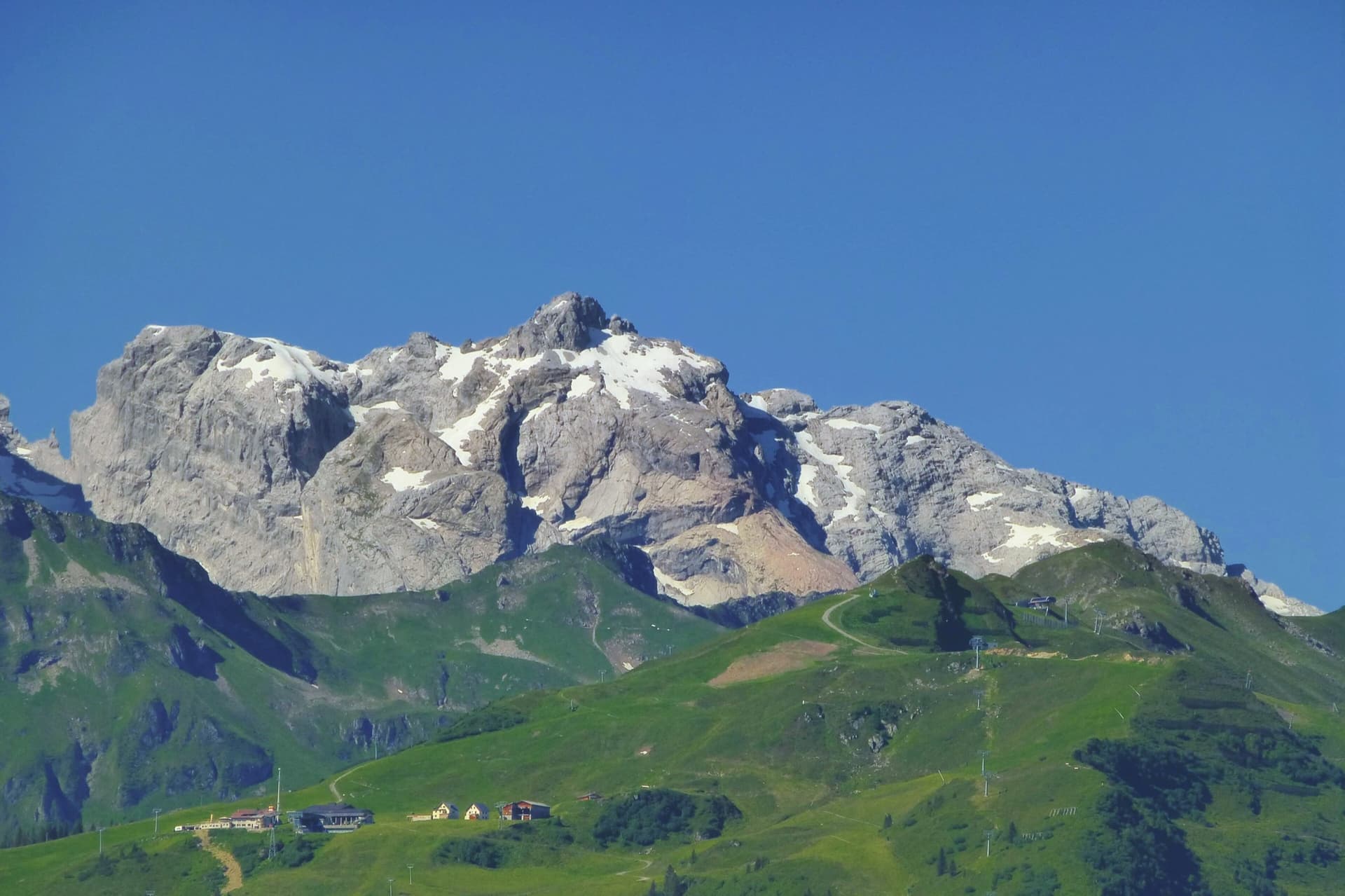
Austria · Rätikon (Montafon)
Five homogeneous pitches of fine, varied limestone climbing on the Gelbeck east face, almost always between UIAA 6 and 7 and hardly ever easier. An overhanging arête on the last pitch is the tricky bit.
6b+5 pitches220 m
Compiled from published sources and last verified October 2026. Bolts, anchors and access change. Climbing is dangerous and you are responsible for your own decisions: check a current topo and read the disclaimer.