Multipitch Atlas

Spigolo Bonatti

Capo d'Uomo · Monte Argentario · Italy

Read the cautionsBail not documentedBolting confidence: medium

A long arête that seems to drop straight into the sea: a sustained 6a first pitch, then corners, slabs and short walls at 5a to 5b+ separated by easy scrambling, with an exposed traverse out on the open face near the top. The 6a can be aided.

Hardest pitch
6a
Pitches
7
Length
240 m
Approach
30 min
Aspect
SE
South-east-facing
Rope
1×60 m
Read before you go

A bolted plaisir arête by all accounts, but there are no recent dated reports, the rock needs care in places and the protection on the easy pitches is undocumented.

The route

Overview

The Spigolo Bonatti follows the full length of the arête below the ruined tower of Capo d'Uomo on Monte Argentario, about 240 m of climbing in seven pitches. Eraldo Meraldi equipped it in 2012 and named it after Walter Bonatti, who spent long periods on the promontory. The hard climbing is on pitch 1; after that the difficulties are 5a to 5b+ with three easy linking pitches. Gulliver's reporters rate it for the setting and a couple of good pitches more than for sustained climbing, and note rock that needs care in places.

The climbing

Pitch by pitch

Pitches of Spigolo Bonatti
PitchGradeLengthNotes
P16a28 mA small corner, then slab on the crest of the arête, slightly left over a short wall and right to the belay. Sustained; Gulliver gives 6a+.
P25b+35 mRight across a slab and up a short wall, then a slanting corner and a traverse right to an arête that leads to the belay. Gulliver gives 5c, technical.
P3225 mOriginal grade II. A faint corner, then traverse right over easier ground to the belay at the foot of the summit pillar. Gulliver notes one harder step (3c).
P45a32 mSlightly right, then straight up to the top of the pillar. Gulliver gives 5b, technical.
P5230 mOriginal grade II. Right to the crest and along it on broken rock, then slightly left to the belay. The ridge path is a couple of metres away here, and the Gulliver author stopped at this point.
P65b+37 mWalk about 10 m along the crest; at the first bolt go out right onto the open face and traverse to the second notch, where you regain the arête and climb easily to the belay. The exposed traverse is the highlight of the upper route.
P7355 mOriginal grade III. Right of the arête, then along it until it eases, and up easy steps to the final belay just below the tower.

Getting there

Approach

To the parking

Drive to Porto Santo Stefano on Monte Argentario. At the port, turn left at the first roundabout and go up the Vallone del Campone for about 3.5 km. At the junction turn left and, where the road crests with a sea view, park on the left in an earth lay-by.

On foot · about 30 min

About 30 minutes (Gulliver). Walk a few metres on along the tarmac and take the dirt road that drops to the right. After about 200 m take the level dirt road on the right to a wide uphill bend, then the path on the left (cairn) along the whole ridge towards the Capo d'Uomo tower, about 15 minutes; you see the arête from here. Near the tower the path drops left to the single-pitch crag. Keep descending past the lowest routes, following cairns, at first to the left. At a scree slope the path forks: the right branch goes to Argento Argentario and Maria Mare; for the Spigolo go down the scree, then right to the wall. The start is on an obvious ledge on the arête below a clear line of bolts.

Map of the walk-in

  • Crag

Loading map

The point marks the crag, not the exact start of the route.

Coordinates · crag

42.39578, 11.10402

Point from camptocamp waypoint 1710698

For your phone or watch

Download GPX

Contains the route point. Opens in most mapping apps and GPS watches.

Points are compiled from published sources, with the precision stated above. They were not surveyed on the ground: check them against a current topo.

Getting down

Descent

The final belay is just below the tower, on the ridge you approached along; walk back to the car by the same path.

Retreat

Bailing off the route

Bail not documented

Retreat is not described in any source. The belays are bolted, and from the top of pitch 5 the ridge path is a couple of metres away, which gives an easy exit two pitches before the end. Below that, you would have to abseil pitches of up to 35 m (50 m by Gulliver's figure for pitch 2) and walk back up the scree.

Retreat from
Top of pitch 5 (walk off to the ridge path). Lower belays are bolted but not confirmed as abseil stations.
Point of no return
Not documented.
Carry
Two ropes if you want to be sure of abseiling the lower pitches, plus maillons, since abseil hardware is not confirmed.
Basis
Part stated, part inferredThe exit at the top of pitch 5 is stated by Gulliver; everything else is inferred from pitch lengths.

Partly inferred from the route facts

Safety

Hazards

  • Rock is compact in places and needs care in others (Gulliver). The scree on the descent to the start is not always stable.
  • How the grade II and III pitches are protected is not documented, and pitch 7 is 55 m. Treat them as easy ground where you should not fall.
  • Heat. Every wall on the Argentario faces south.
  • The start is a long way below the path; if you retreat from low on the route you have to walk back up the scree.

Sun and weather

Conditions

South-east to south facing, from a little above the sea to about 350 m. In full sun for most of the day: a July 2017 party started walking at 05:00 and clipped the first bolt at 06:00 to finish before the sun arrived. Best in spring and autumn; avoid very hot or very windy days.

Usual season · Mar to May, Oct to Nov

Sun on the wall · SE-facing

Working out the sunlit hours for this month.

  • January: not yet worked out
  • February: not yet worked out
  • March (usual season): not yet worked out
  • April (usual season): not yet worked out
  • May (usual season): not yet worked out
  • June: not yet worked out
  • July: not yet worked out
  • August: not yet worked out
  • September: not yet worked out
  • October (usual season): not yet worked out
  • November (usual season): not yet worked out
  • December: not yet worked out

Sun on the wallDaylight, wall in shade● Usual season

Estimated from the wall's aspect only. Ignores surrounding terrain, gullies and the wall's exact shape. Clock times are local to the wall (Central European time), for the 15th of each month.

Climate figures for Monte Argentario are not available yet

What to carry

Gear

15 quickdraws and normal multipitch kit; cams are not needed (camptocamp). The sources do not name a rope length. The last pitch is given as 55 m, so a 60 m rope is the minimum for the route as described. Helmet.

Checklist

Quickdraws
15
Rope
1×60 m
Helmet
One each
Maillons or spare karabiners
To leave behind if you retreat

Derived from the route data; check it against a current topo

From climbers

Reader reports

Reader reports are not being collected yet. Until they are, check a current topo and the local club or guidebook publisher for recent changes to Spigolo Bonatti.

Worth knowing

Tips

  • The 6a on pitch 1 can be aided (camptocamp gives A0 with 5b obligatory).
  • You can leave the route at the top of pitch 5, where the ridge path is alongside, if you want a shorter day.
  • Argento Argentario (6a, about 110 m) starts higher on the same wall and can finish up the last two pitches of the Spigolo.
  • Capo d'Uomo also has a single-pitch sector re-equipped by Meraldi.

Open questions

Where sources disagree

  • Maximum grade: 6a on camptocamp and PlanetMountain (the opener's figure), 6a+ on Gulliver.
  • Pitches: camptocamp gives 28, 35, 25, 32, 30, 37 and 55 m. Gulliver gives 30, 50, 25, 30 and 30 m for the first five and grades them 6a+, 5c, 3c, 5b, 3a, then mentions two more pitches of 5c and 3a.
  • Approach time: 15 minutes to the tower on camptocamp, 30 minutes to the start on Gulliver.

Provenance

Sources

Around 6a · about 7 pitches

Similar elsewhere

The Adamelo spur on Mallo Pisón, Riglos

Spain · Riglos & Agüero (Mallos)

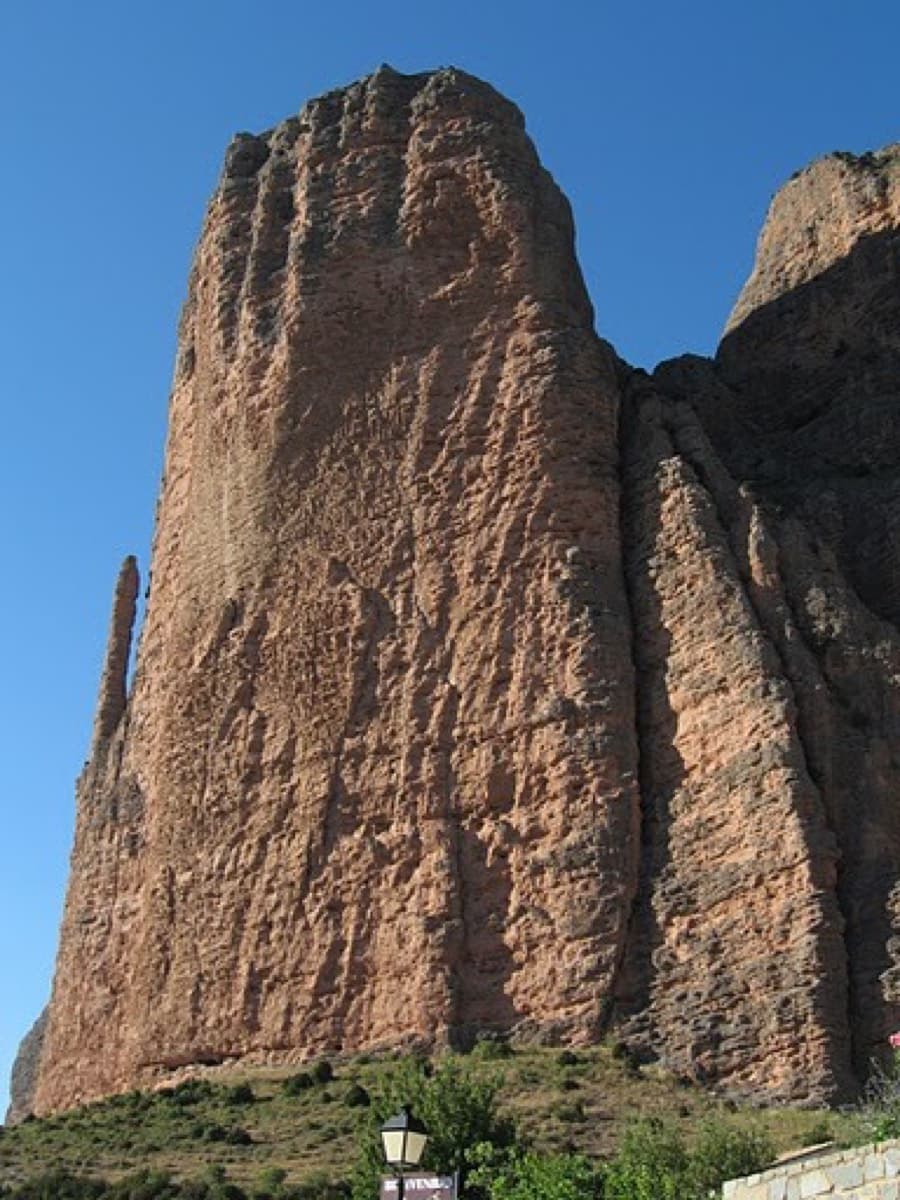
Espolón del Adamelo

This is the gentlest way to sample Riglos. Polished pockets and two bulging 'panzas' lead to a 6a crux that can be pulled through on the bolts (A0). The upper spur is easy, and the Pisón towers loom close by.

6a7 pitches175 m

Read the cautions
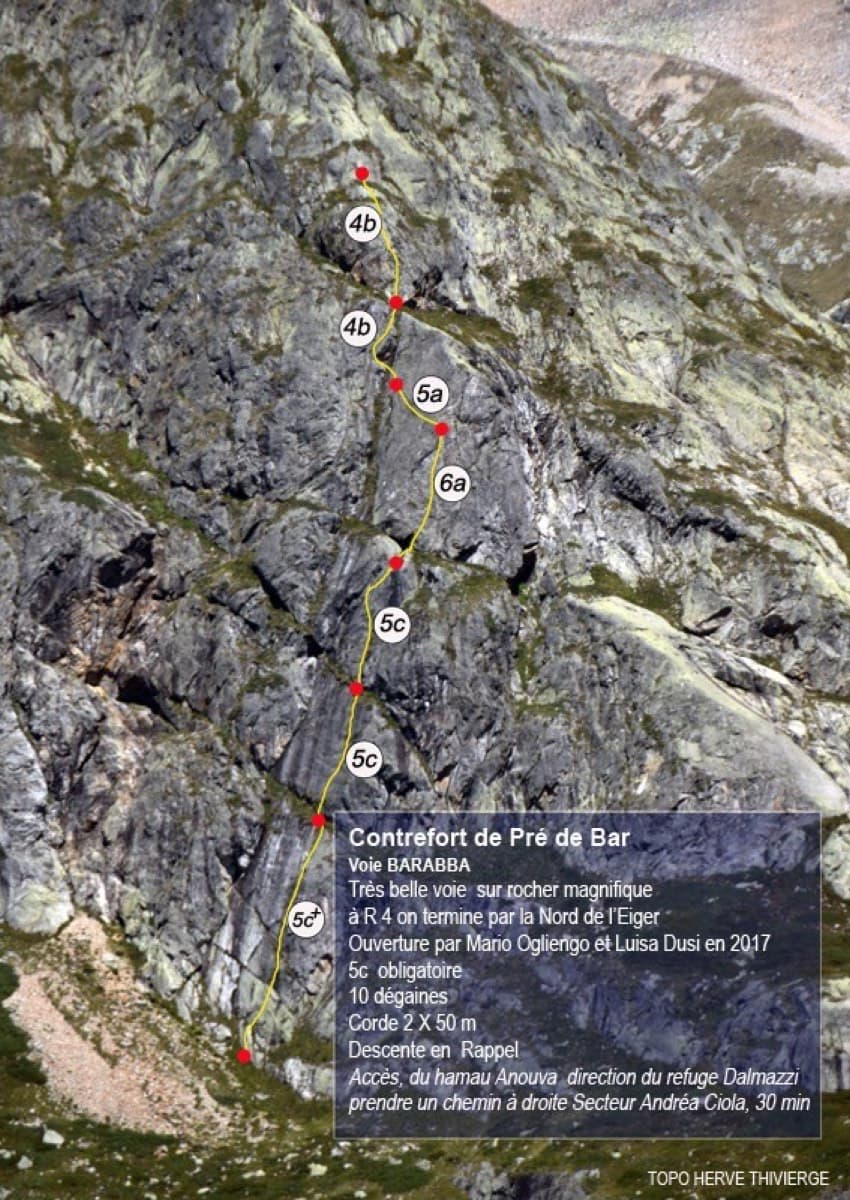
Topo of Barabba on the Contrefort de Pré de Bar, Val Ferret

Italy · Aosta Valley

Barabba

A pretty plaisir route on edgy, quartz-studded granite slabs beneath the Mont Blanc massif. The crux is a short bulge and steep juggy wall on P4. Camptocamp rates it 'great'.

6a7 pitches180 m

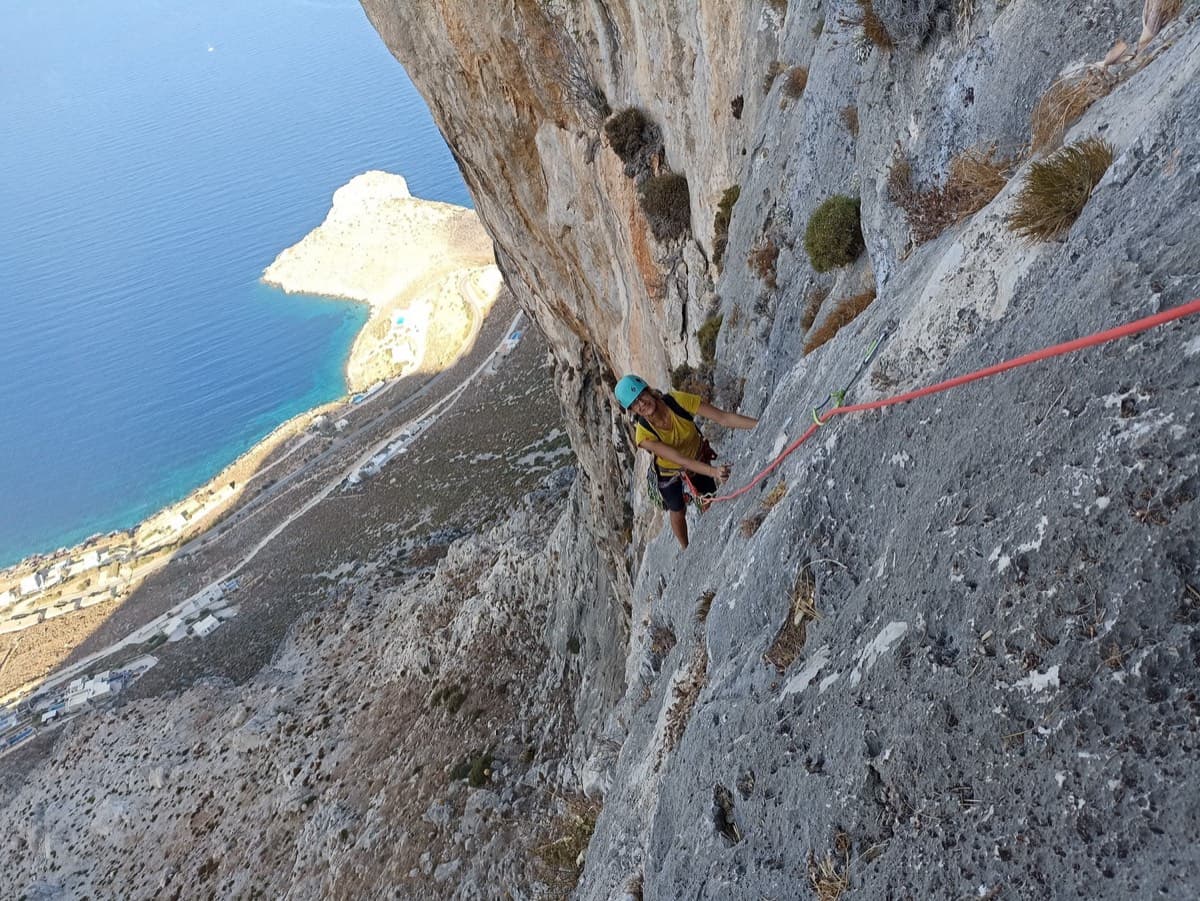
Climber on Lost Goat, Olympic Wall, Kalymnos

Greece · Kalymnos & Telendos

Lost Goat

A mountain-style outing high above Masouri, with a delicate traversing 6a on P4 and a lovely final corner. Most pitches feel easy for their grade, but the route is loose in places, so wear a helmet.

6a7 pitches170 m

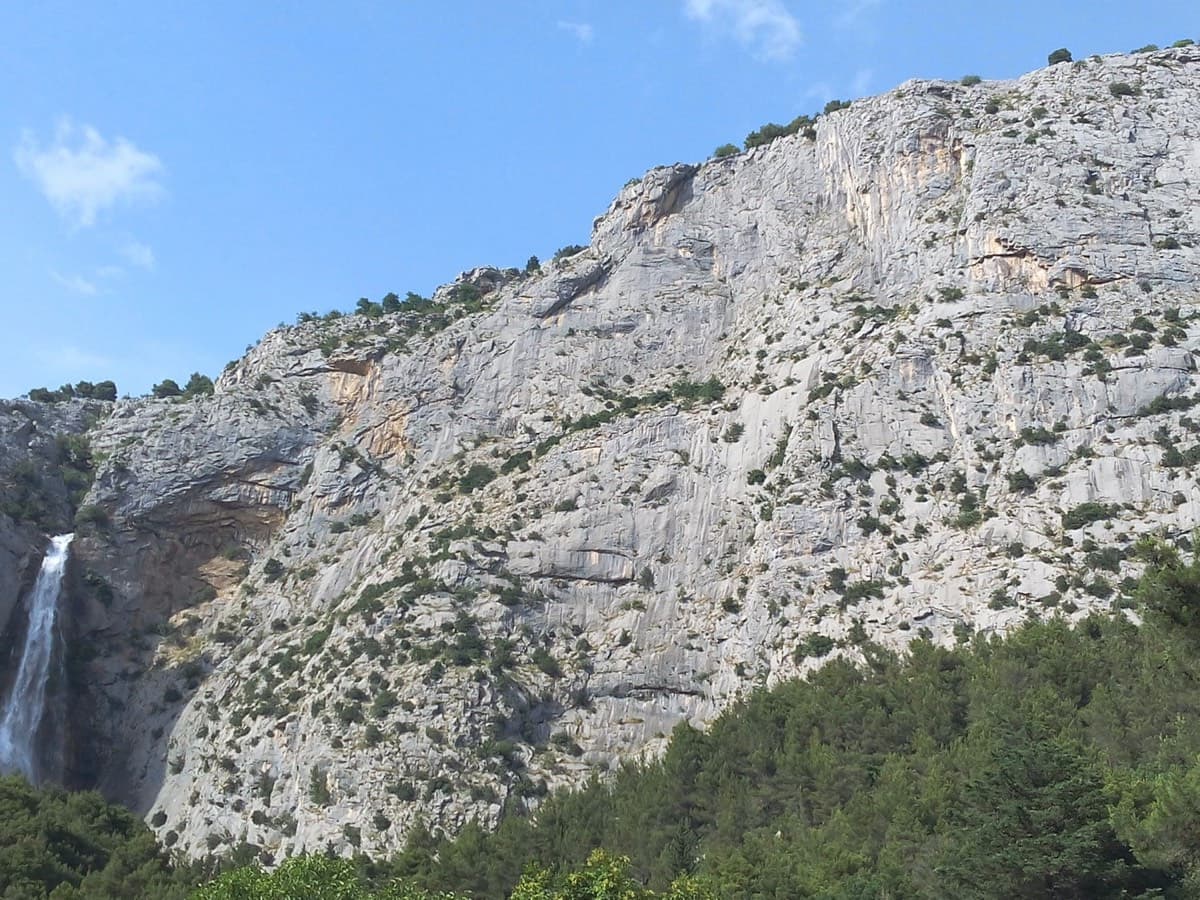
The Ilinac wall above the Cetina near Omiš; Rambo climbs the centre of the face

Croatia · Omiš

Rambo

Omiš's signature moderate: long, slabby pitches on knobbly grey limestone with big views over the Cetina mouth and the Adriatic. The crux is a short crack on the final pitch.

6a6 pitches230 m

Compiled from published sources and last verified October 2026. Bolts, anchors and access change. Climbing is dangerous and you are responsible for your own decisions: check a current topo and read the disclaimer.