Multipitch Atlas

Team Hirschwurst

Kleine Himmelwand, Kötschachtal · Gastein (Hohe Tauern) · Austria

Read the cautionsEasy to bailBolting confidence: medium

A ten-pitch slab route on the Kleine Himmelwand next to Father and Son, mostly UIAA 6 with passages of 7 and a single move of 8- on pitch 2 that can be pulled through on a bolt. The first seven pitches are good; the source says the last three or four are not very rewarding.

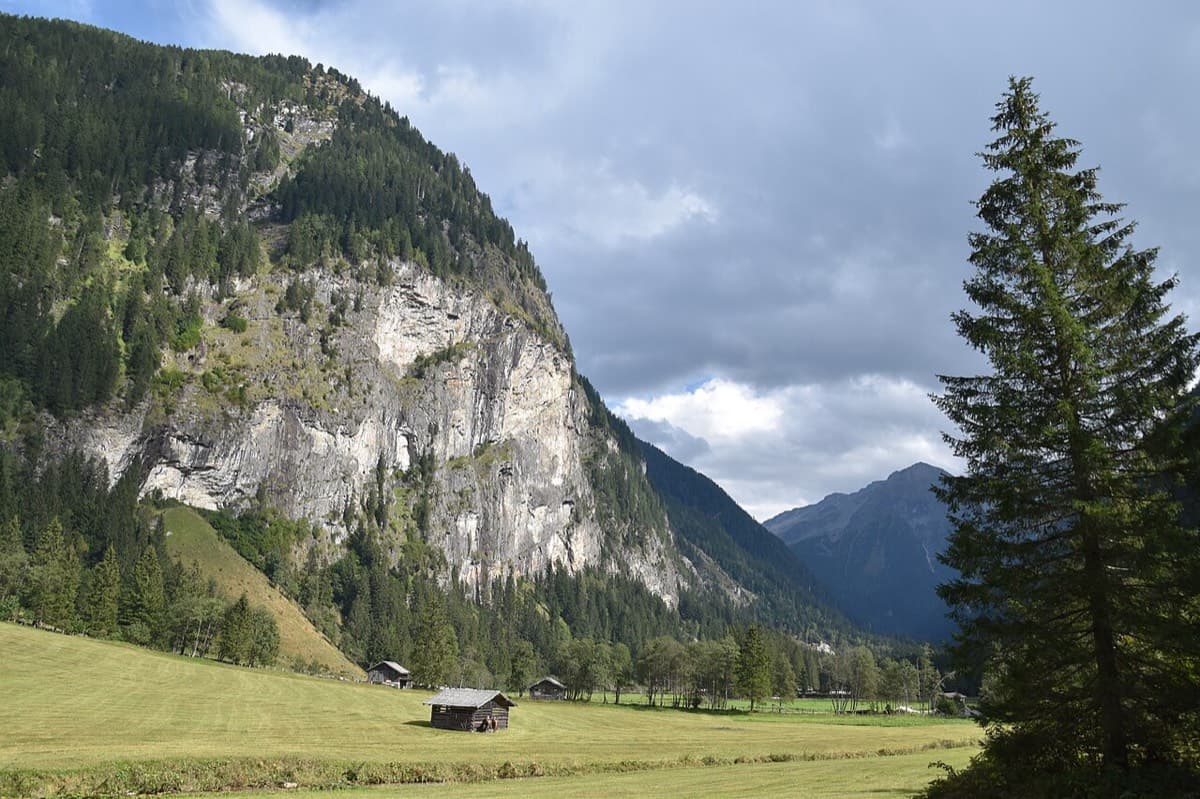
The Himmelwand above the Himmelwandhütte in the Kötschachtal, on the approach to the Kleine HimmelwandPhoto: Gerd Fahrenhorst · CC BY 4.0

Photo

The Himmelwand above the Himmelwandhütte in the Kötschachtal, on the approach to the Kleine HimmelwandPhoto: Gerd Fahrenhorst · CC BY 4.0
Hardest pitch
7a
Pitches
10
Length
350 m
Approach
30 min
Aspect
S
South-facing
Rope
2×50 m
Read before you go

Single-source record: protection is rated only 'good' (S2) with about 6a+ obligatory, and the upper pitches are said to be poor.

The route

Overview

Team Hirschwurst shares the approach, the wall and part of the abseil line with Father and Son. bergsteigen.com describes varied climbing on good rock, mainly slabs with some cracks and steeper passages. Most of it is around UIAA 6 (5c to 6a) with passages of 7 (about 6b+), and pitch 2 has one move of 8- (about 7a) that goes at A0. UIAA 6+, about 6a+, is obligatory. The page says pitches 7 to 10 are not very rewarding, so many parties will be content with the first seven.

The climbing

Pitch by pitch

Pitches of Team Hirschwurst
PitchGradeNotes
P1–Not described individually in open sources.
P2–Contains the hardest move of the route, UIAA 8- (about 7a), which can be climbed at A0.
P3–Not described individually in open sources.
P4–Not described individually in open sources.
P5–Not described individually in open sources.
P6–Not described individually in open sources.
P7–Not described individually; bergsteigen.com says pitches 7 to 10 are not very rewarding.
P8–Not described individually; bergsteigen.com says pitches 7 to 10 are not very rewarding.
P9–Not described individually; bergsteigen.com says pitches 7 to 10 are not very rewarding.
P10–Not described individually; bergsteigen.com says pitches 7 to 10 are not very rewarding.

Getting there

Approach

To the parking

From Bad Gastein drive into the Kötschachtal and park before the Grüner Baum hotel, at the Kötschachtal car park (about 1080 m).

On foot · about 30 min

About 30 min on a forest road across meadows and past the Himmelwandhütte. Continue straight on until a game feeding station appears on the left; above it carry on straight towards the waterfall and climb beside it, crossing it twice, to reach the rock at about 1200 m.

Map of the walk-in

  • Crag
  • Parking

Loading map

The point marks the crag, not the exact start of the route.

Coordinates · crag

47.12146, 13.18667

Parking

47.12698, 13.15736

Kötschachtal car park before the Grüner Baum hotel (bergsteigen.com marker)

Point from bergsteigen.com map marker for the route (same point as Father and Son); The Topo places the Kleine Himmelwand sector about 330 m away

For your phone or watch

Download GPX

Contains the route point and parking. Opens in most mapping apps and GPS watches.

Points are compiled from published sources, with the precision stated above. They were not surveyed on the ground: check them against a current topo.

Getting down

Descent

Abseil the route from belay to belay with 50 m double ropes. In the lower part you can also use the stations of Father and Son. bergsteigen.com allows about 1 h 35 for the descent and walk out.

Retreat

Bailing off the route

Easy to bail

Abseiling the route is the normal descent, from belay to belay with 50 m double ropes, so you can turn round at any belay. In the lower part the stations of Father and Son can be used as well.

Retreat from
Any belay.
Point of no return
None described.
Carry
2×50 m ropes.
Basis
Stated in the sourcesbergsteigen.com describes the abseil descent and the rope length.

Safety

Hazards

  • Protection is rated 'good' (S2), not 'very good': on this site's scale that normally means longer gaps between bolts than on Father and Son, and UIAA 6+ (about 6a+) is obligatory.
  • Spring avalanches threaten the approach and the base of the wall.
  • The approach crosses the waterfall stream twice; expect it to be awkward at high water.
  • Up to ten abseils on a wall shared with other routes: keep track of which stations you are using.

Sun and weather

Conditions

South facing, base about 1200 m. Season April to October. In spring wait until the full-depth avalanches have come down. The wall dries relatively quickly after rain.

Usual season · Apr to Oct

Sun on the wall · S-facing

Working out the sunlit hours for this month.

  • January: not yet worked out
  • February: not yet worked out
  • March: not yet worked out
  • April (usual season): not yet worked out
  • May (usual season): not yet worked out
  • June (usual season): not yet worked out
  • July (usual season): not yet worked out
  • August (usual season): not yet worked out
  • September (usual season): not yet worked out
  • October (usual season): not yet worked out
  • November: not yet worked out
  • December: not yet worked out

Sun on the wallDaylight, wall in shade● Usual season

Estimated from the wall's aspect only. Ignores surrounding terrain, gullies and the wall's exact shape. Clock times are local to the wall (Central European time), for the 15th of each month.

Monthly climate averages for Gastein (Hohe Tauern), 1991-2020
MeasureJanFebMarApr (usual season)May (usual season)Jun (usual season)Jul (usual season)Aug (usual season)Sep (usual season)Oct (usual season)NovDec
Mean daily high °C−114813182020151150
Mean daily low °C−8−7−3048101062−3−7
Rain days 1 mm or more121114151820201814121213

● marks the usual climbing season. Averages for 1991-2020 at about 1228 m. Area climate from Open-Meteo reanalysis. Temperatures are adjusted to the height of the crag; rain comes from a grid cell of about 10 to 25 km, and summer highs on sea cliffs can read a few degrees low. The wall and valley can differ. Data: Open-Meteo, CC BY 4.0.

What to carry

Gear

12 quickdraws, 2×50 m ropes and a helmet.

Checklist

Quickdraws
12
Rope
2×50 m
Helmet
One each
Abseil device and prusik
The descent or the retreat involves abseiling

Derived from the route data; check it against a current topo

From climbers

Reader reports

Reader reports are not being collected yet. Until they are, check a current topo and the local club or guidebook publisher for recent changes to Team Hirschwurst.

Worth knowing

Tips

  • The crux move on pitch 2 goes at A0, which brings the hardest free climbing down to about 6b+.
  • bergsteigen.com rates only the first seven pitches as good, so consider abseiling from the top of pitch 7.

Open questions

Where sources disagree

  • Number of good pitches: the character text says '7 good pitches' and then that pitches 7 to 10 are not very rewarding, which overlap on pitch 7. The total of ten pitches is taken from that sentence.
  • Obligatory grade: the header gives 6+ obligatory, the notes give VI+ obligatory with S2; both agree.

Provenance

Sources

Same area

More in Gastein (Hohe Tauern)

All routes in Gastein (Hohe Tauern)
The Himmelwand in the Kötschachtal near Bad Gastein; the Kleine Himmelwand lies beyond the main wall

Austria · Gastein (Hohe Tauern)

Father and Son

Ten pitches of varied climbing on good rock, mostly slabs with some cracks and steeper passages. Largely UIAA 5 with a few moves of 6 and three spots of 7 that go at 6+ A0. A short walk-in and a rigged abseil line.

6b+10 pitches350 m
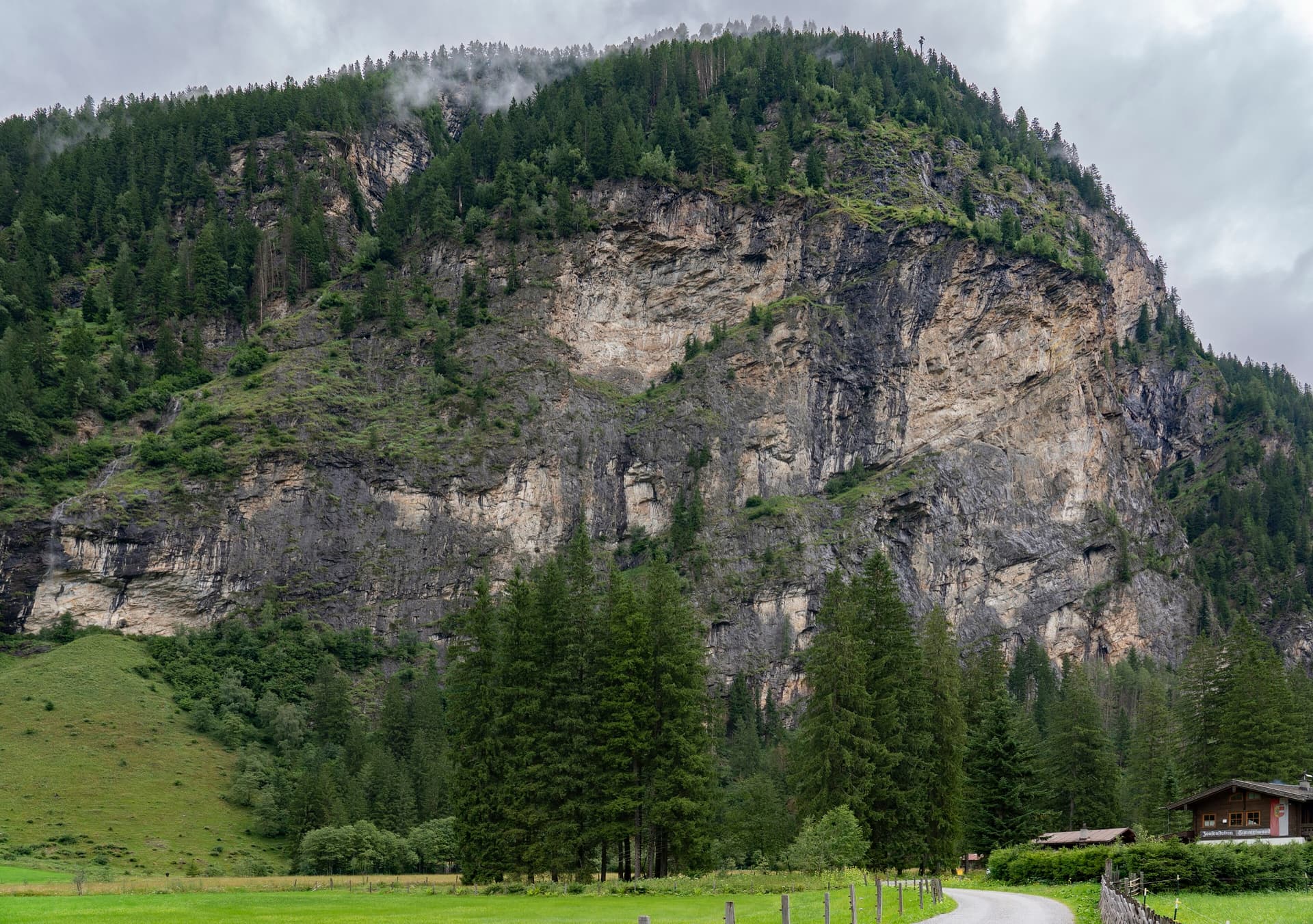
The Himmelwand in the Kötschachtal near Bad Gastein, seen from the valley road by the Himmelwandhütte; the Kleine Himmelwand lies further up the valley

Austria · Gastein (Hohe Tauern)

JKF Happiness

A long, modern slab and wall route beside the waterfall on the Kleine Himmelwand, with six independent 50 m pitches before it joins the last two pitches of Father and Son. Three pitches have technical, bouldery passages at UIAA 7+ and the obligatory grade is high for the area, but the bolts are close.

6c9 pitches350 m

Around 7a · about 10 pitches

Similar elsewhere

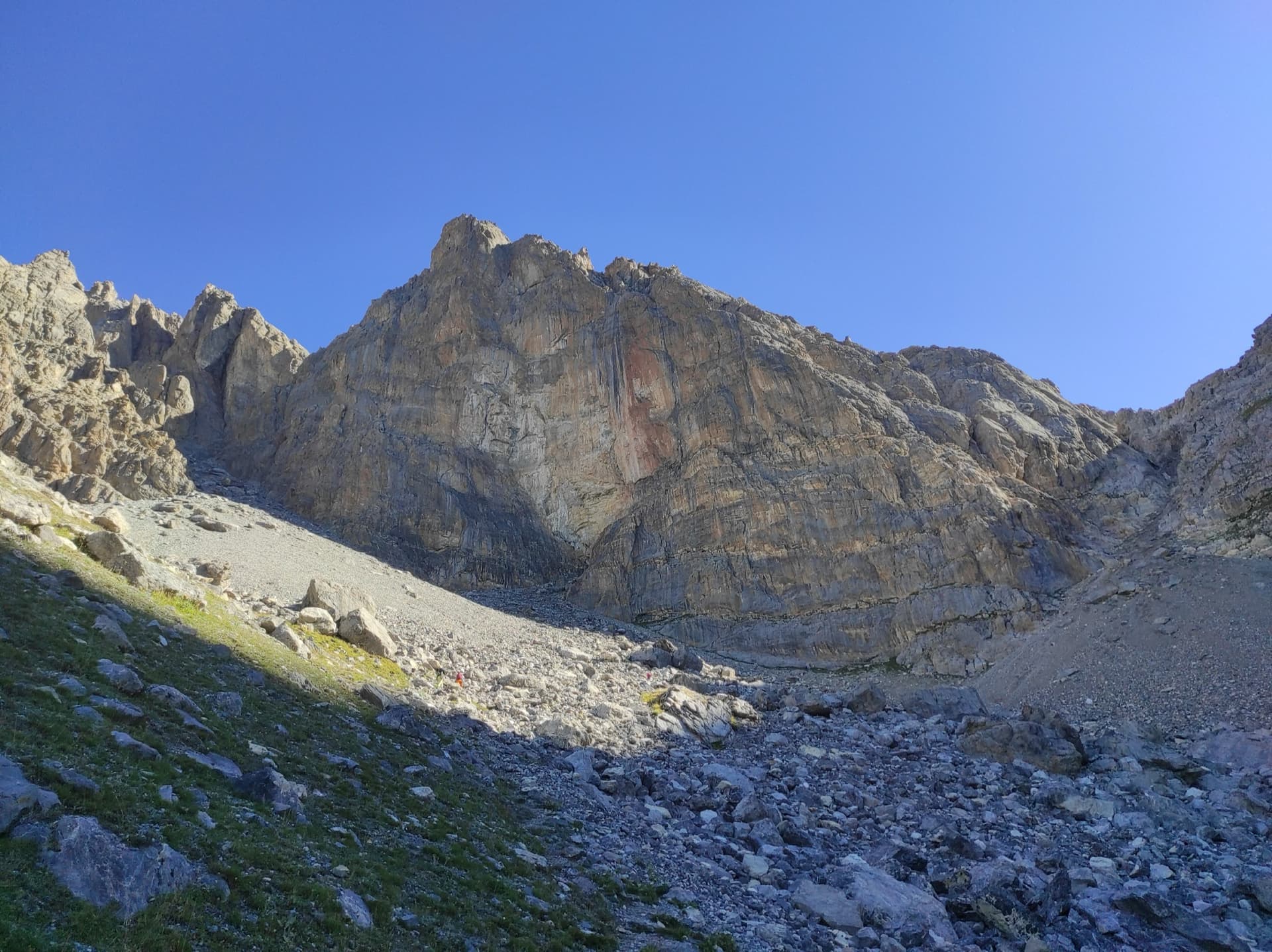
The face of the Tour Termier above its scree bowl in the Cerces; Feu Sacré climbs this wall, the line is not marked.

France · Cerces

Feu Sacré

The classic hard route of the Tour Termier: ten steep, technical pitches on superb compact limestone at 3000 m, a short walk from the Col du Galibier road. It is never athletic but sustained at 6a+ to 6b, with a 7a pitch and a 6c move that both go at 6a A0. Cold, wind and thin footwork make it feel bigger than the numbers.

7a10 pitches320 m

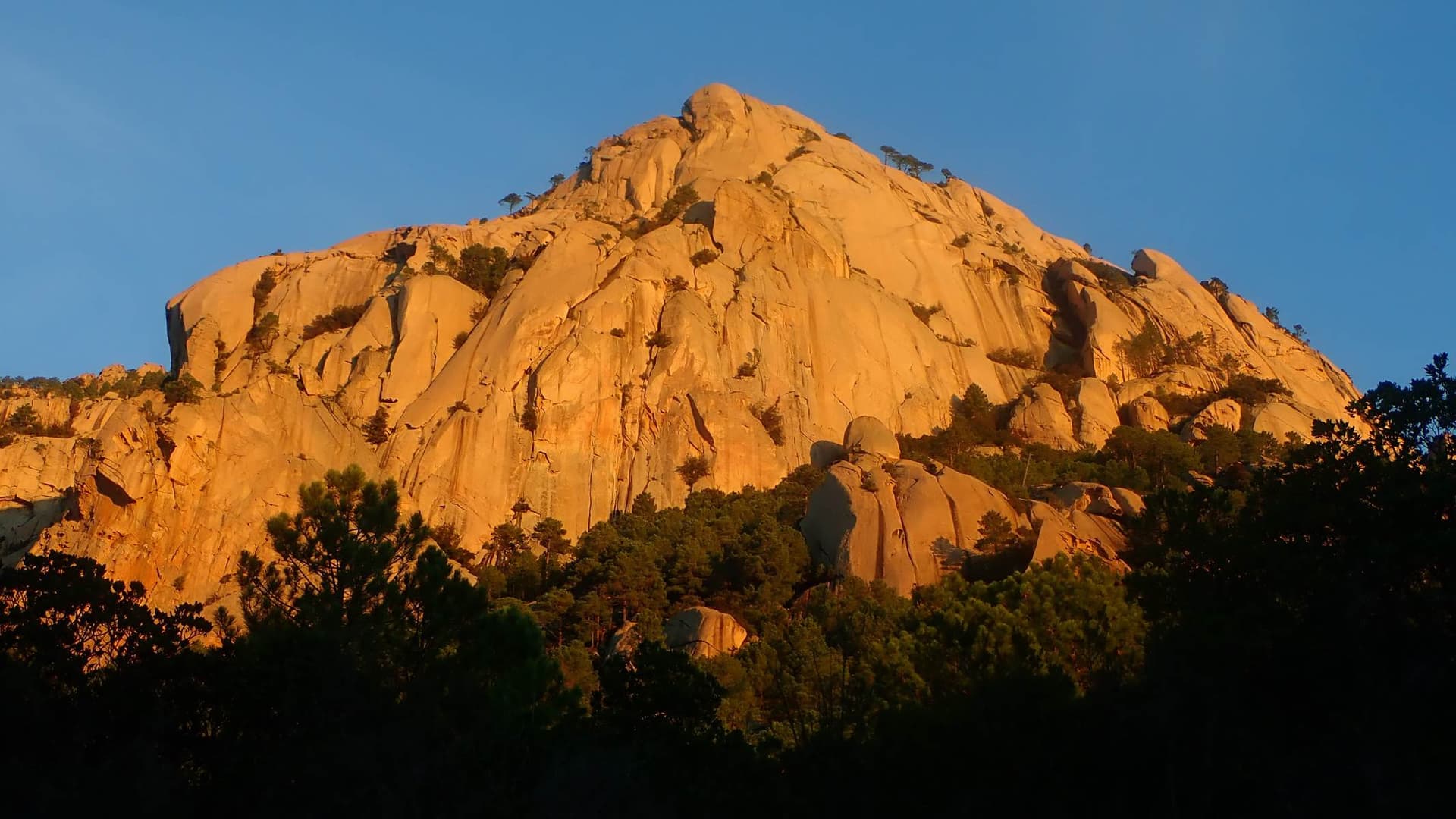
The granite dome of Teghie Lisce glowing at sunrise above the pines of Bavella; Acqua in bocca climbs its slabs, the line is not marked.

France · Bavella

Acqua in bocca

A sampler of everything Bavella granite does: a technical 7a wall, layback and jamming cracks, an off-width, a squeeze slot behind a tree, and three pitches of pure friction slab to finish. Bolted well enough to climb on quickdraws, which is rare here. The wide pitches are awkward and bruising if you are not used to the style.

7a10 pitches300 m

Read the cautions

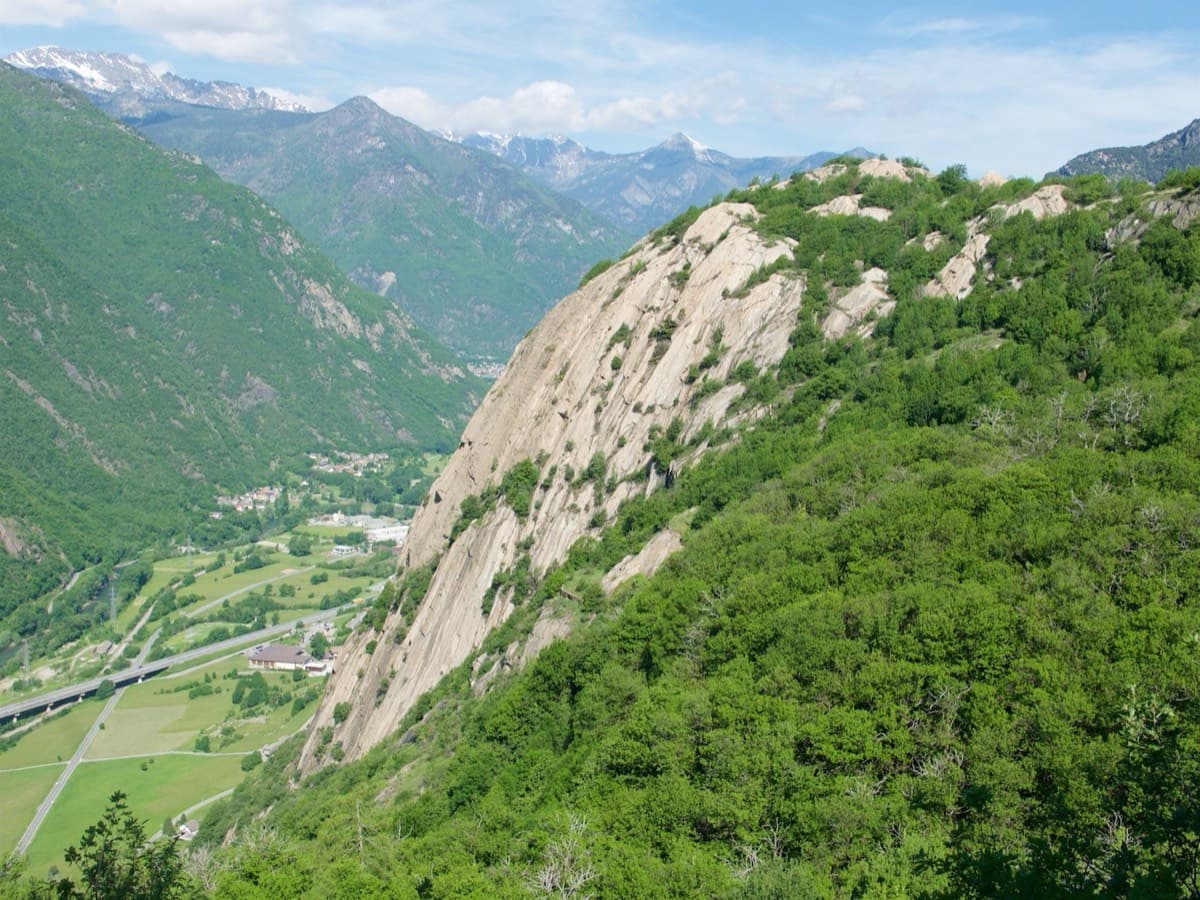
The Paretone di Arnad (Corma di Machaby) above the Dora Baltea valley, seen from the path to the Pilastro Lomasti

Italy · Aosta Valley

Sputnik

The hard route at the far left of the Paretone: two ordinary pitches, then steep walls on pitches 4 and 5 that are less slabby than the neighbours. Pitch 6 follows the arete at 7a, or 6a+ with a strenuous few metres of aid. Harder than the board at the car park suggests.

7a10 pitches250 m

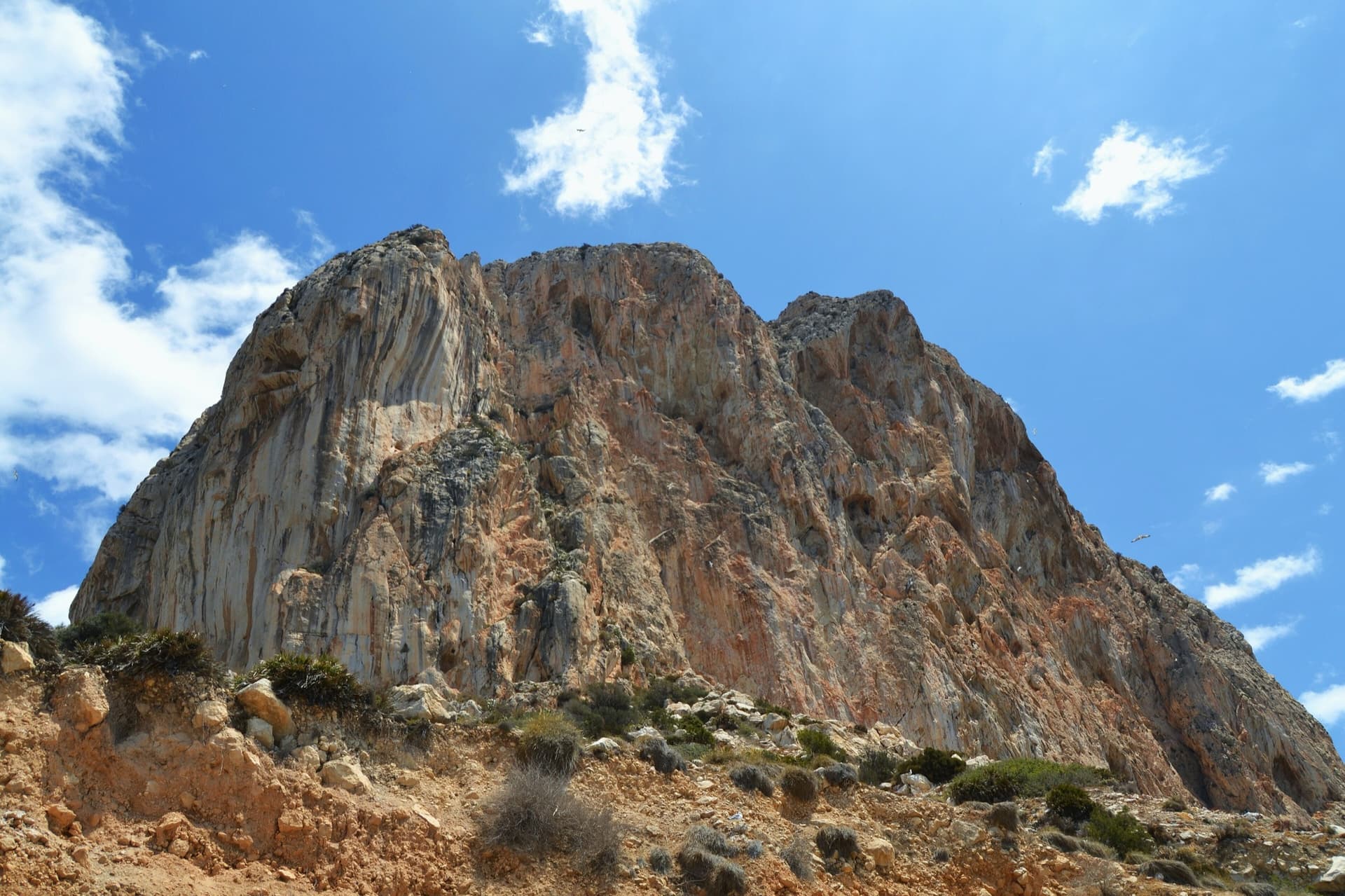
The south face of the Peñón de Ifach seen from the foot of the wall, Calpe. Mare Nostrum takes the right-hand side of this face.

Spain · Costa Blanca (Peñón de Ifach)

Mare Nostrum

Nine steep pitches up the wildly sculpted right side of the south face, overhanging almost throughout. Two long 7a pitches open the route and a third comes near the top, and even the 6a+ pitches are athletic. The rock is covered in holds and much less polished than the classics to the left.

7a9 pitches310 m

Read the cautions

Compiled from published sources and last verified October 2026. Bolts, anchors and access change. Climbing is dangerous and you are responsible for your own decisions: check a current topo and read the disclaimer.