Menu

Trygg og glad

Slettafjell · Slettafjell (Agder) · Norway

Easy to bail

The classic bolted line on Slettafjell, a long, sociable slab day at moderate grades with fine views. Two easy pitches lead to steadily harder slab, with a 6a+ crux on the 50 m sixth pitch that you can pull through on the bolts. It finishes at a belay below the top of the wall, and you abseil the route.

Climbing mode: Big type, screen kept awake, tick pitches as you go.

Hardest pitch
6a+6a+
Pitches
7
Length
285 m
Approach
–
Aspect
NE
North-east-facing
Rope
2×50 m

Highest point about 700 m above sea level (estimate: terrain height at the mapped point plus the height of the route).

Rock
not stated
Season
May to Sep
Bolting confidence
Medium
Last verified
October 2026 · Aggregated by AI from published sources

Photo

Climbing modeBig type, screen kept awake, tick pitches as you go.

Overview

Trygg og glad ('safe and happy') is the one fully bolted route on Slettafjell, a big slab wall in Åseral otherwise climbed on trad gear. It has seven pitches: two easy ones at Norwegian grade 3, then 4, 5 and 5 before the 6 (6a+) crux pitch and a 5+ (5c) finish. Fri Flyt names it one of the most classic lines on the wall, and a 2016 UKC post calls it well bolted and one of Norway's top bolted multipitches. Climbers on the 27crags/thetopo listing describe it as a beginners' multipitch with fine views. The bolted route ends four pitches below the top; the trad extension 'Trygg og glad helt hjem' continues to the summit.

Worth knowing

  • The route is often described as a first long multipitch; allow a full day with the abseils.
  • If you want to reach the top, the trad extension 'Trygg og glad helt hjem' (5+, four more pitches) has bolted belays at its second, third and fourth stances, so it can also be abseiled.
  • Norwegian grades converted to French with the Scandinavian-to-French table used by the Norwegian route database brattelinjer.no (5- = 5a, 5 = 5b, 5+ = 5c, 6- = 6a, 6 = 6a+, 6+ = 6b, 7- = 6b+, 7 = 6c, 7+ = 7a).

Pitch by pitch

The atlas doesn't show topos: they are the work of the people who bolt and document these routes. See the topo at thetopo/27crags – Trygg og glad, or in Brattelinjer: Slettafjell (online guide).

Pitches of Trygg og glad
PitchGradeLengthNotes
P1330 mEasy slab. Norwegian 3-.
P23+40 mEasy slab. Norwegian 3+.
P34b45 mNorwegian 4.
P45b40 mNorwegian 5.
P55b40 mNorwegian 5.
P66a+50 mThe crux pitch, Norwegian 6. Expect rope drag on this long pitch. The crux is closely bolted and can be aided on the bolts.
P75c40 mNorwegian 5+, the last bolted pitch.

Approach

To the parking

Slettafjell is in Åseral municipality, Agder, about 1.5 hours' drive north of Kristiansand. Kristiansand has the nearest airport and ferry port; you need a car. The brattelinjer.no database gives the parking point at about 58.7079 N, 7.5688 E.

On foot

From the parking, the mapped approach path on brattelinjer.no is about 425 m long with about 140 m of ascent, heading west up to the wall. The first belay of the route was posted in 2026 at 58.713133 N, 7.554489 E.

Map of the walk-in

Coordinates · route base

58.71313, 7.55449

Parking

58.70788, 7.56877

Sector parking point on sorlandet.brattelinjer.no (Slettafjell)

DirectionsDriving directions

Point from brattelinjer.no route coordinate: GPS of the first belay posted by a climber in August 2026

For your phone or watch

Download GPX

Contains the route point and parking.

Points from published sources, not surveyed.

Descent

Abseil the route on two 50 m ropes. The route's anchors are also used by neighbouring routes (Halvveis til himmelen exits to them). A 2023 party warns that the position of the bolts puts a slight twist in the ropes on the abseil, and suggests leaving a carabiner or two on the way down.

Bailing off the route

Easy to bail

Abseiling the route is the normal descent, from bolted anchors on two 50 m ropes, so you can retreat from any belay. Parties have done exactly that in bad weather. Expect some rope twist.

Retreat from
Any belay.
Point of no return
None; the descent is down the route.
Carry
Two 50 m ropes. A spare carabiner or two to leave if the ropes twist badly.
Basis
Stated in the sourcesbrattelinjer.no and the UKC post both give abseil as the descent; tick comments record a retreat in a storm and a turn-back at the sixth belay.

Norway

In an emergency

In an emergency · Norway

112Emergency (police); passes mountain accidents to the rescue centre

Call 112

Emergency (police); passes mountain accidents to the rescue centre

Position of the route base

58.71313, 7.55449

Say what happened, how many are hurt, and where you are. Checked October 2026 (source).

Hazards

  • Pitch 6 is a full 50 m with rope drag.
  • Ropes tend to twist on the abseil because of where the bolts sit.
  • Weather: thunderstorms and heavy rain have forced retreats.

Gear

12 quickdraws plus one 60 cm sling (brattelinjer.no). Two 50 m ropes for the abseil. Helmet. No trad gear is needed for the bolted route; the extension above needs a rack.

Checklist

Quickdraws
12
Rope
2×50 m
Helmet
One each
Abseil device and prusik
For abseiling
Maillons or spare karabiners
To leave behind if you retreat

Conditions

Reader reports

No reports yet.

Report a problem with this route

Say what and where. Reports are checked before they appear; no name or email is stored.

Bolts and history

Bolting
A sport route bolted from bottom to top, with bolted belays that are also the abseil anchors; the local database lists it as bolted and the first ascensionist's note calls it pleasant climbing on bolts. The crux on pitch 6 is closely bolted, enough to aid through it. A 2016 forum report calls it well bolted. The bolted route stops below the top of the wall; the four pitches above are trad.
History
Credited on brattelinjer.no to Nils Rune Birkeland, with the year given as 2000. Fri Flyt credits Birkeland and friends with cleaning and bolting the lines on Slettafjell.
Guidebook
Sørlandet Rock (local guide named by Fri Flyt); the route is also on sorlandet.brattelinjer.no, the free online database of the Agder climbing community. Free topo.

Where sources disagree

  • Pitches: brattelinjer.no lists 7 bolted pitches; a thetopo/27crags user comment says '9-ish pitches', which probably counts the trad extension. The UKC post says the bolted route ends four pitches below the top.
  • Grade: brattelinjer.no and Fri Flyt give 6 (6a+) for the crux; the 2016 UKC post calls the crux pitch 6a.
  • First ascent date: the database shows 1 January 2000, which looks like a placeholder for the year only.

Sources

Around 6a+ · about 7 pitches

Similar elsewhere

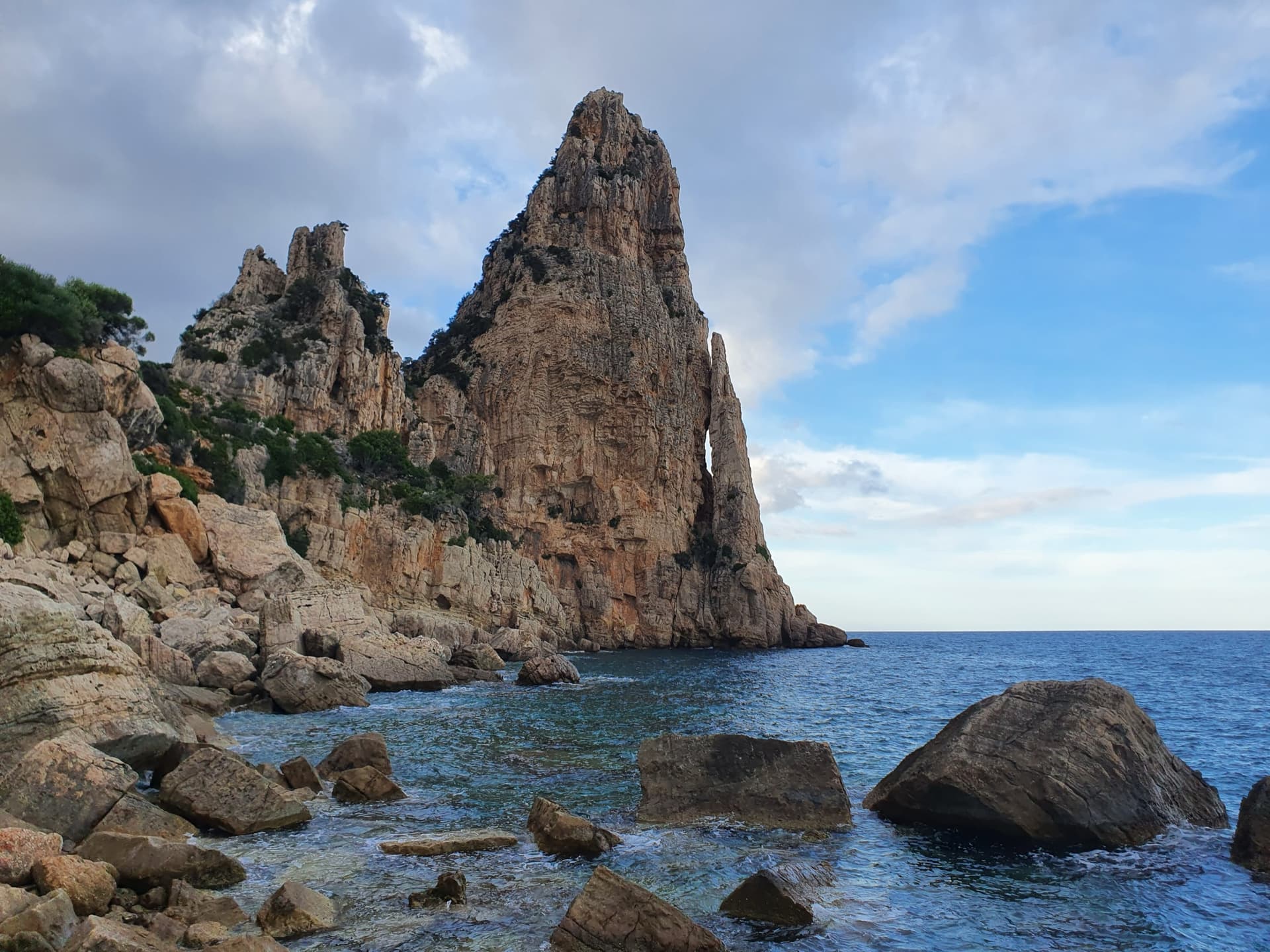
Pedra Longa, the 128 m limestone tower on the Baunei coast, seen from the shoreline rocks at its foot.

Italy · Sardinia

Marinaio di Foresta

An airy, mostly left-rising traverse that spirals round the Pedra Longa sea stack to its summit, on water-runnelled grey walls and pocketed white rock right above the sea. It has become one of the most popular routes in Sardinia, so expect queues.

6a+6a+7 pitches190 m

Committing

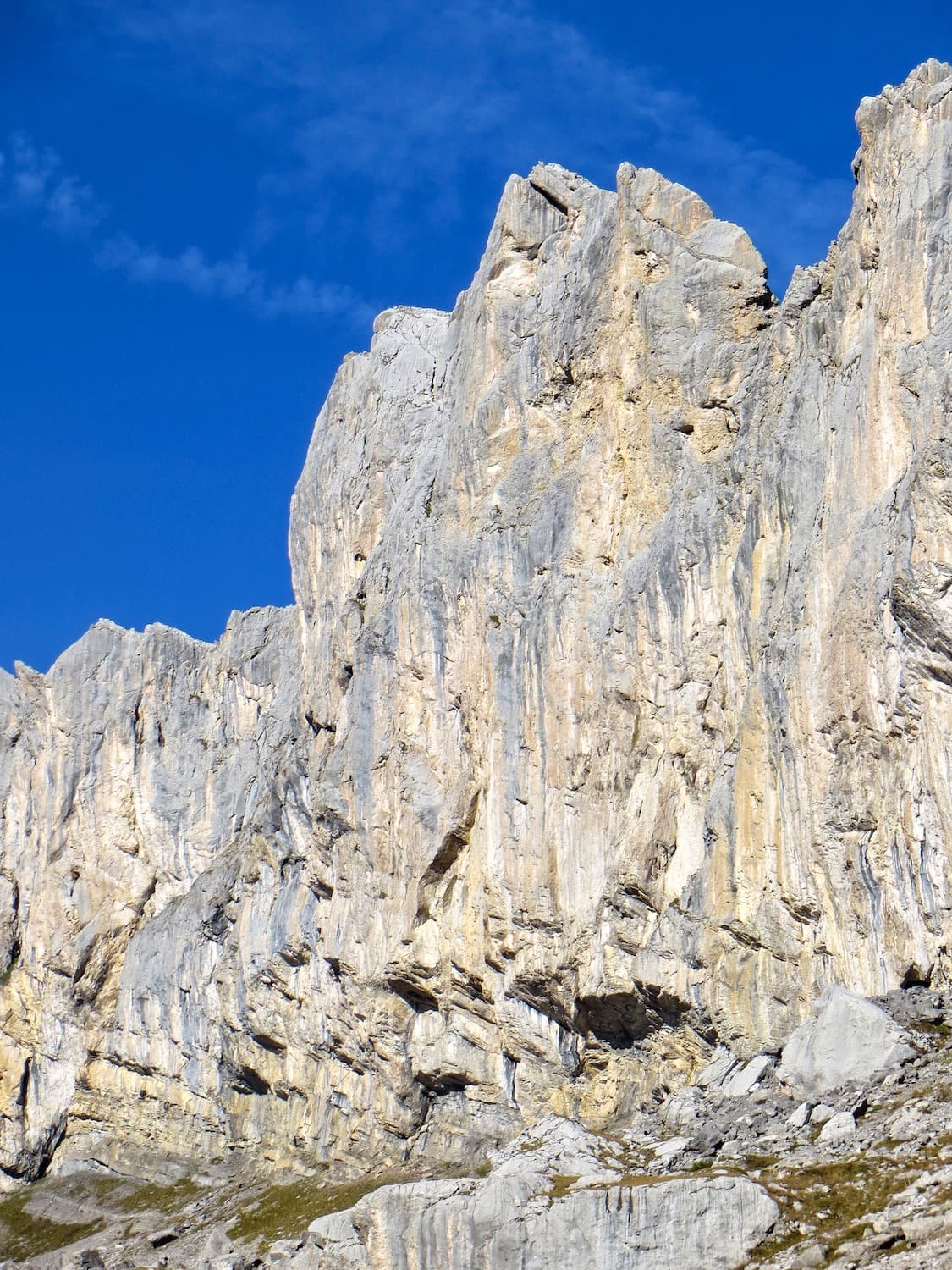
The water-worn runnels of the second pitch of Die Namenlose

Switzerland · Glarus (Brüggler)

Die Namenlose

The hardest of the Brüggler plaisir routes: an overhanging start on big holds, then smooth runnelled slabs, with a very blank 6a+ slab on pitch 3 that feels hard for the grade. The hardest moves there can be avoided by weaving left or right while still clipping the bolts. The top three pitches are easier.

6a+6a+7 pitches200 m

Committing

The Pointe Maurice Brandt at the left end of the Montons; Greatime threads its way between the roofs. The line is not marked

Switzerland · Sanetsch

Greatime

An adventurous line that weaves between the roofs of the Pointe Maurice Brandt, at the far left end of the Montons. It improves with height: the lower pitches have some friable rock, the last two are on exceptional grey, sculpted limestone. Lots of traversing and a memorable free-hanging final abseil.

6a+6a+7 pitches180 m

Read the cautions

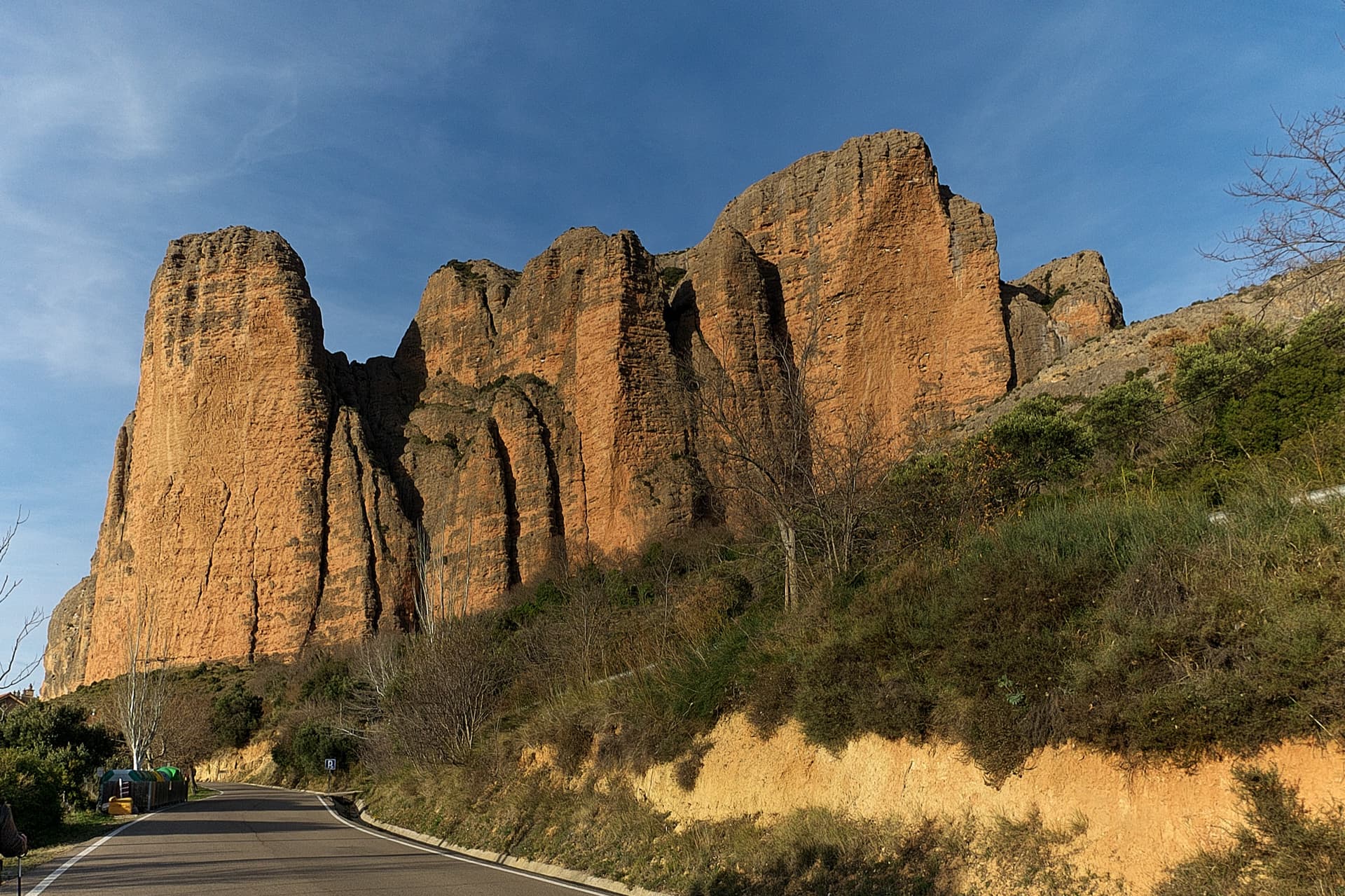
The south faces of the main Riglos wall in low sun, seen from the road into the village: Mallo Pisón on the left and the wall running right towards Mallo Frechín and La Visera at the right-hand end.

Spain · Riglos & Agüero (Mallos)

José Antonio Sanz

A good first route at Riglos: seven sustained 6a pitches on the spur of the Frechín, with a grandstand view of the Visera. Manage rope drag on the wandering first pitch.

6a+6a+7 pitches180 m

Researched and aggregated by AI from published sources, last compiled October 2026. It can be wrong, and bolts, anchors and access change: check a current guidebook and read the disclaimer.