Multipitch Atlas

Argento Argentario (with the Spigolo Bonatti finish)

Capo d'Uomo · Monte Argentario · Italy

Bail with caveatsBolting confidence: high

Three independent pitches on the wall below Capo d'Uomo, ending with a memorable 40 m wall of pockets, drips and flowstone at 6a. The route proper stops on the arête; the opener suggests carrying on up the last two pitches of the Spigolo Bonatti, an exposed 5c traverse and an easy ridge, to finish at the tower.

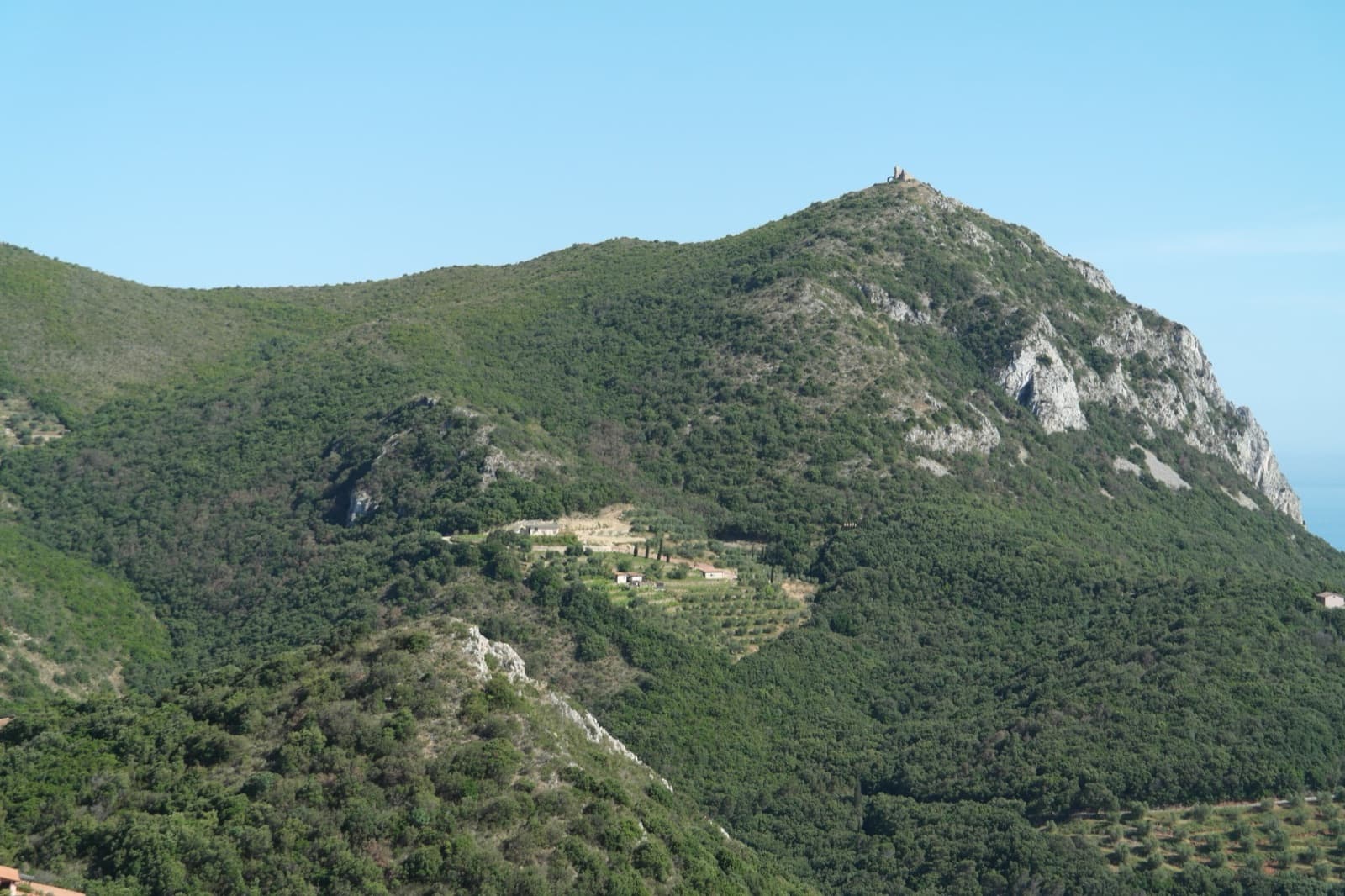
The headland of Capo d'Uomo on Monte Argentario with its watchtower on top, and the island of Giannutri on the horizon. The multipitch wall drops towards the sea below the tower; the routes are not visible in this view.Photo: Ceppicone · CC BY-SA 3.0

Photo

The headland of Capo d'Uomo on Monte Argentario with its watchtower on top, and the island of Giannutri on the horizon. The multipitch wall drops towards the sea below the tower; the routes are not visible in this view.Photo: Ceppicone · CC BY-SA 3.0
Hardest pitch
6a
Pitches
5
Length
200 m
Approach
30 min
Aspect
SE
South-east-facing
Rope
1×60 m

The route

Overview

Argento Argentario is a three-pitch bolted route (5c, 5a, 6a; 110 m) on the south-east wall of Capo d'Uomo. Its opener's description adds that from the top, on the arête, you can continue up the last two pitches of the Spigolo Bonatti, and that five-pitch outing to the tower is what is listed here. The first pitch is a pleasant slab with some grass and suspect holds, the second is little more than a transfer, and the third is the reason to come: forty sustained metres on generous, oddly shaped holds with one harder move. If you skip the finish you can unrope on the arête and take the small path just to the left.

The climbing

Pitch by pitch

Pitches of Argento Argentario (with the Spigolo Bonatti finish)
PitchGradeLengthBoltsNotes
P15c35 m–A slab on good rock, a little grassy in places: watch what you pull on. The first bolt had no hanger in 2019. At that first bolt the line on the right is the Via del Diedro, whose first two pitches (5c, 5a) are a like-for-like alternative. Long quickdraws help.
P25a35 m–Easy-angled climbing that serves mainly to reach the upper wall. Pitches 1 and 2 have been linked with a 70 m rope and 18 quickdraws.
P36a40 m–The pitch of the route: a vertical wall close to a big dark corner on its left, sustained on generous holds, drips and flowstone. One move of 6a is not obligatory and the rest is about 5b to 5c. The bolt that protects the crux sits above a bulge and stays hidden until the last moment. There is no intermediate belay; two or three long quickdraws reduce drag near the top. Belay on the arête.
P45c––Join the Spigolo Bonatti: the end of its traverse pitch, which leaves the crest rightwards onto the open face in full exposure and regains the arête at a notch. The full Bonatti pitch is 37 m with 10 bolts; how much of it you climb from here is not stated.
P53a55 m5 boltsRight of the arête, then along it to where it eases, and up easy steps to the final belay just below the tower. Figures are those of the Spigolo Bonatti's last pitch.

Getting there

Approach

To the parking

Drive to Porto Santo Stefano on Monte Argentario (southern Tuscany). At the port turn left at the first roundabout and climb the Vallone del Campone for about 3.5 to 4 km. At a junction turn left (the right branch is signed 'Poderi del Capo d'Uomo') and continue level for about 500 m to where the road crests with a view of the sea. Park on the left in an earth lay-by with signposts for Capo d'Uomo, or along the road; one December 2025 party wondered whether parking there is officially allowed.

On foot · about 30 min

About 30 minutes, mostly downhill. From the lay-by take the dirt road that drops to the right, on the other side of the tarmac, for about 200 m, then the level track on the right to a wide bend that climbs steeply. Just before the bend take the path on the left (cairn) and follow the whole ridge towards the ruined tower of Capo d'Uomo, about 15 minutes. Shortly before the tower drop left to the single-pitch crag and go down past its lowest routes. Continue down to a scree slope, following the cairns, at first to the left. Half-way down the scree, obvious cairns lead right to the scree fan below the wall, and a short climb up it reaches a cairn at the foot of the first slab. The start is an earthy ledge by an upright tree with a sling; nothing is named. Stefy and the Via del Diedro start from the same spot.

Map of the walk-in

  • Crag

Loading map

The point marks the crag, not the exact start of the route.

Coordinates · crag

42.39578, 11.10402

Point from camptocamp waypoint 1710698

For your phone or watch

Download GPX

Contains the route point. Opens in most mapping apps and GPS watches.

Points are compiled from published sources, with the precision stated above. They were not surveyed on the ground: check them against a current topo.

Getting down

Descent

From the tower walk back along the ridge path you came in on, about 15 to 20 minutes to the car. If you stop at the top of pitch 3, unrope and take the small path immediately to the left to the same ridge.

Retreat

Bailing off the route

Bail with caveats

The start is reached on foot, so retreat means abseiling to the scree and walking back up. The belays are two bolts to link, without rings, and a maillon on the crux of pitch 3 shows that parties have backed off there. From the top of pitch 3 you simply walk off left, so the finish is optional.

Retreat from
The belays after pitches 1 and 2, leaving gear; the arête at the top of pitch 3, on foot.
Point of no return
None documented; after pitch 3 there is a path beside the crest.
Carry
Pitches are 35 to 40 m, so two ropes or a 70 to 80 m single to abseil, plus maillons and cord.
Basis
Part stated, part inferredThe walk-off from the arête and the belay type are stated by Gulliver; abseil retreat from the lower belays is inferred from the pitch lengths and the maillon report.

Partly inferred from the route facts

Safety

Hazards

  • This is a link-up: the route itself has three pitches, and the last two belong to the Spigolo Bonatti. Parties who reach the arête often walk off instead.
  • Loose and grassy holds on the first pitch.
  • Nothing is named at the base and neighbouring lines share bolts and belays; a 2019 party climbed the first two pitches of the Via del Diedro without realising, and a 2026 party notes that Maria Mare leaves this route's last pitch rightwards after two bolts.
  • The top belay of pitch 3 has no abseil ring.
  • The approach descends unstable scree.
  • Full sun for most of the day.

Sun and weather

Conditions

South-east facing above the sea, between roughly 70 and 350 m, and in the sun for most of the day. Reports describe pleasant climbing in December and February; spring and autumn are ideal, and in summer you need a dawn start. Avoid very windy days.

Usual season · Feb to May, Oct to Dec

Sun on the wall · SE-facing

Working out the sunlit hours for this month.

  • January: not yet worked out
  • February (usual season): not yet worked out
  • March (usual season): not yet worked out
  • April (usual season): not yet worked out
  • May (usual season): not yet worked out
  • June: not yet worked out
  • July: not yet worked out
  • August: not yet worked out
  • September: not yet worked out
  • October (usual season): not yet worked out
  • November (usual season): not yet worked out
  • December (usual season): not yet worked out

Sun on the wallDaylight, wall in shade● Usual season

Estimated from the wall's aspect only. Ignores surrounding terrain, gullies and the wall's exact shape. Clock times are local to the wall (Central European time), for the 15th of each month.

Climate figures for Monte Argentario are not available yet

What to carry

Gear

15 quickdraws including two or three long ones (18 if you link the first two pitches), and cord to link the belay bolts. The sources do not name a rope: the last pitch is given as 55 m and you walk off, so a single 60 m rope is the minimum. Helmet recommended.

Checklist

Quickdraws
15
Rope
1×60 m
Helmet
One each
Maillons or spare karabiners
To leave behind if you retreat
Cord
Mentioned for retreat

Derived from the route data; check it against a current topo

From climbers

Reader reports

Reader reports are not being collected yet. Until they are, check a current topo and the local club or guidebook publisher for recent changes to Argento Argentario (with the Spigolo Bonatti finish).

Worth knowing

Tips

  • The third pitch is worth doing even on its own: a 2026 party abseiled in from the arête to climb it.
  • Pair it with Maria Mare, which starts beside it.
  • The bolted single-pitch crag below the tower is on the way out.

Open questions

Where sources disagree

  • Pitch count: PlanetMountain and Gulliver both give Argento Argentario three pitches and 110 m. The five pitches and roughly 200 m here add the Spigolo Bonatti finish (37 m and 55 m by the opener's figures), which PlanetMountain describes as 'the last two pitches' and Gulliver as 'the last part of the 5c traverse and then the last easy pitches'.
  • A recent Spigolo Bonatti report calls its upper pitches transfers and skipped the traverse because a path runs beside the crest.
  • Pitch lengths for the three independent pitches come from PlanetMountain only; Gulliver repeats them.

Provenance

Sources

Same area

More in Monte Argentario

All routes in Monte Argentario
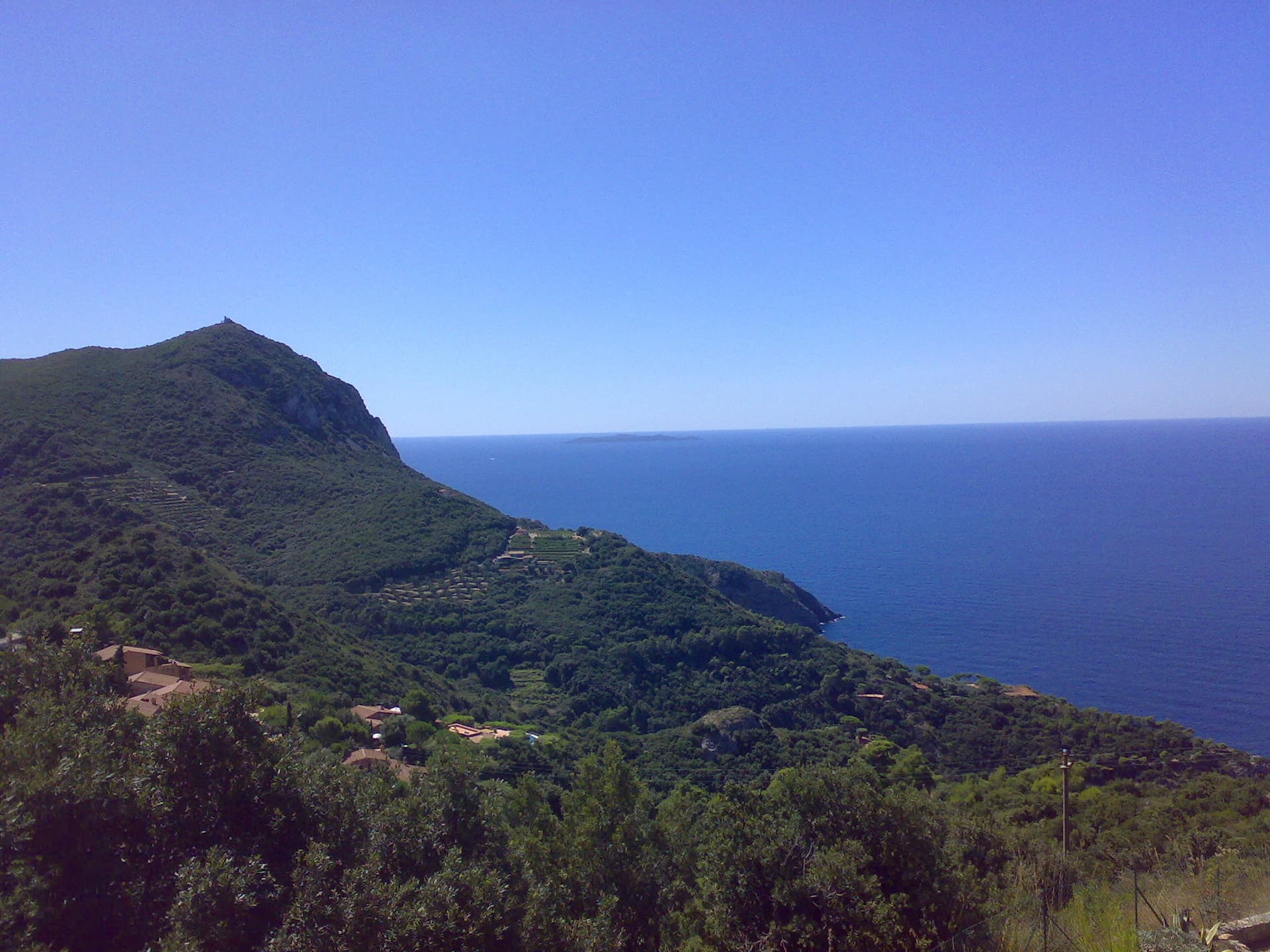
A tower-topped summit on the west coast of Monte Argentario with limestone crags falling towards the sea, photographed about 1.5 km north of Capo d'Uomo; it is very probably Capo d'Uomo and its watchtower seen from the north, not the south-east face the route climbs.

Italy · Monte Argentario

Spigolo Bonatti

A long arête that seems to drop straight into the sea: a sustained 6a first pitch, then corners, slabs and short walls at 5a to 5b+ separated by easy scrambling, with an exposed traverse out on the open face near the top. The 6a can be aided.

6a7 pitches240 m

Read the cautions
The headland of Capo d'Uomo on Monte Argentario with its watchtower on top, and the island of Giannutri on the horizon. The multipitch wall drops towards the sea below the tower; the routes are not visible in this view.

Italy · Monte Argentario

Maria Mare

Four pitches on the sea-facing wall of Capo d'Uomo: a featured slab, an easy linking pitch, and two vertical, athletic pitches on sculpted grey limestone to the crest below the old watchtower. The final wall is the highlight. The lower pitches need care with holds.

5c4 pitches110 m

Read the cautions

The headland of Capo d'Uomo on Monte Argentario with its watchtower on top, and the island of Giannutri on the horizon. The multipitch wall drops towards the sea below the tower; the routes are not visible in this view.

Italy · Monte Argentario

Stefy

The hardest of the short multipitch lines at Capo d'Uomo. Two approach pitches shared with the Via del Diedro lead to a sustained, technical 6a+ slab pitch that slants right on superb rock, then a varied 6a pitch up a smooth slab and a juggy bulge to the crest. The best climbing on this wall is at the top.

6a+4 pitches130 m

Around 6a · about 5 pitches

Similar elsewhere

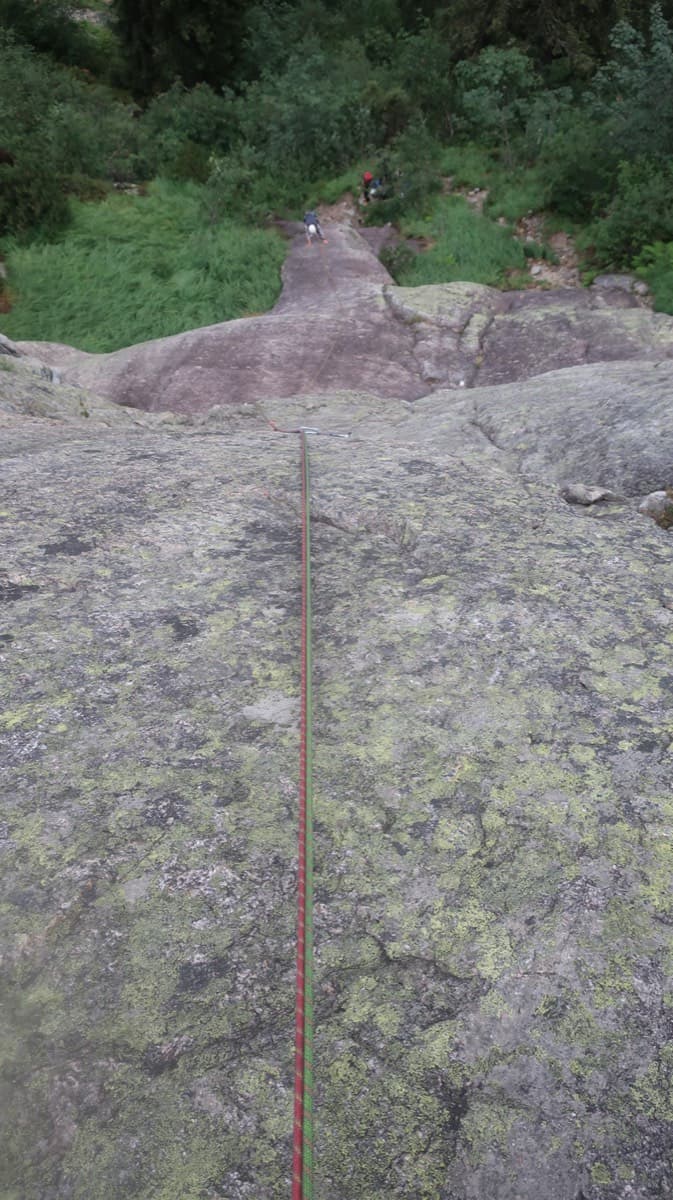
Looking down the lichen-covered granite slab of Bügeleisen towards the forest at Handegg

Switzerland · Grimsel

Bügeleisen

A short, varied granite route up a pale, smooth pillar across the valley from the Handegg slabs: a corner crack, then friction and edge slabs that get harder pitch by pitch. Grades are stiff, and the last pitch is sustained and tricky. A good half day or uncertain-weather route with a 15-minute approach.

6a5 pitches200 m

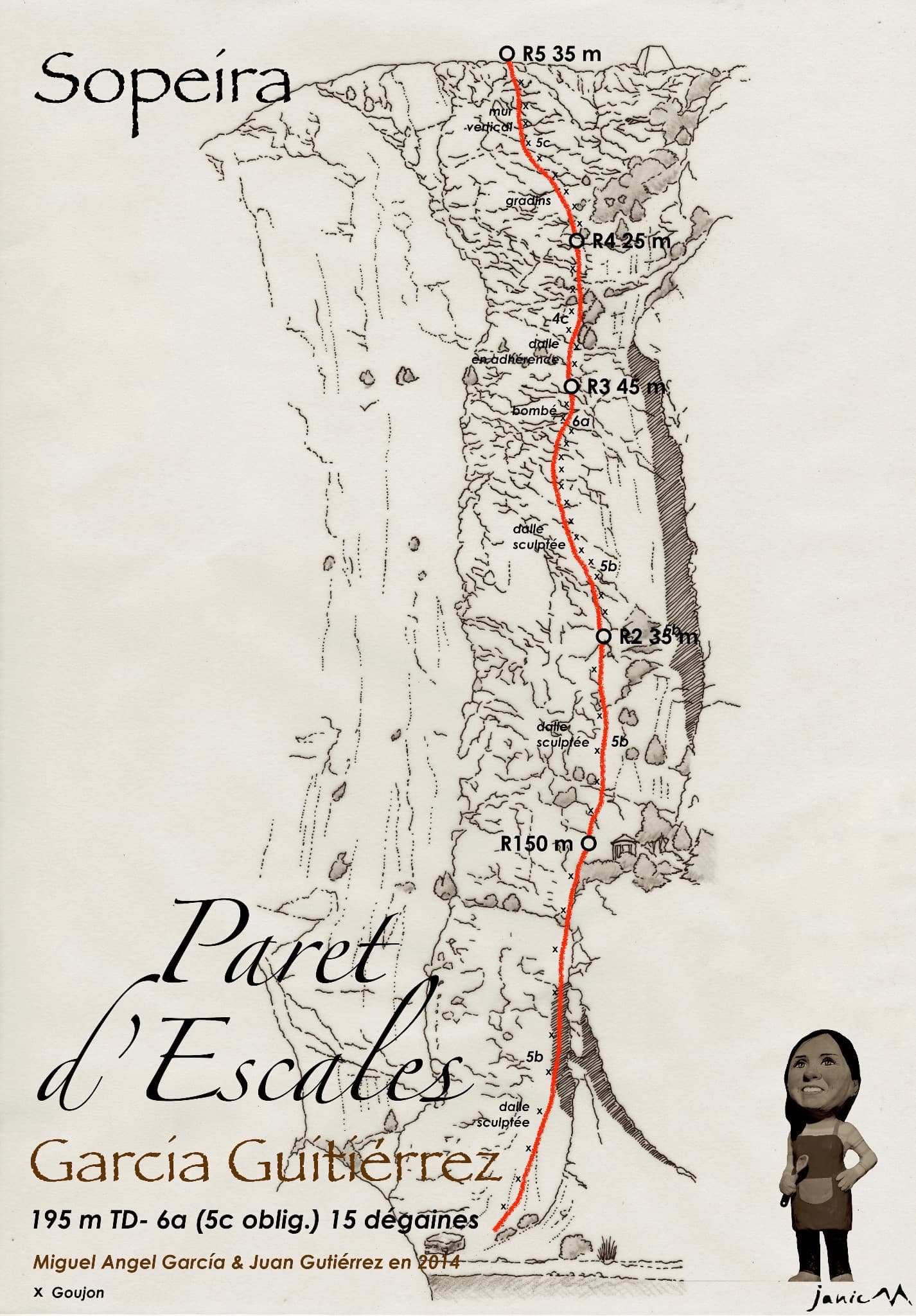
Drawn topo of García-Gutiérrez on the Paret d'Escales, with belays, pitch lengths and grades.

Spain · Escales (Ribagorça Pyrenees)

García-Gutiérrez

The neighbour of Xin Xan and a step up from it: adherence slabs low down, then an excellent, vertical third pitch on good holds that passes a small roof. It follows the edge of a corner without climbing in it. The last pitch has some doubtful rock.

6a5 pitches195 m

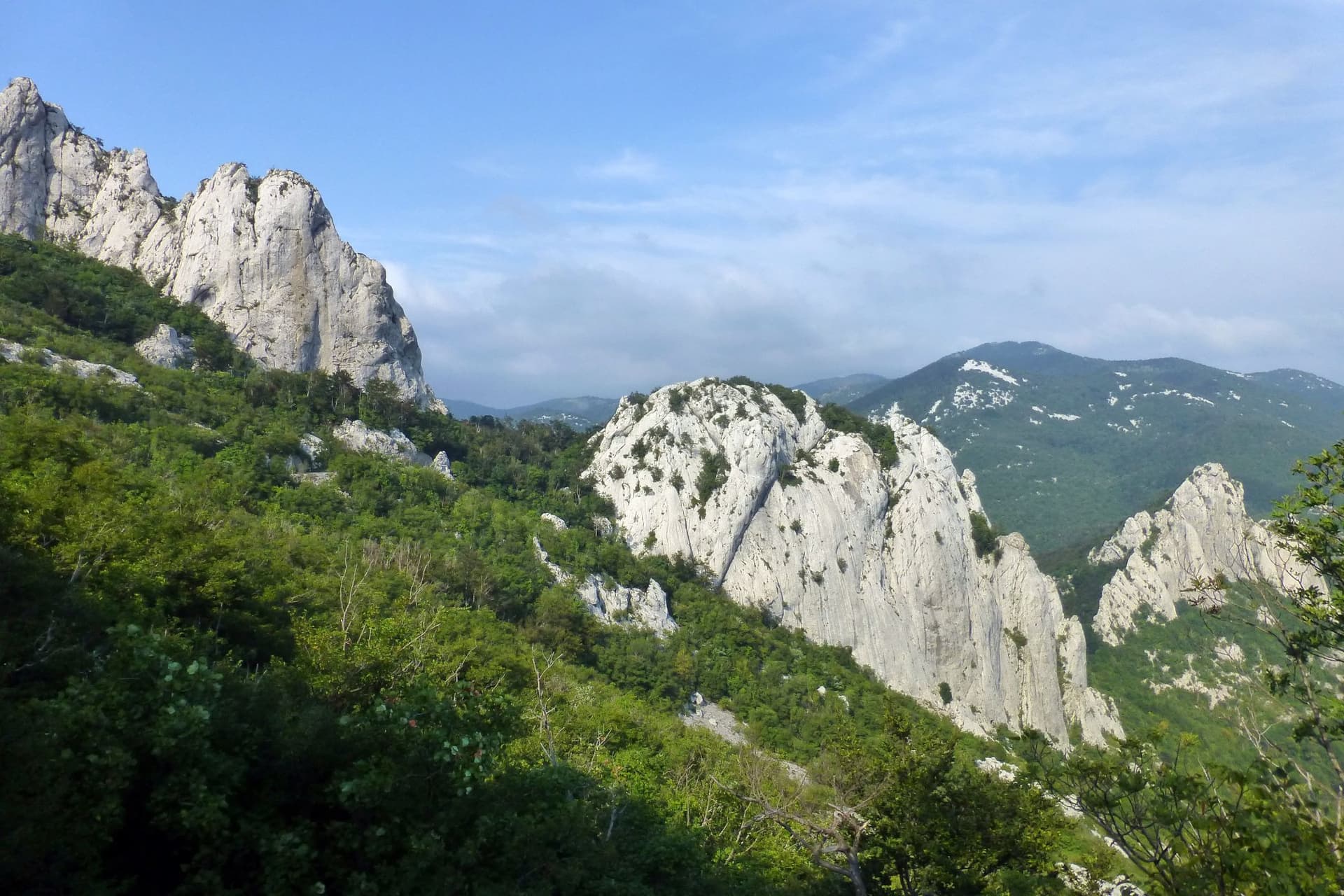
The limestone towers of the Dabarski kukovi above the Dabar basins, August 2019; the route is not marked.

Croatia · Dabarski kukovi (Velebit)

Ma Jo

Five pitches of steady 5c to 6a on compact, sculpted limestone in a quiet corner of the Velebit. The first pitch is sustained and delicate, pitch 3 has a short bouldery move over a small arch that you can pull through, and pitches 4 and 5 are the best of the route. Pitch 2 ends in a short vegetated gully and pitch 3 crosses a ledge.

6a5 pitches150 m

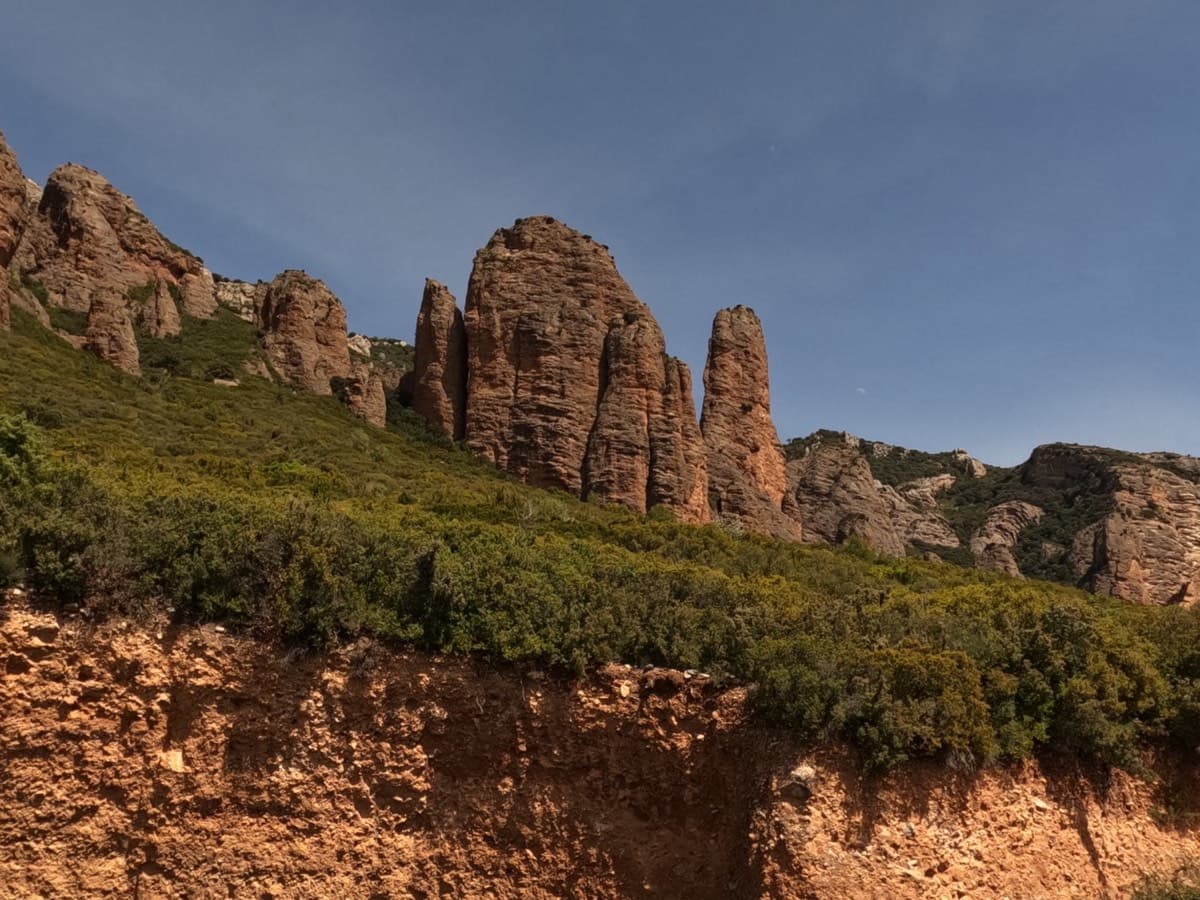
Mallo Cored (centre) with the Aguja Roja to its right, Riglos

Spain · Riglos & Agüero (Mallos)

Vía del Bolo

An arm-pumping 6a to start and a superb 6a to finish, with easier ground between. Skip the bolt-and-thread stance under the overhang on pitch 4 and belay 5 m higher.

6a5 pitches125 m

Read the cautions

Compiled from published sources and last verified October 2026. Bolts, anchors and access change. Climbing is dangerous and you are responsible for your own decisions: check a current topo and read the disclaimer.