Multipitch Atlas

Stefy

Capo d'Uomo · Monte Argentario · Italy

Bail with caveatsBolting confidence: medium

The hardest of the short multipitch lines at Capo d'Uomo. Two approach pitches shared with the Via del Diedro lead to a sustained, technical 6a+ slab pitch that slants right on superb rock, then a varied 6a pitch up a smooth slab and a juggy bulge to the crest. The best climbing on this wall is at the top.

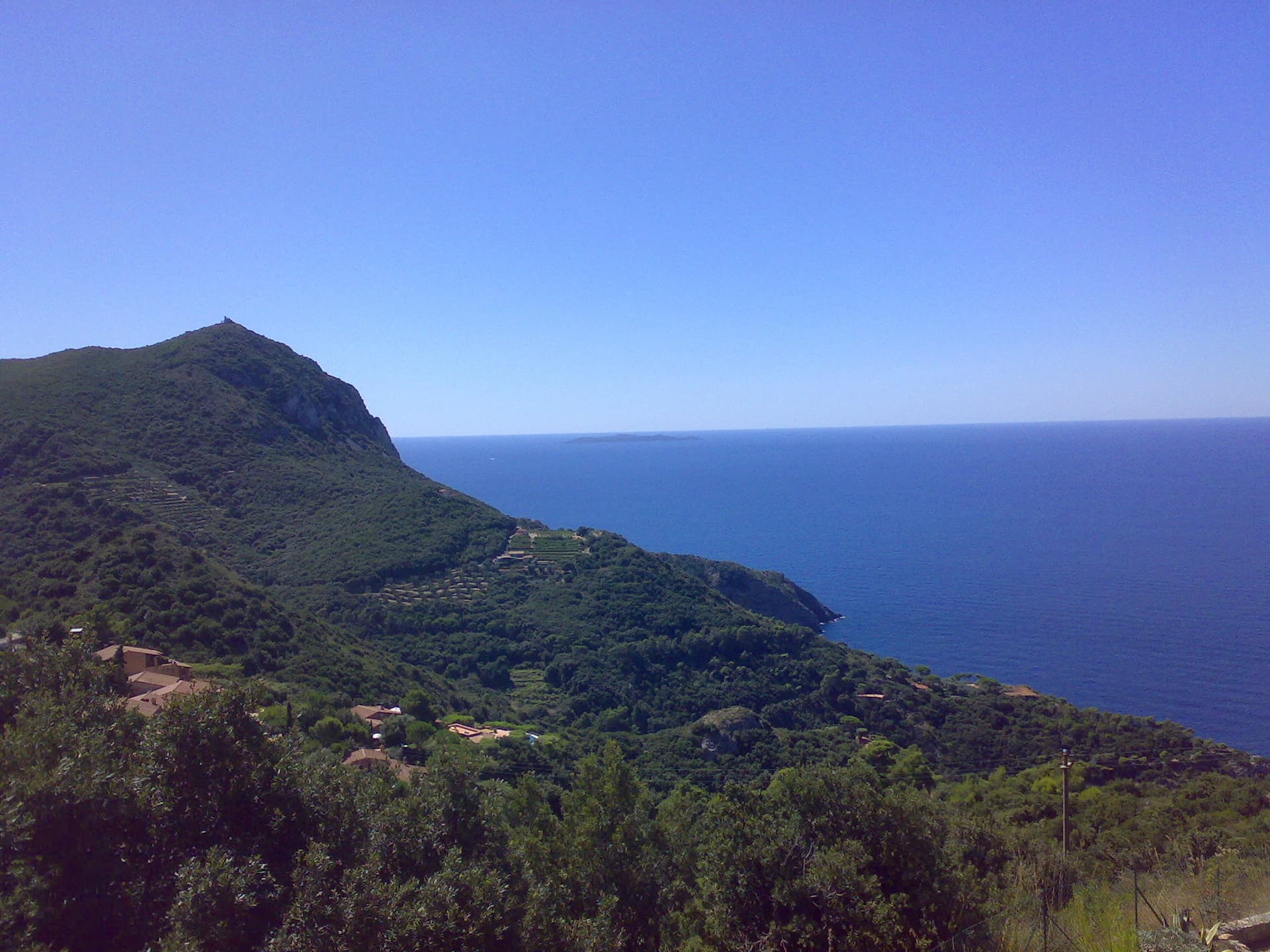
The headland of Capo d'Uomo on Monte Argentario with its watchtower on top, and the island of Giannutri on the horizon. The multipitch wall drops towards the sea below the tower; the routes are not visible in this view.Photo: Ceppicone · CC BY-SA 3.0

Photo

The headland of Capo d'Uomo on Monte Argentario with its watchtower on top, and the island of Giannutri on the horizon. The multipitch wall drops towards the sea below the tower; the routes are not visible in this view.Photo: Ceppicone · CC BY-SA 3.0
Hardest pitch
6a+
Pitches
4
Length
130 m
Approach
30 min
Aspect
SE
South-east-facing
Rope
1×60 m

The route

Overview

Stefy is described as a combination: the first two pitches of the Via del Diedro, then two independent pitches up the wall to the right. The start is at the same small tree-shaded clearing as Argento Argentario, above the sea on the south-east side of Capo d'Uomo. After a long 5c diagonal and an easy slab, the third pitch pulls through a bulge and traverses right across technical slabs at 6a+, and the fourth climbs a wall, a smooth slab beside a small corner and a last juggy overhang at 6a. Recent parties single out the third and fourth pitches for the quality of the rock. All the information comes from one Gulliver page and its trip reports.

The climbing

Pitch by pitch

Pitches of Stefy
PitchGradeLengthNotes
P15c45 mFollow the line of bolts that slants up to the right. The first hanger has been removed; you can clip the first bolt of the route on the left with a long sling. Given as 45 to 50 m. This is the first pitch of the Via del Diedro.
P24c30 mEasy-angled slabs: go up above the belay, then traverse clearly right before reaching the next steep wall. Belay at the foot of a yellowish corner, where the Via del Diedro continues.
P36a+30 mThe crux, fairly sustained. Pull up the overhang above the belay, clip the first bolt straight up, then move decisively right onto technical slabs, following the bolts on a rightward diagonal to a rather uncomfortable belay on two bolts to link. A December 2025 party went too far right at the end and reached a different belay.
P46a20 mStraight up above the belay (easier just left of the first bolt), over a short wall to a smooth slab that forms a small corner on its left. Climb beside the corner, take a last juggy overhang and come out on the crest. Varied and still fairly sustained.

Getting there

Approach

To the parking

Drive to Porto Santo Stefano on Monte Argentario (southern Tuscany). At the port turn left at the first roundabout and climb the Vallone del Campone for about 3.5 to 4 km. At a junction turn left (the right branch is signed 'Poderi del Capo d'Uomo') and continue level for about 500 m to where the road crests with a view of the sea. Park on the left in an earth lay-by with signposts for Capo d'Uomo, or along the road; one December 2025 party wondered whether parking there is officially allowed.

On foot · about 30 min

25 to 30 minutes. From the lay-by take the dirt road that drops to the right, on the other side of the tarmac, for about 200 m, then the level track on the right to a wide bend that climbs steeply. Just before the bend take the path on the left (cairn) and follow the whole ridge towards the ruined tower of Capo d'Uomo, about 15 minutes. Shortly before the tower drop left to the single-pitch crag and go down past its lowest routes. A little lower take another track on the left that moves slightly away from the wall and keeps descending towards the start of the Spigolo Bonatti (cairns and fixed ropes). Before reaching the bottom, cut right, level, for a few metres across the scree to a small clearing with trees at the foot of a nearly vertical wall with visible bolts. Argento Argentario starts here too.

Map of the walk-in

  • Crag

Loading map

The point marks the crag, not the exact start of the route.

Coordinates · crag

42.39578, 11.10402

Point from camptocamp waypoint 1710698

For your phone or watch

Download GPX

Contains the route point. Opens in most mapping apps and GPS watches.

Points are compiled from published sources, with the precision stated above. They were not surveyed on the ground: check them against a current topo.

Getting down

Descent

On foot: follow the easy crest on faint tracks up to the tower, then the approach path along the ridge back to the car.

Retreat

Bailing off the route

Bail with caveats

The start is reached on foot, so you can retreat by abseiling to the clearing and walking back up the approach path. The belays are bolted but only the one after pitch 3 is described, as two bolts to link, so expect to leave gear. The first pitch is 45 to 50 m and slants, which a single 60 m rope cannot abseil in one go.

Retreat from
The belays after pitches 1 and 2; from the second belay the easier Via del Diedro continues up the yellowish corner, but its upper pitches are not described in the sources read.
Point of no return
Not documented. Pitch 3 traverses right across slabs, which would make abseiling back to the second belay awkward.
Carry
Two ropes to abseil the 45 to 50 m first pitch, plus maillons and cord.
Basis
Inferred from the route factsInferred from the pitch lengths, the traverse and the belay description on Gulliver; no source describes a retreat.

Partly inferred from the route facts

Safety

Hazards

  • Nothing is named at the base and several bolted lines share the first metres and the lower slabs.
  • The first hanger on pitch 1 is missing.
  • It is easy to drift too far right at the end of pitch 3.
  • The approach crosses unstable scree.
  • Full sun for most of the day.

Sun and weather

Conditions

South-east facing above the sea, between roughly 70 and 350 m, and in the sun for most of the day. Reports describe pleasant climbing in December and February; spring and autumn are ideal, and in summer you need a dawn start. Avoid very windy days.

Usual season · Feb to May, Oct to Dec

Sun on the wall · SE-facing

Working out the sunlit hours for this month.

  • January: not yet worked out
  • February (usual season): not yet worked out
  • March (usual season): not yet worked out
  • April (usual season): not yet worked out
  • May (usual season): not yet worked out
  • June: not yet worked out
  • July: not yet worked out
  • August: not yet worked out
  • September: not yet worked out
  • October (usual season): not yet worked out
  • November (usual season): not yet worked out
  • December (usual season): not yet worked out

Sun on the wallDaylight, wall in shade● Usual season

Estimated from the wall's aspect only. Ignores surrounding terrain, gullies and the wall's exact shape. Clock times are local to the wall (Central European time), for the 15th of each month.

Climate figures for Monte Argentario are not available yet

What to carry

Gear

14 to 15 quickdraws, some of them extendable, and cord to link the belay bolts. The description names no rope length; the first pitch is 45 to 50 m and you walk off, so a single 60 m rope is the minimum the lengths imply. Helmet.

Checklist

Quickdraws
15
Rope
1×60 m
Helmet
One each
Maillons or spare karabiners
To leave behind if you retreat
Cord
Mentioned for retreat

Derived from the route data; check it against a current topo

From climbers

Reader reports

Reader reports are not being collected yet. Until they are, check a current topo and the local club or guidebook publisher for recent changes to Stefy.

Worth knowing

Tips

  • A December 2025 party climbed it in 80 minutes.
  • An April 2026 party abseiled in from the top to climb only the last pitch, which they rated the most distinctive on the wall.
  • Combine it with another route on the same wall or with single pitches at the crag below the tower.

Open questions

Where sources disagree

  • Single source: only Gulliver describes this route. PlanetMountain's pages for Capo d'Uomo cover the neighbouring Argento Argentario, Magnificat and Spigolo Bonatti but not Stefy or the Via del Diedro.
  • Length: the Gulliver header gives 130 m of climbing; its pitch lengths add up to 125 to 130 m.
  • Pitch 1 is given as a range, 45 to 50 m; 45 m is entered in the pitch list.

Provenance

Sources

Same area

More in Monte Argentario

All routes in Monte Argentario
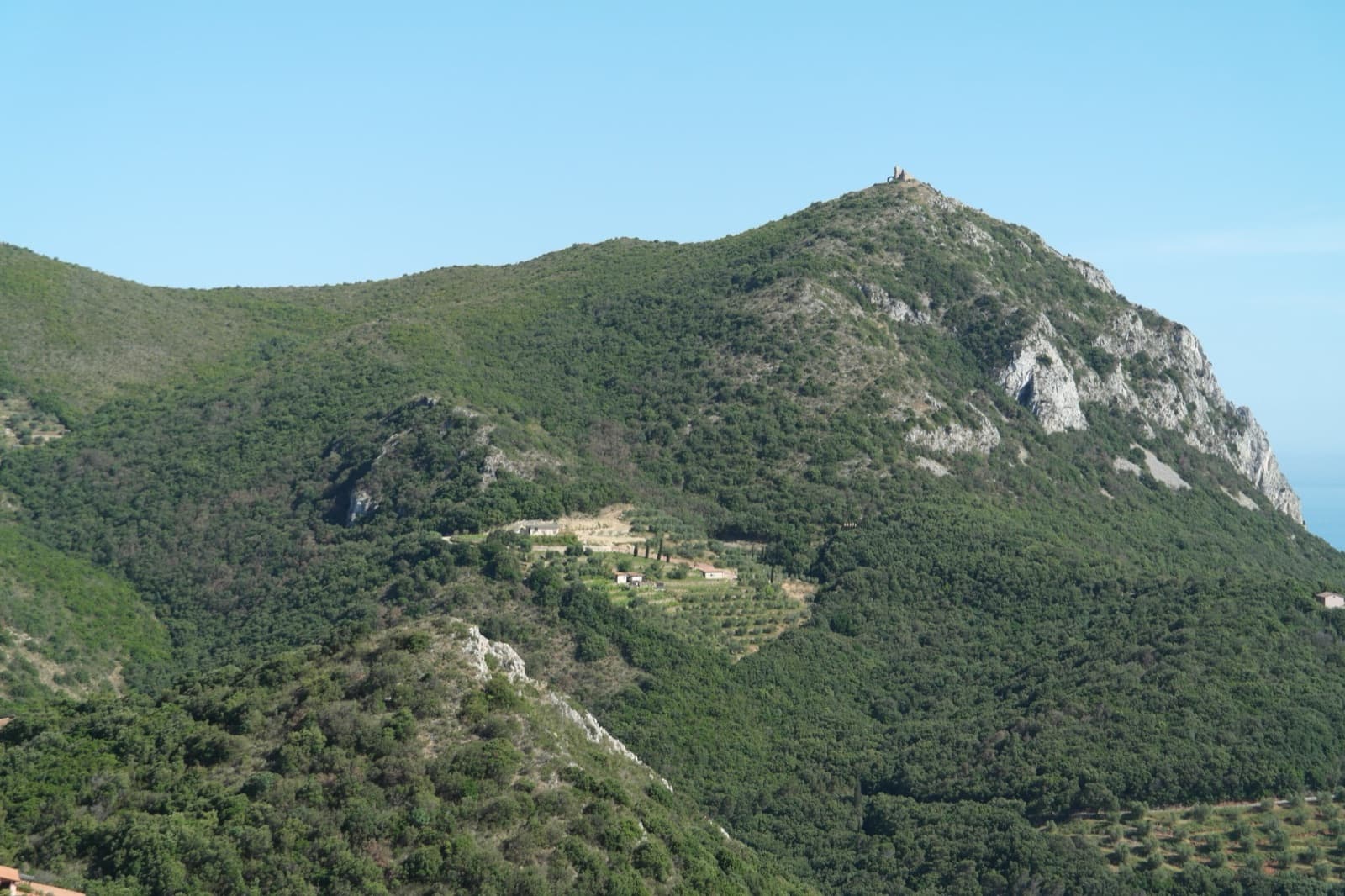
A tower-topped summit on the west coast of Monte Argentario with limestone crags falling towards the sea, photographed about 1.5 km north of Capo d'Uomo; it is very probably Capo d'Uomo and its watchtower seen from the north, not the south-east face the route climbs.

Italy · Monte Argentario

Spigolo Bonatti

A long arête that seems to drop straight into the sea: a sustained 6a first pitch, then corners, slabs and short walls at 5a to 5b+ separated by easy scrambling, with an exposed traverse out on the open face near the top. The 6a can be aided.

6a7 pitches240 m

Read the cautions
The headland of Capo d'Uomo on Monte Argentario with its watchtower on top, and the island of Giannutri on the horizon. The multipitch wall drops towards the sea below the tower; the routes are not visible in this view.

Italy · Monte Argentario

Maria Mare

Four pitches on the sea-facing wall of Capo d'Uomo: a featured slab, an easy linking pitch, and two vertical, athletic pitches on sculpted grey limestone to the crest below the old watchtower. The final wall is the highlight. The lower pitches need care with holds.

5c4 pitches110 m

Read the cautions

The headland of Capo d'Uomo on Monte Argentario with its watchtower on top, and the island of Giannutri on the horizon. The multipitch wall drops towards the sea below the tower; the routes are not visible in this view.

Italy · Monte Argentario

Argento Argentario (with the Spigolo Bonatti finish)

Three independent pitches on the wall below Capo d'Uomo, ending with a memorable 40 m wall of pockets, drips and flowstone at 6a. The route proper stops on the arête; the opener suggests carrying on up the last two pitches of the Spigolo Bonatti, an exposed 5c traverse and an easy ridge, to finish at the tower.

6a5 pitches200 m

Around 6a+ · about 4 pitches

Similar elsewhere

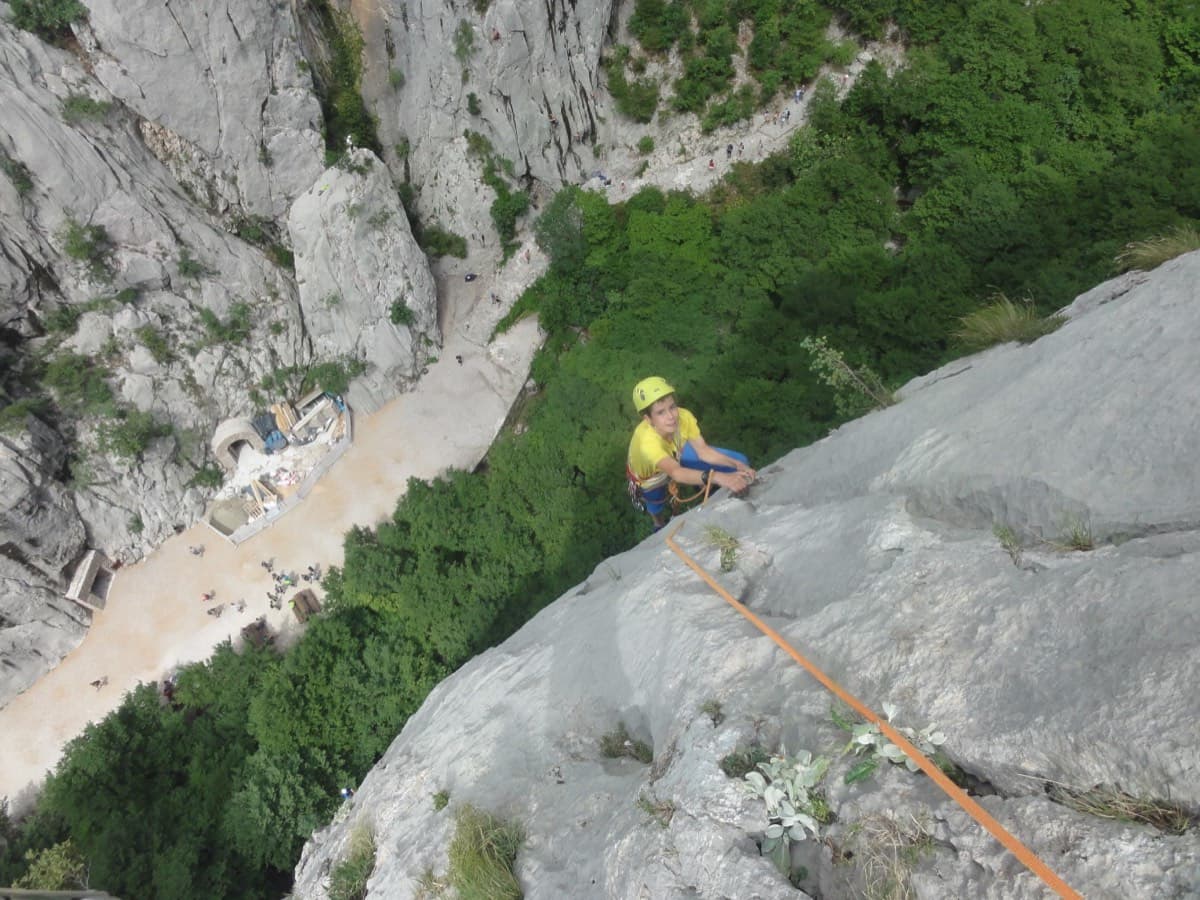
Climber on pitch 3 of Karamara Sweet Temptations, Veliki Ćuk, above the Paklenica canyon floor

Croatia · Paklenica

Karamara Sweet Temptations

A five-minute approach from the gorge café. There is a polished boulder-problem start, then wandering grooves and an airy traverse on the 6a+ third pitch.

6a+4 pitches110 m

Read the cautions

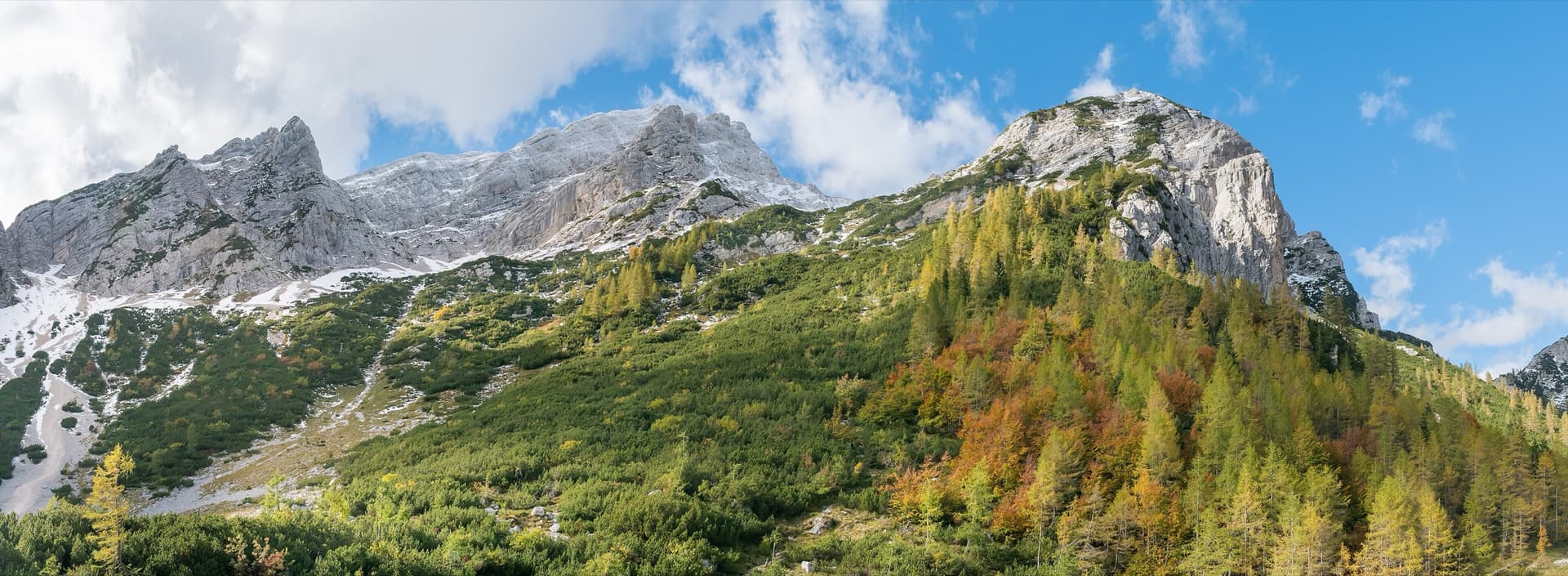
Mala Mojstrovka (left) and Nad Šitom glava (right) from the Vršič Pass in autumn; the routes are on the pale rock wall of Nad Šitom glava above the larches.

Slovenia · Vršič Pass (Julian Alps)

Rdeča pentlja

Beautiful plates and mini dolomite-style runnels, then a final corner. It makes a neat companion to its neighbours on the same face.

6a+4 pitches110 m

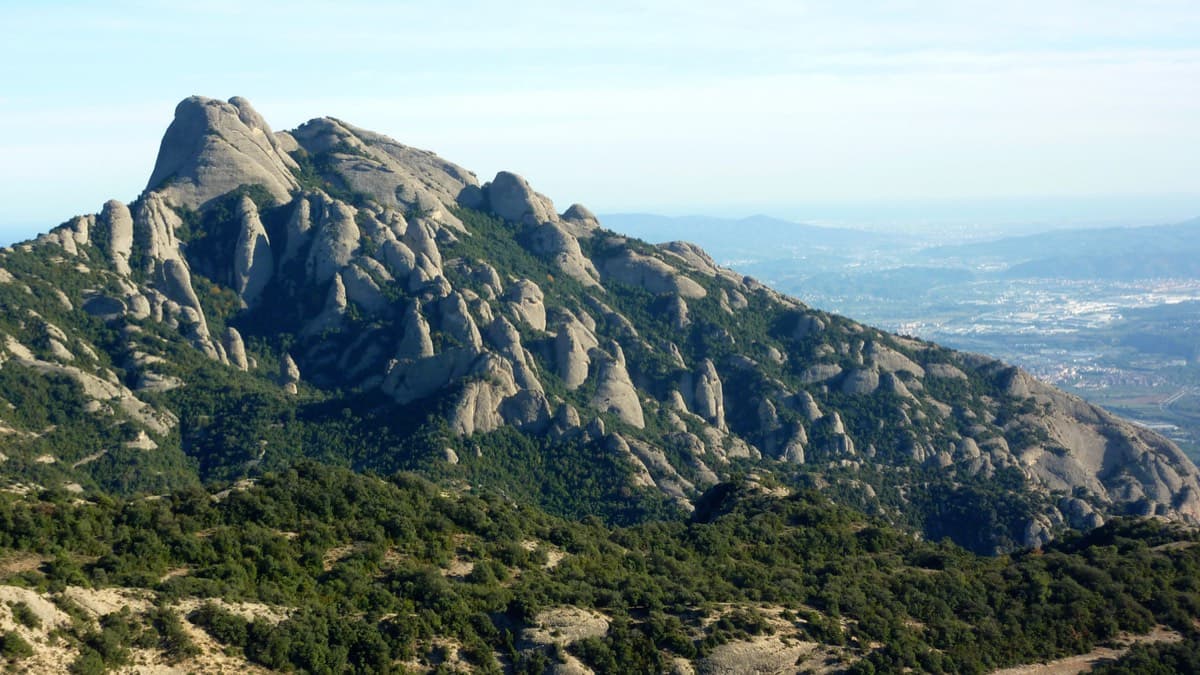
West side of the Gorros sector, Montserrat

Spain · Montserrat

Integral d'en Pitu i la Nuri

A modern linkup over two pinnacles on excellent conglomerate. Overhanging 6a and 6a+ walls alternate with easy 'potato-field' slabs. The new bolting makes it one of the most reassuring long lines in the massif.

6a+5 pitches185 m

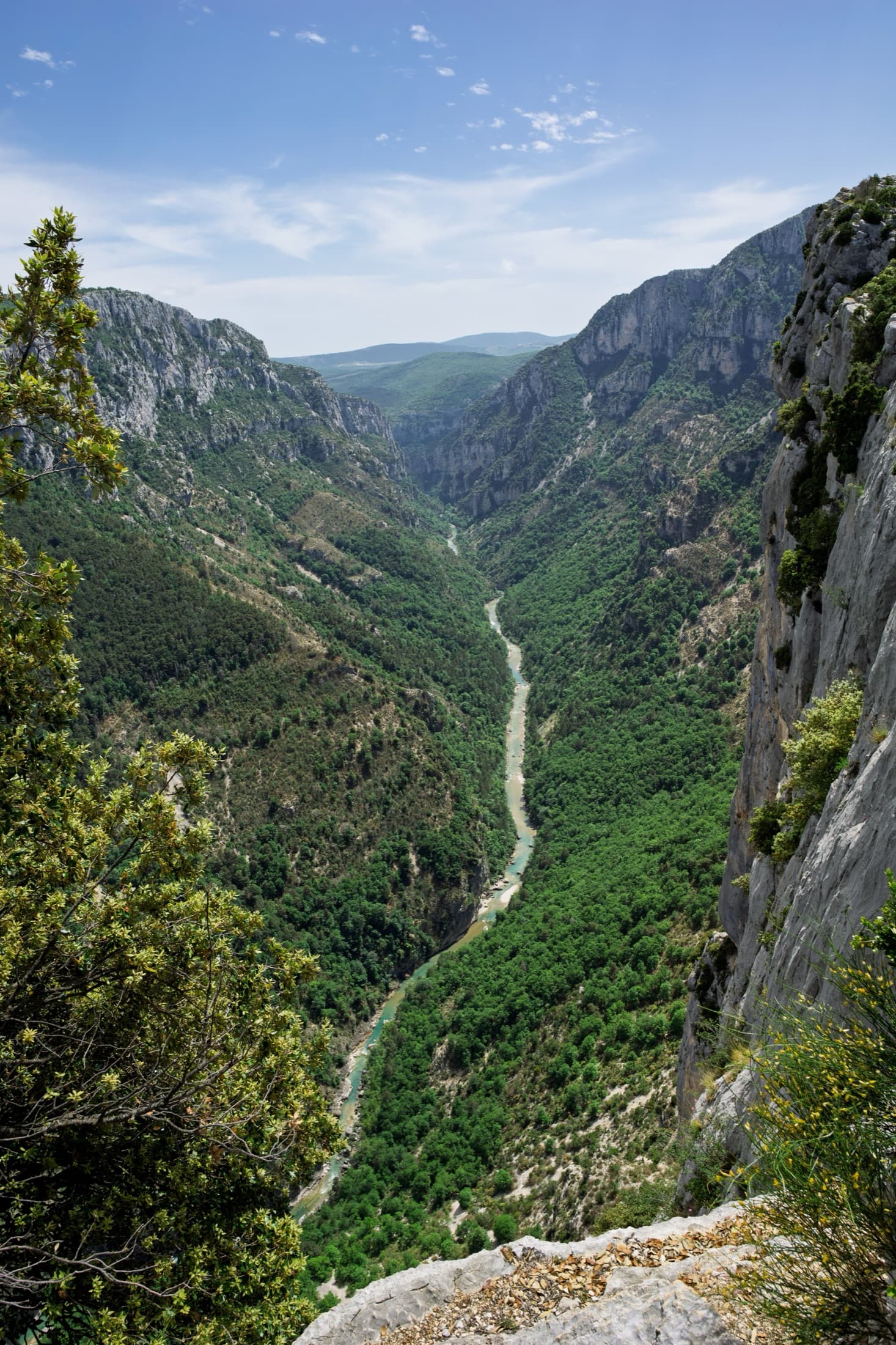
The Verdon gorge from the Belvédère de la Carelle, where the abseils to the route start

France · Verdon

Afin que nul ne meure

A 1985 classic of the Escalès, a grade harder and noticeably bolder than Les Dalles Grises next door. Five pitches on pockets and slabs, starting with polished rising traverses and finishing up a sculpted wall of vertical flutings, an overhanging crack and a bulge at 6a+. You need to be solid at 6a to enjoy it.

6a+5 pitches150 m

Read the cautionsCommitting

Compiled from published sources and last verified October 2026. Bolts, anchors and access change. Climbing is dangerous and you are responsible for your own decisions: check a current topo and read the disclaimer.