

Spain · Vega Baja (Orihuela & Callosa)
Código Vertical
A popular modern four-pitch classic on Pared Negra's compact grey limestone, around UIAA 6/6+ (about French 6a). Best on cool, sunny winter days.
6a4 pitches150 m
Sierra de Callosa (Redován) · Vega Baja (Orihuela & Callosa) · Spain
Read the cautionsBail with caveatsBolting confidence: medium
A long, steady V+ spur to the summit of the Sierra de Callosa on exceptional rock. Many terraces allow a safe retreat, which makes it good mileage for building multipitch experience. Check local seasonal climbing restrictions in the Sierra de Callosa.
Described as bolted throughout with a V+ crux, but the only detailed report found no belay on a final pitch of over 60 m, and no source gives rope length, bolt counts or equipping date.
The route
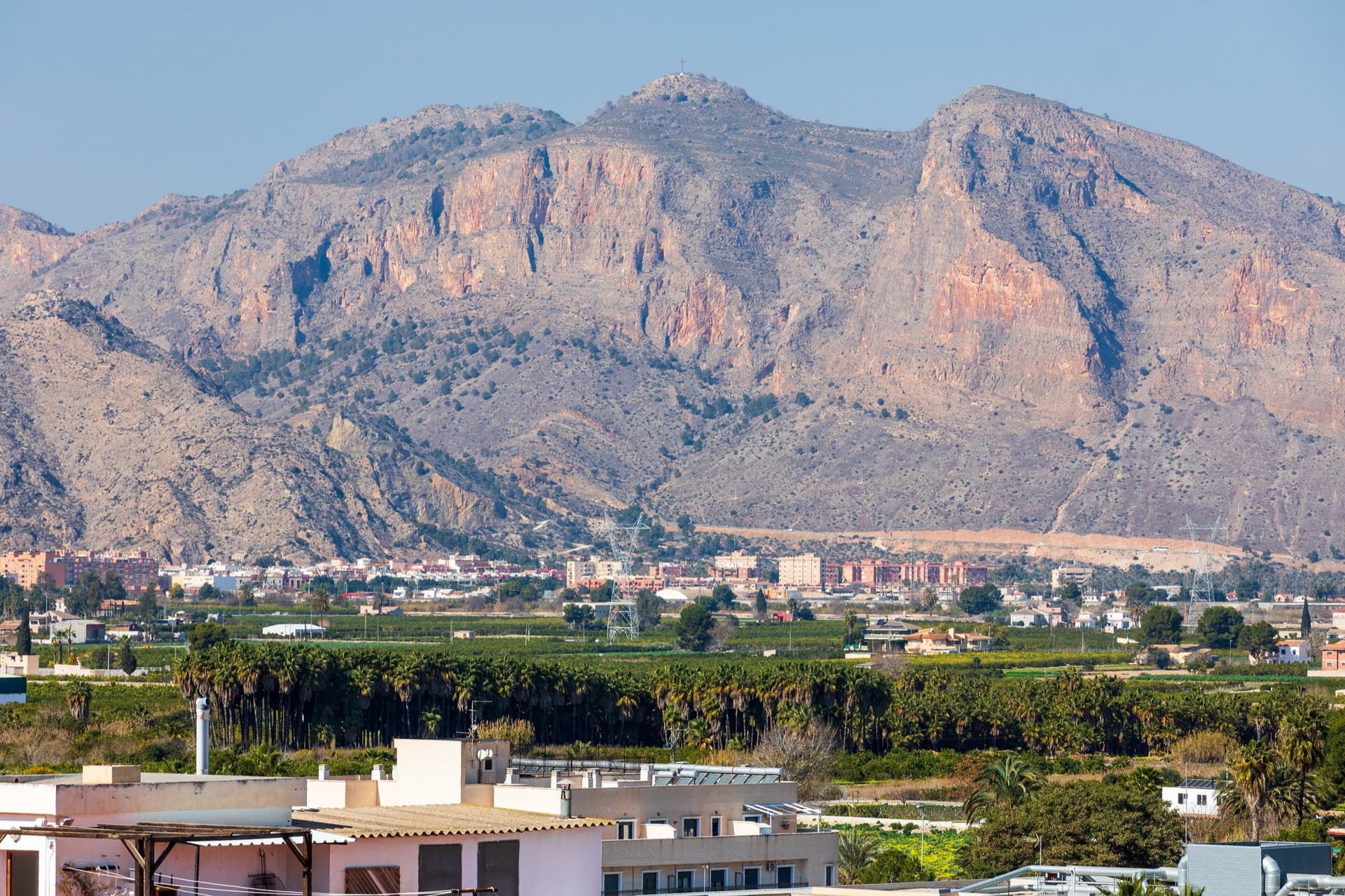
Espolón PDP is the longest route in the Vega Baja: about 500 m and nine pitches up La Pancha, the wall above Redován in the Sierra de Callosa, finishing near the summit trig point. The climbing is slabs, corners and one layback at IV+ to V+, on rock described as excellent, and the line is broken by three big grassy terraces that you walk across. Local sources describe it as bolted throughout and low in exposure, which makes it a good mileage day. Only two blog-style sources describe it, there is no published rope or quickdraw list, and the final pitch is reported as longer than 60 m with no obvious belay, so it needs more care than the grade suggests.
In pictures
The climbing
| Pitch | Grade | Notes |
|---|---|---|
| P1 | 5+ | Steep slab on good rock with some delicate moves. Graded V+. |
| P2 | 5+ | Similar, with a small overhang at the end passed on the left. Ends on the first terrace. Walk about 20 m across the terrace to the continuation. Graded V+. |
| P3 | 4+ | Easy linking pitch to a belay in the middle of the slab. Can be joined to pitch 4. Graded IV+. |
| P4 | 5a | Heads towards a distinctive corner but climbs the slab to its right. Belay on a terrace. Graded V. |
| P5 | 5a | Easy but exposed traverse right to a belay. Graded V. |
| P6 | 5+ | Right from the belay, then up a fine, exposed corner. The reporting party thought it the best pitch. Graded V+. |
| P7 | 5+ | The crux. Cross the second terrace rightwards, then a layback with good holds at the hard move; IV+ or easier above. Graded V+. |
| P8 | 4+ | Easy with good holds, moving right all the time to the belay. Above is the last terrace, with isolated steps of II+/III; go all the way right to find the bolts of the last pitch. Graded IV+. |
| P9 | 4+ | Reported as more than 60 m: almost 50 m of easy, low-angle rock, then a vertical last 15 m. The reporting party found no proper belay station here and climbed in line with the last bolt. Graded IV+. |
Getting there
Redován, near Orihuela (Alicante province), reached from the A-7 motorway. Park at the Redován sports centre (polideportivo), which has a car park. No public transport information was found.
A well-marked, maintained path with wooden sections and steps leads from the sports centre to the foot of the wall in about 15 minutes. Espolón PDP is the second route from the right; the first is Seiquer-Bo, which starts a few metres lower. Each route has a plaque at its base with name and grade.
Loading map
The point marks the crag, not the exact start of the route.
Point from gulliver.it (neighbouring route) "Redovàn, La Pancha - X Capítulos"
Contains the route point. Opens in most mapping apps and GPS watches.
Points are compiled from published sources, with the precision stated above. They were not surveyed on the ground: check them against a current topo.
Coordinates: 38.12029, -0.90386 (crag)
Getting down
Walk off; no abseils. The route ends close to the trig point of the Alto del Águila (568 m). Follow the local trail SL-CV 146, waymarked white and green, back down to the sports centre. The one party with a published time took about 1 h 30 min, in the dark.
Retreat
Bail with caveats
Yes, at the terraces. Link Alicante says the route has several terraces from which you can abandon the climb, and the trip report says that at the top of P7 you can head left to look for the descent path. Away from the terraces nothing is documented: no source describes the belay hardware or any abseils.
Partly inferred from the route facts
Safety
Sun and weather
La Pancha faces south to south-west and is listed locally as a winter crag; the October to April season listed here fits. The route is usually busy. The reporting party climbed in mid-November in pleasant temperatures and had late sun on the upper pitches.
Sun on the wall · SW-facing
Working out the sunlit hours for this month.
Sun on the wallDaylight, wall in shade● Usual season
Estimated from the wall's aspect only. Ignores surrounding terrain, gullies and the wall's exact shape. Clock times are local to the wall (Central European time), for the 15th of each month.
| Measure | Jan (usual season) | Feb (usual season) | Mar (usual season) | Apr (usual season) | May | Jun | Jul | Aug | Sep | Oct (usual season) | Nov (usual season) | Dec (usual season) |
|---|---|---|---|---|---|---|---|---|---|---|---|---|
| Mean daily high °C | 16 | 18 | 20 | 23 | 26 | 31 | 33 | 33 | 29 | 25 | 20 | 17 |
| Mean daily low °C | 5 | 6 | 8 | 11 | 14 | 18 | 21 | 21 | 18 | 14 | 10 | 6 |
| Rain days 1 mm or more | 4 | 4 | 5 | 5 | 4 | 2 | 1 | 2 | 5 | 5 | 5 | 4 |
● marks the usual climbing season. Averages for 1991-2020 at about 27 m. Area climate from Open-Meteo reanalysis. Temperatures are adjusted to the height of the crag; rain comes from a grid cell of about 10 to 25 km, and summer highs on sea cliffs can read a few degrees low. The wall and valley can differ. Data: Open-Meteo, CC BY 4.0.
What to carry
No source gives a rope length or quickdraw count. Because the last pitch is reported as over 60 m, plan your rope around that (see hazards). Helmet and a head torch are sensible on a route of this length.
Derived from the route data; check it against a current topo
From climbers
Reader reports are not being collected yet. Until they are, check a current topo and the local club or guidebook publisher for recent changes to Espolón P.D.P..
Worth knowing
Open questions
Provenance
Same area
Spain · Vega Baja (Orihuela & Callosa)
A popular modern four-pitch classic on Pared Negra's compact grey limestone, around UIAA 6/6+ (about French 6a). Best on cool, sunny winter days.
6a4 pitches150 m
Spain · Vega Baja (Orihuela & Callosa)
The classic of Redován: ten pitches and 300 m of steady grade 5 with three steeper pitches on red rock. The eighth pitch, a traverse right into an overhanging corner above the orange cliffs, is the one people remember. Closed from January to June for nesting eagles.
6a+10 pitches300 m
Spain · Vega Baja (Orihuela & Callosa)
Five pitches up the centre of La Pancha, the main wall above Redován. The second pitch climbs the middle of a red pillar with a polished crux on flat holds; the 40 m last pitch is an elegant slab that looks much harder than it is. Outside the bird closure that affects Botri.
6b+5 pitches150 m
Around 5+ · about 9 pitches
Spain · El Chorro
An airy, exposed adventure on clean, solid rock: the best long easy route on the Frontales and an ideal first big multipitch.
5+8 pitches251 m
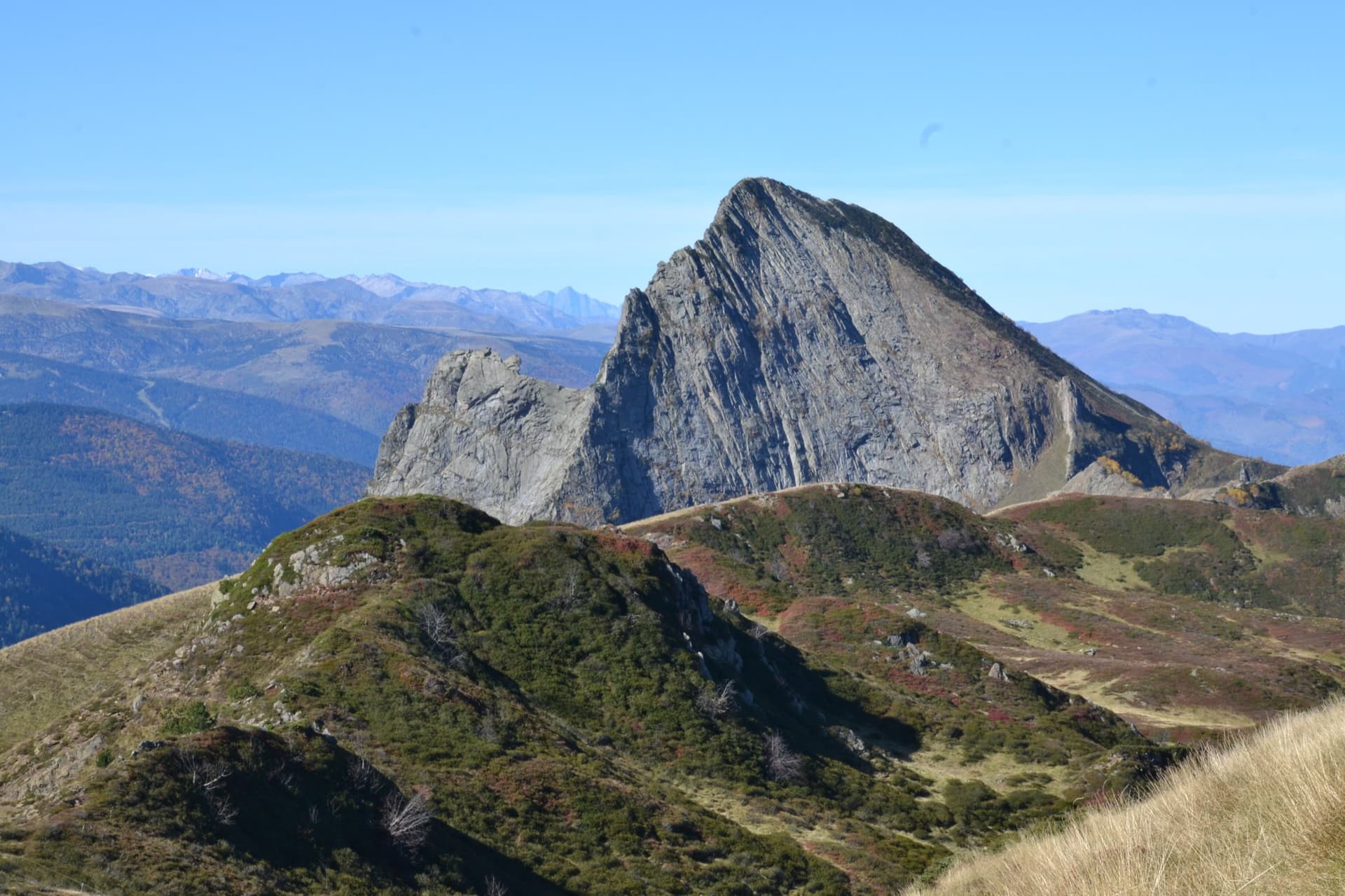
France · Ariège Pyrenees
Consistent, low-angled slab climbing on compact granite, with 10 pitches of 5a–5b+ on the big east face. Above all it is a long, sunny-morning moderate.
5b+10 pitches400 m
Read the cautions
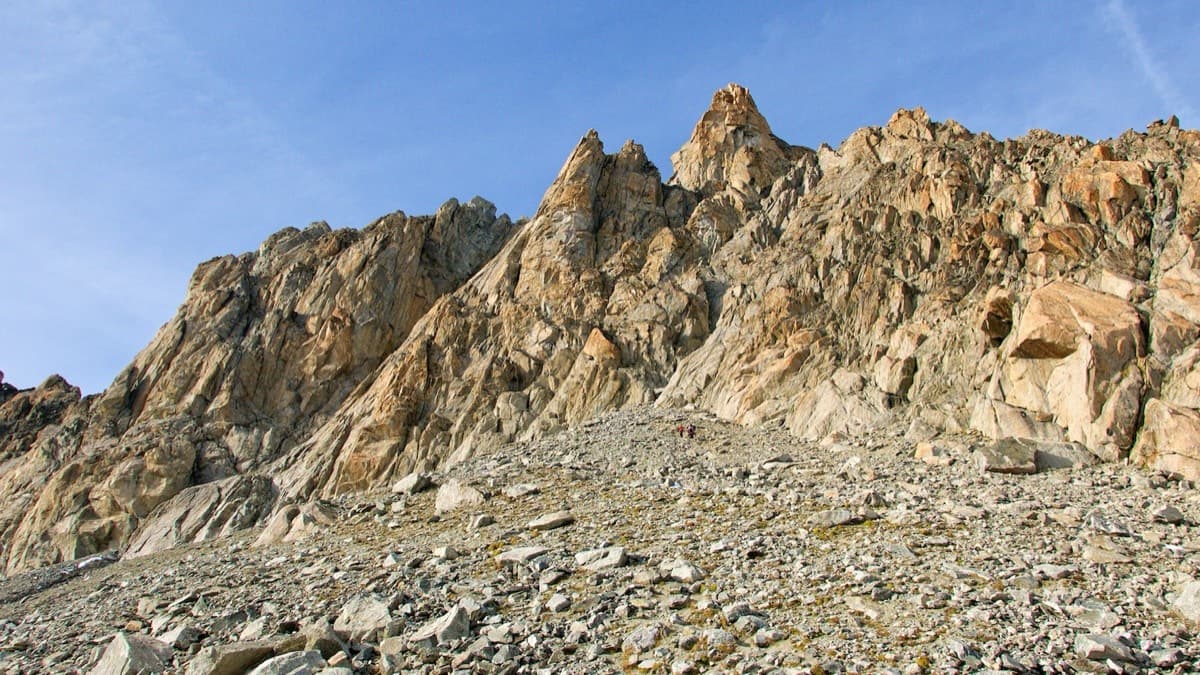
Switzerland · Orny (Champex, Mont Blanc massif)
Nine pitches up a granite spur and the final tower of the Aiguille d'Orny to a 3150 m summit, on rough, cracked rock with superb friction. Two moves of 5b, the rest 4b and 4c, closely bolted since 2016 and easy enough to climb in boots. The three steep pitches on the summit tower are the highlight.
5b9 pitches250 m
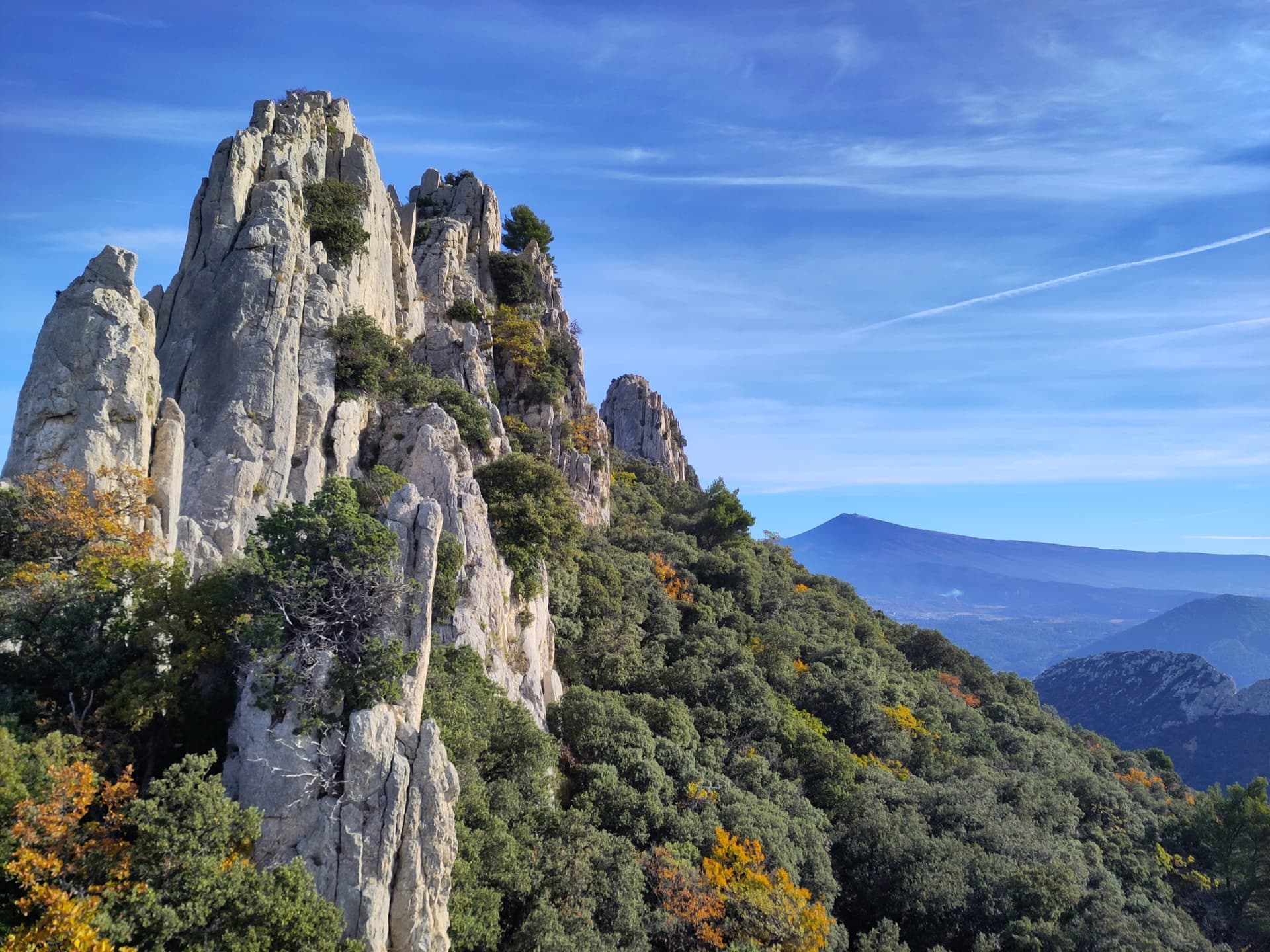
France · Dentelles de Montmirail
A west-to-east traverse of the six towers of the Florets crest, alternating short pitches with five short abseils and ending on a knife-edge. First climbed in 1928, it is the classic introduction to ridge climbing in Provence. The moves of 5 are short but polished and cannot be avoided, and all the rope work makes it slower than its length suggests.
5b9 pitches120 m
Compiled from published sources and last verified October 2026. Bolts, anchors and access change. Climbing is dangerous and you are responsible for your own decisions: check a current topo and read the disclaimer.