Menu

Greim

Peña Cigal, south-west face (below the big corner, about 50 m right of Reencuentro) · Liébana (Peña Cigal) · Spain

Easy to bail

Six pitches up the big characteristic corner of Peña Cigal, with a 50 m third pitch that steepens to a 6c+ finish (A0 on two bolts and a peg). The rest is sustained 6a to 6b on good rock. Stainless bolts and ringed belays throughout.

Climbing mode: Big type, screen kept awake, tick pitches as you go.

Hardest pitch
6c+6c+
Pitches
6
Length
200 m
Approach
30 min
Aspect
SW
South-west-facing
Rope
2×60 m

Highest point about 1300 m above sea level (estimate: terrain height at the mapped point).

Rock
limestone
Season
Apr to Jul, Sep to Oct
Bolting confidence
Medium
Last verified
October 2026 · Aggregated by AI from published sources

Photo

Climbing modeBig type, screen kept awake, tick pitches as you go.

Overview

Greim takes the spectacular corner that is the most obvious feature of this part of the Peña Cigal face. The first two pitches were climbed in traditional style long ago by the GREIM club of Potes; the equippers later bolted the whole line for sport climbing with stainless steel, with the first ascensionists' agreement. The 50 m corner pitch builds from 5c to a 6c+ overhanging finish, which you can aid on the bolts (a 2017 party called it 'not obligatory'); the other pitches are 6a to 6b. The last two pitches are shared with Quimera and La uña que mece la cuna.

Worth knowing

  • The 6c+ moves at the top of the corner go at A0, which brings the obligatory grade down to 6b (the equippers' figure).
  • Combine with Quimera: the two share their last two pitches and their abseils.

Pitch by pitch

The atlas doesn't show topos: they are the work of the people who bolt and document these routes. See the topo at Grupo de Montaña Altai – Peña Cigal topo (pared central), or in Peña Cigal: photo topo and route list (central wall).

Pitches of Greim
PitchGradeLengthNotes
P16a+30 mA steep wall on good, slightly spaced holds (6a), a traverse left under an undercut crack with precise footwork, then an indistinct channel on good holds. Watch for loose stones in the grass and scattered blocks near the belay.
P26b20 mShort and intense on excellent rock: a shallow corner (5c), a strong, delicate move right into a vertical crack climbed by bridging (6b), a balancy step onto a narrow ledge and a slab move (6b), then an easier corner.
P36c+50 mThe big corner. Reach it straight up and traverse right, then climb it on good holds, mostly on its edge, from 5c at the bottom to 6c+ where it overhangs at the top. The hard moves are on two bolts and a peg and go at A0. Exit right with a short slab traverse to the belay.
P46a50 mBroken ground up and right to a ledge below a corner (5a), joining Quimera's blue-bolted crack; the corner needs technical moves and some laybacking (6a), then a cracked spur to a short traverse right to the belay (5c).
P56a30 mAiry slab moves straight off the belay (6a) to cracks followed to the end of the pitch on excellent rock (5c to 6a). Small, semi-hanging belay. Shared with Quimera and La uña que mece la cuna.
P66a20 mA crack past two small trees (6a), then a slightly overhanging wall diagonally left (6a) and easy ground to the last belay. About 20 m of easy scrambling with loose stones leads on to the platforms below the south summit.

Approach

To the parking

Potes is the nearest town (shops, accommodation). From Potes take the CA-184 towards the Piedrasluengas pass as far as Pesaguero, then turn off to Caloca. From the south, cross the Piedrasluengas pass from Cervera de Pisuerga (CL-627, becoming the CA-184 in Cantabria) and turn left for Caloca just past the first houses of Pesaguero. Before Caloca, after a series of hairpins, pass the El Cigal apartments; at the next left-hand bend a dirt track leaves on the right. Park in the lay-by a few metres along it, or about 300 m further up.

On foot · about 30 min

About 30 minutes. Take the left-hand, rising track (the right branch goes to a livestock farm). After a few metres a faint path enters a small oak wood on the right and climbs round above the farm building, then continues through scrub and up a grassy slope to the foot of the face, meeting a better-marked path that leads to the base of the reddish spur. A July 2026 party found the wood path nearly abandoned, with brambles at its top end, and on the way back found the better line above the farm. Greim starts directly below its big corner, about 50 m right of Reencuentro. Three routes start here: Greim (left, stainless bolts), Quimera (three or four metres right, blue-painted bolts) and La uña que mece la cuna.

Map of the walk-in

Point from camptocamp summit waypoint 1934281 (Peña Cigal); the routes are on the south-west face below this point

For your phone or watch

Download GPX

Contains the route point.

Points from published sources, not surveyed.

Descent

Abseil in three on two 60 m ropes. La Garafa abseiled Greim's own line for the top two pitches and then Quimera's, which is more direct and avoids swinging about: R6 to R4 (50 m), R4 to Quimera's R2 (50 m), Quimera's R2 to the ground (55 m). The equippers also say Greim can be abseiled on its own ringed belays. Walking down the Vira is banned until 1 September.

Bailing off the route

Easy to bail

Abseiling is the normal descent and every belay has two ringed bolts, so you can retreat from any stance. The abseils are long (50 to 55 m), so two 60 m ropes are needed.

Retreat from
Any belay; Quimera's ringed belays alongside give a more direct line down.
Point of no return
None; the route is abseiled from the top.
Carry
Two 60 m ropes.
Basis
Stated in the sourcesLa Garafa describes the belays and the abseil sequence; the equippers confirm the route is abseilable.

Spain

In an emergency

In an emergency · Spain

112Emergency

Call 112

Emergency

Position of the crag

43.05462, -4.56012

Marks the crag, not the route: give route and pitch.

Say what happened, how many are hurt, and where you are. Checked October 2026 (source).

Hazards

  • Loose stones in the grass and scattered blocks around the first belay, and loose rock in the scramble above the last belay.
  • The pitch 3 crux is protected by two bolts and a peg of unknown age.
  • Bird-nesting rules (Federación Cántabra notice, 2019): until 1 September or the end of breeding, do not walk down the Vira and do not use the alternative abseil line between Sicigias and Amigos. A July 2026 party saw a sign at the car park saying some routes are now closed, so read it before you set off.

Gear

14 quickdraws and two 60 m ropes. Helmet.

Checklist

Quickdraws
14
Rope
2×60 m
Helmet
One each
Abseil device and prusik
For abseiling

Conditions

Plan B nearby

  • EasierSicigias6c4 pitchesfaces SWclose by
  • HarderQuimera7a6 pitchesfaces SWclose by

Straight-line distances, up to 30 km.

Reader reports

No reports yet.

Report a problem with this route

Say what and where. Reports are checked before they appear; no name or email is stored.

Bolts and history

Bolting
Fully re-equipped as a sport route with stainless-steel bolts by Antonio G. Corbalán with José Revuelta (La Garafa, Xabigaton) or F. Javier Calleja (equippers' sector page, Altai topo), with the agreement of the original party. Every belay has two ringed bolts plus a third bolt (2015). A peg remains between two bolts at the pitch 3 crux.
History
The first two pitches were opened in traditional style many years ago by the GREIM club of Potes. The equippers later bolted the whole route for sport climbing with stainless steel (equippers' post dated 2006; La Garafa and Xabigaton name José Revuelta and Antonio G. Corbalán; the sector page and the Altai topo name Corbalán and F. Javier Calleja).
Guidebook
The equippers' blog 'Cigal' (zigalfree.blogspot.com) has a description of every route. The Cantabrian sport-climbing guidebooks also cover the area. Free topo.

Where sources disagree

  • Length: 180 m in La Garafa's header, but its pitch lengths add up to 200 m.
  • The equippers' sector page lists 'four pitches plus two', because the last two are shared with Quimera and La uña que mece la cuna.
  • Re-equippers: La Garafa and Xabigaton name José Revuelta and Antonio G. Corbalán; the equippers' sector page and the Altai topo name Corbalán and F. Javier Calleja (Elías).
  • Pitch 3: 6c+ (equippers, La Garafa, Xabigaton) against '6a/A0 (7a+?)' in the Altai topo. Either way the hard moves go at A0.

Sources

More in Liébana (Peña Cigal)

All routes in Liébana (Peña Cigal)
No photo yet

Spain · Liébana (Peña Cigal)

Roberval

Sustained 5c to 6a climbing on grey limestone slabs, cracks and corners at the left end of the Peña Cigal wall, with short harder sections up to 6b. The hardest move is the first one off the ground. Bolted in stainless steel and abseiled from every belay.

6b6b5 pitches140 m

No photo yet

Spain · Liébana (Peña Cigal)

Quimera

The hard neighbour of Greim: a perfect corner and a technical roof traverse (7a) on pitch 2, then a sustained, airy slab of 6b+ to 7a, before joining Greim for three pitches of 6a to 6b. The obligatory grade is 6b, so the 7a moves can be aided on the bolts.

7a7a6 pitches

Read the cautions

No photo yet

Spain · Liébana (Peña Cigal)

Sicigias

Long, sustained 6a pitches of slab, cracks and corners, then a technical 6c wall of small crimps on the third pitch, on the left side of the Peña Cigal wall. Stainless bolts and ringed belays throughout. Above the first pitch it is an autumn-only route because of nesting vultures.

6c6c4 pitches150 m

Read the cautions

Around 6c+ · about 6 pitches

Similar elsewhere

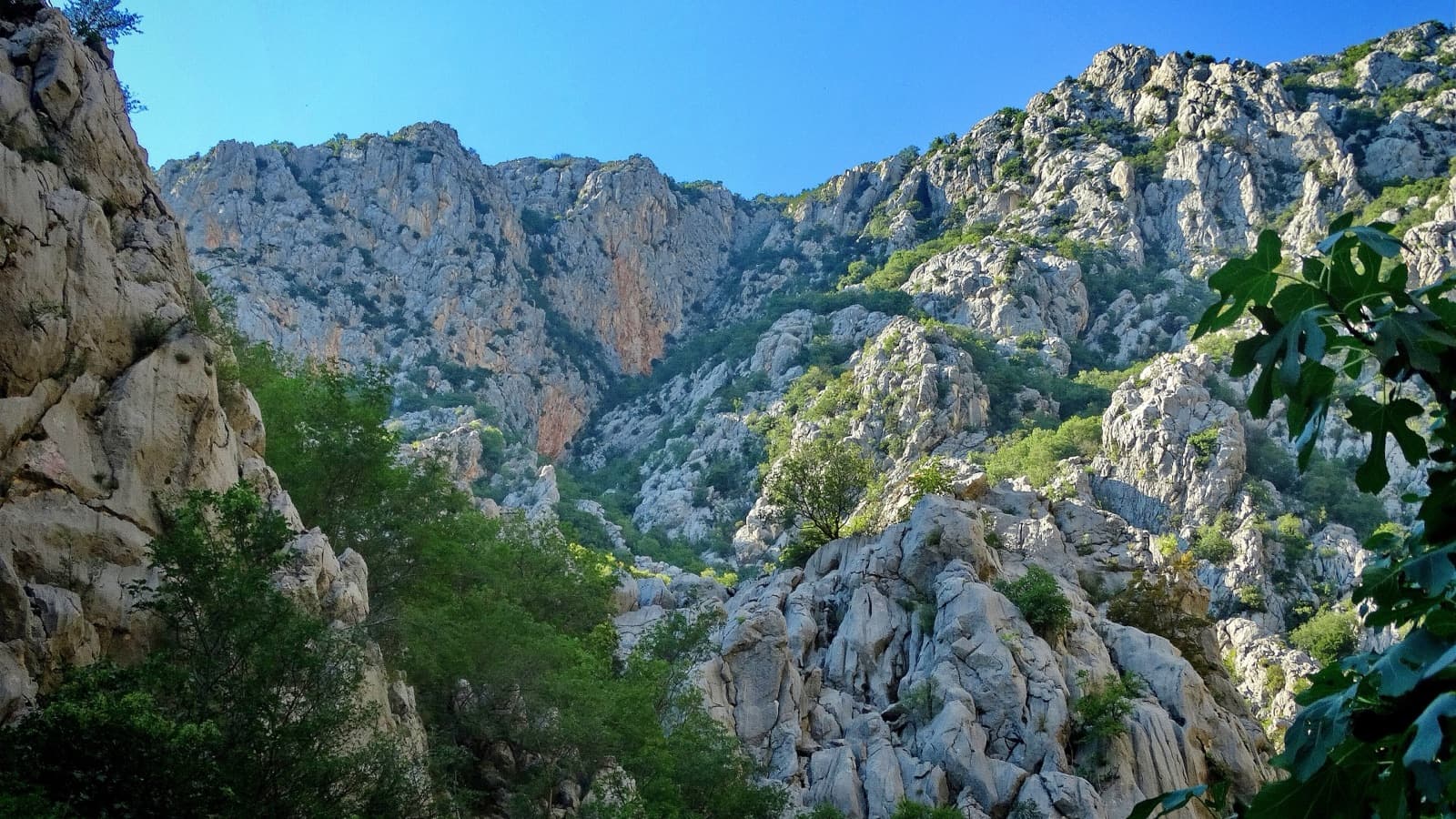
Orange-streaked limestone walls of the Velika Paklenica canyon seen from the opposite side; Debeli kuk is one of the walls of this canyon, but the source does not name the face shown.

Croatia · Paklenica

Big Wall Speed Climbing (Tinin raz)

The line used for Paklenica's annual Big Wall Speed Climbing competition: steep, direct and on very rough rock that has stayed unpolished. A sustained 45 m 6c+ pitch on small holds is the crux, followed by sharp runnels, a big corner and three overhangs to finish. Fifteen minutes from the car.

6c+6c+6 pitches200 m

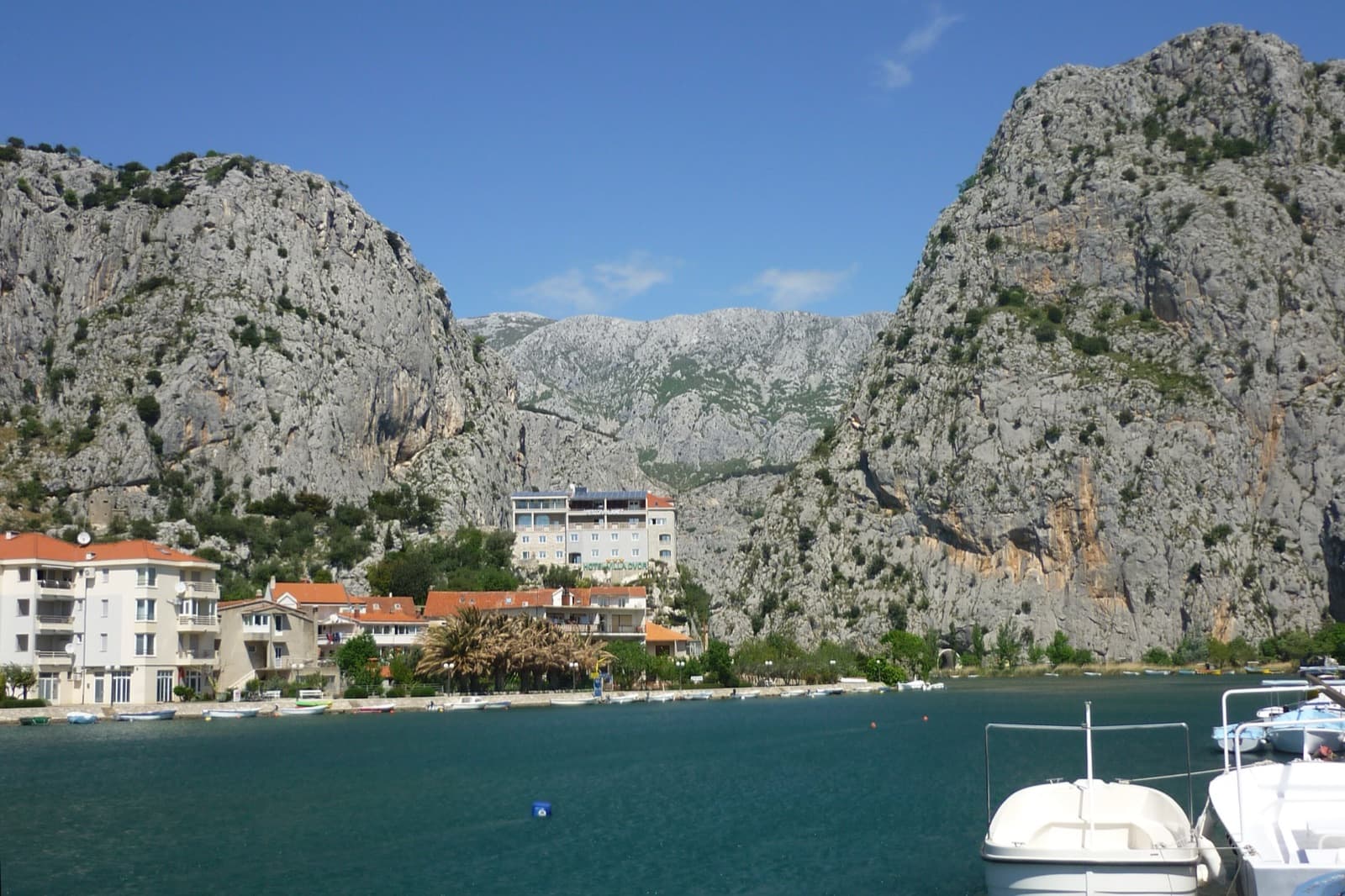
A view of the region, not this route's wall. The limestone gate of the Cetina at Omiš, seen across the river mouth; the town's crags, Stomorica among them, are on cliffs like these.

Croatia · Omiš

Pipeline

A 2024 line up the detached needle, nicknamed the Salami, on the south flank of Kula in the Cetina canyon behind Omiš. Five sustained pitches of 6b to 6c+ on excellent rock, split by a short walk across a ledge: crack-seamed slab, water grooves, an airy corner crack and steep technical wall climbing on the headwall. The obligatory grade is high.

6c+6c+6 pitches220 m

Read the cautions

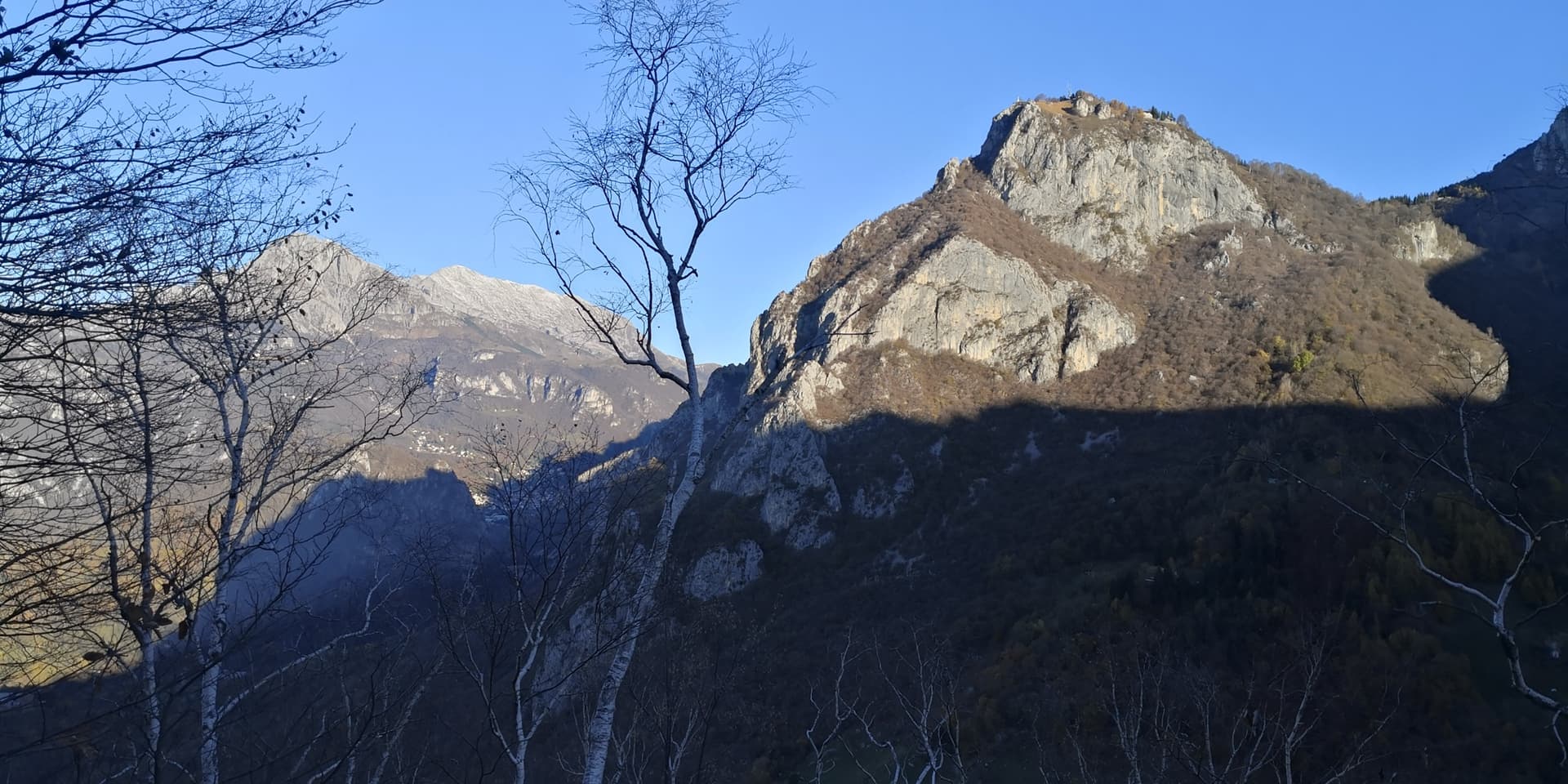
The limestone faces of the Pizzo d'Erna above Lecco; Via Mariet climbs the Punta Centa pillar on this mountain beside the Gamma 1 via ferrata (line not marked)

Italy · Lecco & Valsassina

Via Mariet

A short, steep sport multipitch on the Punta Centa, the grey limestone pillar of the Pizzo d'Erna above Lecco, climbing almost parallel to the Gamma 1 via ferrata with a big view over the town and lake. Technical slabs and walls get steadily harder, with the 6c+ and 6c pitches at the top, but the obligatory grade is only about 6a because the bolts are close. Expect a few friable holds and people on the ferrata beside you.

6c+6c+6 pitches150 m

Read the cautions

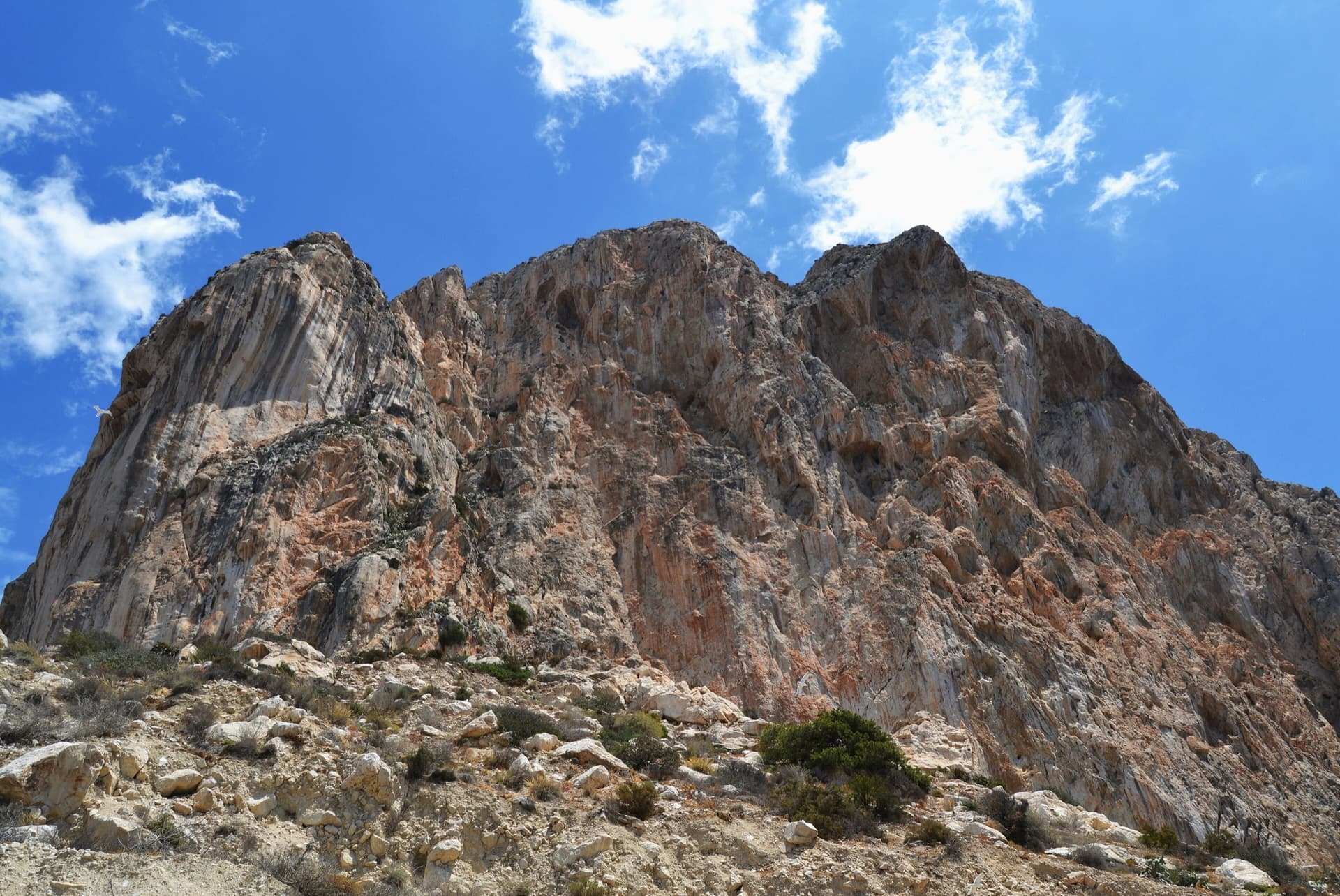
The south face of the Peñón de Ifach from the path below the cliffs, Calpe: 300 m of orange and grey limestone. Costa Blanca climbs this wall.

Spain · Costa Blanca (Peñón de Ifach)

Costa Blanca

The sport classic of the Peñón: a thin slab, a corner crack that steepens into an overhang, a pillar, then a wild exit from a big cave 200 m above the sea. Sustained at 6b with a 6c fifth pitch on polished slopers and a 6c+ last pitch whose crux can be pulled through on a bolt.

6c+6c+7 pitches220 m

Researched and aggregated by AI from published sources, last compiled October 2026. It can be wrong, and bolts, anchors and access change: check a current guidebook and read the disclaimer.