Menu

Sicigias

Peña Cigal, south-west face (left side, second line right of the big roofs, just right of Amigos) · Liébana (Peña Cigal) · Spain

Read the cautionsEasy to bail

Long, sustained 6a pitches of slab, cracks and corners, then a technical 6c wall of small crimps on the third pitch, on the left side of the Peña Cigal wall. Stainless bolts and ringed belays throughout. Above the first pitch it is an autumn-only route because of nesting vultures.

Climbing mode: Big type, screen kept awake, tick pitches as you go.

Hardest pitch
6c6c
Pitches
4
Length
150 m
Approach
30 min
Aspect
SW
South-west-facing
Rope
2×60 m

Highest point about 1300 m above sea level (estimate: terrain height at the mapped point).

Rock
limestone
Season
Sep to Oct
Bolting confidence
Medium
Last verified
October 2026 · Aggregated by AI from published sources
Read before you go

Included as an exception: well bolted with ringed belays, but by law only pitch 1 may be climbed until 1 September (or the end of breeding), so the full route is for autumn only.

Photo

Climbing modeBig type, screen kept awake, tick pitches as you go.

Overview

Sicigias is the second line of bolts right of the big roofs on the left side of Peña Cigal's south-west face, starting just right of Amigos. It has four pitches, about 150 m: two long, sustained 6a pitches of slab, corners and cracks, a technical 6c wall of small crimps that you have to read, and a 5c corner pitch to a ledge below the Vira. It is fully bolted in stainless steel with abseil rings on every belay. The exception to the atlas rules is access: under the Cantabrian federation's 2019 nesting rules you may climb only the first pitch until 1 September or the end of the breeding season, so the full route is an autumn climb.

Worth knowing

  • In the nesting season pitch 1 is a fine 50 m 6a on its own; abseil from R1 on two ropes.
  • The equippers give the obligatory grade as 6b.
  • In autumn it combines well with Roberval, left of the big roofs, which is open all year.

Pitch by pitch

The atlas doesn't show topos: they are the work of the people who bolt and document these routes. See the topo at Grupo de Montaña Altai – Peña Cigal topo (pared central), or in Peña Cigal: photo topo and route list (central wall).

Pitches of Sicigias
PitchGradeLengthNotes
P16a50 mA long, sustained 6a pitch. A delicate slab (6a direct) leads to small ledges below a steep corner with good holds, on the boundary between grassy, broken rock on the right and compact slab on the left. Athletic moves out of the corner, a channel slightly left, a long step right onto a slab (6a), then a delicate traverse right on broken rock (5c; test holds) and elegant slab moves up and right to the belay at the foot of a corner. The cracks are filling with vegetation (2015). This is the only pitch open before 1 September.
P26a40 mUp the corner above the belay, out onto compact slab with excellent holds to a grassy ledge (5b), steep long moves right into a short corner (5c), then a very elegant, vertical slab on small edges (6a). Easier but more delicate rock leads diagonally left to ledges at the foot of a gully and the belay shared with Amigos.
P36c30 mThe crux: the compact, vertical slab above the belay, sustained on small crimps and very technical, with the hardest move at the top of the wall. Then a delicate 3 m traverse left into a channel between blocks, where the holds get bigger but the rock is fractured (6a/5c), to a big grassy platform.
P45c30 mA slab with big pockets into a perfect right-angled corner (5c), a harder move out right (6a) onto ledges and ramps of less compact rock, then a short corner to the last belay (5b). Graded V+ by the Altai topo and La Garafa. About 15 m of easy ramps and ledges (2b) continue to the Vira; do not go up there in the nesting season.

Approach

To the parking

Potes is the nearest town. From Potes take the CA-184 towards the Piedrasluengas pass as far as Pesaguero and turn off for Caloca (from the south, cross the Piedrasluengas pass from Cervera de Pisuerga). Just before Caloca, at the bend after the El Cigal apartments, a dirt track leaves on the right; park beside it after about 100 m.

On foot · about 30 min

About 30 minutes. Walk on up the track about 250 m to a junction, take the small path into the wood opposite, then climb the slope towards the face on the most-used path. Follow the foot of the face leftwards past the big roofs: Amigos is the first line of bolts after the roofs and Sicigias starts a few metres to its right and slightly lower.

Map of the walk-in

Point from camptocamp summit waypoint 1934281 (Peña Cigal); the route is on the south-west face below this point

For your phone or watch

Download GPX

Contains the route point.

Points from published sources, not surveyed.

Descent

Abseil. The equippers say to abseil the route and link into the Amigos belays: five abseils of 30 m, or 60, 60 and 30 m on two 60 m ropes. La Garafa gives R4 to R2 (60 m), R2 to Amigos R1 (60 m) and Amigos R1 to the ground (30 m). From the Vira, about 15 m above R4, there is also an abseil line (50, 50 and 30 m) starting beside the last belay. Until 1 September walking down the Vira and the alternative abseil line between Sicigias and Amigos are both banned, but in that period you may not climb above pitch 1 anyway. The equippers warn against abseiling down the Amigos gully itself because of rockfall.

Bailing off the route

Easy to bail

Every belay has abseil rings and abseiling is the normal descent, so you can retreat from any stance. The lower abseils link into the Amigos belays; on two 60 m ropes the sequence is about 60, 60 and 30 m from R4.

Retreat from
Any belay (R1 to R4), all ringed; R2 is shared with Amigos.
Point of no return
None; the route is abseiled.
Carry
Two 60 m ropes (R1 to the ground is about 50 m).
Basis
Stated in the sourcesThe equippers, La Garafa, the Altai topo and the federation's 2017 note all describe ringed belays and the abseil descent.

Spain

In an emergency

In an emergency · Spain

112Emergency

Call 112

Emergency

Position of the crag

43.05462, -4.56012

Marks the crag, not the route: give route and pitch.

Say what happened, how many are hurt, and where you are. Checked October 2026 (source).

Hazards

  • Seasonal closure: until 1 September or the end of breeding, Sicigias may be climbed only to the first belay (Cantabrian federation, 2019). Climbing above pitch 1 in that period breaches the restriction and disturbs nesting vultures. From R1 the abseil is 50 m, so bring two ropes even for the first pitch.
  • Loose and fractured rock on the traverse of pitch 1, the exit of pitch 3 and the ledges of pitch 4; test holds.
  • Vegetation is growing back into the cracks of pitch 1 and is slippery when wet.
  • Rockfall in the Amigos gully: do not abseil down the gully itself.
  • No recent full ascent report: the newest account is from 2015 and covers only the first three pitches.

Gear

16 quickdraws and two 60 m ropes (the equippers recommend climbing on double 60 m ropes and you need both for the abseils). Helmet. The equippers' page also lists 'material para dos reuniones' (gear for two belays), a line that appears on all their route posts; no source describes a belay that needs it, and every belay has rings. Nothing beyond quickdraws is needed for protection: the exception on this route is the seasonal closure.

Checklist

Quickdraws
16
Rope
2×60 m
Helmet
One each
Abseil device and prusik
For abseiling

Conditions

Plan B nearby

  • EasierRoberval6b5 pitchesfaces SWclose by
  • HarderGreim6c+6 pitchesfaces SWclose by

Straight-line distances, up to 30 km.

Reader reports

No reports yet.

Report a problem with this route

Say what and where. Reports are checked before they appear; no name or email is stored.

Bolts and history

Bolting
Fully bolted with stainless-steel parabolts by Antonio G. Corbalán and Amelia Rodero, with abseil rings on every belay (equippers, Altai topo, Cantabrian federation 2017). The exception is access, not bolting: since 2019 the federation allows only pitch 1 until 1 September or the end of the vulture breeding season.
History
Equipped as a sport route by Antonio G. Corbalán and Amelia Rodero; the equippers' route post is dated March 2006. The 2019 nesting restriction was issued by the Federación Cántabra de Deportes de Montaña y Escalada.
Guidebook
The equippers' blog 'Cigal' (zigalfree.blogspot.com) describes every route; the Grupo de Montaña Altai topo of the central wall and the federation's 2017 regulations list which routes have ringed belays. Free topo.

Where sources disagree

  • Pitch count: four pitches to the last ringed belay (Altai, La Garafa); the equippers' sector page counts five, including the 2b scramble to the Vira.
  • Pitch 4: 5c on the equippers' pages, V+ on the Altai topo and in La Garafa.
  • Pitch 3 finish: the equippers grade the last section of pitch 3 6a/5c; the pitch is 6c overall in every source.
  • Abseil sequence: equippers 30-30-30-30-30 or 60-60-30 m via Amigos; La Garafa R4 to R2 60 m, R2 to Amigos R1 60 m, Amigos R1 to the ground 30 m; the descent page says abseil the route until it meets the alternative abseil line at Amigos R3.
  • Nesting dates: the federation's 2019 notice runs until 1 September or the end of breeding; the Altai topo says 1 February to 1 September; the equippers say roughly early February to late September.
  • Name spelling: La Garafa writes 'Sigicias'.

Sources

More in Liébana (Peña Cigal)

All routes in Liébana (Peña Cigal)
No photo yet

Spain · Liébana (Peña Cigal)

Roberval

Sustained 5c to 6a climbing on grey limestone slabs, cracks and corners at the left end of the Peña Cigal wall, with short harder sections up to 6b. The hardest move is the first one off the ground. Bolted in stainless steel and abseiled from every belay.

6b6b5 pitches140 m

No photo yet

Spain · Liébana (Peña Cigal)

Greim

Six pitches up the big characteristic corner of Peña Cigal, with a 50 m third pitch that steepens to a 6c+ finish (A0 on two bolts and a peg). The rest is sustained 6a to 6b on good rock. Stainless bolts and ringed belays throughout.

6c+6c+6 pitches200 m

No photo yet

Spain · Liébana (Peña Cigal)

Quimera

The hard neighbour of Greim: a perfect corner and a technical roof traverse (7a) on pitch 2, then a sustained, airy slab of 6b+ to 7a, before joining Greim for three pitches of 6a to 6b. The obligatory grade is 6b, so the 7a moves can be aided on the bolts.

7a7a6 pitches

Read the cautions

Around 6c · about 4 pitches

Similar elsewhere

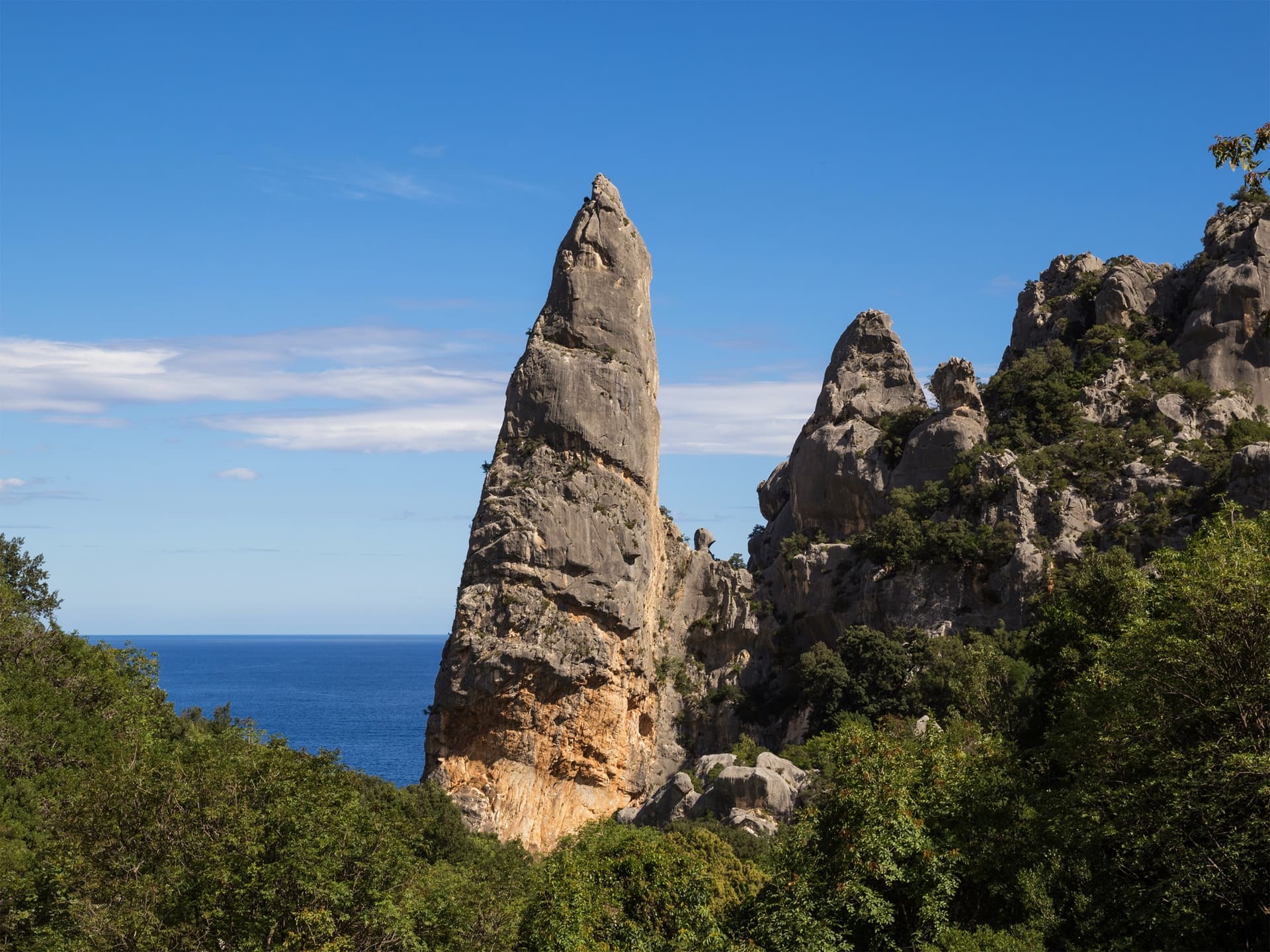
The Aguglia di Goloritzè, the 140 m limestone spire above Cala Goloritzè, seen from the approach path with the Gulf of Orosei behind.

Italy · Sardinia

Sole Incantatore

The harder classic on the Goloritzè spire: compact grey walls and smooth water-drop slabs at 6b to 6b+, then a 6c scoop and an airy finish to a tiny summit above the turquoise bay. Shaded, technical and on the feet.

6c6c4 pitches135 m

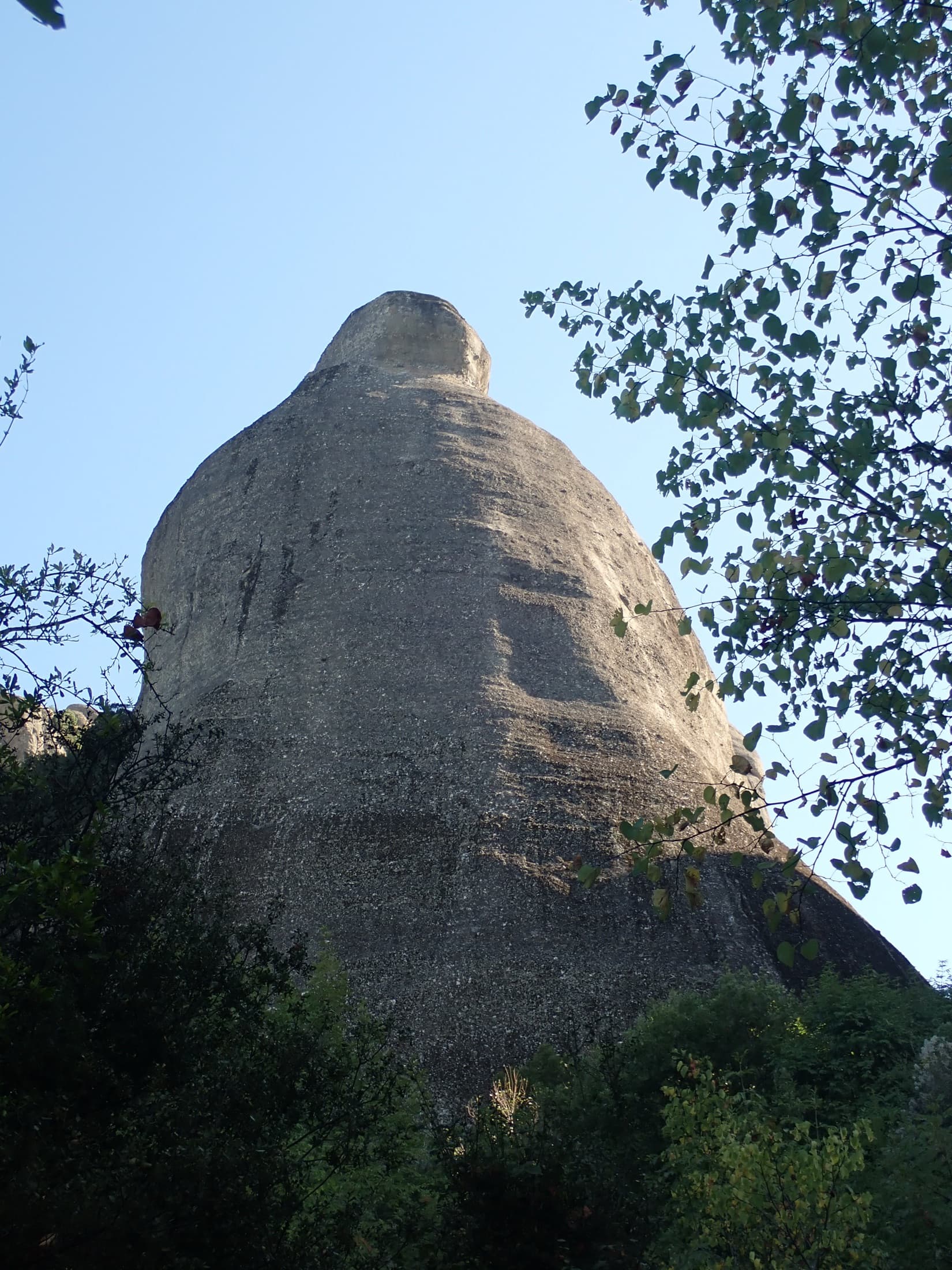
Glocke (The Bell) at Meteora from the foot of the wall; Interamerica climbs the middle of the face

Greece · Meteora

Interamerica

A short, steep and very well-protected line up the middle of The Bell's smooth south-west wall, on typical Meteora cobbles. Three sustained pitches of 6a to 6a+ lead to a short 6c bulge that goes at A0. An unusually reassuring introduction to Meteora conglomerate.

6c6c4 pitches100 m

Read the cautions

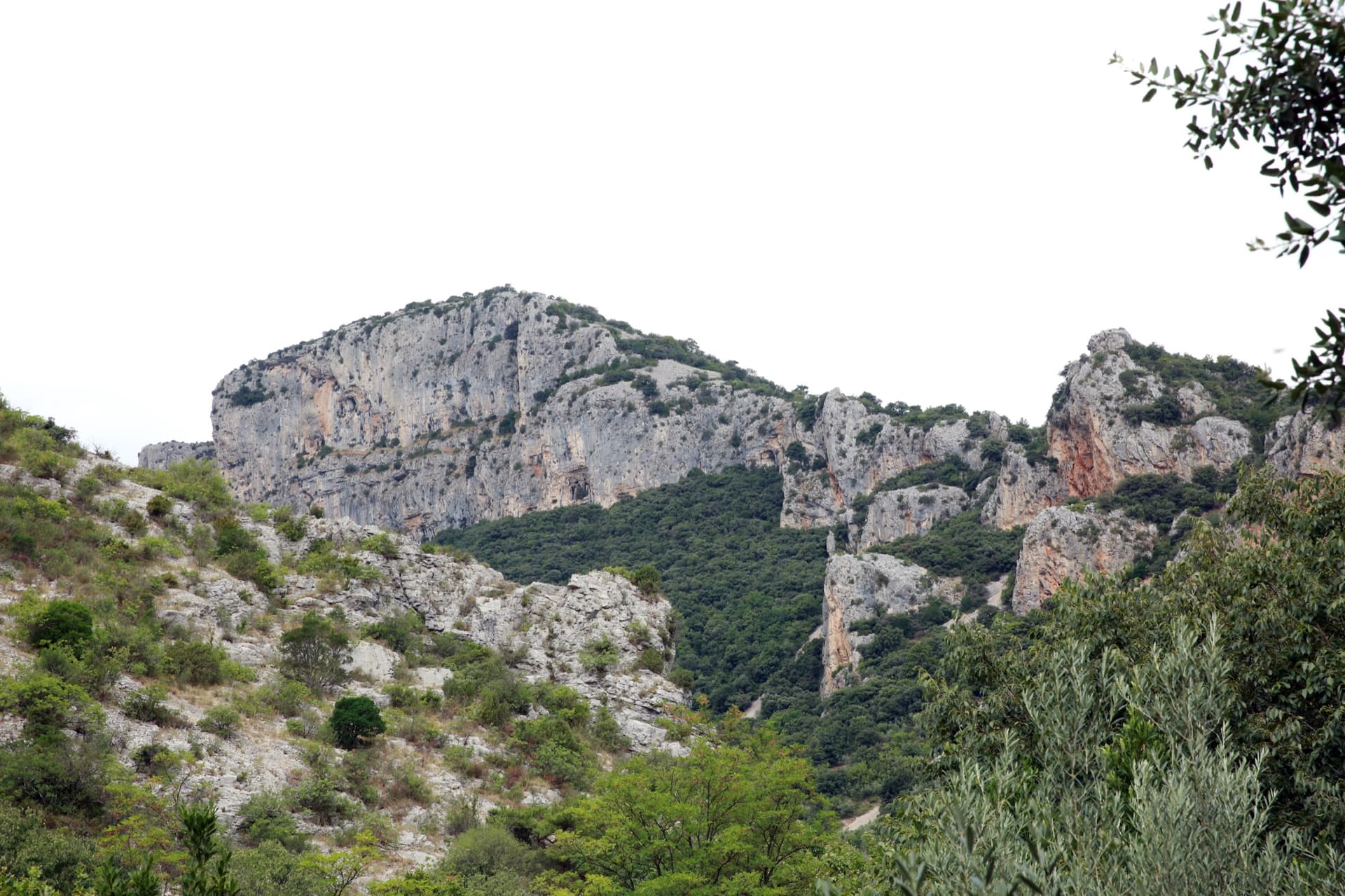
The Cirque du Bout du Monde above Saint-Guilhem-le-Désert, where Paradis Perdus climbs (the route is not marked)

France · Saint-Guilhem-le-Désert

Paradis Perdus

A short, sustained and very steep limestone line at the back of the Cirque du Bout du Monde. Four pitches of technical, hard-to-read wall climbing on sharp, grippy rock, with the crux on the third pitch. The grades on the local topo are widely considered stiff.

6c6c4 pitches120 m

Read the cautions

No photo yet

Bosnia and Herzegovina · Spijonik (Visočica)

Chasing a Dream

A new four-pitch sport route on the tallest section of a remote limestone wall high on the Visočica range, with corners, cracks, small roofs and bulges. It is sustained in the 6a to 6b+ range, and the last pitch has a 6c crux: an overhanging, wide block that you pass with slaps and a knee bar.

6c6c4 pitches100 m

Read the cautions

Researched and aggregated by AI from published sources, last compiled October 2026. It can be wrong, and bolts, anchors and access change: check a current guidebook and read the disclaimer.