Menu

Interamerica

Glocke (The Bell), south-west wall, Western Group · Meteora · Greece

Read the cautionsBail with caveats

A short, steep and very well-protected line up the middle of The Bell's smooth south-west wall, on typical Meteora cobbles. Three sustained pitches of 6a to 6a+ lead to a short 6c bulge that goes at A0. An unusually reassuring introduction to Meteora conglomerate.

Climbing mode: Big type, screen kept awake, tick pitches as you go.

Glocke (The Bell) at Meteora from the foot of the wall; Interamerica climbs the middle of the facePhoto: Olivier Juaneda · CC BY-SA 3.0
Hardest pitch
6c6c
Pitches
4
Length
100 m
Approach
15 min
Aspect
W
West-facing
Rope
2×50 m

Highest point about 300 m above sea level (camptocamp waypoint 651271 (summit)).

Rock
conglomerate
Season
Mar to May, Sep to Oct
Bolting confidence
Medium
Last verified
October 2026 · Aggregated by AI from published sources
Read before you go

Included as an exception: very well bolted, but belays 2 and 3 are a single glue-in ring each, so carry a sling to back them up.

Photo

Climbing modeBig type, screen kept awake, tick pitches as you go.

Overview

Interamerica (originally Alemannischer Schelledanz) climbs the centre of the south-west wall of Glocke, The Bell, a smooth conglomerate dome on the western edge of Meteora. Four pitches, about 100 m, of steep, technical climbing on cobbles: 6a, 6a+ and 6a, then a short 6c bulge under the summit cap that goes at A0. It is one of the best-protected routes in Meteora and parties call the bolting rock solid. The exception to the atlas rules is the belays: the second and third belays are each a single large glue-in ring rather than two bolts.

Worth knowing

  • About 2 hours return from the car for the route (2022), so it pairs well with Pfadfinder on the same wall.
  • The obligatory grade is about 6a to 6a+ if you aid the last pitch.
  • The Meteora guidebooks are sold in Kastraki (Taverna Paradisos, Camping Vrachos).

Pitch by pitch

The atlas doesn't show topos: they are the work of the people who bolt and document these routes. See the topo at Camptocamp – Hervé Thivierge photo-topo of The Bell, or in Meteora Best of Classics.

Pitches of Interamerica
PitchGradeLengthNotes
P16a35 mA vertical wall.
P26a+30 mDirectly up the wall to a bulge. The belay at the top is a single large glue-in ring; back it up, for example by clipping the first bolt of pitch 3.
P36a20 mA steep slab to a break below the cap of the Bell. Another single-ring belay. An easier exit (4b on SummitPost, 4c on the Thivierge topo) leaves the route here instead of the last pitch.
P46c15 mA short overhang to the summit, described as nice and short; it can be aided on the bolts (A0). Do not link it with pitch 3: a 2020 party who skipped the R3 belay had heavy rope drag on the 6c.

Approach

To the parking

Kalambaka is on the railway from Athens and about 85 km from Larissa airport; Kastraki, just north of Kalambaka, is the usual base. A car is useful but not essential. From Kastraki take the road towards the monasteries (St Nicolaos). Just after the Doupiani tower, on the left, take the steep road up to the left and park at the col (SummitPost describes the car park on the left just after Doupiani).

On foot · about 15 min

About 15 minutes. From the col follow the dirt track to the left along the rocks, then the path that passes between two cliffs (camptocamp); The Bell is visible about 200 m to the right (south-east), and a marked path on the right leads through a field and a small wood to its foot. Of the three routes on the wall, Carillon of the Bell (Glockenspiel) is on the right with its first point at 10 m; the starts of Interamerica and Pfadfinder are obvious, each with a silver ring about 1.5 m off the ground.

Map of the walk-in

Point from camptocamp waypoint 651271 (Glocke summit)

For your phone or watch

Download GPX

Contains the route point.

Points from published sources, not surveyed.

Descent

Abseil. A 2022 party abseiled in two 45 m abseils down Pfadfinder, the route just left, and found the abseils very efficient. The Thivierge topo gives abseil descent with 2×50 m ropes. (The classic Glockenspiel descent, two abseils of 20 m and 35 m down the north-east side followed by a gully and a tunnel back round to the foot, is an alternative described by SummitPost.)

Bailing off the route

Bail with caveats

The route is short and the normal descent is by abseil, so retreat is realistic from any belay. R1 is a normal belay; R2 and R3 are single glue-in rings, so retreating from them means abseiling off one point (or leaving a sling to link it to the next bolt). The top pitch can be aided, which is often easier than retreating.

Retreat from
Any belay; R2 and R3 are single rings.
Point of no return
None; the descent is by abseil from the summit area.
Carry
Two 50 m ropes and a spare sling or maillon to back up a single-ring anchor.
Basis
Part stated, part inferredThe abseil descent, rope length and single-ring belays are stated (camptocamp outings, Thivierge topo); retreat from the individual belays is inferred.

Greece

In an emergency

In an emergency · Greece

112Emergency: ambulance, fire, police

Call 112

Emergency: ambulance, fire, police

Position of the crag

39.72705, 21.62251

Marks the crag, not the route: give route and pitch.

Say what happened, how many are hurt, and where you are. Checked October 2026 (source).

Hazards

  • R2 and R3 are each a single large glue-in ring (2020 and 2022 reports). Both reports call the rings solid, but there is no second point: back each one up to the next bolt.
  • The 6c last pitch is short and overhanging; aid it on the bolts if needed rather than risk a fall onto a single-ring belay.
  • Linking pitches 3 and 4 causes heavy rope drag.
  • Summer heat at Meteora; the summit is exposed, and parties do not linger there.

Gear

12 quickdraws, two 50 m ropes, helmet. Extra: a sling or cordelette to back up the single-ring belays at R2 and R3 (to the first bolt of the next pitch). No source mentions cams or nuts.

Checklist

Quickdraws
12
Rope
2×50 m
Helmet
One each
Abseil device and prusik
For abseiling
Slings
Mentioned for retreat
Maillons or spare karabiners
To leave behind if you retreat

Conditions

Reader reports

No reports yet.

Report a problem with this route

Say what and where. Reports are checked before they appear; no name or email is stored.

Bolts and history

Bolting
One of the best-protected routes in Meteora: parties in 2020 and 2022 call it very well equipped, and the first point is a silver ring 1.5 m off the ground. The exception is the belays: R2 and R3 are each a single large glue-in ring, not two bolts, so back them up (a 2020 party linked R2 to the first bolt of the next pitch). The short 6c last pitch can be aided on the bolts.
History
First climbed by Gunther Rieth and T. Kluge on 31 October 1990 as Alemannischer Schelledanz; it was later renamed Interamerica (Interamerican Direct), after an insurance company.
Guidebook
'Meteora: Climbing and Hiking' (1986) and 'Meteora Climbing Part II' (2000) by Dietrich Hasse and Heinz Lothar Stutte, sold in Kastraki. Hervé Thivierge's photo-topo of The Bell is on camptocamp. Buy from climbing-guide.eu.

Where sources disagree

  • Obligatory grade: 6a on camptocamp, 6a+ on the Thivierge topo (pitch 2 is graded 6a+ in both).
  • Easy exit from R3: a 4b traverse left on SummitPost, a 4c exit right on the Thivierge topo.
  • Aspect: west on camptocamp, south-west wall on SummitPost.
  • Name: camptocamp and the Thivierge topo say Interamerica; SummitPost says the route was renamed Interamerican (Direct) and gives the original name Alemannischer Schelledanz.
  • Bolt counts are not published; pitch lengths are SummitPost's (35, 30, 20 and 15 m).

Sources

Around 6c · about 4 pitches

Similar elsewhere

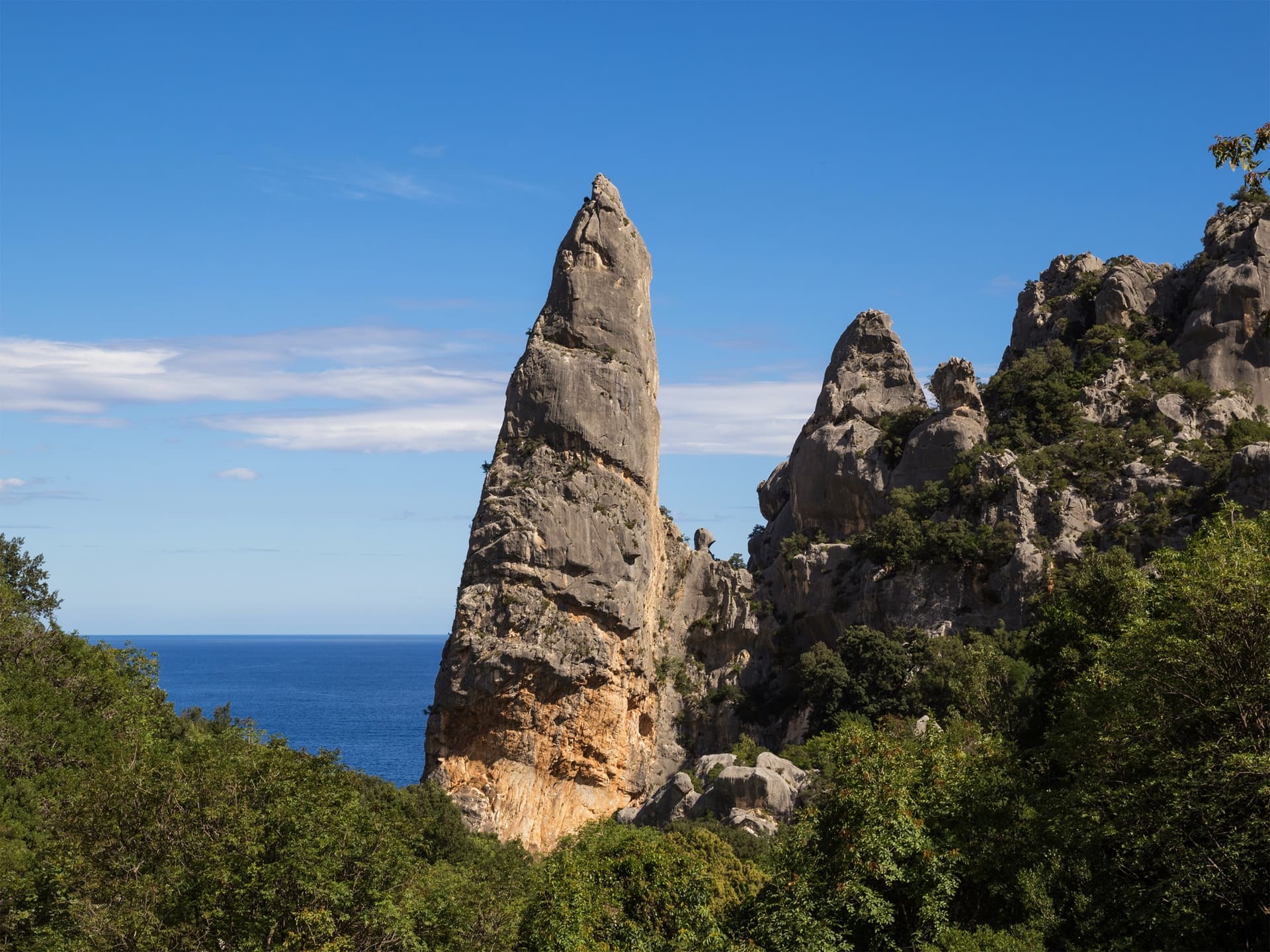
The Aguglia di Goloritzè, the 140 m limestone spire above Cala Goloritzè, seen from the approach path with the Gulf of Orosei behind.

Italy · Sardinia

Sole Incantatore

The harder classic on the Goloritzè spire: compact grey walls and smooth water-drop slabs at 6b to 6b+, then a 6c scoop and an airy finish to a tiny summit above the turquoise bay. Shaded, technical and on the feet.

6c6c4 pitches135 m

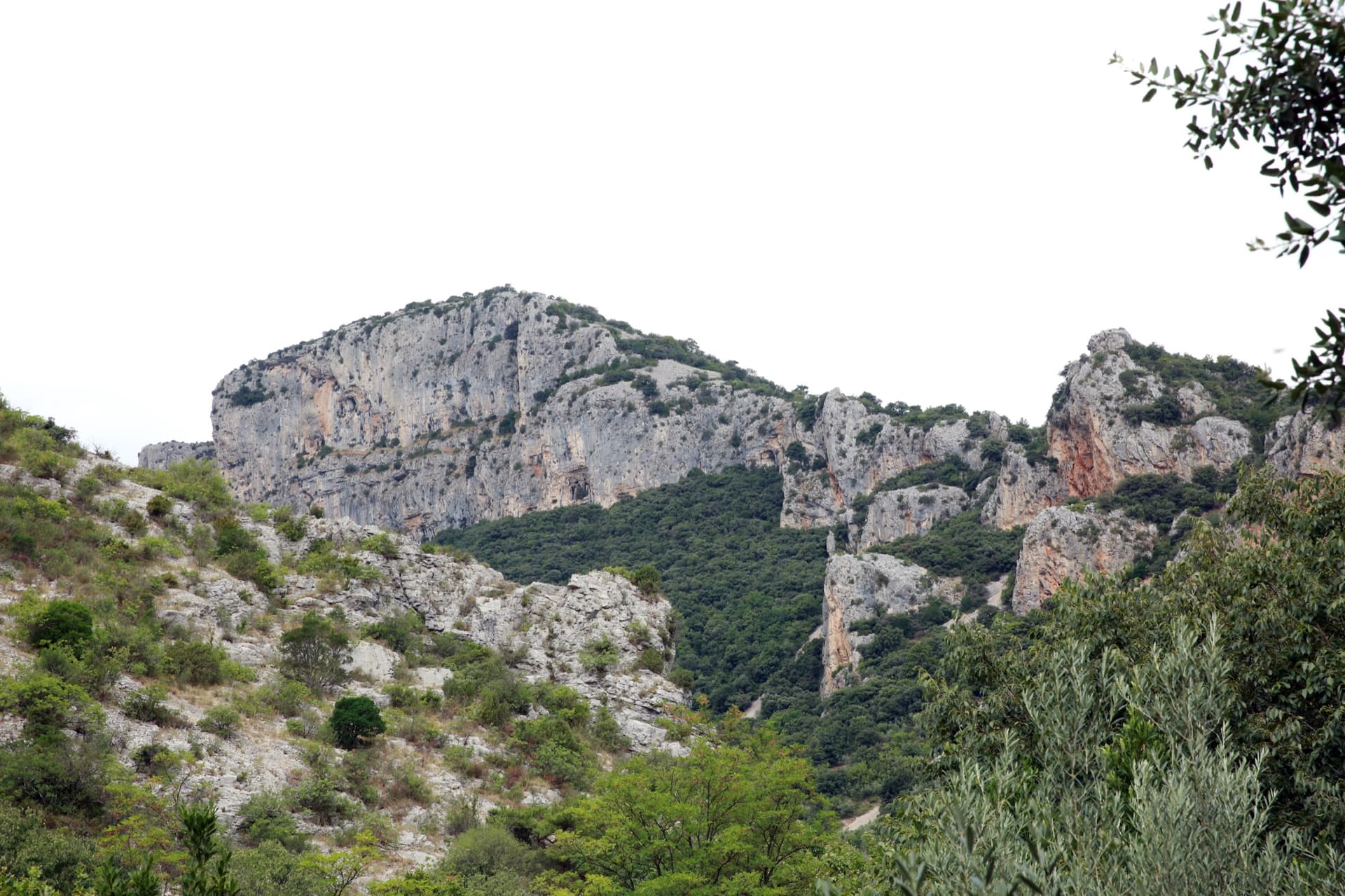
The Cirque du Bout du Monde above Saint-Guilhem-le-Désert, where Paradis Perdus climbs (the route is not marked)

France · Saint-Guilhem-le-Désert

Paradis Perdus

A short, sustained and very steep limestone line at the back of the Cirque du Bout du Monde. Four pitches of technical, hard-to-read wall climbing on sharp, grippy rock, with the crux on the third pitch. The grades on the local topo are widely considered stiff.

6c6c4 pitches120 m

Read the cautions

No photo yet

Spain · Liébana (Peña Cigal)

Sicigias

Long, sustained 6a pitches of slab, cracks and corners, then a technical 6c wall of small crimps on the third pitch, on the left side of the Peña Cigal wall. Stainless bolts and ringed belays throughout. Above the first pitch it is an autumn-only route because of nesting vultures.

6c6c4 pitches150 m

Read the cautions

No photo yet

Bosnia and Herzegovina · Spijonik (Visočica)

Chasing a Dream

A new four-pitch sport route on the tallest section of a remote limestone wall high on the Visočica range, with corners, cracks, small roofs and bulges. It is sustained in the 6a to 6b+ range, and the last pitch has a 6c crux: an overhanging, wide block that you pass with slaps and a knee bar.

6c6c4 pitches100 m

Read the cautions

Researched and aggregated by AI from published sources, last compiled October 2026. It can be wrong, and bolts, anchors and access change: check a current guidebook and read the disclaimer.