Multipitch Atlas

Inntalsynfonie

Geierwand, Haiming · Inntal (Haiming Geierwand) · Austria

Easy to bailBolting confidence: high

One of the longer and more popular lines on the Geierwand, at much the same grade as Alhambra but with rather better climbing. Well-featured slabs lead to the big ledge; above it the route continues to mid-height in the upper wall, where a few pitches are brittle but closely bolted. It ends in the middle of the wall and you abseil.

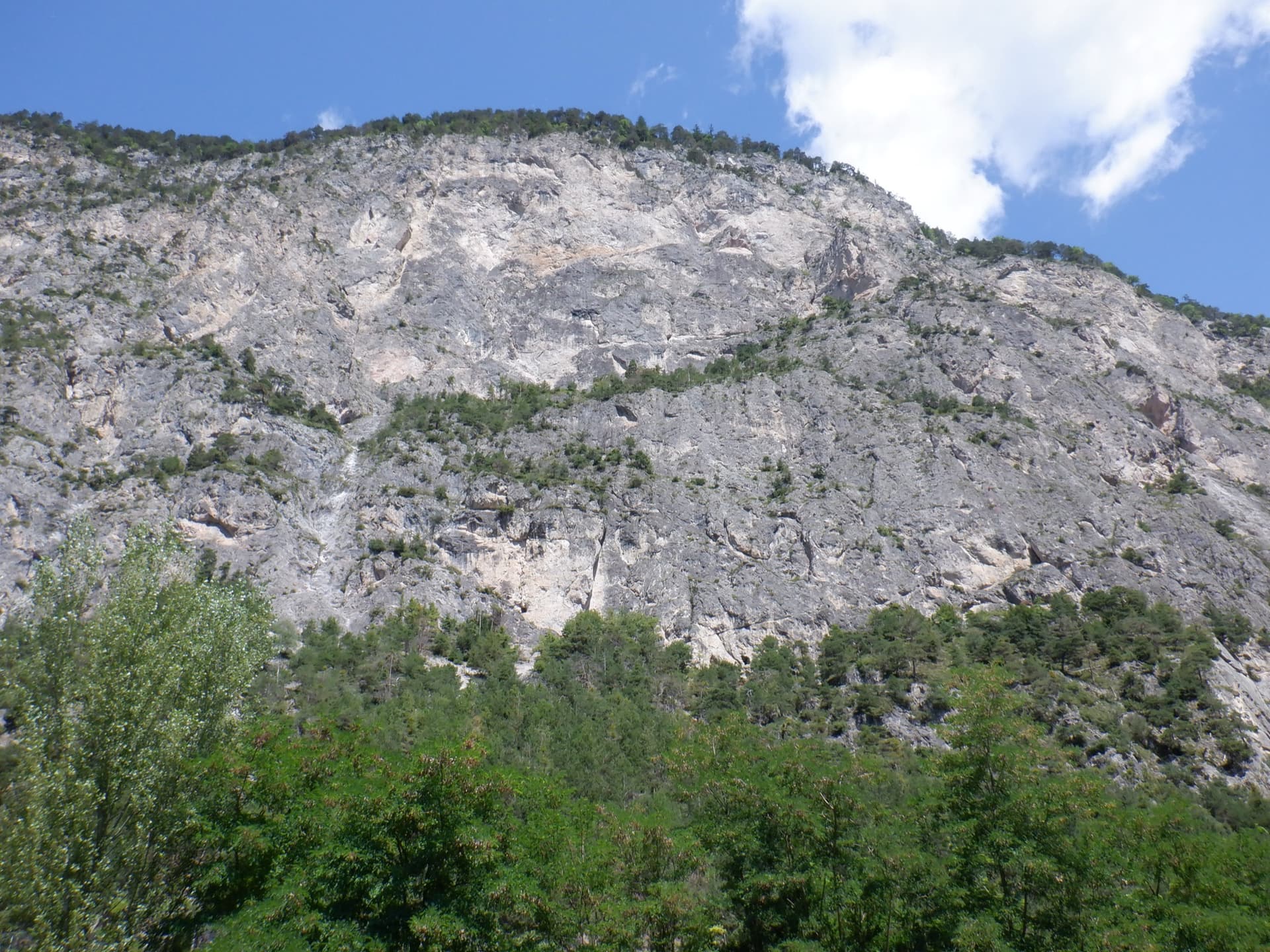
The Geierwand above Haiming seen from the car park; Inntalsynfonie climbs to the vegetated ledge and on to mid-height in the upper wallPhoto: Théo Giani · CC BY-SA 3.0

Photo

The Geierwand above Haiming seen from the car park; Inntalsynfonie climbs to the vegetated ledge and on to mid-height in the upper wallPhoto: Théo Giani · CC BY-SA 3.0
Hardest pitch
6a+
Pitches
10
Length
261 m
Approach
15 min
Aspect
S
South-facing
Rope
2×60 m or 1×70 m

The route

Overview

Inntalsynfonie climbs the lower tier of the Geierwand on good, featured slabs, crosses the big ledge and continues up the upper wall to an abseil station at about mid-height. The climbing is mostly 5a to 5c with two 6a pitches low down and one 6a+ pitch above the ledge, which is also the most brittle. bergsteigen.com rates the moves above those of Alhambra but warns of a few loose pitches near the top. Because the route stops in the middle of the wall, abseiling is the only way down.

The climbing

Pitch by pitch

Pitches of Inntalsynfonie
PitchGradeLengthNotes
P16a30 mThe entry pitch, one of the two 6a pitches of the lower tier.
P25a30 mPleasant climbing on the lower slabs.
P33b20 mEasy linking ground.
P46a25 mThe second 6a pitch; bergsteigen.com shows well-featured slabs in this part of the route.
P55a+20 mOne of the last pitches before the big ledge.
P65c28 mFirst pitch of the upper part, above the ledge.
P76a+27 mThe hardest pitch (UIAA 6/6+) and also the most brittle, but very closely bolted.
P85c35 mThe longest pitch of the route.
P95a+26 mA brittle, vegetated traverse.
P105a+26 mThe last pitch, to the abseil station in the middle of the wall.

Getting there

Approach

To the parking

Haiming lies in the Inn valley at the mouth of the Ötztal in Tyrol. Leave the A12 at Mötz or Ötztal, drive into Haiming and follow the 'Rafting-Center' signs. Turn right straight after the bridge over the Inn and continue past the rafting centre to the car park with the large Klettersteig board, at about 660 m. By public transport take the train to Haiming and a bus to the Innbrücke stop.

On foot · about 15 min

15 to 20 min. From the car park follow the Klettersteig signs towards the motorway and cross it. On the far side go a few steps left along the track to a rockfall net, then take the path uphill to the rock. The start is right of a prominent pillar and left of a cave-like hole, with the name on a small metal plate.

Map of the walk-in

  • Route base
  • Parking

Loading map

The point marks the base of the route.

Coordinates · route base

47.26230, 10.87720

Parking

47.26020, 10.87830

Car park after the rafting centre, Haiming (bergsteigen.com marker 'Parkplatz')

Point from bergsteigen.com map marker (start of route)

For your phone or watch

Download GPX

Contains the route point and parking. Opens in most mapping apps and GPS watches.

Points are compiled from published sources, with the precision stated above. They were not surveyed on the ground: check them against a current topo.

Getting down

Descent

Abseil from the top of the route back to the big ledge. Walk along the ledge to its lower edge, taking the most worn path trace, and continue abseiling from there to the foot of the wall. bergsteigen.com describes all the abseil stations as well equipped and allows 1 h for the descent.

Retreat

Bailing off the route

Easy to bail

Abseiling is the normal descent. From the end of the route you abseil to the big ledge, walk to its lower edge and abseil on to the ground, and bergsteigen.com says the stations are all well equipped. Turning round lower down uses the same line.

Retreat from
Any belay on the abseil line; the big ledge splits the descent into two stages.
Point of no return
None described.
Carry
2×60 m ropes or a single 70 m rope.
Basis
Stated in the sourcesbergsteigen.com describes the abseil descent and the quality of the stations.

Safety

Hazards

  • Rockfall: loose stones lie on the ledges and terraces and are easily knocked off, especially when you pull ropes. Climbers Paradise asks for extreme care whenever other parties are on the wall. Wear a helmet from the foot of the wall.
  • A few pitches in the upper part are brittle, including the crux pitch and the vegetated traverse on the penultimate pitch.
  • The route ends in the middle of the wall: you must abseil, in two stages with a walk along the ledge in between.
  • South wall in full sun: very hot in summer.

Sun and weather

Conditions

South facing, with the base at about 740 m and the top of the wall at about 1050 m. bergsteigen.com shows a season from March to November and Climbers Paradise calls the wall climbable almost all year, but both warn that it is very hot in summer. Spring and autumn are the best times.

Usual season · Mar to Jun, Sep to Nov

Sun on the wall · S-facing

Working out the sunlit hours for this month.

  • January: not yet worked out
  • February: not yet worked out
  • March (usual season): not yet worked out
  • April (usual season): not yet worked out
  • May (usual season): not yet worked out
  • June (usual season): not yet worked out
  • July: not yet worked out
  • August: not yet worked out
  • September (usual season): not yet worked out
  • October (usual season): not yet worked out
  • November (usual season): not yet worked out
  • December: not yet worked out

Sun on the wallDaylight, wall in shade● Usual season

Estimated from the wall's aspect only. Ignores surrounding terrain, gullies and the wall's exact shape. Clock times are local to the wall (Central European time), for the 15th of each month.

Monthly climate averages for Inntal (Haiming Geierwand), 1991-2020
MeasureJanFebMar (usual season)Apr (usual season)May (usual season)Jun (usual season)JulAugSep (usual season)Oct (usual season)Nov (usual season)Dec
Mean daily high °C3581216212222191594
Mean daily low °C−7−5−12610121295−1−5
Rain days 1 mm or more121215162121211916131313

● marks the usual climbing season. Averages for 1991-2020 at about 723 m. Area climate from Open-Meteo reanalysis. Temperatures are adjusted to the height of the crag; rain comes from a grid cell of about 10 to 25 km, and summer highs on sea cliffs can read a few degrees low. The wall and valley can differ. Data: Open-Meteo, CC BY 4.0.

What to carry

Gear

14 quickdraws (bergsteigen.com emphasises the number; Climbers Paradise says 15), helmet, and 2×60 m ropes or a single 70 m.

Checklist

Quickdraws
14
Rope
2×60 m or 1×70 m
Helmet
One each
Abseil device and prusik
The descent or the retreat involves abseiling

Derived from the route data; check it against a current topo

From climbers

Reader reports

Reader reports are not being collected yet. Until they are, check a current topo and the local club or guidebook publisher for recent changes to Inntalsynfonie.

Worth knowing

Tips

  • bergsteigen.com gives UIAA 5 (about 5a) as the obligatory grade.
  • You can stop at the big ledge after the lower tier and abseil from its lower edge if the brittle upper pitches do not appeal.

Open questions

Where sources disagree

  • Number of pitches and length: the Climbers Paradise table lists ten pitches adding up to 267 m, but its header says 9 pitches and 261 m; bergsteigen.com gives 230 m of climbing and no pitch count. The ten-pitch table is used here.
  • Grade: 6a+ in the Climbers Paradise table; UIAA 6/6+ with 5 obligatory on bergsteigen.com.
  • Which pitch is where: bergsteigen.com's photo captions do not number the pitches, so the notes on the brittle crux and the vegetated traverse are matched to the table by grade and position.

Provenance

Sources

Same area

More in Inntal (Haiming Geierwand)

All routes in Inntal (Haiming Geierwand)
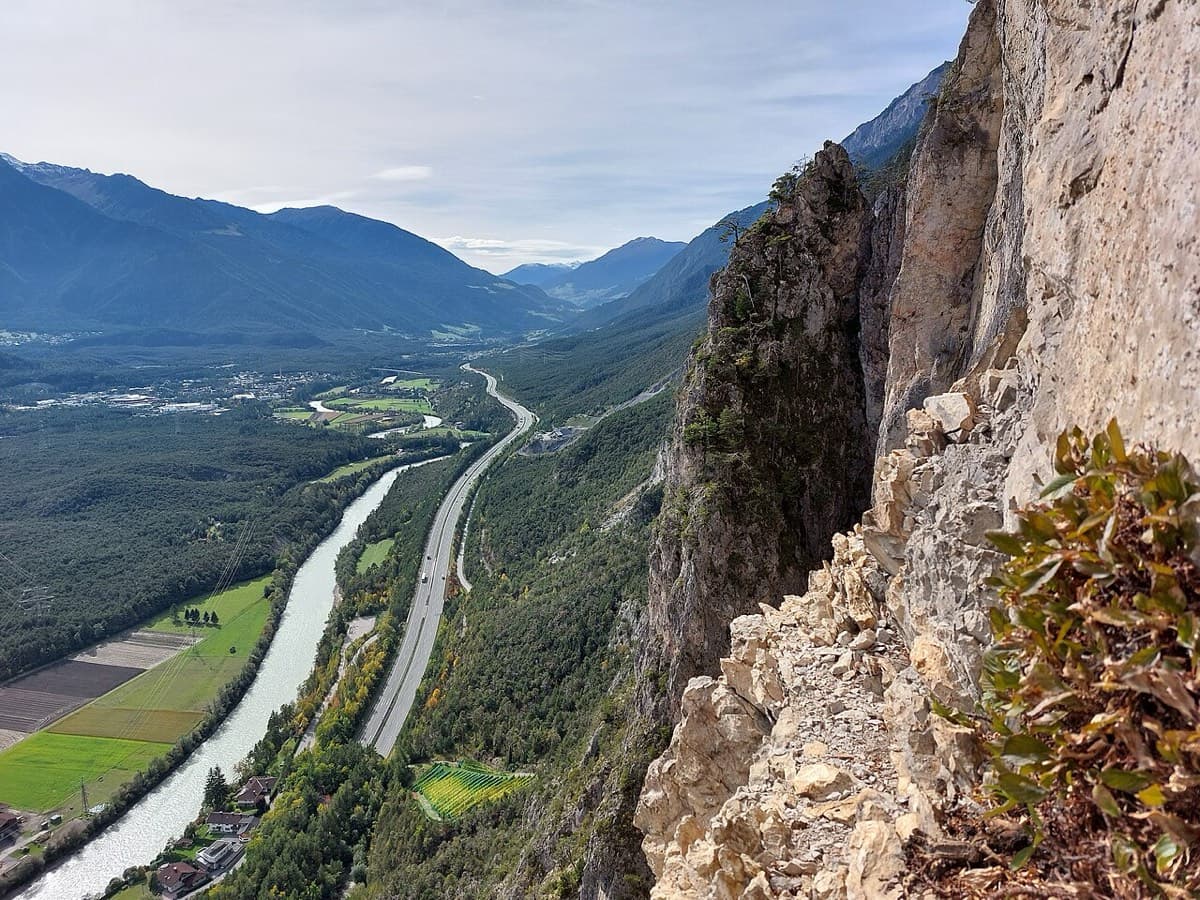
View west along the Inn valley from the top of the Geierwand near Haiming, with part of the wall on the right

Austria · Inntal (Haiming Geierwand)

Sunset Boulevard

Billed as probably the best mid-grade multipitch at the Geierwand (UIAA 6/6+, 5 obligatory). It starts with steep, juggy climbing, and the upper pitches are rough pocketed slabs. It can be combined with Alhambra's upper pitches.

6a+12 pitches345 m
The Geierwand above Haiming seen from the car park; Alhambra climbs the full height of the wall, crossing the vegetated ledge at mid-height

Austria · Inntal (Haiming Geierwand)

Alhambra

The longest route on the Geierwand and its most popular easy outing: rough slabs low down, a walk across the big ledge, then steeper, pocketed and more exposed climbing above. The crux is a short traverse to the belay on pitch 10. The last two pitches are scrambling over loose ground.

6a+12 pitches430 m

The Geierwand above Haiming seen from the car park; Nebraska takes the left side of the wall from bottom to top

Austria · Inntal (Haiming Geierwand)

Nebraska

bergsteigen.com calls this the best route on the Geierwand: steep, almost always vertical pocket climbing on the left side of the wall. The hardest move comes on pitch 2, but the upper half stacks several 6b pitches one after another and tires the forearms. Recommended to climbers who are comfortable at 6b.

6b+13 pitches355 m

The Geierwand above Haiming seen from the car park; Im Auge des Geiers climbs the centre of the upper wall above the vegetated ledge

Austria · Inntal (Haiming Geierwand)

Geierwandführe + Im Auge des Geiers

A two-part combination: the four-pitch Geierwandführe as a warm-up to the big ledge, then five pitches of Im Auge des Geiers straight up the central 'eye' of the upper wall on pocketed, slightly overhanging rock with fine slabs to finish. Sustained at 6b in the upper part, but a little less demanding than Nebraska.

6b+9 pitches230 m

Around 6a+ · about 10 pitches

Similar elsewhere

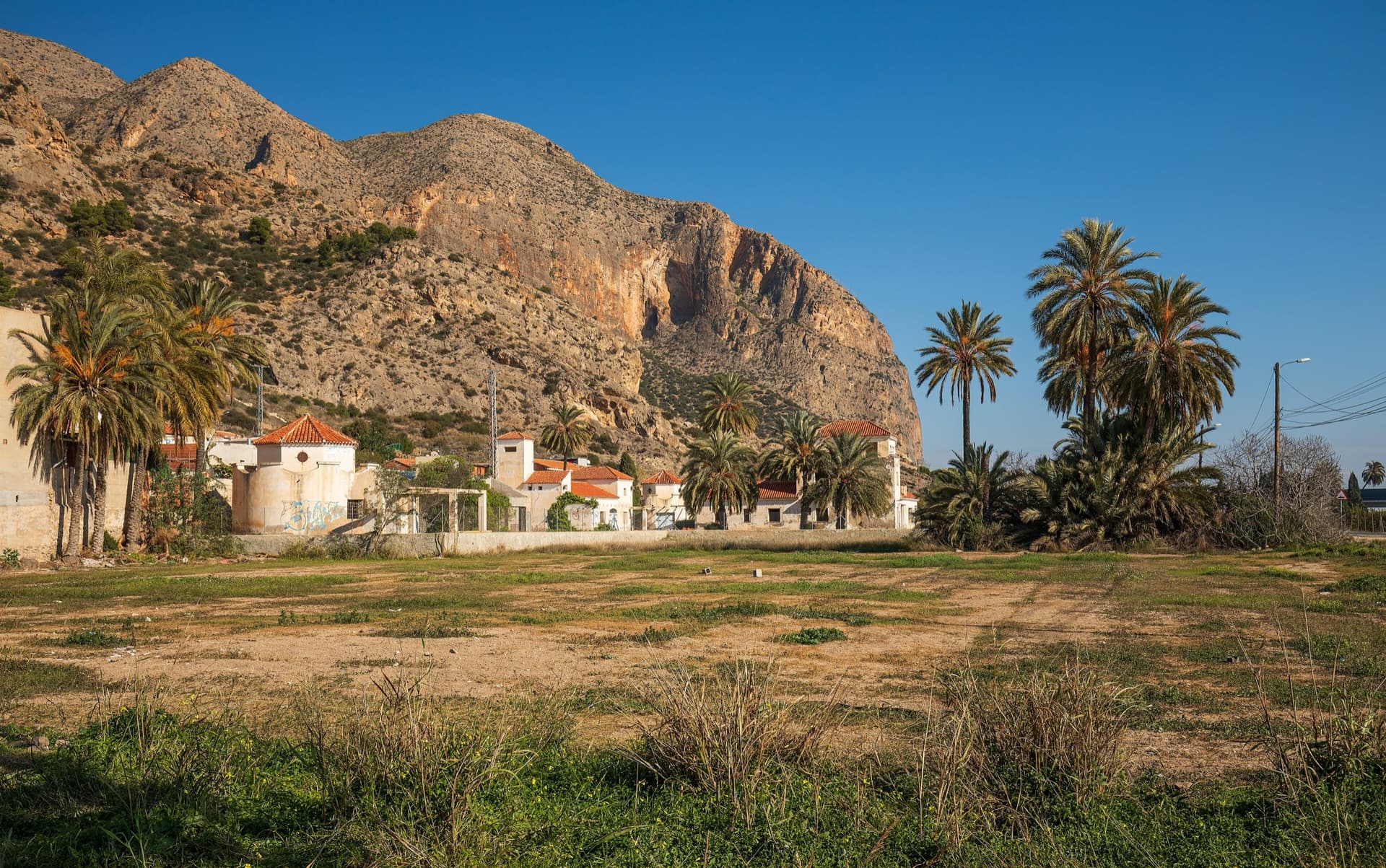
The big orange limestone wall of the Sierra de Callosa directly above Redován, seen from the edge of the village.

Spain · Vega Baja (Orihuela & Callosa)

Botri

The classic of Redován: ten pitches and 300 m of steady grade 5 with three steeper pitches on red rock. The eighth pitch, a traverse right into an overhanging corner above the orange cliffs, is the one people remember. Closed from January to June for nesting eagles.

6a+10 pitches300 m

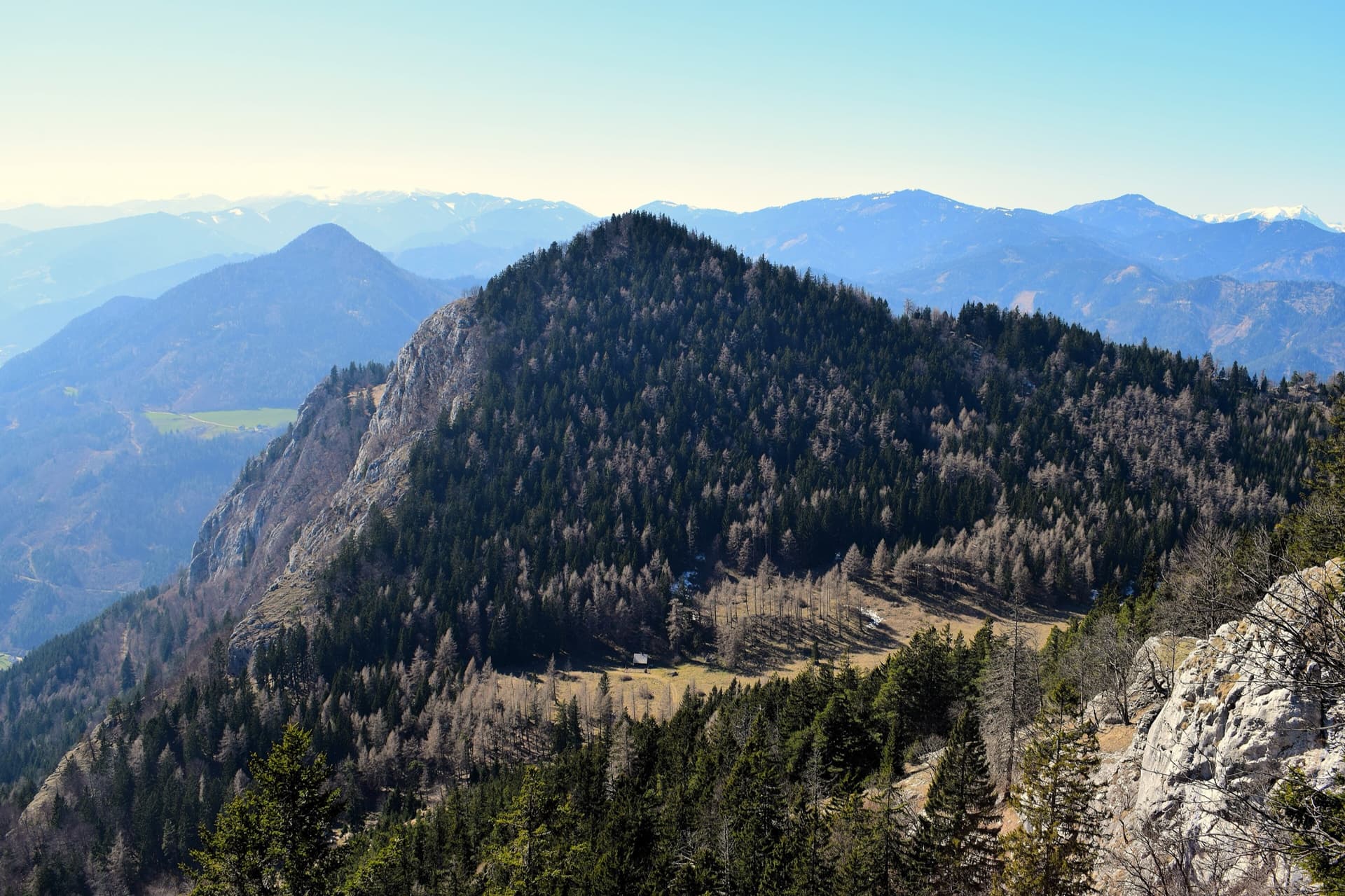
The Röthelstein seen from a spur of the Rote Wand, looking west across the Bucheben saddle; the SO-Sporn routes finish at the climbers' summit and descend to this saddle

Austria · Grazer Bergland

Broken Soul

A modern plaisir line on the south-east spur of the Röthelstein, finished in 2018 by linking three old, forgotten pitches with six newly cleaned ones. The fifth and sixth pitches are rated among the best on the Röthelstein. UIAA 6+ at the hardest, with only 5 obligatory.

6a+10 pitches315 m

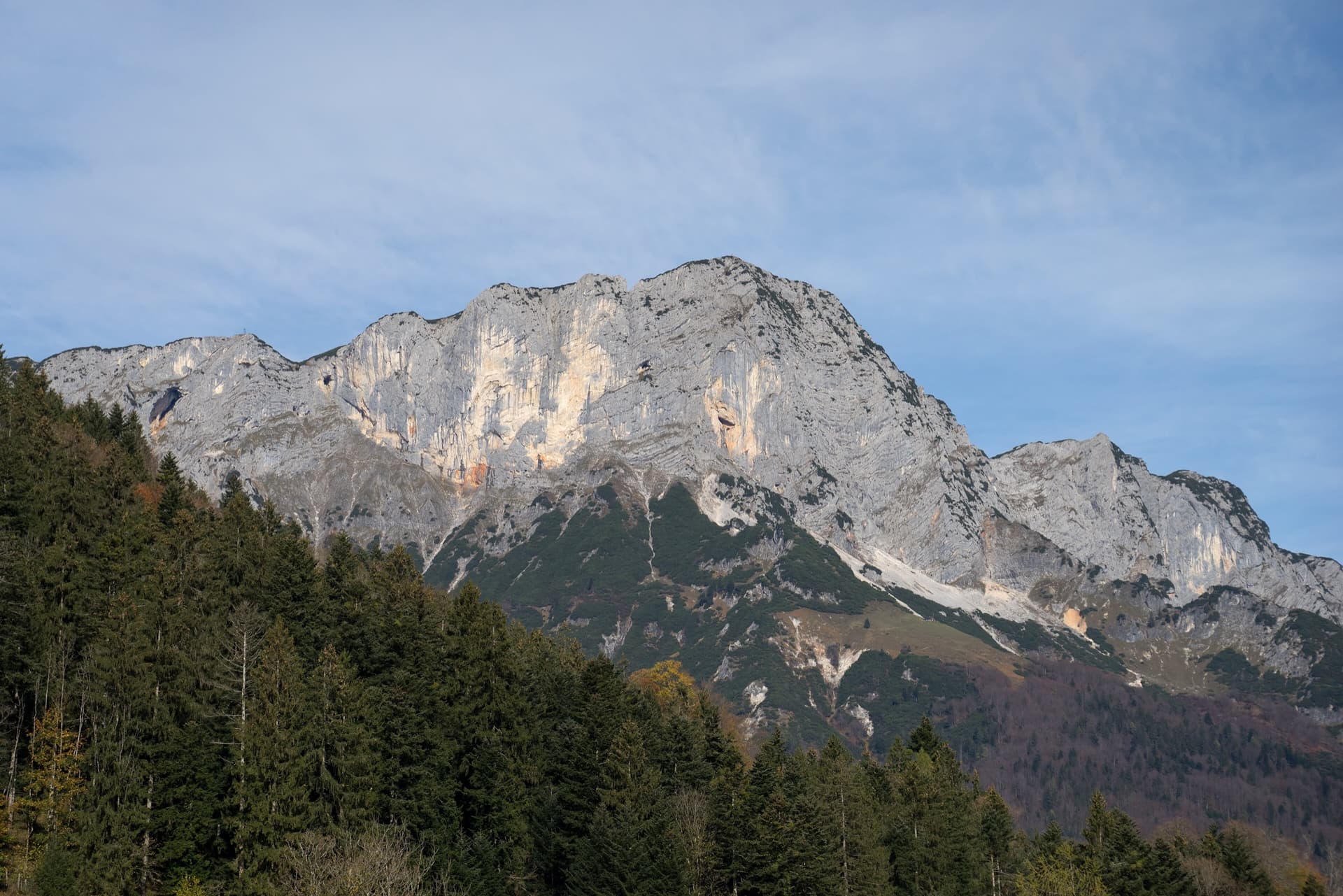
The Berchtesgadener Hochthron, highest point of the Untersberg, seen from Maria Gern: the south face in afternoon light, with the south-east walls on the right.

Germany · Berchtesgaden & Bad Reichenhall

Dahoam is Dahoam

A long-day alpine-flavoured plaisir route on the Untersberg's summit wall. Pitches range from UIAA 5+ to 6+ (≈5b–6b), with 5+ obligatory.

6a+10 pitches250 m

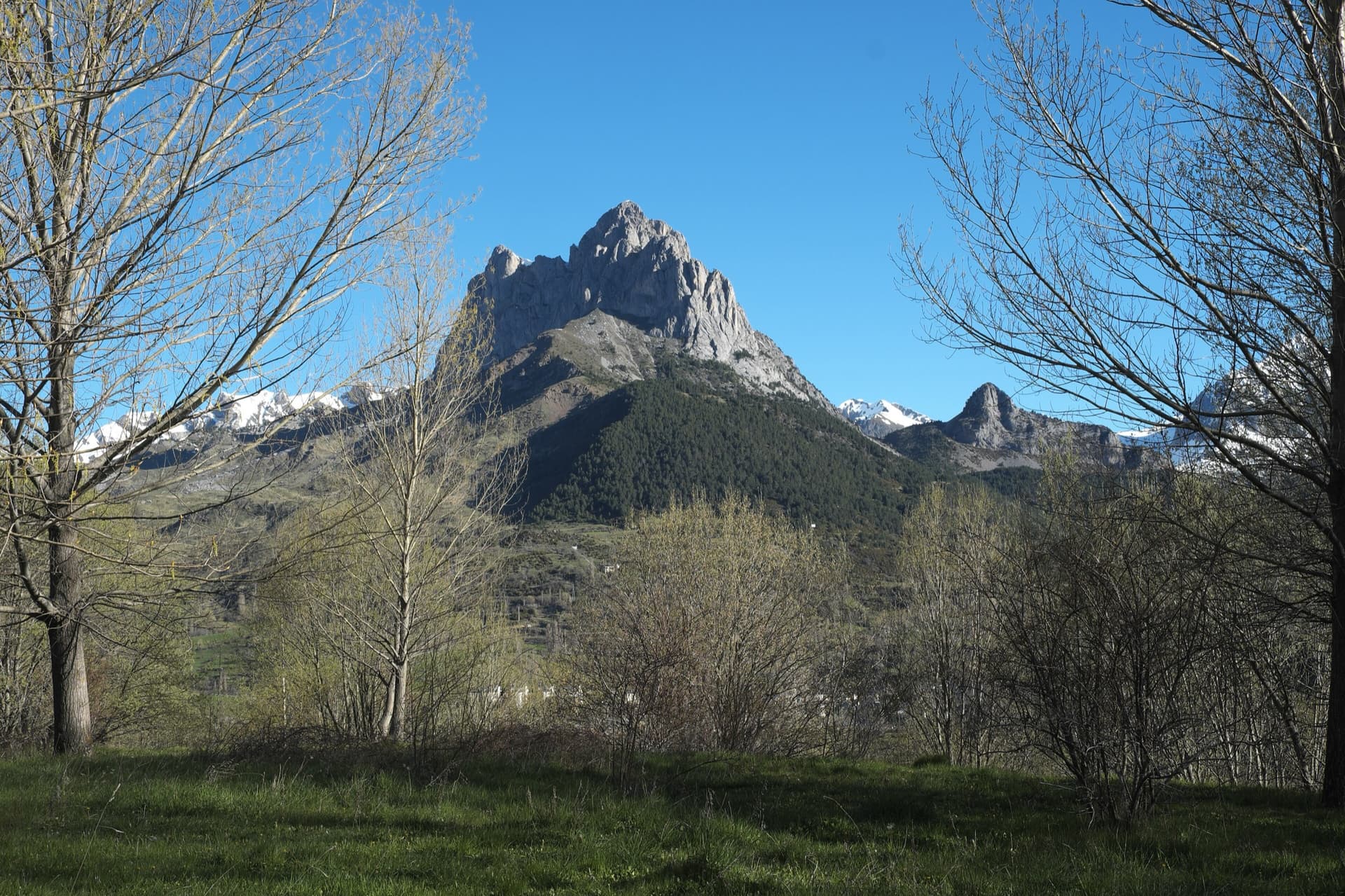
The twin limestone summits of Peña Foratata above the forest, seen from Sallent de Gállego in spring.

Spain · Aragonese Pyrenees (Tena & Canfranc valleys)

La Joya del Gállego

Varied, sustained limestone of chimneys, dihedrals and compact fluted slabs high above the Tena valley. Bearded-vulture nesting closes the face from 1 Dec to 31 Jul unless lifted early, so check montanaregulada.org.

6a+10 pitches265 m

Read the cautions

Compiled from published sources and last verified October 2026. Bolts, anchors and access change. Climbing is dangerous and you are responsible for your own decisions: check a current topo and read the disclaimer.