Multipitch Atlas

Nebraska

Geierwand, Haiming · Inntal (Haiming Geierwand) · Austria

Bail with caveatsBolting confidence: high

bergsteigen.com calls this the best route on the Geierwand: steep, almost always vertical pocket climbing on the left side of the wall. The hardest move comes on pitch 2, but the upper half stacks several 6b pitches one after another and tires the forearms. Recommended to climbers who are comfortable at 6b.

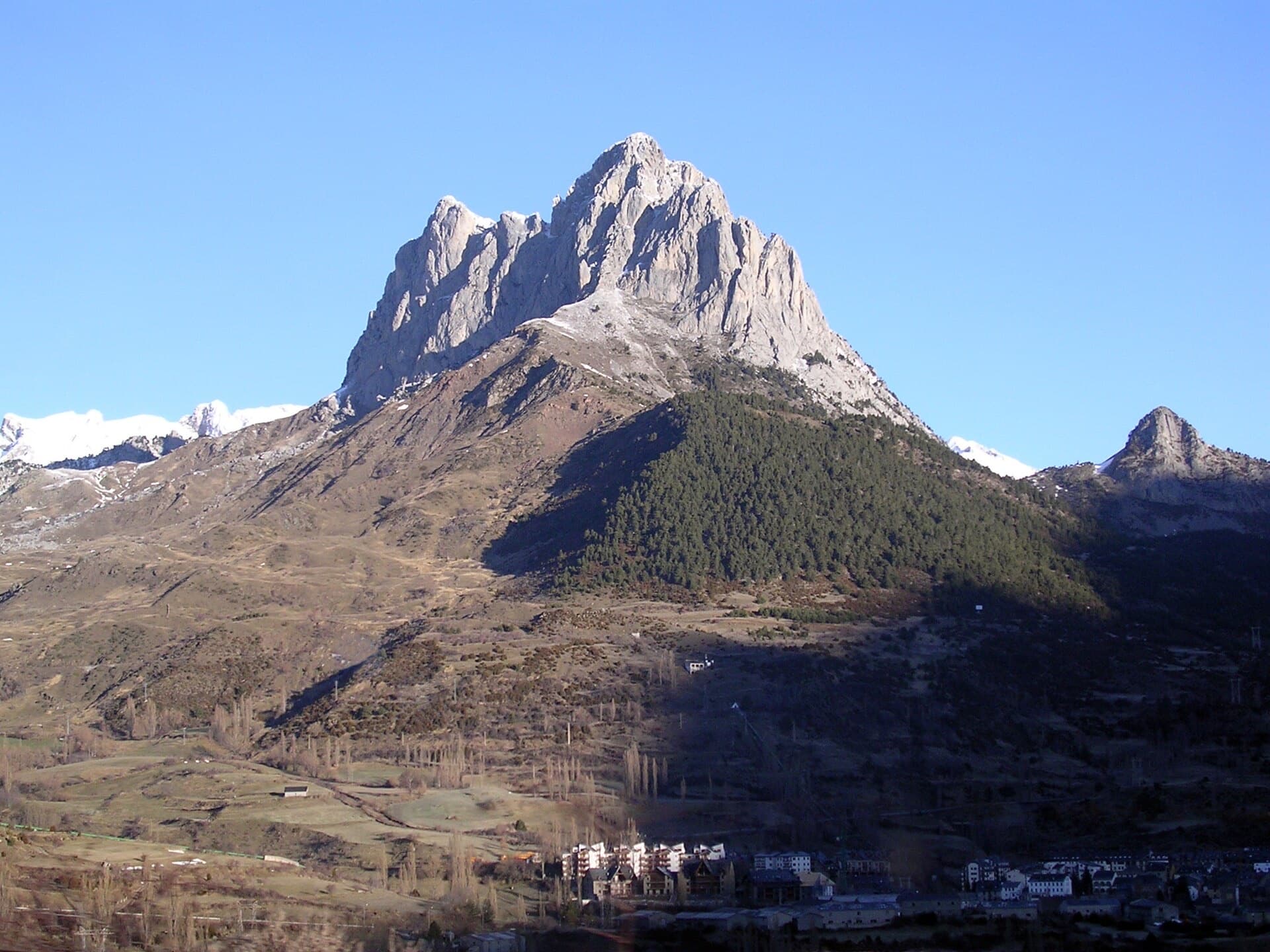
The Geierwand above Haiming seen from the car park; Nebraska takes the left side of the wall from bottom to topPhoto: Théo Giani · CC BY-SA 3.0

Photo

The Geierwand above Haiming seen from the car park; Nebraska takes the left side of the wall from bottom to topPhoto: Théo Giani · CC BY-SA 3.0
Hardest pitch
6b+
Pitches
13
Length
355 m
Approach
15 min
Aspect
S
South-facing
Rope
2×60 m

The route

Overview

Nebraska climbs the left-hand side of the Geierwand from the ground to the top of the wall. After a 6a+ warm-up the crux arrives early, a 6b+ passage on pitch 2 where you use a corner. An easy vegetated pitch and a pocketed slab lead to the headwall, where pitch after pitch of vertical pocket climbing at 6a+ to 6b follows. A two-pitch finish added in 2020, with another 6b+ passage, takes the route to the top so that you can walk down. Despite the very good bolting it is a sustained day for the grade.

The climbing

Pitch by pitch

Pitches of Nebraska
PitchGradeLengthNotes
P16a+25 mEnjoyable climbing straight away, starting right of the corner.
P26b+22 mThe crux of the route (UIAA 7/7+): a steep passage where you help yourself with the corner.
P33+32 mThe one vegetated pitch of the route.
P45c35 mFine slabs with pockets.
P56a+35 mThe headwall begins around here.
P66a+32 mPocketed wall; the belay has a fine view over the Inn valley.
P76a+32 mBecomes steeper towards the end.
P86b25 mbergsteigen.com shows perfect slabs with good pocket holds in this part of the wall.
P96b27 mSteep climbing in the harder upper pitches.
P106b22 mThe third 6b pitch in a row.
P115b25 mbergsteigen.com describes a traverse on edges and brittle ground around here; its pitch numbering runs one higher than this table from somewhere in the upper wall, so treat the match as approximate.
P126b+28 mFirst pitch of the 2020 finish: a delicate traverse to start, then a corner, with a passage of UIAA 7/7+.
P136a30 mLast pitch of the 2020 finish, to the top of the wall and the start of the walk down.

Getting there

Approach

To the parking

Haiming lies in the Inn valley at the mouth of the Ötztal in Tyrol. Leave the A12 at Mötz or Ötztal, drive into Haiming and follow the 'Rafting-Center' signs. Turn right straight after the bridge over the Inn and continue past the rafting centre to the car park with the large Klettersteig board, at about 660 m. By public transport take the train to Haiming and a bus to the Innbrücke stop.

On foot · about 15 min

15 to 20 min. From the car park follow the Klettersteig signs towards the motorway and cross it. On the far side go a few steps left along the track to a rockfall net, then take the path uphill to the rock. At the top of the path go a short way left to the start, right of a prominent corner and right of the mountain rescue training area. The name is written on a metal plate.

Map of the walk-in

  • Crag
  • Parking

Loading map

The point marks the crag, not the exact start of the route.

Coordinates · crag

47.26250, 10.87810

Parking

47.26020, 10.87830

Car park after the rafting centre, Haiming (bergsteigen.com marker 'Parkplatz')

Point from camptocamp waypoint 1793379 (GeierWand, Haiming); bergsteigen.com gives no start marker for this route

For your phone or watch

Download GPX

Contains the route point and parking. Opens in most mapping apps and GPS watches.

Points are compiled from published sources, with the precision stated above. They were not surveyed on the ground: check them against a current topo.

Getting down

Descent

On foot, about 1 h: from the end of the route go up to a rock wall, where a path comes in from the right (from Alhambra). Follow the marked path up and left to a small plateau in the forest, then take the good trail on the right, protected in places, down to the car park. Alternatively abseil: there is an equipped abseil line and bergsteigen.com recommends 2×60 m ropes for the upper part.

Retreat

Bailing off the route

Bail with caveats

The route has an equipped abseil line, which was the normal descent before the 2020 finish was added and is still the descent given by Climbers Paradise. bergsteigen.com recommends 2×60 m ropes for abseiling the upper part and suggests abseiling from below the top pitches when parties are underneath. Station positions and abseil lengths are only shown on the topo.

Retreat from
From the belays of the upper wall down the abseil line; exact stations are on the topo.
Point of no return
None described. Once on the 2020 finish it is simpler to top out and walk down.
Carry
2×60 m ropes and the topo.
Basis
Part stated, part inferredBoth sources state that the route can be abseiled; the station layout is not described in text, so the detail is inferred.

Partly inferred from the route facts

Safety

Hazards

  • Rockfall: loose stones lie on the ledges and terraces and are easily knocked off, especially when you pull ropes. Climbers Paradise asks for extreme care whenever other parties are on the wall. Wear a helmet from the foot of the wall.
  • The first pitch above the original finish starts over brittle ground, and the start of the next is described as very brittle. If a party is climbing below, bergsteigen.com suggests giving up the top pitches and abseiling instead.
  • Sustained: several hard pitches follow each other in the upper wall and bergsteigen.com allows 4 h 45 for the climbing.
  • South wall in full sun: very hot in summer.

Sun and weather

Conditions

South facing, with the base at about 740 m and the top of the wall at about 1050 m. bergsteigen.com shows a season from March to November and Climbers Paradise calls the wall climbable almost all year, but both warn that it is very hot in summer. Spring and autumn are the best times. bergsteigen.com singles the route out for spring and autumn.

Usual season · Mar to Jun, Sep to Nov

Sun on the wall · S-facing

Working out the sunlit hours for this month.

  • January: not yet worked out
  • February: not yet worked out
  • March (usual season): not yet worked out
  • April (usual season): not yet worked out
  • May (usual season): not yet worked out
  • June (usual season): not yet worked out
  • July: not yet worked out
  • August: not yet worked out
  • September (usual season): not yet worked out
  • October (usual season): not yet worked out
  • November (usual season): not yet worked out
  • December: not yet worked out

Sun on the wallDaylight, wall in shade● Usual season

Estimated from the wall's aspect only. Ignores surrounding terrain, gullies and the wall's exact shape. Clock times are local to the wall (Central European time), for the 15th of each month.

Monthly climate averages for Inntal (Haiming Geierwand), 1991-2020
MeasureJanFebMar (usual season)Apr (usual season)May (usual season)Jun (usual season)JulAugSep (usual season)Oct (usual season)Nov (usual season)Dec
Mean daily high °C3581216212222191594
Mean daily low °C−7−5−12610121295−1−5
Rain days 1 mm or more121215162121211916131313

● marks the usual climbing season. Averages for 1991-2020 at about 723 m. Area climate from Open-Meteo reanalysis. Temperatures are adjusted to the height of the crag; rain comes from a grid cell of about 10 to 25 km, and summer highs on sea cliffs can read a few degrees low. The wall and valley can differ. Data: Open-Meteo, CC BY 4.0.

What to carry

Gear

13 quickdraws (Climbers Paradise says 15), helmet and 2×60 m ropes. bergsteigen.com lists no nuts and no cams.

Checklist

Quickdraws
13
Rope
2×60 m
Helmet
One each
Abseil device and prusik
The descent or the retreat involves abseiling

Derived from the route data; check it against a current topo

From climbers

Reader reports

Reader reports are not being collected yet. Until they are, check a current topo and the local club or guidebook publisher for recent changes to Nebraska.

Worth knowing

Tips

  • The neighbouring line Sunnyboy (6b then 6b+, three pitches) is recommended as an alternative start on steep pockets.
  • The hardest moves are well bolted; bergsteigen.com gives UIAA 6 (about 5c+) as the obligatory grade.

Open questions

Where sources disagree

  • Number of pitches: bergsteigen.com calls it a 14-pitch route (12 original pitches plus the two-pitch 2020 finish). The Climbers Paradise table lists 13 pitches, while its header still says 11 pitches and 312 m. The 13-pitch table is used here because it is the only published pitch-by-pitch list; expect one more belay than shown somewhere in the upper wall.
  • Length: 355 m on bergsteigen.com; the Climbers Paradise pitch lengths add up to 370 m.
  • Grade: 6b+ on Climbers Paradise; UIAA 7/7+ with 6 obligatory on bergsteigen.com.
  • Quickdraws: 13 on bergsteigen.com, 15 on Climbers Paradise.
  • Descent: bergsteigen.com describes the walk-off from the 2020 finish; Climbers Paradise still gives the abseil line as the descent.

Provenance

Sources

Same area

More in Inntal (Haiming Geierwand)

All routes in Inntal (Haiming Geierwand)
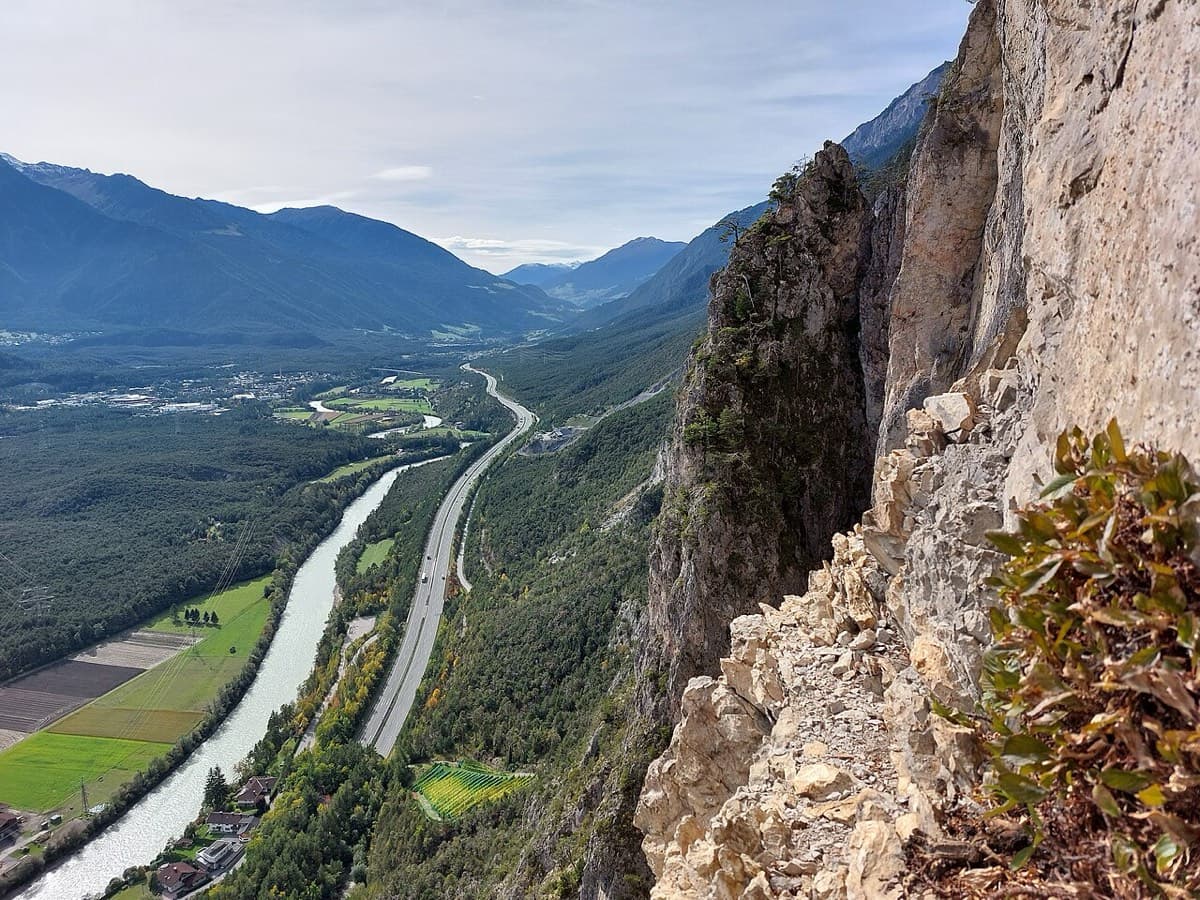
View west along the Inn valley from the top of the Geierwand near Haiming, with part of the wall on the right

Austria · Inntal (Haiming Geierwand)

Sunset Boulevard

Billed as probably the best mid-grade multipitch at the Geierwand (UIAA 6/6+, 5 obligatory). It starts with steep, juggy climbing, and the upper pitches are rough pocketed slabs. It can be combined with Alhambra's upper pitches.

6a+12 pitches345 m
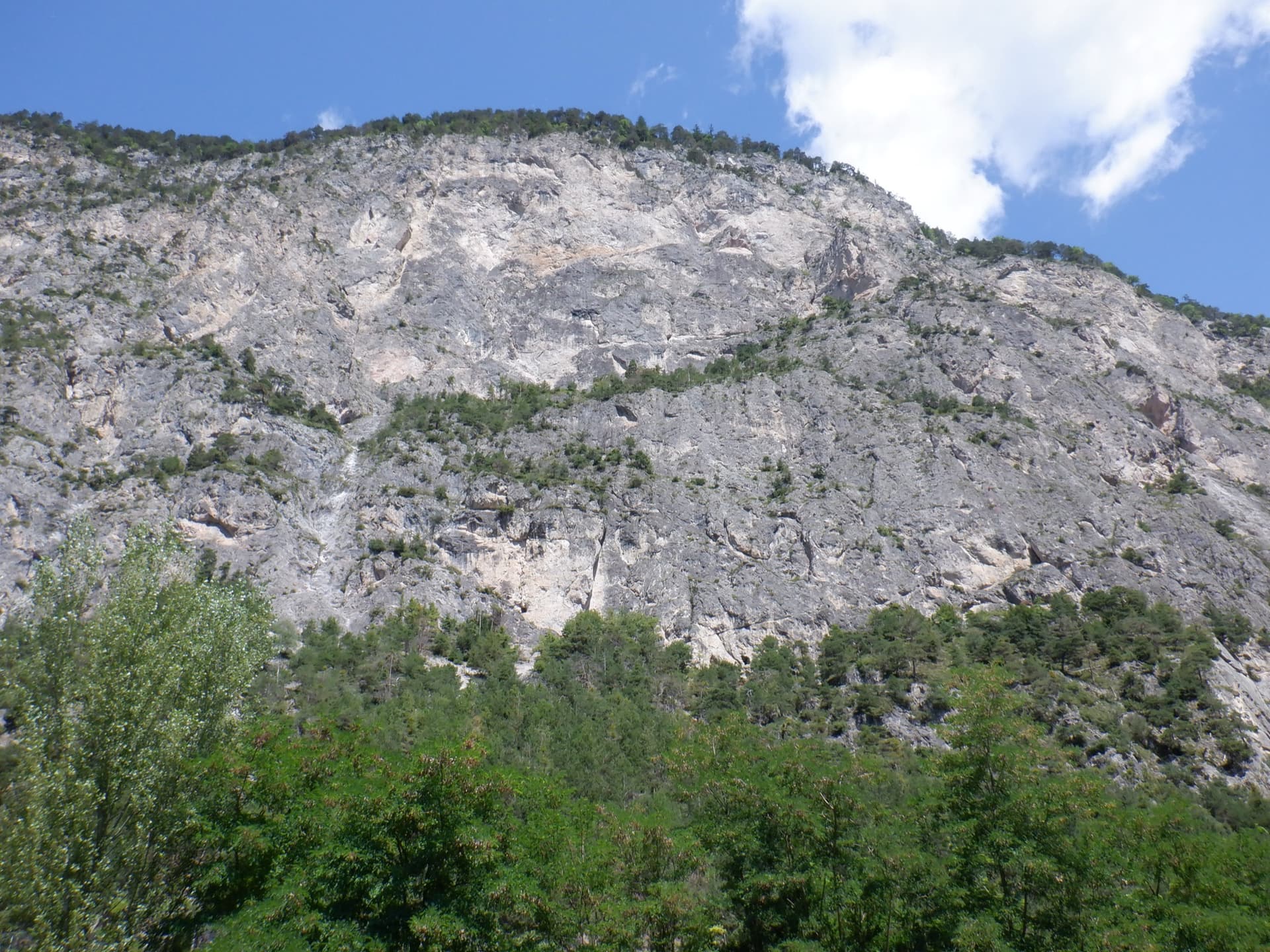
The Geierwand above Haiming seen from the car park; Alhambra climbs the full height of the wall, crossing the vegetated ledge at mid-height

Austria · Inntal (Haiming Geierwand)

Alhambra

The longest route on the Geierwand and its most popular easy outing: rough slabs low down, a walk across the big ledge, then steeper, pocketed and more exposed climbing above. The crux is a short traverse to the belay on pitch 10. The last two pitches are scrambling over loose ground.

6a+12 pitches430 m

The Geierwand above Haiming seen from the car park; Inntalsynfonie climbs to the vegetated ledge and on to mid-height in the upper wall

Austria · Inntal (Haiming Geierwand)

Inntalsynfonie

One of the longer and more popular lines on the Geierwand, at much the same grade as Alhambra but with rather better climbing. Well-featured slabs lead to the big ledge; above it the route continues to mid-height in the upper wall, where a few pitches are brittle but closely bolted. It ends in the middle of the wall and you abseil.

6a+10 pitches261 m

The Geierwand above Haiming seen from the car park; Im Auge des Geiers climbs the centre of the upper wall above the vegetated ledge

Austria · Inntal (Haiming Geierwand)

Geierwandführe + Im Auge des Geiers

A two-part combination: the four-pitch Geierwandführe as a warm-up to the big ledge, then five pitches of Im Auge des Geiers straight up the central 'eye' of the upper wall on pocketed, slightly overhanging rock with fine slabs to finish. Sustained at 6b in the upper part, but a little less demanding than Nebraska.

6b+9 pitches230 m

Around 6b+ · about 13 pitches

Similar elsewhere

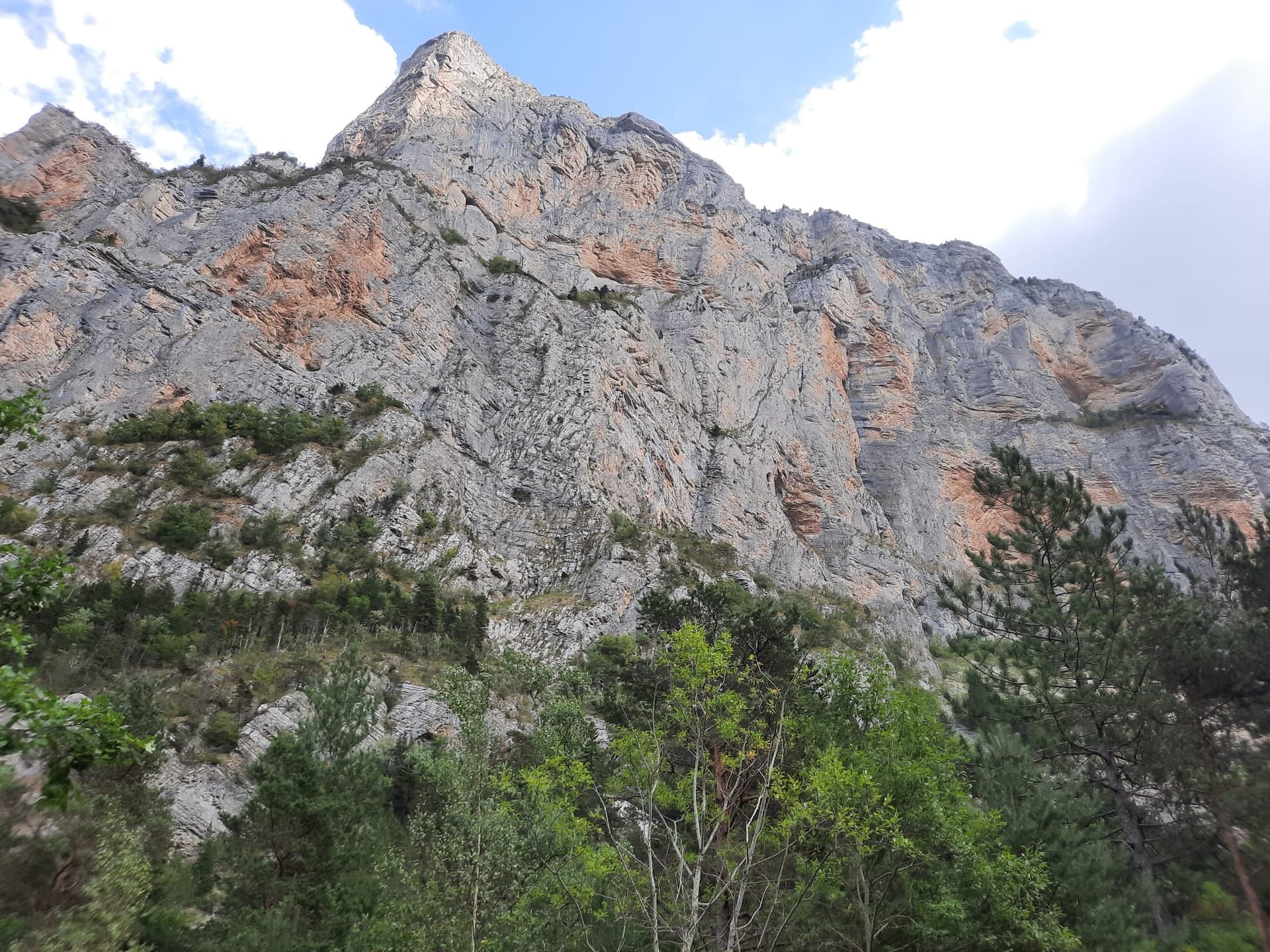
The limestone south face of the Peña Foratata rising above Sallent de Gállego in the Tena valley. Vía Anzas climbs this side of the peak; the exact line cannot be picked out here.

Spain · Aragonese Pyrenees (Tena & Canfranc valleys)

Vía Anzas

A big, fully bolted mountain route straight up the middle of a wall of the Peña Foratata to its summit. Three technical corner pitches at 6b+ low down and a 6b and a 6a above the grass terrace, separated by easy transition pitches. Short pitches by design, a long descent, and a seasonal closure for bearded vultures until the end of July.

6b+14 pitches420 m

Read the cautions

The Petite Roche wall at Les Gillardes seen from the foot of the face; Les Maîtres du Jeu climbs it, the line is not marked.

France · Dévoluy

Les Maîtres du Jeu

A recent line that has quickly become the friendly way to discover Les Gillardes: 350 m of vertical walls on flint edges, with fair grades and reassuring bolts on a cliff known for neither. Long, continuous pitches of 6b and 6b+, one of 6c, and a conglomerate finish.

6c13 pitches350 m

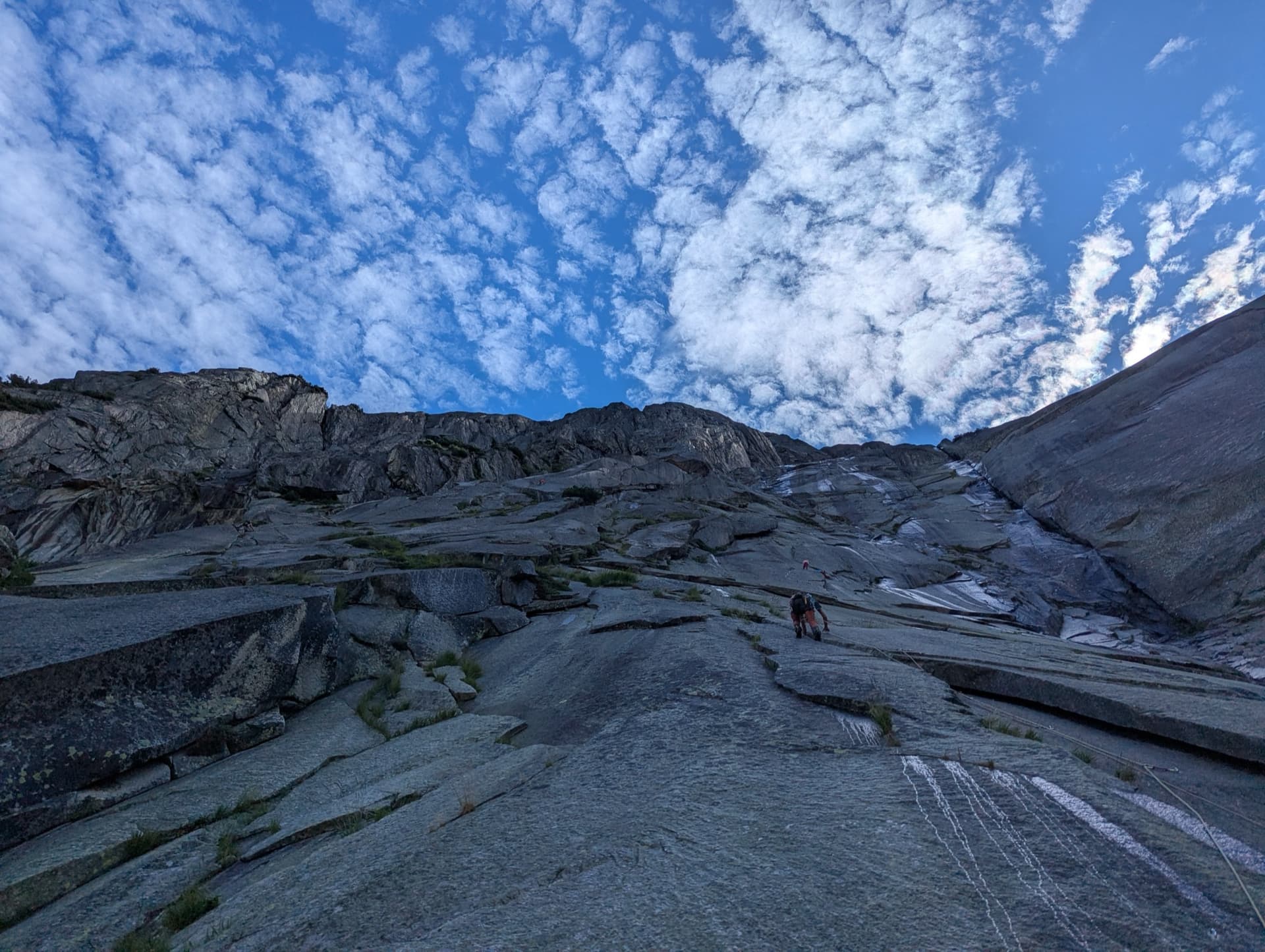
The granite slabs of the Gelmerfluh under a mackerel sky, photographed from pitch 3 of Savoir Vivre.

Switzerland · Grimsel

Sagittarius

A Grimsel granite classic: low-angle slabs lead to the famous 6a+ crack pitches and a thin 6b traverse, then steeper, sculpted ground. Sustained at 5c/6a throughout.

6b13 pitches400 m

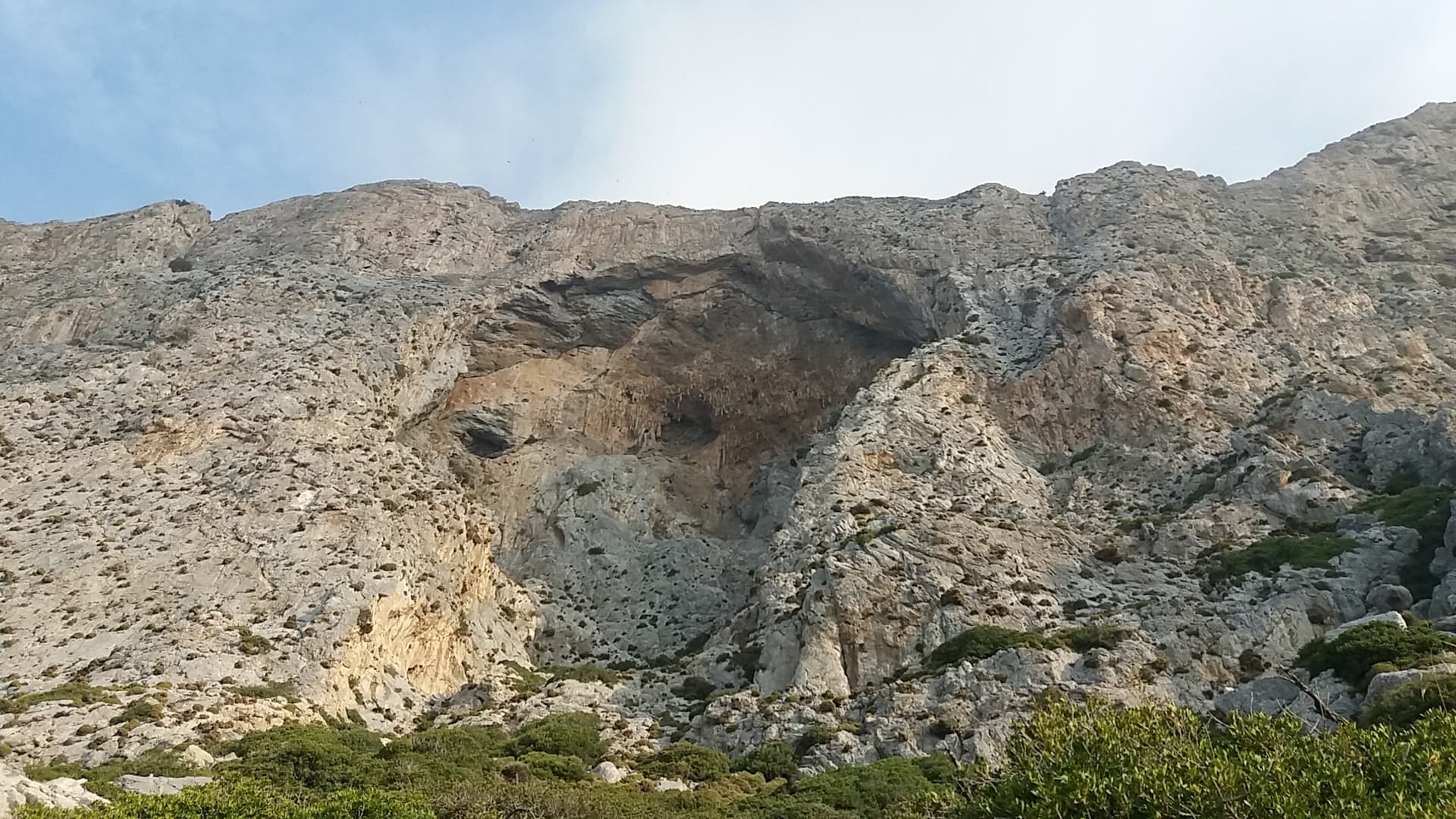
The Crescendo cave on the south face of Telendos; Eterna climbs the wall to its left.

Greece · Kalymnos & Telendos

Eterna

Eleven pitches up the south face of Telendos on extraordinarily sculpted rock, finishing with a 50 m wall of flint-like knobs. Two 6b+ pitches low down are the cruxes and the grades are widely called friendly. With the boat or coastal walk in and the walk off over the island, it makes a full and memorable day.

6b+11 pitches265 m

Compiled from published sources and last verified October 2026. Bolts, anchors and access change. Climbing is dangerous and you are responsible for your own decisions: check a current topo and read the disclaimer.