Multipitch Atlas

Les Maîtres du Jeu

Les Gillardes – Petite Roche · Dévoluy · France

Bail not documentedBolting confidence: high

A recent line that has quickly become the friendly way to discover Les Gillardes: 350 m of vertical walls on flint edges, with fair grades and reassuring bolts on a cliff known for neither. Long, continuous pitches of 6b and 6b+, one of 6c, and a conglomerate finish.

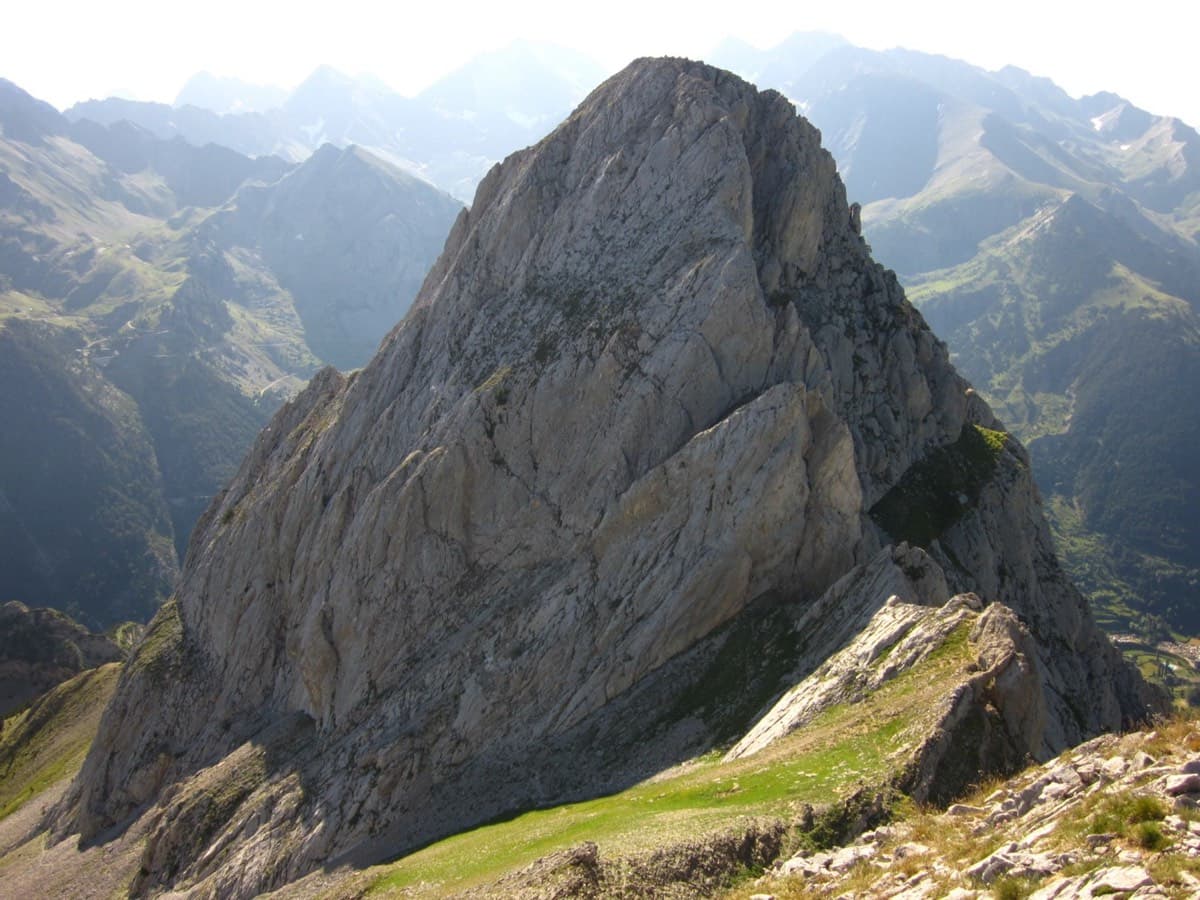
The 'LMDJ' mark painted at the start of Les Maîtres du Jeu, Les GillardesPhoto: Eric Revolle · CC BY-NC-ND 3.0

Photo

The 'LMDJ' mark painted at the start of Les Maîtres du Jeu, Les GillardesPhoto: Eric Revolle · CC BY-NC-ND 3.0
Hardest pitch
6c
Pitches
13
Length
350 m
Approach
20 min
Aspect
NW
North-west-facing
Rope
–

The route

Overview

Les Maîtres du Jeu climbs the Petite Roche of Les Gillardes in two bastions separated by a ledge. The lower part has the atmosphere: a grey slab and overhangs to start, a superb flint wall on pitch 3, an orange corner, a technical traverse and vertical wall on pitch 5 (the crux and the best pitch) and a weaving 45 m pitch. Above the ledge the climbing is a little calmer, on flint and then conglomerate. Parties find the grades fair, with no real 6c move for some, and the climbing more on the feet than on the arms. Obligatory grade 6b.

The climbing

Pitch by pitch

Pitches of Les Maîtres du Jeu
PitchGradeLengthNotes
P16a+25 mA grey slab, then an overhang; short, with the hard part at the small overhang. Belay between the two overhangs.
P26a35 mAn overhang, then slab. Chained belay well right of the crest of the pillar, shared with the Abert-Devantay.
P36b30 mGo right, not straight up the gold hangers, to reach a superb wall on flint.
P46b+45 mTrend right to the obvious orange corner; belay under the roof.
P56c30 mA technical traverse on good holds, then a vertical wall. Superb and airy; the best pitch for several parties.
P66b+45 mWeaves up a magnificent flint wall. Manage the rope drag.
P75c–A grey wall to a belay at the start of the ledge, then up and leftwards along the ledge (one bolt) to a belay on two hangers; a tree and a single bolt on the right are not the belay. Camptocamp lists the ledge traverse as a separate ungraded pitch and says the two link on a 50 m rope; a 2026 party confirms it just fits, with drag, and warns not to fall at the end above the stones.
P85c+30 mStart right of an overhang in white rock; fairly short with one thin move. Belay just after the tree.
P96b+45 mFlint and more flint.
P106b35 mLeft, then a steeper section on very abrasive orange rock.
P116a+–A long flight on flint.
P126a–Short, on flint and then conglomerate. It can be linked with the previous pitch by skipping bolts; watch the drag.
P135c–Entertaining conglomerate, shared with Association de Bienfaiteurs.

Getting there

Approach

To the parking

From Grenoble take the road via La Mure and Corps, cross the Sautet dam and go through La Posterle (Pellafol) into the Souloise gorge. Park on the right just before the Pont de la Baume, beside the large information panels. A 2026 party travelled by bus to Corps and then by bicycle, returning by train from Clelles.

On foot · about 20 min

About 20 min. Cross the bridge and immediately take the handrail that descends on the left. Follow the path up the scree to the foot of the wall. The route starts a few metres to the right of where you arrive, with 'LMDJ' painted discreetly; a 2026 party says to aim for the classic Association de Bienfaiteurs.

Map of the walk-in

  • Crag
  • Parking

Loading map

The point marks the crag, not the exact start of the route.

Coordinates · crag

44.75568, 5.89212

Parking

44.75100, 5.88472

Pont de la Baume (camptocamp waypoint 131555)

Point from camptocamp waypoint 1057957

For your phone or watch

Download GPX

Contains the route point and parking. Opens in most mapping apps and GPS watches.

Points are compiled from published sources, with the precision stated above. They were not surveyed on the ground: check them against a current topo.

Getting down

Descent

Continue to the top over steps of grade III, taking care with the many embedded blocks. Pick up the path near the rim, soon marked in yellow, and follow it south down to the hamlet of Les Jouves, then return along the road to the Pont de la Baume (about 3 km; several parties hitch). Camptocamp allows 1 h 30 min; parties report about 1 h.

Retreat

Bailing off the route

Bail not documented

Retreat is not described by any source. The descent is on foot from the top and nothing says whether the belays are equipped for abseiling, apart from one chained belay at the top of pitch 2. One party did turn back from pitch 3 in a storm, without saying how. The ledge between the two bastions is crossed by other routes, but no escape along it is documented.

Retreat from
Not documented beyond a retreat from pitch 3.
Point of no return
Not documented. Pitches 4 and 5 traverse right under roofs, which would complicate abseiling from above them.
Carry
Two ropes of at least 50 m (pitches reach 45 m), maillons and cord, if you want the option.
Basis
Inferred from the route factsCamptocamp gives a walk-off and pitch lengths only; the retreat from pitch 3 is mentioned in a 2026 trip report without detail.

Partly inferred from the route facts

Safety

Hazards

  • Embedded and loose blocks on the grade III exit, which is usually done unroped at the end of a long day.
  • The rock is good to excellent but still needs testing in places.
  • Heat on the last four pitches in summer afternoons.
  • Rope drag on the 45 m pitches and where pitches are linked.
  • A storm forced one party to retreat from pitch 3; the wall is long and the walk-off is from the top.

Sun and weather

Conditions

North-west facing from about 1100 m. The wall is in shade in the morning; the upper part gets the sun in the early afternoon (pitch 10 to 12 for parties starting around 8:00) and is then very hot in summer. The upper part is exposed to wind. Reports run from late April to August.

Usual season · May to Sep

Sun on the wall · NW-facing

Working out the sunlit hours for this month.

  • January: not yet worked out
  • February: not yet worked out
  • March: not yet worked out
  • April: not yet worked out
  • May (usual season): not yet worked out
  • June (usual season): not yet worked out
  • July (usual season): not yet worked out
  • August (usual season): not yet worked out
  • September (usual season): not yet worked out
  • October: not yet worked out
  • November: not yet worked out
  • December: not yet worked out

Sun on the wallDaylight, wall in shade● Usual season

Estimated from the wall's aspect only. Ignores surrounding terrain, gullies and the wall's exact shape. Clock times are local to the wall (Central European time), for the 15th of each month.

Climate figures for Dévoluy are not available yet

What to carry

Gear

15 quickdraws, several extendable. No source states the rope; pitches reach 45 m and the descent is on foot. Helmet.

Checklist

Quickdraws
15
Rope
Length not given in the sources
Helmet
One each
Maillons or spare karabiners
To leave behind if you retreat
Cord
Mentioned for retreat

Derived from the route data; check it against a current topo

From climbers

Reader reports

Reader reports are not being collected yet. Until they are, check a current topo and the local club or guidebook publisher for recent changes to Les Maîtres du Jeu.

Worth knowing

Tips

  • Start by 8:00 in summer to climb most of the route in the shade.
  • Parties take 5 to 8 hours on the route.
  • There are pools for a swim under the bridge on the way back to the main road.

Open questions

Where sources disagree

  • Pitch count: camptocamp lists 14 entries, one of them the ungraded ledge traverse that it says links with the pitch before. It is merged into pitch 7 here, giving 13.
  • Descent time: 1 h 30 min on camptocamp, about 1 h in two 2026 reports that hitched the road section.
  • Only camptocamp (route page and many trip reports) could be read; no second independent site describes the route in detail.

Provenance

Sources

Around 6c · about 13 pitches

Similar elsewhere

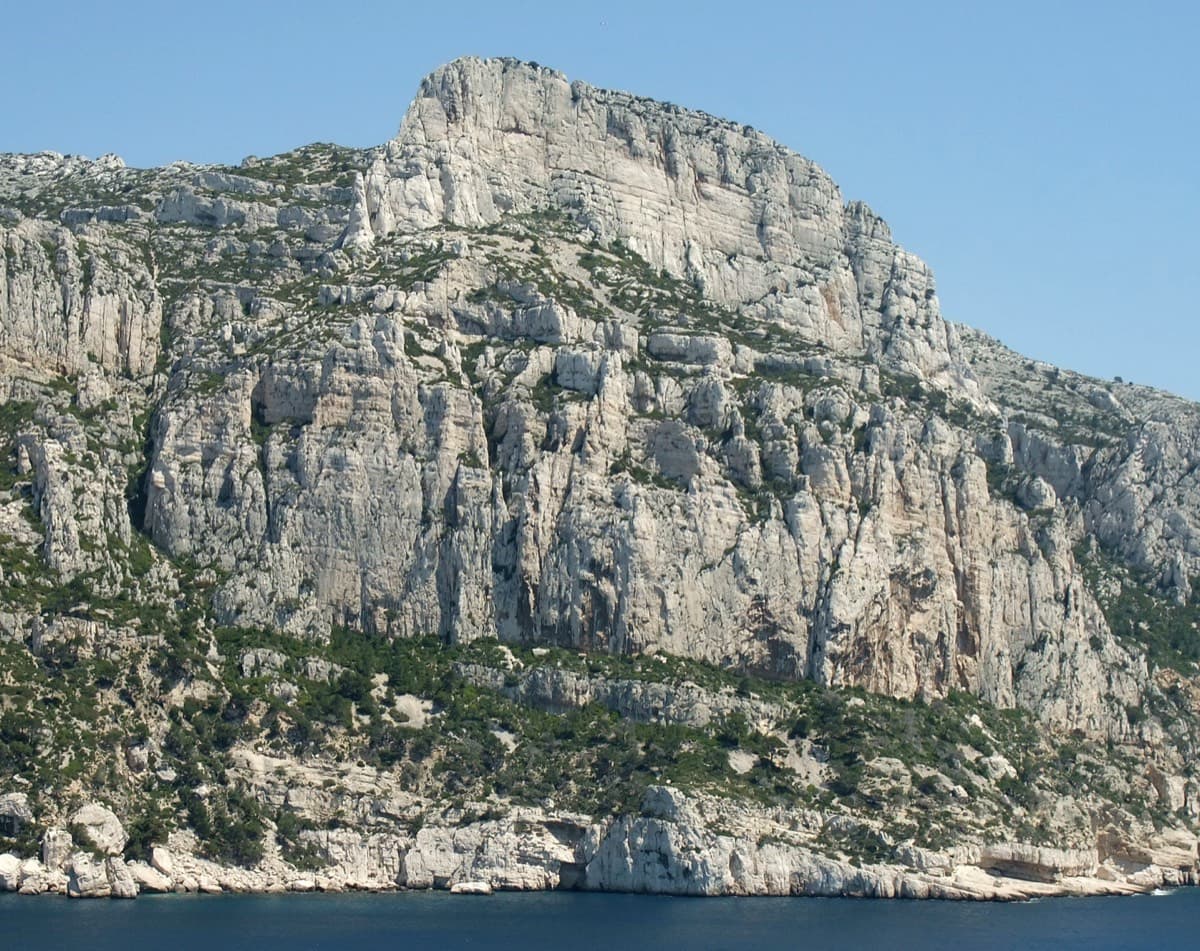
The Grande Candelle and its plinth from the sea; Armata Calanca climbs the plinth and then the south face to the summit

France · Calanques

Armata Calanca

The big modern classic of the Calanques: eleven pitches in three tiers from the foot of the Candelle plinth to the summit, sustained in the sixth grade on grey water-pocketed limestone above the sea. Two walking ledges split the day and offer escapes. The eighth pitch, a 6b+ diagonal along a flake, is the one people remember.

6c11 pitches320 m
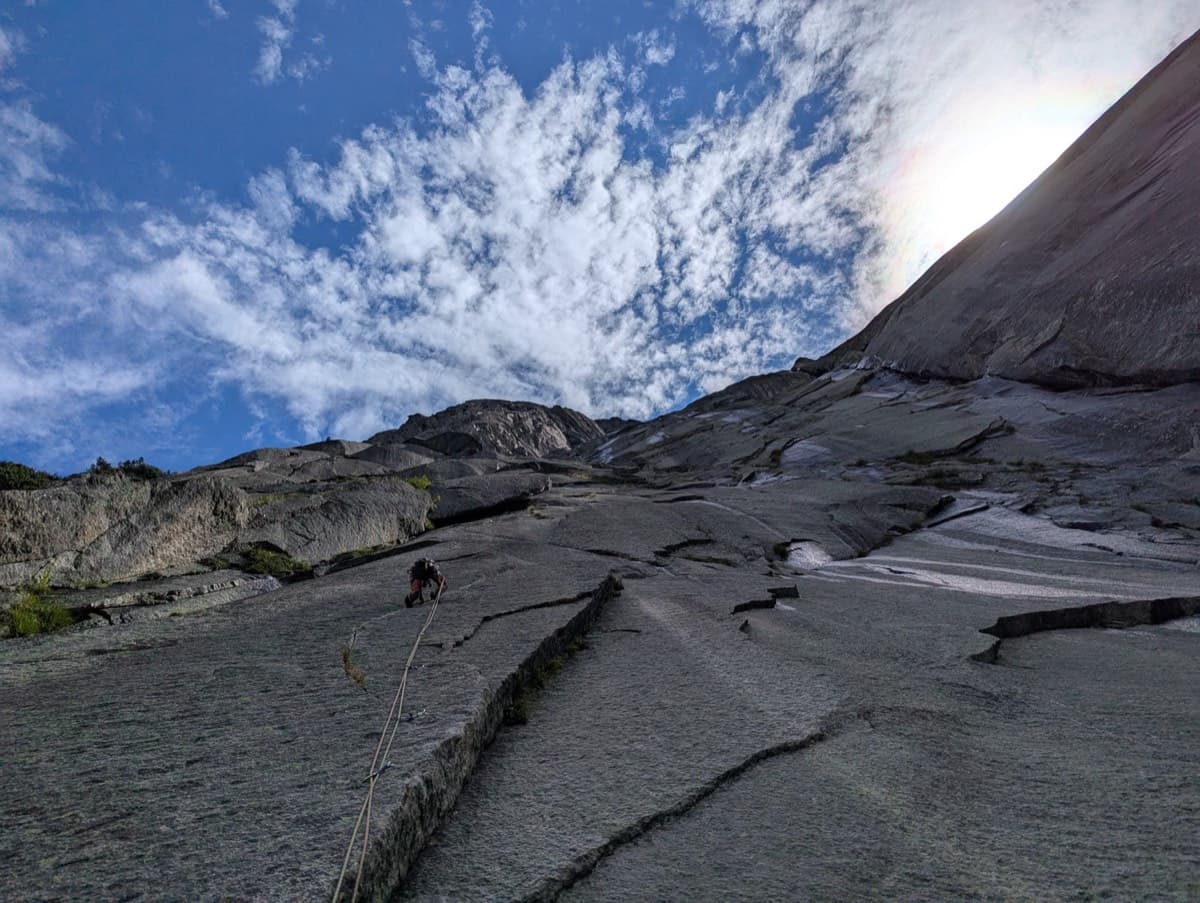
The crack of pitch 5 (Kurvenriss) on Savoir Vivre, Gelmerfluh

Switzerland · Grimsel

Savoir Vivre

Fourteen pitches up the Gelmerfluh next to Sagittarius, and by several accounts the better route: a knife-cut flake, a finger-to-hand crack worthy of Chamonix, corners, a pendulum and Grimsel slab, then easier quartz-veined walls to the top. Mostly 5c to 6a, with two short slab cruxes that almost everyone aids.

6c+14 pitches400 m

The Peña Foratata above Formigal and the Tena valley (general view of the peak, not of the route's wall)

Spain · Aragonese Pyrenees (Tena & Canfranc valleys)

Vía Anzas

A big, fully bolted mountain route straight up the middle of a wall of the Peña Foratata to its summit. Three technical corner pitches at 6b+ low down and a 6b and a 6a above the grass terrace, separated by easy transition pitches. Short pitches by design, a long descent, and a seasonal closure for bearded vultures until the end of July.

6b+14 pitches420 m

Read the cautions

No photo yet

Italy · Arco & Valle del Sarca

Nataraj

Steep, athletic corner climbing on the Mandrea wall above Arco, with pocketed slabs where the corner turns loose. Mostly 6a to 6b with a harder move on pitch 5 and the crux in the last pitch; both go at A0. The long layback corner near the top is the pitch people remember.

6c10 pitches275 m

Compiled from published sources and last verified October 2026. Bolts, anchors and access change. Climbing is dangerous and you are responsible for your own decisions: check a current topo and read the disclaimer.