Multipitch Atlas

Nataraj

Mandrea (Laghel, Arco) · Arco & Valle del Sarca · Italy

Bail not documentedBolting confidence: medium

Steep, athletic corner climbing on the Mandrea wall above Arco, with pocketed slabs where the corner turns loose. Mostly 6a to 6b with a harder move on pitch 5 and the crux in the last pitch; both go at A0. The long layback corner near the top is the pitch people remember.

Hardest pitch
6c
Pitches
10
Length
275 m
Approach
20 min
Aspect
SE
South-east-facing
Rope
1×50 m
walk-off

The route

Overview

A ten-pitch sport route on the south-east wall of Mandrea, above the hamlet of Laghel just west of Arco. It follows a big corner system, stepping left onto water-pocketed slabs wherever the corner rock is poor. Bergsteigen.com describes it as very steep and athletic but always well protected, and gulliver.it says the grades are generous by Arco standards. The crux is in the last pitch and can be aided; a harder direct finish (UIAA 8-) was added in 2020.

The climbing

Pitch by pitch

Pitches of Nataraj
PitchGradeNotes
P16bShared with the route Moana at first: slab to the first bolt (5b), then diagonally left over cracked bulges with perhaps one move of 6b.
P25aA low-angled slab on water pockets, superb rock.
P36bSlab (6a), a technical traverse round the arete (6b), then slab again to the belay.
P46a+Easy pocketed slab to a short wall with one athletic move; good hold out left beyond the tree.
P56b+A fine diagonal to the right with one move of 6b/6c at the third bolt, aidable, then a chimney (6a) that is awkward with a rucksack. The belay is very uncomfortable.
P66aAn open corner, grey on the left and yellow on the right (5c/6a). The yellow rock is friable but there is a bolt every metre.
P76aA very large flake that almost forms a ledge, leading into the main corner. The gulliver.it party linked this with pitch 8 and gives 6a for the pair.
P86aThe big layback corner: sustained 6a and the best pitch of the route.
P9–A short wall, then diagonally right through woodland and up a small corner. An easy linking pitch; no grade given.
P106cA short overhanging corner with three or four hard moves (6b/6c on gulliver.it, UIAA 7+ on bergsteigen.com, easily aided), then easier rock diagonally left to the last belay on a tree.

Getting there

Approach

To the parking

Arco is at the north end of Lake Garda. By car leave the A22 Brenner motorway at Rovereto Sud (Lago di Garda Nord) and drive via Nago to Arco. Buses serve Arco and Dro. In the centre of Arco follow the road towards Riva and turn off for Laghel after the park. A one-way system leads to the small church of Laghel. Turn left there, go briefly uphill and north until the road becomes gravel after about 1 km, and continue to a cross with a fountain (Fontane), where you park. The Kushi Ling meditation centre is just beyond.

On foot · about 20 min

About 20 min. Walk up the forest road between the cross and the fountain to the foot of the wall. Turn right and follow the path marked with red dots along the base. The start is on a step that you reach by climbing up at a tree with two slings; just before it the path touches the wall and then drops a little. The route name is written in red at the start.

Map of the walk-in

  • Route base
  • Parking

Loading map

The point marks the base of the route.

Coordinates · route base

45.94770, 10.88700

Parking

45.94170, 10.88370

Parking marked on bergsteigen.com

Point from bergsteigen.com touren/klettern/via-nataraj-mandrea

For your phone or watch

Download GPX

Contains the route point and parking. Opens in most mapping apps and GPS watches.

Points are compiled from published sources, with the precision stated above. They were not surveyed on the ground: check them against a current topo.

Getting down

Descent

On foot, about 45 min. From the top follow traces west to the tarmac road and go left along it. After a large meadow on the right and some houses on the left, a hiking path on the left leads back south-east towards the wall, at one point right along the cliff edge. Follow it down towards Laghel, then go left on a good path with red dots back to the access track and the cross and fountain.

Retreat

Bailing off the route

Bail not documented

Retreat is not documented. The route is normally finished and walked off, and neither source describes abseiling. The line wanders (a diagonal on pitch 5, a woodland link on pitch 9), which would make abseiling awkward.

Retreat from
Not known.
Point of no return
Not documented. The cruxes on pitches 5 and 10 are aidable, so continuing on aid is usually the practical option high on the route.
Carry
A single 50 m rope limits abseils to 25 m; take a second rope plus maillons and cord if you want a realistic retreat option.
Basis
Inferred from the route factsNeither source mentions retreat; inferred from the line and the stated rope length.

Partly inferred from the route facts

Safety

Hazards

  • The yellow rock in the pitch 6 corner is friable; avoid knocking stones onto parties below.
  • The big flake on pitch 7 is described by gulliver.it as not very reassuring.
  • The belay at the top of pitch 5 is cramped.

Sun and weather

Conditions

South-east facing, start at about 400 m. Sunny from the morning; spring and autumn are best. Bergsteigen.com gives 3 h for the climb.

Usual season · Mar to May, Sep to Nov

Sun on the wall · SE-facing

Working out the sunlit hours for this month.

  • January: not yet worked out
  • February: not yet worked out
  • March (usual season): not yet worked out
  • April (usual season): not yet worked out
  • May (usual season): not yet worked out
  • June: not yet worked out
  • July: not yet worked out
  • August: not yet worked out
  • September (usual season): not yet worked out
  • October (usual season): not yet worked out
  • November (usual season): not yet worked out
  • December: not yet worked out

Sun on the wallDaylight, wall in shade● Usual season

Estimated from the wall's aspect only. Ignores surrounding terrain, gullies and the wall's exact shape. Clock times are local to the wall (Central European time), for the 15th of each month.

Climate figures for Arco & Valle del Sarca are not available yet

What to carry

Gear

13 quickdraws, slings for the belays (the last one is a tree) and a single 50 m rope. Gulliver.it says to bring quickdraws only. Helmet.

Checklist

Quickdraws
13
Rope
1×50 m (walk-off)
Helmet
One each
Maillons or spare karabiners
To leave behind if you retreat
Cord
Mentioned for retreat

Derived from the route data; check it against a current topo

From climbers

Reader reports

Reader reports are not being collected yet. Until they are, check a current topo and the local club or guidebook publisher for recent changes to Nataraj.

Worth knowing

Tips

  • The pitch 5 move can also be avoided by staying low to the right and entering the chimney from its base, at the cost of skipping one bolt (gulliver.it).
  • Some parties park near the top and walk down to the base first.
  • The direct finish at UIAA 8- (about 6c+/7a) is marked on the bergsteigen.com topo and is less polished than the original right-hand exit.

Open questions

Where sources disagree

  • Overall grade: gulliver.it gives 6b maximum with 5c obligatory while describing moves of 6b/6c on pitches 5 and 10; bergsteigen.com gives UIAA 7+ (about 6c) for one move in the last pitch and 'constant 7-' elsewhere. 6c is used as the maximum.
  • Length: 275 m (bergsteigen.com) against 300 m (gulliver.it).
  • Pitch grades come from a single gulliver.it trip description, so the pitch_grades card field is left empty; the pitch 5 grade is given here as 6b+ for a move reported as 6b/6c.

Provenance

Sources

Same area

More in Arco & Valle del Sarca

All routes in Arco & Valle del Sarca
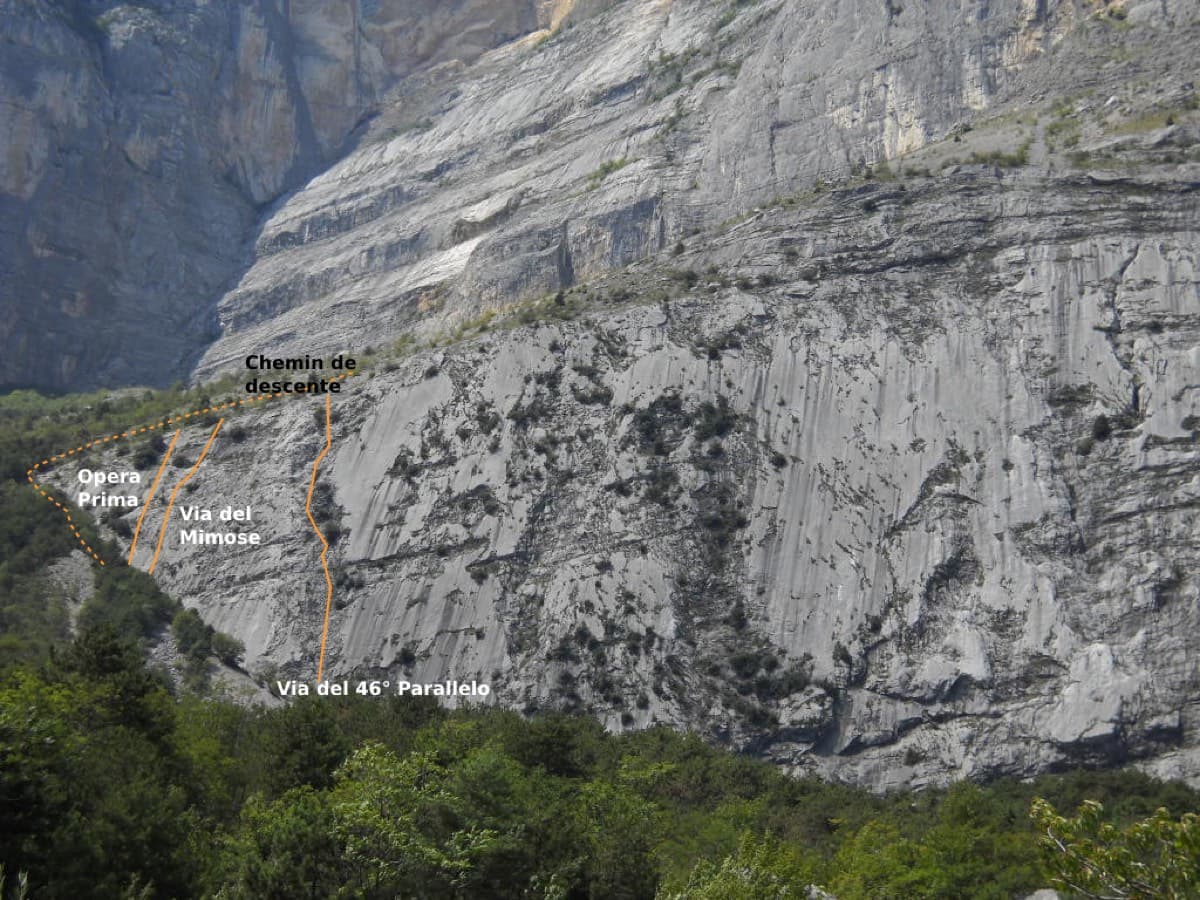
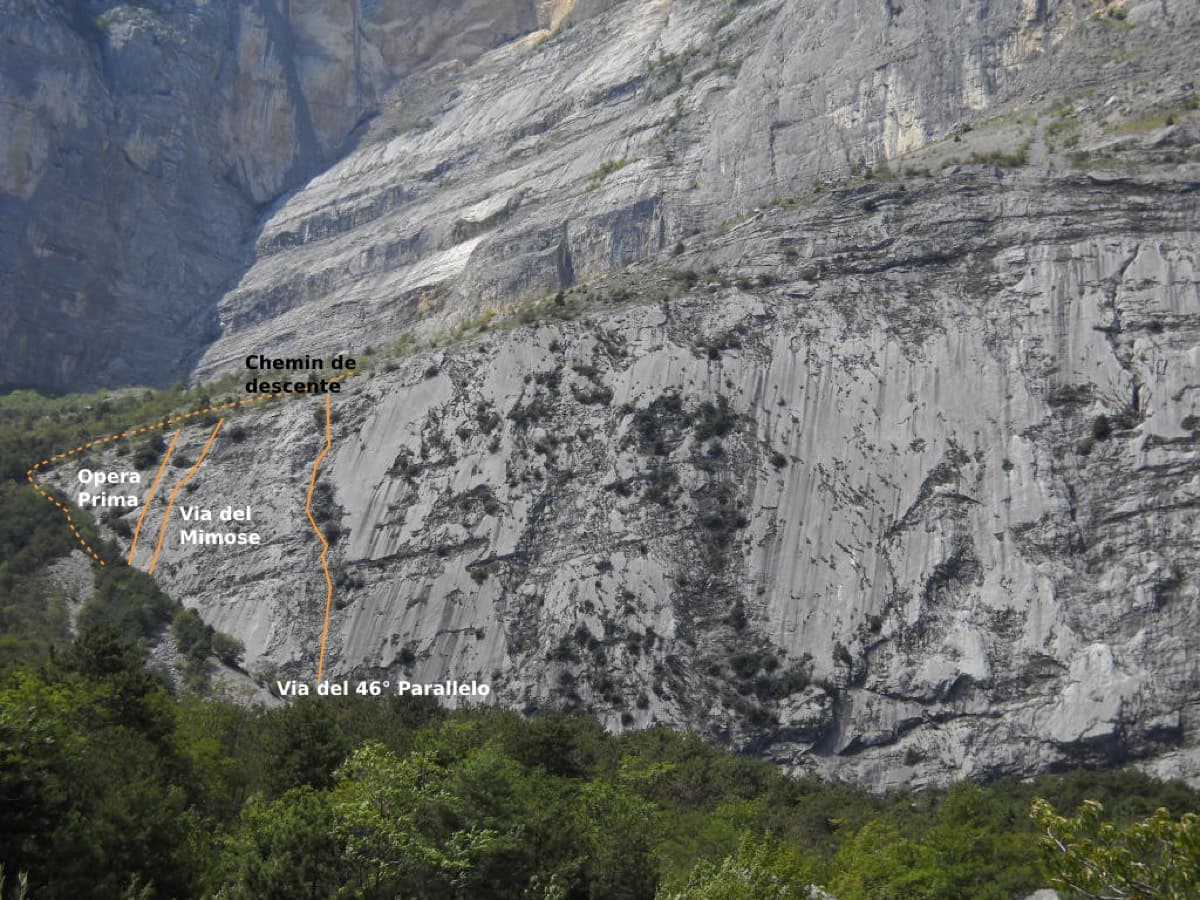
The Parete Zebrata (Placche Zebrate) above Dro, with the lines of three other routes at its left end marked

Italy · Arco & Valle del Sarca

Rita

This is the archetypal long, easy Arco slab, first climbed in 1971. It wanders up the lower bands and then improves into a superb water-worn chimney system in the upper half. It is very polished and very busy, so start early. Original grade 6- UIAA per bergsteigen.com; gulliver gives 5c max.

5c16 pitches400 m

Read the cautions
No photo yet

Italy · Arco & Valle del Sarca

Orizzonti Dolomitici

A succession of short walls and slabs separated by ledges, with the first two pitches shared with Amazzonia. The crux is a single 5c/6a move just below the P5 belay. It's a relaxed, well-protected outing above the Sarche gorge.

5c10 pitches250 m

The Parete Zebrata (Placche Zebrate) above Dro, with the lines of three other routes at its left end marked

Italy · Arco & Valle del Sarca

Man-Ilia

An easy, relaxing sport route on low-angle Zebrate slabs, trending left to right to join Cane Trippa at the fifth belay. It's an excellent first multipitch. Gulliver gives UIAA III / II–III / IV / IV–IV+ for the first four pitches, converted here.

5b6 pitches240 m

No photo yet

Italy · Arco & Valle del Sarca

Via Roberto

Eight sustained pitches up the wall opposite the Laterna restaurant, rarely easier than 6a. The crux is a short overhanging wall on pitch 5 that can be pulled through on the bolts. Less cleaned than its neighbours, with some broken rock on pitch 6.

6c+8 pitches220 m

Around 6c · about 10 pitches

Similar elsewhere

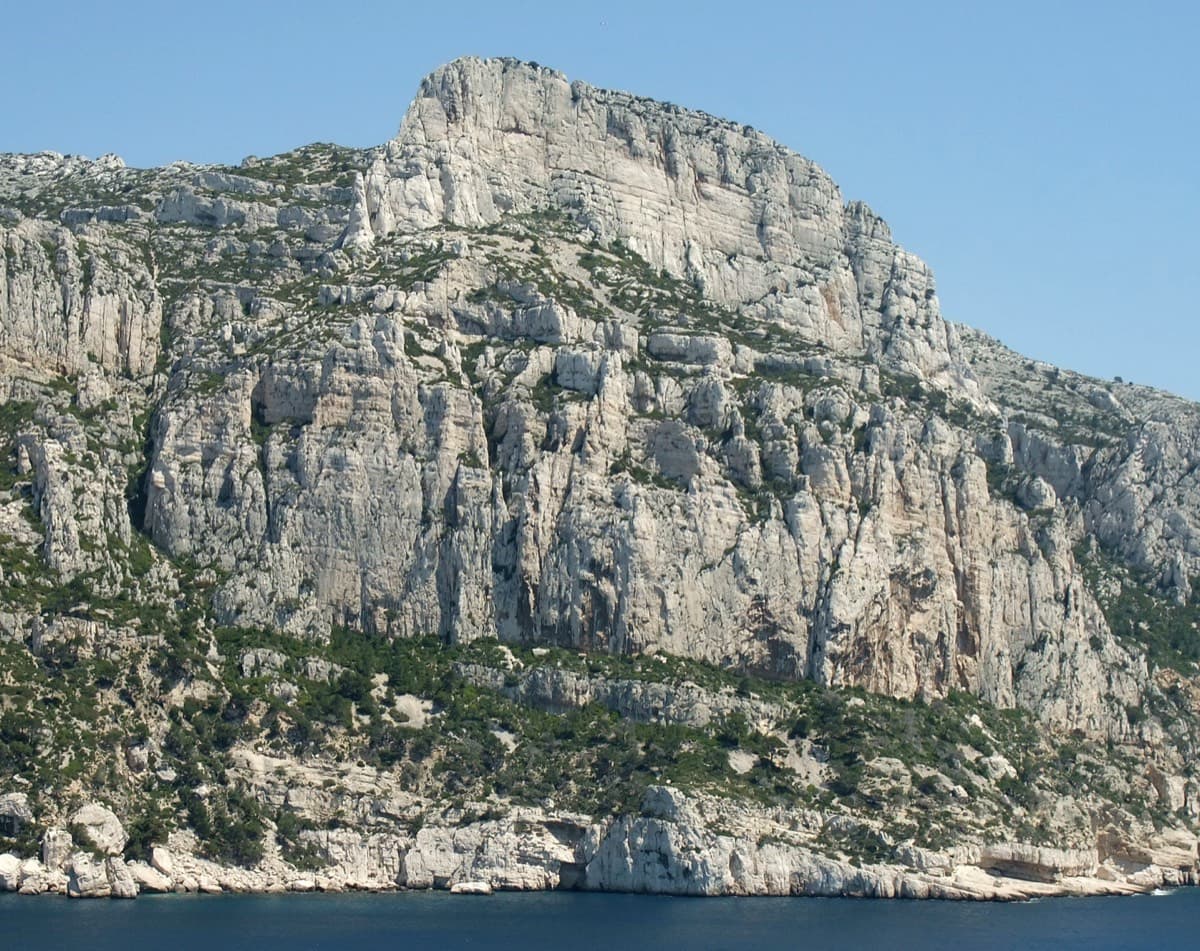
The Grande Candelle and its plinth from the sea; Armata Calanca climbs the plinth and then the south face to the summit

France · Calanques

Armata Calanca

The big modern classic of the Calanques: eleven pitches in three tiers from the foot of the Candelle plinth to the summit, sustained in the sixth grade on grey water-pocketed limestone above the sea. Two walking ledges split the day and offer escapes. The eighth pitch, a 6b+ diagonal along a flake, is the one people remember.

6c11 pitches320 m

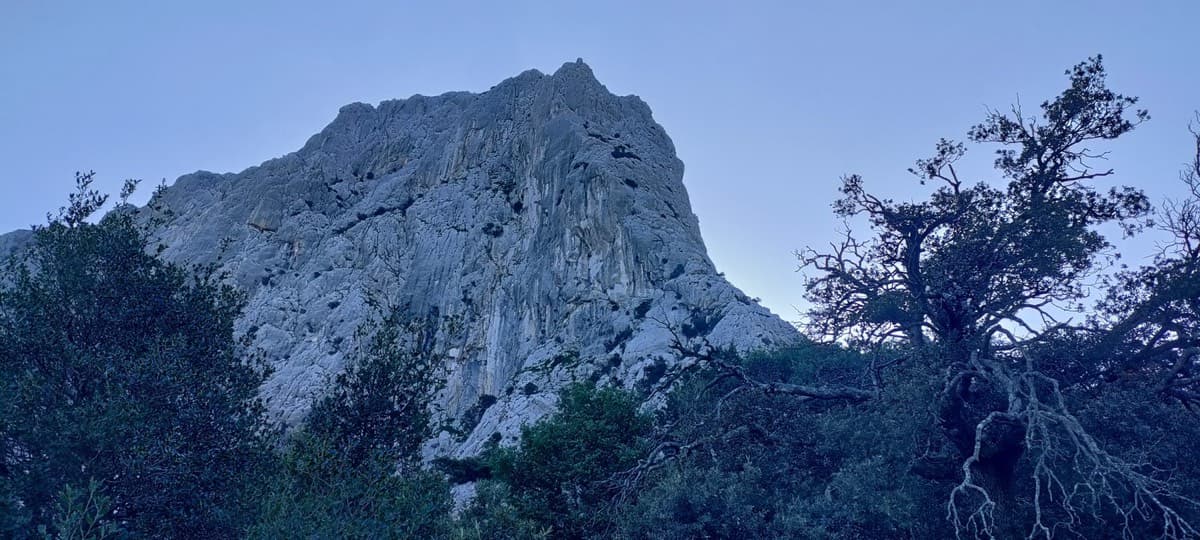
The north-west side of Punta Cusidore at dawn, seen from the approach above Oliena

Italy · Sardinia

L'Ombra della Mia Mano

A 300 m pillar on the 'Dolomite of Sardinia': a hard, smooth first pitch in a north-facing gully, long grey slabs and walls, a demanding technical crux on pitch 6, then exposed climbing on the crest of the pillar on big sculpted holds. Mountain atmosphere with sport protection.

6c9 pitches300 m

Read the cautions

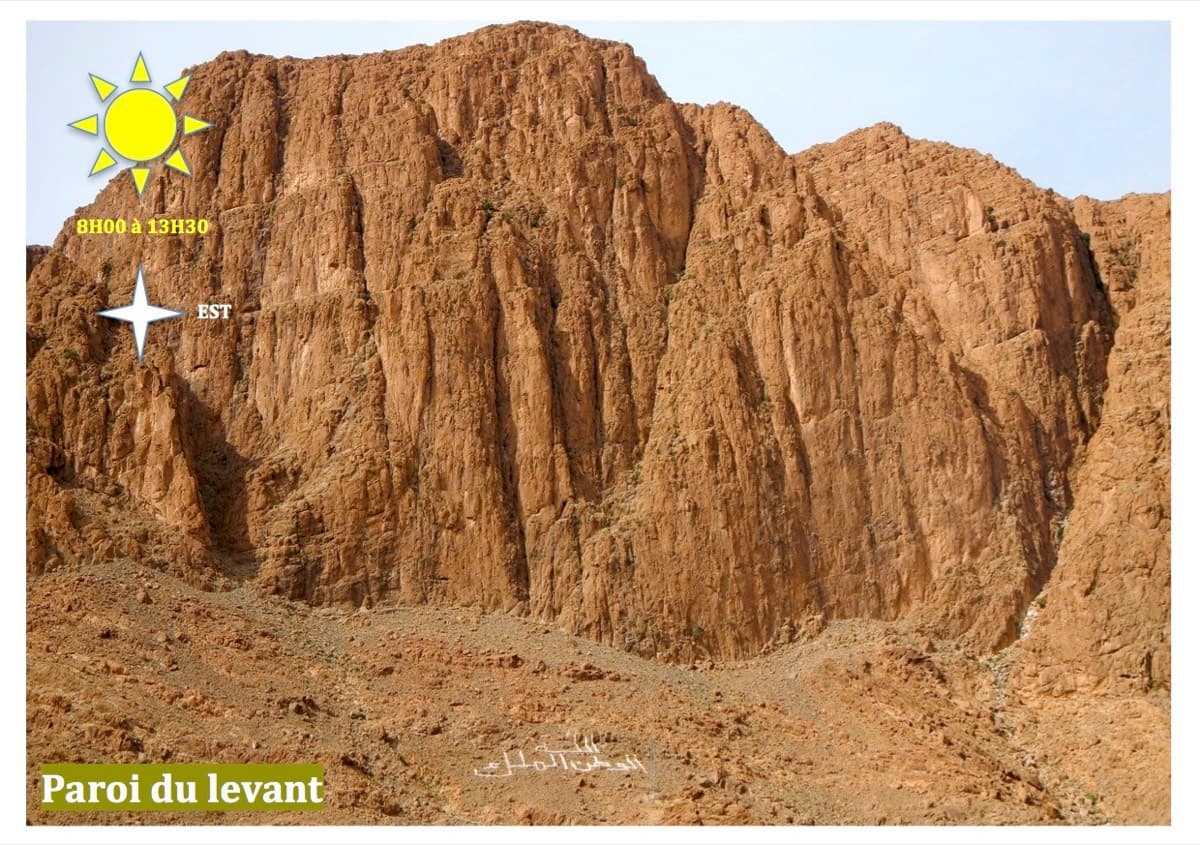
The Paroi du Levant above Tizgui, with the sun hours for the wall; Voie Tifégha is at its left end

Morocco · Todra Gorge (Todgha)

Voie Tifégha

A wandering nine-pitch line up the left end of the big wall above Tizgui, mostly 5b to 6a with a superb steep corner on pitch 6. Well bolted but with a mountain feel: it is little travelled, the rock is very abrasive and not fully cleaned, and the belays and the walk-off take some finding.

6c9 pitches250 m

Read the cautions

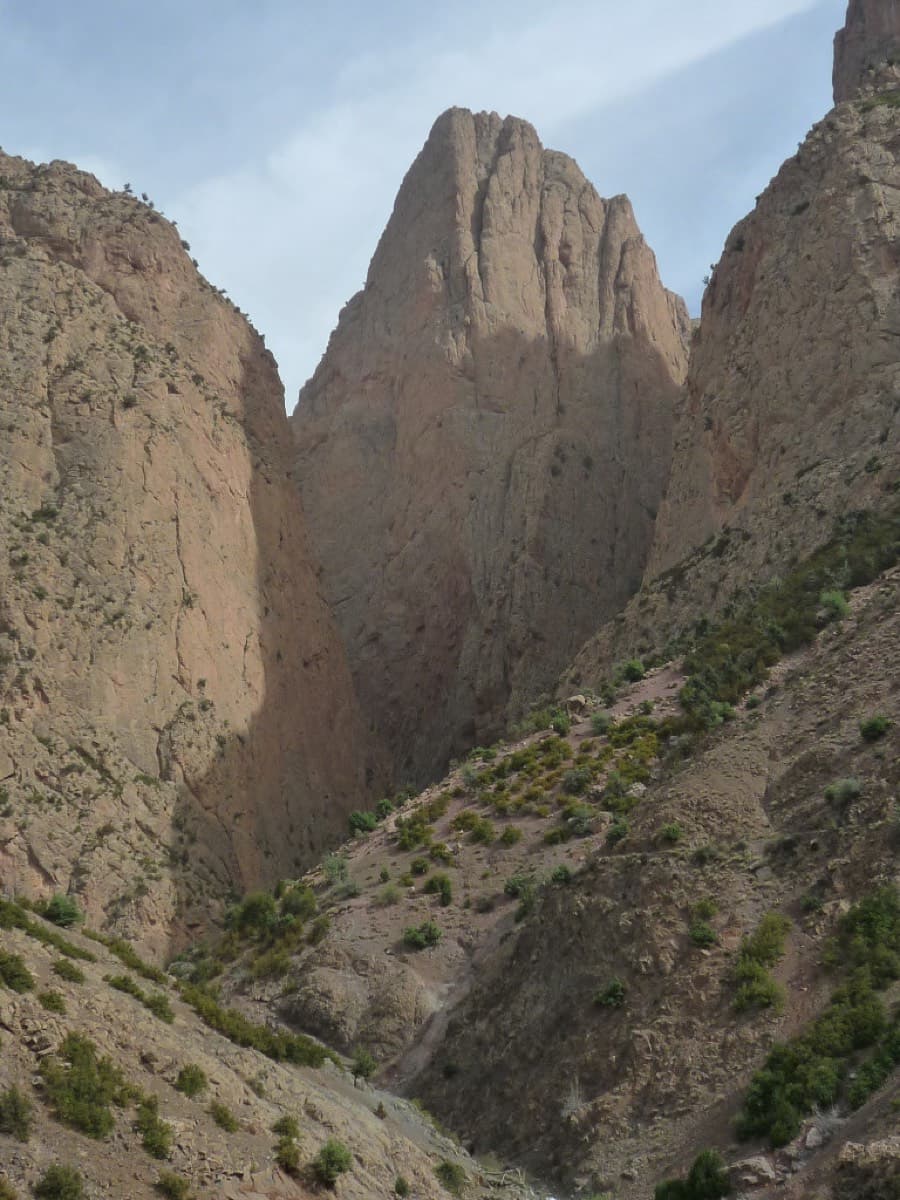
The Paroi des Sources (left) and the Taoujdad seen from near Taghia

Morocco · Taghia

Belle et Berbère

Ten pitches of even 6b and 6b+ on compact rock ten minutes from the gîtes, mostly technical slab and wall climbing on your feet, with a 50 m sixth pitch on vertical edges that everyone singles out. It is among the most accessible long routes at Taghia, in the shade for most of the day, and a little polished low down.

6b+10 pitches330 m

Read the cautions

Compiled from published sources and last verified October 2026. Bolts, anchors and access change. Climbing is dangerous and you are responsible for your own decisions: check a current topo and read the disclaimer.