Menu

Kamala

Kirchlispitzen – seventh tower, south face (Grüscher Älpli) · Rätikon (Prättigau) · Switzerland

Easy to bail

Typical Rätikon climbing on rough, very compact steep slabs where you trust your feet, generously bolted. The bottom two pitches are thin and technical, two grassy pitches follow, and the last four are superb.

Climbing mode: Big type, screen kept awake, tick pitches as you go.

The south walls of the Kirchlispitzen in the RätikonPhoto: Dirtbagislife · CC BY-SA 4.0
Hardest pitch
7a7a
Pitches
9
Length
280 m
Approach
30 min
Aspect
S
South-facing
Rope
2×50 m for the abseil

Highest point about 2552 m above sea level (camptocamp waypoint 668008 (summit)).

Rock
limestone
Season
Jul to Sep
Bolting confidence
High
Last verified
October 2026 · Aggregated by AI from published sources

Photo

Climbing modeBig type, screen kept awake, tick pitches as you go.

Overview

Kamala climbs the far right side of the seventh (easternmost) Kirchlispitze, just left of the col, and gives a taste of Rätikon slab climbing without the Rätikon's reputation for bold bolting. Two thin opening pitches (6c and 7a) lead to a grassy ledge and a transitional 6a, then four excellent pitches between 6b and 6c on perfect rock finish the route. The hard moves are short.

Worth knowing

  • The lower pitches are the hardest; the obligatory grade is lower because the hard sections are short.
  • Look for the gold Fixé hangers stamped 'Bächli Bergsport'.

Pitch by pitch

The atlas doesn't show topos: they are the work of the people who bolt and document these routes. See the topo in Kletterführer Schweiz extrem Ost.

Pitches of Kamala
PitchGradeLengthNotes
P16c30 mA thin start where you must trust your feet; the hard section is short.
P27a–Rising rightwards on a bumpy, undulating wall with very fine moves, then no further difficulty.
P36b25 mPoorer rock at first, improving.
P4235 mA grassy ledge (walking ground). Belay straight up at a chain of galvanised steel; do not go to the stainless bolts on the right.
P56a35 mSlabby rock interrupted by grassy ledges. Gipfelbuch gives 6a+.
P66b+40 mPillars and slabs, more exposed. Very fine.
P76b50 mA steep wall of hyper-compact rock, all on the feet, finishing on fine runnels.
P86c30 mA superb technical pitch on perfect rock.
P96b20 mA homogeneous slab to finish.

Approach

To the parking

Drive from Schiers up to Grüscher Älpli (about 50 min; toll road from Schuders, CHF 10 per day). Camptocamp reports that bivouacking at the car park appears to be tolerated.

On foot · about 30 min

From the climbers' car park follow the track to an open area with a hut, cross the stream and take the marked path towards the face (towards the Schweizertor). Leave it when the start is clearly visible and go up about 50 m without a path to the foot of the wall. The start is about 20 m right of Sabra and 30 m left of Desù. About 30 min.

Map of the walk-in

Parking

47.02184, 9.77639

Grüscher Älpli climbers' car park (camptocamp access waypoint 1561866)

DirectionsDriving directions

Point from camptocamp route 1559773 geometry (seventh Kirchlispitze, right side)

For your phone or watch

Download GPX

Contains the route point and parking.

Points from published sources, not surveyed.

Descent

Abseil the route with 2×50 m ropes: all belays have chains and rings. Or walk off on the north side via the Schweizertor.

Bailing off the route

Easy to bail

All belays have chains and rings and abseiling the route with 2×50 m ropes is a stated descent, so you can retreat from any belay.

Retreat from
Any belay.
Point of no return
None.
Carry
2×50 m ropes.
Basis
Stated in the sourcesCamptocamp and Gipfelbuch both give abseiling the route as a descent.

Switzerland

In an emergency

In an emergency · Switzerland

1414Rega air rescue

Call 1414

Rega air rescue

In Valais call 144.

Position of the crag

47.03586, 9.77995

Marks the crag, not the route: give route and pitch.

Say what happened, how many are hurt, and where you are. Checked October 2026 (source).

Hazards

  • Changeable weather; take warm clothing.
  • The grassy ledges of pitches 4 and 5 are slippery when wet.

Gear

13 (camptocamp) or 14 (Gipfelbuch) quickdraws; a 50 m rope to climb, 2×50 m to abseil. Nuts and cams not needed.

Checklist

Quickdraws
14
Rope
2×50 m for the abseil
Helmet
One each
Abseil device and prusik
For abseiling

Conditions

Plan B nearby

Straight-line distances, up to 30 km.

Reader reports

No reports yet.

Report a problem with this route

Say what and where. Reports are checked before they appear; no name or email is stored.

Bolts and history

Bolting
Well bolted with gold-coloured Fixé hangers; the first ascensionists say nuts and cams are not needed. All belays have chains and rings for abseiling. A 2023 party called the bolting faultless, far from the Rätikon clichés.
History
First climbed by Marcel and Kathrin Dettling (bolted 2009 to 2010; camptocamp gives the first ascent as 27 June 2010).
Guidebook
Panico / Vital Eggenberger Rätikon guide; topo on hikr.org (post 24694). Buy from kletterfuehrer.net.

Where sources disagree

  • Pitch 5: 6a (camptocamp) against 6a+ (Gipfelbuch).
  • Quickdraws: 13 (camptocamp) against 14 (Gipfelbuch).
  • First ascent date: 27 June 2010 (camptocamp) against 2009 to 2010 (Gipfelbuch).

Sources

Around 7a · about 9 pitches

Similar elsewhere

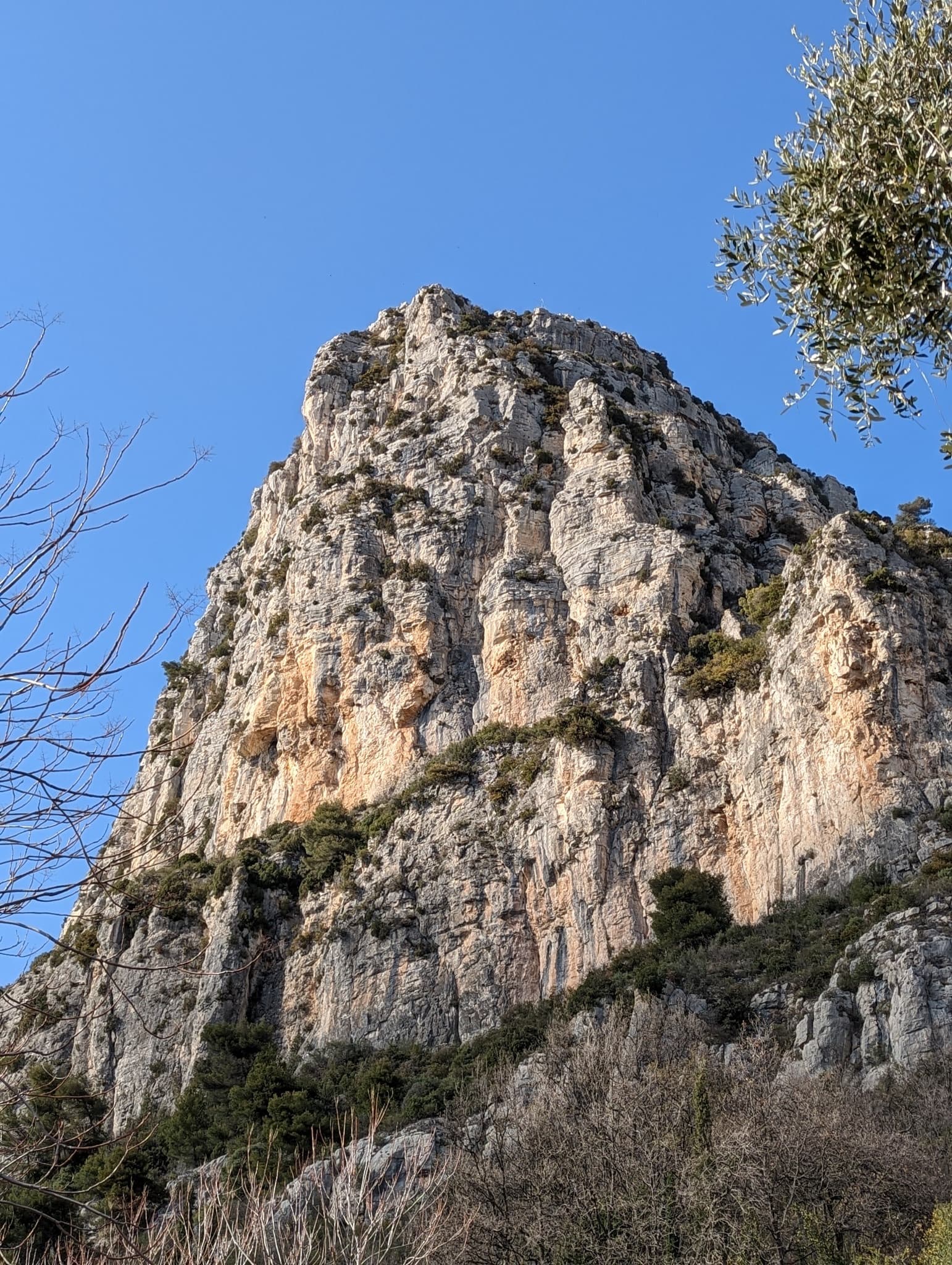
The Grande Face of the Baou de Saint-Jeannet seen from the car park; Astragale nocturne is on this face.

France · Baou de Saint-Jeannet

Astragale nocturne

One of the best modern lines on the main face: nine pitches up a pillar left of the central depression, on overhanging stratified walls, thin slabs, a striking arête and a big flake. Sustained at 6a+ to 6c with one 7a pitch that parties find closer to 6c+, and 6b obligatory. The bolting lets you climb relaxed, but there are jammed blocks to treat gently.

7a7a9 pitches230 m

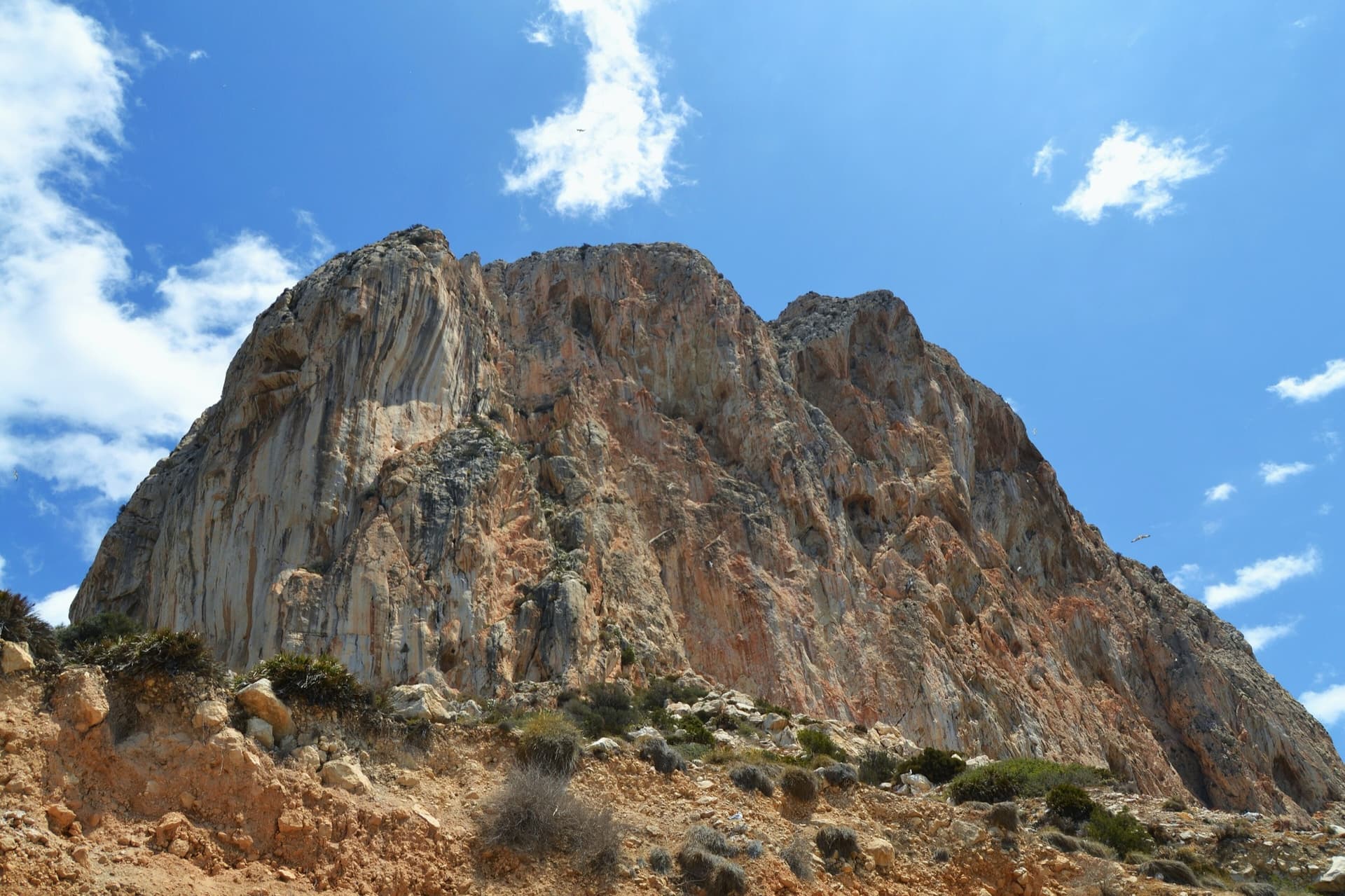
The south face of the Peñón de Ifach seen from the foot of the wall, Calpe. Mare Nostrum takes the right-hand side of this face.

Spain · Costa Blanca (Peñón de Ifach)

Mare Nostrum

Nine steep pitches up the wildly sculpted right side of the south face, overhanging almost throughout. Two long 7a pitches open the route and a third comes near the top, and even the 6a+ pitches are athletic. The rock is covered in holds and much less polished than the classics to the left.

7a7a9 pitches310 m

Read the cautions

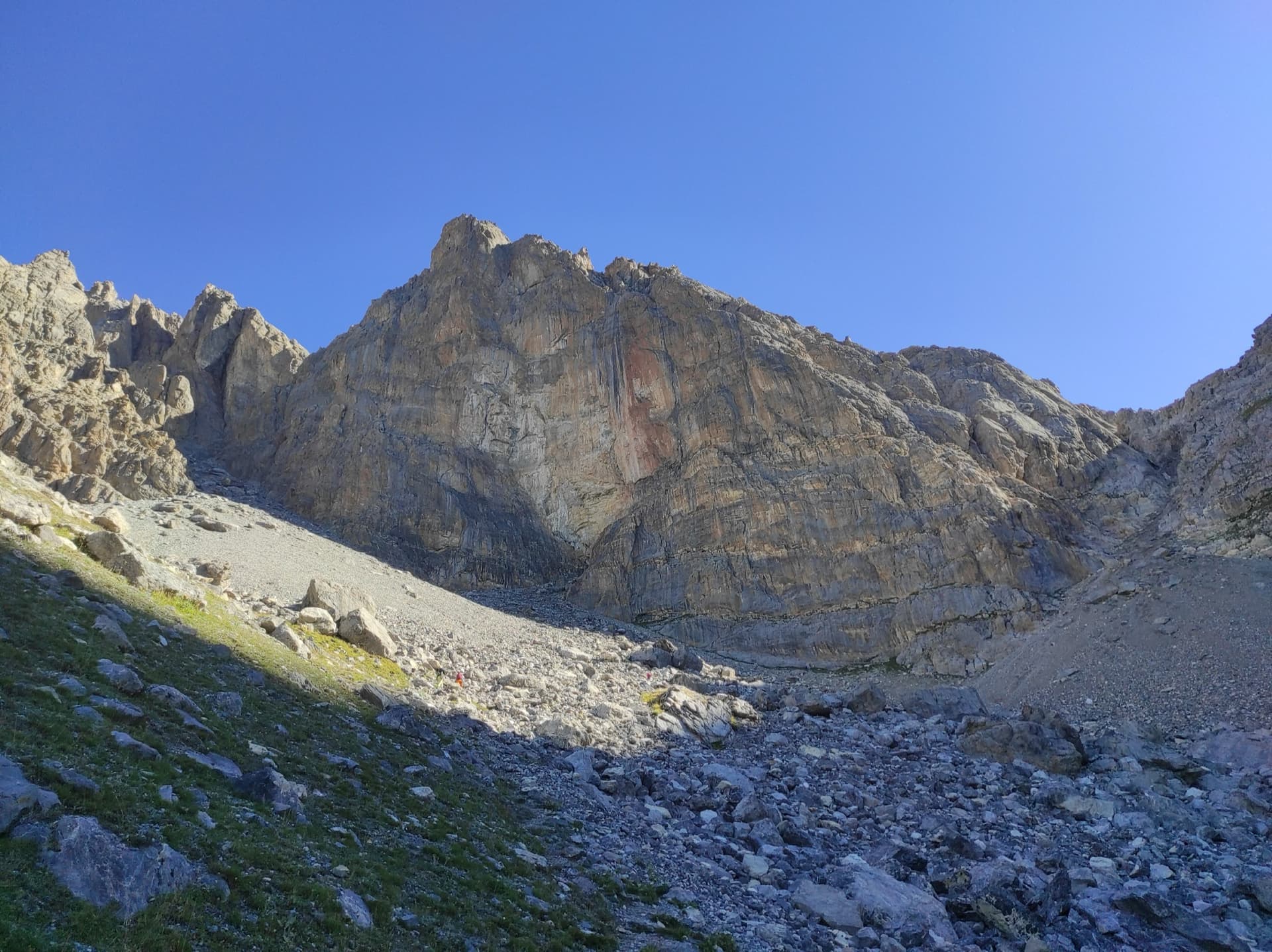
The face of the Tour Termier above its scree bowl in the Cerces; Feu Sacré climbs this wall, the line is not marked.

France · Cerces

Feu Sacré

The classic hard route of the Tour Termier: ten steep, technical pitches on superb compact limestone at 3000 m, a short walk from the Col du Galibier road. It is never athletic but sustained at 6a+ to 6b, with a 7a pitch and a 6c move that both go at 6a A0. Cold, wind and thin footwork make it feel bigger than the numbers.

7a7a10 pitches320 m

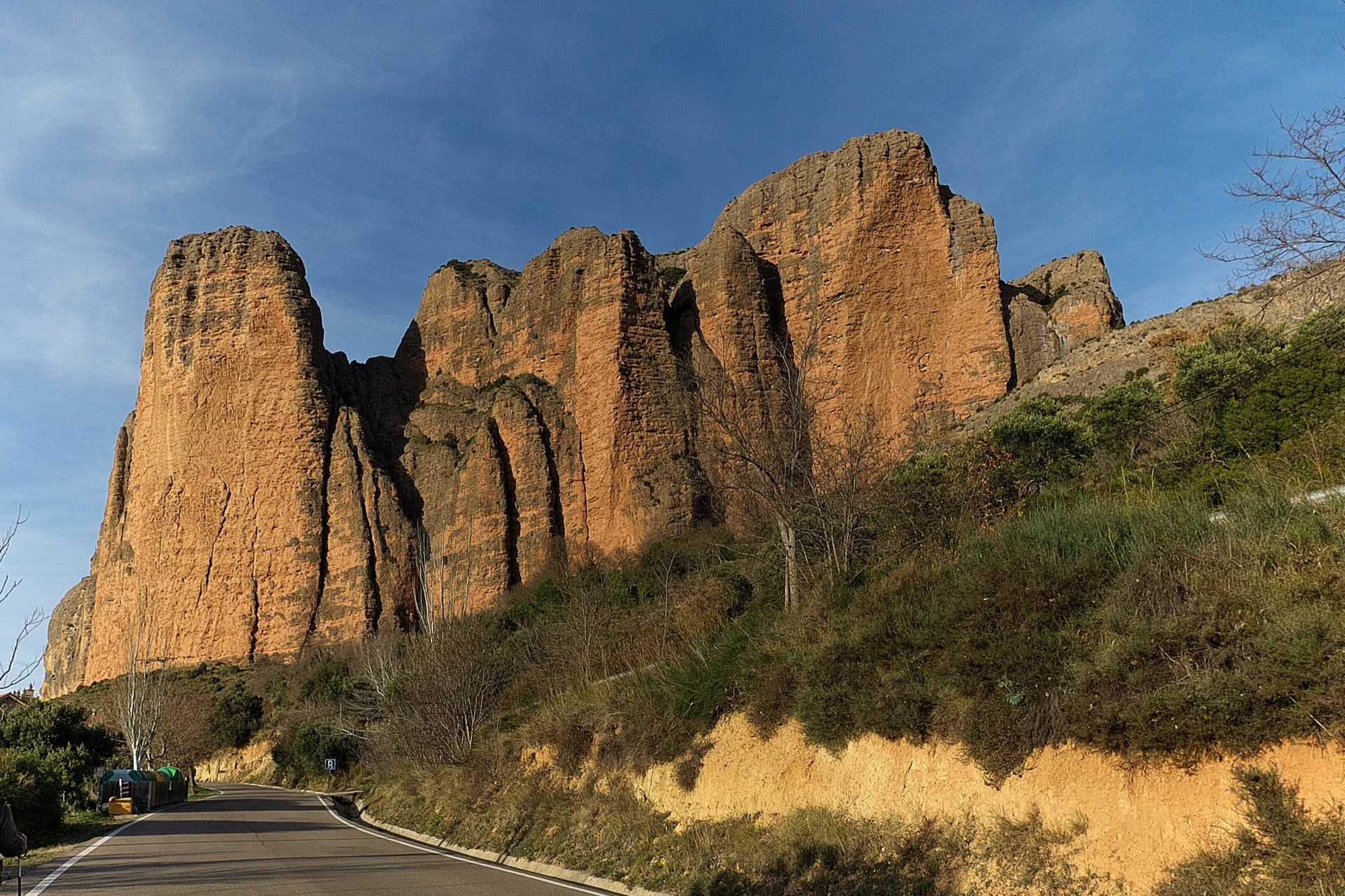
The south faces of the main Riglos wall in low sun, seen from the road into the village: Mallo Pisón on the left and the wall running right towards Mallo Frechín and La Visera at the right-hand end.

Spain · Riglos & Agüero (Mallos)

La Fiesta de los Bíceps

The famous overhanging line up the left side of the Visera, following the white chalk stripe you can see from the village. A polished, technical 7a pitch low down, then five pitches of ever steeper climbing on huge cobbles where the difficulty is staying un-pumped. Bolts are sound but spaced, and above the third belay the only practical way off is the top.

7a7a8 pitches250 m

Read the cautionsCommitting

Researched and aggregated by AI from published sources, last compiled October 2026. It can be wrong, and bolts, anchors and access change: check a current guidebook and read the disclaimer.