Multipitch Atlas

Astragale nocturne

Grande Face · Baou de Saint-Jeannet · France

Bail with caveatsBolting confidence: high

One of the best modern lines on the main face: nine pitches up a pillar left of the central depression, on overhanging stratified walls, thin slabs, a striking arête and a big flake. Sustained at 6a+ to 6c with one 7a pitch that parties find closer to 6c+, and 6b obligatory. The bolting lets you climb relaxed, but there are jammed blocks to treat gently.

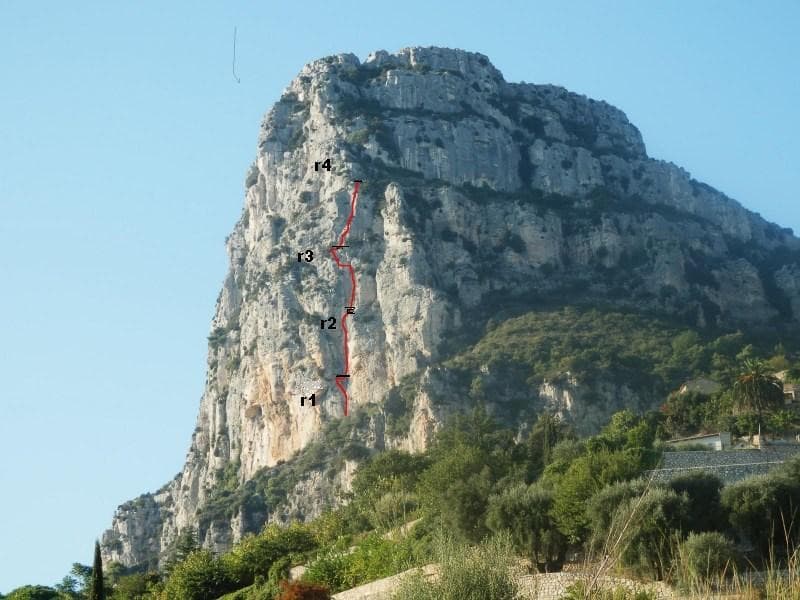
The first ascensionists' photo-topo of Astragale nocturne on the Grande Face of the Baou de Saint-JeannetPhoto: matt06 · CC BY-SA 3.0

Topo

The first ascensionists' photo-topo of Astragale nocturne on the Grande Face of the Baou de Saint-JeannetPhoto: matt06 · CC BY-SA 3.0
Hardest pitch
7a
Pitches
9
Length
230 m
Approach
30 min
Aspect
SW
South-west-facing
Rope
1×60 m
walk-off

The route

Overview

Astragale nocturne takes the pillar left of the big depression that cuts the middle of the Grande Face, starting in a bay of overhanging red rock left of L'Innominata and finishing on the summit. It was bolted in 2014 by three local climbers and has become a reference at its grade. The second pitch is the hardest: a slightly overhanging wall on big holds followed by a thin, steep slab. Higher up the route crosses the ledges of La Dominante, borrows a flake from it, and joins the Pilier du Soleil for a final long pitch of boulder moves between ledges. Grades are fair up to about 6b+ and generous above, according to several parties.

The climbing

Pitch by pitch

Pitches of Astragale nocturne
PitchGradeLengthBoltsNotes
P16b+25 m–A boulder start with a low first bolt, a mantel onto a slab, then a fine crack and small corner with some unstable blocks. Finish by a delicate traverse right under the roof, which is the crux and can be done at A0. The length is a 2023 party's estimate.
P27a35 m–A slightly overhanging corner and wall on big horizontal holds (6b, about 10 m), then a stratified wall and a thin, steep slab (7a, about 20 m) with a delicate mantel to the belay by a shrub. After about 12 m make a short detour right and ignore the rusty bolt straight above. Parties give 6c to 7a; nothing is extreme but it is continuous.
P36a+20 m–A stratified wall, then a crack on the right to the upper strata. The line wanders and you feel you are climbing beside the bolts; one of the pitches parties call a little exposed. Often linked with pitch 4.
P46a30 m–The top of the pillar, first on the left then on the right: an arête to turn and a fine technical wall. A large block above R3 was flagged as very unstable when the route was new; a 2023 party found it solid, but do not touch it. Belay on the comfortable ledges of La Dominante.
P55c25 m2 boltsUp a flake belonging to La Dominante (two bolts; sling a tree above the belay as a runner, 4c). Do not use the Dominante belay on the right: continue up a steep wall on the left (5c, one Petzl hanger at its start) to a belay on Fixe bolts. Two slings are useful to add protection low down. The bolt count is for the shared flake only.
P66b15 m–A long loop out left across a wall of water-drop pockets, then a delicate mantel right onto a sloping ledge. Short, wandering and very well protected.
P76c20 m–Straight up a steep wall on small holds, then along a big flake (one more or less unstable block). Slant left through an awkward, athletic roof to join the Pilier du Soleil at a belay shared with L'Innominata. One section among blocks is a little exposed.
P8320 m–Traverse up and right along a vegetated ledge of about 15 m to a belay on two Fixe bolts. Can be linked with pitch 7.
P96c+30 m–A long pitch of technical slab and steep steps with boulder moves between rests; not sustained, and the hard moves are protected. The last bolt is about 6 m below the top; the belay is on the summit, on a thread plus one bolt.

Getting there

Approach

To the parking

Saint-Jeannet is reached via Carros and Gattières from the north, La Gaude from the south-east, or Vence. Park in one of the car parks at the entrance to the village (about 410 m): driving through the village is reserved for residents and there is no parking inside it. Bus line 510 of the Alpes-Maritimes network is listed on camptocamp as serving the village.

On foot · about 30 min

About 30 min. From the chapel of Notre-Dame-des-Champs take the path behind it to a rock step and go left on the mauve-marked path. Leave it (a 2023 party notes a mauve cross) for a rocky gully that leads to the foot of the main face; climb the gully, with easy climbing in places, and exit left. The start is left of the central depression and left of L'Innominata, in a zone of characteristic overhanging orange-red rock: follow the gold Fixe hangers, with the name on a plaque. A 2026 party who stayed too long on the lower path reached the start from the cave side by about 6 m of slightly exposed scrambling with bolts in place.

Map of the walk-in

  • Crag
  • Parking

Loading map

The point marks the crag, not the exact start of the route.

Coordinates · crag

43.75082, 7.13748

Parking

43.75001, 7.14479

Saint-Jeannet village (camptocamp waypoint 122004); use the car park at the village entrance

Point from camptocamp waypoint 41705 (Baou de Saint-Jeannet)

For your phone or watch

Download GPX

Contains the route point and parking. Opens in most mapping apps and GPS watches.

Points are compiled from published sources, with the precision stated above. They were not surveyed on the ground: check them against a current topo.

Getting down

Descent

On foot, about 45 min: from the summit follow the yellow-marked normal path of the Baou back to the village.

Retreat

Bailing off the route

Bail with caveats

The normal way off is over the top and no source describes the belays as rigged for abseiling. A 2019 party judged that in case of need you could abseil either down the route or, with some improvisation, by using the equipped belays of neighbouring routes. At R4 the route crosses the ledges of La Dominante, an older and easier route, but no source describes escaping along them.

Retreat from
Belays are on two bolts throughout; the lower four pitches are steep and close to the line of ascent.
Point of no return
Not stated. Above R6 the route wanders more (a loop left on pitch 6, a slanting roof on pitch 7 and a ledge traverse on pitch 8), which would complicate abseiling.
Carry
Two ropes or a rope and tag line (pitch 2 is about 35 m), plus maillons and cord to leave at the belays.
Basis
Part stated, part inferredThe possibility of abseiling is one party's stated opinion (2019); the gear needed and the difficulty higher up are inferred from the pitch descriptions.

Partly inferred from the route facts

Safety

Hazards

  • Jammed and stacked blocks on several pitches. Most are reported solid, but the block above R3 and one on the pitch 7 flake are specifically flagged.
  • Pitch 5 has only two bolts on its lower, easy flake, because it is shared with an older route.
  • The top-out of pitch 9 is about 6 m above the last bolt on easy ground.
  • Unstable blocks at the end of pitch 1; keep the belayer out of the fall line.

Sun and weather

Conditions

South-west facing between 600 and 800 m. Parties report good conditions from late September to April; a November 2019 party was battered by wind, and a March 2026 party climbed comfortably in a jumper under cloud. Light rain did not wet the steep second pitch.

Usual season · Jan to May, Oct to Dec

Sun on the wall · SW-facing

Working out the sunlit hours for this month.

  • January (usual season): not yet worked out
  • February (usual season): not yet worked out
  • March (usual season): not yet worked out
  • April (usual season): not yet worked out
  • May (usual season): not yet worked out
  • June: not yet worked out
  • July: not yet worked out
  • August: not yet worked out
  • September: not yet worked out
  • October (usual season): not yet worked out
  • November (usual season): not yet worked out
  • December (usual season): not yet worked out

Sun on the wallDaylight, wall in shade● Usual season

Estimated from the wall's aspect only. Ignores surrounding terrain, gullies and the wall's exact shape. Clock times are local to the wall (Central European time), for the 15th of each month.

Climate figures for Baou de Saint-Jeannet are not available yet

What to carry

Gear

15 quickdraws plus belay gear. Camptocamp does not specify a rope; parties climb on a single rope, and a 60 m lets you link pitches 3 and 4. Two slings for the tree and flake on pitch 5. A 0.25 cam can protect the exit of pitch 9, though a 2023 party found it unnecessary. Helmet.

Checklist

Quickdraws
15
Rope
1×60 m (walk-off)
Helmet
One each
Maillons or spare karabiners
To leave behind if you retreat
Cord
Mentioned for retreat

Derived from the route data; check it against a current topo

From climbers

Reader reports

Reader reports are not being collected yet. Until they are, check a current topo and the local club or guidebook publisher for recent changes to Astragale nocturne.

Worth knowing

Tips

  • Allow 3 to 4 h 30 on the route.
  • The obligatory grade is 6b; a 2023 party suggests climbing 6c comfortably to enjoy it and limit the exposure.
  • Pitches 3 and 4, 5 and 6, and 7 and 8 were linked by a 2024 party.

Open questions

Where sources disagree

  • Length: 200 m of climbing on camptocamp, 230 m on the first ascensionists' topo. The topo figure is used.
  • Pitch 2: 7a on both topos; parties in 2023 and 2024 found it 6c to 6c+, a 2019 party found it hard.
  • Pitch 9 is 6c+ on the topos; a 2024 party mentions a tough boulder move, others find the upper grades generous.
  • Pitch lengths are not published; those given are one 2023 party's estimates and add up to 215 m.
  • Overall grade: ED- on camptocamp, TD+ according to 2024 parties.
  • The first ascensionists' blog post (revalpin.com), linked from camptocamp, is no longer online and could not be checked.

Provenance

Sources

Same area

More in Baou de Saint-Jeannet

All routes in Baou de Saint-Jeannet
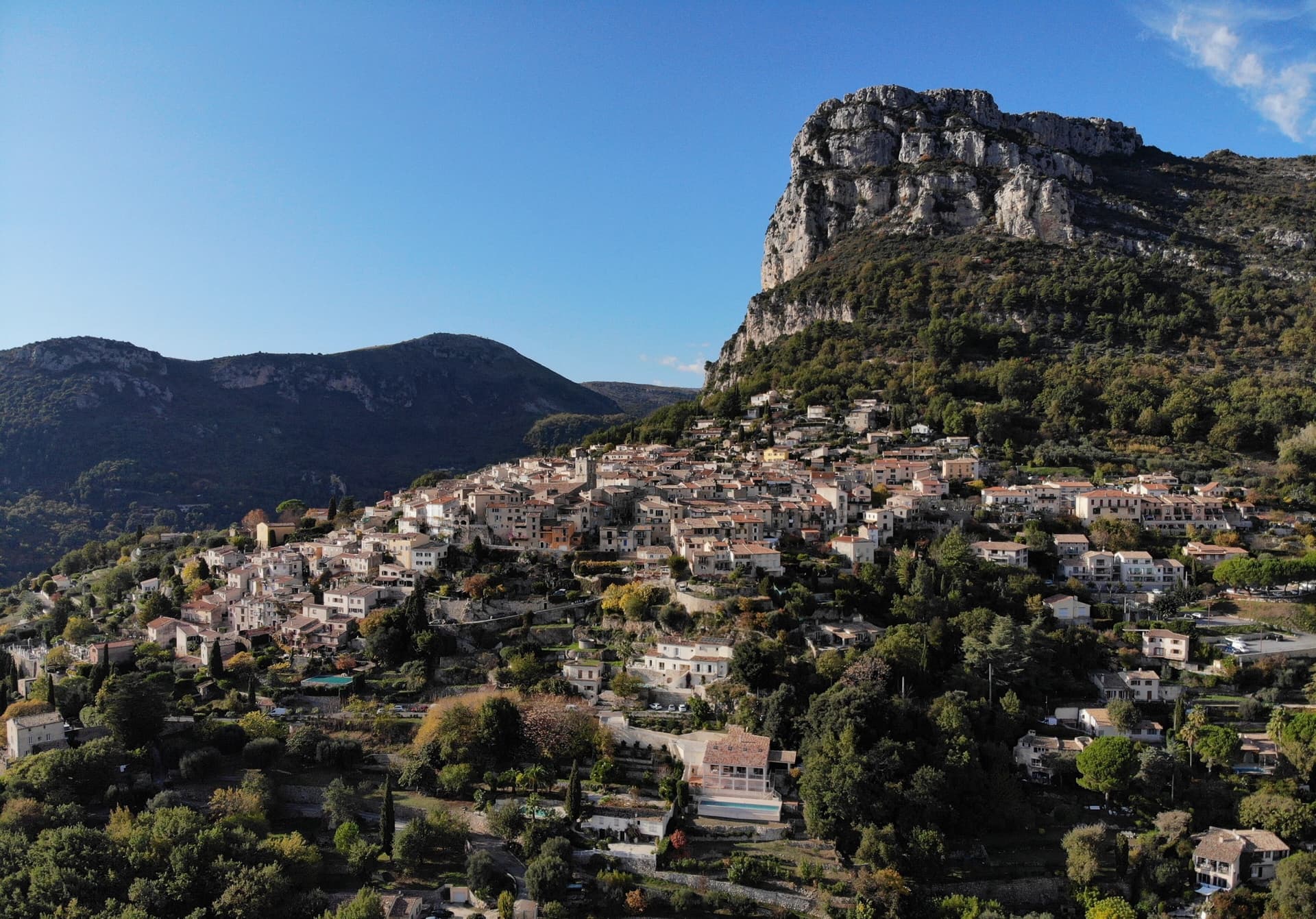
The village of Saint-Jeannet beneath the main cliff of the Baou de Saint-Jeannet; Jardins secrets is on this Grande Face, the exact line is not marked.

France · Baou de Saint-Jeannet

Jardins secrets

One of the essential long routes of the Baou: seven pitches that hardly drop below the sixth grade, each with a different problem, from thin slab to a steep bulge and a superb layback corner at 6c. The single 7a section on pitch 2 is closely bolted and can be aided. Expect a few loose blocks and a scrappy link pitch across the Vernet ledge.

7a7 pitches200 m

Read the cautions
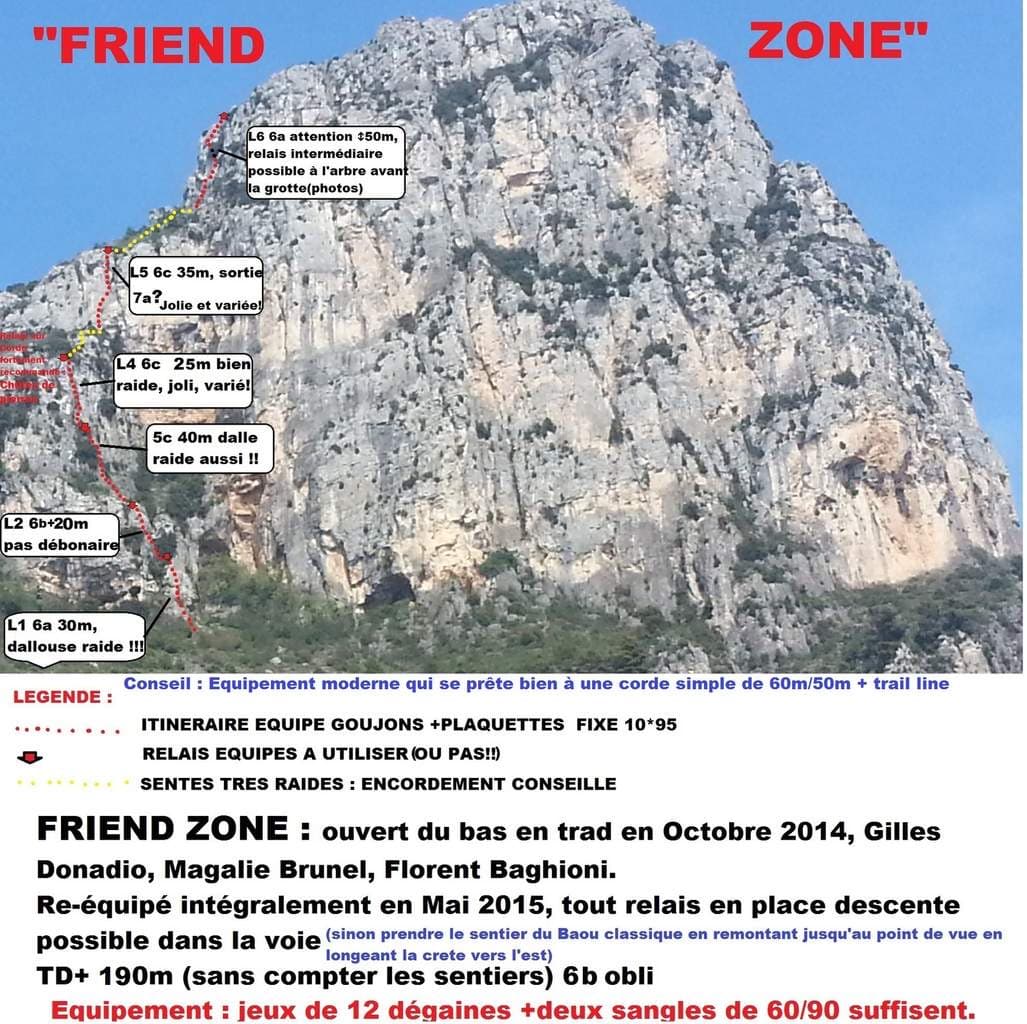
The opener's photo-topo of Friend Zone on the west side of the Baou de Saint-Jeannet, with pitch grades and lengths

France · Baou de Saint-Jeannet

Friend Zone

A modern bolted line up the left side of the Baou, starting beside the Péril Jaune cave: six varied pitches on unpolished rock, with a steep 6c wall and a fine crack and corner finishing with one hard move (7a on the topo, 6c or 6c+ to most parties). Two walking transitions through scrub break the climbing, so it has less exposure than the routes on the main face.

7a6 pitches230 m

The equippers' photo-topo of Entrée libre (red) beside La Tonton Walker and the Arête S on the south pillar of the Baou de Saint-Jeannet

France · Baou de Saint-Jeannet

Entrée libre (Intégrale 2015)

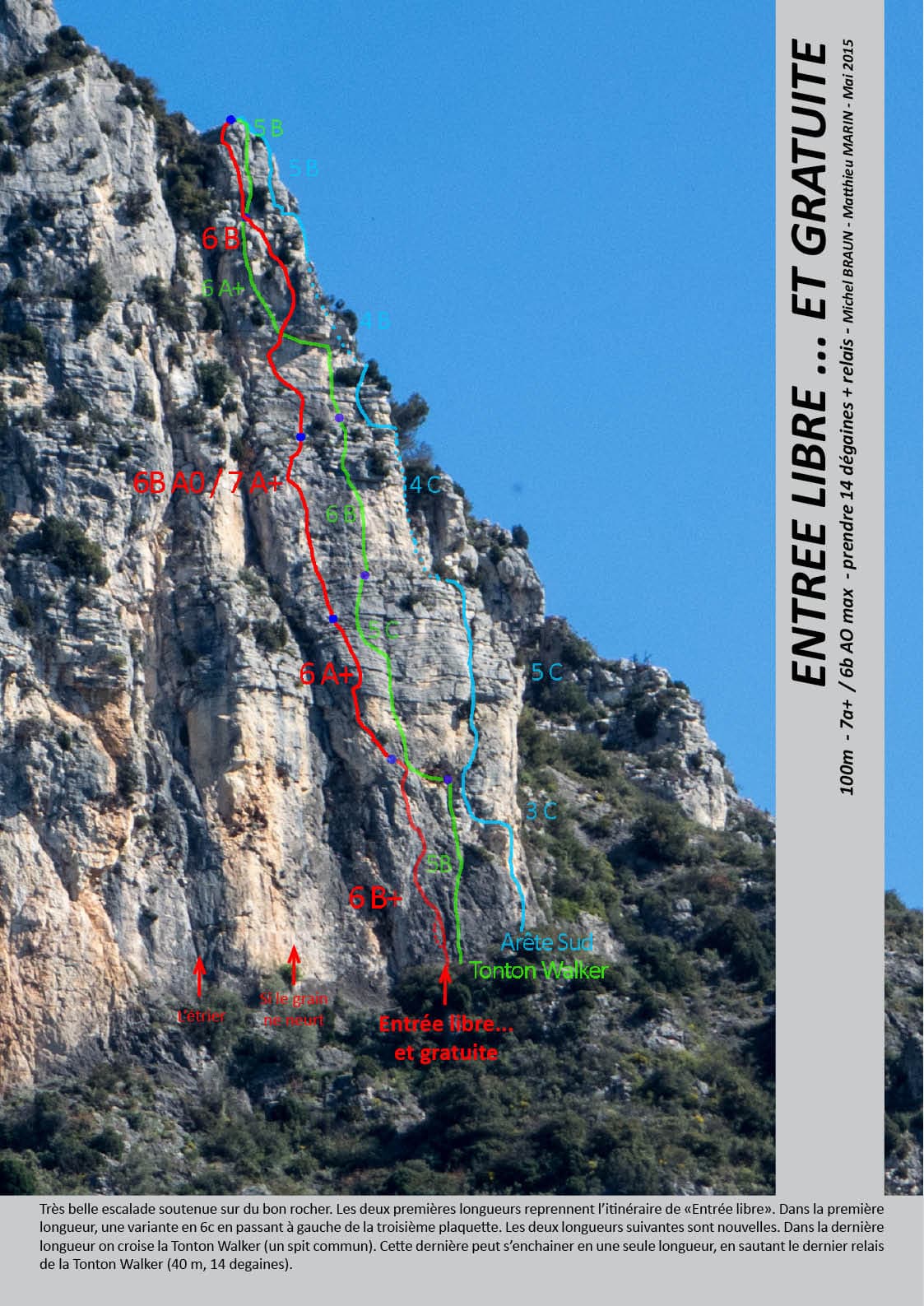
A short, sustained and very well bolted line on the pillar left of the Arête S, parallel to La Tonton Walker. Thin walls, a steep stratified pitch on big holds and one blank slab move of 7a that most people pull through. The friendliest introduction to the harder routes of the Baou, and easy to extend to the summit by one of the routes above the Vire Vernet.

7a5 pitches100 m

L'étrier drawn on the south-west face of the Baou de Saint-Jeannet, with its four belays

France · Baou de Saint-Jeannet

L'étrier

The most accessible bolted multipitch on the Baou: four homogeneous pitches of French 5+ with one move of 6a, up a crack, corners and sculpted stratified walls, with an airy traverse on pitch 3. Short enough for half a day. Local grades are stiff, the first pitch is polished and the easy sections are run-out.

6a4 pitches120 m

Read the cautions

Around 7a · about 9 pitches

Similar elsewhere

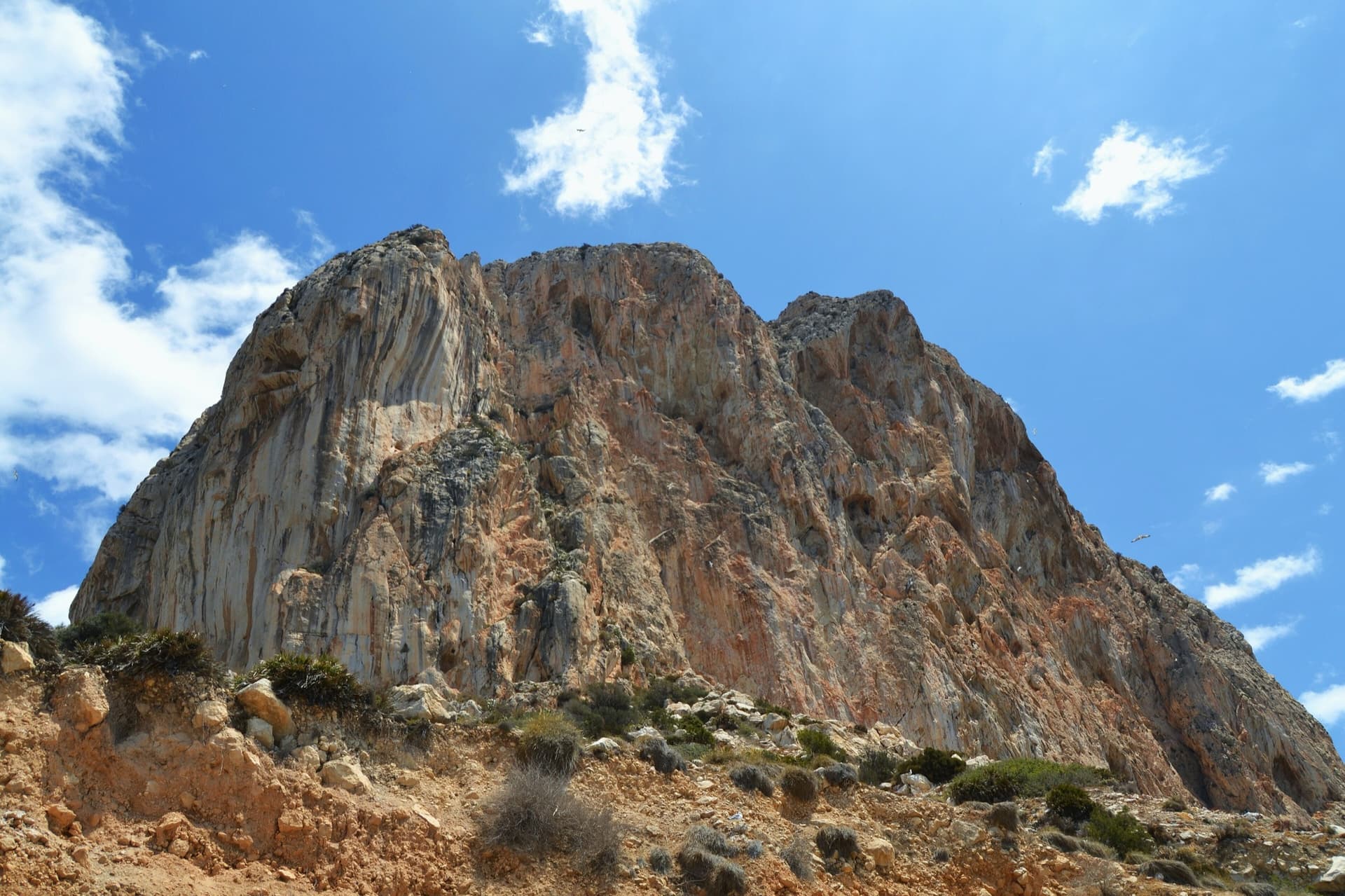
The south face of the Peñón de Ifach seen from the foot of the wall, Calpe. Mare Nostrum takes the right-hand side of this face.

Spain · Costa Blanca (Peñón de Ifach)

Mare Nostrum

Nine steep pitches up the wildly sculpted right side of the south face, overhanging almost throughout. Two long 7a pitches open the route and a third comes near the top, and even the 6a+ pitches are athletic. The rock is covered in holds and much less polished than the classics to the left.

7a9 pitches310 m

Read the cautions

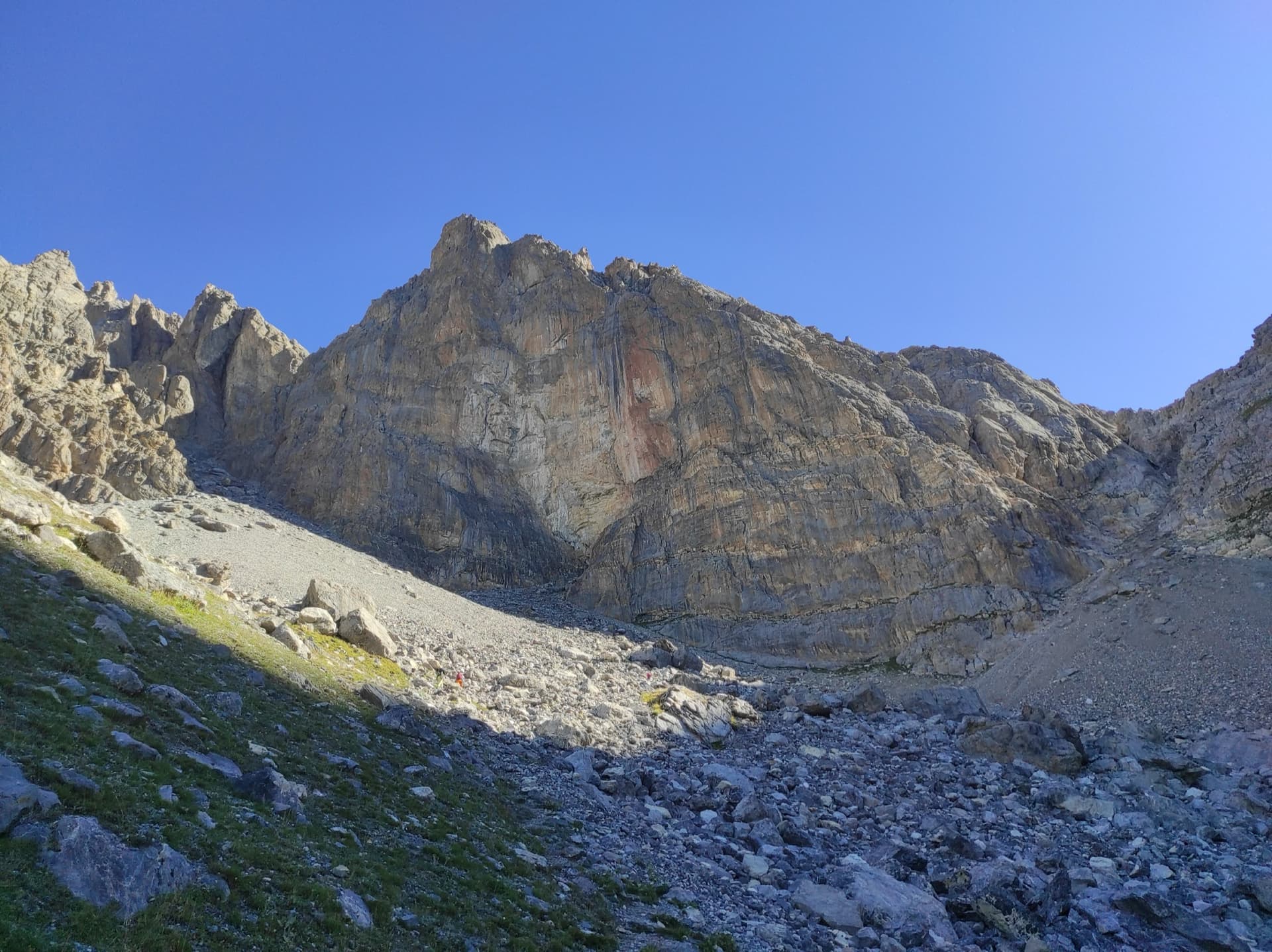
The face of the Tour Termier above its scree bowl in the Cerces; Feu Sacré climbs this wall, the line is not marked.

France · Cerces

Feu Sacré

The classic hard route of the Tour Termier: ten steep, technical pitches on superb compact limestone at 3000 m, a short walk from the Col du Galibier road. It is never athletic but sustained at 6a+ to 6b, with a 7a pitch and a 6c move that both go at 6a A0. Cold, wind and thin footwork make it feel bigger than the numbers.

7a10 pitches320 m

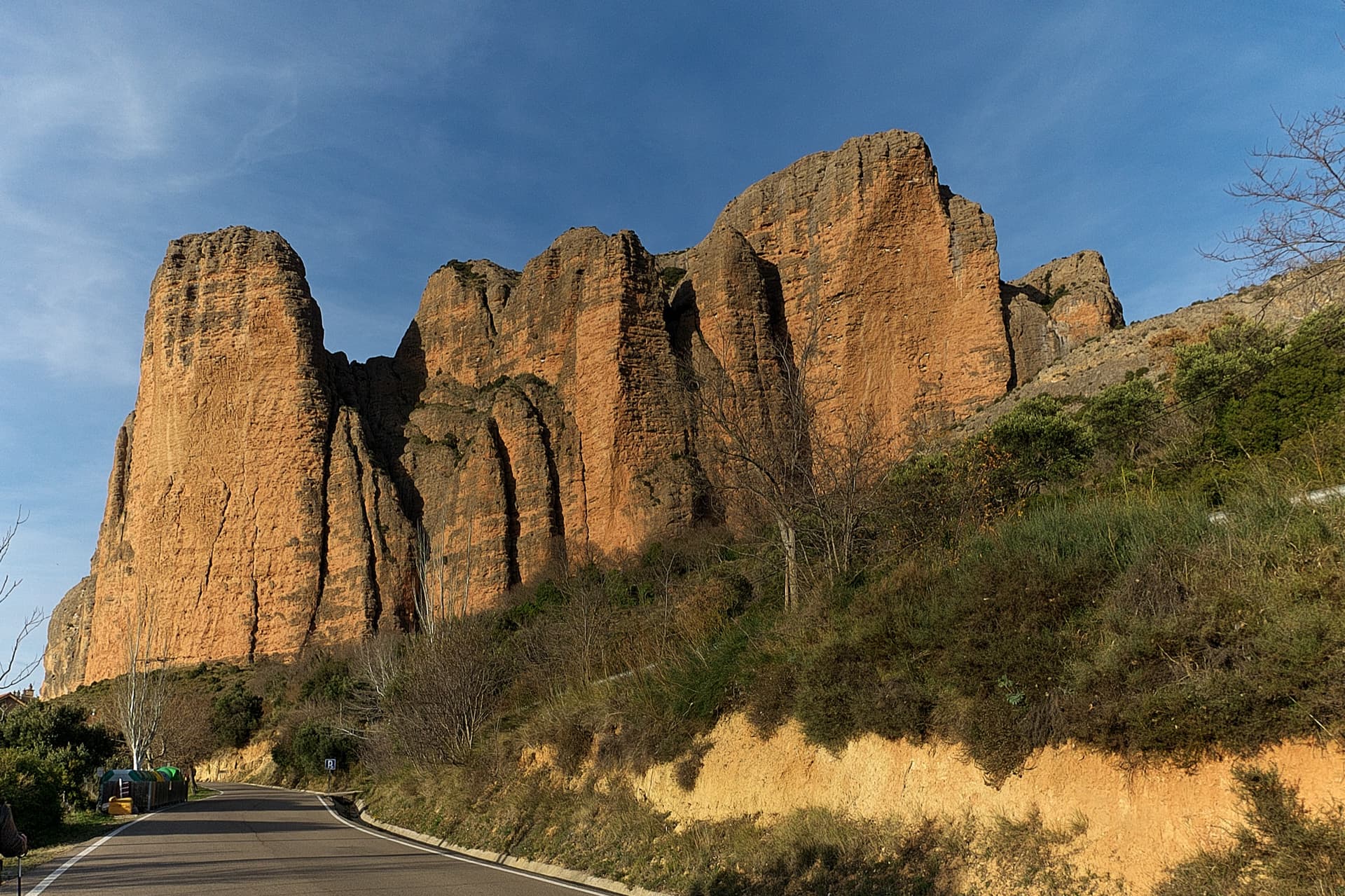
The south faces of the main Riglos wall in low sun, seen from the road into the village: Mallo Pisón on the left and the wall running right towards Mallo Frechín and La Visera at the right-hand end.

Spain · Riglos & Agüero (Mallos)

La Fiesta de los Bíceps

The famous overhanging line up the left side of the Visera, following the white chalk stripe you can see from the village. A polished, technical 7a pitch low down, then five pitches of ever steeper climbing on huge cobbles where the difficulty is staying un-pumped. Bolts are sound but spaced, and above the third belay the only practical way off is the top.

7a8 pitches250 m

Read the cautionsCommitting

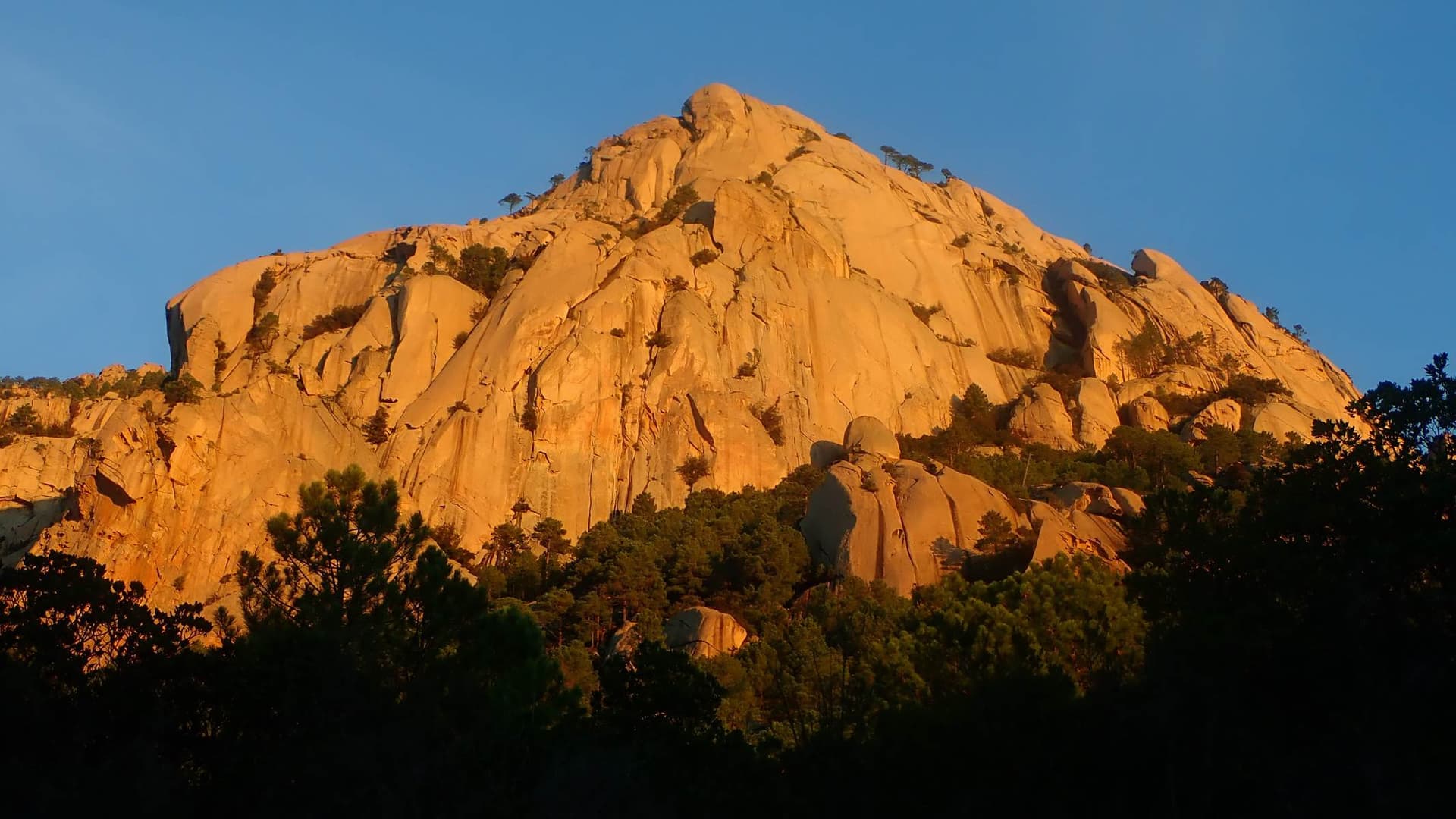
The granite dome of Teghie Lisce glowing at sunrise above the pines of Bavella; Acqua in bocca climbs its slabs, the line is not marked.

France · Bavella

Acqua in bocca

A sampler of everything Bavella granite does: a technical 7a wall, layback and jamming cracks, an off-width, a squeeze slot behind a tree, and three pitches of pure friction slab to finish. Bolted well enough to climb on quickdraws, which is rare here. The wide pitches are awkward and bruising if you are not used to the style.

7a10 pitches300 m

Read the cautions

Compiled from published sources and last verified October 2026. Bolts, anchors and access change. Climbing is dangerous and you are responsible for your own decisions: check a current topo and read the disclaimer.