Multipitch Atlas

Friend Zone

Grotte du Péril Jaune sector (west side of the Grande Face) · Baou de Saint-Jeannet · France

Bail with caveatsBolting confidence: high

A modern bolted line up the left side of the Baou, starting beside the Péril Jaune cave: six varied pitches on unpolished rock, with a steep 6c wall and a fine crack and corner finishing with one hard move (7a on the topo, 6c or 6c+ to most parties). Two walking transitions through scrub break the climbing, so it has less exposure than the routes on the main face.

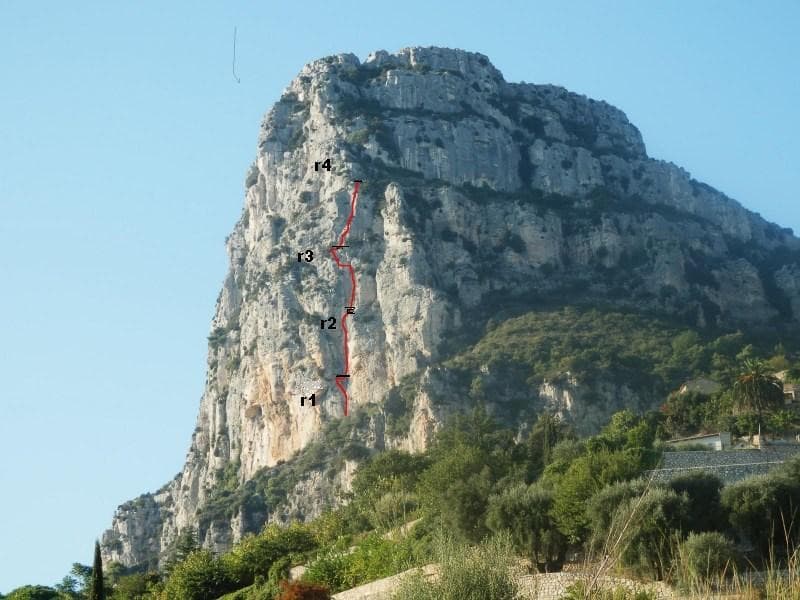
The opener's photo-topo of Friend Zone on the west side of the Baou de Saint-Jeannet, with pitch grades and lengthsPhoto: Florent-B · CC BY-SA 3.0

Topo

The opener's photo-topo of Friend Zone on the west side of the Baou de Saint-Jeannet, with pitch grades and lengthsPhoto: Florent-B · CC BY-SA 3.0
Hardest pitch
7a
Pitches
6
Length
230 m
Approach
20 min
Aspect
SW
South-west-facing
Rope
1×50 m
walk-off

The route

Overview

Friend Zone climbs the left-hand end of the Baou, from the Péril Jaune cave to the summit plateau. It was opened ground-up on nuts and cams in 2014, found to be poor value in that style, and then cleaned and bolted throughout by one of the first ascensionists the following spring. The result is a homogeneous sport route in the 6a to 6c range with one harder move at the top of pitch 5. The rock is new and rough, without the polish of the Baou's older classics, but it still sheds the odd flake and the ledges hold gravel. The obligatory grade is about 6b+.

The climbing

Pitch by pitch

Pitches of Friend Zone
PitchGradeLengthBoltsNotes
P16a35 m8 boltsA pleasant slab on a pillar, then left into steeper, more awkward climbing (5c+) and a boulder move of 6a to finish. Belay on the left-hand tree on a small terrace (two linked slings). Bolts continue straight up the spur: do not follow them. A 2025 party thinks the pitch is shorter than stated.
P26b+20 m7 boltsLeave leftwards up a compact grey wall beside a slanting crack, with two awkward moves in a row at the start, then traverse left and climb a sustained steep wall on small edges. The difficulties are concentrated at the first three bolts. The crack can be wet and earthy. Belay on a comfortable step, two bolts linked with cord.
P35c40 m7 boltsA transitional slab. Where two bolt lines diverge, take the left one ('Les 3 salopards' goes right) up a steepening wall to trees. Go through the trees to a belay on two linked slings in a small orange niche. Parties rate it 5 to 5c and find it vegetated.
P46c30 m9 boltsTraverse left through an overhanging section, then climb the slab on the left of a steepening corner, with the crux near the top: a long reach between good holds. One sudden gap between bolts on easy ground higher up. Take care mounting the ledge, which is covered in loose gravel, directly above the belayer. Belay on two linked bolts, awkward, among trees. Then scramble up between blocks close to the ridge to the start of pitch 5.
P57a30 m13 boltsA steep first wall (6b), then a superb crack rising rightwards to the final corner, which overhangs slightly and is passed with one hard bridging move on the last two bolts. Most parties give the move 6c or 6c+, and it can be aided. Some stacked blocks in the crack move: climb gently. Belay at the top of the corner on two linked bolts. Then walk about 80 m across the sheep enclosure to a white and yellow wall with a tree halfway up.
P66a40 m10 boltsFollow bolts and a large peg up a corner to a big holm oak, cross it, pass an intermediate belay and climb through a kind of cave under large blocks to exit on the summit. Belay up and right on two linked bolts, one of which was reported as needing replacement. The pitch is close to 50 m by the Spanish-language text and can be split at the tree or in the cave.

Getting there

Approach

To the parking

Saint-Jeannet is reached via Carros and Gattières from the north, La Gaude from the south-east, or Vence. Park in one of the car parks at the entrance to the village (about 410 m): driving through the village is reserved for residents and there is no parking inside it. Bus line 510 of the Alpes-Maritimes network is listed on camptocamp as serving the village.

On foot · about 20 min

About 20 min (parties report 30 min to 1 h including gearing up). Cross the village to the chapel of Notre-Dame-des-Champs (also called Notre-Dame des Baous) and take the concrete path behind it. After a few minutes a short rock step on the left leads onto a path with mauve paint marks; follow it for about ten minutes, passing the gully that leads up to the right-hand part of the face. A steep cairned track on the right then climbs to the foot of the Grotte du Péril Jaune. Just before the fixed rope that leads up into the cave, turn left: the start is a low-angled slab on a grassy pillar a few metres from the path, with bolts visible and 'FZ' written at the foot.

Map of the walk-in

  • Crag
  • Parking

Loading map

The point marks the crag, not the exact start of the route.

Coordinates · crag

43.75316, 7.13471

Parking

43.75001, 7.14479

Saint-Jeannet village (camptocamp waypoint 122004); use the car park at the village entrance

Point from camptocamp waypoint 103734 (Grotte du Péril Jaune, the cave the route starts beside)

For your phone or watch

Download GPX

Contains the route point and parking. Opens in most mapping apps and GPS watches.

Points are compiled from published sources, with the precision stated above. They were not surveyed on the ground: check them against a current topo.

Getting down

Descent

On foot, about 45 to 50 min. Walk up to the summit of the Baou and take the normal hiking path (yellow marks, then the GR) back down to the village. A 2022 party came down through the ressauts on the south-east side instead.

Retreat

Bailing off the route

Bail with caveats

The opener's topo states that every belay is in place and that descent down the route is possible, and the Spanish-language camptocamp text says many belays are equipped for abseiling. No party reports having done it. Belays on trees and on bolts joined with cord mean you should expect to leave slings or maillons. The two walking transitions (after pitch 4 and after pitch 5) put you on vegetated ledges near the ridge, but no source describes an escape on foot from them.

Retreat from
Any belay according to the opener's topo; R1 and R3 are slings on trees.
Point of no return
None stated. Above pitch 5 only one pitch of 6a remains, so going up is usually simpler.
Carry
With a single 50 m rope you can only abseil 25 m, which is less than most pitches (30 to 40 m), so carry a second rope or a tag line if you want the option, plus slings and maillons (the opener's topo itself suggests a single rope with a trail line).
Basis
Part stated, part inferredAbseil descent is stated on the opener's topo and in the Spanish camptocamp text; the rope and gear advice is inferred from the pitch lengths and belay descriptions.

Partly inferred from the route facts

Safety

Hazards

  • Loose material: flakes on pitch 2, a pile of gravel on the ledge below R4 and movable blocks in the crack of pitch 5. Do not stand under the leader on these pitches.
  • After storms the ledges collect stones and branches; a 2022 party found the exit of pitch 4 unnerving for that reason.
  • The last belay had one bolt that needed changing according to camptocamp; back it up.
  • The belay at R1 is easy to overshoot: stop at the trees on the left, not on the spur above.

Sun and weather

Conditions

South-west and west facing between about 470 and 800 m. This side stays in the shade later than the main face: a late-June party climbed in shade except for part of pitch 4, and an October party enjoyed the crux pitch in the evening sun. The crack on pitch 2 seeps after rain. It can be windy at the belays in winter.

Usual season · Jan to May, Oct to Dec

Sun on the wall · SW-facing

Working out the sunlit hours for this month.

  • January (usual season): not yet worked out
  • February (usual season): not yet worked out
  • March (usual season): not yet worked out
  • April (usual season): not yet worked out
  • May (usual season): not yet worked out
  • June: not yet worked out
  • July: not yet worked out
  • August: not yet worked out
  • September: not yet worked out
  • October (usual season): not yet worked out
  • November (usual season): not yet worked out
  • December (usual season): not yet worked out

Sun on the wallDaylight, wall in shade● Usual season

Estimated from the wall's aspect only. Ignores surrounding terrain, gullies and the wall's exact shape. Clock times are local to the wall (Central European time), for the 15th of each month.

Climate figures for Baou de Saint-Jeannet are not available yet

What to carry

Gear

14 quickdraws and a single 50 m rope (a 2025 party used 55 m). Two or three long slings for the tree belays; the opener's topo suggests two 60 to 90 cm slings. No cams or nuts needed. Helmet.

Checklist

Quickdraws
14
Rope
1×50 m (walk-off)
Helmet
One each
Slings
Mentioned for retreat
Maillons or spare karabiners
To leave behind if you retreat

Derived from the route data; check it against a current topo

From climbers

Reader reports

Reader reports are not being collected yet. Until they are, check a current topo and the local club or guidebook publisher for recent changes to Friend Zone.

Worth knowing

Tips

  • Allow 2 h 30 to 4 h on the route.
  • The crux of pitch 5 is short and bolted closely enough to pull through; a sling for a foot loop helps.
  • The two-pitch route 'La goutte au nez' (6b) lies on the way down and makes a good extra.

Open questions

Where sources disagree

  • Crux grade: 7a on camptocamp's French text and the opener's topo (with a question mark); the Spanish-language text gives 6b then 6c (7a?), and parties in 2017, 2019, 2021 and 2022 give 6c to 6c+.
  • Pitch 1 is 6a on camptocamp and the topo but 5c or 5+ to several parties; pitch 4 is 6c on camptocamp and 6b+ (/c?) in the Spanish text.
  • Pitch lengths differ between camptocamp (35, 20, 40, 30, 30, 40 m) and the opener's topo (30, 20, 40, 25, 35, 50 m). Camptocamp's are used.
  • Bolt size: 10 mm on the opener's topo, 12 mm according to a February 2025 party.
  • Quickdraws: 14 on camptocamp, 12 on the opener's topo.
  • Total height: 230 m on camptocamp, 190 m of climbing (paths excluded) on the opener's topo.

Provenance

Sources

Same area

More in Baou de Saint-Jeannet

All routes in Baou de Saint-Jeannet
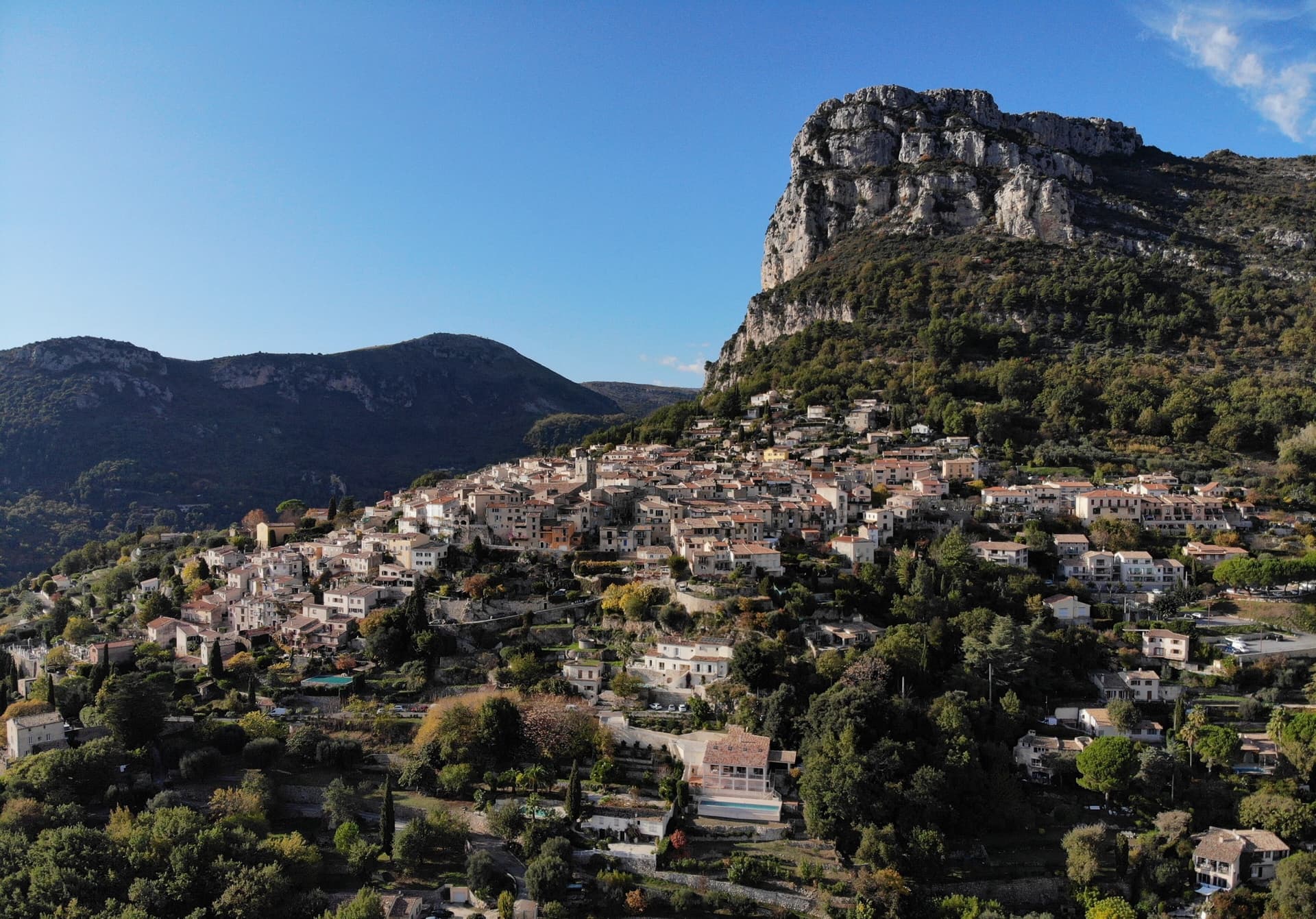
The village of Saint-Jeannet beneath the main cliff of the Baou de Saint-Jeannet; Jardins secrets is on this Grande Face, the exact line is not marked.

France · Baou de Saint-Jeannet

Jardins secrets

One of the essential long routes of the Baou: seven pitches that hardly drop below the sixth grade, each with a different problem, from thin slab to a steep bulge and a superb layback corner at 6c. The single 7a section on pitch 2 is closely bolted and can be aided. Expect a few loose blocks and a scrappy link pitch across the Vernet ledge.

7a7 pitches200 m

Read the cautions
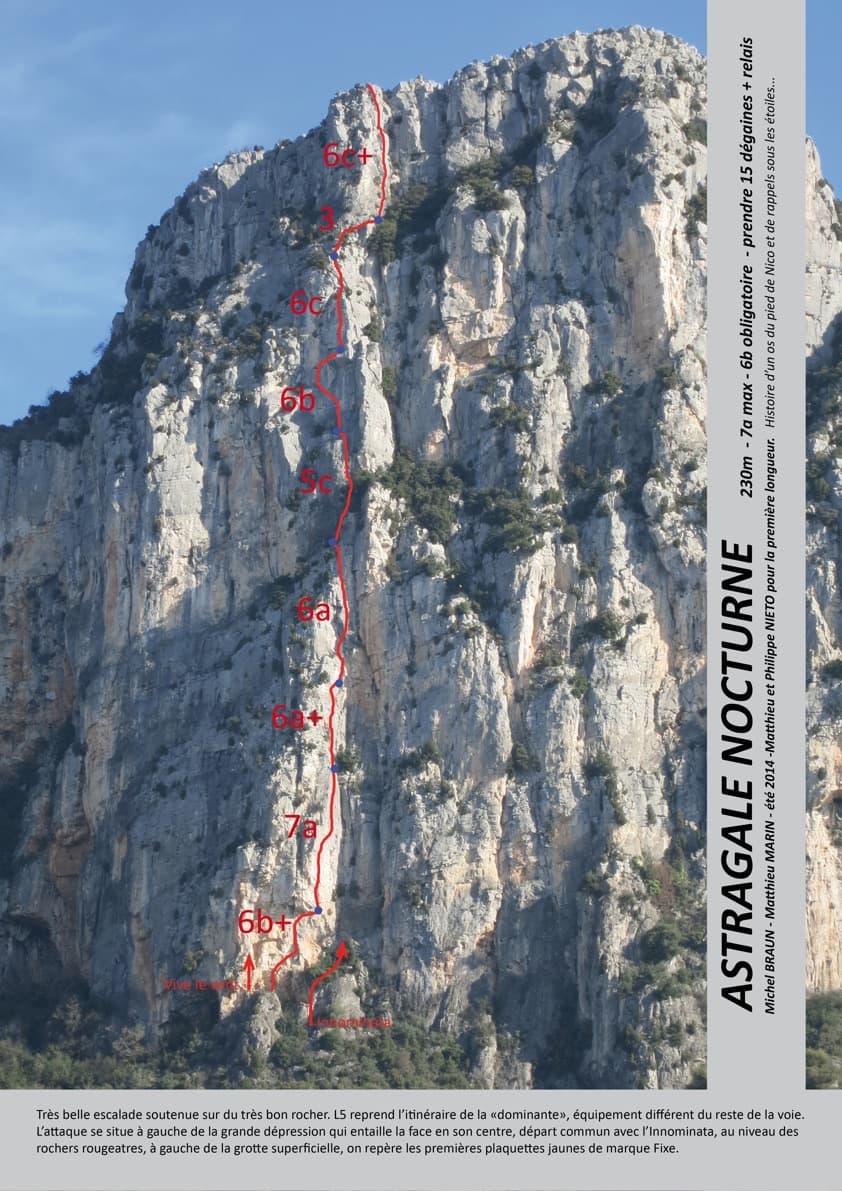
The first ascensionists' photo-topo of Astragale nocturne on the Grande Face of the Baou de Saint-Jeannet

France · Baou de Saint-Jeannet

Astragale nocturne

One of the best modern lines on the main face: nine pitches up a pillar left of the central depression, on overhanging stratified walls, thin slabs, a striking arête and a big flake. Sustained at 6a+ to 6c with one 7a pitch that parties find closer to 6c+, and 6b obligatory. The bolting lets you climb relaxed, but there are jammed blocks to treat gently.

7a9 pitches230 m

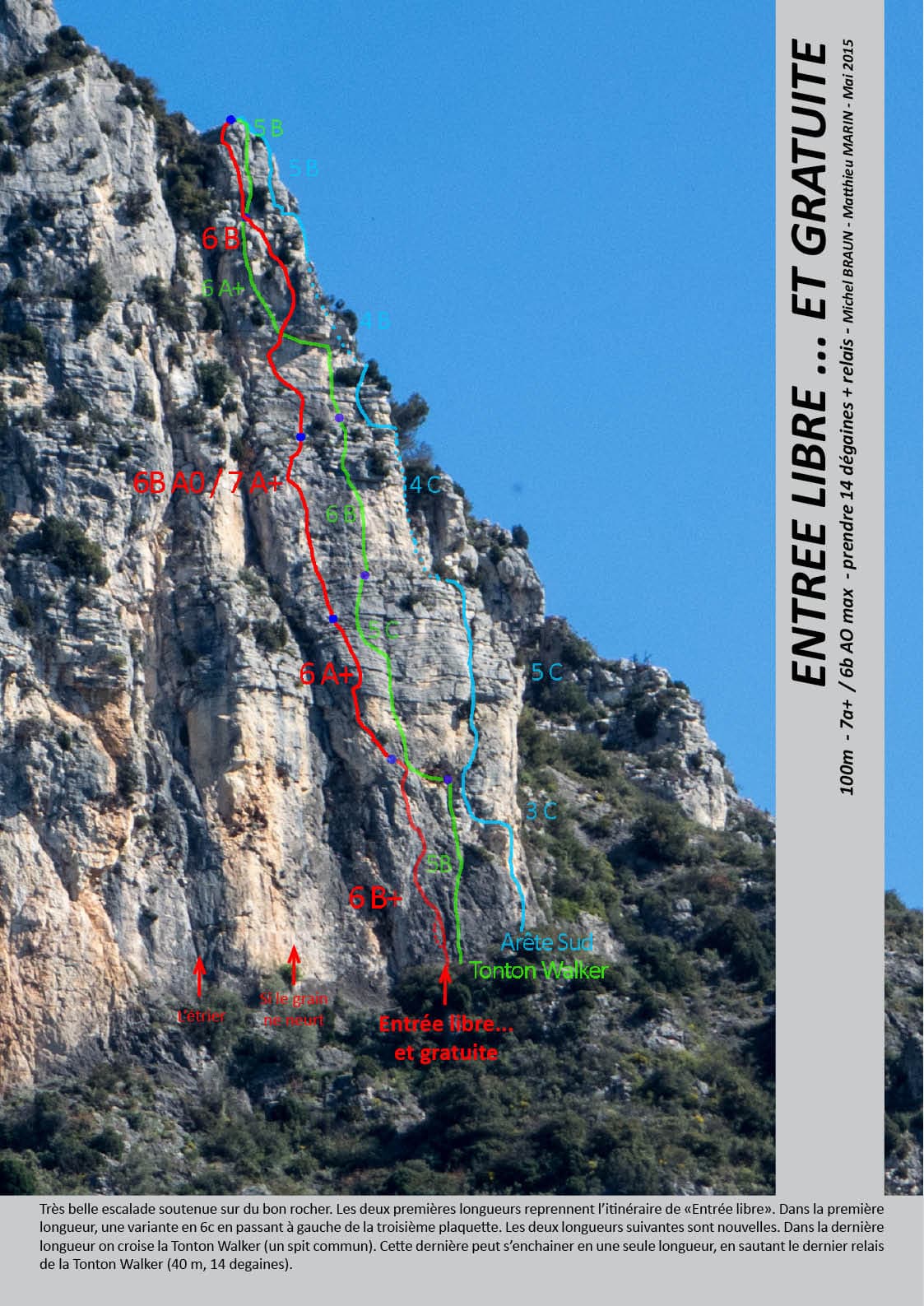
The equippers' photo-topo of Entrée libre (red) beside La Tonton Walker and the Arête S on the south pillar of the Baou de Saint-Jeannet

France · Baou de Saint-Jeannet

Entrée libre (Intégrale 2015)

A short, sustained and very well bolted line on the pillar left of the Arête S, parallel to La Tonton Walker. Thin walls, a steep stratified pitch on big holds and one blank slab move of 7a that most people pull through. The friendliest introduction to the harder routes of the Baou, and easy to extend to the summit by one of the routes above the Vire Vernet.

7a5 pitches100 m

L'étrier drawn on the south-west face of the Baou de Saint-Jeannet, with its four belays

France · Baou de Saint-Jeannet

L'étrier

The most accessible bolted multipitch on the Baou: four homogeneous pitches of French 5+ with one move of 6a, up a crack, corners and sculpted stratified walls, with an airy traverse on pitch 3. Short enough for half a day. Local grades are stiff, the first pitch is polished and the easy sections are run-out.

6a4 pitches120 m

Read the cautions

Around 7a · about 6 pitches

Similar elsewhere

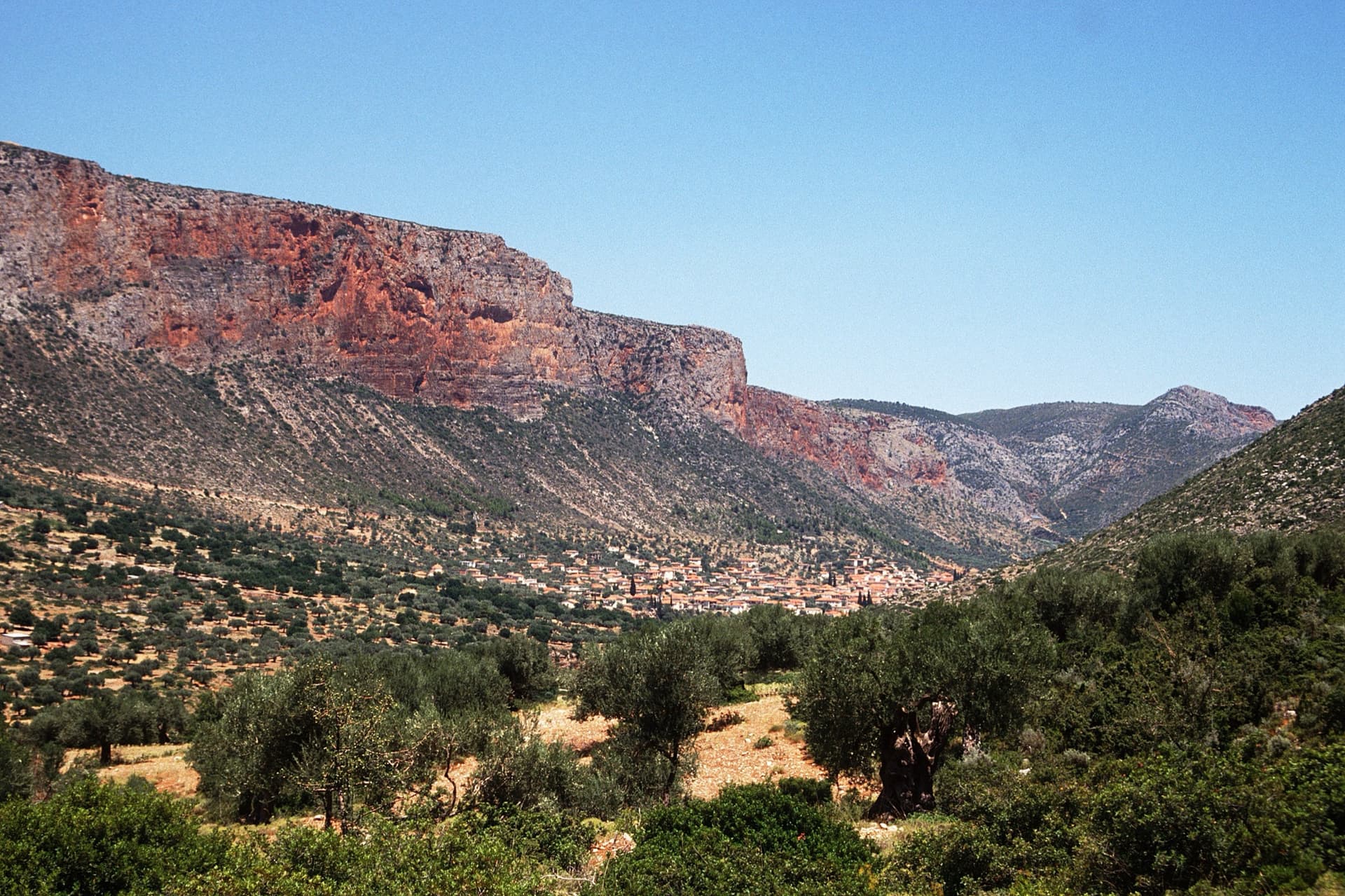
Kokkinovrachos above Leonidio seen from the west; the big sport multi-pitches climb the red wall above the town

Greece · Leonidio & Kyparissi

Ramisi Rock

The route that opened Kokkinovrachos to sport multi-pitch climbing: six long pitches up the centre-right of the red wall, sustained at 6b+ to 6c with one technical 7a crux that can be aided on two bolts. Rated three stars locally and more sustained than Aramis.

7a6 pitches180 m

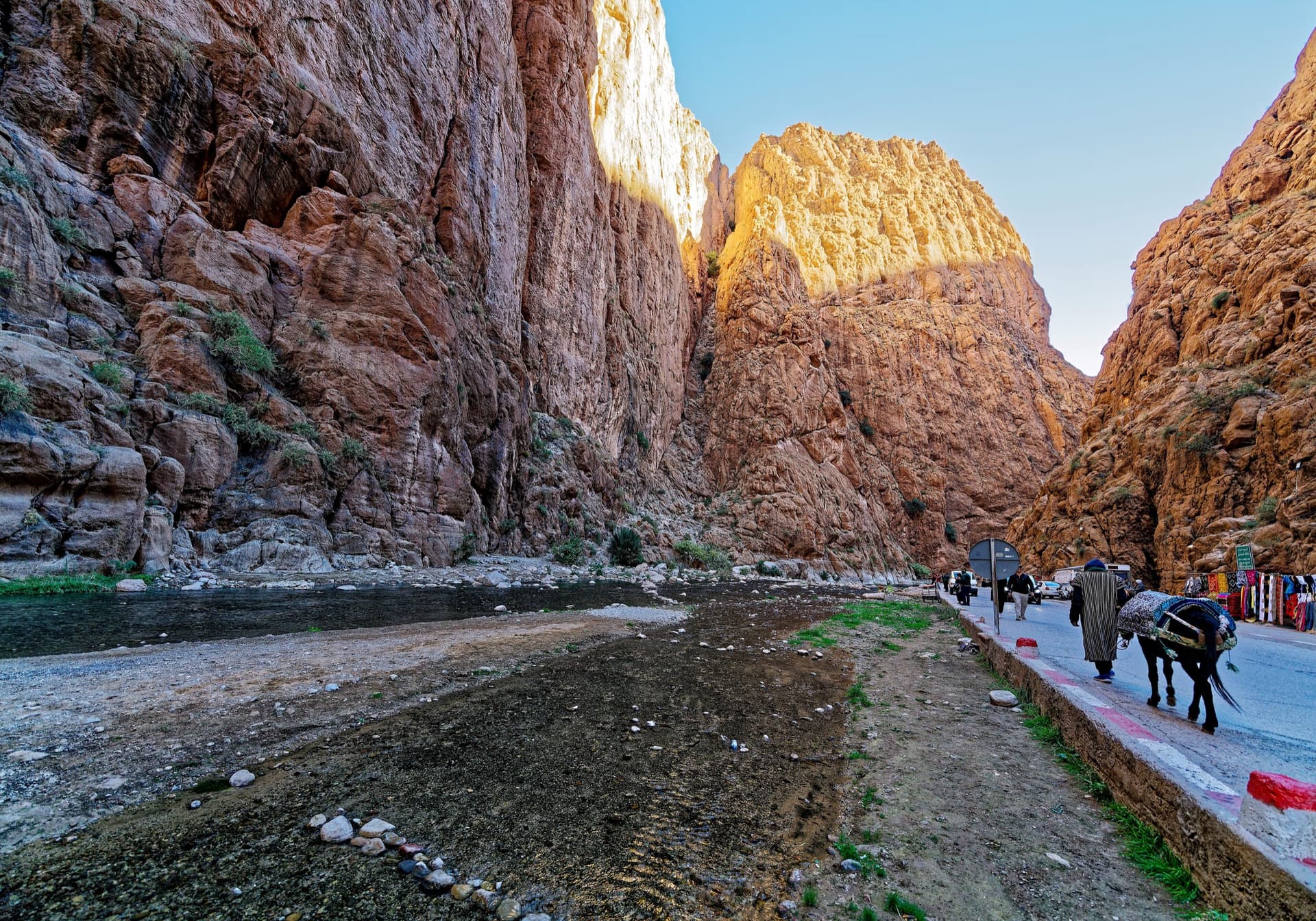
The narrows of the Todra Gorge in late afternoon light, a few minutes' walk upstream of the Mansour wall; a view of the gorge, not of this route's wall.

Morocco · Todra Gorge (Todgha)

China Perdida

Steep, fingery wall climbing that starts with your feet almost in the stream at the gorge entrance. The 7a second pitch is hard for only 2 to 3 metres and can be swapped for a 6b pitch on the neighbouring route, after which three pitches of 6b+ to 6c+ on pocketed and edgy rock lead to the top. Abseil descent.

7a6 pitches200 m

Read the cautions

The Petite Aiguille de l'Arcelin from the approach through the Cirque de l'Arcelin

France · Vanoise (Grand Bec)

Stop ou Encore

A short, wild, modern route on the grey limestone of the Petite Aiguille de l'Arcelin, in two halves: thin, technical slab low down, including a sustained 6b+ with obligatory moves, then steep walls with a very sustained 7a pitch of two bouldery cruxes. Seldom climbed for its quality.

7a6 pitches190 m

Read the cautions

The start of Alfredo Alfredo at the foot of the east face of Monte Oddeu

Italy · Sardinia

Alfredo Alfredo

Two pitches of bridging up a 60 m corner hung with tufas and stalactites (6c+, 6c), then grey water-drop walls and a short roof at 7a that goes in three moves of aid. Seven pitches of varied climbing on perfect, unpolished rock.

7a7 pitches220 m

Compiled from published sources and last verified October 2026. Bolts, anchors and access change. Climbing is dangerous and you are responsible for your own decisions: check a current topo and read the disclaimer.