Multipitch Atlas

Kassensturz

Hannibalturm · Furka · Switzerland

Read the cautionsBail with caveatsBolting confidence: high

The right-hand route on the Hannibalturm and the hardest of its plaisir lines. Two slab pitches lead to a layback crack, an awkward overhanging crack and corner, and a bulge above an athletic layback that gives the 6c crux. The first pitch is easy for the grade but boldly bolted.

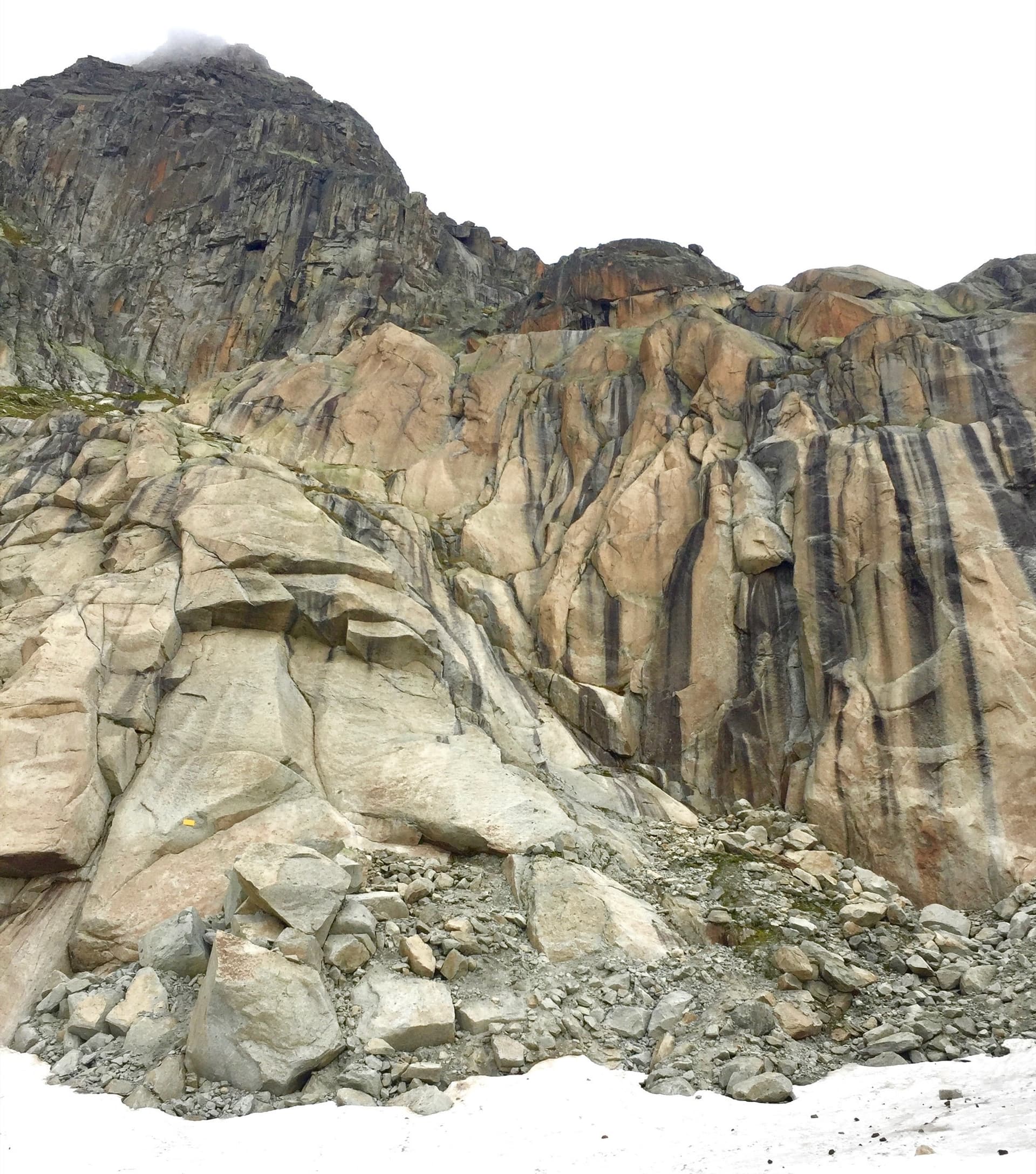
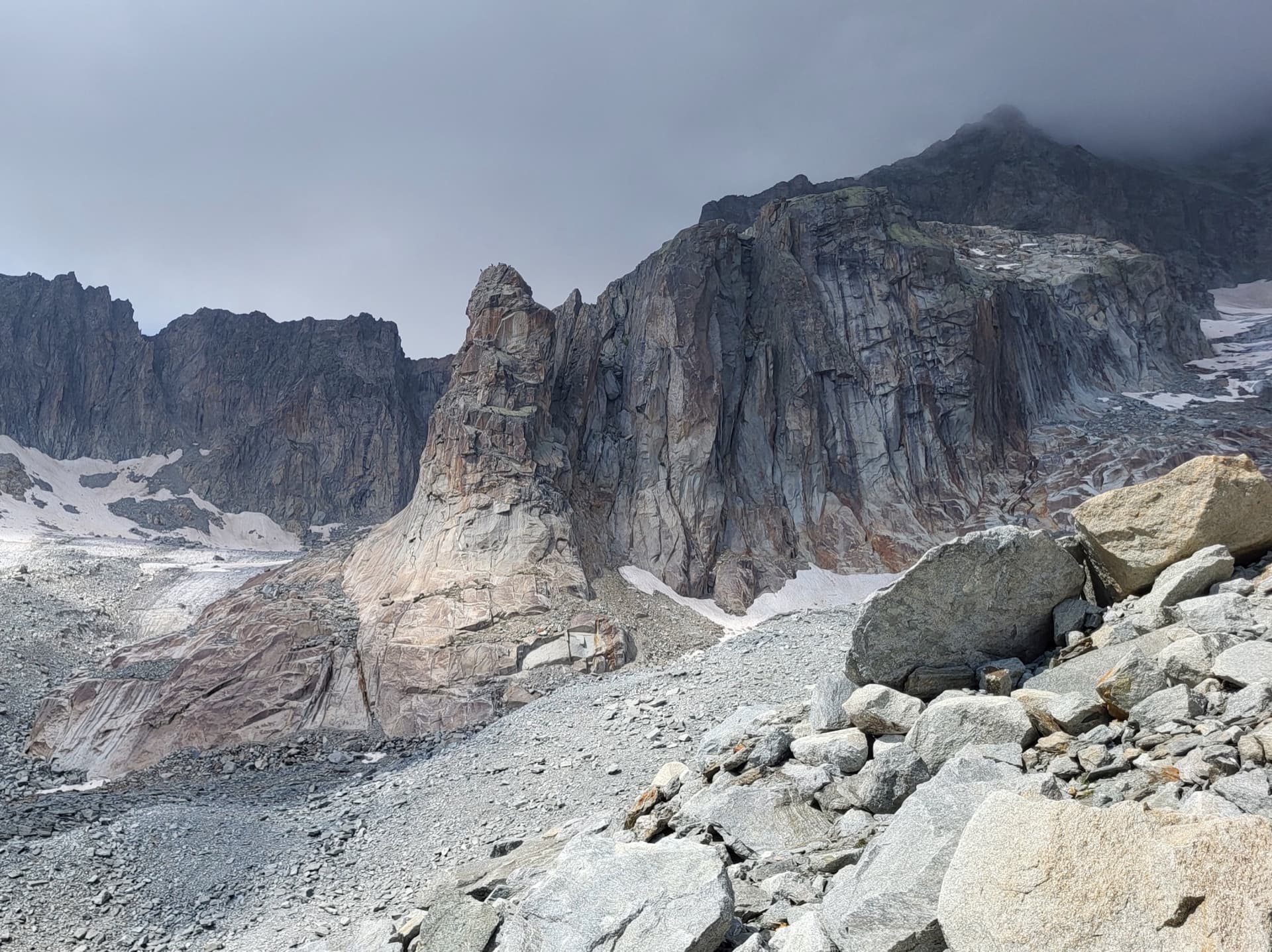
The Hannibalturm above the moraines of the Sidelen glacierPhoto: alexduchablais · CC BY-SA 3.0

Photo

The Hannibalturm above the moraines of the Sidelen glacierPhoto: alexduchablais · CC BY-SA 3.0
Hardest pitch
6c
Pitches
6
Length
170 m
Approach
75 min
Aspect
S
South-facing
Rope
2×50 m
Read before you go

Fully bolted and well protected where it is hard, but the first slab pitch is seriously run-out.

The route

Overview

Kassensturz takes the right edge of the south face of the Hannibalturm, right of Conquest of Paradise, with its name painted at the foot. It was opened in 2003 by Marco Achermann and Stefan Walker. The lower slabs are moderate but sparsely bolted, and the upper half is steep and physical on fractured, unusually featured granite. It is much quieter than its neighbours. Parties disagree about the grades: some find them fair, one 2025 party would add a grade to every pitch.

The climbing

Pitch by pitch

Pitches of Kassensturz
PitchGradeLengthNotes
P15c+40 mA slab with good friction and holds but widely spaced bolts; a 2018 party notes the first bolt is very high and a 2024 party counted four in the pitch. Length from a 2018 party.
P26a45 mSlab with several bulges to cross. At the top do not follow the attractive small crack: take the ledge leftwards to the belay (2025 report). Length from a 2018 party.
P36b40 mA layback crack, then the crest of the pillar, leaving it on the right, and a traverse left to the belay. Thin slab climbing on fine flakes before it eases. Length from a 2018 party.
P46b+45 mAn awkward overhanging crack, then a corner finished by the wall on its right. Physical, on fractured rock that needs good footwork. Length from a 2018 party.
P56c35 mAn athletic layback at 6a+ to an optional belay, then a bulge taken on the left and left by its right side with several powerful moves. The 6c section is short. A harder variation (given 7a by a 2018 party) goes further left.
P64c40 mAn easy cracked slab to the top of the tower. Length from a 2018 party.

Getting there

Approach

To the parking

The Furka Pass road links Andermatt (Uri) and the upper Rhône valley (Valais) and is open in summer only. Park at the Hotel Furkablick, a little east of the pass. The Sidelenhütte (2708 m) above is the alternative base; it is about 15 to 20 minutes from the tower.

On foot · about 75 min

From the Hotel Furkablick take the marked path east towards the Sidelenhütte. After the bridge continue up the moraine; at its top, before the hut, leave the path and head by sight for the base of the tower. Gain the starting ledge from the right (east) by a short delicate passage. About 1 h 15. A 2022 party left the moraine after the bridge and went straight up over the rubble-covered glacier instead. From the Sidelenhütte allow about 15 minutes along the rock band behind the hut and across the moraines (cairns).

Map of the walk-in

  • Crag
  • Parking

Loading map

The point marks the crag, not the exact start of the route.

Coordinates · crag

46.59920, 8.41970

Parking

46.57639, 8.42146

Hotel Furkablick on the Furka Pass road (camptocamp access waypoint 569751)

Point from camptocamp waypoint 175119 (Hannibalturm); Mountain Project places the tower about 100 m away at 46.5983, 8.4198

For your phone or watch

Download GPX

Contains the route point and parking. Opens in most mapping apps and GPS watches.

Points are compiled from published sources, with the precision stated above. They were not surveyed on the ground: check them against a current topo.

Getting down

Descent

Use the dedicated abseil line on the right (east) of the tower, marked in red; the first abseil starts on the east ridge. Camptocamp gives four abseils with 2×50 m and a 2024 party did it in three with 60 m ropes. Parties recommend this line over abseiling the routes because the ropes are less likely to jam, but expect to queue: it serves all the routes on the tower.

Retreat

Bailing off the route

Bail with caveats

The belays are bolted and camptocamp's Spanish text describes abseiling the route itself, so a retreat from any stance should work with two ropes. The usual descent, however, is the separate abseil line to the right, and no source describes a retreat part-way up in detail.

Retreat from
Any belay, by abseiling the route with two ropes.
Point of no return
None documented.
Carry
2×50 m ropes; be ready to leave a karabiner if a stance is not rigged for abseiling.
Basis
Inferred from the route factsInferred from the bolted belays and from camptocamp's Spanish locale, which gives the descent as abseiling the route; the rigging of each stance is not described.

Partly inferred from the route facts

Safety

Hazards

  • Pitch 1 is run-out on a slab at 5c+ (about four bolts in 40 m by one count). A fall there would be long.
  • 6b is obligatory according to camptocamp.
  • Some hollow-sounding flakes (2018 report).
  • The approach crosses moraines and the rubble-covered edge of the Sidelen glacier, with unstable boulders and snow early in the season.
  • Queues at the shared abseil line; high mountain weather and afternoon storms.

Sun and weather

Conditions

South-facing at about 2750 to 2900 m. The right side of the tower goes into shade in the afternoon, which one party used to escape the heat. In late June 2019 a party found the starts of Conquest of Paradise and Kassensturz dry while snow still complicated the start of Hanimoon. The Furka road is open in summer only.

Usual season · Jul to Sep

Sun on the wall · S-facing

Working out the sunlit hours for this month.

  • January: not yet worked out
  • February: not yet worked out
  • March: not yet worked out
  • April: not yet worked out
  • May: not yet worked out
  • June: not yet worked out
  • July (usual season): not yet worked out
  • August (usual season): not yet worked out
  • September (usual season): not yet worked out
  • October: not yet worked out
  • November: not yet worked out
  • December: not yet worked out

Sun on the wallDaylight, wall in shade● Usual season

Estimated from the wall's aspect only. Ignores surrounding terrain, gullies and the wall's exact shape. Clock times are local to the wall (Central European time), for the 15th of each month.

Monthly climate averages for Furka, 1991-2020
MeasureJanFebMarAprMayJunJul (usual season)Aug (usual season)Sep (usual season)OctNovDec
Mean daily high °C−10−8−5−227101062−5−9
Mean daily low °C−15−15−12−9−5−122−2−6−11−14
Rain days 1 mm or more131214151719201915141514

● marks the usual climbing season. Averages for 1991-2020 at about 2839 m. Area climate from Open-Meteo reanalysis. Temperatures are adjusted to the height of the crag; rain comes from a grid cell of about 10 to 25 km, and summer highs on sea cliffs can read a few degrees low. The wall and valley can differ. Data: Open-Meteo, CC BY 4.0.

What to carry

Gear

2×50 m ropes, 12 quickdraws, helmet. Camptocamp says cams and nuts are useless; a 2011 Mountain Project contributor carried a few anyway. Mountain boots for the approach when there is snow.

Checklist

Quickdraws
12
Rope
2×50 m
Helmet
One each
Abseil device and prusik
The descent or the retreat involves abseiling
Maillons or spare karabiners
To leave behind if you retreat

Derived from the route data; check it against a current topo

From climbers

Reader reports

Reader reports are not being collected yet. Until they are, check a current topo and the local club or guidebook publisher for recent changes to Kassensturz.

Worth knowing

Tips

  • Use the optional belay on pitch 5 to split the layback from the crux bulge.
  • A good second route of the day once the right side is in the shade.

Open questions

Where sources disagree

  • Pitch count: six on camptocamp, seven on Mountain Project (which may count the optional belay on pitch 5).
  • Protection: camptocamp says cams and nuts are useless; Mountain Project (2011) tags the route trad and sport and its author carried a few cams and nuts.
  • Pitch lengths are one 2018 party's figures and add up to more than the 170 m height camptocamp gives.
  • Pitch 5: 6c on camptocamp; a 2018 party climbed a line just to the left at 7a.

Provenance

Sources

Same area

More in Furka

All routes in Furka
The Hannibalturm, a granite tower standing in front of the walls of the Gross Bielenhorn above the Sidelen glacier.

Switzerland · Furka

Conquest of Paradise

The classic of the Hannibalturm: six short, wandering pitches of slab, quartz veins, cracks and a 6a+ slab crux on perfect high-mountain granite at 2800 m. A bench and a bus-stop sign wait on the summit. Very popular, so expect company.

6a+6 pitches180 m
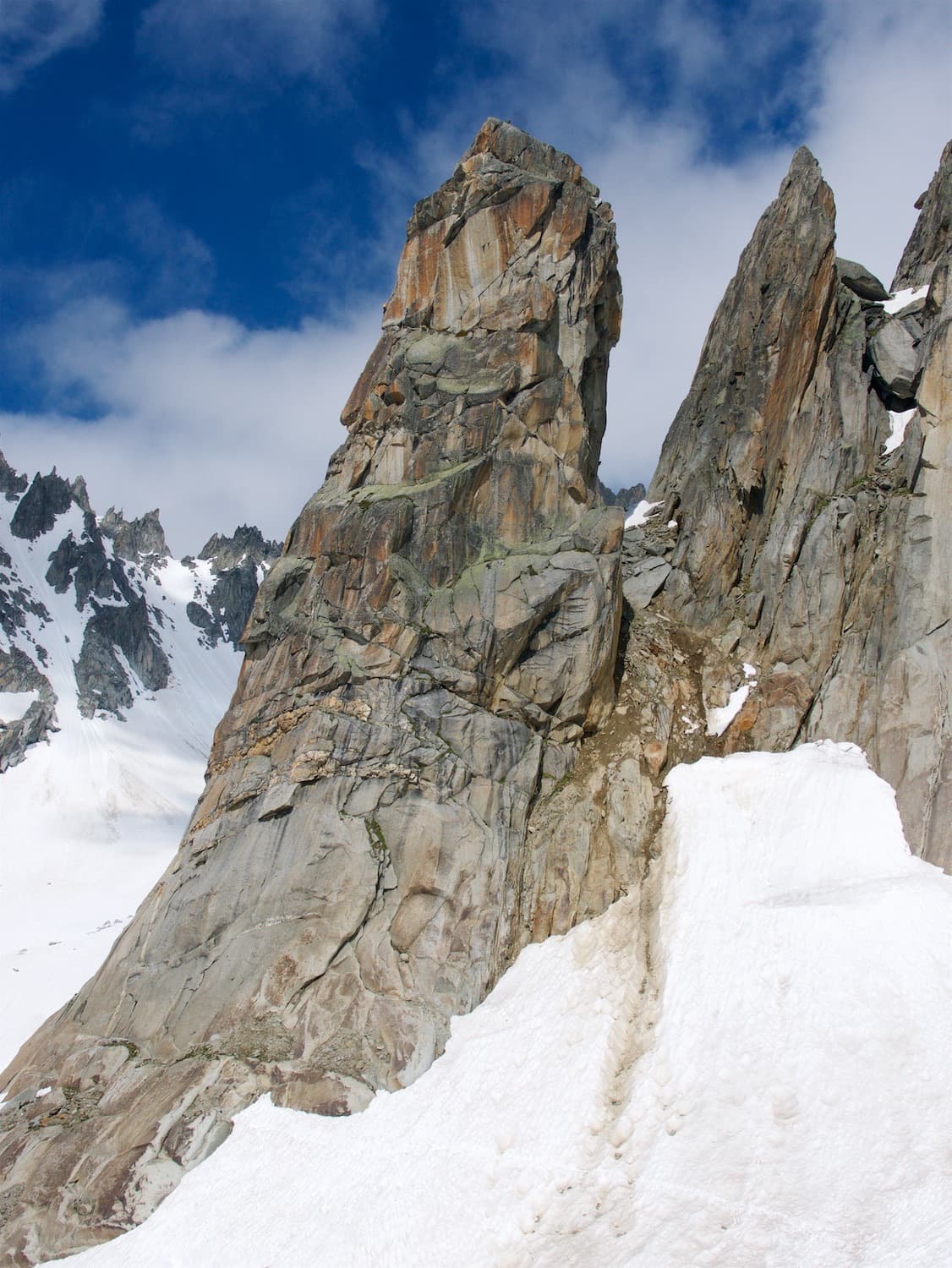
The Hannibalturm in early season, with snow still lying at its foot

Switzerland · Furka

Hanimoon

Five sustained pitches on the left side of the Hannibalturm, never easier than 5c+ and never much harder than 6a+. A smooth friction slab leads to steep wall climbing, a pillar, a flake and a corner, and the route finishes up a ladder of huge quartz knobs. Many parties rate it the best line on the tower and find the second pitch the hardest.

6a+5 pitches170 m

The Kristall sector at the foot of the Gross Furkahorn, with the snow patch below the slabs

Switzerland · Furka

Kristall

The most popular route on the lowest tier of slabs under the Gross Furkahorn, the quickest climbing to reach from the Furka Pass. A corner and slabs lead to a fine thin crack at 6a and a short steep step. It is often used as the first part of the Kombination link-up towards the summit.

6a5 pitches163 m

Around 6c · about 6 pitches

Similar elsewhere

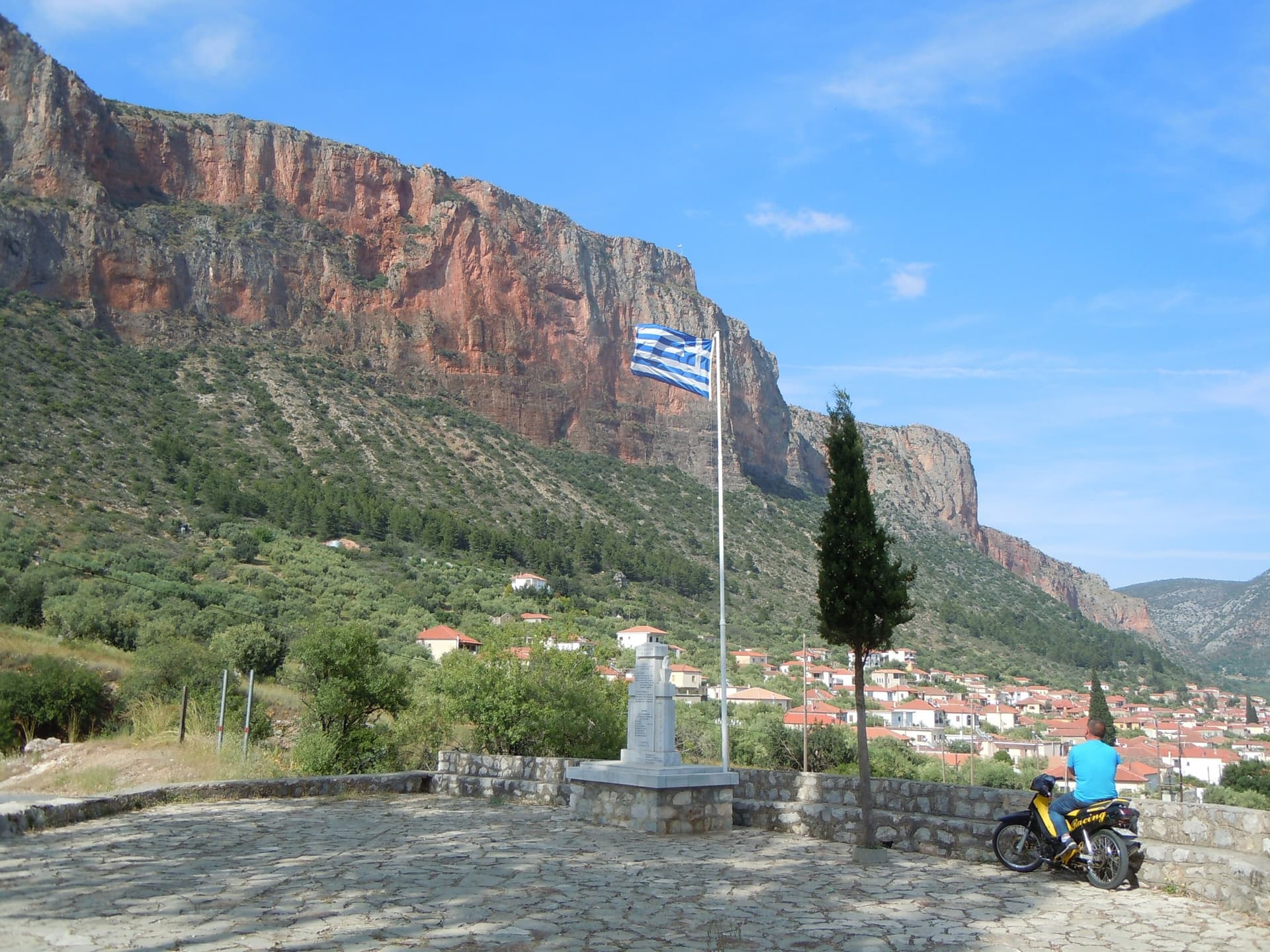
The red Kokkinovrachos wall above the rooftops of Leonidio, seen from Agios Nektarios.

Greece · Leonidio & Kyparissi

Aramis

Six sustained pitches up the red wall above Leonidio, four of them 6c. The climbing is steep and on good holds, with a 3 m boulder problem on the last pitch and a long 6a+ to start. The bolts are close enough to let you concentrate on the moves.

6c6 pitches200 m

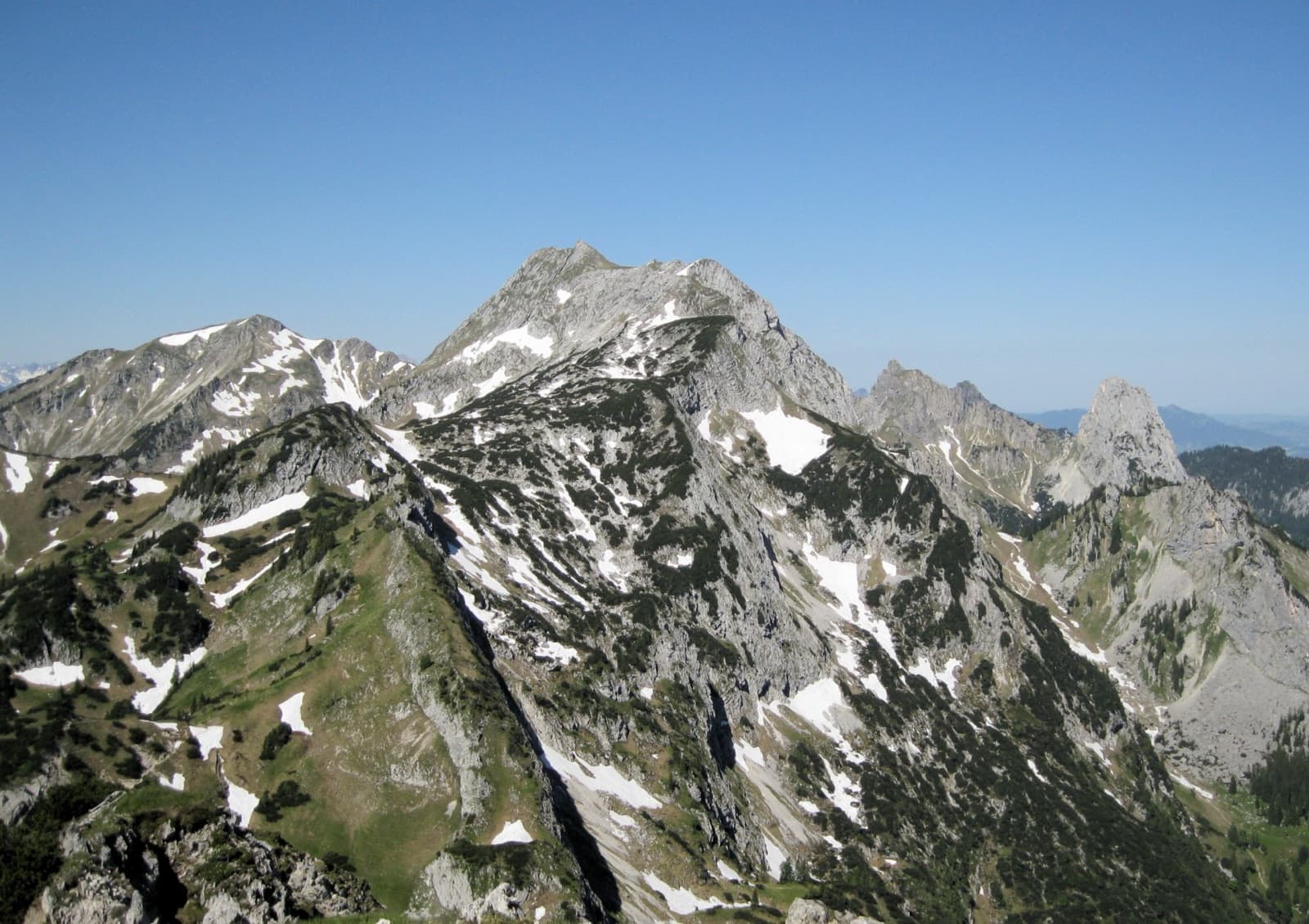
A view of the region, not this route's wall. The Hochplatte in the Ammergau Alps seen from the east in early summer; the Schlössel crag is on this side of the massif but cannot be picked out.

Germany · Ammergauer Alpen

Besser leben mit M.

Six sustained pitches up stepped diagonal corners, compact slabs and steep walls on the very rough limestone of the Kenzenkopf, an hour from the Kenzenhütte. The first pitch is the hardest, at UIAA 7 to 7+ with acrobatic moves on holdless slabs; the rest stays between 6 and 7. Sunny until late afternoon and far quieter than the Geiselstein.

6c6 pitches180 m

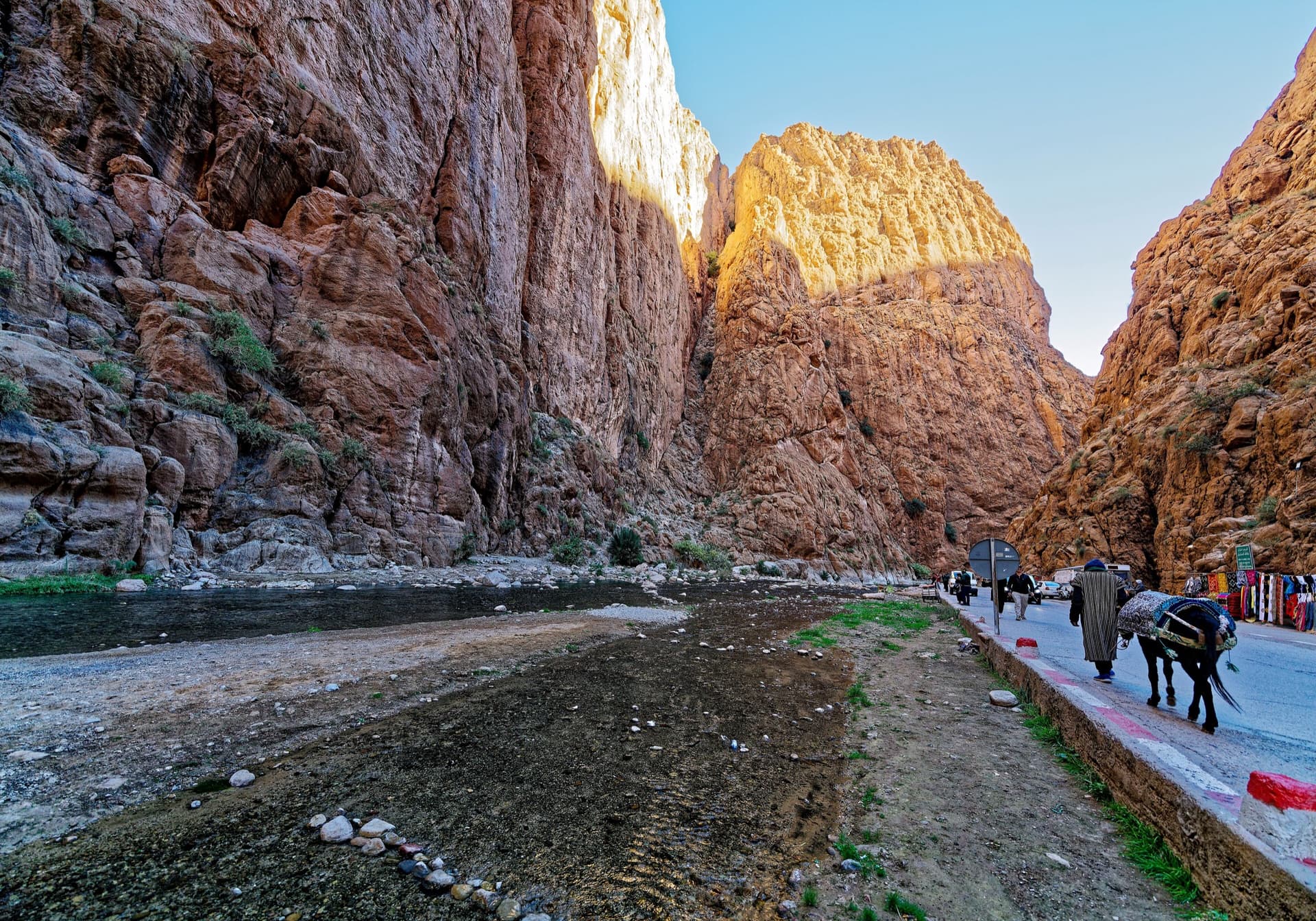
The narrows of the Todra Gorge in late afternoon light, a few minutes' walk upstream of the Mansour wall; a view of the gorge, not of this route's wall.

Morocco · Todra Gorge (Todgha)

Cœur de Palmier

Six pitches of technical wall and corner climbing one minute from the gorge-entrance guesthouses. Easy pitches alternate with three hard ones, and the 6b+ fourth pitch and the 6c last pitch are precise, footwork-heavy climbing on very rough rock. The route stops in the middle of the wall and you abseil off.

6c6 pitches160 m

The Tête d'Aval de Montbrison from the valley; the southern buttresses are on the left

France · Briançonnais

Le Droit à la Paresse

A six-pitch slab and wall climb on the buttresses below the great south face of the Tête d'Aval, on the same grey water-worn limestone but half the height and much more closely bolted. A burly 6c start over a bulge leads to sustained, technical 6b+ and 6a+ walls on small edges. Ledges break the exposure, but the moves are hard for the grade and about 6b is obligatory.

6c6 pitches200 m

Compiled from published sources and last verified October 2026. Bolts, anchors and access change. Climbing is dangerous and you are responsible for your own decisions: check a current topo and read the disclaimer.