Multipitch Atlas

Pericles

Telendos South Face – Pericles sector (just past the Prometheus pillar) · Kalymnos & Telendos · Greece

Bail with caveatsBolting confidence: high

Ten short pitches up a tufa-laced white wall 35 min from Telendos village. Four easy pitches (5 to 5+) through slabs and ledges reach a half-height terrace; the upper wall then gives a memorable tufa pitch at 6a+, a 6b+ bulge and an overhanging corner. Closely bolted on glue-ins and equipped for an abseil descent.

Telendos from above Myrties: the south face is the sunlit wall on the left of the mountain, above and beyond the villagePhoto: Coronium · CC BY-SA 4.0

Photo

Telendos from above Myrties: the south face is the sunlit wall on the left of the mountain, above and beyond the villagePhoto: Coronium · CC BY-SA 4.0
Hardest pitch
6b+
Pitches
10
Length
180 m
Approach
35 min
Aspect
S
South-facing
Rope
–

The route

Overview

Pericles is the highlight of a small sector of four multi-pitch routes bolted in 2023 and 2024 on a separate buttress of the Telendos south face, a little past the Prometheus pillar. The equipper set out to offer an easier introduction to the south face than the big routes further west: a 35 min approach, moderate grades, short pitches and an abseil line back to your bags. The lower 100 m is easy and somewhat broken; the upper 80 m is steep, white and covered in tufas. The route is new and has few logged ascents, so expect the odd fragile hold.

The climbing

Pitch by pitch

Pitches of Pericles
PitchGradeLengthBoltsNotes
P1525 m12 boltsA solid pillar. For the first few bolts climb to the right, where the rock is sound.
P2520 m6 boltsA rising traverse right onto a big ledge with a tree, set out so the belayer is never directly below the leader. Do not traverse left at the end: the anchor on the left is for abseiling only.
P35+20 m10 boltsAn interesting groove and corner above the belay.
P4320 m8 boltsEasy ground to a bolt belay among the trees on a ledge.
P55+25 m15 boltsThe 'Split' pitch. Climb to the third bolt, then continue straight up (Thucydides goes left here).
P66a+20 m13 boltsThe 'Six Year Wait' pitch: a superb line up a series of tufas, the best pitch of the sector.
P76b+15 m11 boltsThe crux. Holds are hard to find but they are there; the hardest moves pull over the bulge.
P86a+15 m10 boltsAn overhanging, technical corner.
P9410 m7 boltsShort and easy.
P10310 m1 boltsTraverse left to the top and a bolt belay set back from the edge.

Getting there

Approach

To the parking

Base yourself in Masouri or Myrties on the west coast of Kalymnos, reached by ferry from Kos (the nearest airport) to Pothia. Most climbers hire a scooter; buses also run from Pothia through Masouri. Small ferries cross from Myrties to Telendos about every half hour (3 euros each way in May 2023). The equipper took the first boat of the day so as to walk in during the morning shade.

On foot · about 35 min

35 min from Telendos village. Follow the approach for the Inspiration sub-sector to a large sloping area of scree, then go up a slope into a zone of large boulders. At the boulders and a short cliff band, three blue paint dots on your right show the way up to the base of the routes. Route names are painted on stones at the foot. Pericles, Thucydides and Atlas share the first four pitches; Hephaestus starts further left.

Map of the walk-in

  • Route base

Loading map

The point marks the base of the route.

Coordinates · route base

37.00479, 26.91104

Point from OpenStreetMap node 13721341684 (Pericles, climbing=route_bottom)

For your phone or watch

Download GPX

Contains the route point. Opens in most mapping apps and GPS watches.

Points are compiled from published sources, with the precision stated above. They were not surveyed on the ground: check them against a current topo.

Getting down

Descent

Either abseil or walk. The sector has a dedicated abseil line, with its own stations, that runs from the summit bolt belays down the wall right of Pericles to the base; the equipper calls it efficient but the topo gives no abseil lengths. Alternatively walk up to the summit plateau and descend the north side via the chapel of St Constantine to the coastal path and the village, as for the other south face routes (1 to 1.5 h on neighbouring routes).

Retreat

Bailing off the route

Bail with caveats

The sector is equipped for an abseil descent and every belay is bolted, so retreat is realistic. The abseil line has its own stations, which are not always at the belays, and the topo does not give abseil lengths.

Retreat from
From the lower four pitches you are on easy, ledgy ground with an abseil anchor at the end of pitch 2. Higher up, the abseil line runs just right of the route.
Point of no return
None documented. From the top you can also walk off.
Carry
A rope long enough for abseils of unknown length (two ropes to be safe), and a maillon or two in case you have to descend from a belay rather than an abseil station.
Basis
Part stated, part inferredThe equipper states the sector is equipped for abseil descent; how well the line serves a mid-route retreat is inferred from the topo photo.

Partly inferred from the route facts

Safety

Hazards

  • The lower half of the buttress is broken, with loose blocks and shattered rock beside the line, even after heavy cleaning. Stay on the bolt line, especially on pitch 1.
  • At the end of pitch 2 do not go left to the abseil anchor; the belay is on the big ledge with the tree.
  • A new route with only a handful of repeats: test holds, particularly on the tufas.
  • Several bolts need extending with slings to avoid rope drag.
  • Heat and sun exposure.
  • All rescue on Kalymnos and Telendos is volunteer-run. Treat a long route on a remote face accordingly.

Sun and weather

Conditions

South facing and hot. The equipper worked in 33°C in early October 2024 and approached during the morning shade. Spring and autumn are the season; start on the first ferry and carry plenty of water.

Usual season · Mar to May, Oct to Nov

Sun on the wall · S-facing

Working out the sunlit hours for this month.

  • January: not yet worked out
  • February: not yet worked out
  • March (usual season): not yet worked out
  • April (usual season): not yet worked out
  • May (usual season): not yet worked out
  • June: not yet worked out
  • July: not yet worked out
  • August: not yet worked out
  • September: not yet worked out
  • October (usual season): not yet worked out
  • November (usual season): not yet worked out
  • December: not yet worked out

Sun on the wallDaylight, wall in shade● Usual season

Estimated from the wall's aspect only. Ignores surrounding terrain, gullies and the wall's exact shape. Clock times are local to the wall (Greek time), for the 15th of each month.

Monthly climate averages for Kalymnos & Telendos, 1991-2020
MeasureJanFebMar (usual season)Apr (usual season)May (usual season)JunJulAugSepOct (usual season)Nov (usual season)Dec
Mean daily high °C131315172124262725211815
Mean daily low °C101011141721232421181512
Rain days 1 mm or more121185300025813

● marks the usual climbing season. Averages for 1991-2020 at about 136 m. Area climate from Open-Meteo reanalysis. Temperatures are adjusted to the height of the crag; rain comes from a grid cell of about 10 to 25 km, and summer highs on sea cliffs can read a few degrees low. The wall and valley can differ. Data: Open-Meteo, CC BY 4.0.

What to carry

Gear

15 quickdraws cover the best-bolted pitch, plus a few slings: the topo says several bolts need extending. The rope length for the abseil line is not published. The pitches are at most 25 m, but check locally or take two ropes before committing to the abseils. Helmet.

Checklist

Quickdraws
15
Rope
Length not given in the sources
Helmet
One each
Abseil device and prusik
The descent or the retreat involves abseiling
Maillons or spare karabiners
To leave behind if you retreat

Derived from the route data; check it against a current topo

From climbers

Reader reports

Reader reports are not being collected yet. Until they are, check a current topo and the local club or guidebook publisher for recent changes to Pericles.

Worth knowing

Tips

  • If 6b+ is too much on the day, Thucydides (6b) shares the first four pitches and splits left at the third bolt of pitch 5.
  • Leave spare water at the base if you plan to abseil.
  • Download the equipper's four-page sector topo from Climb Kalymnos before you go.

Open questions

Where sources disagree

  • No independent pitch-by-pitch account exists yet: the UKC entry repeats the equipper's figures and has five logged ascents with no comments.
  • The 2023 topo and the 2024 sector topo agree on every pitch.

Provenance

Sources

Same area

More in Kalymnos & Telendos

All routes in Kalymnos & Telendos
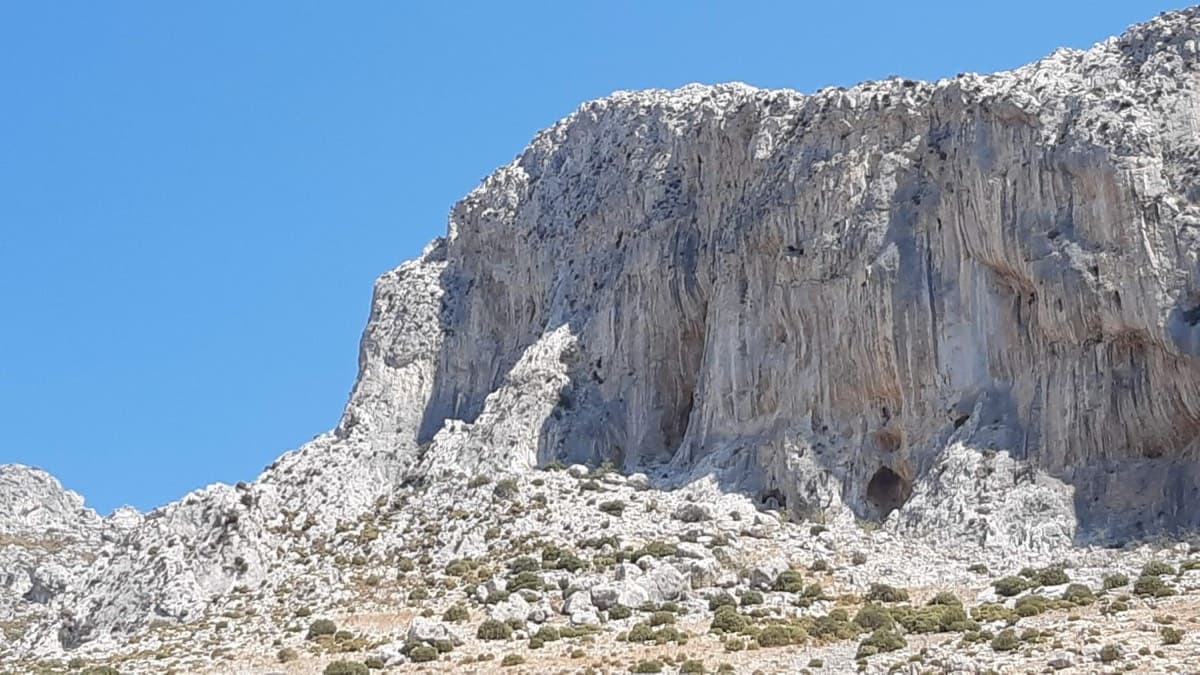
The south face of Telendos and its great cave, seen from the approach.

Greece · Kalymnos & Telendos

Wings for Life

The first route on the wall (Odermatt and Keller, 2008), climbing a long, exposed line on sharp, grippy rock right of the huge roof. The lower pitches are easy for the grade. The two 6a cruxes are a short odd corner over a small roof and a traverse high up, and they come with big exposure. Pitches are short, so you can link them with long draws.

6a11 pitches250 m
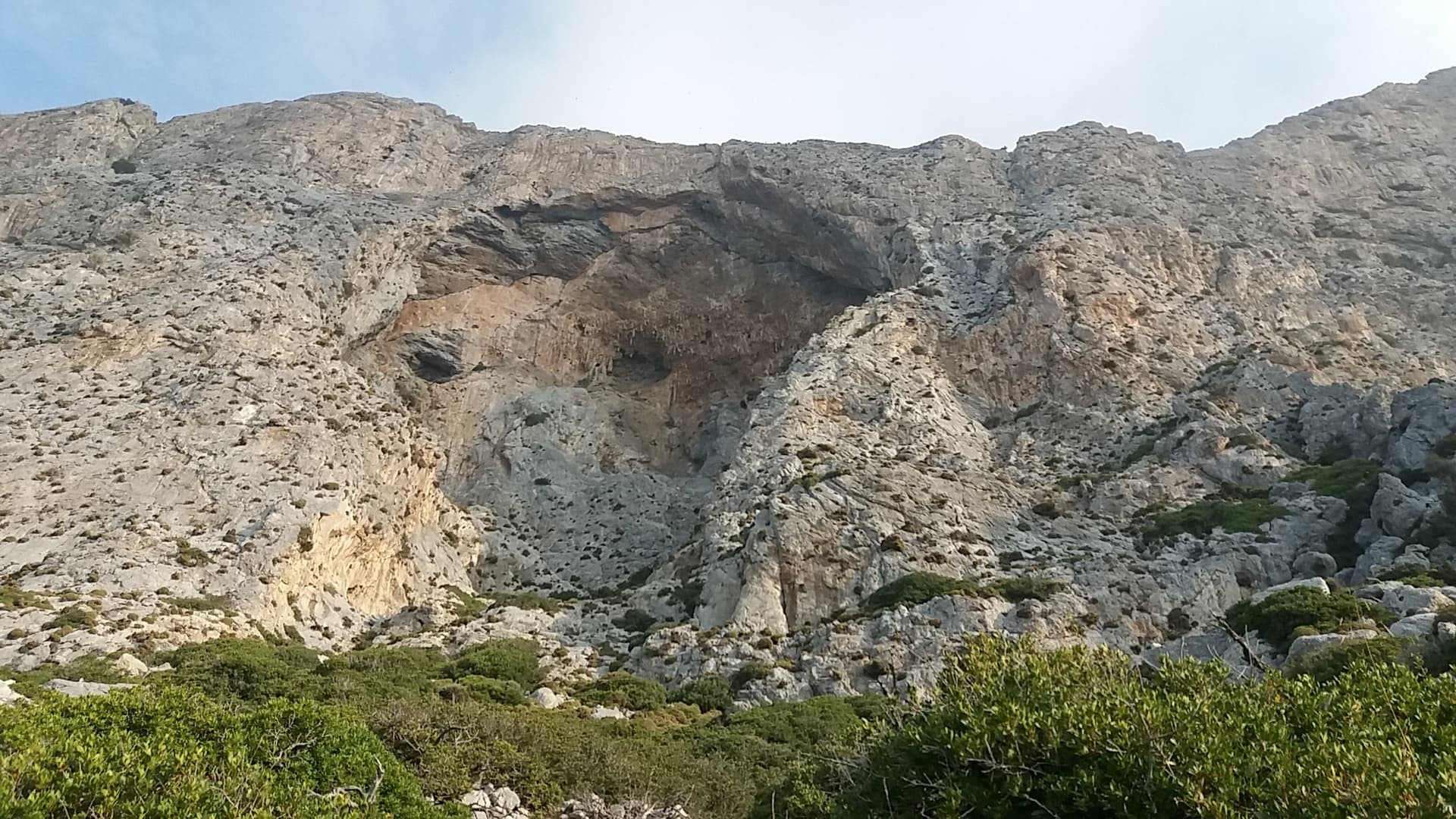
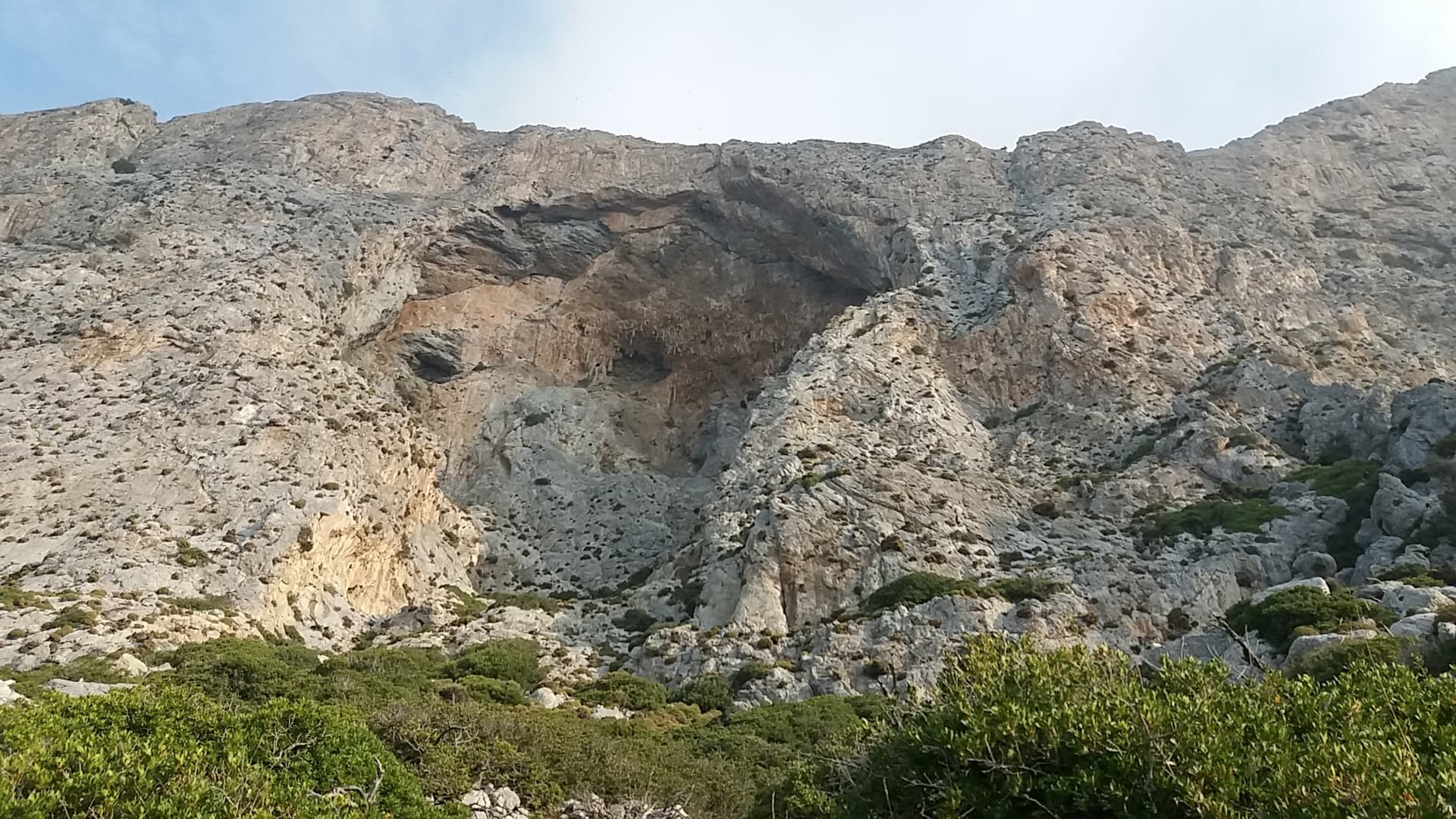
The south face of Telendos around its great cave, seen from the approach path; Wild Country climbs the wall left of the cave.

Greece · Kalymnos & Telendos

Wild Country

A sustained, varied line on sculpted limestone. It starts with an easy slab and builds to slightly overhanging jugs with huge exposure on the top pitch. Mountain Project and camptocamp grade the crux 6a+ (Rockfax says 6a). With a 70 m rope you can link several pairs of pitches.

6a9 pitches265 m

The cliff above the Grande Grotta: 3 Stripes starts on the second-to-last spur on the left and finishes up the shaded wall

Greece · Kalymnos & Telendos

3 Stripes

Kalymnos's best-known introduction to multi-pitch: a series of steps and slabs, always with plenty of holds, finishing on top of the Grande Grotta. The upper pitches feel very exposed. Real pitch lengths are shorter than the guidebook says (20–25 m).

5c+6 pitches175 m

Committing

The south face of Telendos around its great cave, seen from the approach path.

Greece · Kalymnos & Telendos

Rita Telendos

Thin moves over small bulges, stemming and big jugs on 'cauliflower' limestone. The crux is P6, which ends at a hanging belay. Mountain Project gives the pitches in YDS only (5.8–5.10b), so French pitch grades are not listed; the overall grade is 5.10b (6a+), and some listings give 6b. You can link P3–P4 and P5–P6.

6a+7 pitches152 m

Read the cautions

Around 6b+ · about 10 pitches

Similar elsewhere

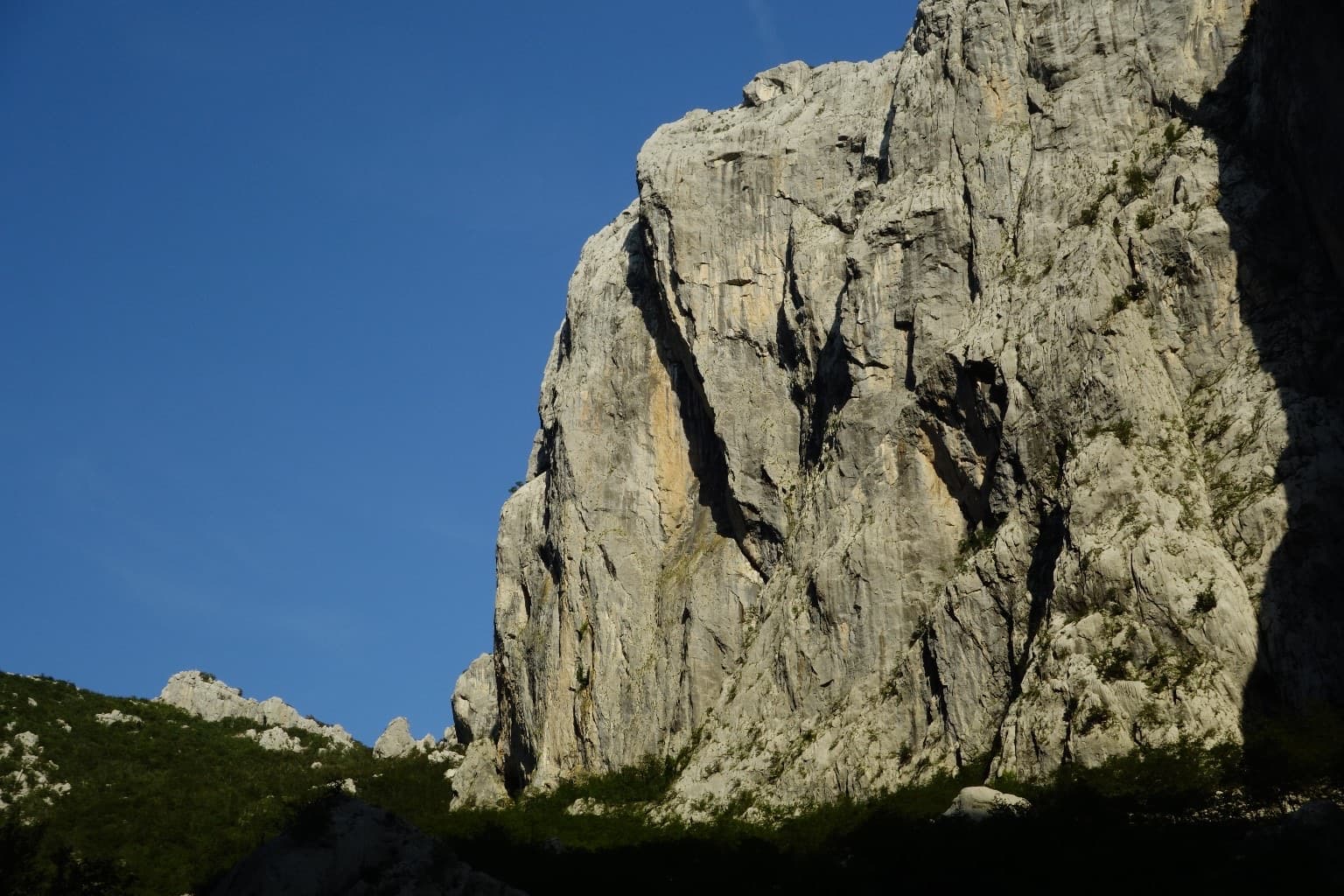
The north-west face of Anića kuk in evening light; the route is not marked.

Croatia · Paklenica

Besmrtnici

A modern line by B. Čujić and I. Matković up the full height of the Trapez sector of Anića kuk: ten pitches, 360 m, steady between 5c and 6b+. It starts right of the classic Mosoraški, crosses it in the upper middle part and finishes to its left. Slabs low down, then a vertical crack, superb vertical slab pitches, a huge corner with a chockstone and an exposed traverse.

6b+10 pitches360 m

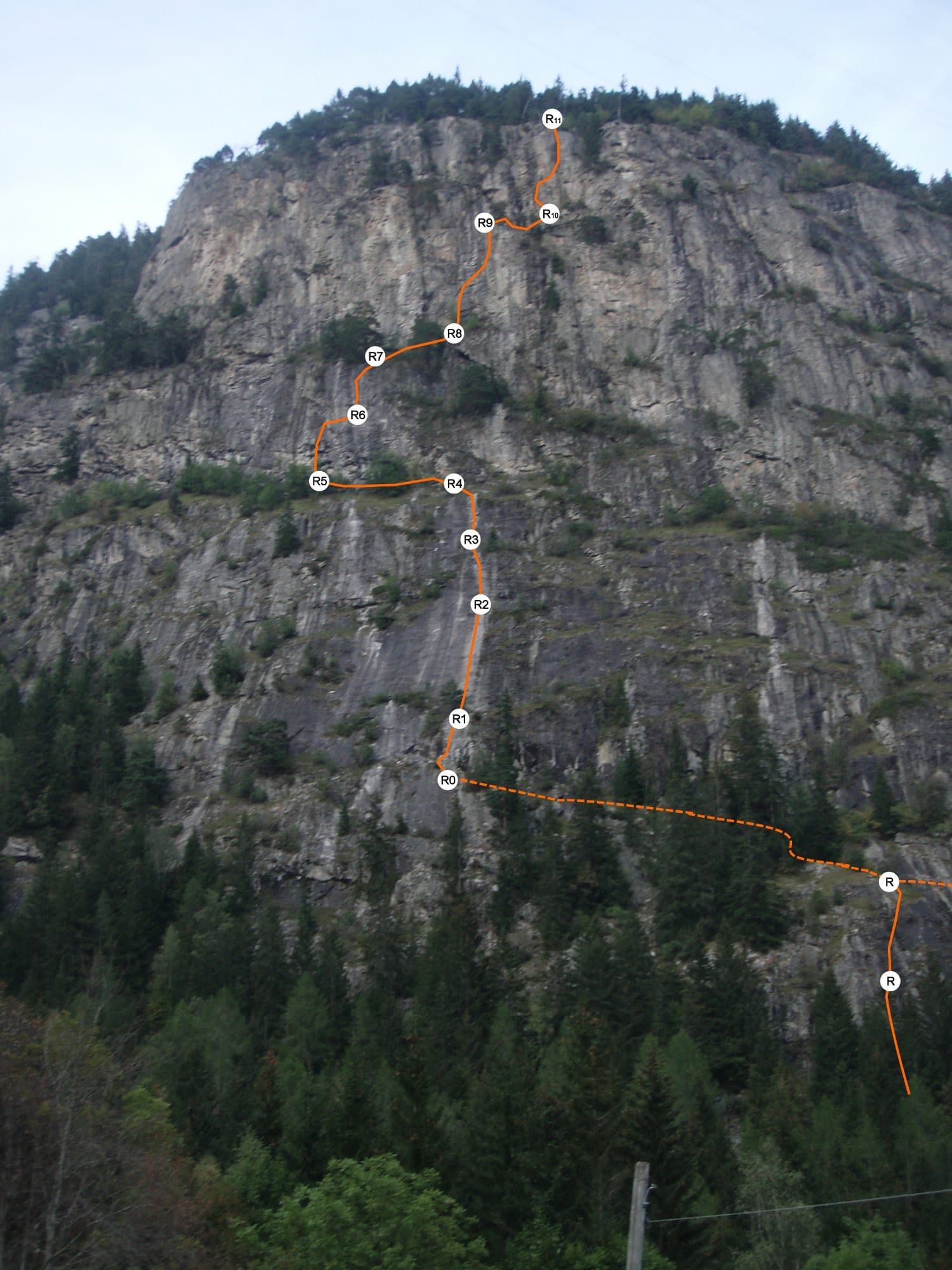
Photo-topo of Vipère au pied on the Barberine wall, with the belays numbered and the two approach pitches up the lower slabs

France · Chamonix valley

Vipère au pied

The original line on the Barberine wall: four pitches of fine, delicate slab above a bouldery first move, then steeper and more athletic climbing through the upper tier, with a superb 6b layback-and-wall pitch near the top. Ledges cut it into sections, so it never feels very exposed, but it is sustained at 6a to 6a+ throughout.

6b+10 pitches250 m

The orange limestone of the Paroi des Sources at Taghia, with climbers on its routes.

Morocco · Taghia

Belle et Berbère

Ten pitches of even 6b and 6b+ on compact rock ten minutes from the gîtes, mostly technical slab and wall climbing on your feet, with a 50 m sixth pitch on vertical edges that everyone singles out. It is among the most accessible long routes at Taghia, in the shade for most of the day, and a little polished low down.

6b+10 pitches330 m

Read the cautions

The Himmelwand in the Kötschachtal near Bad Gastein; the Kleine Himmelwand lies beyond the main wall

Austria · Gastein (Hohe Tauern)

Father and Son

Ten pitches of varied climbing on good rock, mostly slabs with some cracks and steeper passages. Largely UIAA 5 with a few moves of 6 and three spots of 7 that go at 6+ A0. A short walk-in and a rigged abseil line.

6b+10 pitches350 m

Compiled from published sources and last verified October 2026. Bolts, anchors and access change. Climbing is dangerous and you are responsible for your own decisions: check a current topo and read the disclaimer.