Menu

Super G

Plagne – Grand Toit · Bernese Jura (Plagne) · Switzerland

Bail with caveats

The longest route at Plagne, about 180 m of climbing that traverses the whole yellow wall of the Grand Toit sector on its best rock. Big atmosphere on every pitch, with traverses where a fall would leave you hanging. 6c, 6a+ obligatory.

Climbing mode: Big type, screen kept awake, tick pitches as you go.

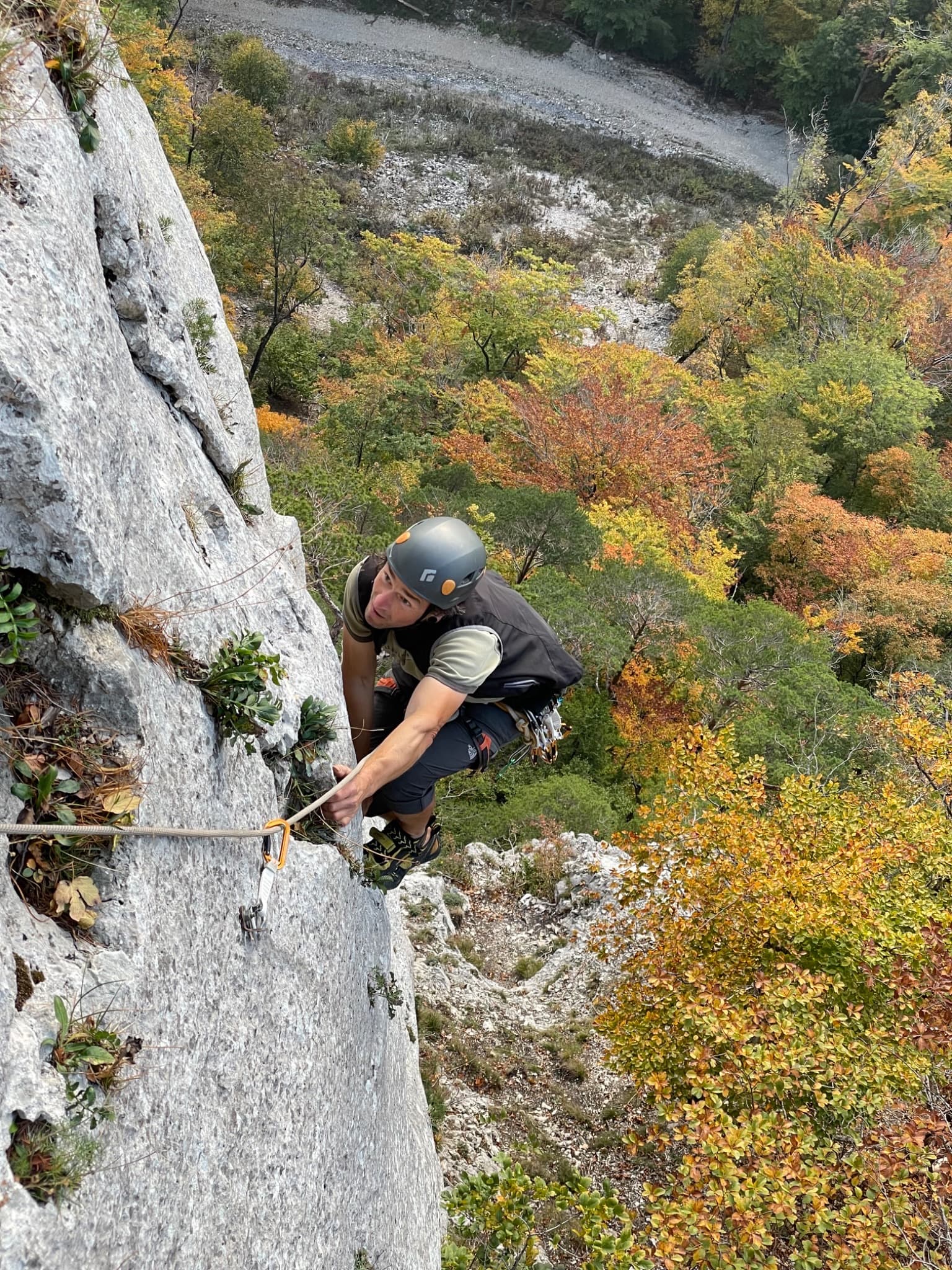
The Grand Toit wall at Plagne from pitch 1 of Super GPhoto: Boris · CC BY-SA 3.0
Hardest pitch
6c6c
Pitches
7
Length
180 m
Approach
–
Aspect
W
West-facing
Rope
1×50 m

Highest point 900 m above sea level (camptocamp route 1054852).

Rock
limestone
Season
Mar to Jun, Sep to Nov
Bolting confidence
Medium
Last verified
October 2026 · Aggregated by AI from published sources

Photo

Climbing modeBig type, screen kept awake, tick pitches as you go.

Overview

Super G is a seven-pitch line across and up the yellow wall of the Grand Toit sector at Plagne, about 180 m of climbing, the longest route on the cliff. It was opened by Boris Girardin in 2017 and 2018, partly from the ground up, and climbed free in September 2018. The grade is 6c with 6a+ obligatory. Several pitches traverse, including a 50 m traverse over pitches 4 and 5, so the second needs to be competent and a fall can leave a climber hanging away from the rock.

Worth knowing

  • Allow about 3 to 3.5 hours (timings from 2022 and 2025).
  • Combine the approach with a warm-up route in the Aiguille sector.

Pitch by pitch

The atlas doesn't show topos: they are the work of the people who bolt and document these routes. See the topo at Camptocamp – Super G topo photo (B. Girardin), or in Kletterführer Jura bernois / Berner Jura.

Pitches of Super G
PitchGradeLengthNotes
P16b20 mClimbed ground-up on the first ascent. A 2020 party found it a stiff warm-up; a few holds in the first two pitches were still fragile in 2020.
P26c25 mTraverse along under the roof, horizontal or even slightly descending; climbed ground-up.
P36b25 mStraight up to the third belay; equipped from above.
P46b–Start of the long rising traverse left (pitches 4 and 5 together cover about 50 m), climbed ground-up.
P56a+–End of the traverse; a 2020 party found an (empty) raptor's nest midway. From the belay, a 5 m abseil leads to belay 4 of Nevermore as an escape.
P65a–Short and easy; equipped from above.
P76b+–Exit pitch, starting with a big bouldery move; equipped from above.

Approach

To the parking

Plagne is 10 km from Biel/Bienne. Drive towards Delémont, turn right at Frinvillier for Plagne and park at the football pitch at the top of the village.

On foot

Walk about 25 minutes on the flat to the top of the cliff, then go down the ladders (Les Échelles) to the Grand Toit sector. You can also warm up by climbing a route of the Aiguille sector to reach the start (CAS 'Jura bernois' topo). The route name is painted at the start.

Map of the walk-in

Point from camptocamp waypoint 1772113 (Plagne – Grand toit)

For your phone or watch

Download GPX

Contains the route point.

Points from published sources, not surveyed.

Descent

From the top, walk back along the cliff-top path. If you need to retreat: abseil the route to belay 3 (2×25 m); from belay 4 you can descend via Nevermore or Via Dolomiti (1×20 m then 2×25 m); from belay 5, a 5 m abseil reaches belay 4 of Nevermore, then climb Nevermore's 3a pitch 5 and go up the gully on the left (new since May 2025).

Bailing off the route

Bail with caveats

The topo describes retreat: abseil the route to belay 3 (2×25 m), use Nevermore or Via Dolomiti from belay 4, or from belay 5 abseil 5 m to Nevermore and escape up its easy 3a pitch 5. The traverses make a straight abseil impossible higher up.

Retreat from
Belays 1 to 5, by the lines described.
Point of no return
Above belay 5 the escape is via Nevermore; above that, finishing is simplest.
Carry
A 50 m rope works for the 25 m abseils; know the Nevermore and Via Dolomiti lines.
Basis
Stated in the sourcesRetreat options are written in the camptocamp topo.

Switzerland

In an emergency

In an emergency · Switzerland

1414Rega air rescue

Call 1414

Rega air rescue

In Valais call 144.

Position of the crag

47.17553, 7.25272

Marks the crag, not the route: give route and pitch.

Say what happened, how many are hurt, and where you are. Checked October 2026 (source).

Hazards

  • Traverses: a fall can leave you hanging free of the rock, hard to get back on without prusiks.
  • A few holds in the first two pitches were still fragile in 2020; rock quality at Plagne varies, though the route uses the best rock on the wall.

Gear

Single 50 m rope and 14 quickdraws, two of them long (60 cm) to extend some clips. Take one or two prusiks in case of a fall on the traverses.

Checklist

Quickdraws
14
Rope
1×50 m
Helmet
One each
Abseil device and prusik
For abseiling

Conditions

Plan B nearby

  • EasierThe Wall6b+4 pitchesfaces W0.1 km away
  • HarderHydra7a6 pitchesfaces S24 km away
  • ShorterKGB6b4 pitchesfaces S19 km away

Straight-line distances, up to 30 km.

Reader reports

No reports yet.

Report a problem with this route

Say what and where. Reports are checked before they appear; no name or email is stored.

Bolts and history

Bolting
Equipped by Boris Girardin in 2017–2018, partly ground-up, on M10 bolts with Fixe belays (camptocamp topo). Parties from 2020 to 2025 report no protection problems; a 2020 party called the equipment 'top and close'.
History
Started ground-up by Boris Girardin on 11 and 18 November 2017 and 8 April 2018 (pitches 1 and 2); pitch 3 from above in August 2018; pitches 4 and 5 ground-up (50 m traverse) on 15 and 19 August 2018; pitches 6 and 7 from above on 26 August 2018. First free ascent 2 September 2018 with R. Pirali.
Guidebook
CAS 'Jura bernois' climbing guide (2023), also cited in the 2013 edition, pages 116 to 118 for the approach. Buy from kletterfuehrer.net.

Where sources disagree

  • Pitch grades are not in the camptocamp text; they come from the equipper's annotated topo photo (camptocamp image 1054868). A 2020 party found pitches 1 and 7 stiff for their grades.

Sources

More in Bernese Jura (Plagne)

All routes in Bernese Jura (Plagne)
A climber on pitch 3 of The Wall, Plagne, above the autumn woods

Switzerland · Bernese Jura (Plagne)

The Wall

A four-pitch classic on Plagne's main face: a slabby corner, a dirty start to pitch 2, then a fine thin crack and a bulging prow. Rebolted in stainless in November 2025 and now 6a obligatory. Expect old-school Jura grades.

6b+6b+4 pitches

Around 6c · about 7 pitches

Similar elsewhere

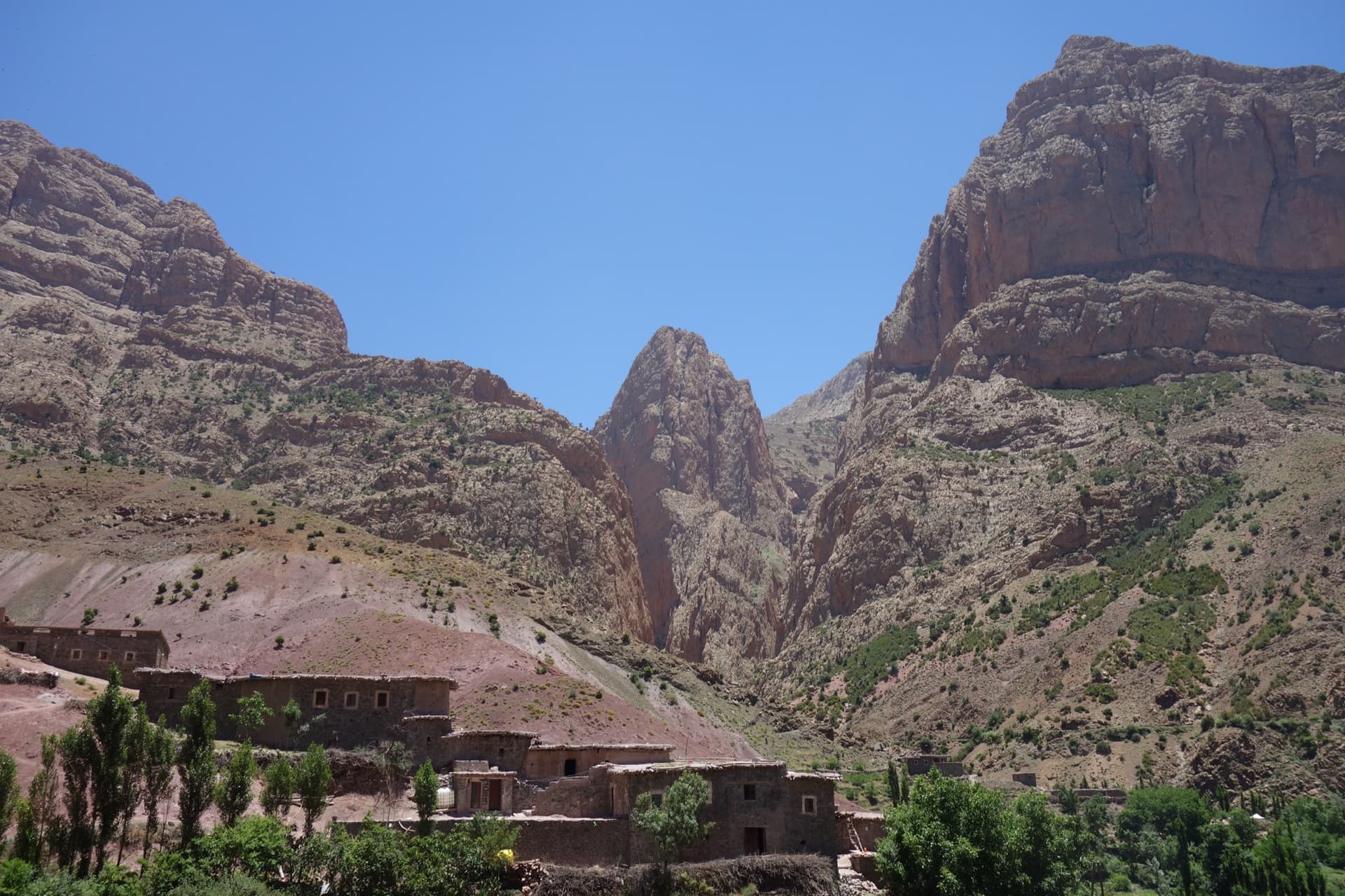
Taghia village beneath the pointed tower of the Taoujdad (centre), with the Oujdad massif at the right; the west face is the tower's right-hand flank, turned towards the Oujdad.

Morocco · Taghia

Au nom de la Réforme

The classic first route at Taghia: steep, water-sculpted red limestone on the west face of the Taoujdad, with a 6c third pitch that is 6b until a short crux below the belay. It is better bolted than most Taghia routes and correspondingly popular, so some pitches are polished.

6c6c7 pitches300 m

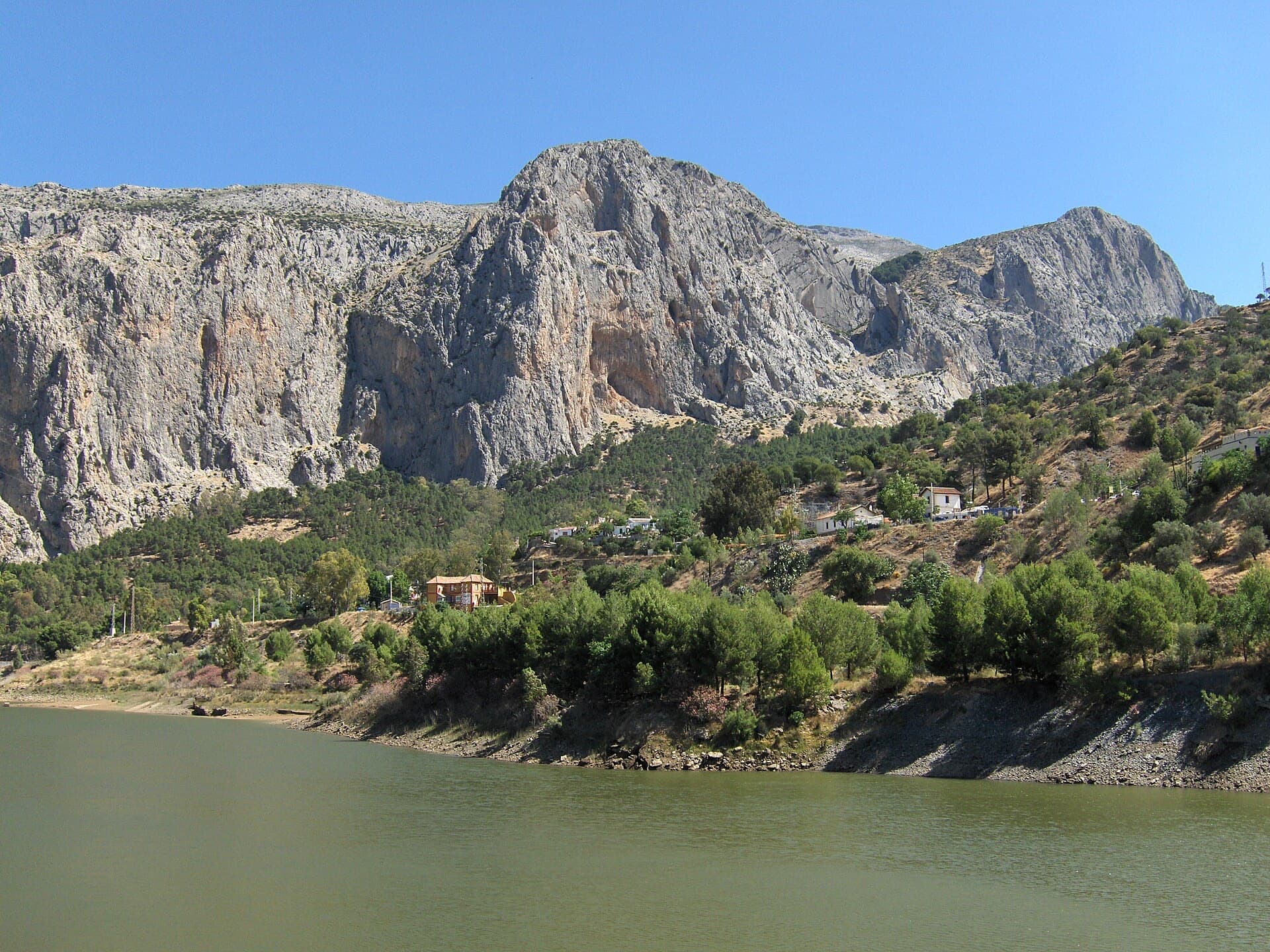
The Frontales cliffs above El Chorro seen across the Tajo de la Encantada reservoir, with the big Poema de Roca cave at the foot of the central dome. Apocalipsis is on this wall; the line is not marked.

Spain · El Chorro

Apocalipsis

Seven pitches up a steep south face at Frontales, sustained, physical and technical on very rough, unpolished limestone. The fifth pitch (6b+) is a thin slab and the sixth (6c) has a strenuous start and a crux on grey rock. It is one of the few 6c multipitch lines here with a clean abseil descent.

6c6c7 pitches195 m

The Rabensteinhorn seen from the Ristfeuchthorn to the west

Germany · Berchtesgaden & Bad Reichenhall

Schmetterlings Kant'n

A steep, athletic line up the pillar right of the Schönheitskönigin von Schneizlreuth, reached by one pitch of that route and one of Alpinmodel. Four independent pitches of UIAA 6 to 7+ on very good rock, then the last pitches of the Schönheitskönigin.

6c6c7 pitches170 m

Read the cautions

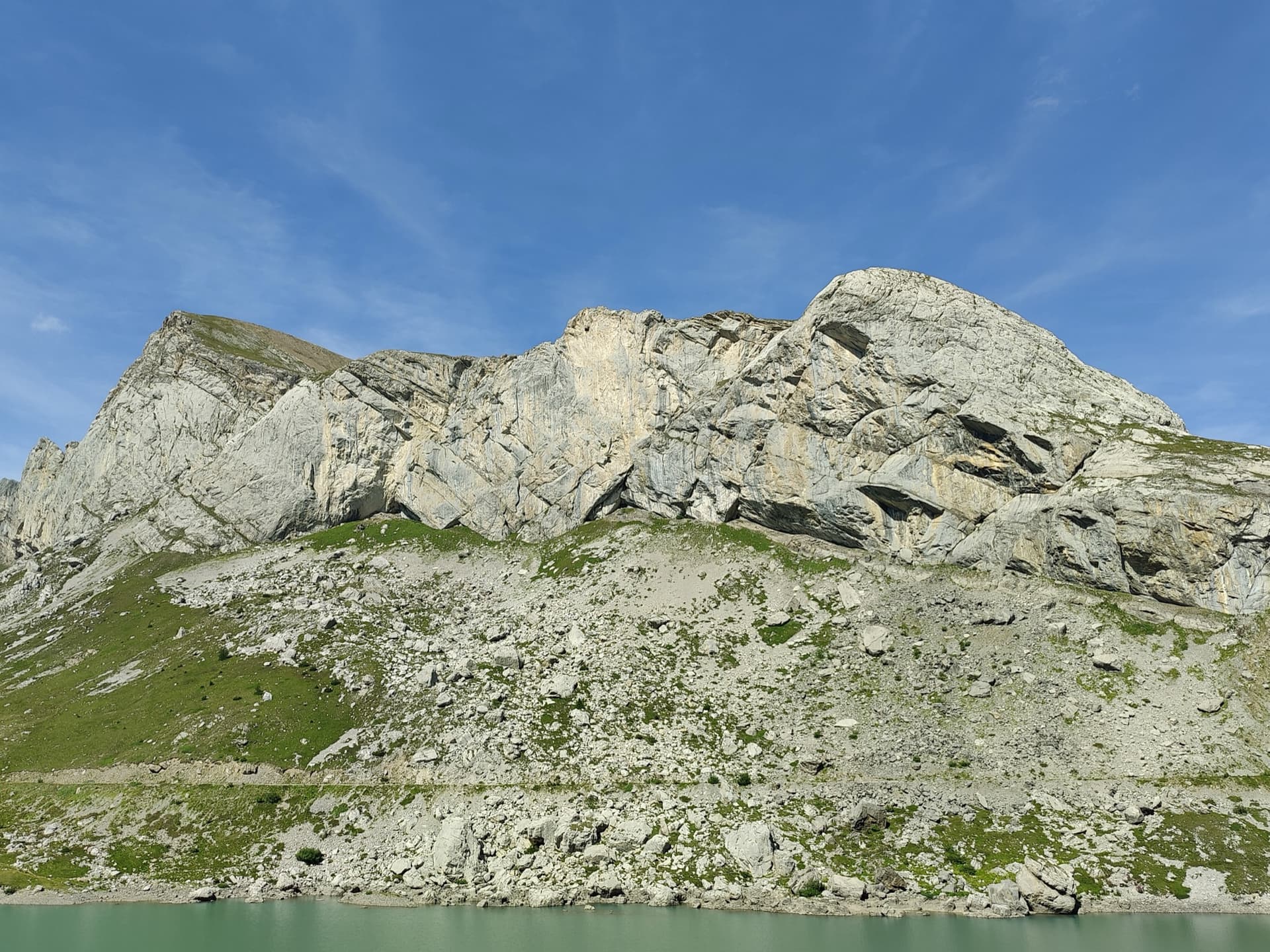
The limestone wall of Les Montons above the Lac de Sénin at the Sanetsch.

Switzerland · Sanetsch

Follomi

The classic introduction to the Sanetsch at 6c: eight varied pitches up a pillar of superb rough limestone, with the hard climbing packed into a few well-bolted metres on each pitch. A steep corner mantel, a balancy wall, a fine slab and an airy exit from a niche. Tops out on grassy slopes with a walk-off.

6c6c8 pitches250 m

Researched and aggregated by AI from published sources, last compiled October 2026. It can be wrong, and bolts, anchors and access change: check a current guidebook and read the disclaimer.