Menu

The Wall

Plagne – Face de Plagne · Bernese Jura (Plagne) · Switzerland

Easy to bail

A four-pitch classic on Plagne's main face: a slabby corner, a dirty start to pitch 2, then a fine thin crack and a bulging prow. Rebolted in stainless in November 2025 and now 6a obligatory. Expect old-school Jura grades.

Climbing mode: Big type, screen kept awake, tick pitches as you go.

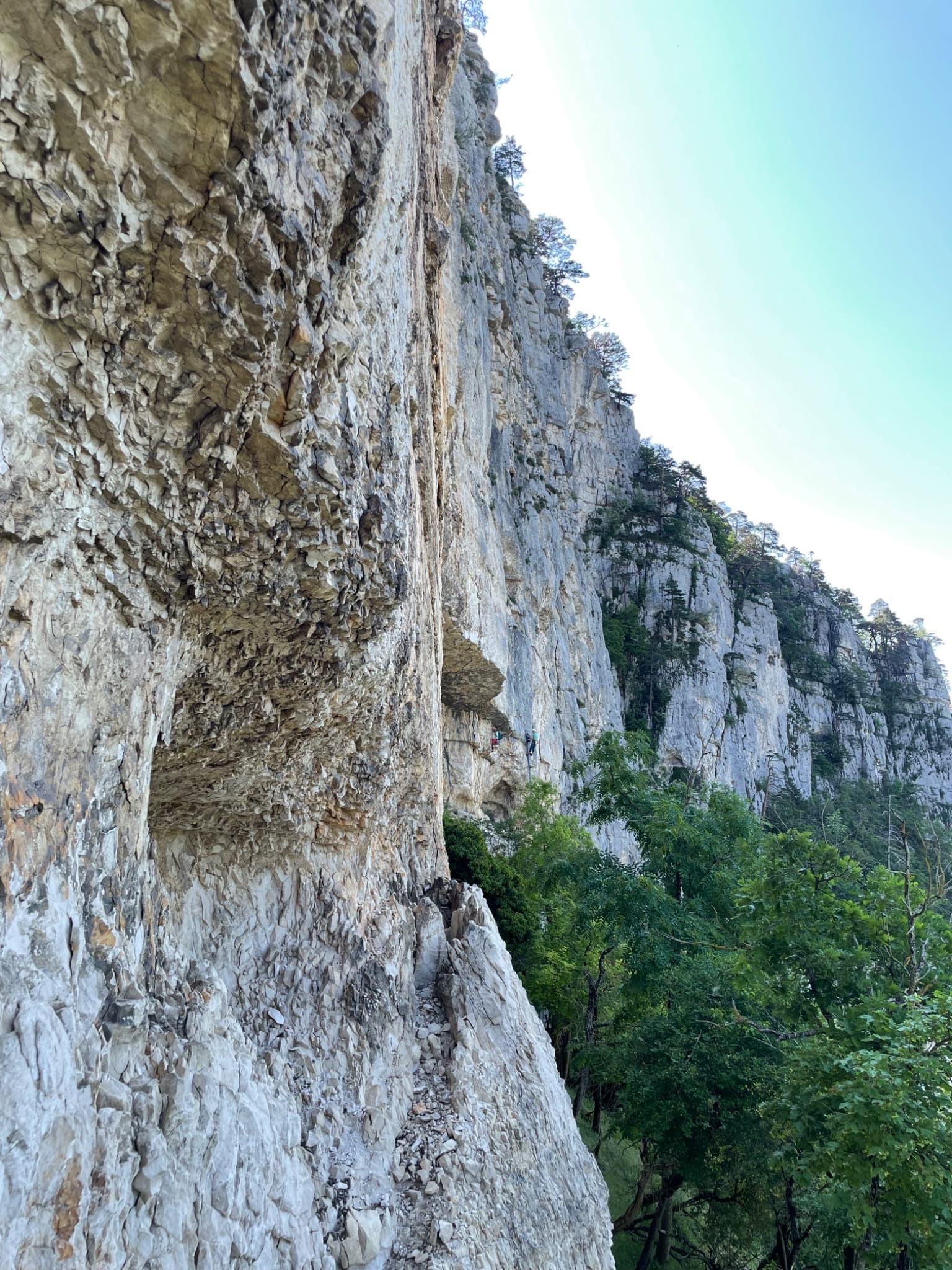
A climber on pitch 3 of The Wall, Plagne, above the autumn woodsPhoto: Boris · CC BY-SA 3.0
Hardest pitch
6b+6b+
Pitches
4
Length
–
Approach
–
Aspect
W
West-facing
Rope
1×50 m

Highest point about 800 m above sea level (estimate: terrain height at the mapped point plus the height of the route).

Rock
limestone
Season
Apr to Jun, Sep to Oct
Bolting confidence
High
Last verified
October 2026 · Aggregated by AI from published sources

Photo

Overview

The Wall climbs four pitches up the steep west face of Plagne, a huge crag of more than 1,100 routes near Biel/Bienne. The camptocamp topo calls it a classic of the sector not to be missed. The first pitch is a friction corner and a mean little slab, the second has some earth at the start, the third is a fine thin limestone crack and the fourth starts with good moves before swinging right round a bulging prow. It was cleaned and re-equipped in stainless in autumn 2025, after which the equipper rates it 6a obligatory.

Worth knowing

  • Allow about 2 to 3.5 hours on the route (2020 parties).
  • Grades at Plagne are stiff: a 2020 party called it '6b obligatory, Jura style' before the rebolt; the equipper now gives 6a obligatory.

Pitch by pitch

The atlas doesn't show topos: they are the work of the people who bolt and document these routes. See the topo in Kletterführer Jura bernois / Berner Jura.

Pitches of The Wall
PitchGradeBoltsNotes
P16b16 boltsSlabby corner on friction, then a tenacious little slab. 15 bolts plus one at the foot of the route.
P26a+11 boltsSome earth in the first part, then a surprising second half. A 2020 party graded it 6a.
P36b+12 boltsA beautiful pitch up a thin limestone crack; a few obligatory moves, and remember your feet.
P46b12 boltsNice moves at the start, then move right round the bulging prow. A 2020 party thought it 6b+.

Approach

To the parking

Plagne is 10 km from Biel/Bienne. Drive towards Delémont, turn right at Frinvillier for Plagne, go up to the village and park at the football pitch at the top of the village (parking there is required). There are guest rooms in the village.

On foot

At Plagne you almost always arrive from the top. From the football pitch walk about 25 minutes on the flat to the top of the cliff, then go down the ladders (Les Échelles) and the paths to the foot of the Face de Plagne; paths are marked red and the route name is painted at the start. A 2020 party instead reached the foot by a 50 m abseil from the top of pitch 2, which they found while walking along the top of the cliff. The access paths are not obvious; carry the CAS topo.

Map of the walk-in

Point from camptocamp waypoint 103761 (Plagne – Face de Plagne)

For your phone or watch

Download GPX

Contains the route point.

Points from published sources, not surveyed.

Descent

From the top the path is very quick: go left via the Les Échelles sector. You can also abseil from every belay (25 m; 30 m from the exit belay). A 2020 party descended in two abseils down the route.

Bailing off the route

Easy to bail

The topo says you can abseil 25 m from every belay, 30 m from the exit, and a 2020 party descended the route in two abseils. The belays are new stainless anchors.

Retreat from
Any belay.
Point of no return
None; the route is short and abseilable throughout.
Carry
A 50 m single rope covers each 25 m abseil.
Basis
Stated in the sourcesAbseil distances are given in the camptocamp topo and an outing describes abseiling the route.

Switzerland

In an emergency

In an emergency · Switzerland

1414Rega air rescue

Call 1414

Rega air rescue

In Valais call 144.

Position of the crag

47.17670, 7.25238

Marks the crag, not the route: give route and pitch.

Say what happened, how many are hurt, and where you are. Checked October 2026 (source).

Hazards

  • Small stones fall frequently (2020 report); wear a helmet.
  • The rock at the start of the route and at the end of pitch 2 is less good than the rest.
  • The access paths along the cliff top and on the ladders are exposed.

Gear

Single 50 m rope and 15 quickdraws (camptocamp). Helmet. A traverse option: from the third belay you can traverse 20 m right and finish up pitch 6 of Nevermore (6b, 30 m).

Checklist

Quickdraws
15
Rope
1×50 m
Helmet
One each
Abseil device and prusik
For abseiling

Conditions

Plan B nearby

  • EasierKGB6b4 pitchesfaces S19 km away
  • HarderSuper G6c7 pitchesfaces W0.1 km away

Straight-line distances, up to 30 km.

Reader reports

No reports yet.

Report a problem with this route

Say what and where. Reports are checked before they appear; no name or email is stored.

Bolts and history

Bolting
Equipped by Boris Girardin in 1996 and completely re-equipped by him on 13 November 2025 with stainless hangers, bolts and belays (51 bolts, 4 belays), after 12 hours of cleaning. The topo counts 11 to 16 bolts per pitch. Before the rebolt, 2020 parties called the gear top quality, a little more spaced in the second half.
History
Opened by Boris Girardin in 1996. Cleaned for 12 hours on 19 and 20 September 2025 and re-equipped on 13 November 2025 with stainless hangers, bolts and belays.
Guidebook
CAS 'Jura bernois' climbing guide (2023 edition), sold in climbing shops; it covers Plagne in detail. Buy from kletterfuehrer.net.

Where sources disagree

  • Pitch grades: the French camptocamp text gives 6b, 6a+, 6b+, 6b; the Spanish text 6a, 6a+, 6b+, 6b; a 2020 party proposed 6b, 6a, 6b+, 6b+.
  • Route length is not published.

Sources

More in Bernese Jura (Plagne)

All routes in Bernese Jura (Plagne)
The Grand Toit wall at Plagne from pitch 1 of Super G

Switzerland · Bernese Jura (Plagne)

Super G

The longest route at Plagne, about 180 m of climbing that traverses the whole yellow wall of the Grand Toit sector on its best rock. Big atmosphere on every pitch, with traverses where a fall would leave you hanging. 6c, 6a+ obligatory.

6c6c7 pitches180 m

Around 6b+ · about 4 pitches

Similar elsewhere

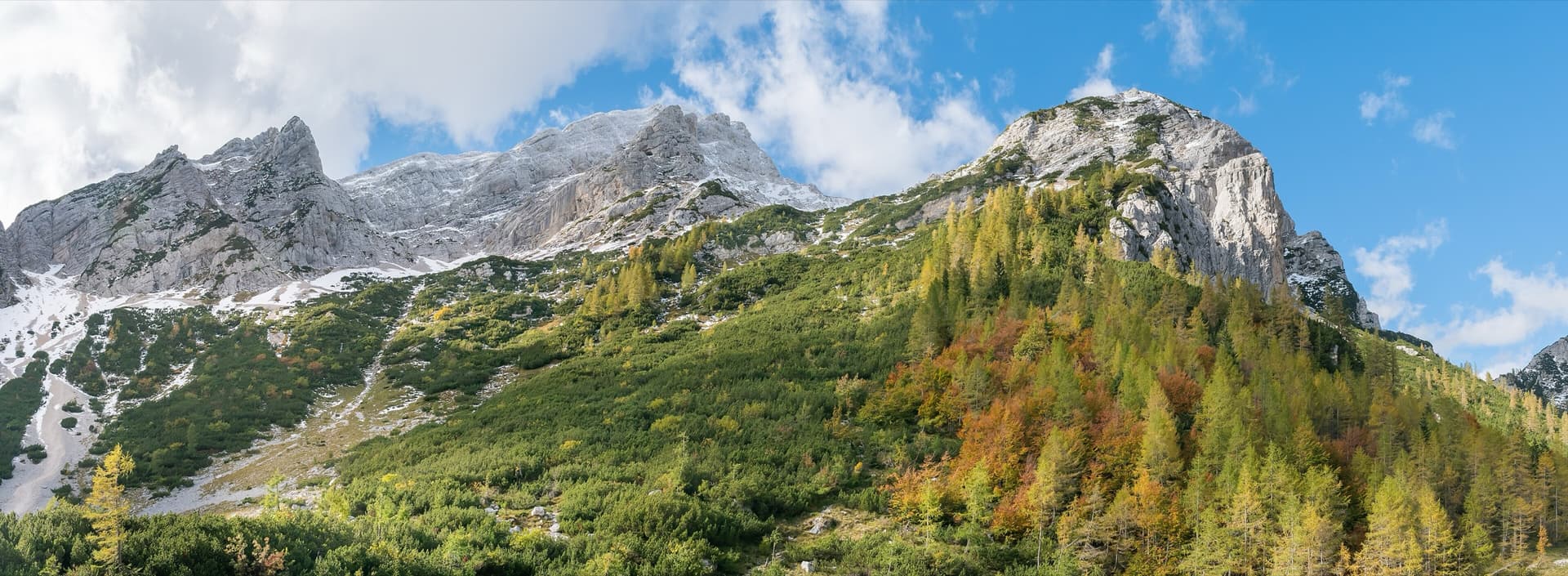
Mala Mojstrovka (left) and Nad Šitom glava (right) from the Vršič Pass in autumn; the routes are on the pale rock wall of Nad Šitom glava above the larches.

Slovenia · Vršič Pass (Julian Alps)

Črni panter

Sustained slab climbing up a striking black streak, clearly visible from the pass, on surprisingly good rock for this face. The crux is a move from slab into a corner on P2.

6b+6b+4 pitches105 m

Read the cautions

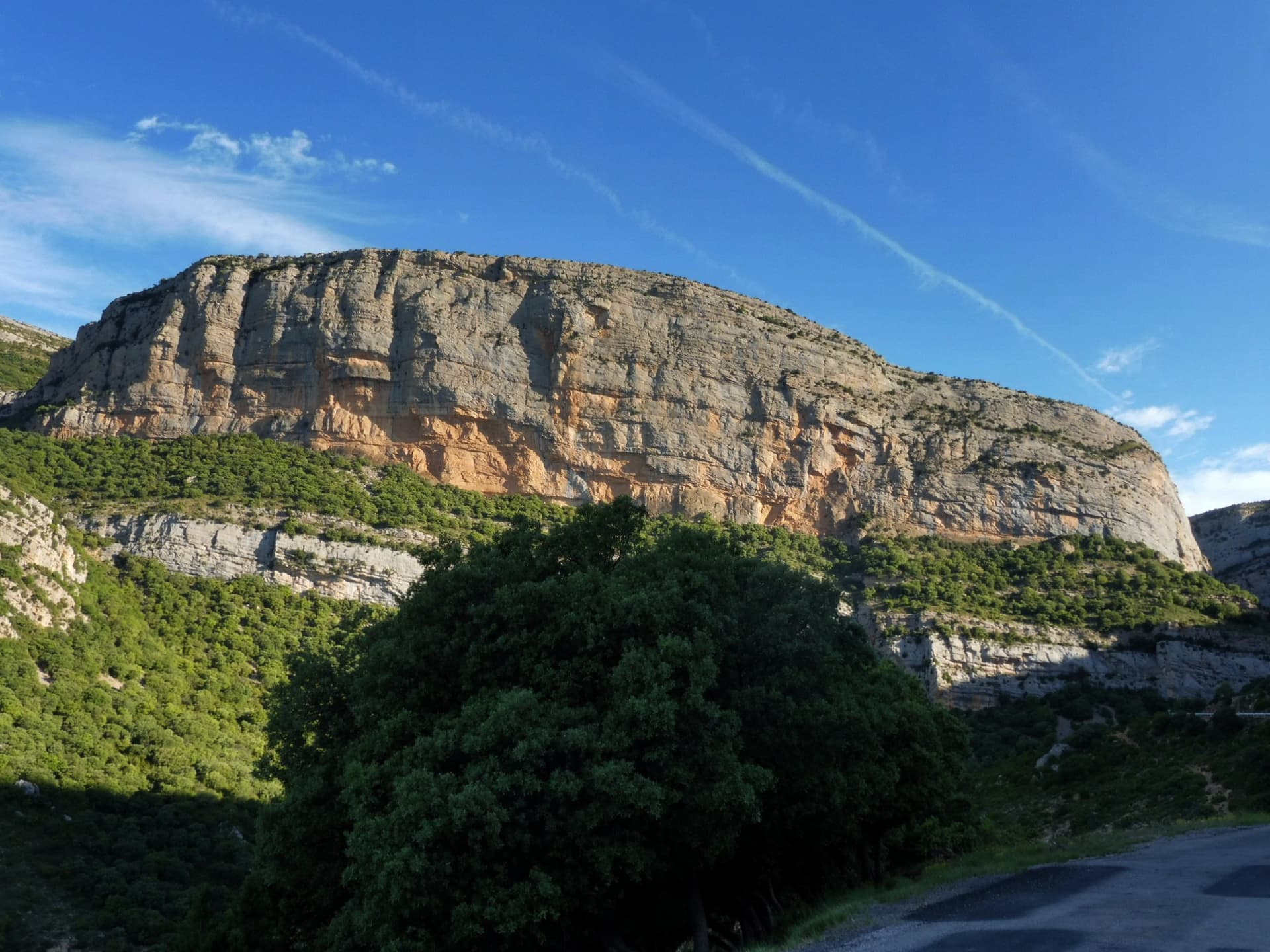
The south-east face of the Roca dels Arcs above the road from Vilanova de Meià, in the Montsec de Rúbies.

Spain · Vilanova de Meià (Roca dels Arcs)

El Somni de Quimfer

Four long, steep pitches on the left side of the Roca dels Arcs, sustained at 6a on good holds and not yet polished above the first pitch. The third pitch is the event: a reachy bulge to start, 30 m of gently overhanging strata, and a hard boulder move off a ledge to finish that most people grade 6c. That last move can be avoided by belaying on the neighbouring route.

6b+6b+4 pitches160 m

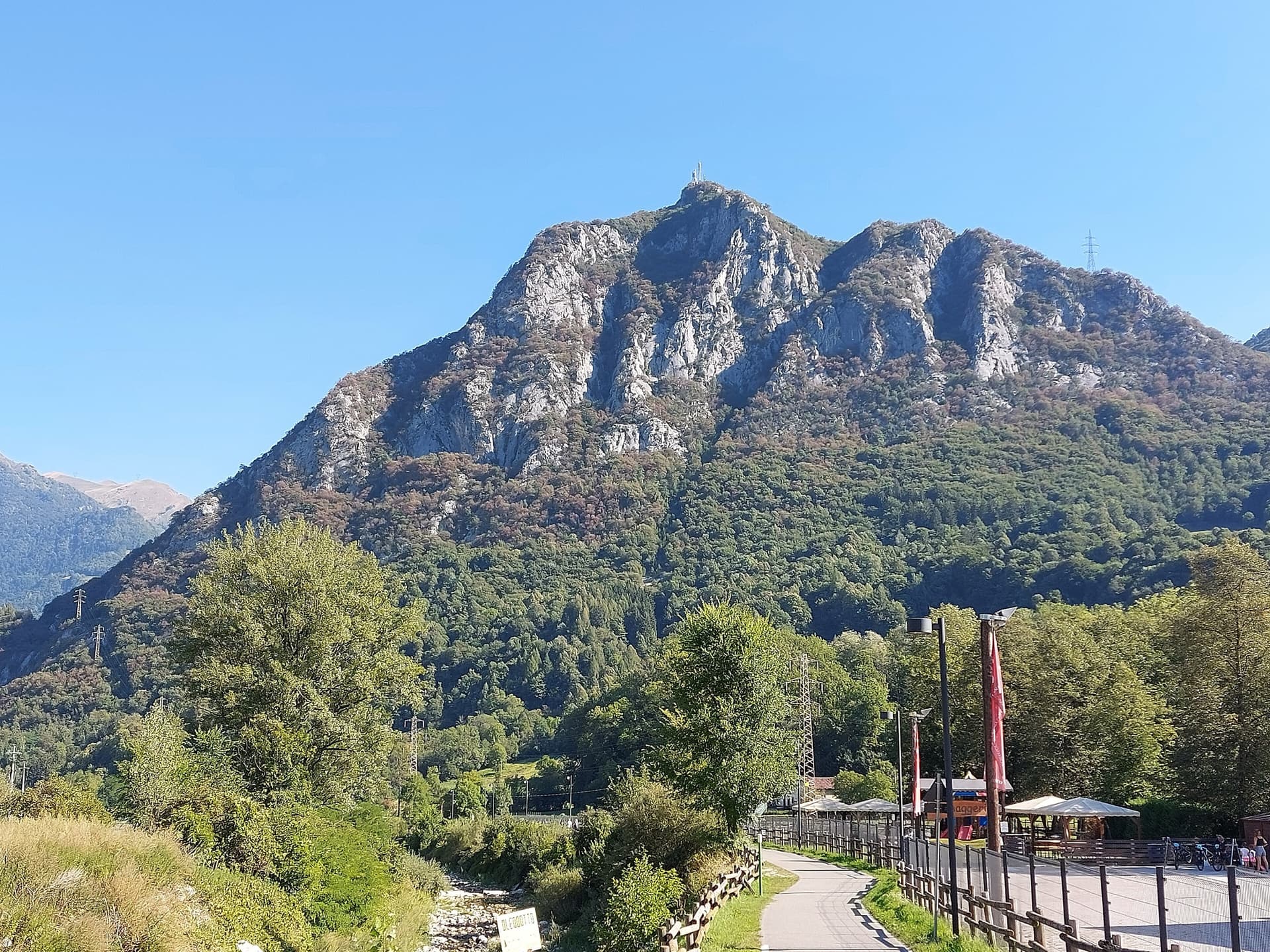
The Zucco dell'Angelone above the Valsassina, seen from Pasturo, with the antenna on its summit. The climbing spurs are the pale limestone ribs on the sunny side of the mountain above Barzio; individual spurs and routes are not marked.

Italy · Lecco & Valsassina

Foto di Gruppo con Signorine

Three friendly pitches up a striking arched flake and compact slabs, then a short wall with one hard, reachy move that most people pull through. A 1980 route by the Savonittos and Alessandro Gogna, and the usual first half of a link-up with Gli Schiavi della Pietra on the spur above.

6b+6b+4 pitches90 m

Read the cautions

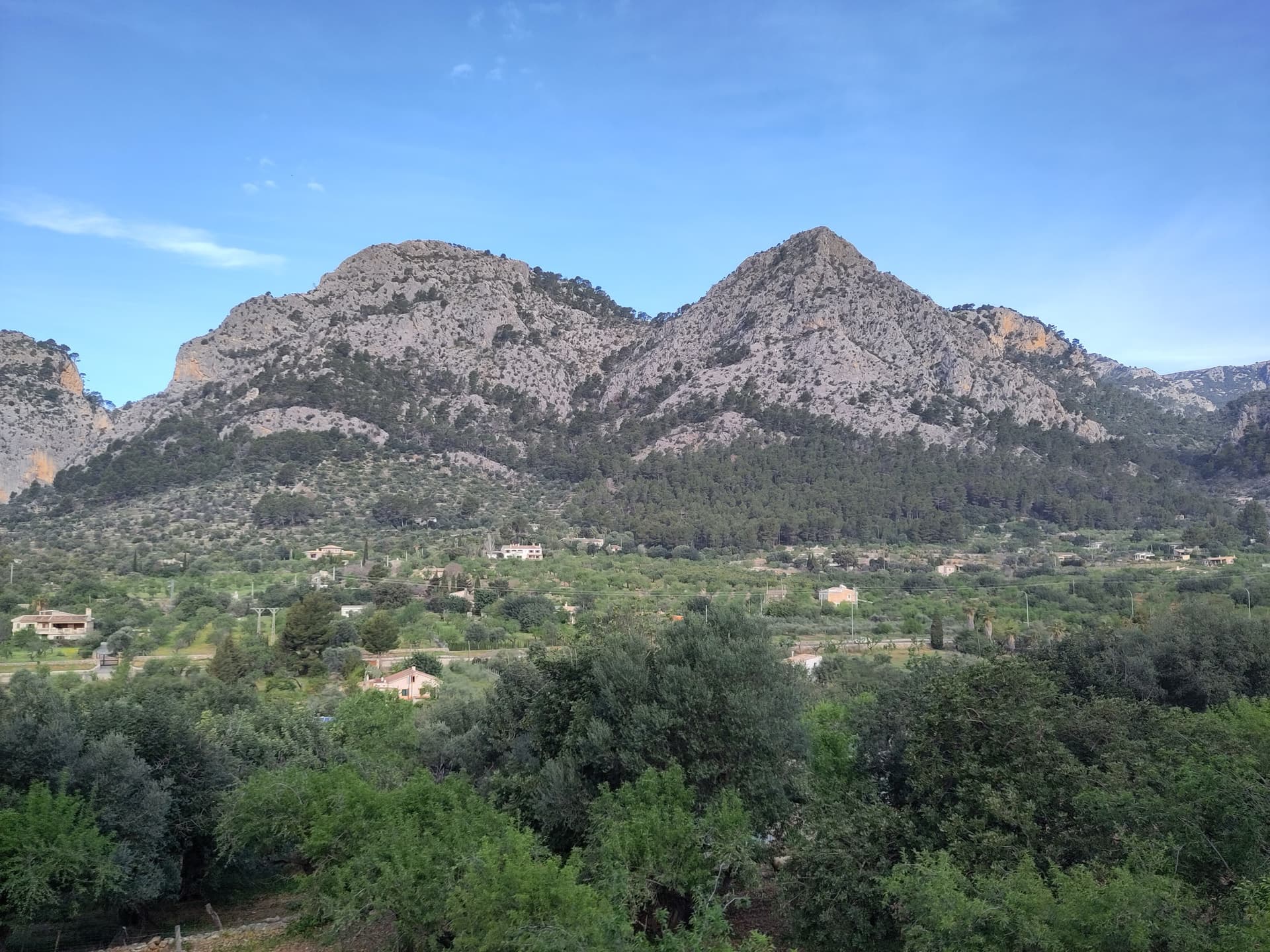
The Puig de Son Nasi (left) and the pointed Puig de s'Alqueria, the Sa Gubia peak, seen from the Sóller railway to the east. The climbing walls are out of sight in the gorge on the far side.

Spain · Mallorca (Sa Gubia)

Mongol Express

A big line up the full height of the Bomberos wall: a 40 m tufa pitch that is a popular climb in its own right, easy broken ground, a steeper 6a, and a long, steep, technical 6b+ wall to finish. The top pitch cannot be aided past its crux, so this is a route for a solid 6b+ leader.

6b+6b+4 pitches155 m

Read the cautions

Researched and aggregated by AI from published sources, last compiled October 2026. It can be wrong, and bolts, anchors and access change: check a current guidebook and read the disclaimer.