Menu

Hydra

Welschenrohr – Glatti Flue · Grand Val Jura (Grandval & Welschenrohr) · Switzerland

Read the cautionsEasy to bail

An aesthetic pillar above Welschenrohr in the Solothurn Jura: six pitches of technical, old-school Jura climbing on stainless bolts, saving the best for a steep, sustained 6c last pitch. Pitch 2 is 7a by the left-hand variant or 6c on the right. Closed April to June for chamois.

Climbing mode: Big type, screen kept awake, tick pitches as you go.

Hardest pitch
7a7a
Pitches
6
Length
140 m
Approach
30 min
Aspect
S
South-facing
Rope
2×50 m or 1×70 m

Highest point 1075 m above sea level (camptocamp route 1366535).

Rock
limestone
Season
Jul to Nov
Bolting confidence
High
Last verified
October 2026 · Aggregated by AI from published sources
Read before you go

Excellent stainless bolting, but stonefall at the base and a seasonal climbing ban from April to June.

Photo

Climbing modeBig type, screen kept awake, tick pitches as you go.

Overview

Hydra climbs the pillar of the Glatti Flue above Welschenrohr, north of Solothurn, in six pitches of about 20 to 35 m. The first ascent was in 1985 and it was rebolted around 2018 with stainless bolts. The grades are old-school: a 2023 party found it hard for the numbers and recommends a solid 6c level, with 6b obligatory on the last pitch. The first half is less interesting climbing on fair rock; the top pitch, a steep wall in a big setting on near-perfect rock, is the highlight.

Worth knowing

  • Allow about 2.5 hours on the route (2021 party).
  • Approach the scree on its right-hand side.

Pitch by pitch

The atlas doesn't show topos: they are the work of the people who bolt and document these routes. See the topo in Kletterführer extrem Jura.

Pitches of Hydra
PitchGradeLengthNotes
P16a25 mFairly short and easy along a line of weakness; rock a bit doubtful (2023 party: 5c/5c+).
P27a20 mLeft-hand variant: up, then along under an overhang before crossing it on big, spaced holds with friction feet. The right-hand variant shares the start, hooks right then traverses back left at 6c.
P36a+25 mTechnical slab, a bit dirty and lichenous, on friction and poor edges (2023: 6a+/6b).
P45c20 mTransition pitch on good holds up a vegetated slab; a favourite of the 2023 party.
P56b+20 mPhysical, technical oblique crack on good but spaced holds with few footholds, then the crest of the pillar (2023: 6b+/6c).
P66c35 mThe key pitch and the best: a steep, sustained vertical wall with some slab moves and some obligatory moves, in a great position.

Approach

To the parking

Drive to Welschenrohr (canton Solothurn), enter the village at the church and follow yellow hiking signs to the cemetery car park; the road is closed beyond. Parking is limited to 4 hours with a disc; if you need longer, park about 200 m lower opposite the church.

On foot · about 30 min

About 30 minutes (1 km). Follow the road towards the cliff through a large farm. About 60 m past the fence above it, take a faint tractor track left across the meadow for about 300 m, through one fence and along a second to a turnstile. Continue on the track, bearing slightly right, for about 200 m to a wooden bench; just before it take the hairpin right to the foot of the scree. Climb the scree, best keeping to the right, to a cairn and a faint path that leads to the foot of the pillar; a green stone marks the start.

Map of the walk-in

Point from camptocamp waypoint 1366525 (Welschenrohr)

For your phone or watch

Download GPX

Contains the route point.

Points from published sources, not surveyed.

Descent

Abseil the route. With 50 m ropes: belay 6 to 4 (can be split in two to limit the risk of jamming), belay 4 to 2 straight down the slab, belay 2 to the ground (re-clip a bolt or two to avoid the trees). With 35 m: 6 to 5, 5 to 3, 3 to 1, 1 to the ground.

Bailing off the route

Easy to bail

Abseiling the route is the normal descent, in three 50 m or four 35 m abseils, so you can retreat from any belay. The 2023 party advises splitting the top abseil to avoid jamming.

Retreat from
Any belay.
Point of no return
None.
Carry
2×50 m ropes or a single 70 m rope.
Basis
Stated in the sourcesAbseil descent described in the topo and outings.

Switzerland

In an emergency

In an emergency · Switzerland

1414Rega air rescue

Call 1414

Rega air rescue

In Valais call 144.

Position of the crag

47.28884, 7.52789

Marks the crag, not the route: give route and pitch.

Say what happened, how many are hurt, and where you are. Checked October 2026 (source).

Hazards

  • The first two pitches are exposed to stonefall, and the foot of the pillar is very exposed in freeze-thaw conditions.
  • Rock is typical of the Basel Jura: correct overall but far from solid on the first pitches.
  • The last pitch is a step up, with some obligatory but not very committing moves (2023).

Gear

10 quickdraws plus belay gear. Double ropes 2×50 m, or a single rope of at least 70 m for the abseils.

Checklist

Quickdraws
10
Rope
2×50 m or 1×70 m
Helmet
One each
Abseil device and prusik
For abseiling

Conditions

Plan B nearby

  • EasierSuper G6c7 pitchesfaces W24 km away

Straight-line distances, up to 30 km.

Reader reports

No reports yet.

Report a problem with this route

Say what and where. Reports are checked before they appear; no name or email is stored.

Bolts and history

Bolting
First climbed in 1985 by M. Brunner and re-equipped around 2018 with stainless bolts; the topo calls it fully equipped and the descent abseils from the belays. Parties in 2021 and 2023 call the bolting excellent and generous ('very, even too, well supplied'), though the last pitch asks more of the leader. The Spanish topo says nuts are useless.
History
First ascent by M. Brunner in 1985; re-equipped around 2018.
Guidebook
SAC Jura guides; the 2023 party mentions the SAC topo. Buy from kletterfuehrer.net.

Where sources disagree

  • Pitch 1: 6a in the topo, 5c/5c+ according to the 2023 party; pitch 3: 6a+ against 6a+/6b; pitch 5: 6b+ against 6b+/6c.

Sources

Around 7a · about 6 pitches

Similar elsewhere

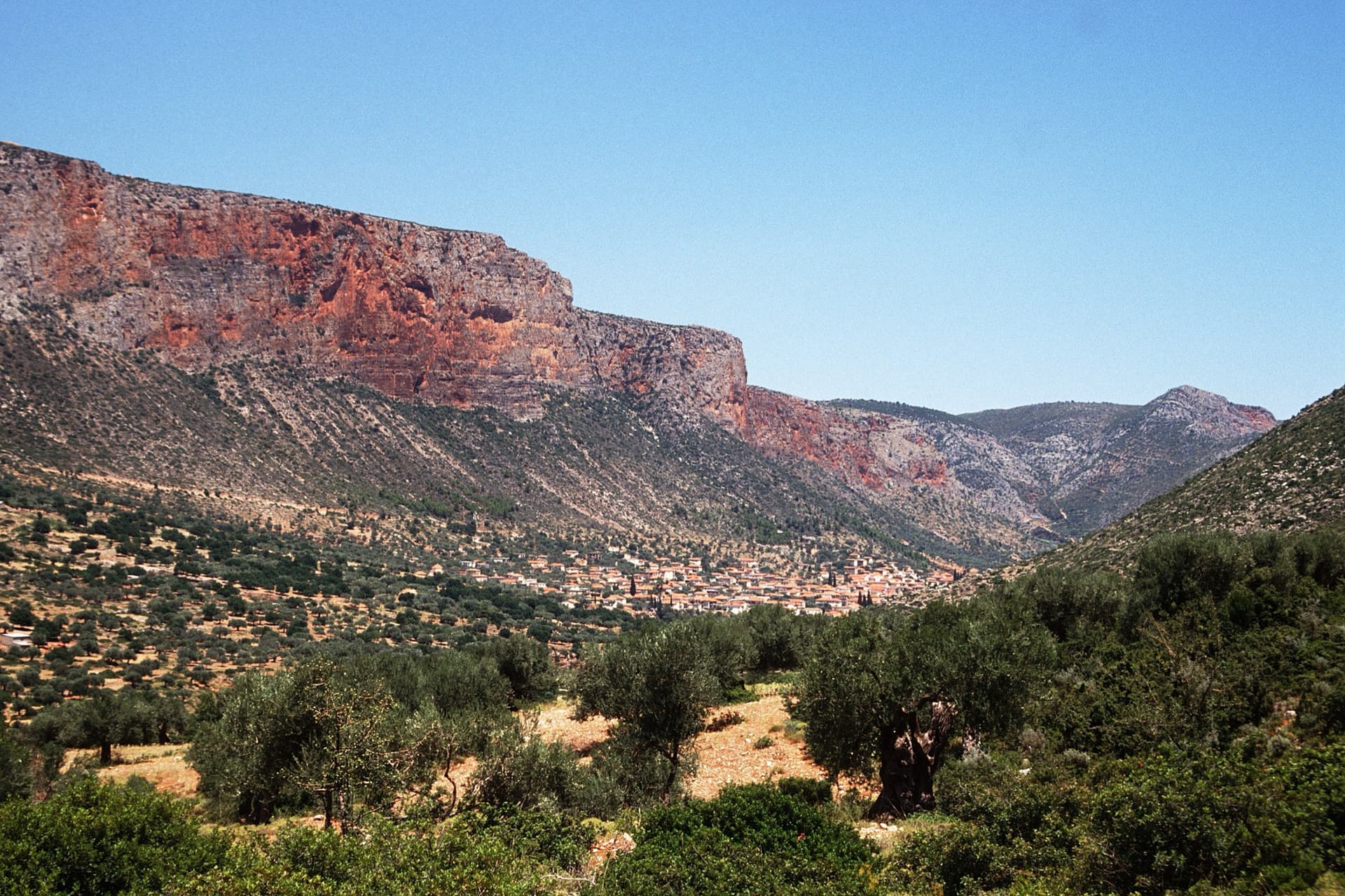
Kokkinovrachos above Leonidio seen from the west; the big sport multi-pitches climb the red wall above the town

Greece · Leonidio & Kyparissi

Ramisi Rock

The route that opened Kokkinovrachos to sport multi-pitch climbing: six long pitches up the centre-right of the red wall, sustained at 6b+ to 6c with one technical 7a crux that can be aided on two bolts. Rated three stars locally and more sustained than Aramis.

7a7a6 pitches180 m

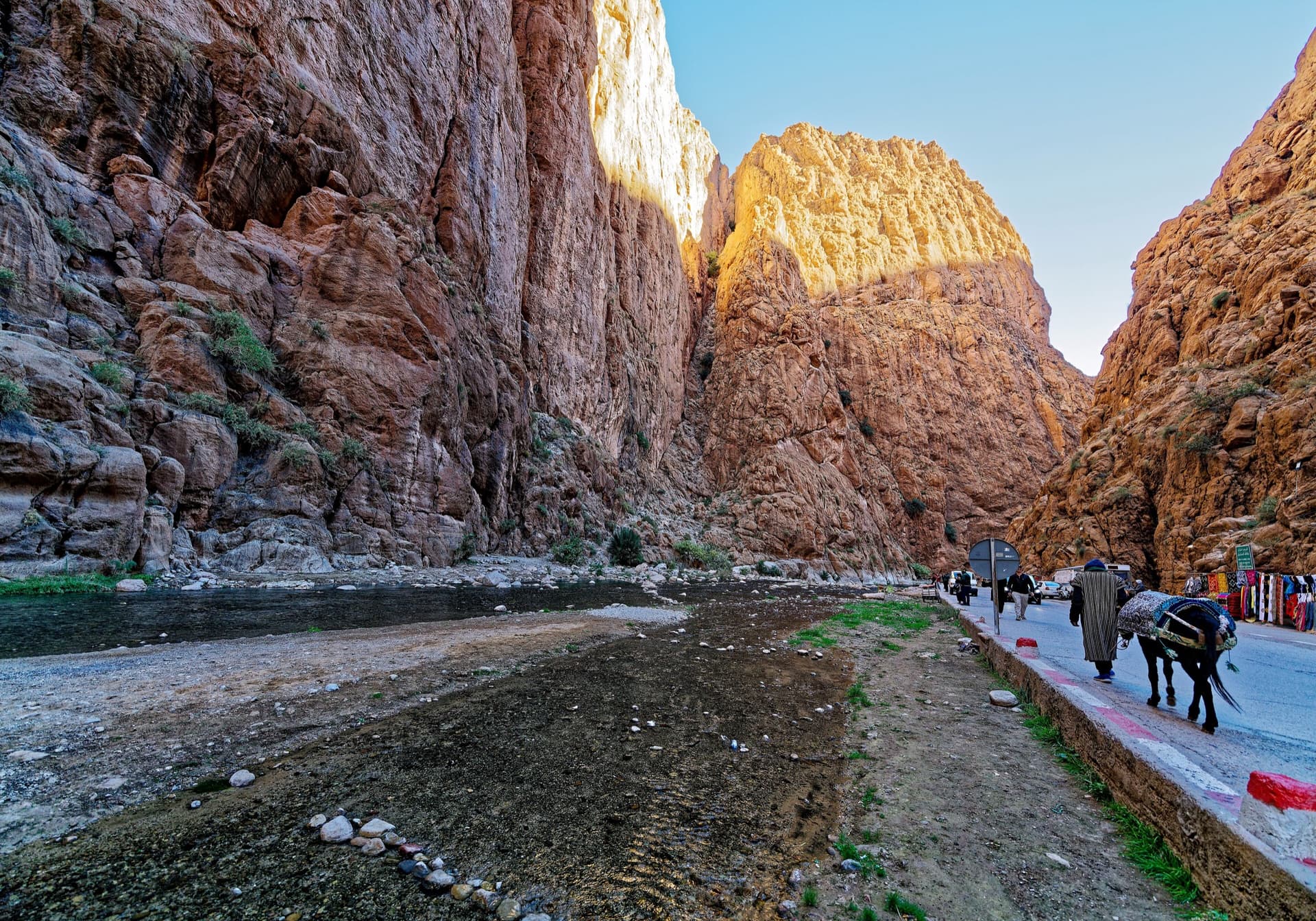
The narrows of the Todra Gorge in late afternoon light, a few minutes' walk upstream of the Mansour wall; a view of the gorge, not of this route's wall.

Morocco · Todra Gorge (Todgha)

China Perdida

Steep, fingery wall climbing that starts with your feet almost in the stream at the gorge entrance. The 7a second pitch is hard for only 2 to 3 metres and can be swapped for a 6b pitch on the neighbouring route, after which three pitches of 6b+ to 6c+ on pocketed and edgy rock lead to the top. Abseil descent.

7a7a6 pitches200 m

Read the cautions

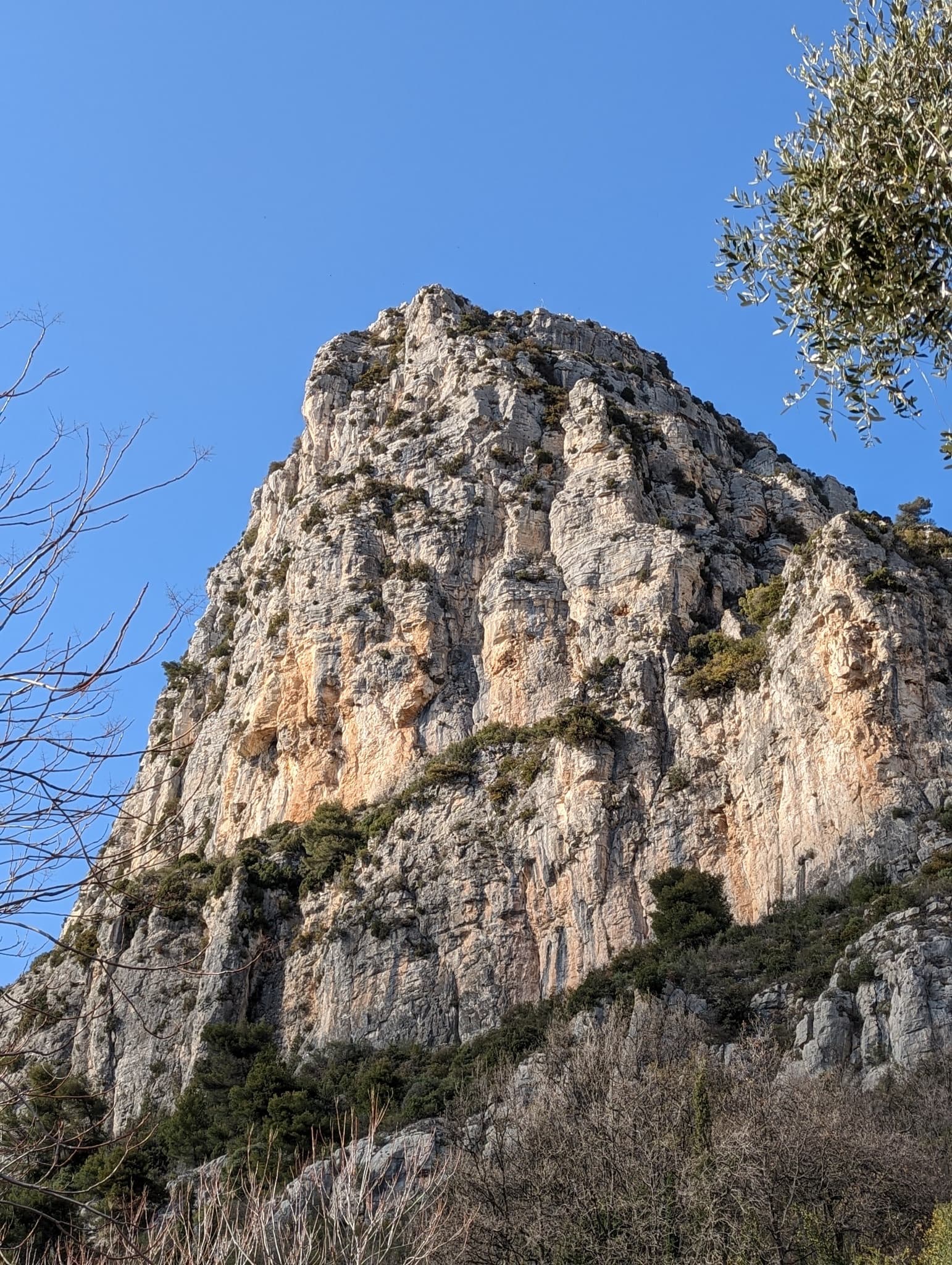
The Grande Face of the Baou de Saint-Jeannet seen from the car park; Friend Zone is on the west side of this face.

France · Baou de Saint-Jeannet

Friend Zone

A modern bolted line up the left side of the Baou, starting beside the Péril Jaune cave: six varied pitches on unpolished rock, with a steep 6c wall and a fine crack and corner finishing with one hard move (7a on the topo, 6c or 6c+ to most parties). Two walking transitions through scrub break the climbing, so it has less exposure than the routes on the main face.

7a7a6 pitches230 m

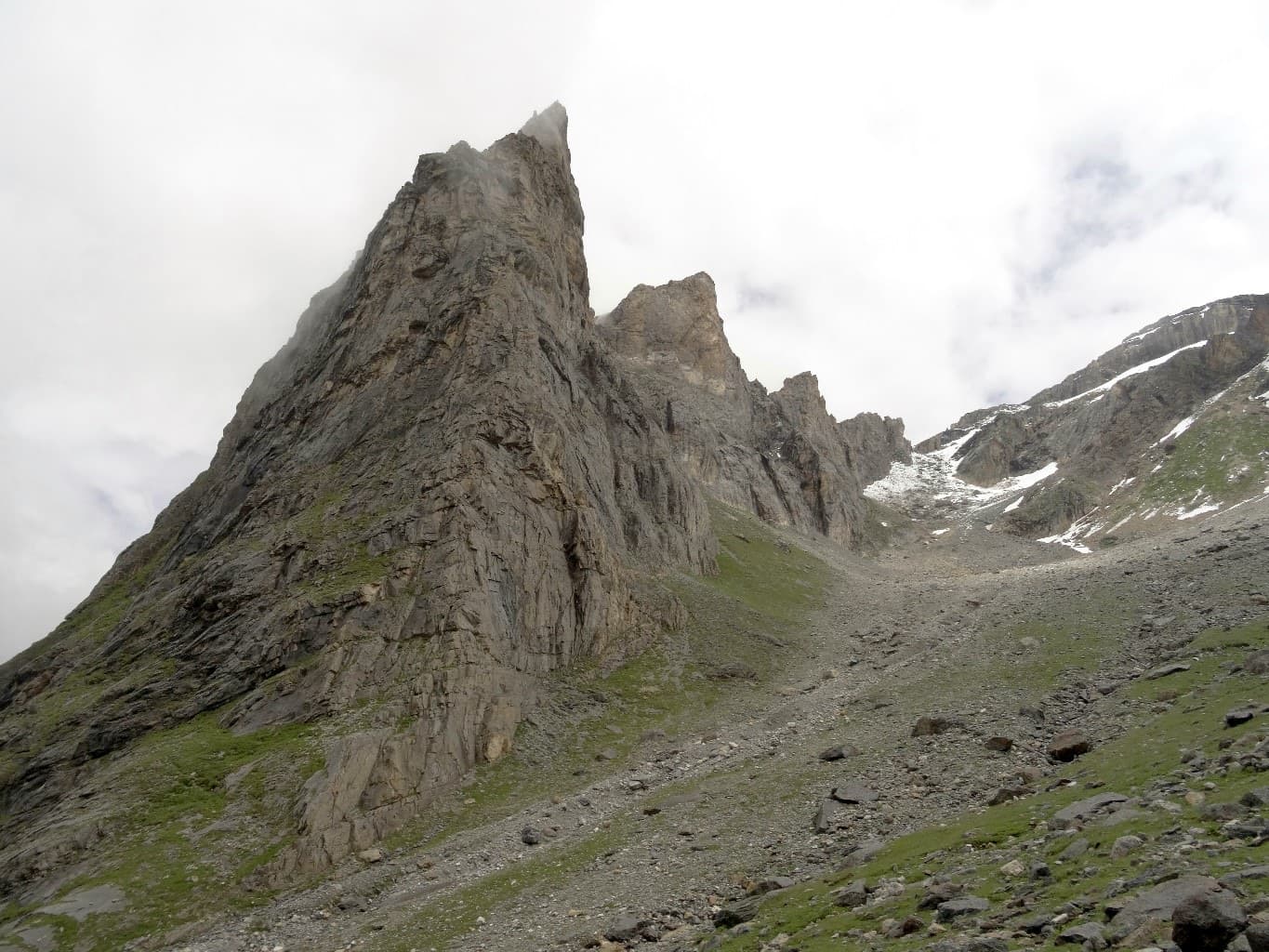
The Petite Aiguille de l'Arcelin from the approach through the Cirque de l'Arcelin

France · Vanoise (Grand Bec)

Stop ou Encore

A short, wild, modern route on the grey limestone of the Petite Aiguille de l'Arcelin, in two halves: thin, technical slab low down, including a sustained 6b+ with obligatory moves, then steep walls with a very sustained 7a pitch of two bouldery cruxes. Seldom climbed for its quality.

7a7a6 pitches190 m

Read the cautions

Researched and aggregated by AI from published sources, last compiled October 2026. It can be wrong, and bolts, anchors and access change: check a current guidebook and read the disclaimer.