Multipitch Atlas

Tintangel

Hintisberg · Bernese Oberland · Switzerland

Easy to bailBolting confidence: high

Four pitches of steep, banded limestone left of Zick-Zack. A long opening pitch with big moves leads to the 6b+ crux, which packs a few fierce moves into its start; then come an athletic line through small roofs and a fine wall on small holds. Stiff grading in the Swiss manner.

A climber on the long first pitch of TintangelPhoto: Melchior · CC BY-SA 3.0

Photo

A climber on the long first pitch of TintangelPhoto: Melchior · CC BY-SA 3.0
Hardest pitch
6b+
Pitches
4
Length
120 m
Approach
35 min
Aspect
SE
South-east-facing
Rope
2×50 m

The route

Overview

Tintangel is one of the older sport lines on the wall, opened in the late 1980s by Felix Maurhofer and Martin Eggler, and a 2010 party used it as a warm-up for Todi. The climbing alternates between horizontal strata and compact slabs, and parties find the first two pitches the hardest. An optional fifth pitch continues to the top of the wall on doubtful rock; most parties abseil from the fourth belay. The route joins Zick-Zack after its third pitch.

The climbing

Pitch by pitch

Pitches of Tintangel
PitchGradeLengthNotes
P16a42 mStart diagonally leftwards. A long pitch, 40 to 45 m, with big, satisfying moves.
P26b+–Right, then left, with two or three fierce moves at the start and a harder section higher up.
P35c–An athletic pitch slanting up and right through small roofs; reachy. Zick-Zack joins here.
P46a–A good wall on small holds, easier than the pitches below.

Getting there

Approach

To the parking

Leave the Interlaken to Grindelwald road at the Restaurant Stalden, go under the small railway tunnel and follow the toll road all the way up to Alp Hintisberg (1650 m). The toll was 10 CHF, paid at the restaurant, in older reports; camptocamp now mentions a ticket machine about 2 km up the road that takes coins or an app. Continue on the gravel track round a hairpin to the hamlet with the alp restaurant and dormitory, pass it and park 100 to 200 m further on at the marked space with a toilet. Park only there: the alp is farmed.

On foot · about 35 min

Walk back down the track about 60 m to a small water tank and take the marked path towards the cliff, leaving the Faulhorn path at a cairn. About 35 minutes. Tintangel is a little left of Zick-Zack. The name is written at the foot but is hard to see from below.

Map of the walk-in

  • Crag
  • Parking

Loading map

The point marks the crag, not the exact start of the route.

Coordinates · crag

46.66126, 7.95266

Parking

46.65450, 7.95256

camptocamp access waypoint 241976 (Unterläger, 1795 m), the trailhead camptocamp links to the Hintisberg routes; park in the marked space just past the alp restaurant

Point from camptocamp waypoint 241971 (Hintisberg, top of the wall); Mountain Project places the crag at 46.6586, 7.9465

For your phone or watch

Download GPX

Contains the route point and parking. Opens in most mapping apps and GPS watches.

Points are compiled from published sources, with the precision stated above. They were not surveyed on the ground: check them against a current topo.

Getting down

Descent

Abseil the route; parties call the abseils quick. A 2010 party carried 2×50 m.

Retreat

Bailing off the route

Easy to bail

Abseiling the route is the normal descent, and at four pitches you are never far from the ground. Parties describe the abseils as efficient.

Retreat from
Any belay.
Point of no return
None.
Carry
2×50 m ropes.
Basis
Part stated, part inferredCamptocamp states the abseil descent; that each of the four belays is rigged is inferred from that and from trip reports.

Partly inferred from the route facts

Safety

Hazards

  • Stiff grades: parties in 2022 and 2026 found the first two pitches hard for the numbers.
  • The optional fifth pitch to the top has doubtful rock.
  • Wet streaks on the wall to the right of the route after rain.

Sun and weather

Conditions

The wall faces south to south-east between about 1900 and 2100 m and dries fast: parties report routes climbable an hour or two after a shower, though seepage lingers in places after heavy storms. It is hot in midsummer even at this height, so some parties wait for the afternoon shade. The season runs from late spring to autumn, and the toll road is kept in good condition. A party arriving on a hot July afternoon in 2022 found the route already in the shade.

Usual season · Jun to Oct

Sun on the wall · SE-facing

Working out the sunlit hours for this month.

  • January: not yet worked out
  • February: not yet worked out
  • March: not yet worked out
  • April: not yet worked out
  • May: not yet worked out
  • June (usual season): not yet worked out
  • July (usual season): not yet worked out
  • August (usual season): not yet worked out
  • September (usual season): not yet worked out
  • October (usual season): not yet worked out
  • November: not yet worked out
  • December: not yet worked out

Sun on the wallDaylight, wall in shade● Usual season

Estimated from the wall's aspect only. Ignores surrounding terrain, gullies and the wall's exact shape. Clock times are local to the wall (Central European time), for the 15th of each month.

Climate figures for Bernese Oberland are not available yet

What to carry

Gear

12 quickdraws, 2×50 m ropes, helmet.

Checklist

Quickdraws
12
Rope
2×50 m
Helmet
One each
Abseil device and prusik
The descent or the retreat involves abseiling

Derived from the route data; check it against a current topo

From climbers

Reader reports

Reader reports are not being collected yet. Until they are, check a current topo and the local club or guidebook publisher for recent changes to Tintangel.

Worth knowing

Tips

  • One party took about 4 hours; another climbed Tintangel and Todi together in 4 h 20.
  • Stop at the fourth belay: the pitch above adds little.

Open questions

Where sources disagree

  • First ascent year: 1987 (camptocamp) or 1989 (Mountain Project).
  • Spelling: Tintangel in most sources; a 2010 party wondered whether it should be Tintagel.
  • Length: 120 m on camptocamp, 152 m on Mountain Project.
  • Pitch 1 length is the midpoint of camptocamp's '40 to 45 m'; other lengths are not published.
  • Rope length comes from a 2010 trip report, before the re-equipping.

Provenance

Sources

Same area

More in Bernese Oberland

All routes in Bernese Oberland
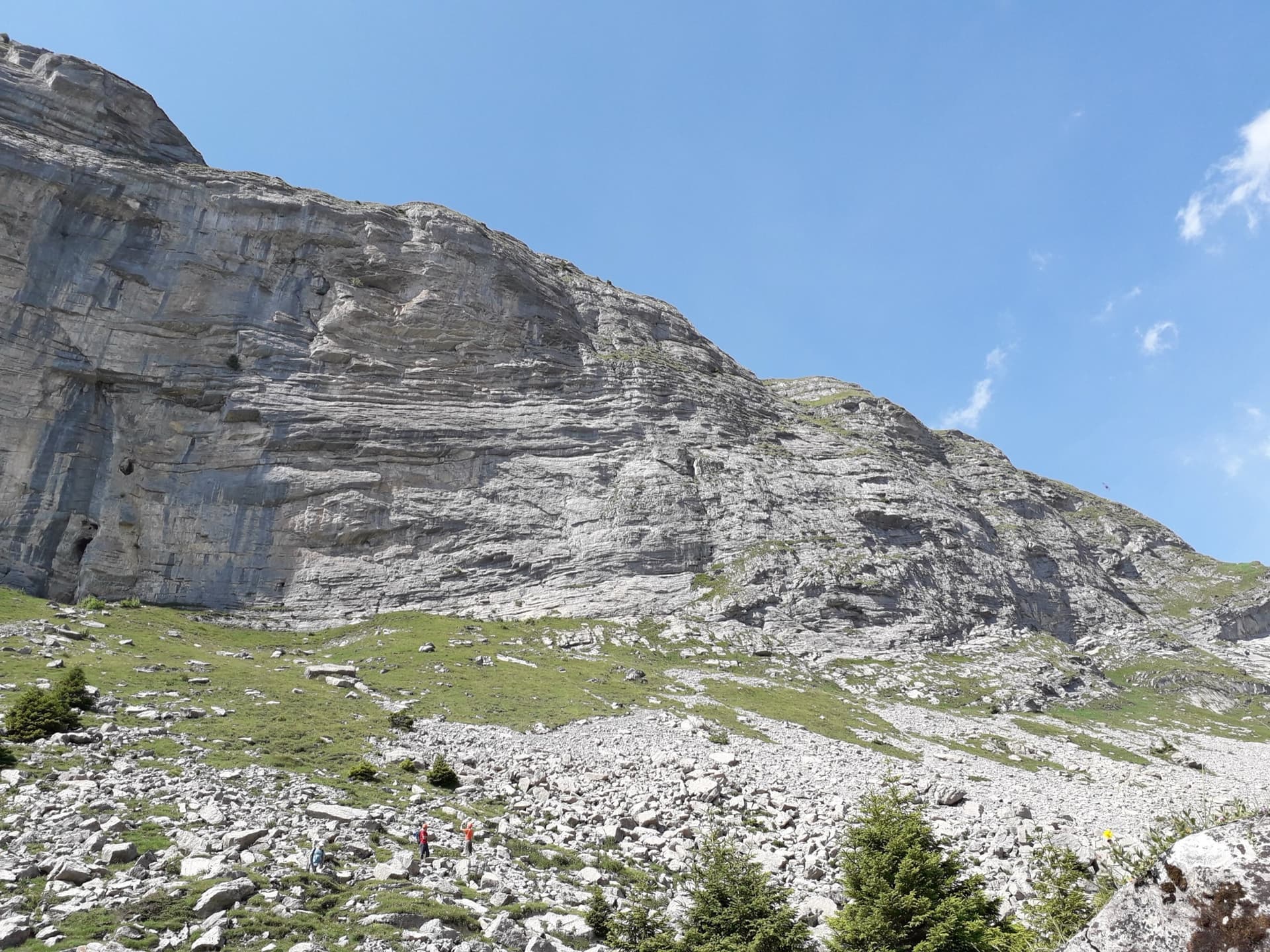
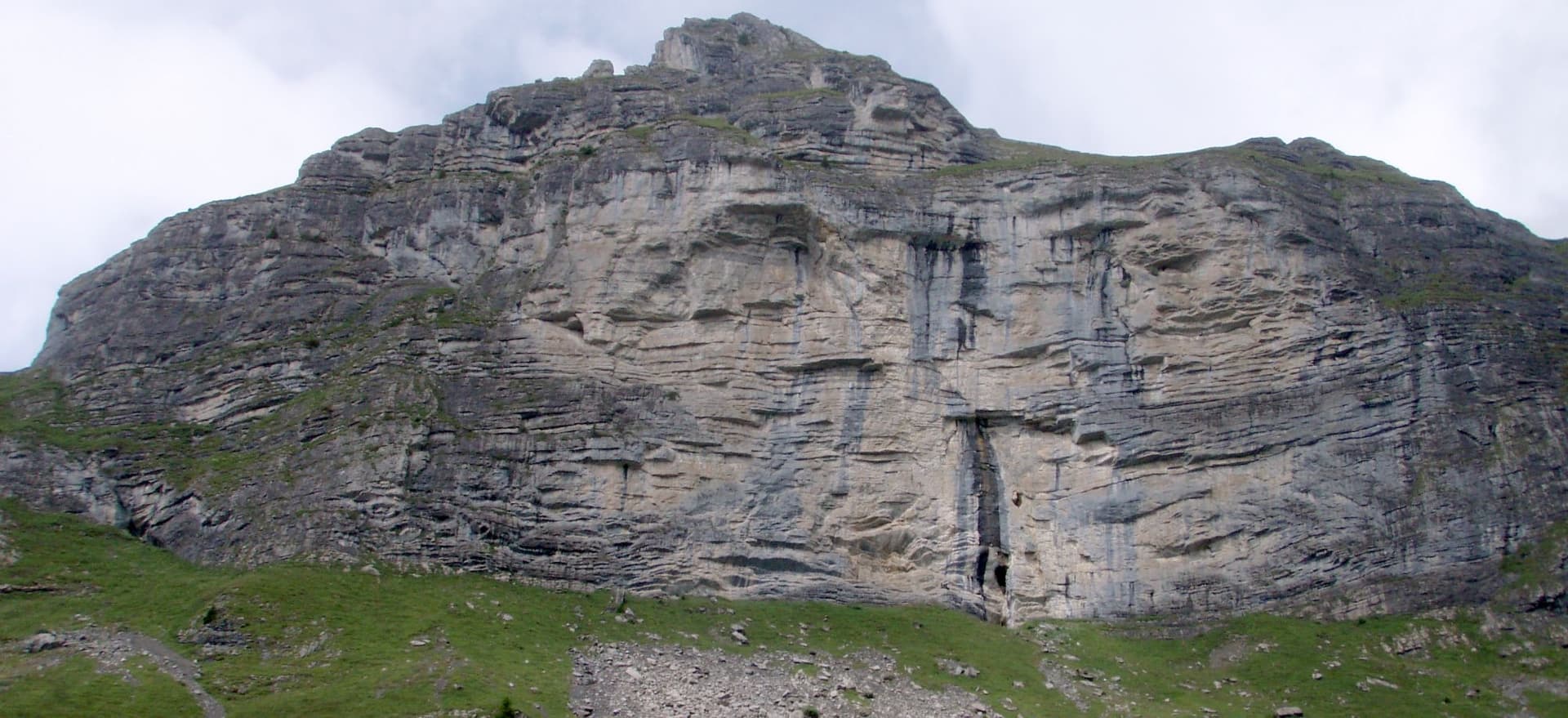
The limestone wall of Hintisberg seen from the meadows on the approach.

Switzerland · Bernese Oberland

Todi

Four pitches of steep, compact limestone opposite the Eiger: a stiff 6a+ warm-up, a short bouldery 7a crux on small edges, a 6b through little roofs on good holds, and a superb, sustained 7a wall of pockets to finish. Short enough to climb without a pack, and the 7a grades are reckoned friendly.

7a4 pitches120 m
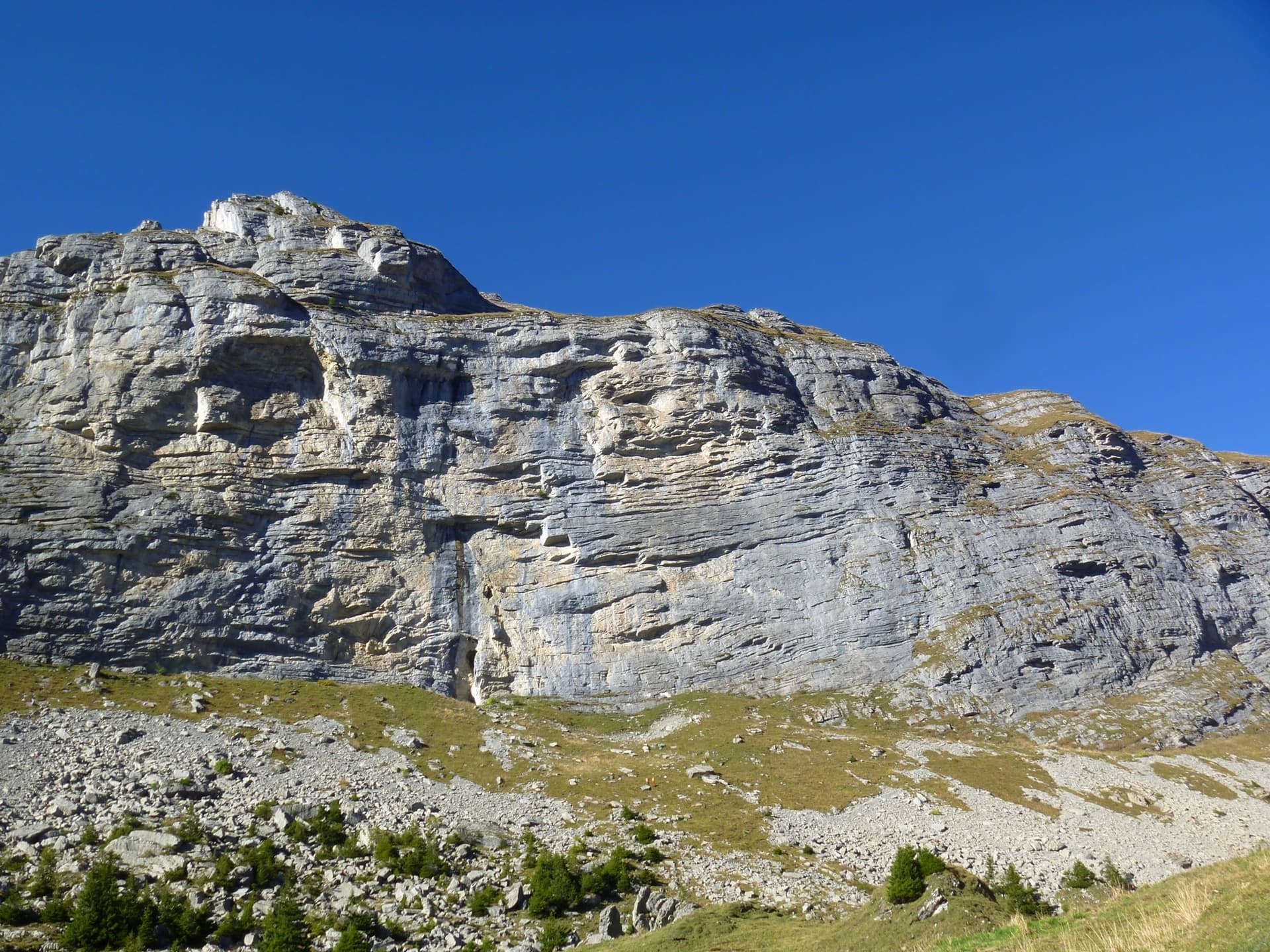
The Hintisberg wall seen from the alp below, on the day of an ascent of Schöne Aussichten

Switzerland · Bernese Oberland

Schöne Aussichten

The easiest long route at Hintisberg, seven pitches on the right side of the wall with the Eiger north face directly behind you. Varied limestone that improves with height: the last two pitches, both 5c, are the best and the hardest. Often quieter than Reisefieber next door.

5c7 pitches180 m

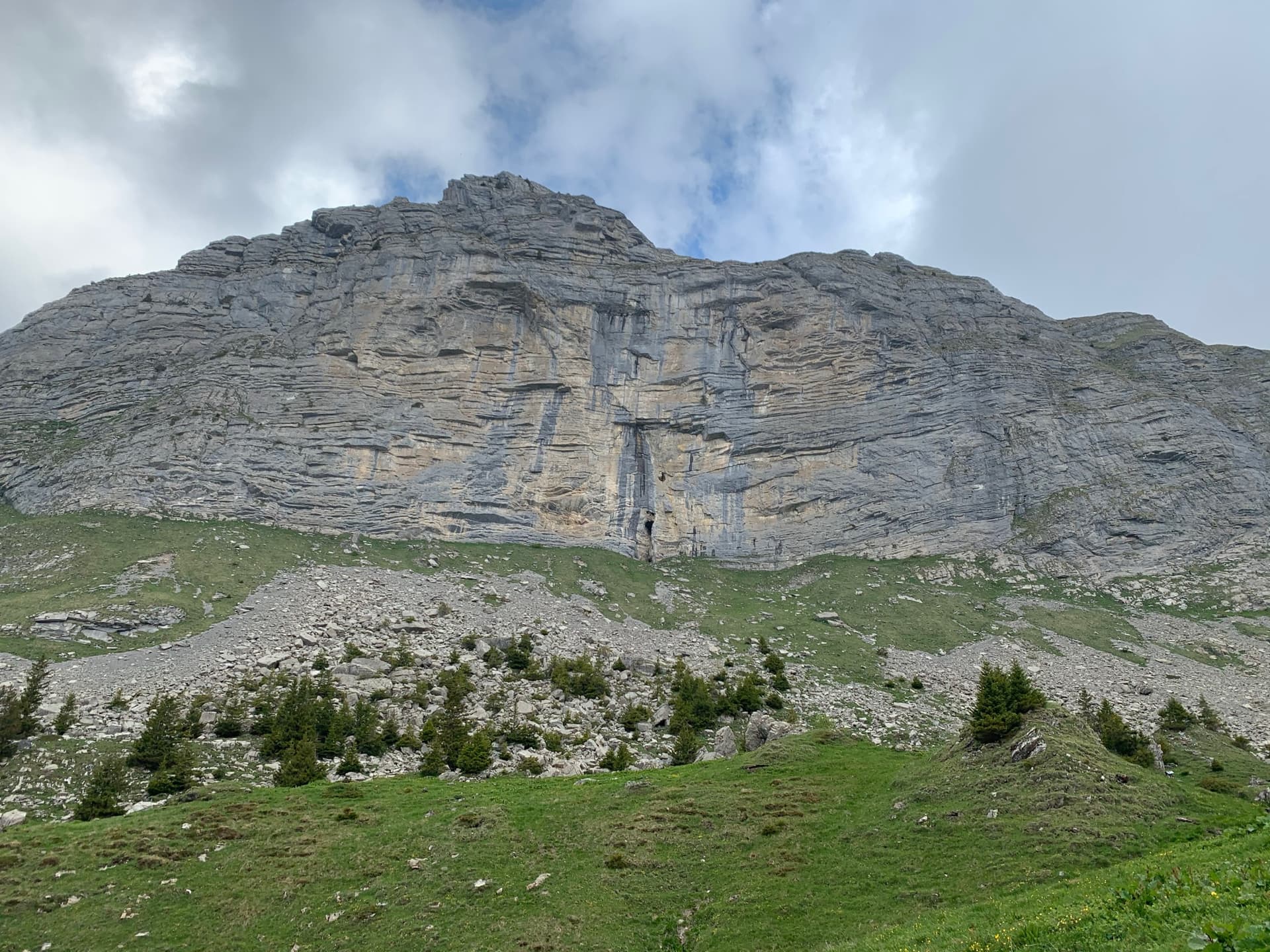
Part of the Hintisberg wall above the scree, seen from the approach

Switzerland · Bernese Oberland

Reisefieber

The most popular route at Hintisberg: six pitches from the lowest point of the wall, with slabs, a technical wall and small overhangs to turn. It gets better as it rises and ends on a superb wall of pockets, where the obligatory 6a crux lies. Expect a queue on fine weekends.

6a6 pitches200 m

The Hintisberg wall from the alp; Blüemlipfad is on the left-hand sector

Switzerland · Bernese Oberland

Blüemlipfad

Six fairly short pitches on the left-hand sector of Hintisberg, left of the big overhangs. The first three are moderate and on less good rock; the upper three are steeper, with the 6a+ crux on small edges on pitch 4, and finish on a grassy top with the whole Bernese Oberland in view. Grades are on the stiff side.

6a+6 pitches180 m

Around 6b+ · about 4 pitches

Similar elsewhere

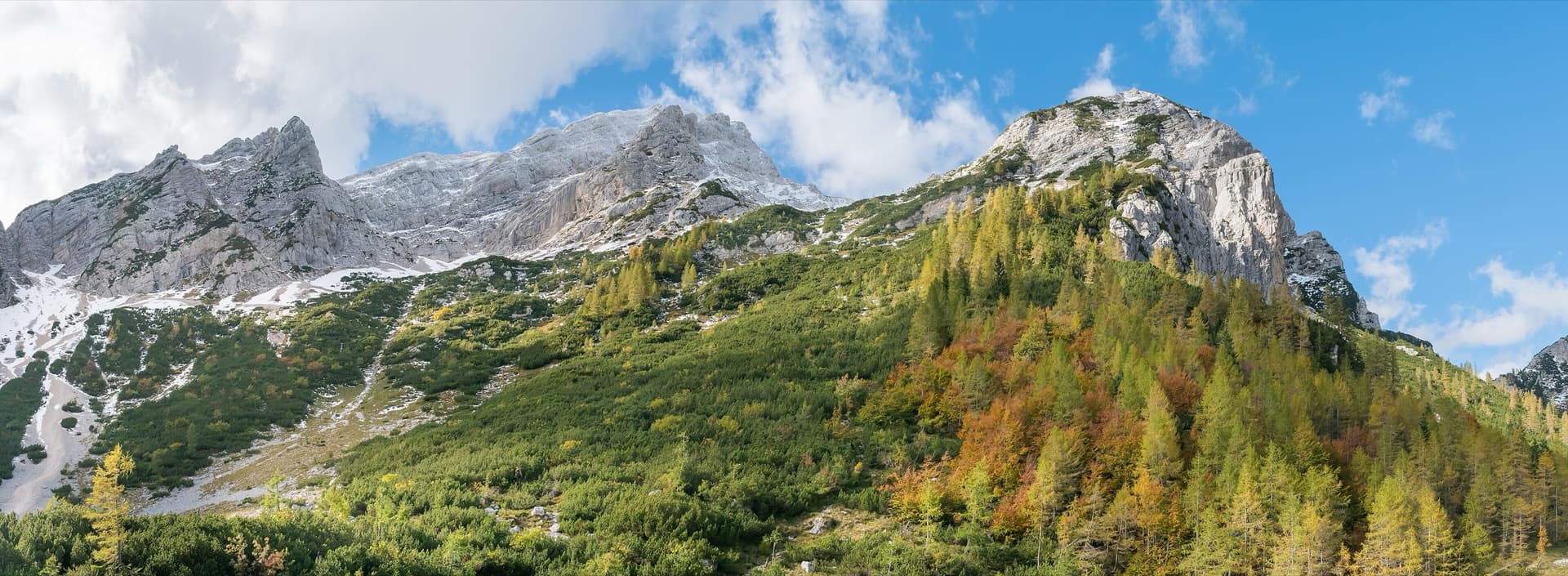
Mala Mojstrovka (left) and Nad Šitom glava (right) from the Vršič Pass in autumn; the routes are on the pale rock wall of Nad Šitom glava above the larches.

Slovenia · Vršič Pass (Julian Alps)

Črni panter

Sustained slab climbing up a striking black streak, clearly visible from the pass, on surprisingly good rock for this face. The crux is a move from slab into a corner on P2.

6b+4 pitches105 m

Read the cautions

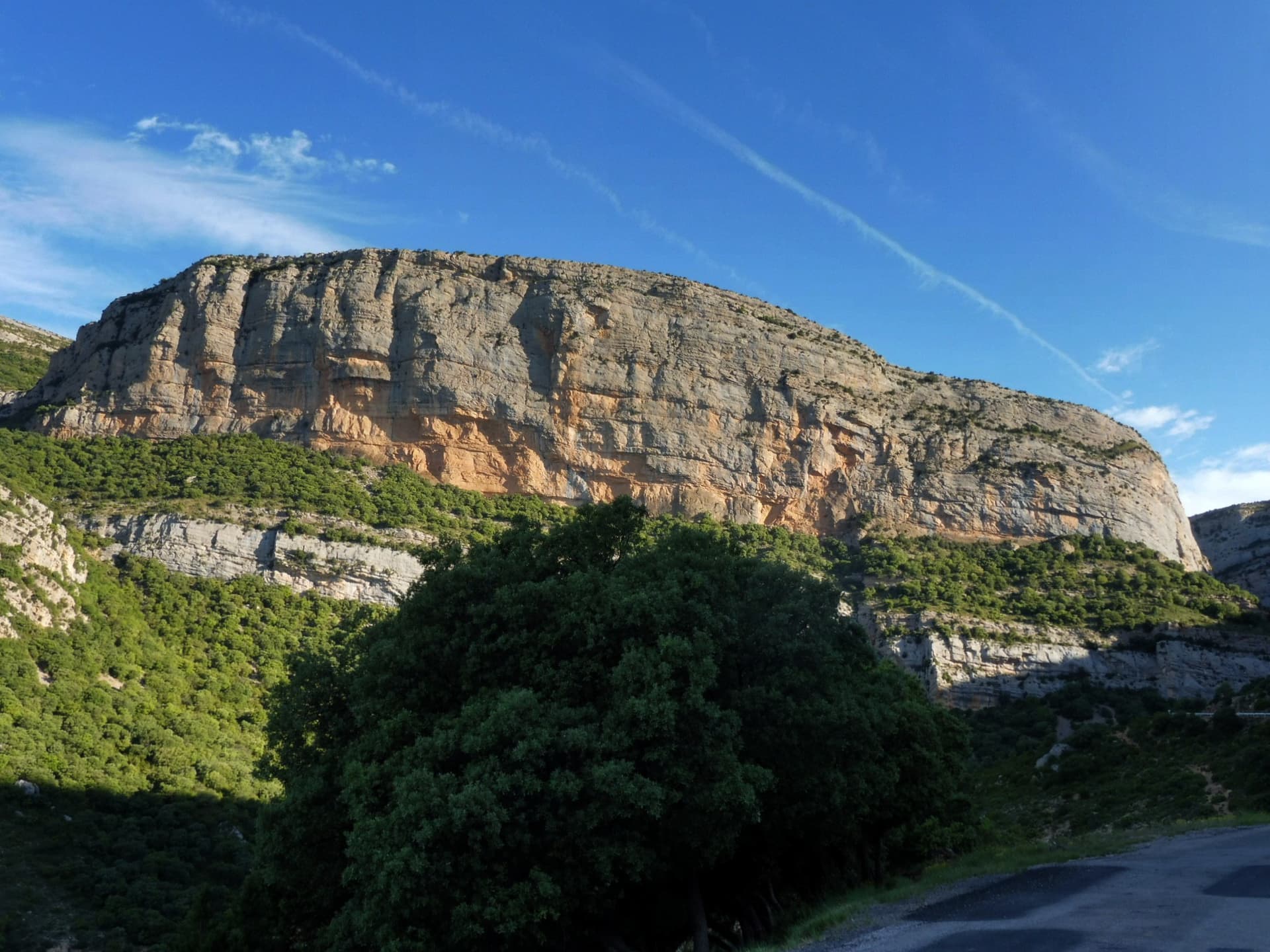
The south-east face of the Roca dels Arcs above the road from Vilanova de Meià, in the Montsec de Rúbies.

Spain · Vilanova de Meià (Roca dels Arcs)

El Somni de Quimfer

Four long, steep pitches on the left side of the Roca dels Arcs, sustained at 6a on good holds and not yet polished above the first pitch. The third pitch is the event: a reachy bulge to start, 30 m of gently overhanging strata, and a hard boulder move off a ledge to finish that most people grade 6c. That last move can be avoided by belaying on the neighbouring route.

6b+4 pitches160 m

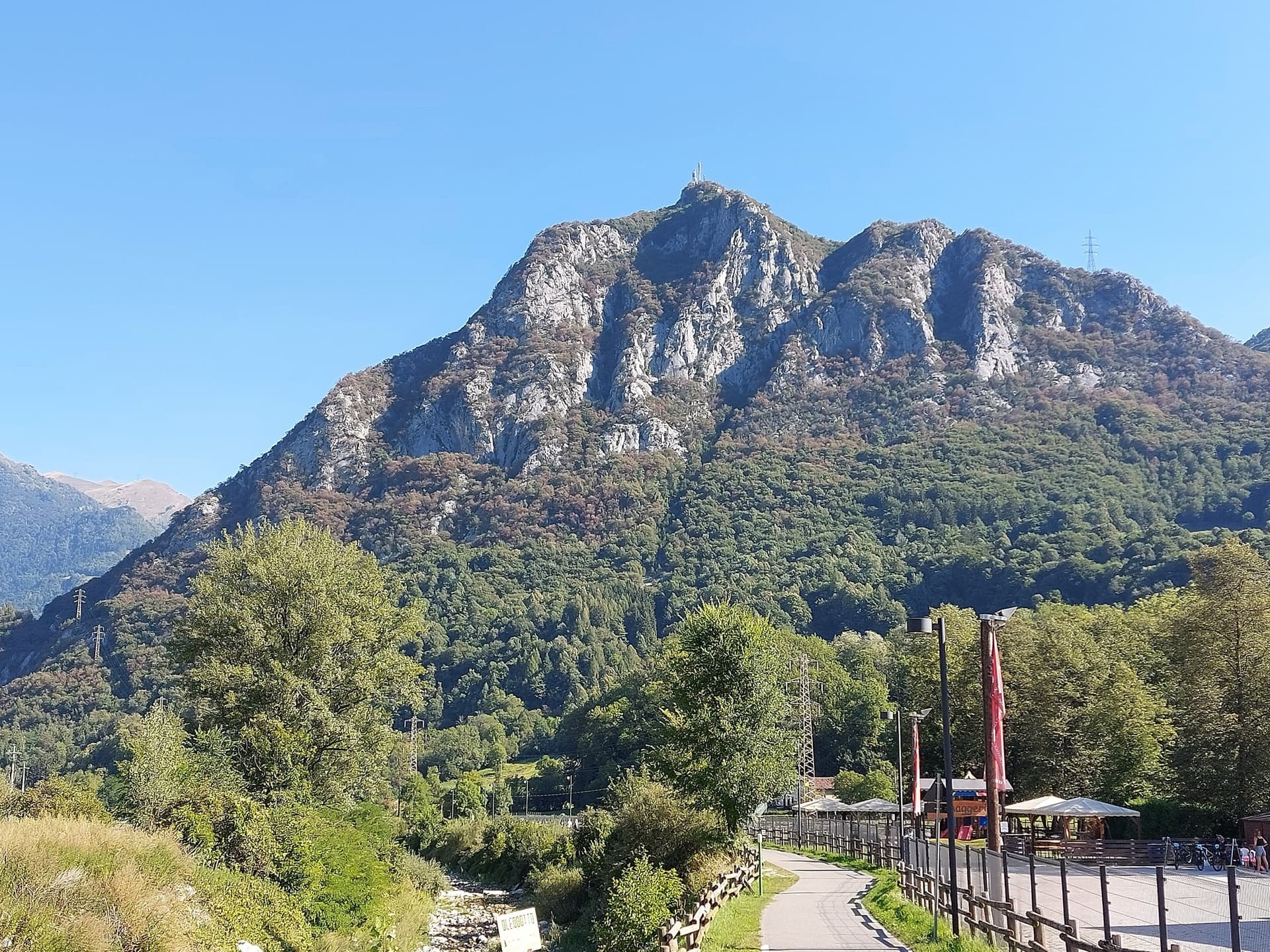
The Zucco dell'Angelone above the Valsassina, seen from Pasturo, with the antenna on its summit. The climbing spurs are the pale limestone ribs on the sunny side of the mountain above Barzio; individual spurs and routes are not marked.

Italy · Lecco & Valsassina

Foto di Gruppo con Signorine

Three friendly pitches up a striking arched flake and compact slabs, then a short wall with one hard, reachy move that most people pull through. A 1980 route by the Savonittos and Alessandro Gogna, and the usual first half of a link-up with Gli Schiavi della Pietra on the spur above.

6b+4 pitches90 m

Read the cautions

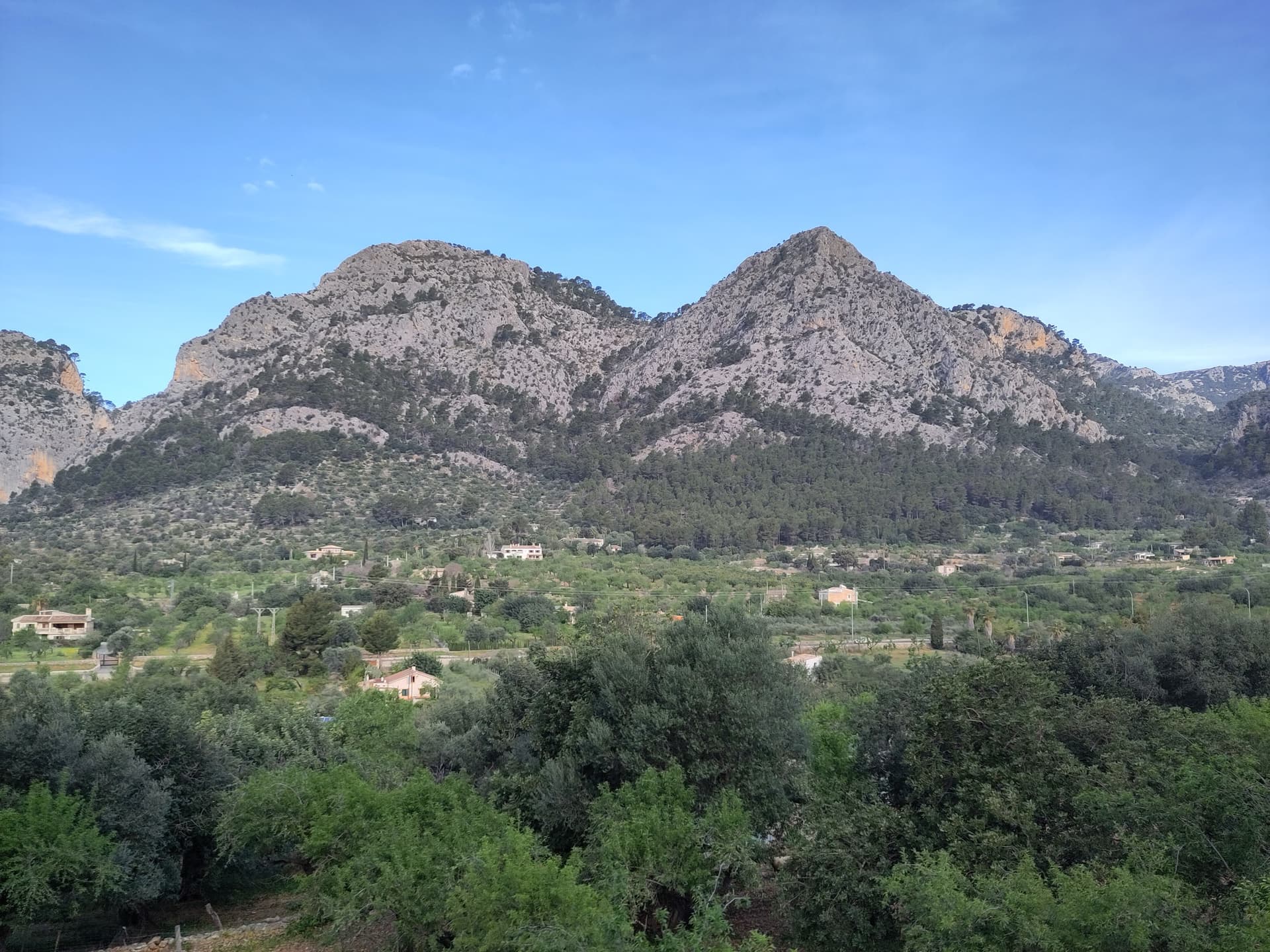
The Puig de Son Nasi (left) and the pointed Puig de s'Alqueria, the Sa Gubia peak, seen from the Sóller railway to the east. The climbing walls are out of sight in the gorge on the far side.

Spain · Mallorca (Sa Gubia)

Mongol Express

A big line up the full height of the Bomberos wall: a 40 m tufa pitch that is a popular climb in its own right, easy broken ground, a steeper 6a, and a long, steep, technical 6b+ wall to finish. The top pitch cannot be aided past its crux, so this is a route for a solid 6b+ leader.

6b+4 pitches155 m

Read the cautions

Compiled from published sources and last verified October 2026. Bolts, anchors and access change. Climbing is dangerous and you are responsible for your own decisions: check a current topo and read the disclaimer.