Menu

Aylan

Séranon – Le Potager · Préalpes d'Azur · France

Easy to bail

A modern line up a limestone pillar above Séranon, steep and varied: crack, corner, a physical bulge and a delicate slab. Five well-bolted pitches in the 6a to 6b+ range, with a short walk between the first and second.

Climbing mode: Big type, screen kept awake, tick pitches as you go.

The pillar of Aylan above Séranon, ringed in redPhoto: phill06 · CC BY-SA 3.0
Hardest pitch
6b+6b+
Pitches
5
Length
165 m
Approach
15 min
Aspect
S
South-facing
Rope
2×50 m

Highest point 1460 m above sea level (camptocamp route 937915).

Rock
limestone
Season
Mar to Jun, Sep to Nov
Bolting confidence
High
Last verified
October 2026 · Aggregated by AI from published sources

Photo

Climbing modeBig type, screen kept awake, tick pitches as you go.

Overview

Aylan climbs a pillar of near-Verdon-quality limestone on the Le Potager crag above Séranon, a quiet corner of the Préalpes de Grasse. It is sustained for its grade, with cruxes in a crack-corner with one reachy move, a bulge, a physical overhanging section and a thin slab, each protected by a bolt at the right place. The rock is very good apart from a few loose blocks in the roof on pitch 3. Since the via ferrata was built, the climbing ends after the fifth pitch.

Worth knowing

  • Allow about 3 to 4 hours for the five pitches.
  • The grades on camptocamp are considered more accurate than those in the V4 guidebook.
  • Séranon's village butcher and the inn are recommended by climbers.

Pitch by pitch

The atlas doesn't show topos: they are the work of the people who bolt and document these routes. See the topo in Escalade dans les Alpes-Maritimes.

Pitches of Aylan
PitchGradeLengthBoltsNotes
P16a40 m18 boltsUp to a small corner, then right up a wall and a crack and over short steps; mostly 5c with a 6a move. Long and wandering, so extend some draws and skip a few bolts to manage drag. Two-bolt linked belay. Then walk about 30 m up to the base of the next pillar (name written again); the line with a thread on the left is Djé.
P26b35 m12 boltsCracked corner with one hard, slightly reachy move, then a thin slab rightwards and a tricky bulge, direct or by the right. You pass a chained abseil belay just before the stance.
P36b30 m11 boltsSustained at first: a crack on the left, a physical overhanging move, then easier cracks. Chained belay. Some blocks in the roof are loose.
P46b+30 m13 boltsEasy above the belay, then a delicate slab; exit left (harder) or slightly right (about 6a). Chained belay.
P55c30 m15 boltsA smooth pillar (5b), then well-featured easier rock. Chained belay.

Approach

To the parking

Séranon is on the Route Napoléon (D6085) between Grasse and Castellane, about 1 h 15 from Nice. Park below the inn at the roundabout (large car park, toilets) or take the chemin de Curnier past the new cemetery and park there or in the hairpin before the hamlet of Curnier.

On foot · about 15 min

About 15 min. Walk to the hamlet of Curnier and follow the via ferrata signs. The route starts 25 m right of the via ferrata start and 5 m right of the route Djé, at the foot of a crack; the name is written at the base.

Map of the walk-in

Point from camptocamp waypoint 469258

For your phone or watch

Download GPX

Contains the route point.

Points from published sources, not surveyed.

Descent

Abseil from R5 to R4 and R3 on the chained belays, then follow the fixed ropes back down. Alternatives: continue 50 m up the via ferrata to a chained 45 m abseil into a gully and fixed ropes, or climb the via ferrata to the summit and take the path down (40 min). The fixed-rope descent is steep.

Bailing off the route

Easy to bail

The normal descent is to abseil the route from the chained belays, so you can retreat from any stance down the same line and finish on the fixed ropes.

Retreat from
Any belay from R1; R3 to R5 are chained abseil belays.
Point of no return
None.
Carry
Two 50 m ropes.
Basis
Stated in the sourcesAbseil descent described on camptocamp and by several parties.

France

In an emergency

In an emergency · France

112Emergency; sends PGHM or CRS mountain rescue

Call 112

Emergency; sends PGHM or CRS mountain rescue

Position of the crag

43.77899, 6.69809

Marks the crag, not the route: give route and pitch.

Say what happened, how many are hurt, and where you are. Checked October 2026 (source).

Hazards

  • Loose blocks in the roof on pitch 3.
  • Stonefall on the vegetated first pitch and in the fixed-rope descent gully.
  • The fixed-rope descent is steep, and in 2021 a large dead tree stood on the abseil line into the gully.

Gear

16 quickdraws, some of them extendable. Two 50 m ropes. Helmet.

Checklist

Quickdraws
16
Rope
2×50 m
Helmet
One each
Abseil device and prusik
For abseiling

Conditions

Plan B nearby

Straight-line distances, up to 30 km.

Reader reports

No reports yet.

Report a problem with this route

Say what and where. Reports are checked before they appear; no name or email is stored.

Bolts and history

Bolting
Equipped in 2017 by David Mattéoli with 12 mm bolts, 11 to 18 bolts per pitch, and two-bolt belays (linked on R1, plain two-bolt R2, chained from R3). The upper pitches of the original line were taken over by the via ferrata, so the route now ends after five pitches. Recent parties call the protection very good, with a bolt at each hard move.
History
Equipped in 2017 by David Mattéoli. The original top three pitches were stripped in favour of the via ferrata, which was under construction in 2021; the route now ends at R5.
Guidebook
'L'escalade dans les Alpes-Maritimes' V4 (Alticoop); a crag topo of Le Potager is on jegrimpe.com. Buy from kletterfuehrer.net.

Where sources disagree

  • Alpes-sud.net still describes eight pitches (to the summit crest, with easy terrain above pitch 5); camptocamp and 2021 parties report that pitches 6 and 7 were removed for the via ferrata.
  • Pitch grades: camptocamp gives split grades (5c/6a, 6a+/6b, 6a+/6b, 6b/+, 5b/c); the upper value is used here. Alpes-sud.net gives 6b/6b+ for pitch 4 with a 6a+ variant on the right.

Sources

Around 6b+ · about 5 pitches

Similar elsewhere

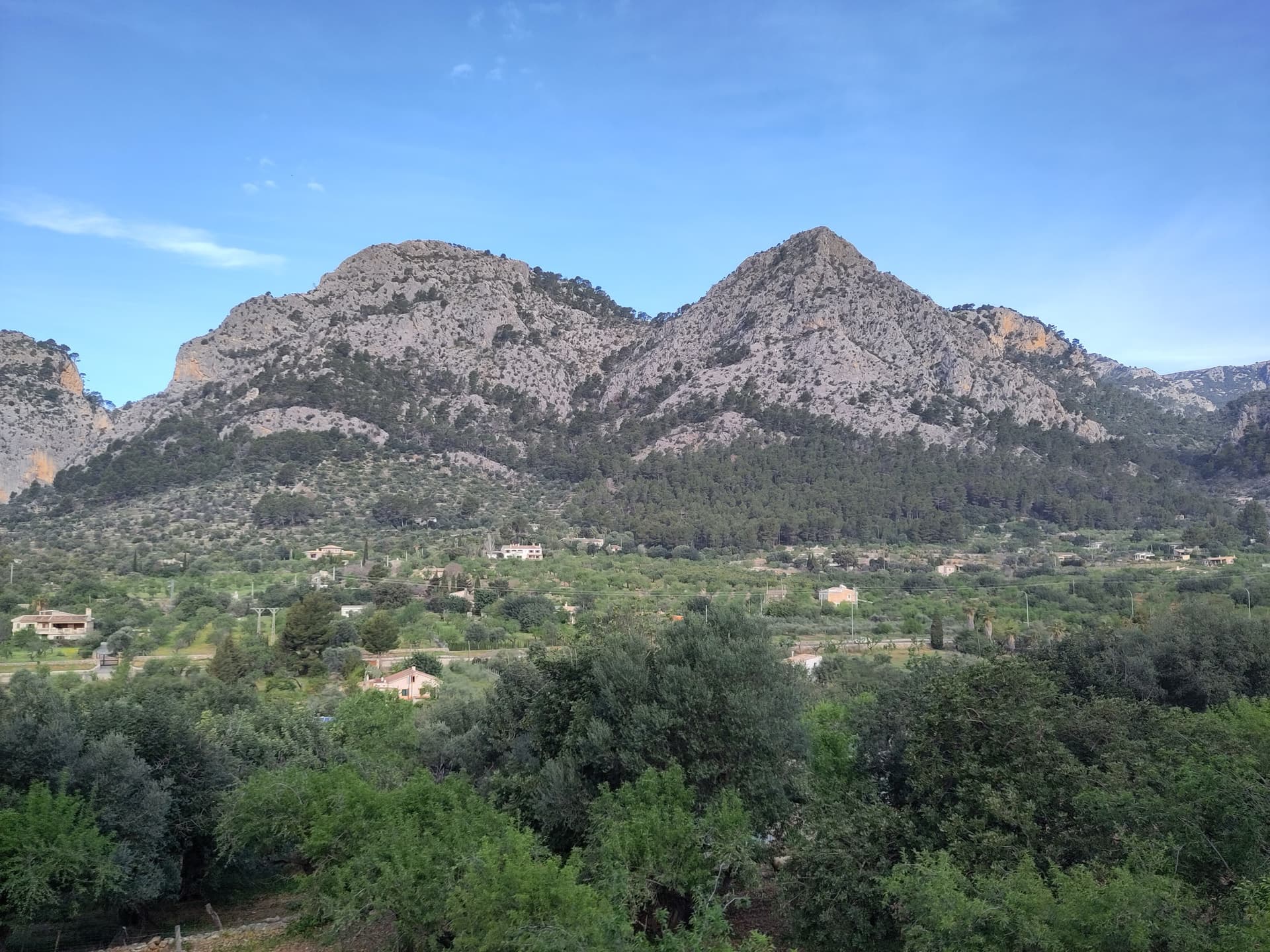
The Puig de Son Nasi (left) and the pointed Puig de s'Alqueria, the Sa Gubia peak, seen from the Sóller railway to the east. The climbing walls are out of sight in the gorge on the far side.

Spain · Mallorca (Sa Gubia)

Sexo Débil

A weaving line up the shady right-hand side of the bay through dramatic ground: an exposed wall, a traverse under a bulge to tufas and bolted-on holds, a superb rising leftward traverse on immaculate rock to a hanging belay, and a traverse back right to an open groove. Originally an aid pitch in the middle, now free at 6b+.

6b+6b+5 pitches100 m

Read the cautions

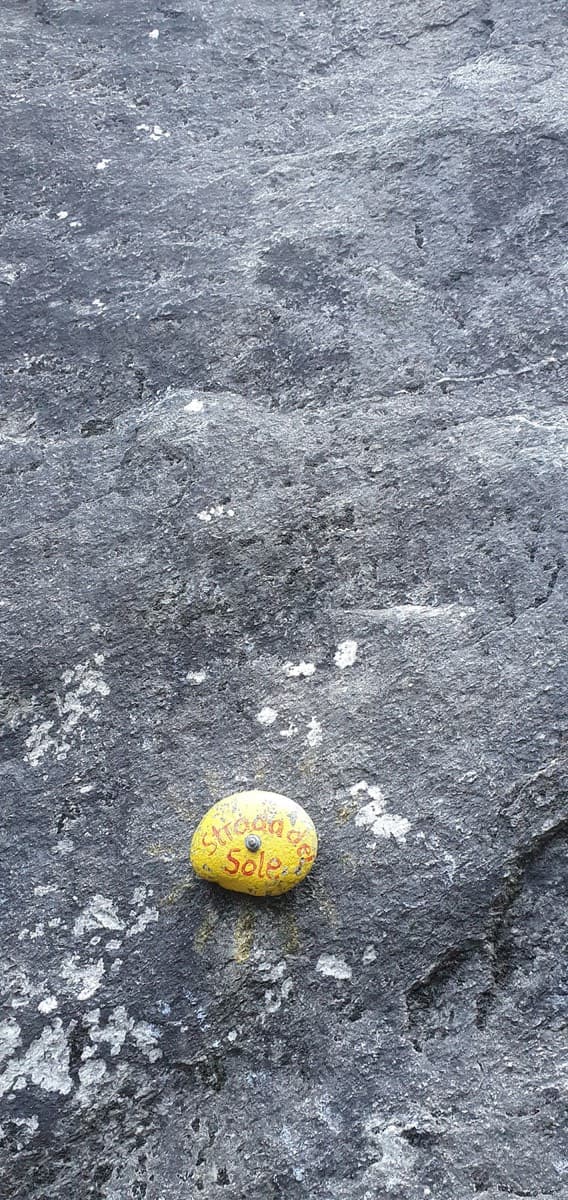
A view of the region, not this route's wall. The painted stone that marks the start of Strada del Sole at the foot of the Nösslachwand

Austria · Ötztal

Caipirinha

A mix of slabs and steep, juggy passages in the Sonnenblume sector, mostly around 5b to 5c+. The one hard move is a small roof on pitch 4 (6b+), which goes easily on aid.

6b+6b+5 pitches170 m

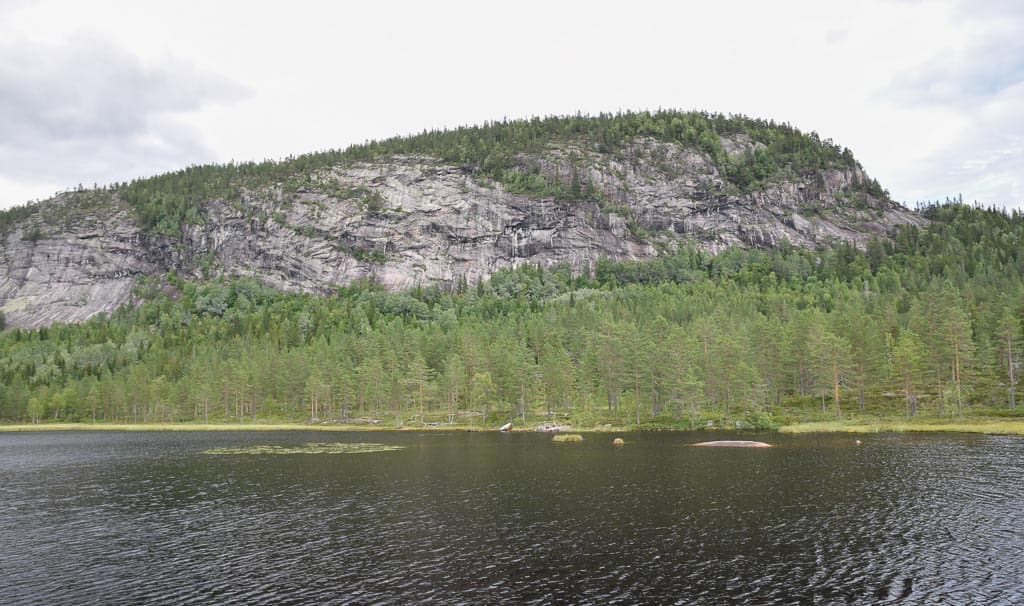
Andersnatten seen across the lake Andersnatttjenn, with the streaked slab wall above the forest

Norway · Andersnatten (Eggedal)

Den svarte stripa

The obvious black streak up the south-east face of Andersnatten. Three pitches of pure, technical slab are followed by steeper wall climbing. It feels hard for the grade if you are new to slab and soft if you are confident on it. Expect more footwork than strength.

6b+6b+5 pitches200 m

Read the cautions

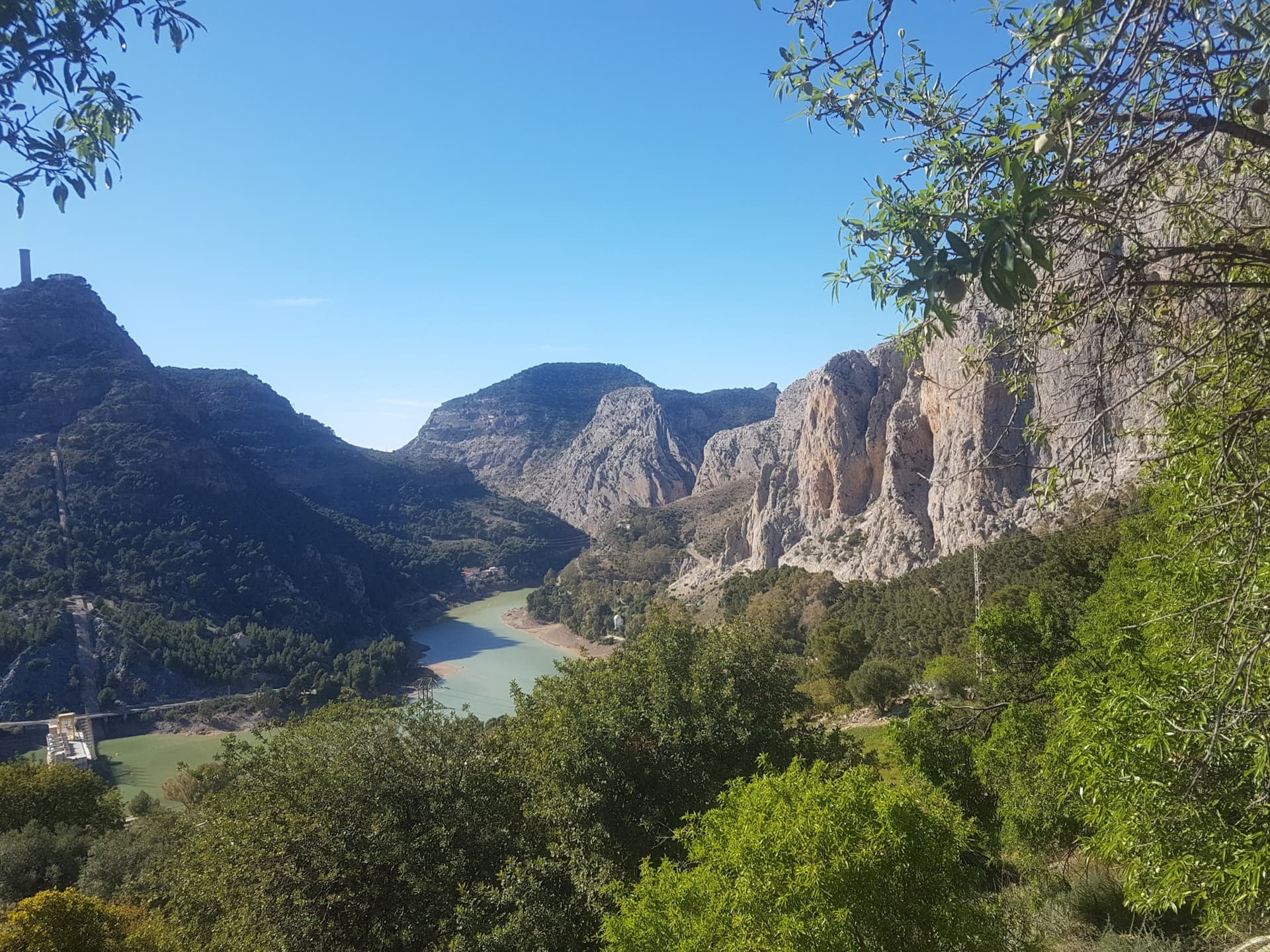
El Chorro: the reservoir and the limestone walls above it, seen from the hillside. A general view of the area; the route is not marked.

Spain · El Chorro

Ébola

The direct line just right of Amptrax, following what used to be that route's abseil descent. Two easy pitches lead to two good ones that each start with a bulge out of a cave: a 6a+ and then the 6b+ crux, short and powerful before a vertical grey wall on good holds. The rock is compact and the belays are comfortable.

6b+6b+5 pitches155 m

Researched and aggregated by AI from published sources, last compiled October 2026. It can be wrong, and bolts, anchors and access change: check a current guidebook and read the disclaimer.