Menu

Balansekoden

Utkleiva · Eresfjord (Romsdal) · Norway

Read the cautionsBail with caveats

One of the longest bolted routes in Norway: fifteen pitches of friction and balance climbing up an enormous, clean slab above the fjord, with a few short, steeper pulls. The 6b+ 'balance slab' near the top is the highlight. Expect long gaps between bolts on the easier ground and a long day.

Climbing mode: Big type, screen kept awake, tick pitches as you go.

Hardest pitch
6b+6b+
Pitches
15
Length
700 m
Approach
30 min
Aspect
NW
North-west-facing
Rope
2 ropes
lengths not stated in sources

Highest point about 850 m above sea level (estimate: terrain height at the mapped point plus the height of the route).

Rock
granite
Season
Jun to Sep
Bolting confidence
Medium
Last verified
October 2026 · Aggregated by AI from published sources
Read before you go

Included as an exception: it is bolted top to bottom with bolted belays, but bolts are 5 to 8 m apart in places and pitch 13 (and, by one account, the pitch 6 traverse) has none, so you need a steady head on slab, not just quickdraws.

Photo

Climbing modeBig type, screen kept awake, tick pitches as you go.

Overview

Balansekoden climbs the huge slab pillar below Utkleiva on the east side of Eresfjorden in fifteen pitches, most of them 45 to 50 m, for about 700 m. The climbing is almost all slab, broken by a wet-prone traverse on pitch 6, a few short steeper pulls, and two near-walking pitches high up. The crux is the 7- (6b+) 'balance slab' on pitch 11, followed by a 6+ (6b) slab on pitch 12; every report calls the route superb. It is bolted from bottom to top with bolted belays and abseiled, but this is Norwegian slab bolting: on easier ground bolts are spaced, with 5 to 8 m between them reported even on some harder pitches, so it is listed here as an exception to the quickdraws-only rule.

Worth knowing

  • Fast parties move together on the first three to five easy pitches to save time, then swap leads.
  • Start early: one 2016 party summited at 19:00 and was back at the foot at 23:15; another turned back at the ledge in pitch 9 after a late start.
  • A 27crags ascensionist would skip the last three easy pitches on a repeat; there is an abseil anchor on the ledge in pitch 9 for an earlier retreat.

Pitch by pitch

The atlas doesn't show topos: they are the work of the people who bolt and document these routes. See the topo in Crag Climbing in Romsdal, Norway.

Pitches of Balansekoden
PitchGradeBoltsNotes
P13–Easy slab (Norwegian 3). Several parties move together on the first three or four pitches.
P23+–Easy slab (Norwegian 3+). In August 2015 a party turned back here after serious stonefall.
P34b–Slab (Norwegian 4).
P45b–A slightly harder slab (Norwegian 5).
P55a–Slab trending slightly right (Norwegian 5-), still fairly easy.
P65b–A near-horizontal traverse of about 25 m, often wet and slippery, then a steep move on good holds (Norwegian 5). An extra bolt was added to the traverse in 2013 and a 2019 party called it closely bolted, but camptocamp (2023) describes an easy, vegetated traverse without bolts.
P75c–Steeper and very fine (Norwegian 5+). Bolts are far apart in places. A 2016 party broke off a 40 cm flake just below the belay.
P85c–Very fine, steeper climbing (Norwegian 5+), again with some long gaps between bolts. There is a big ledge with an abseil anchor in the middle of pitch 9 above.
P96a–Rightward-trending (Norwegian 6-). Easy but very sparsely bolted ground leads to a slightly overhanging pull of 4 to 5 m rightwards on good holds, well bolted, to an airy belay. With a lot of rope out on the slab below, have your belayer take in before you commit.
P105c–A magnificent steep slab (Norwegian 5+ on camptocamp, 5 in a 2019 report) leading to the balance slab.
P116b+–The 'balansesvaet', the crux (Norwegian 7-): sustained slab on small knobs, steeper and smoother than it looks, hardest in the last 10 to 15 m to the belay. Fairly closely bolted; a 2016 party describes the next bolt as just out of reach, with a fall of a couple of metres.
P126b–Another fine slab (Norwegian 6+), less sustained than pitch 11 but with a move or two just as hard.
P1320 boltsA transition pitch: a walk up a low-angled grade 2 slope. Camptocamp says it has no bolts.
P146a–An arc through the steep wall on fine black rock (Norwegian 6-), with two steeper pulls that can be wet.
P152–Easy, mostly walking ground to the top. In 2019 the anchor found at the top was two bolts in a detached-looking block.

Approach

To the parking

Eresfjord is at the head of Eresfjorden in Molde municipality, Møre og Romsdal. Reported parties came by car from Ålesund and from Trondheim (via Sunndal and Grøvudalen); one 2023 party rode an electric bike 10 km along the fjord to the car park. The approach path leaves the main road at a sign. The village shop is the Coop.

On foot · about 30 min

About 20 to 30 minutes straight up the slope from the road. Camptocamp describes a path marked with blue dots and an obvious start. A 2019 report found the path badly blocked by fallen trees after about 100 m (it follows the stream bed in its middle part), and a 2016 party lost the path in the forest and reached the slab two pitches up, then had to cross a nearly unbolted, wet slab traverse to reach the bolts. Stay on the path to the foot of the slab.

Map of the walk-in

Point from camptocamp waypoint 1549501 (Utkleiva); 27crags puts the crag at 62.70874, 8.13907, about 800 m away

For your phone or watch

Download GPX

Contains the route point.

Points from published sources, not surveyed.

Descent

Abseil the route: about 11 or 12 abseils. Camptocamp notes that some abseil anchors are offset from the belays but logical; a 2016 party missed one, with one climber hanging from a single bolt while the next anchor was found off to the side and above. In 2019 the top anchor was two bolts in a block that did not look safe, so that party did not abseil from it but carefully down-climbed the easy last pitch first. The abseils took 1 h 45 min for a fast 2023 party and about four hours for a tired 2016 party.

Bailing off the route

Bail with caveats

The route is normally abseiled, so you can retreat from most belays on the abseil anchors. A 2016 party retreated from the abseil anchor on the big ledge in pitch 9. The catch is the length and route-finding: about a dozen 45 to 50 m abseils, some anchors offset from the line, on a slab where it is easy to miss the next station.

Retreat from
Abseil anchors on the line; an anchor on the big ledge in the middle of pitch 9 is a documented retreat point.
Point of no return
None documented. The top anchor found in 2019 looked untrustworthy, and that party down-climbed the easy last pitch before abseiling.
Carry
Two ropes, time and daylight; keep enough slack in your schedule for a dozen abseils.
Basis
Part stated, part inferredAbseil descent, offset anchors, the pitch 9 retreat and the top anchor are stated by camptocamp, Peakbook (2016, 2019) and Jugebenken; retreat from other individual belays is inferred.

Norway

In an emergency

In an emergency · Norway

112Emergency (police); passes mountain accidents to the rescue centre

Call 112

Emergency (police); passes mountain accidents to the rescue centre

Position of the crag

62.70383, 8.15083

Marks the crag, not the route: give route and pitch.

Say what happened, how many are hurt, and where you are. Checked October 2026 (source).

Hazards

  • Run-out climbing: the route is fully bolted, but parties report 5 to 8 m between bolts even on some harder pitches, very sparse bolts on the easy ground of pitch 9, and long gaps on pitches 7 and 8. Camptocamp says the easy pitches are more spaced and lists pitch 13 (and the easy traverse on pitch 6) as having no bolts. Do not attempt it unless you are comfortable on 5 to 5+ slab far above your last bolt.
  • Stonefall: in August 2015 a party on pitch 2 was hit by serious stonefall and retreated. The local site judged it a one-off, but fresh stones were seen near the start.
  • Loose features: a 40 cm flake broke off near the top of pitch 7 in 2016.
  • The top anchor found in 2019 was two bolts in a block that looked detached; do not weight it carelessly.
  • Abseil anchors are sometimes offset from the line and hard to find; double-check every abseil at the end of a long day.
  • The pitch 6 traverse is often wet and slippery.

Gear

16 quickdraws (camptocamp). Two ropes for the abseils: reported parties used a 60 m rope to move together on the easy lower pitches and abseiled on two ropes, but no source states the rope length needed. No source recommends cams or nuts, and extra gear does not fix the exception here: the run-outs are on compact slab, so the real requirement is being steady on 5 and 5+ slab well above the last bolt.

Checklist

Quickdraws
16
Rope
2 ropes (lengths not stated in sources)
Helmet
One each
Abseil device and prusik
For abseiling

Conditions

Reader reports

No reports yet.

Report a problem with this route

Say what and where. Reports are checked before they appear; no name or email is stored.

Bolts and history

Bolting
Bolted throughout by local climbers (in place by 2010) with bolted belays and abseil anchors, and a local site calls it 'alt fullbolta'. It is NOT closely bolted everywhere: parties report 5 to 8 m between bolts even on some of the harder pitches, very sparse bolts on the easy ground of pitch 9, and camptocamp (2023) describes pitch 13 (grade 2) and the easy traverse of pitch 6 as having no bolts. The hard slab pitches (11 and 12) are fairly closely bolted, and in 2019 the top anchor was two bolts in a detached-looking block.
History
Bolted by local Eresfjord climbers; the route was in place by 18 August 2010, when a six-pack was hidden at the top. In June 2013 Terje Aamodt, Iver Gjelstenli and Miroslav Peto replaced a missing nut on a pitch 11 bolt and added an extra bolt on the pitch 6 traverse.
Guidebook
Sportsklatring i Romsdal (local guidebook, recommended by Norsk Klatring for Eresfjord). Camptocamp has a pitch list in Norwegian grades. Buy from climbing-guide.eu.

Where sources disagree

  • Pitch 6 traverse: camptocamp (2023) calls it an easy traverse without bolts; a 2013 local note says a bolt was added, and a 2019 report says it is now so closely bolted that it is fine even when wet.
  • Pitch 10: Norwegian 5+ on camptocamp, 5 in the 2019 report.
  • Pitch count: 15 in every route source; Terje Aamodt's 2013 photo blog says 16.
  • Rock: only camptocamp gives a rock type (granite).
  • Bolt count: an earlier research note gave about 130 bolts, but no source re-read for this record states a bolt count, so it is left out.
  • Pitch lengths: the 2016 report says most pitches are 45 to 50 m; no source gives individual lengths. Length is camptocamp's 695 m of difficulties.
  • Grades were converted with the Norwegian table used by brattelinjer.no (5 = 5b, 5+ = 5c, 6- = 6a, 6+ = 6b, 7- = 6b+); 27crags lists the route at 6b+. Norwegian 2, 3 and 3+ have no French equivalent in that table and are kept as written.

Sources

Around 6b+ · about 15 pitches

Similar elsewhere

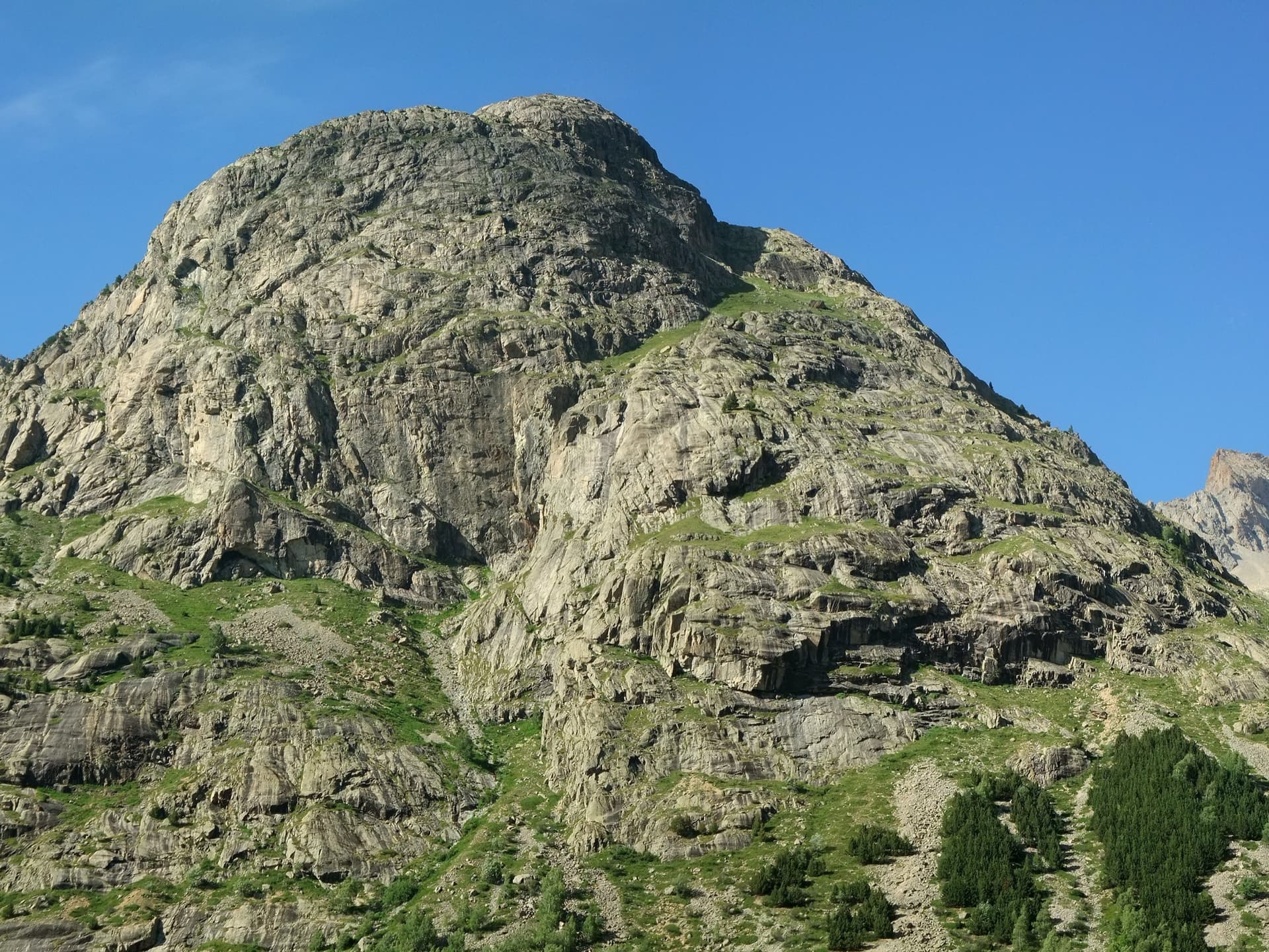
The south face of the Tête de la Maye above La Bérarde

France · La Bérarde (Écrins)

Maye Friend

Fifteen pitches up the steeper centre of the face: steep cracks and walls in the first third, then a long sequence of sometimes very thin friction slabs. Mostly 5c to 6a+ with one short 6b+ that goes at A0. Rated among the best on the wall and much quieter than its famous neighbour.

6b+6b+15 pitches400 m

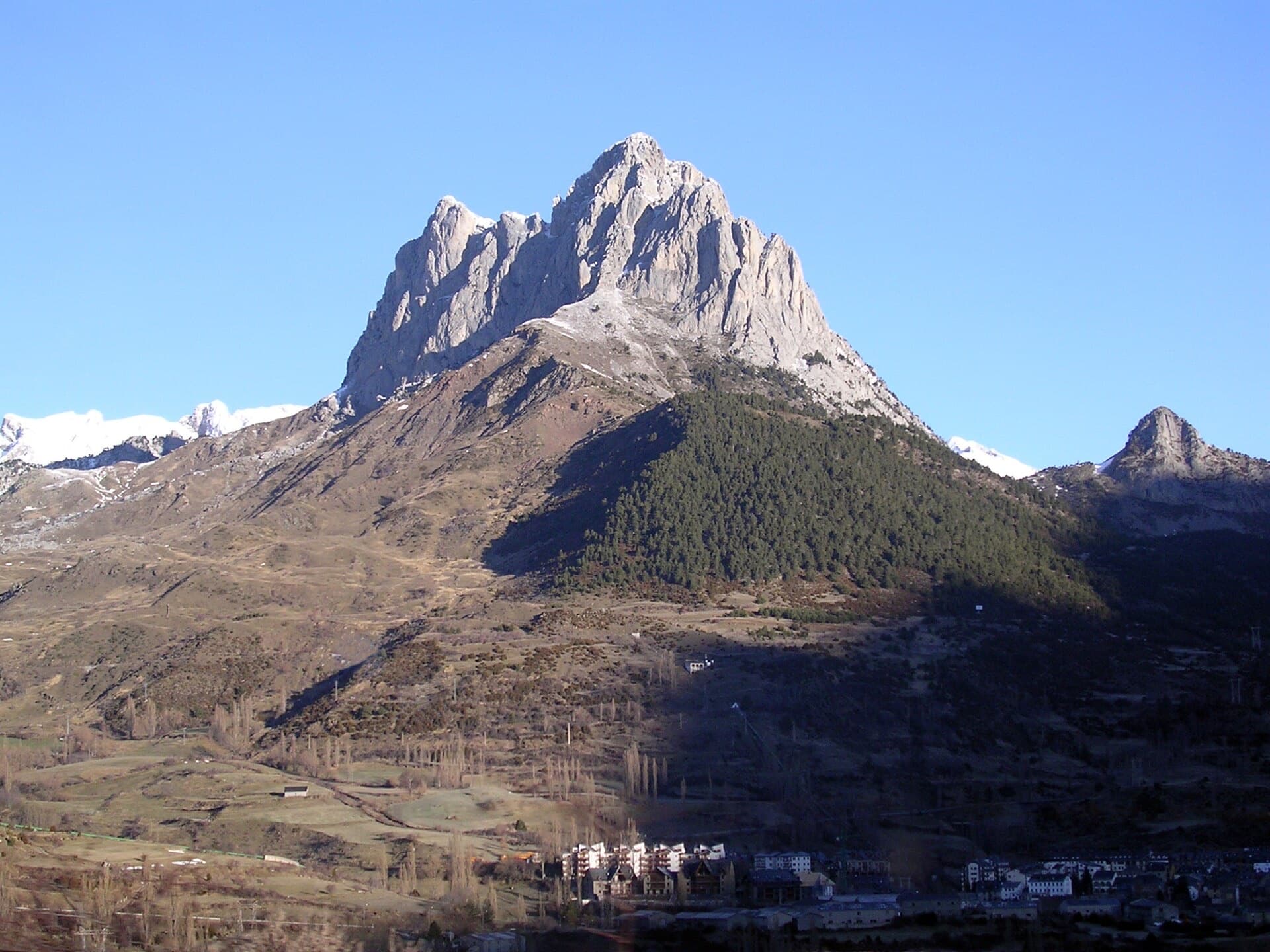
The limestone south face of the Peña Foratata rising above Sallent de Gállego in the Tena valley. Vía Anzas climbs this side of the peak; the exact line cannot be picked out here.

Spain · Aragonese Pyrenees (Tena & Canfranc valleys)

Vía Anzas

A big, fully bolted mountain route straight up the middle of a wall of the Peña Foratata to its summit. Three technical corner pitches at 6b+ low down and a 6b and a 6a above the grass terrace, separated by easy transition pitches. Short pitches by design, a long descent, and a seasonal closure for bearded vultures until the end of July.

6b+6b+14 pitches420 m

Read the cautions

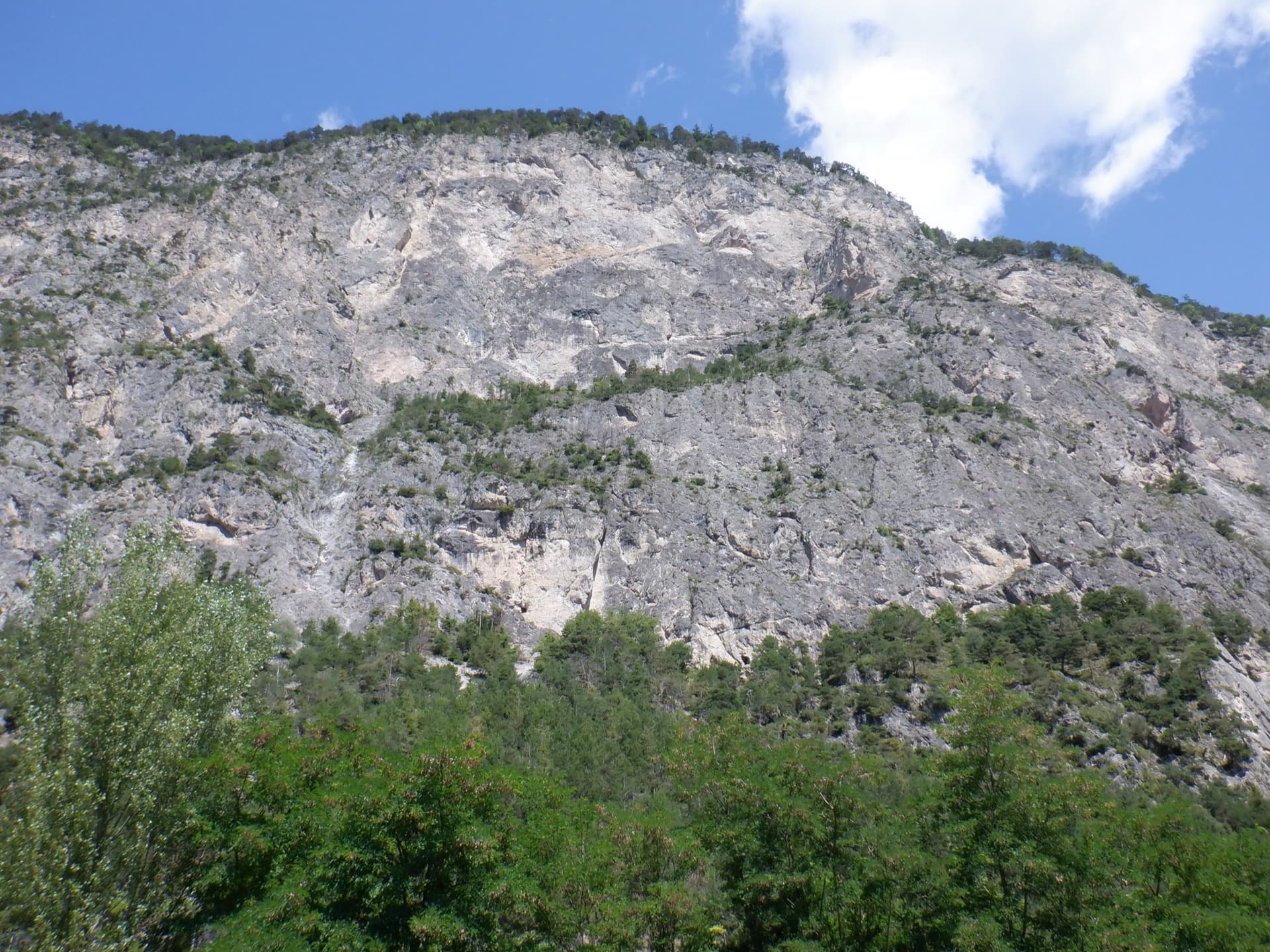
The Geierwand above Haiming seen from the car park; Nebraska takes the left side of the wall from bottom to top

Austria · Inntal (Haiming Geierwand)

Nebraska

bergsteigen.com calls this the best route on the Geierwand: steep, almost always vertical pocket climbing on the left side of the wall. The hardest move comes on pitch 2, but the upper half stacks several 6b pitches one after another and tires the forearms. Recommended to climbers who are comfortable at 6b.

6b+6b+13 pitches355 m

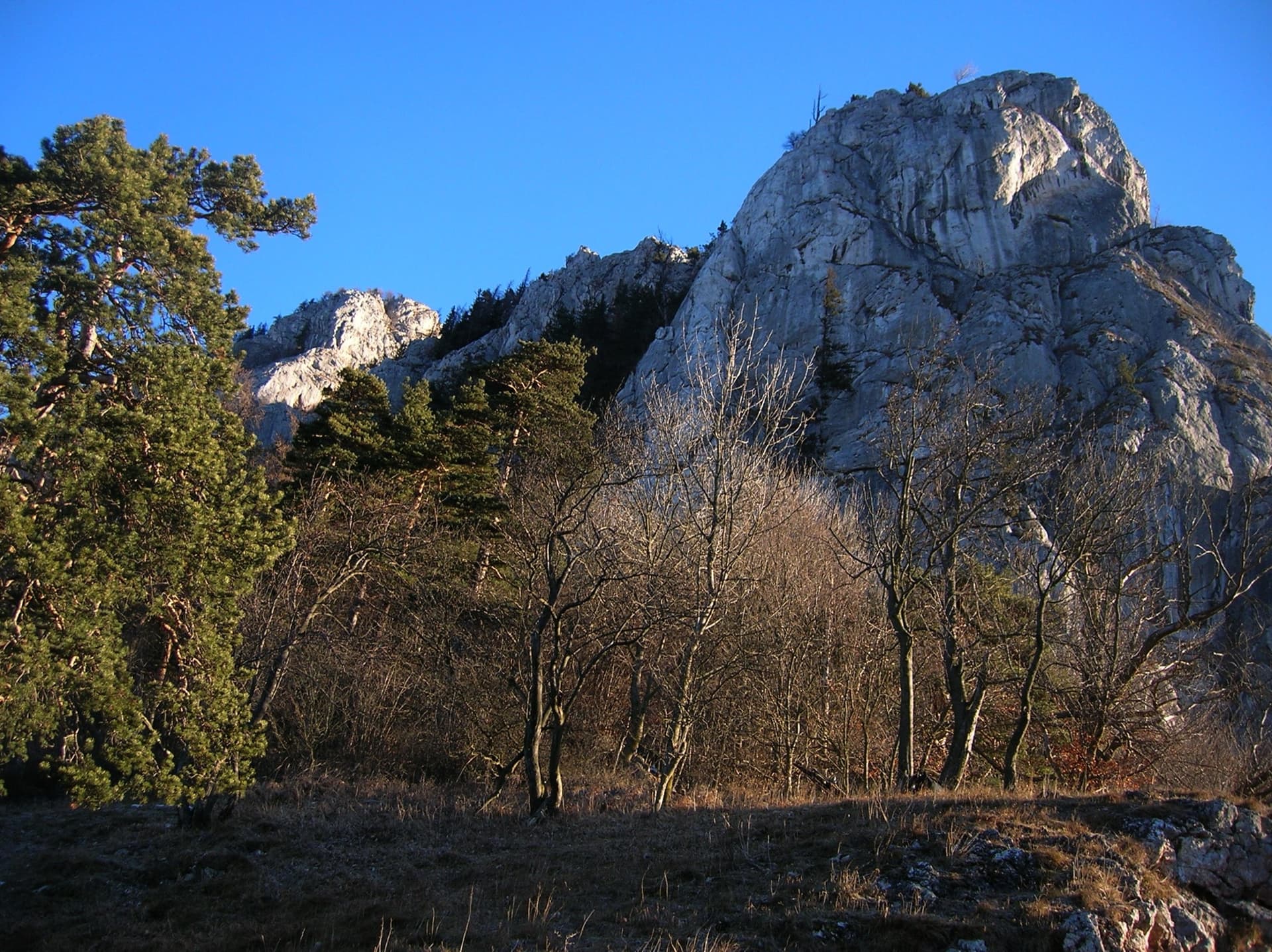
The rock towers of the Ratengrat on the Röthelstein above Mixnitz, where the first half of the route climbs

Austria · Grazer Bergland

Don Kamille und Pepperone

Possibly the longest route in the Grazer Bergland: sixteen pitches that start up the Ratengrat (Don Kamille) and continue up the Breite Wand (Pepperone). The lower half is among the best climbing on the Ratengrat; the upper half begins gently over slabby steps in the forest and then steepens. Two passages of UIAA 7- and several of 6+.

6b6b16 pitches440 m

Researched and aggregated by AI from published sources, last compiled October 2026. It can be wrong, and bolts, anchors and access change: check a current guidebook and read the disclaimer.