Multipitch Atlas

Spelling need not be exact.

Du cidre pour les étoiles

Quiquillon (south-east face) · Orpierre · France

Easy to bail

Three steep, sustained 6a pitches on the south-east face of the Quiquillon, the first a long 40 m pump on layered rock, then a walking link and two short, easy slab pitches to the ridge. Very closely bolted with doubled chained belays; the lower half is the reason to go.

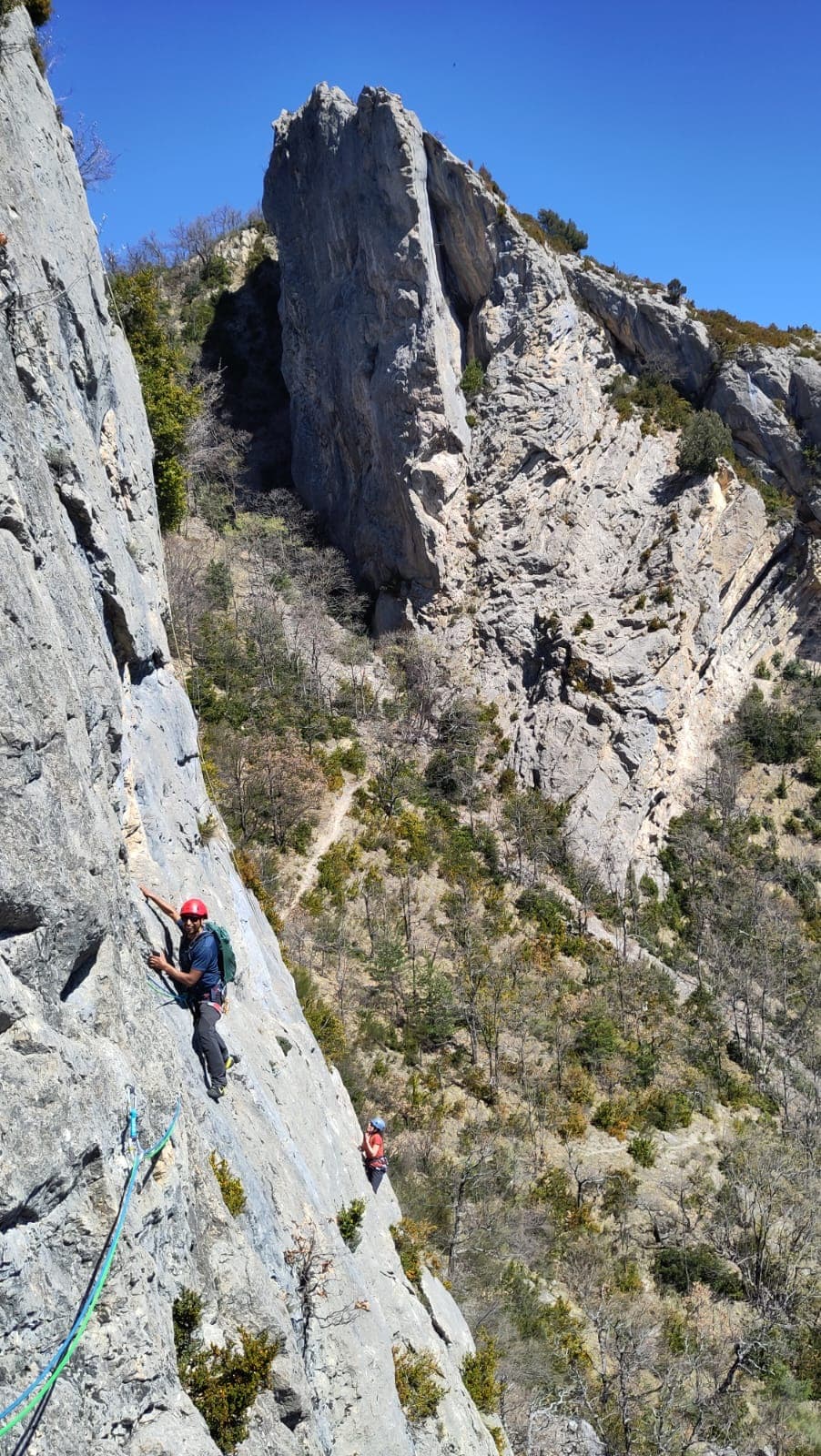
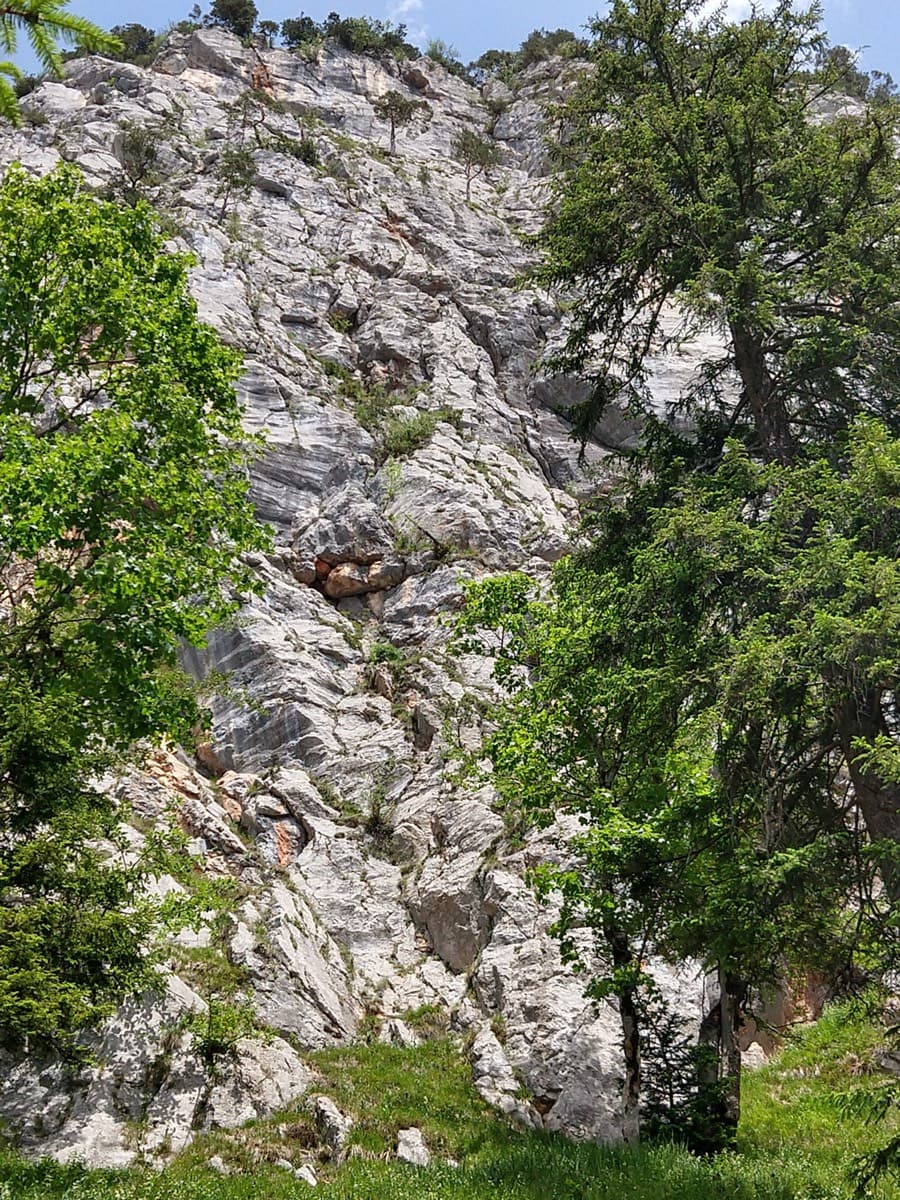
The long, steep first pitch of Du cidre pour les étoiles on the Quiquillon, OrpierrePhoto: RemyH · CC BY-NC-ND 3.0

Photo

Hardest pitch
6a
Pitches
6
Length
145 m
Approach
30 min
Aspect
SE
South-east-facing
Rope
1×60 m
(walk-off); 2×60 m to abseil
Rock
limestone
Season
Mar to May, Sep to Nov
Bolting confidence
High
Last verified
October 2026 · Compiled from published sources

Overview

Du cidre pour les étoiles climbs the steep wall just left of Le Ramier on the south-east face of the Quiquillon. Its first three pitches are the substance: a long, vertical and continuous 40 m pitch on layered rock with good holds, a wall and slab with a thin crux, and a shorter pitch with one move on a steep slab. A 20 m walking link and two easy slab pitches then lead to the summit ridge. Parties agree that at the grade it is much more demanding than Brazil, and many find the first two pitches nearer 6a+. Bolting is very close and the belays are doubled.

Worth knowing

  • Allow 2 to 4 hours on the route and about 45 minutes to walk down.
  • The local topo grades pitch 1 at 5c+; treat it as a long, sustained 6a and save energy for the crux of pitch 2.
  • Le Dièdre Sud, La Grotte and the Adrech routes such as Massacre à la débroussailleuse are common companions for a second route the same day.

Pitch by pitch

No topo we can show; see the sources.

Pitches of Du cidre pour les étoiles
PitchGradeLengthBoltsNotes
P16a40 m–A steep, layered wall with good holds but sustained all the way to the belay, with a bulge mid-way and a steep finish; 15 quickdraws. Easy to be pumped; read the footholds. Some holds are polished. The local topo gives 5c+, but parties consider 6a fair or stiff. A 2021 party thought it nearly 50 m.
P26a25 m–Wall, then slab; the hard move is a long step on the steepening slab at a bolt. Two bolts close together allow A0, and a party in 2015 found it easier slightly to the right on a small vertical flake. Many rate it 6a+.
P36a20 m–Easy, then one move on a steep slab and a short traverse left to the belay. Can be linked with pitch 2 for a continuous pitch and a comfortable belay (14 quickdraws).
P44a20 m2 boltsA link: two bolts at the start on the left, then walking. Traverse left to the path, which leads back right to the terrace at the foot of the upper section; one party belayed off a tree there. Do not go straight up: you could knock stones onto parties below.
P55a20 m–Pleasant slab moves.
P65b20 m–A vertical pitch with one harder move near the end, to the ridge. Pitches 5 and 6 can be linked (very close bolts, so skip some), but one party had heavy rope drag and only about 5 m of a 60 m rope spare.

Approach

To the parking

Drive to Orpierre (about 10 km west-north-west of Laragne-Montéglin) and up to the Parking de l'Adrech above the village. Several parties walk up from the village or campsite instead, about 25 to 30 minutes to the Quiquillon.

On foot · about 30 min

From the Adrech car park, follow signs for the Quiquillon and pass below Brazil and La Grotte. The route starts just left of Le Ramier, in the fine steep wall. From the village a marked path leads up to the Quiquillon in about 25 to 30 minutes.

Map of the walk-in

Coordinates · crag

44.31890, 5.69873

Parking

44.31917, 5.70167

Parking de l'Adrech (camptocamp waypoint 178282)

Point from camptocamp waypoint 103699 (Orpierre - Quiquillon)

For your phone or watch

Download GPX

Contains the route point and parking.

Points from published sources, not surveyed.

Descent

The usual descent is on foot along the Quiquillon ridge, with cables on the most exposed parts, then back by the Quatre Heures path (about 45 minutes; one 2026 party took the wrong branch at the 'Orpierre par l'Ascle' sign). Abseiling is possible: go down the ridge beside the cable to a chained abseil line, then three abseils; the second is airy and stops at a small, narrow ledge mid-face where you change over on a hanging stance. Camptocamp warns that on busy days abseiling is not a good idea, and parties report queues and ropes blowing onto neighbouring routes in strong wind.

Bailing off the route

Easy to bail

Retreat is documented: a 2016 party abseiled from the first belay, and a chained abseil line descends the face from the ridge in three abseils. The lower belays are chained and doubled, and the first three pitches are 20 to 40 m, so you can abseil back down the lower wall on two ropes.

Retreat from
The belays of pitches 1 to 3 (chained and doubled), or from the ridge via the abseil line reached by following the cable down.
Point of no return
None really: after pitch 3 the route joins a walking terrace, and from the top both the walk-off and the abseils are available.
Carry
2×60 m ropes for the abseil line and to retreat from the 40 m first pitch; a single 60 m rope will not get you down from the 40 m first pitch. Watch for parties below.
Basis
Part stated, part inferredAbseiling from the first belay and the three-abseil descent are stated in trip reports; retreat from the second and third belays is inferred.

In an emergency · France

112Emergency; sends PGHM or CRS mountain rescue

  • 17Gendarmerie and police

Position of the crag

44.31890, 5.69873

Marks the crag, not the route: give route and pitch.

Say what happened, how many are hurt, and where you are. Checked October 2026 (source).

Hazards

  • The 4a link pitch passes above other routes: follow the traverse left to the path and do not climb straight up, or you may knock stones onto parties below.
  • Polish: reports vary, but several (2017 and 2018, and 2024 on a cold day) found the holds of the first pitch polished and greasy.
  • The top belay on the ridge is not chained.
  • The abseil descent has a hanging changeover on a narrow ledge; ropes can drift onto other routes in wind, and there may be a queue.
  • The ridge descent has exposed sections protected by cables.

Gear

15 quickdraws for the first pitch. The rope is not given on camptocamp; parties report using a single 60 m rope and 2×60 m ropes for the abseils. A sling for the unchained top belay. Helmet.

Checklist

Quickdraws
15
Rope
1×60 m (walk-off); 2×60 m to abseil
Helmet
One each
Abseil device and prusik
For abseiling

Conditions

Plan B nearby

  • EasierBrazil5c8 pitchesfaces SEsame wall
  • HarderFleur de Lotus6b5 pitchesfaces SEsame wall

Straight-line distances, up to 30 km.

Reader reports

No reports yet.

Report a problem with this route

Say what and where. Reports are checked before they appear; no name or email is stored.

Bolts and history

Bolting
Very closely bolted throughout; several parties call it over-bolted, and recent reports (2024 to 2026) describe the equipment as excellent. The belays are chained and doubled so that two parties can climb one behind the other, except the top belay on the ridge, which is not chained (take a sling). The pitch 2 crux has two bolts close together for A0.
History
Not in the 2009 Orpierre topo; the camptocamp page was created after an outing in October 2012. No opening details are published.
Guidebook
'Grimper dans les Hautes-Alpes - Orpierre et les Pays du Buëch' (Pierre-Yves Bochaton, Marion Deïdda) and later editions of the local Orpierre topo (it is not in the 2009 edition).

Where sources disagree

  • Pitch grades: the French camptocamp text gives 6a, 6a, 6a, 4a, 5a, 5b; the Spanish text gives 6a, 6a+, 5c; the local topo gives 5c+ for pitch 1 according to several parties; a 2021 report quotes 6a+ overall with 5c+ obligatory. Many parties feel pitch 1 or pitch 2 is worth 6a+, and one called pitch 2 6b. The card uses camptocamp's 6a.
  • Pitch 1 length: 40 m on camptocamp; a 2021 party thought it nearly 50 m.
  • Polish: 2017 and 2018 parties found pitch 1 very polished, while 2015 and 2023 parties found little polish.
  • Length: the pitch lengths add up to 145 m; camptocamp gives 160 m of climbing height and 280 m of total height gain.

Sources

More in Orpierre

All routes in Orpierre
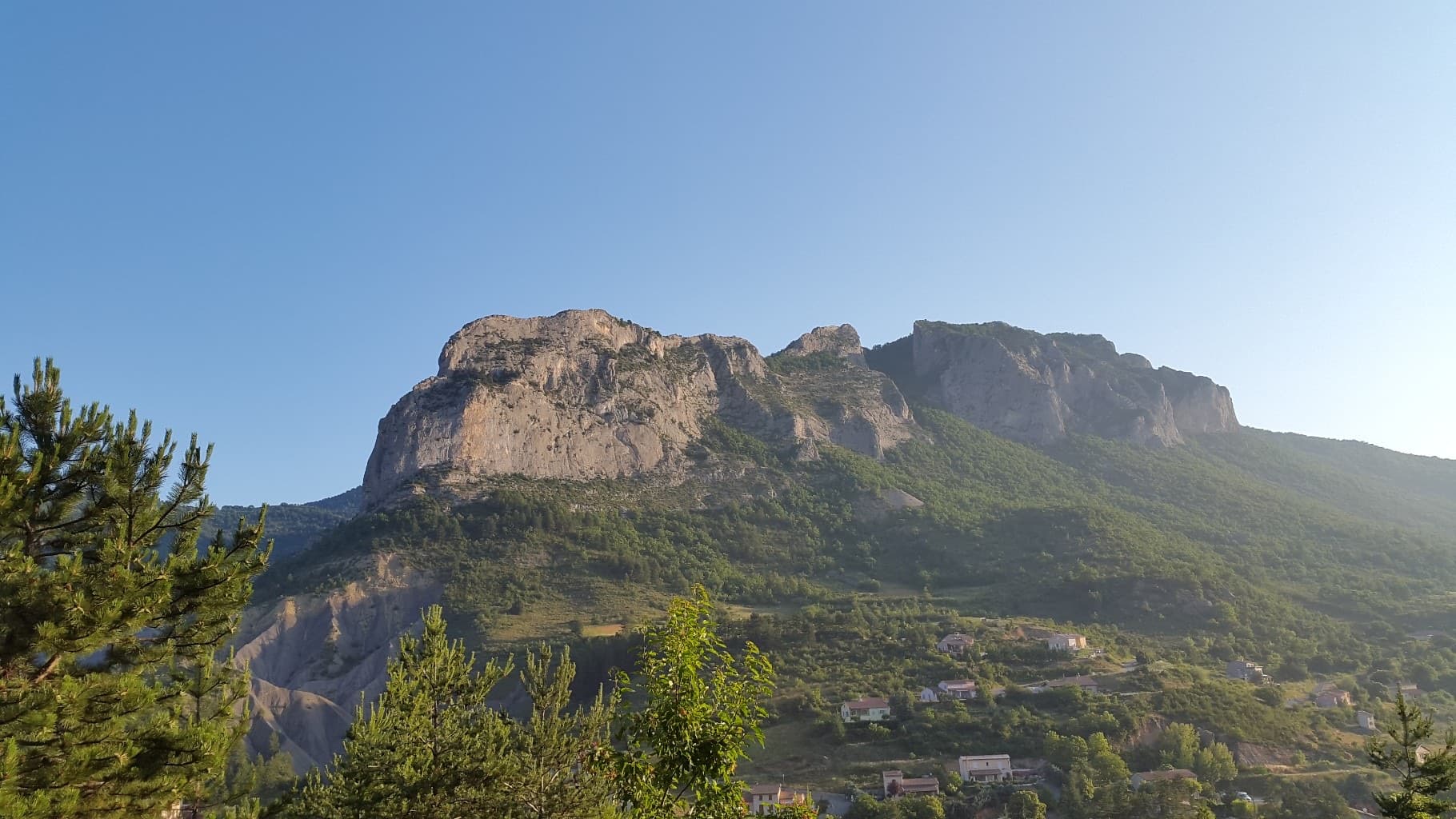
The Quiquillon above Orpierre, home of Brazil and the other multipitch routes on its south-east face

France · Orpierre

Brazil

A popular first multipitch on the south-east face of the Quiquillon: eight short pitches of steep, juggy 5a to 5c limestone, very closely bolted, finishing on the summit ridge. The two 5c pitches at the top are the hardest and polished in places, but can be aided on the bolts. Expect company.

5c8 pitches180 m

Setting off on the traverse pitch of Le Maître de la danse on the Pilier W de l'Ascle, Orpierre

France · Orpierre

Le Maître de la danse

A short, easy beginners' multipitch on the west pillar of the Ascle: six short pitches of 4c to 5b on sculpted limestone with holes and edges, an airy but well-bolted traverse, and a fine slab to finish. Very closely bolted with comfortable chained belays.

5b6 pitches130 m

Leading the steep, physical wall of pitch 4 (6b) of Fleur de Lotus on the Quiquillon, Orpierre

France · Orpierre

Fleur de Lotus

A direct, homogeneous line up the south-east face of the Quiquillon: steep grey walls and slabs at 6a/6a+, with a physical, juggy bulge leading to a fine 6b traverse on pitch 4. Generously bolted and well travelled, a step up from Brazil next door.

6b5 pitches160 m

Around 6a · about 6 pitches

Similar elsewhere

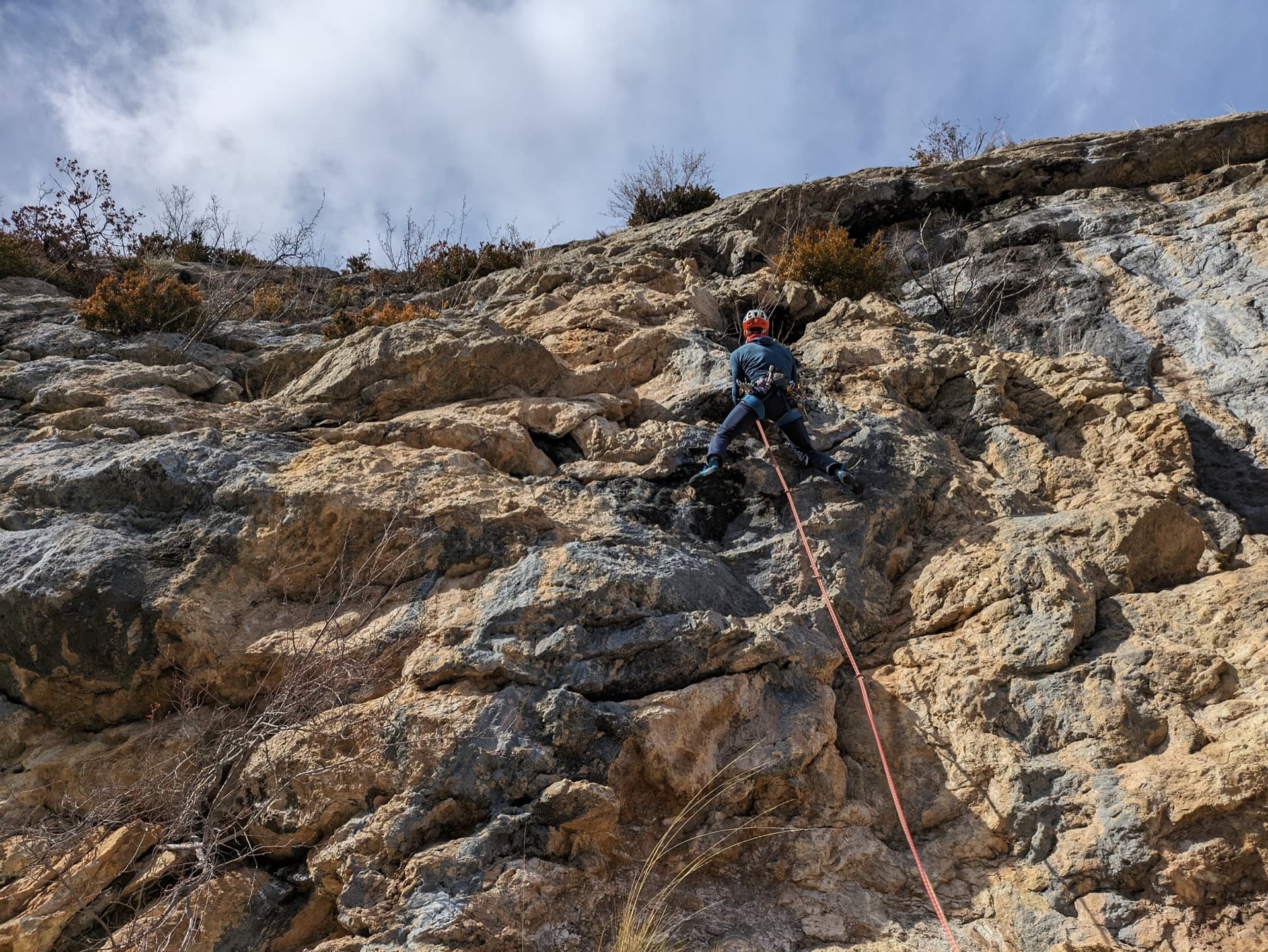
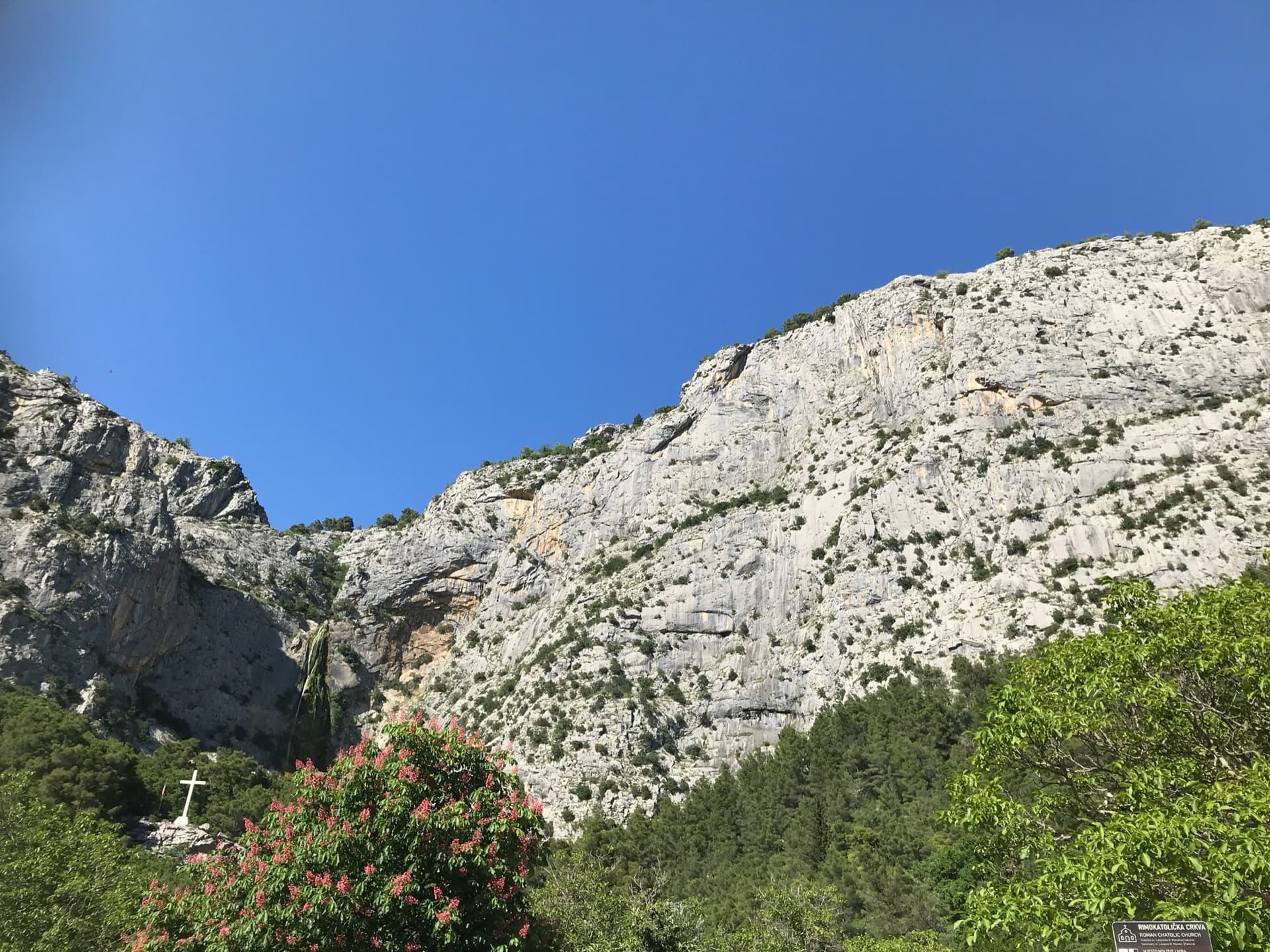
The Ilinac wall above the Cetina just upstream of Omiš, seen from the roadside chapel car park; Rambo takes the centre of the face, but the line is not marked.

Croatia · Omiš

Rambo

Omiš's signature moderate: long, slabby pitches on knobbly grey limestone with big views over the Cetina mouth and the Adriatic. The crux is a short crack on the final pitch.

6a6 pitches230 m

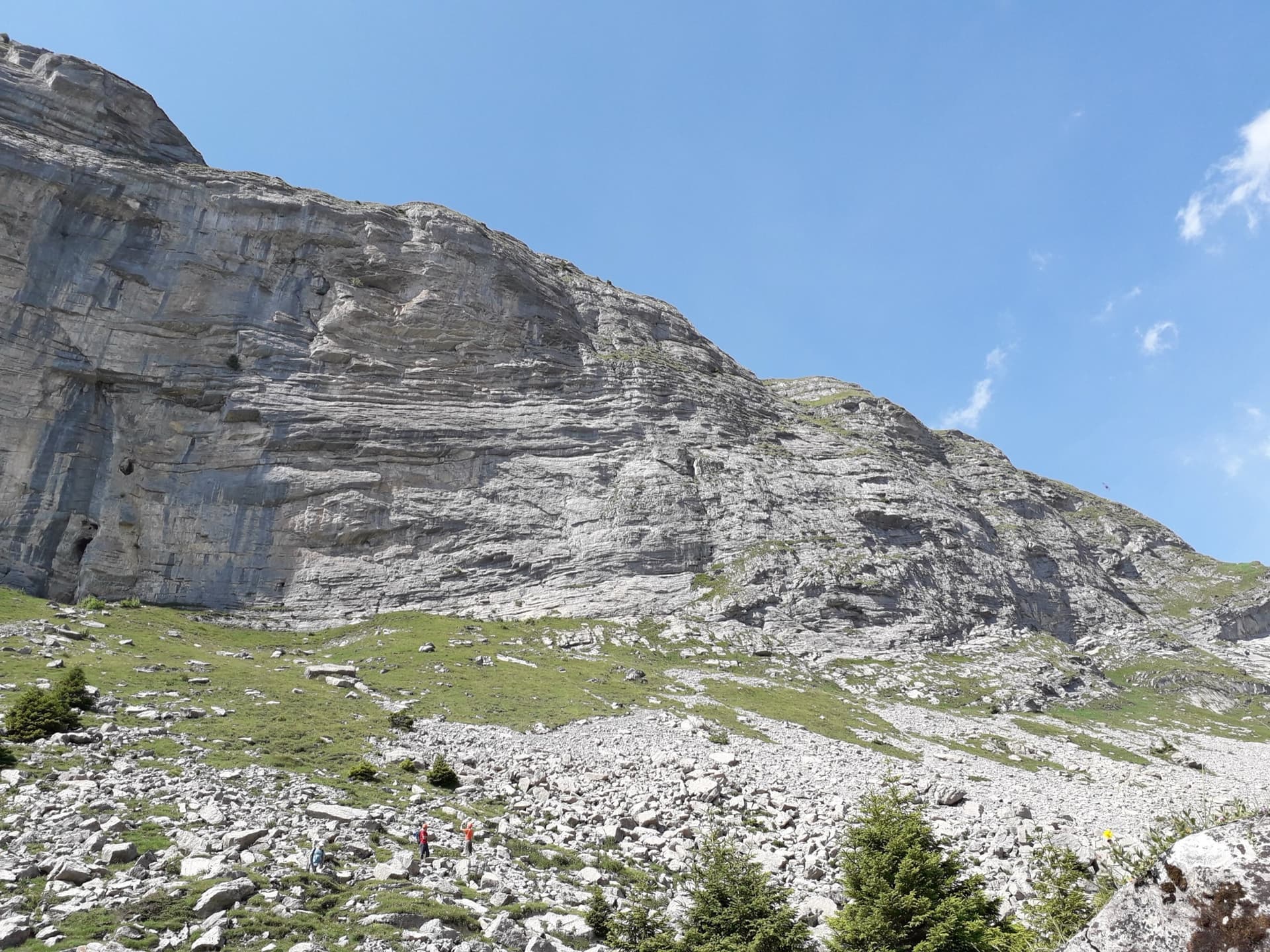
Part of the Hintisberg wall above the scree, seen from the approach

Switzerland · Bernese Oberland

Reisefieber

The most popular route at Hintisberg: six pitches from the lowest point of the wall, with slabs, a technical wall and small overhangs to turn. It gets better as it rises and ends on a superb wall of pockets, where the obligatory 6a crux lies. Expect a queue on fine weekends.

6a6 pitches200 m

The Rabensteinhorn wall climbed by Die Schönheitskönigin von Schneizlreuth, seen from its foot

Germany · Berchtesgaden & Bad Reichenhall

Die Schönheitskönigin von Schneizlreuth

Six pitches on excellent grippy limestone with views to the Watzmann, established 2012. Pitch grades are converted from the UIAA topo (6-, 6, 6, 5+, 5+, 6); 5 is obligatory.

6a6 pitches165 m

The south face of the Pfadflue: the sector of Salü Jan, Hallo Marco and Bilbo

Switzerland · Gastlosen

Hallo Marco

Six pitches of water-worn runnels and compact slab on the south face of the Pfadflue, ending on a ledge at mid-height. Pitch 4 pulls over a small overhang and pitch 5 is a delicate, holdless friction slab. You can carry on up the last five pitches of Salü Jan to the summit.

6a6 pitches250 m

Compiled from published sources, last verified October 2026. Bolts, anchors and access change: check a current topo and read the disclaimer.