Multipitch Atlas

Spelling need not be exact.

Le Maître de la danse

Pilier W de l'Ascle · Orpierre · France

Bail with caveats

A short, easy beginners' multipitch on the west pillar of the Ascle: six short pitches of 4c to 5b on sculpted limestone with holes and edges, an airy but well-bolted traverse, and a fine slab to finish. Very closely bolted with comfortable chained belays.

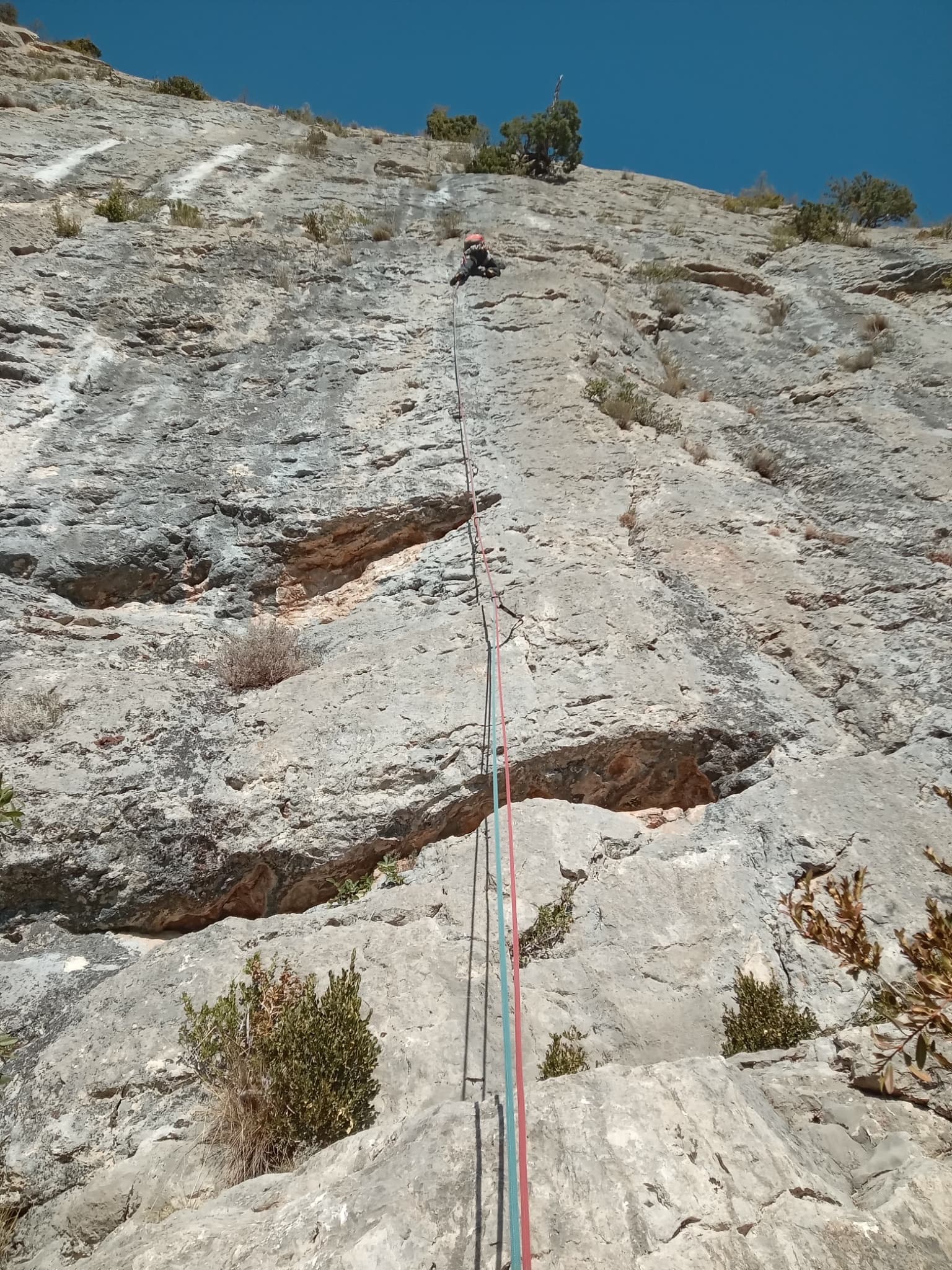
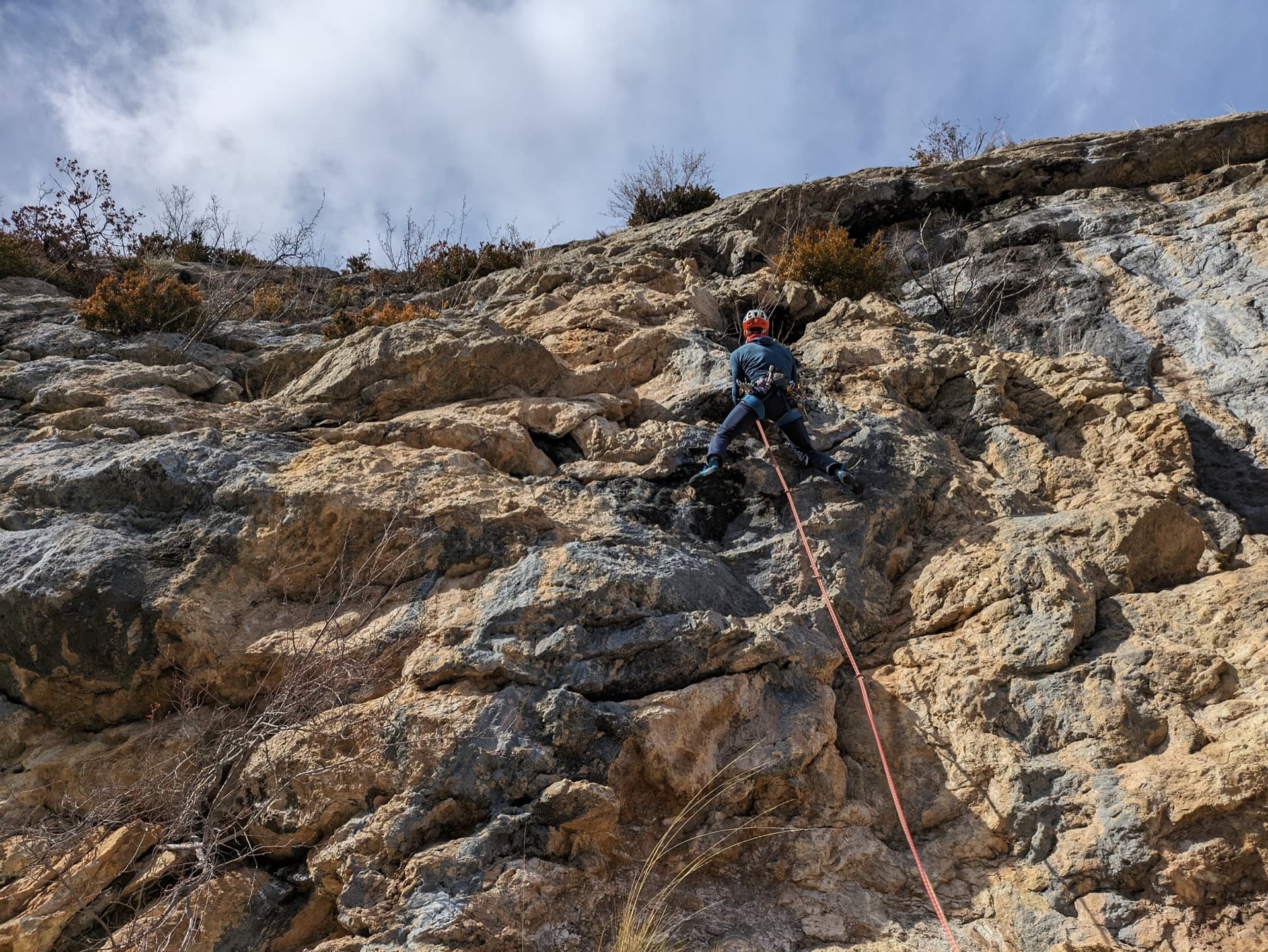
Setting off on the traverse pitch of Le Maître de la danse on the Pilier W de l'Ascle, OrpierrePhoto: Fabien Quétier · CC BY-SA 3.0

Photo

Hardest pitch
5b
Pitches
6
Length
130 m
Approach
25 min
Aspect
S
South-facing
Rope
1×35 m
walk-off
Rock
limestone
Season
Mar to May, Sep to Nov
Bolting confidence
High
Last verified
October 2026 · Compiled from published sources

Overview

Le Maître de la danse is the left-most route on the west pillar of the Ascle and one of the standard introductions to multipitch climbing at Orpierre. It has six short pitches, one of them a 15 m grade 3 link through bushes, with a maximum of 5b and 5a obligatory. The highlights are an airy 20 m traverse left on pitch 3 and a fine pocketed slab on the last pitch. Bolts are 2 to 4 m apart and the belays are chained and comfortable, so it suits beginners and guided or club days. Experienced parties climb it in about an hour as a short outing.

Worth knowing

  • Allow 1 to 2.5 hours on the route; a club party with a beginner took about 2h30.
  • Linking pitches 1 and 2 and pitches 4 and 5 (or 5 and 6) gives four longer pitches; on the lower pitches the line wanders, so extend the bolts.
  • Pèlerin de Compostelle, Malkuth la Terre and Merci M'sieur nearby make good second routes for the same day.

Pitch by pitch

No topo we can show; see the sources.

Pitches of Le Maître de la danse
PitchGradeLengthNotes
P15a20 mAn easy warm-up on good holds, though the start is polished: one 2026 party found it easier to start a little right and come back left at the first or second bolt.
P25a25 mShares its belay with the first belay of Malkuth la Terre (there are three belays there). A little harder than pitch 1. Can be linked with pitch 1 on a 50 m rope; watch the rope drag.
P34c20 mAn airy traverse left for 20 m, very well bolted. Easiest if you stay low.
P45b15 mA short pitch; links easily with pitch 5.
P5315 mA link pitch of 10 to 15 m through bushes; usually combined with pitch 4 or pitch 6.
P65a+30 mA superb pocketed slab, with a less obvious move before the belay (one party went slightly right to avoid an awkward flared crack). Bolts are a little further apart than below.

Approach

To the parking

Drive to Orpierre (about 10 km west-north-west of Laragne-Montéglin) and up to the Parking de l'Adrech above the village, about 15 minutes on foot from the village.

On foot · about 25 min

About 25 minutes. From the Adrech car park, take the climbers' path that heads right towards the Quatre Heures sector, then follow the signs to the Ascle. The route is the left-most on the face, after Pèlerin de Compostelle and Malkuth la Terre, with its name marked at the foot.

Map of the walk-in

Coordinates · crag

44.32198, 5.70010

Parking

44.31917, 5.70167

Parking de l'Adrech (camptocamp waypoint 178282)

Point from camptocamp waypoint 43675 (Orpierre - Pilier W de l'Ascle)

For your phone or watch

Download GPX

Contains the route point and parking.

Points from published sources, not surveyed.

Descent

On foot: go up to the col between the west and east pillars of the Ascle and join the Quatre Heures path back down to the car park. One 2026 party took about 45 minutes from the top to the car park.

Bailing off the route

Bail with caveats

The pitches are short (15 to 30 m) and every belay is chained, so you can abseil from the lower belays. The 20 m traverse left on pitch 3 means that from above it a straight abseil will not follow the route, and the route is often busy with parties below.

Retreat from
The first and second belays (the second is shared with Malkuth la Terre). Above the traverse of pitch 3 the line is offset to the left.
Point of no return
Not documented. Above pitch 3 it is easier and quicker to finish the route (5b at most, then a grade 3 link and the slab) than to retreat.
Carry
The 35 m rope suggested for climbing allows only short abseils; take a 50 m or longer rope if you want the option.
Basis
Inferred from the route factsSources give the belay type, pitch lengths and the walk-off but do not discuss retreat.

In an emergency · France

112Emergency; sends PGHM or CRS mountain rescue

  • 17Gendarmerie and police

Position of the crag

44.32198, 5.70010

Marks the crag, not the route: give route and pitch.

Say what happened, how many are hurt, and where you are. Checked October 2026 (source).

Hazards

  • Busy: the Ascle is popular with groups and beginners, and several parties report many people on the face.
  • The start of pitch 1 is polished and feels stiff for the grade.
  • A May 2024 party reported a large hollow-sounding flake that seemed to move in the first pitch of the route just to the right; take care at the shared start area.
  • Pitch 3 traverses 20 m left, which matters for a second who is unsure on traverses and for any retreat.

Gear

12 quickdraws and a 35 m rope (camptocamp); with a 50 m rope you can link pitches 1 and 2, 3 and 4, 4 and 5, or 5 and 6. A few extenders reduce rope drag when linking. Helmet.

Checklist

Quickdraws
12
Rope
1×35 m (walk-off)
Helmet
One each

Conditions

Plan B nearby

  • HarderBrazil5c8 pitchesfaces SE0.4 km away

Straight-line distances, up to 30 km.

Reader reports

No reports yet.

Report a problem with this route

Say what and where. Reports are checked before they appear; no name or email is stored.

Bolts and history

Bolting
Glue-in staples every 2 to 4 m, and comfortable chained belays, each with two stations on two glue-in staples. Parties in 2026 call the equipment excellent and very close, a little more spaced on the last pitch. A September 2026 party found the top belay to be one chained anchor plus two separate bolts.
History
No opening details are published. Camptocamp thanks the Orpierre bolters; most of the cliffs belong to the commune, which employs someone to equip them.
Guidebook
'Grimper dans les Hautes-Alpes - Orpierre et les Pays du Buëch' (Pierre-Yves Bochaton, Marion Deïdda) and the local Orpierre topo (editions of 2009, 2013, 2016 and 2020 are mentioned by parties); also listed in 'Escalade plaisir - Alpes du Sud, Provence'.
Where sources disagree

  • Pitch lengths: the French camptocamp text and La Voie Facile give 20, 25, 20, 15, 15 and 30 m; the Spanish text gives 20, 30, 20, 20, 20 and 30 m. The French figures are used.
  • Height: camptocamp gives 130 m of climbing; La Voie Facile gives 130 m of route but 90 m of height gain.
  • Descent: camptocamp describes walking to the col between the two Ascle pillars; La Voie Facile describes following the arête of the pillar towards the top, then the path back to the car park.

Sources

More in Orpierre

All routes in Orpierre
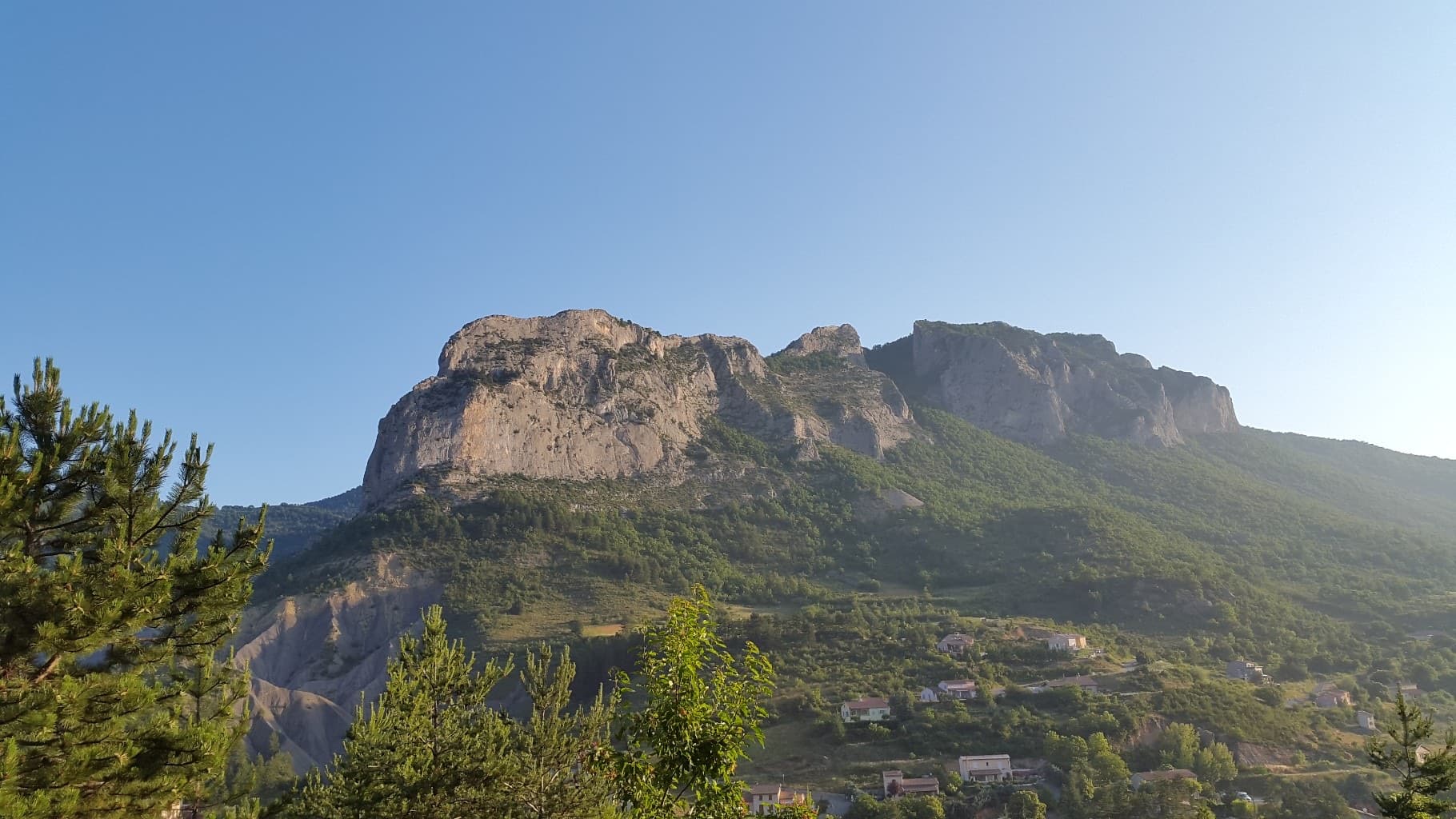
The Quiquillon above Orpierre, home of Brazil and the other multipitch routes on its south-east face

France · Orpierre

Brazil

A popular first multipitch on the south-east face of the Quiquillon: eight short pitches of steep, juggy 5a to 5c limestone, very closely bolted, finishing on the summit ridge. The two 5c pitches at the top are the hardest and polished in places, but can be aided on the bolts. Expect company.

5c8 pitches180 m

Leading the steep, physical wall of pitch 4 (6b) of Fleur de Lotus on the Quiquillon, Orpierre

France · Orpierre

Fleur de Lotus

A direct, homogeneous line up the south-east face of the Quiquillon: steep grey walls and slabs at 6a/6a+, with a physical, juggy bulge leading to a fine 6b traverse on pitch 4. Generously bolted and well travelled, a step up from Brazil next door.

6b5 pitches160 m

The long, steep first pitch of Du cidre pour les étoiles on the Quiquillon, Orpierre

France · Orpierre

Du cidre pour les étoiles

Three steep, sustained 6a pitches on the south-east face of the Quiquillon, the first a long 40 m pump on layered rock, then a walking link and two short, easy slab pitches to the ridge. Very closely bolted with doubled chained belays; the lower half is the reason to go.

6a6 pitches145 m

Around 5b · about 6 pitches

Similar elsewhere

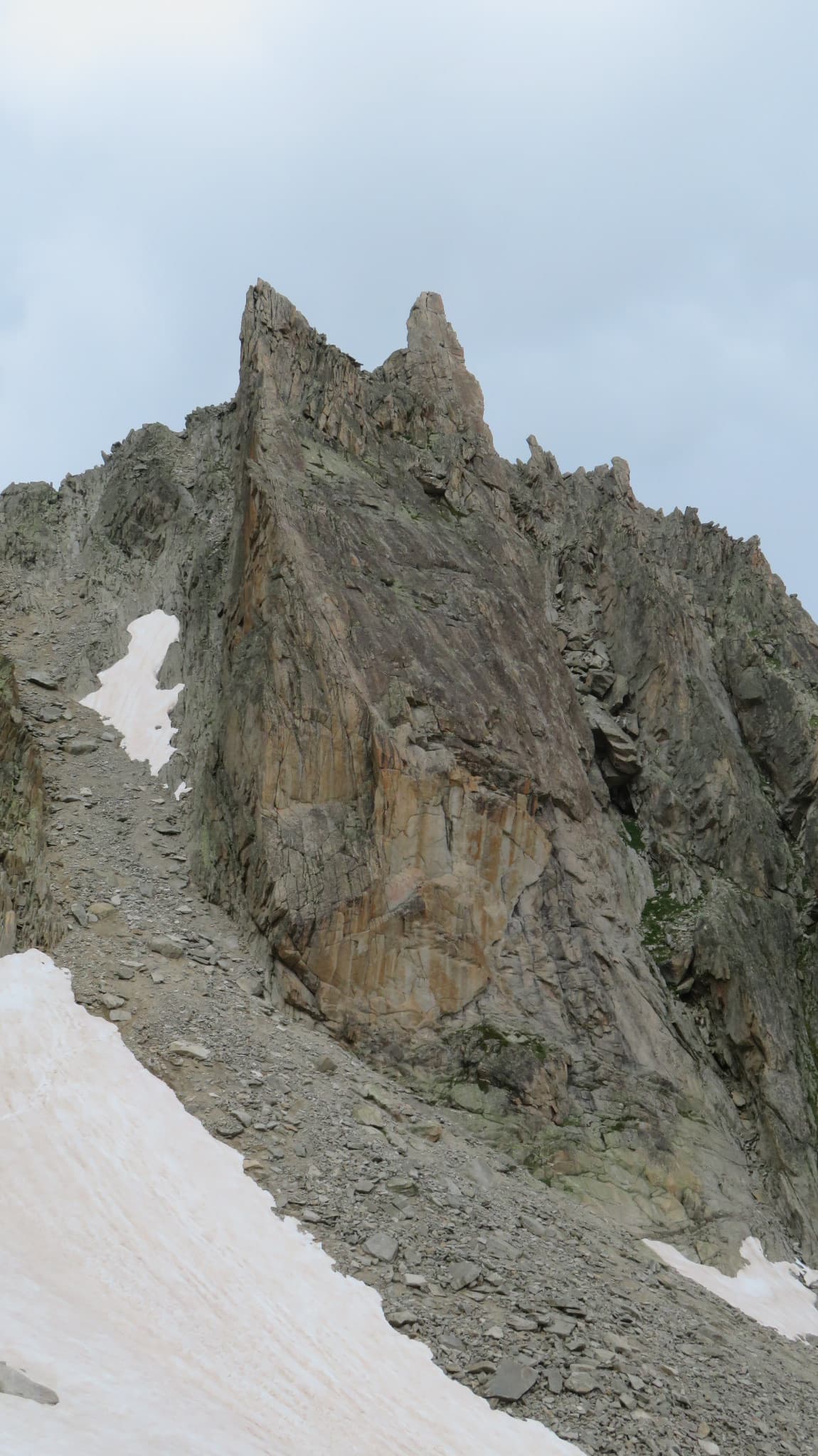
The pillar of the Aiguille de la Cabane above the Cabane d'Orny; Bon accueil climbs this pillar.

Switzerland · Orny (Champex, Mont Blanc massif)

Bon accueil

The friendliest long route at the Cabane d'Orny: four short pitches up the lower spur, a walk right along a ledge, then two steeper pitches up the red summit bastion. The first pitch is the crux, a physical corner that many find hard for 5b, and it can be avoided by an easier bolted start. Fine rough granite and a summit at almost 3000 m.

5b6 pitches130 m

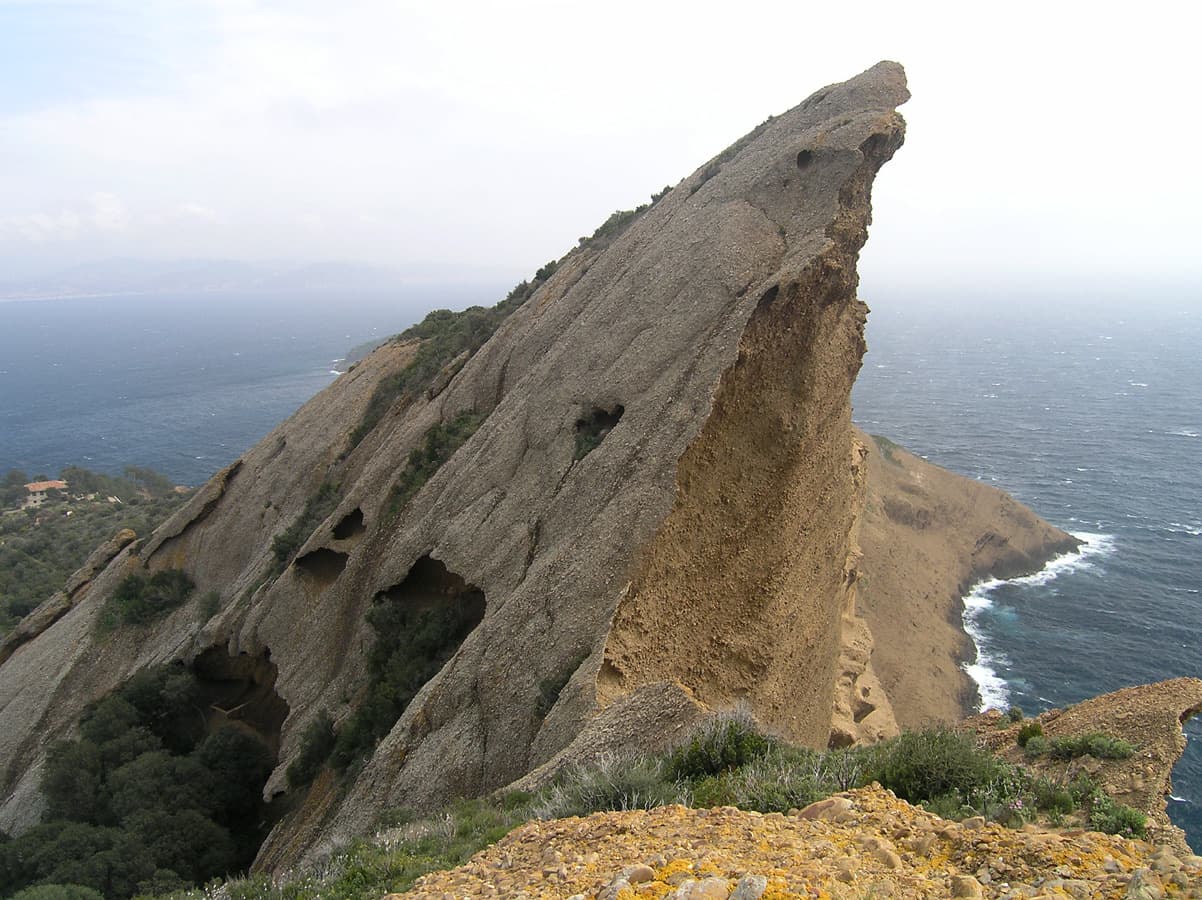
One of the conglomerate summits of the Bec de l'Aigle above La Ciotat

France · Calanques

Piste Noire

An easy adventure on the brown pudding-stone of the Bec de l'Aigle at La Ciotat. You abseil into a sea-level gorge, traverse a few metres above the water and climb cobbles past two caves to the crest, finishing with an airy bolted ridge. The climbing is never hard; the unusual rock, the abseil approach and the setting make the day.

5b6 pitches150 m

Committing

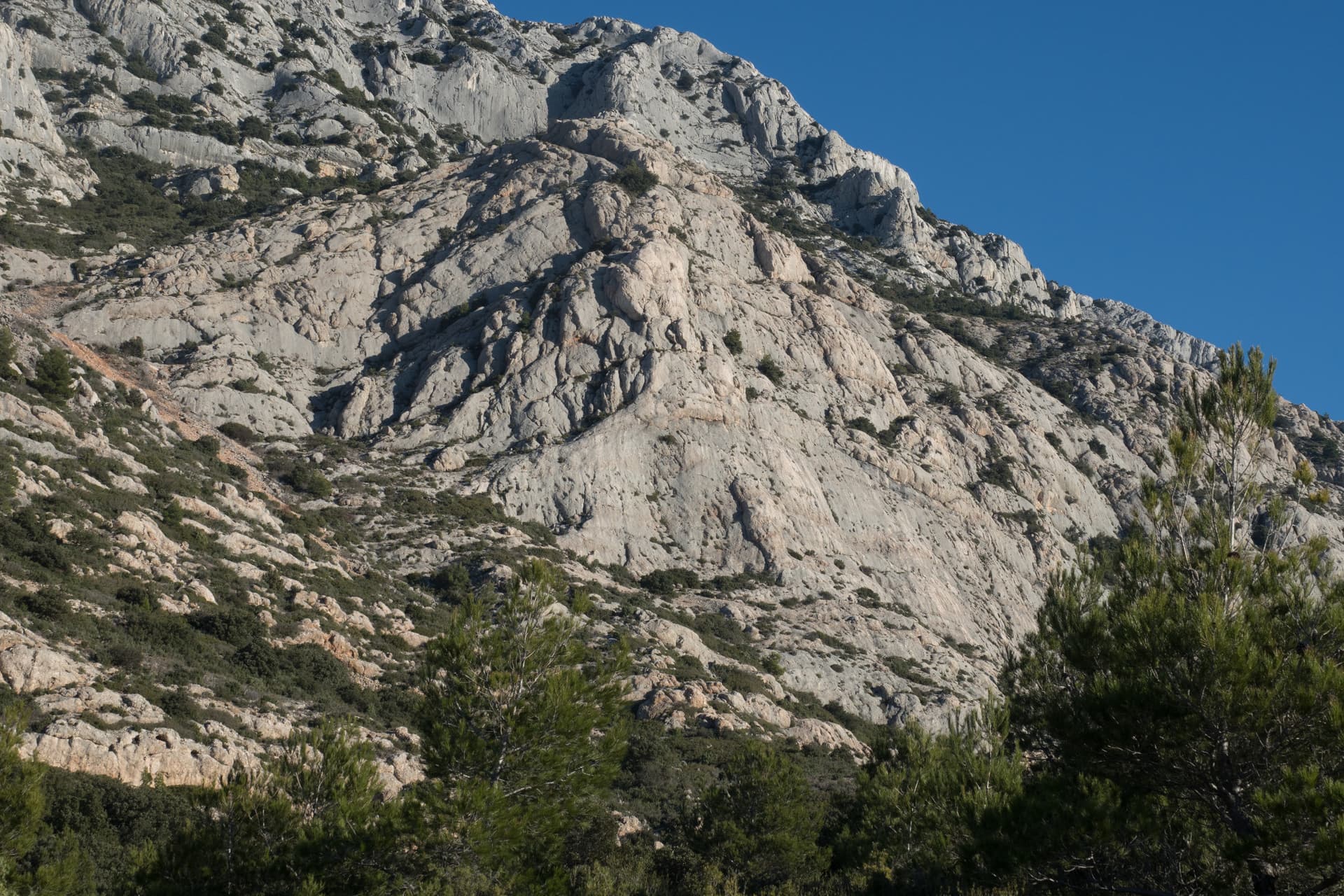
The Socle de la Carrière on the south side of the Montagne Sainte-Victoire. Tambour Magique climbs these slabs; its line is not pointed out.

France · Sainte-Victoire

Tambour Magique

A six-pitch outing at 5a to 5b on the compact 'marble' breccia of the Socle de la Carrière, running alongside La Marbrière. Short climbing sections on fine rock alternate with stony terraces. Bolting is friendlier than the local tradition, which makes it a good first route on the mountain.

5b6 pitches170 m

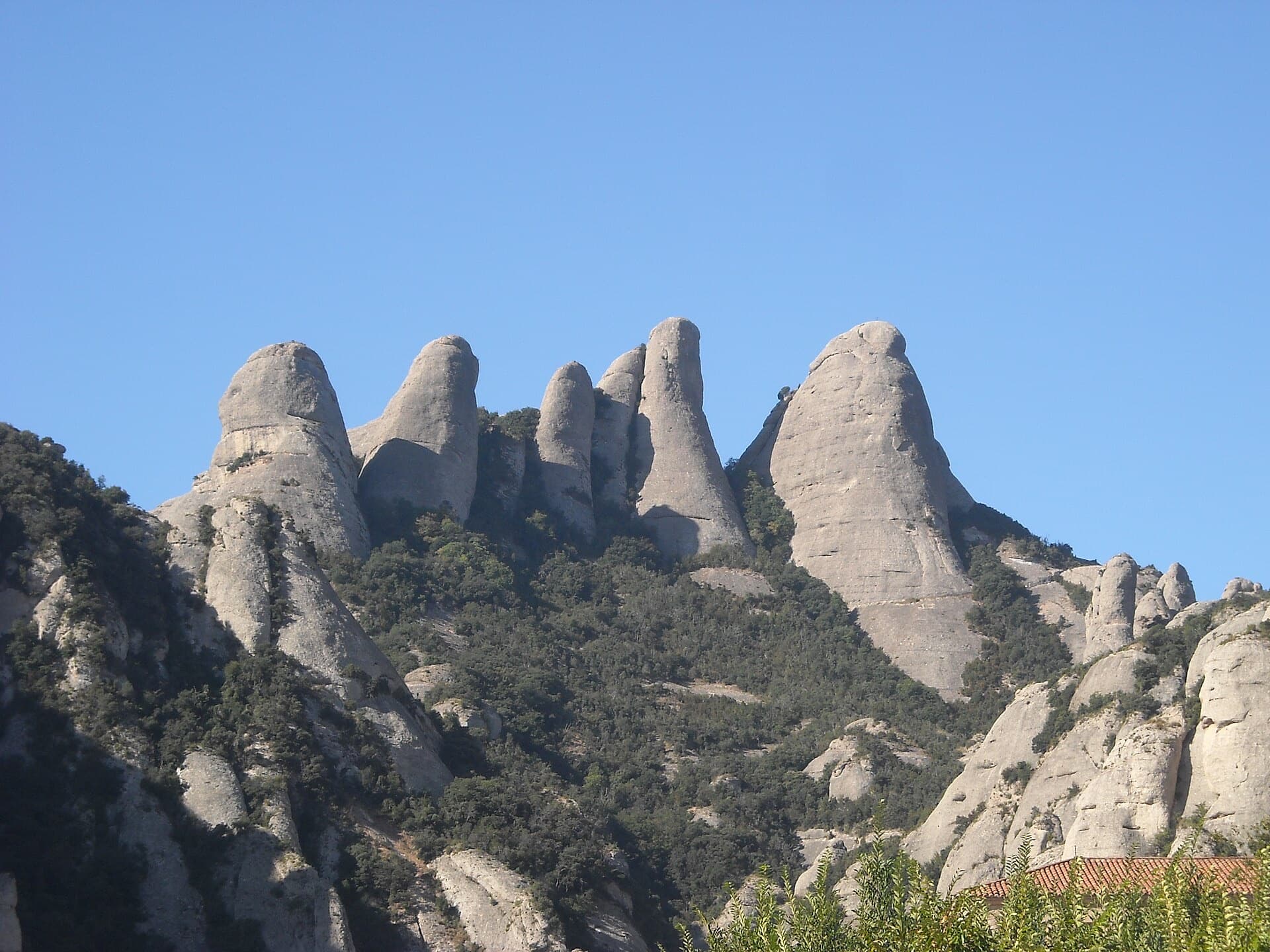
The Gorros of Montserrat from the monastery side: left to right the Gorra Marinera, the Magdalenes and the Gorra Frígia. Via Sargantanes climbs the Gorra Marinera, the left-hand tower.

Spain · Montserrat

Via Sargantanes

A popular first Montserrat multipitch close to the monastery. Steep pebble walls at 5b are split by easy slabs, finishing on an airy summit cap.

5b6 pitches145 m

Read the cautions

Compiled from published sources, last verified October 2026. Bolts, anchors and access change: check a current topo and read the disclaimer.