Multipitch Atlas

Flotter Dreier

Martinswand – Vorbau (Zirl) · Karwendel (Innsbruck Nordkette) · Austria

Bail not documentedBolting confidence: high

One of the most popular routes on the Martinswand plinth: five short pitches of limestone slab that get better with height. The crux is a traverse right on pitch 3, hard from the first move, followed by a friction slab on pitch 4.

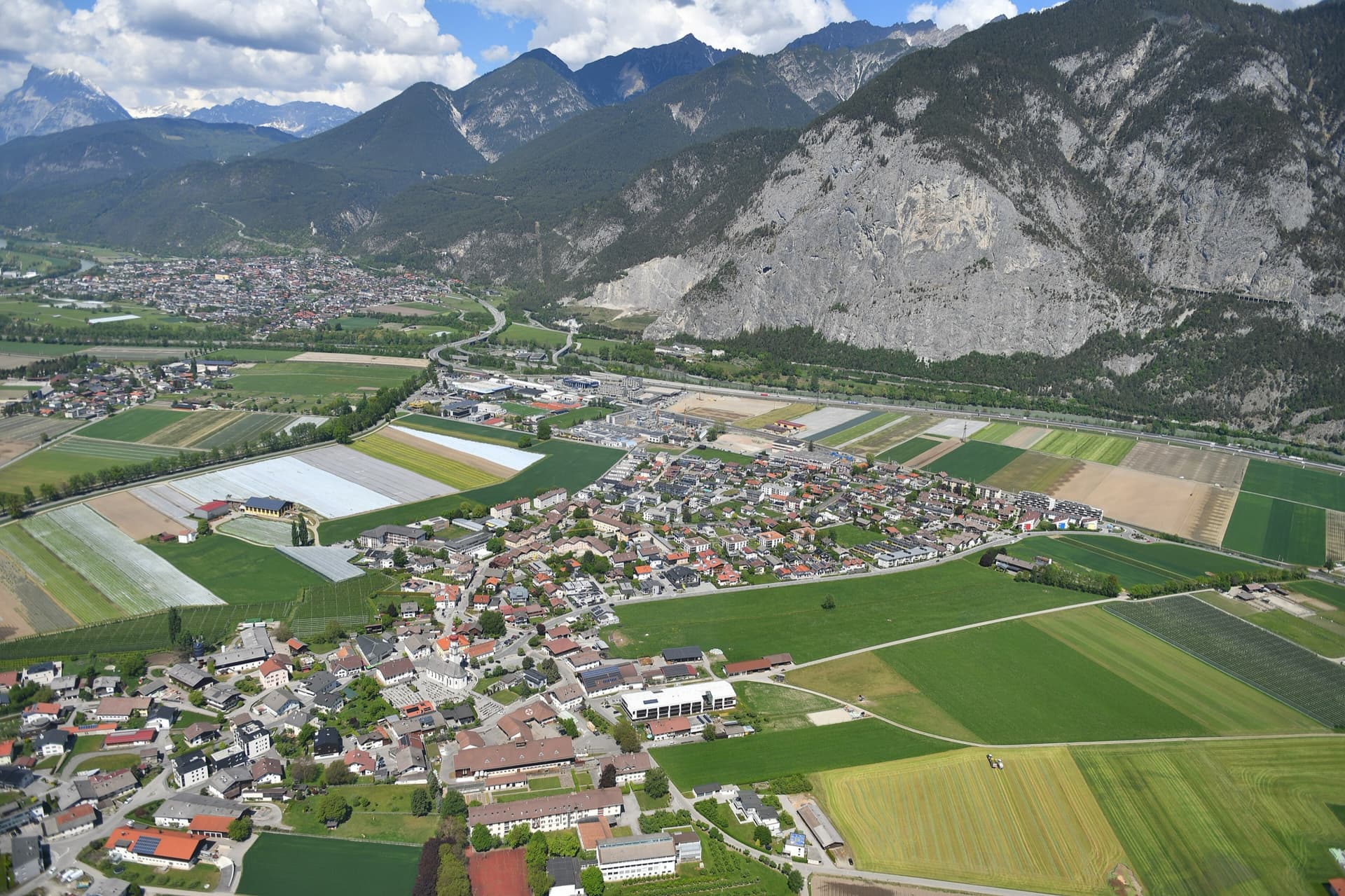
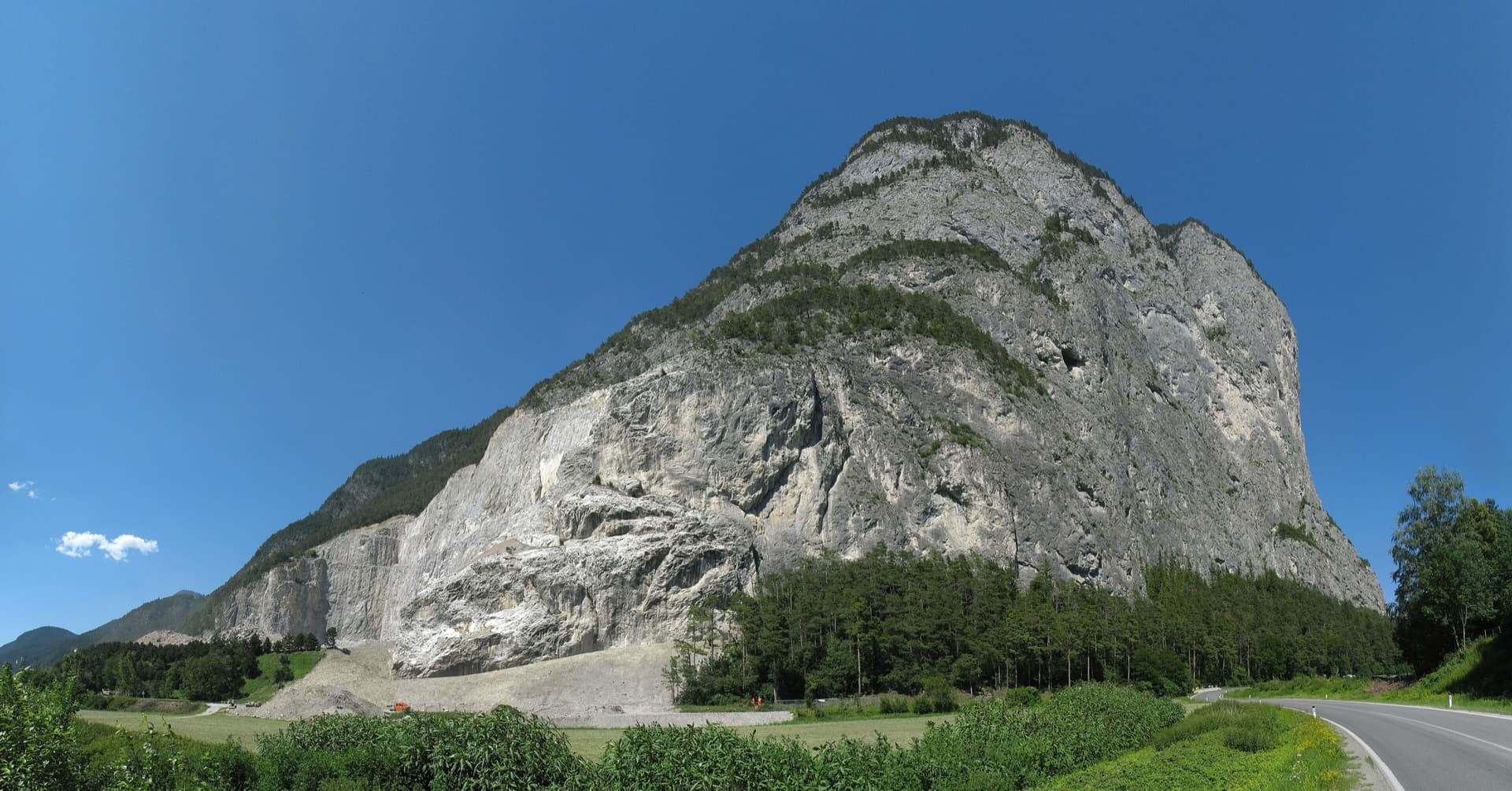
The Martinswand above the Inn valley near Zirl, seen from the south-west. The Vorbau routes climb the slabby plinth at the right-hand (eastern) end of the wall; the line is not marked.Photo: KlausFoehl · CC BY-SA 3.0

Photo

The Martinswand above the Inn valley near Zirl, seen from the south-west. The Vorbau routes climb the slabby plinth at the right-hand (eastern) end of the wall; the line is not marked.Photo: KlausFoehl · CC BY-SA 3.0
Hardest pitch
5b
Pitches
5
Length
135 m
Approach
15 min
Aspect
S
South-facing
Rope
1×60 m

The route

Overview

A short, friendly slab route on the plinth below the main Martinswand, ten minutes from the car and south-facing. bergsteigen.com calls it one of the two most popular plinth routes. The climbing is mostly UIAA 4 to 5 with one harder passage, the rightward traverse on pitch 3. The route crosses Emmentaler at the first belay. Recent visitors found the grades stiff, so treat it as a 5b route with a move that can feel like 6a.

The climbing

Pitch by pitch

Pitches of Flotter Dreier
PitchGradeLengthNotes
P14a25 mEasy start that steepens as you climb (UIAA IV+ on camptocamp). Emmentaler crosses from the right at the belay.
P24b25 mStraight up the corner above the belay: a vertical slab on good edges, one athletic move, then easy ground to the belay (UIAA V- on camptocamp).
P35b25 mThe crux: a traverse right, hardest in the first metres. UIAA 5+ on bergsteigen.com, 5a on Climbers Paradise, V+/6a on camptocamp. The bolts are close and it goes at A0.
P44c30 mEasy start, then a friction slab where you have to trust your feet (UIAA V on camptocamp). bergsteigen.com suggests taking the slab on its right side.
P54b30 mA rising traverse to start, then a succession of slabs to the last belay (UIAA V- on camptocamp).

Getting there

Approach

To the parking

Leave the A12 Inn valley motorway at Zirl-Ost and follow the road to the Kematen (Sellrain) turn-off. After the exit, pass the quarry and drive back towards Innsbruck along the foot of the Martinswand to the parking by a ramp, signed P1 (Alpenverein climbing garden, 615 m). By public transport, take the train to Innsbruck and a bus to the Martinswand/Zirl stop.

On foot · about 15 min

From P1 walk towards the Alpenverein climbing garden as far as the toilet block, pass it heading towards Zirl and follow the signs for 'Vorbaurouten' up the path until you are close to the wall. Turn off left to a gully, climb steeply, then follow the foot of the wall on the level to the start. The route name is on a metal plate; Emmentaler starts just to the right. About 10 to 15 minutes.

Map of the walk-in

  • Route base
  • Parking

Loading map

The point marks the base of the route.

Coordinates · route base

47.26790, 11.27830

Parking

47.26670, 11.28090

P1, Alpenverein climbing garden car park below the Martinswand (bergsteigen.com map marker)

Point from bergsteigen.com map marker (route start, approximate)

For your phone or watch

Download GPX

Contains the route point and parking. Opens in most mapping apps and GPS watches.

Points are compiled from published sources, with the precision stated above. They were not surveyed on the ground: check them against a current topo.

Getting down

Descent

Walk off. From the top traverse right along ledges (grade 1, partly marked with paint dots) to the marked Martinswand descent path, follow it right into the forest and take the path down to the car park. Allow 30 to 45 minutes. A 2026 party describes the way as marked with red dots, a little exposed but fine with care.

Retreat

Bailing off the route

Bail not documented

No source describes abseiling this route. The pitches are 25 to 30 m, so a 60 m rope would reach from belay to belay, but the abseil hardware at the belays is not documented. A separate abseil line exists further left on the plinth (beside Rucola), which shows that descending the slabs is feasible in principle.

Retreat from
Not documented. Pitch 3 traverses right, so retreating from above it would mean abseiling diagonally (inferred).
Point of no return
Not documented. After the pitch 3 traverse, finishing the route and walking off is probably simpler than reversing it (inferred).
Carry
Maillons or old carabiners and cord in case the belays have no rings.
Basis
Inferred from the route factsbergsteigen.com, Climbers Paradise and camptocamp describe only the walk-off; pitch lengths are published, belay hardware is not.

Partly inferred from the route facts

Safety

Hazards

  • Stonefall. There is a lot of scree above the plinth, chamois knock stones down, and in strong Föhn wind stones fall without any help. Wear a helmet from the approach onwards.
  • The walk-off crosses exposed ledges with grade 1 to 2 scrambling; it needs some alpine experience and is delicate when wet.
  • The Vorbau is popular and other parties are often above and below you.

Sun and weather

Conditions

South-facing, with the start at about 800 m. bergsteigen.com says the Vorbau routes can be climbed all year except when there is snow. The low altitude and full sun make midsummer days hot (inferred from aspect and altitude, not stated by the sources).

Usual season · Mar to Jun, Sep to Nov

Sun on the wall · S-facing

Working out the sunlit hours for this month.

  • January: not yet worked out
  • February: not yet worked out
  • March (usual season): not yet worked out
  • April (usual season): not yet worked out
  • May (usual season): not yet worked out
  • June (usual season): not yet worked out
  • July: not yet worked out
  • August: not yet worked out
  • September (usual season): not yet worked out
  • October (usual season): not yet worked out
  • November (usual season): not yet worked out
  • December: not yet worked out

Sun on the wallDaylight, wall in shade● Usual season

Estimated from the wall's aspect only. Ignores surrounding terrain, gullies and the wall's exact shape. Clock times are local to the wall (Central European time), for the 15th of each month.

Monthly climate averages for Karwendel (Innsbruck Nordkette), 1991-2020
MeasureJanFebMar (usual season)Apr (usual season)May (usual season)Jun (usual season)JulAugSep (usual season)Oct (usual season)Nov (usual season)Dec
Mean daily high °C−7−5−22711131395−2−6
Mean daily low °C−17−15−11−8−3133−1−5−11−15
Rain days 1 mm or more131315162121212016141313

● marks the usual climbing season. Averages for 1991-2020 at about 2267 m. Area climate from Open-Meteo reanalysis. Temperatures are adjusted to the height of the crag; rain comes from a grid cell of about 10 to 25 km, and summer highs on sea cliffs can read a few degrees low. The wall and valley can differ. Data: Open-Meteo, CC BY 4.0.

What to carry

Gear

10 quickdraws (camptocamp says 10 to 12), a 60 m single rope, slings and screwgates for the belays, helmet. Carry your approach shoes for the walk-off.

Checklist

Quickdraws
10
Rope
1×60 m
Helmet
One each
Maillons or spare karabiners
To leave behind if you retreat
Cord
Mentioned for retreat

Derived from the route data; check it against a current topo

From climbers

Reader reports

Reader reports are not being collected yet. Until they are, check a current topo and the local club or guidebook publisher for recent changes to Flotter Dreier.

Worth knowing

Tips

  • If the pitch 3 traverse feels too hard, pull on the closely spaced bolts.
  • Allow about 2 hours for the climbing.
  • The plinth routes get busy; the two pillar routes right of Flying Grass are a way to pass the time if you have to queue.

Open questions

Where sources disagree

  • Grade: 5a on Climbers Paradise, UIAA 5+ on bergsteigen.com (2012), 6a free and 5c obligatory on camptocamp (2026). A July 2026 party thought pitches 2, 3 and 4 were all undergraded. 5b is used here as the middle value.
  • Length: Climbers Paradise gives 75 m in its header but its five pitches add up to 135 m, which matches bergsteigen.com; camptocamp gives 120 m.
  • Name: 'Der Flotte Dreier' on bergsteigen.com, 'Flotter Dreier' on Climbers Paradise and camptocamp.

Provenance

Sources

Same area

More in Karwendel (Innsbruck Nordkette)

All routes in Karwendel (Innsbruck Nordkette)
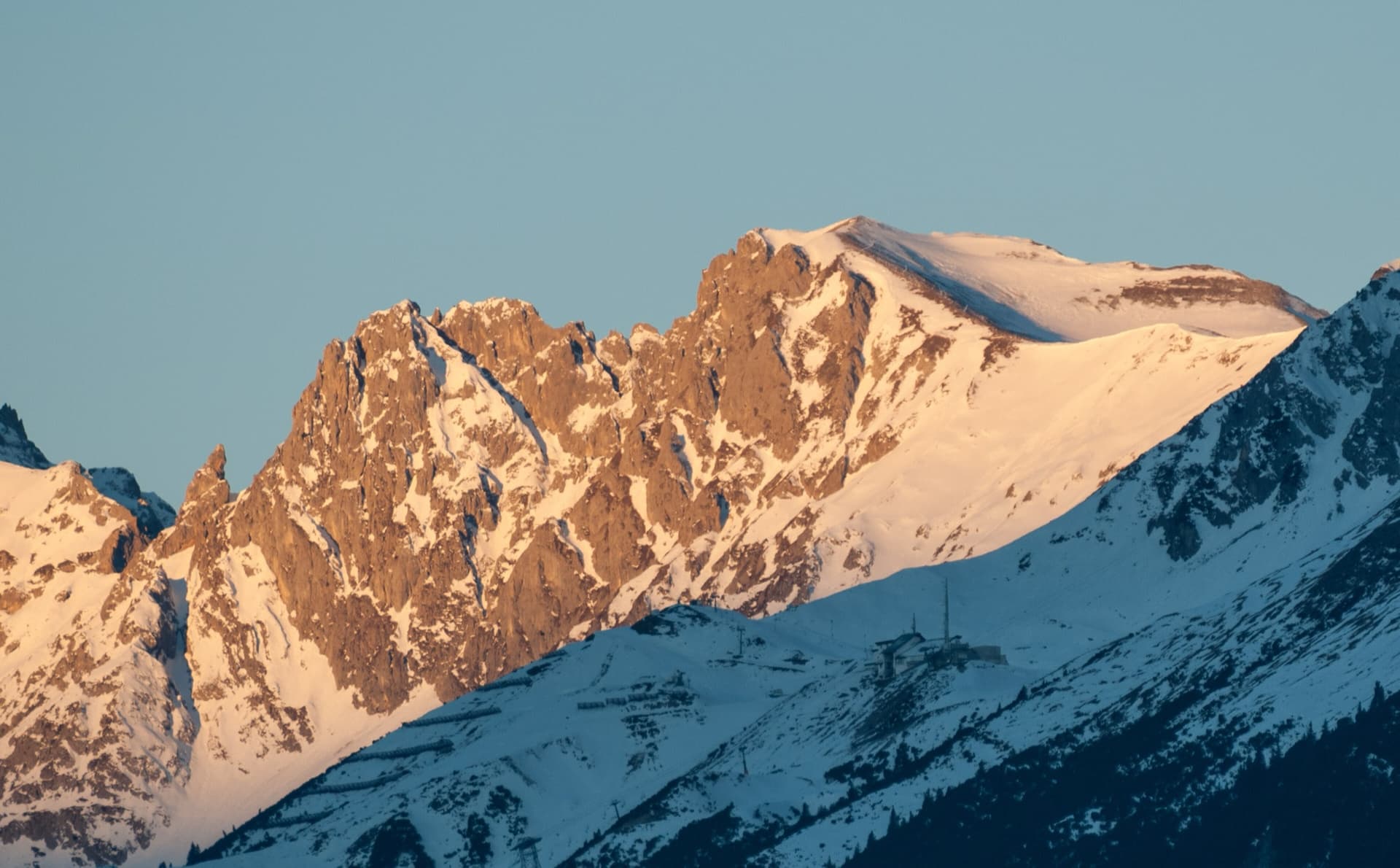
Evening light on Frau Hitt and the Westliche and Östliche Sattelspitze on the Innsbruck Nordkette, seen from the east above the Seegrube; the exact line is not marked.

Austria · Karwendel (Innsbruck Nordkette)

Mit Vergnügen – avec plaisir

A plaisir line straight above Innsbruck, reached by cable car. Two pitches are UIAA 6-/6 (5+/A0) and the rest is mostly grade 4–5. The upper pitches are grassy, so avoid it when wet.

6a9 pitches300 m
The Martinswand above the Inn valley near Zirl, seen from the south-west. The Vorbau routes climb the slabby plinth at the right-hand (eastern) end of the wall; the line is not marked.

Austria · Karwendel (Innsbruck Nordkette)

Rucola

A popular plaisir route up the slabs of the Martinswand plinth: seven pitches, mostly UIAA 4, with only about three harder metres in a short steep corner on pitch 5. Often combined with a route on the wall above.

5c7 pitches225 m

The Martinswand above the Inn valley near Zirl, seen from the south-west. The Vorbau routes climb the slabby plinth at the right-hand (eastern) end of the wall; the line is not marked.

Austria · Karwendel (Innsbruck Nordkette)

Kaiser Max Spätlese

Easy slab climbing straight up the plate zone below the 'Ostrisswald' on the Martinswand plinth, broken by a few ledges. Mostly UIAA 4 to 5, with an overhang on pitch 2 and the 6a crux on the long last pitch.

6a6 pitches200 m

Aerial view over Kematen to the south face of the Martinswand, with Zirl on the left. The Vorbau routes are on the lower slabs at the right-hand (eastern) end of the wall; the line is not marked.

Austria · Karwendel (Innsbruck Nordkette)

Flying Grass

The original Martinswand plinth classic: six pitches of limestone slab, well bolted but polished by traffic, so the grade feels stiff. The crux comes on pitch 3 and a fine 45 m slab finishes the route.

6a+6 pitches150 m

Around 5b · about 5 pitches

Similar elsewhere

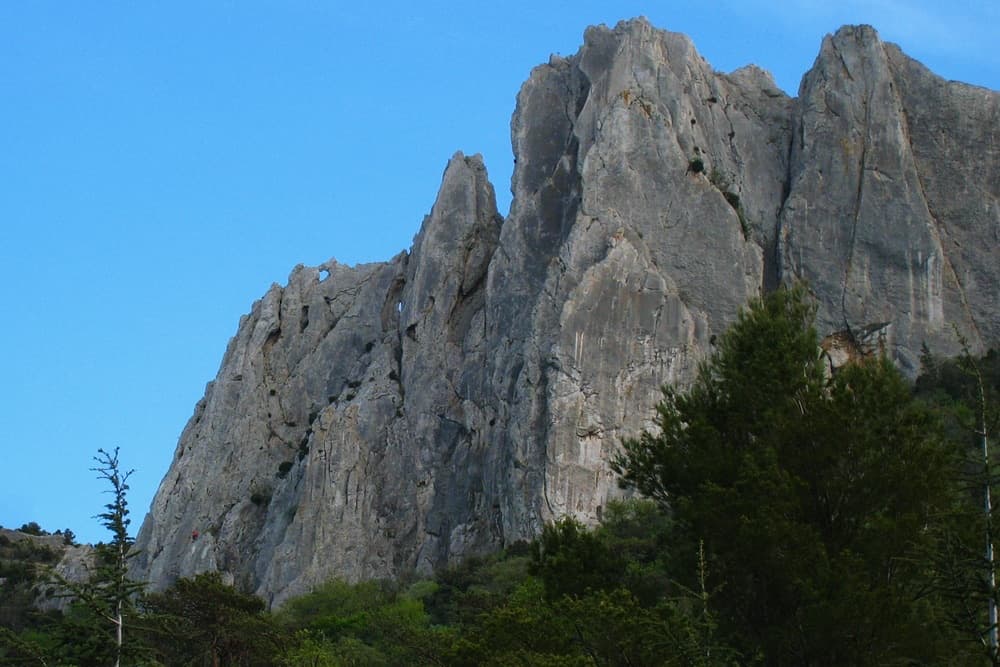
The north face of the Gigondas chain at the Aiguillette Lagarde and Trois Plaques sectors, with a window through the crest visible on the left; Petite Émeline climbs on this side. The line is not marked.

France · Dentelles de Montmirail

Petite Émeline

A short, generously bolted beginner's multipitch on the north face of the Gigondas chain: an easy corner, a fine vertical wall, a rising traverse, and then a squeeze through a natural window in the crest to finish on the sunny south side. Polished from traffic but full of character, and done in an hour or so.

5b4 pitches65 m

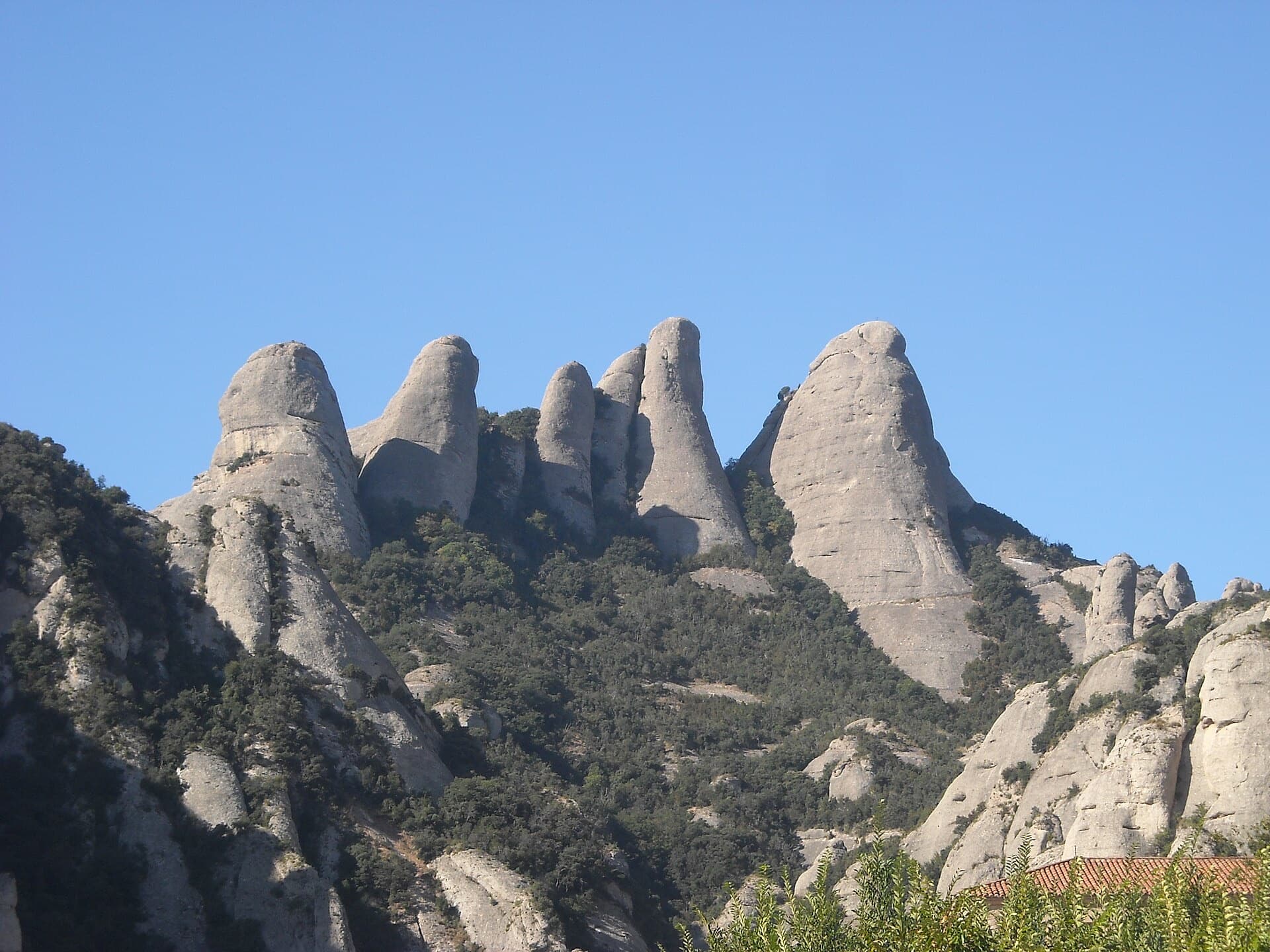
The Gorros of Montserrat from the monastery side: left to right the Gorra Marinera, the Magdalenes and the Gorra Frígia. Via Sargantanes climbs the Gorra Marinera, the left-hand tower.

Spain · Montserrat

Via Sargantanes

A popular first Montserrat multipitch close to the monastery. Steep pebble walls at 5b are split by easy slabs, finishing on an airy summit cap.

5b6 pitches145 m

Read the cautions

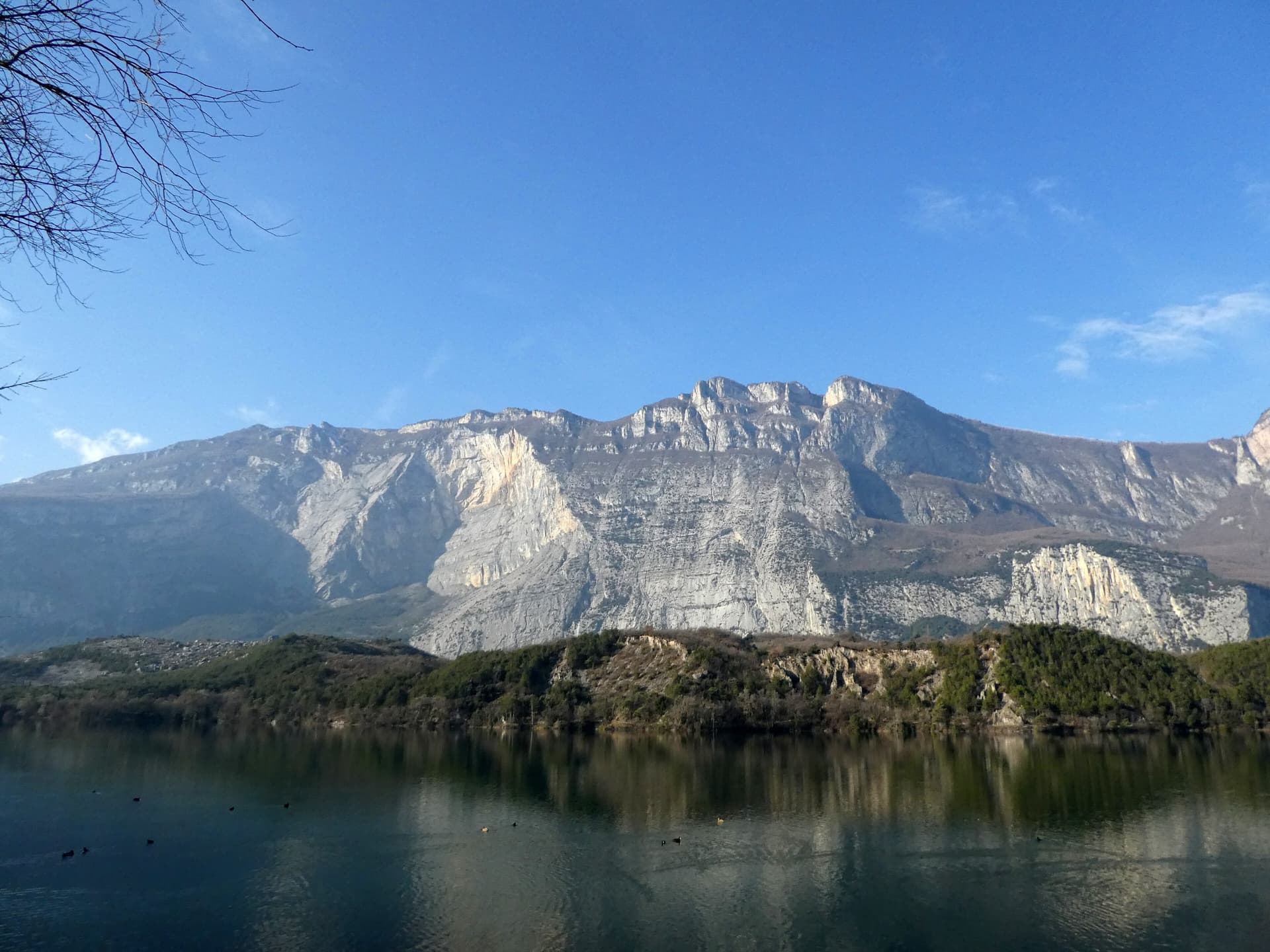
The east face of Monte Brento rising above Lago di Cavedine and the Marocche boulder field. The Placche Zebrate are the pale slab apron at the foot of the wall; the route's line is not marked.

Italy · Arco & Valle del Sarca

Man-Ilia

An easy, relaxing sport route on low-angle Zebrate slabs, trending left to right to join Cane Trippa at the fifth belay. It's an excellent first multipitch. Gulliver gives UIAA III / II–III / IV / IV–IV+ for the first four pitches, converted here.

5b6 pitches240 m

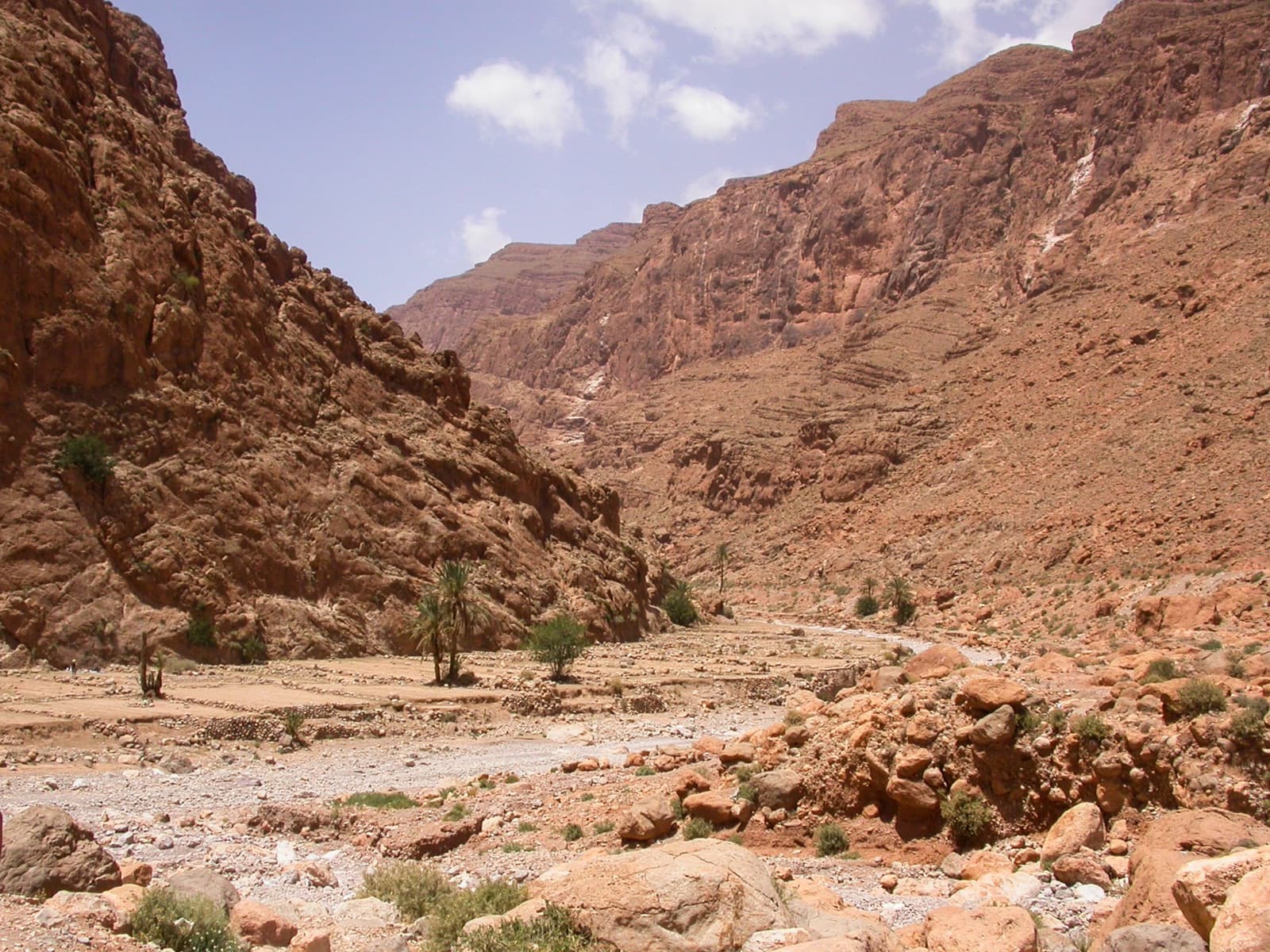
Palms and garden terraces on the riverbed just upstream of the Todra narrows, the setting of the Jardin d'été sector.

Morocco · Todra Gorge (Todgha)

Tik Sab

Four pitches of even 5b, five minutes from the road. In the sun all afternoon. A good short first multipitch of a trip.

5b4 pitches125 m

Compiled from published sources and last verified October 2026. Bolts, anchors and access change. Climbing is dangerous and you are responsible for your own decisions: check a current topo and read the disclaimer.