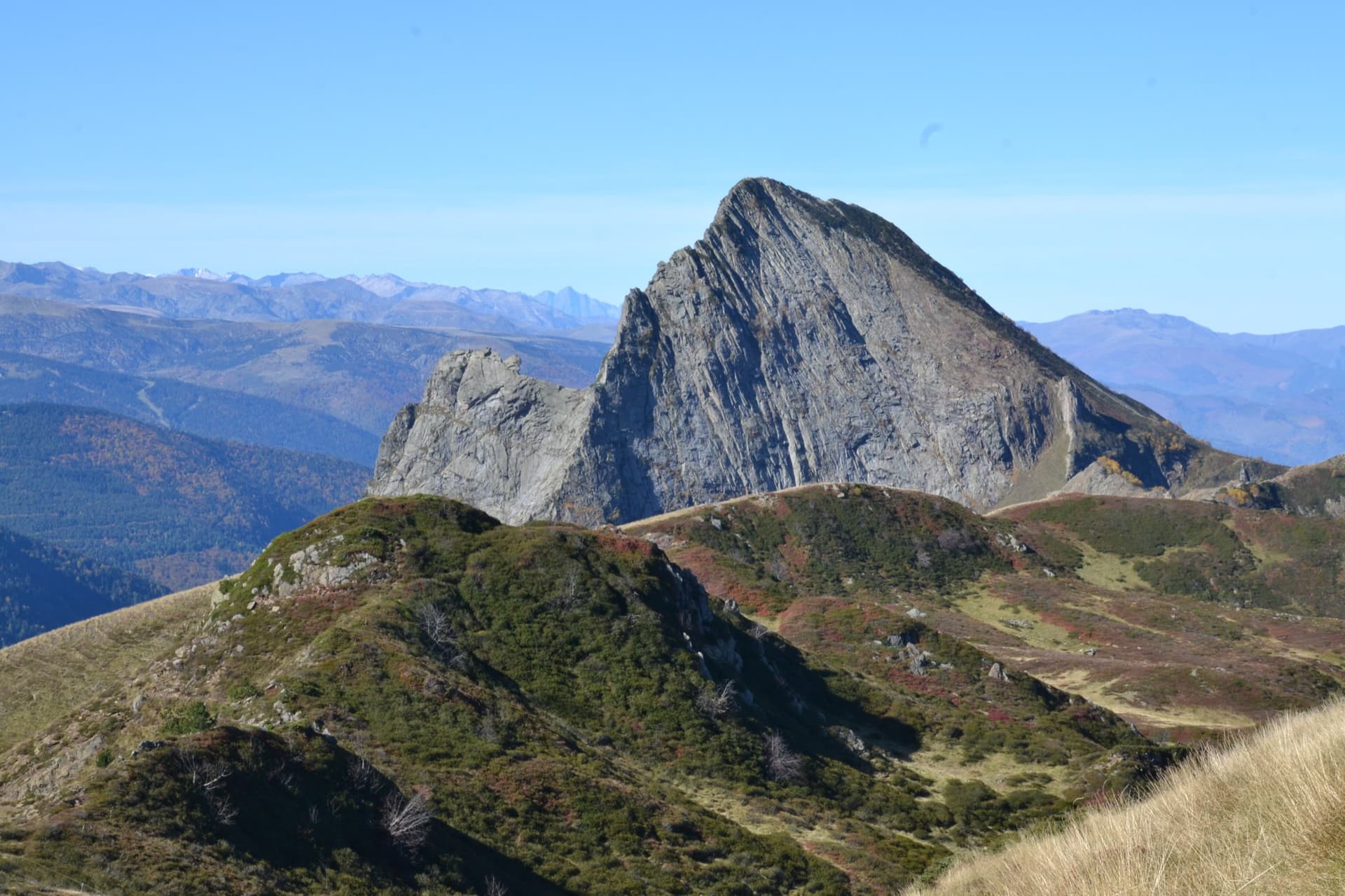
France · Ariège Pyrenees
Pink Floyd
Consistent, low-angled slab climbing on compact granite, with 10 pitches of 5a–5b+ on the big east face. Above all it is a long, sunny-morning moderate.
5b+10 pitches400 m
Read the cautions
Quié de Sinsat – La Pelle · Ariège Pyrenees · France
Read the cautionsBail with caveatsBolting confidence: medium
The big day out at Sinsat: three stacked routes linked by two walking terraces, 400 m to the top of La Pelle. Verdon-like grey slabs on the first two tiers, then a wilder finish up an orange chimney-corner, a ridge and a last bulge. Technical, sustained at 5c to 6a and stiffly graded.
Entirely bolted and a regional classic, but a hanger was reported missing on pitch 8 in 2024, the upper part has loose rock and the descent is long and intricate.
The route
The Intégrale d'Anaïs strings together Le Plaisir du Geste on the left flank of the Pubis (three pitches), Jeanne on the middle tier (three pitches) and Anaïs on the right flank of La Pelle (six pitches), with a walk through a garden between each. The first two parts are superb compact slab that demands trust in your feet, with a well-protected move through a slight overhang on Jeanne. Anaïs has more atmosphere and less perfect rock: a chimney-corner, an easy ridge and a final bulge of 6b+ that almost everyone aids. The obligatory grade is a technical 6a to 6a+. It is a long day, with a descent on the far side that takes about two hours and ends with abseils.
The climbing
| Pitch | Grade | Notes |
|---|---|---|
| P1 | 6a | Le Plaisir du Geste. A wall of poorer rock to start, then a superb slab with thin, obligatory moves in the sustained second half. A sharp wake-up when cold. Chained belay. |
| P2 | 5c+ | Straight up, then a traverse left with two thin moves, one in the middle and one just before the chained belay. |
| P3 | 5c | A steep, slightly exposed move straight above the belay, a good crack, then well left under the roofs. Belay on one bolt and a tree. Then walk at least 50 m, trending right along the crest (red dots), to the foot of Jeanne; trainers are useful. |
| P4 | 6a+ | Jeanne. A crack and easy slab, then a beautiful, sustained and obligatory slab with a well-protected move through a slight overhang. Take 13 quickdraws. Several parties think it is nearer 6b. |
| P5 | 6a | Another sustained slab, steep and fingery off the belay. |
| P6 | 5c | One move of 5c, then a series of easy little steps on rock of varying quality. From the last belay follow red dots to the left end of the terrace and the first belay of Anaïs. |
| P7 | 5c | Anaïs. A vegetated crack, then a traverse right just before the belay. The first bolt is very high but the climbing is not hard. |
| P8 | 6a | The orange chimney-corner, exited on the right: for many the best pitch, all about positioning. One hanger was missing in 2024; the pitch is a little bolder for it but the protection remains adequate. |
| P9 | 5b | Continue up the main crack, with care for the rock, to gain the ridge. |
| P10 | 5b | A short pitch along the ridge. |
| P11 | 6b+ | A slight traverse left on slab, then the last bulge: 6b+ free or 6a+/A0 on closely spaced bolts. The rock to the right of the bolts is poor; in March 2025 a party pulled off two blocks there. |
| P12 | 5c+ | A short pitch to the top, right of the summit of La Pelle. |
Getting there
Sinsat is in the Ariège valley between Tarascon-sur-Ariège and Les Cabannes, south of Foix on the N20. Coming from Tarascon, turn left onto the D220 about 500 m after the level crossing (sign 'rocher d'escalade'), cross the bridge over the Ariège, turn right and park in the field laid out as a car park. Trains on the Toulouse to Latour-de-Carol line stop at Les Cabannes, about 30 min on foot (3.6 km of flat road) from the car park.
35 to 50 min. From the car park take the path common to the Pubis, Peppermint and Toit sectors (signs). After 5 min leave the path to the Sinsat single-pitch cliff on the left; after 10 min leave the Peppermint and Toit path and take the track on the right that climbs steeply to the Pubis, zigzagging and then steep up the final gully. The GR4b+ sector is about 40 m to the left. Go to the start of Le Plaisir du Geste, whose name is painted at the foot.
Loading map
The point marks the crag, not the exact start of the route.
Parking
Sinsat climbers' car park (camptocamp waypoint 128849)
Point from camptocamp waypoint 571633 (Quié de Sinsat, La Pelle); the route starts lower, in the GR4b+ sector of the Pubis
Contains the route point and parking. Opens in most mapping apps and GPS watches.
Points are compiled from published sources, with the precision stated above. They were not surveyed on the ground: check them against a current topo.
Coordinates: 42.80964, 1.66136 (crag) · Parking: 42.80071, 1.66522
Getting down
Down the far (north) side, allow 1 h 45 min to 2 h 30 min to the car. Traverse left in an arc through the scrub to reach very steep scree gullies, with a section through box. Descend the scree for a long way to a cairn where you leave it to the right. Follow a vague, steep track through the box for about 100 m, then turn left at a small slab 2 m wide with a faint red mark. Do not miss this turn: straight on leads onto the bulge of the Pubis and sends stones onto the routes. The red-marked track leads to a tree rigged with slings above the route Grand Public; one abseil from the tree and three more reach the foot of the Pubis. Then the approach path.
Retreat
Bail with caveats
CAFMA states that you can escape on foot to the left after the first tier and to the right after the second, and parties have stopped at both terraces. On the first tier CAFMA strongly advises against abseiling Le Plaisir du Geste. No source describes retreating from the six pitches of Anaïs, where the line includes a chimney, a ridge and a traverse.
Safety
Sun and weather
South facing from about 900 m to the top of La Pelle. Best in spring and autumn; a late-March party was comfortable in a T-shirt, and September parties roasted and ran out of water. CAFMA states that the Intégrale can be climbed all year with no nesting restriction, unlike other sectors of the Quié. The rock is compact and excellent on the first two parts and more broken on Anaïs.
Sun on the wall · S-facing
Working out the sunlit hours for this month.
Sun on the wallDaylight, wall in shade● Usual season
Estimated from the wall's aspect only. Ignores surrounding terrain, gullies and the wall's exact shape. Clock times are local to the wall (Central European time), for the 15th of each month.
| Measure | Jan | Feb | Mar (usual season) | Apr (usual season) | May (usual season) | Jun | Jul | Aug | Sep (usual season) | Oct (usual season) | Nov (usual season) | Dec |
|---|---|---|---|---|---|---|---|---|---|---|---|---|
| Mean daily high °C | 2 | 2 | 5 | 8 | 12 | 16 | 19 | 19 | 15 | 12 | 6 | 3 |
| Mean daily low °C | −6 | −6 | −4 | −1 | 3 | 7 | 9 | 9 | 6 | 3 | −2 | −5 |
| Rain days 1 mm or more | 11 | 12 | 12 | 15 | 18 | 17 | 17 | 17 | 13 | 12 | 12 | 11 |
● marks the usual climbing season. Averages for 1991-2020 at about 1785 m. Area climate from Open-Meteo reanalysis. Temperatures are adjusted to the height of the crag; rain comes from a grid cell of about 10 to 25 km, and summer highs on sea cliffs can read a few degrees low. The wall and valley can differ. Data: Open-Meteo, CC BY 4.0.
What to carry
12 quickdraws plus belays (13 for the first pitch of Jeanne; about 15 if you link pitches on Anaïs) and ropes for 45 to 50 m abseils on the descent (CAFMA says 90 to 100 m of abseil rope). Slings for the bolt-and-tree belay. Trainers for the links and the descent. Plenty of water. Helmet.
Derived from the route data; check it against a current topo
From climbers
Reader reports are not being collected yet. Until they are, check a current topo and the local club or guidebook publisher for recent changes to Intégrale d'Anaïs.
Worth knowing
Open questions
Provenance
Same area
France · Ariège Pyrenees
Consistent, low-angled slab climbing on compact granite, with 10 pitches of 5a–5b+ on the big east face. Above all it is a long, sunny-morning moderate.
5b+10 pitches400 m
Read the cautions
France · Ariège Pyrenees
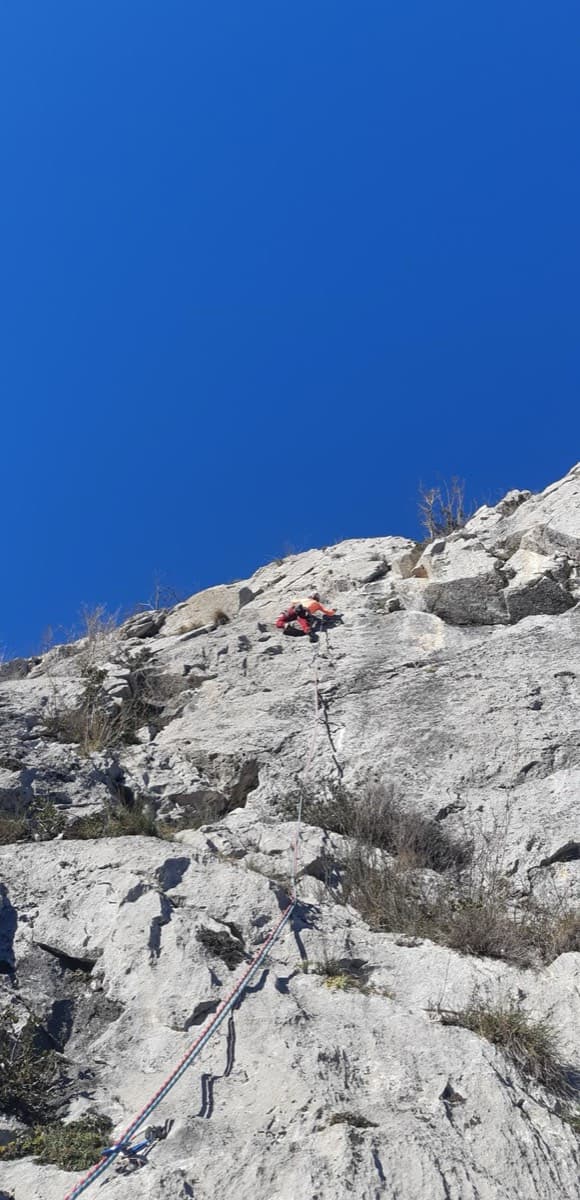
The hard classic of the Calamès pillars above Bédeilhac: technical slabs, a well-bolted roof and a sustained 6c wall, capped by a short 7a slab pitch after a walk across a garden. Compact rock and close bolts make it a good place to try harder grades on a multipitch. The middle pitch is vegetated.
7a5 pitches180 m
France · Ariège Pyrenees
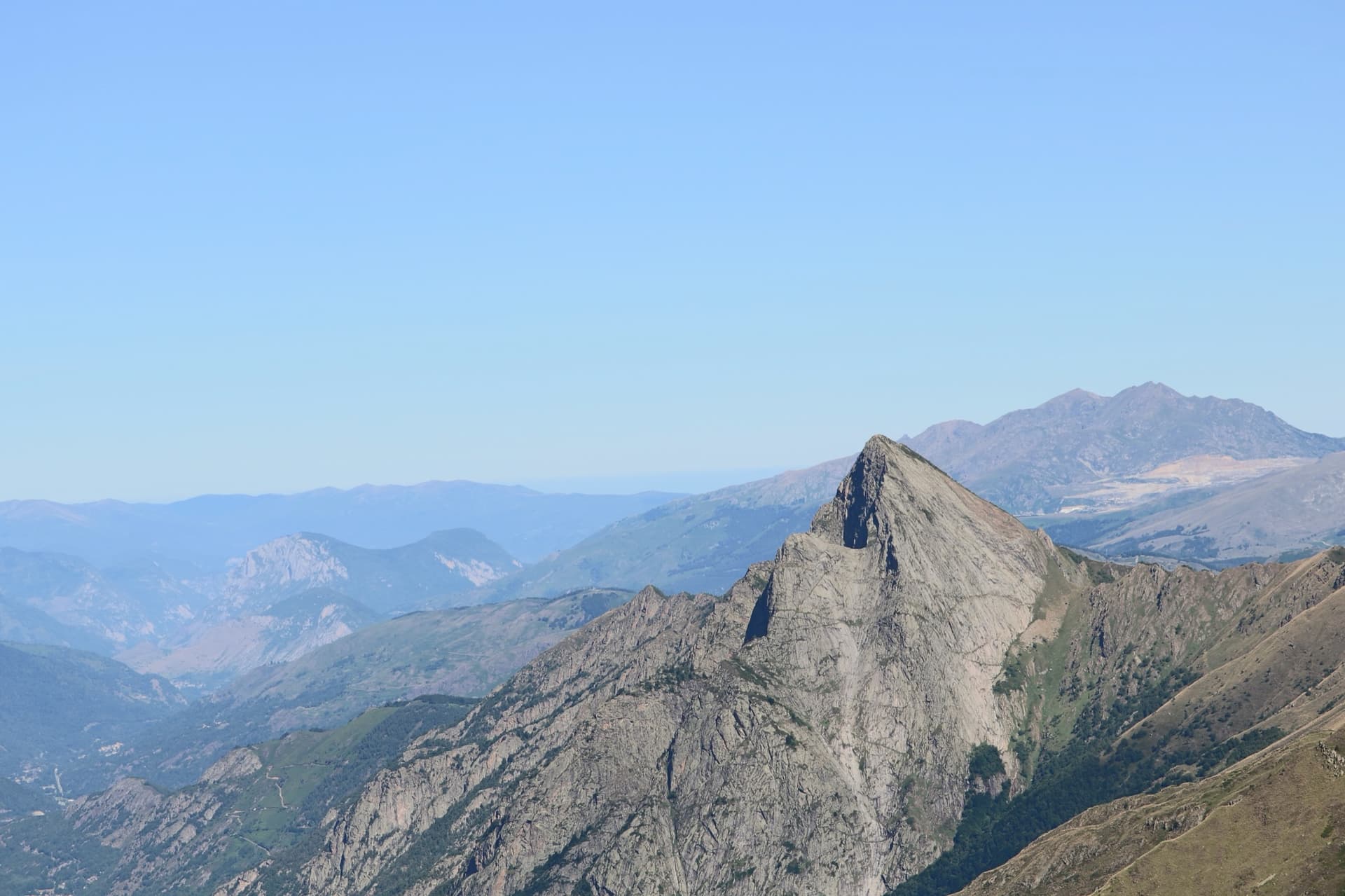
The friendliest introduction to the granite slabs of the Dent d'Orlu: six pitches of friction climbing with a few steeper steps, shorter and better bolted than the face's big classics. It is the route to do when the weather is unsure or the longer lines are out of reach.
5c6 pitches230 m
France · Ariège Pyrenees
A short multipitch on the sculpted granite dome below the Dent d'Orlu, and a change from the big slabs above: a friction slab, a surprisingly vertical wall, a steep 6a corner and crack that finishes with a thin traverse, and a long slab to the top.
6a5 pitches120 m
Around 6b+ · about 12 pitches
Greece · Kalymnos & Telendos
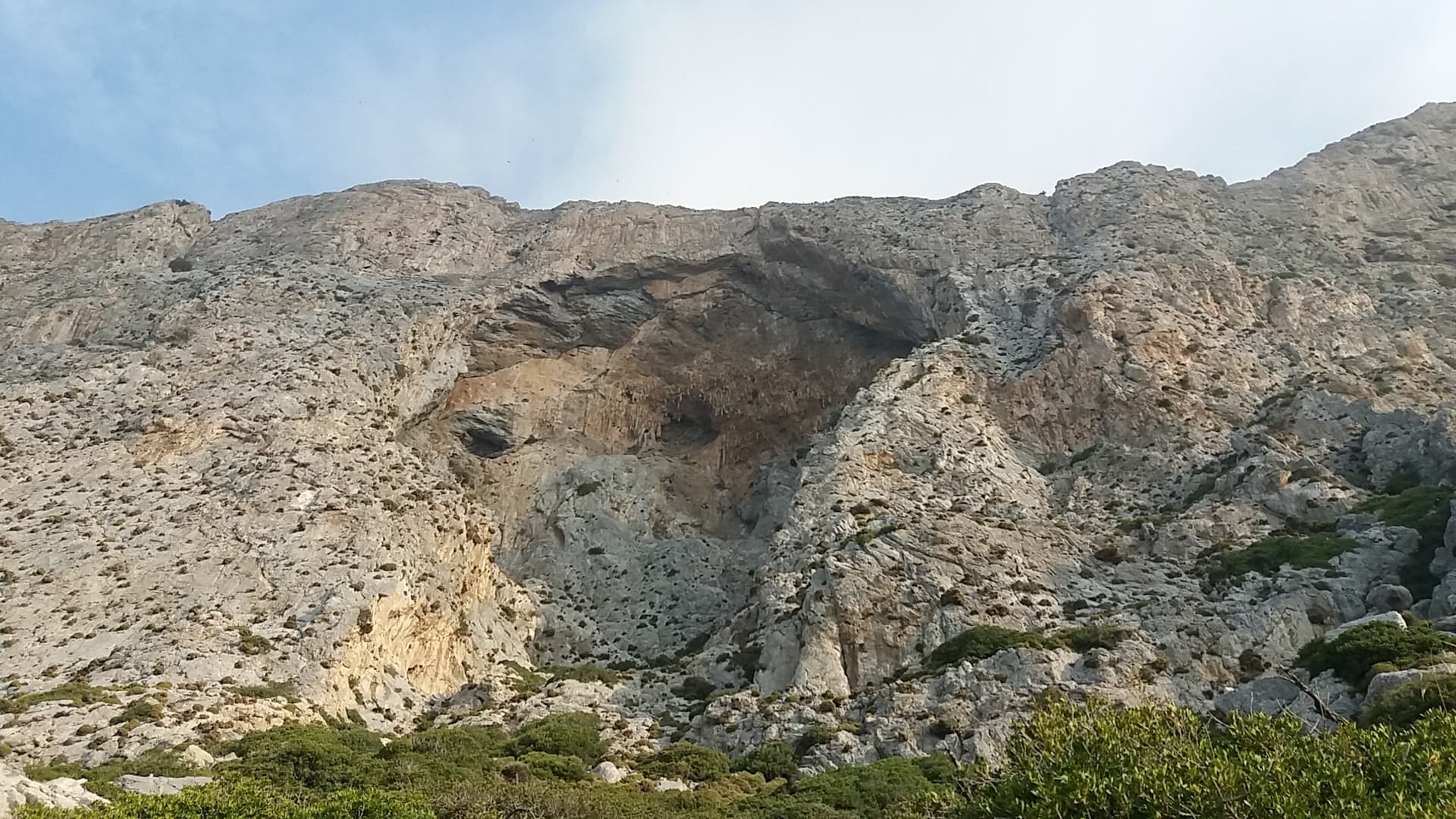
Eleven pitches up the south face of Telendos on extraordinarily sculpted rock, finishing with a 50 m wall of flint-like knobs. Two 6b+ pitches low down are the cruxes and the grades are widely called friendly. With the boat or coastal walk in and the walk off over the island, it makes a full and memorable day.
6b+11 pitches265 m
Austria · Inntal (Haiming Geierwand)
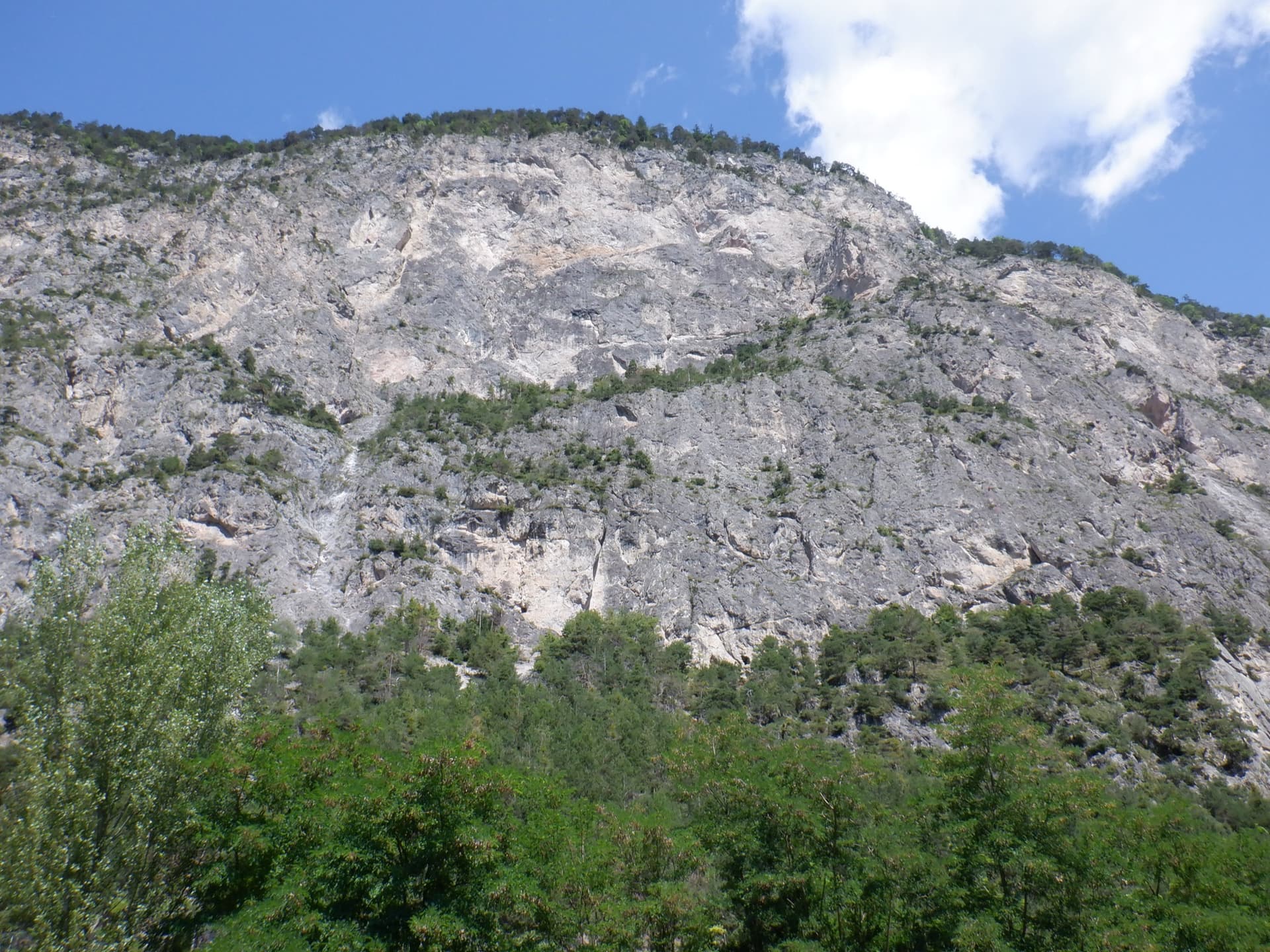
bergsteigen.com calls this the best route on the Geierwand: steep, almost always vertical pocket climbing on the left side of the wall. The hardest move comes on pitch 2, but the upper half stacks several 6b pitches one after another and tires the forearms. Recommended to climbers who are comfortable at 6b.
6b+13 pitches355 m
Italy · Sardinia
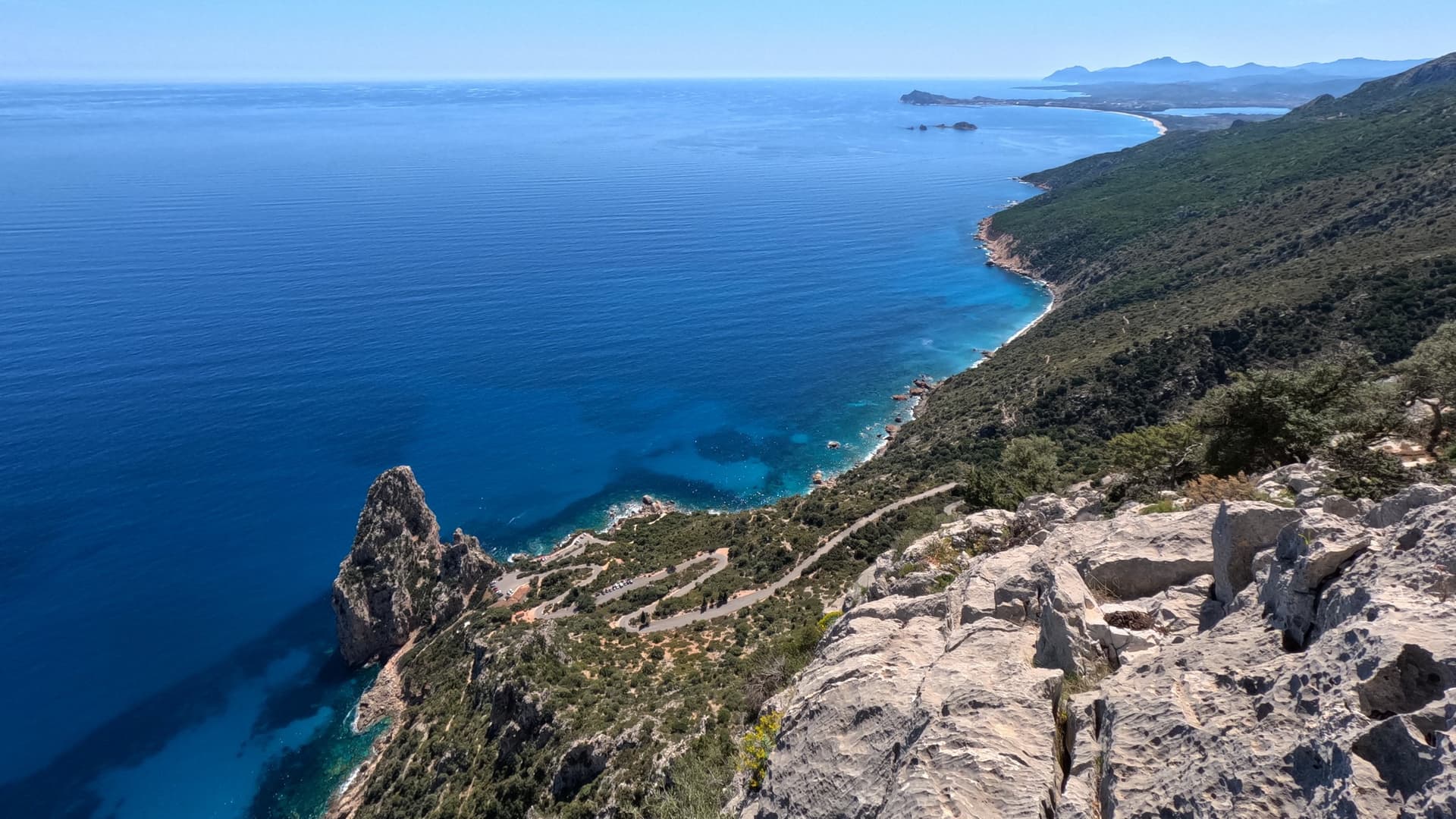
A 400 m plaisir route above Pedra Longa with the sea behind you all day. Eight easy, vegetated pitches lead to a steep finish: the last three or four pitches, up to 6b, are the real climbing. Closely bolted throughout; the long abseil descent through bushes needs care.
6b12 pitches400 m
Croatia · Paklenica
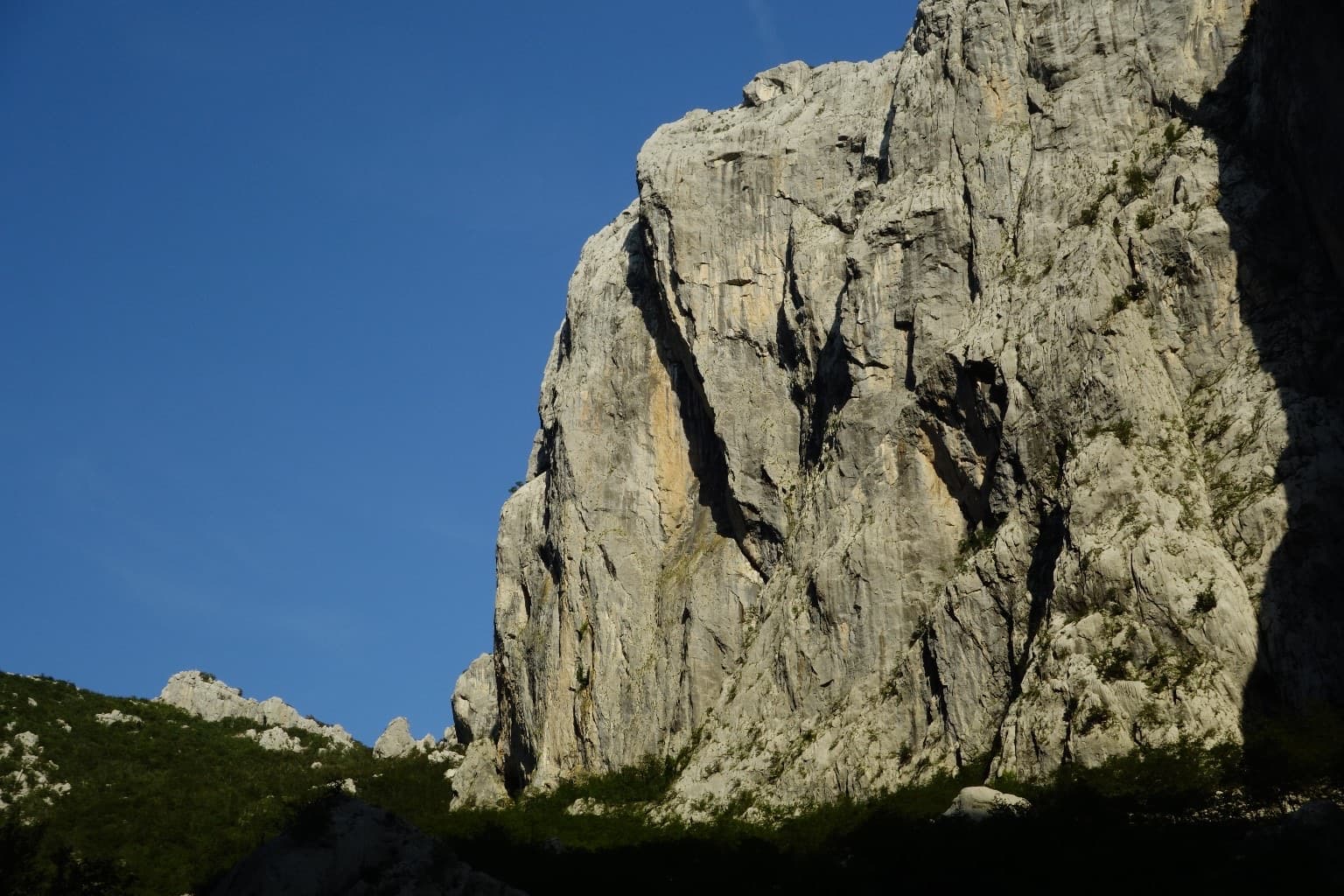
A modern line by B. Čujić and I. Matković up the full height of the Trapez sector of Anića kuk: ten pitches, 360 m, steady between 5c and 6b+. It starts right of the classic Mosoraški, crosses it in the upper middle part and finishes to its left. Slabs low down, then a vertical crack, superb vertical slab pitches, a huge corner with a chockstone and an exposed traverse.
6b+10 pitches360 m
Compiled from published sources and last verified October 2026. Bolts, anchors and access change. Climbing is dangerous and you are responsible for your own decisions: check a current topo and read the disclaimer.