Multipitch Atlas

La vita è bella

Les Montons · Sanetsch · Switzerland

Bail not documentedBolting confidence: medium

A long, homogeneous line up the full height of the Montons on excellent limestone: steep sculpted walls and fine slabs, mostly 6a to 6b, with two short 6c cruxes that can be pulled through on the bolts. The fifth pitch, a steep Verdon-style slab, is the one people remember.

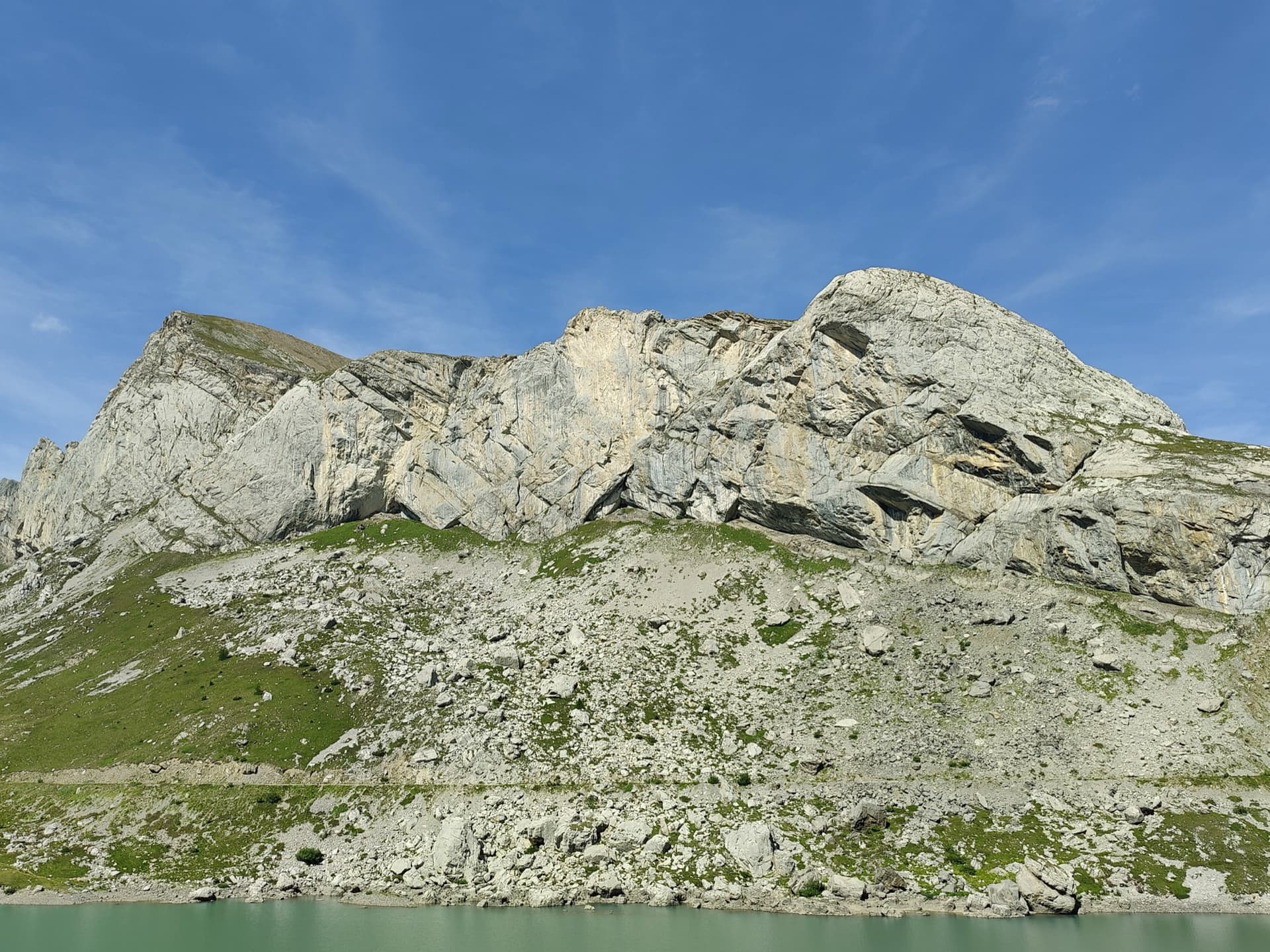
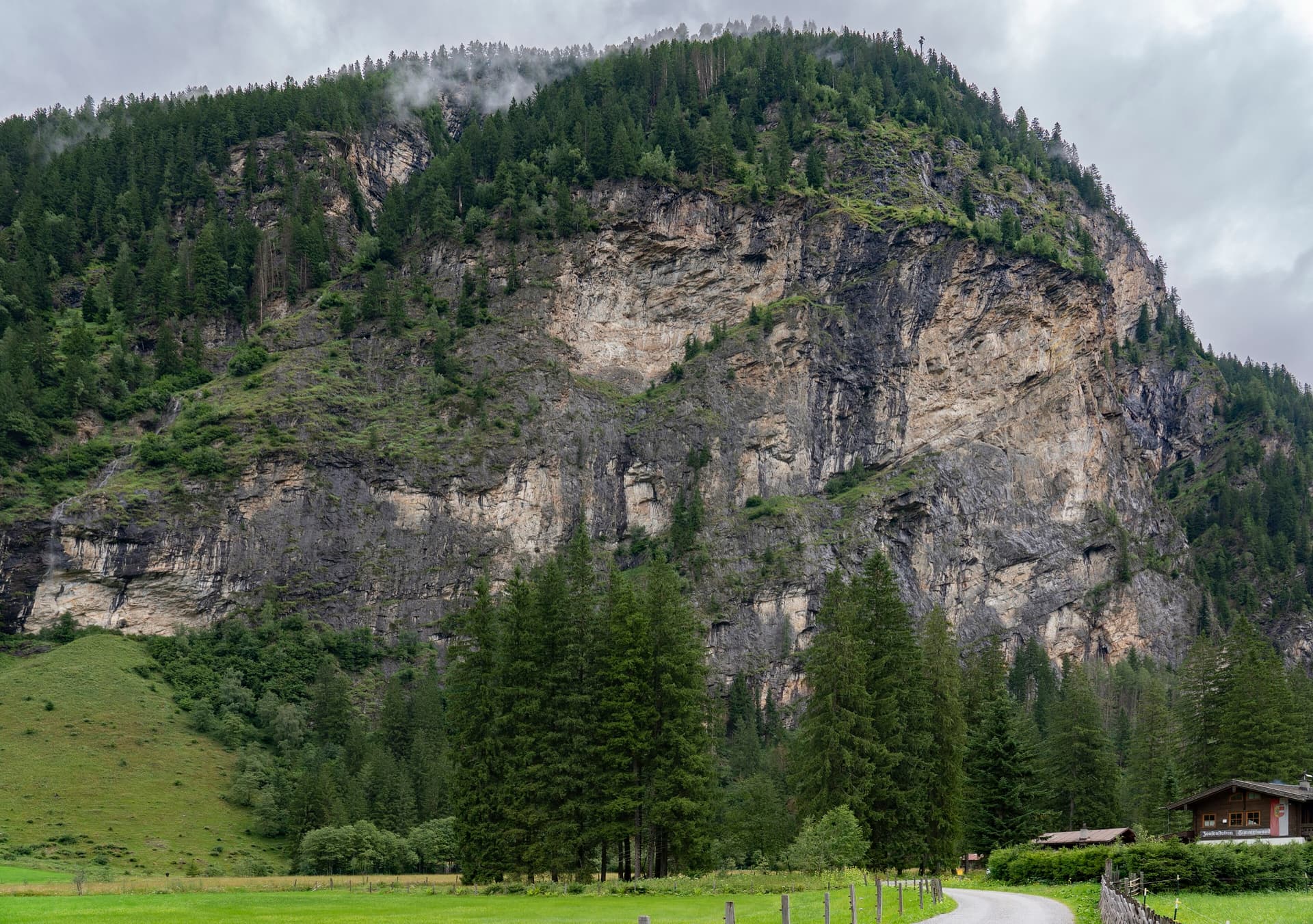
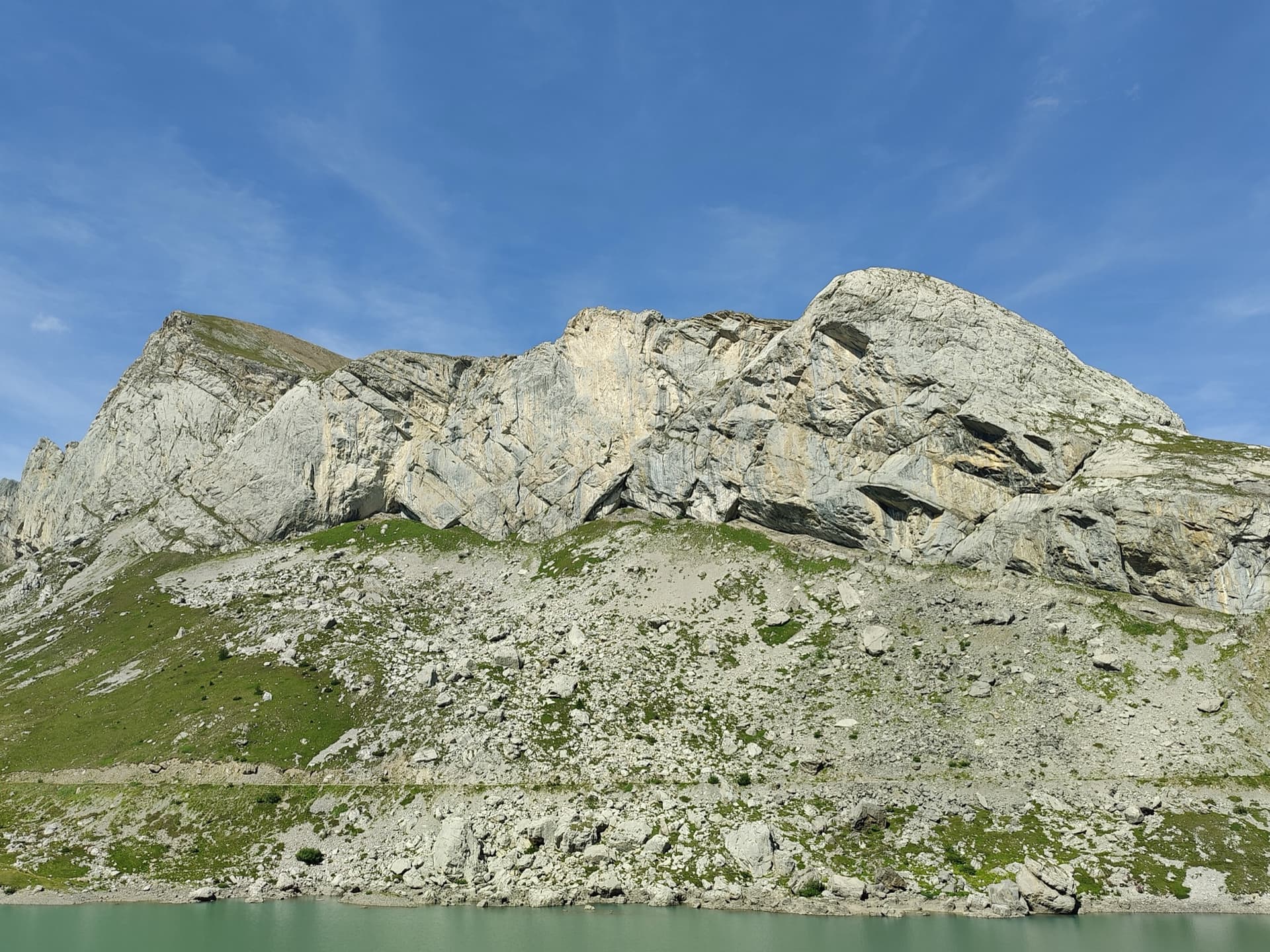
Les Montons at Sanetsch, with the Pointe Maurice Brandt in the centre; La vita è bella climbs the main wall. The line is not markedPhoto: alexduchablais · CC BY-SA 3.0

Photo

Les Montons at Sanetsch, with the Pointe Maurice Brandt in the centre; La vita è bella climbs the main wall. The line is not markedPhoto: alexduchablais · CC BY-SA 3.0
Hardest pitch
6c
Pitches
9
Length
250 m
Approach
20 min
Aspect
S
South-facing
Rope
1×50 m
walk-off

The route

Overview

La vita è bella starts just right of Follomi and climbs to the top of the Montons in nine pitches, sharing its penultimate belay with Les Zéros sont fatigués. It was opened in 2000 by Michel and Suzanne Gleser with Boris Kscikwa, and Yves Remy added a new exit in 2014. With the two cruxes aided the route is 6b with 6a+ obligatory, which makes it a logical step up from Follomi. A 2019 party took five hours.

The climbing

Pitch by pitch

Pitches of La vita è bella
PitchGradeNotes
P15c+A delicate mantel to start, then a thin slab.
P22bA grassy transition pitch. A 2022 party saw no bolts on it; the rock is less compact here. Some parties skip the first two pitches and start at pitch 3.
P36cA fine 6a wall, then an overhang at 6c, well protected, which goes at 6b with two points of aid. It ends with a physical mantel onto a good hidden hold.
P46a+A steep, well-sculpted wall to start, with a move half-way during the slight traverse left. Do not traverse too far left, or you join the neighbouring route.
P56cA magnificent steep slab with one hard, bouldery move, which goes at 6a with one point of aid. The crux is starting to polish.
P66aA slab, less steep, with a short traverse right on good undercuts.
P76aMore slab, then flakes on the right, and cross a ledge.
P86bA steep wall, then through the sandstone band. The belay is shared with Les Zéros sont fatigués.
P95cClimb 3 m above the belay, traverse 10 m right and climb a last steep wall.

Getting there

Approach

To the parking

From Sion drive up through Savièse to the Col du Sanetsch (2252 m) and on down towards the Lac de Sénin, about 26 km from Sion; the road is long and narrow and opens in June. A bus runs from Sion in season. From the Bernese side a cable car climbs from Gsteig to the lake. Wild camping near the lake is common, and there is an inn by the dam.

On foot · about 20 min

From the parking follow the path that winds up through the boulder field. At the largest boulder head right and pass below Follomi, whose name is painted in red. Go past the niche and the corner beyond and climb about fifteen metres to the foot of a short wall that gives access to a slab, with a single bolt. 20 minutes. A 2020 party found the marked white-and-red hiking path to the big boulder the shortest and least loose way up.

Map of the walk-in

  • Crag

Loading map

The point marks the crag, not the exact start of the route.

Coordinates · crag

46.35343, 7.27946

Point from camptocamp waypoint 43146 (Sanetsch – Les Montons)

For your phone or watch

Download GPX

Contains the route point. Opens in most mapping apps and GPS watches.

Points are compiled from published sources, with the precision stated above. They were not surveyed on the ground: check them against a current topo.

Getting down

Descent

Walk off. From the top take the path that descends to the right, then follow the red dots into the descent gully and ledges, which are awkward and dangerous when wet. The path then runs along the foot of the wall back to the start.

Retreat

Bailing off the route

Bail not documented

The normal way off is on foot from the top, and no source describes abseiling. A 2020 party notes that the belays are not chained, so an abseil retreat would mean leaving maillons or carabiners at each stance, and the pitch lengths are not published.

Retreat from
Not documented.
Point of no return
Not documented; the route is nine pitches long and tops out on the plateau.
Carry
Two ropes and enough maillons and cord to equip several belays.
Basis
Inferred from the route factsUnchained belays are stated in a 2020 trip report; the rest is inferred from the walk-off descent.

Partly inferred from the route facts

Safety

Hazards

  • The belays are not chained, so retreat means leaving gear.
  • The grassy second pitch has no fixed protection and is slippery when wet.
  • Both 6c moves are hard to free: a 2019 party found the second particularly stubborn. Be ready to pull on the bolts.
  • The descent gully is steep and dangerous when wet.

Sun and weather

Conditions

South to south-east facing limestone between about 2050 m and 2500 m, in the sun from early morning. The season runs from the opening of the pass road in June to October. Seeps under the roofs stay wet for days after heavy rain, and snow can lie in the boulder field in early June.

Usual season · Jun to Oct

Sun on the wall · S-facing

Working out the sunlit hours for this month.

  • January: not yet worked out
  • February: not yet worked out
  • March: not yet worked out
  • April: not yet worked out
  • May: not yet worked out
  • June (usual season): not yet worked out
  • July (usual season): not yet worked out
  • August (usual season): not yet worked out
  • September (usual season): not yet worked out
  • October (usual season): not yet worked out
  • November: not yet worked out
  • December: not yet worked out

Sun on the wallDaylight, wall in shade● Usual season

Estimated from the wall's aspect only. Ignores surrounding terrain, gullies and the wall's exact shape. Clock times are local to the wall (Central European time), for the 15th of each month.

Monthly climate averages for Sanetsch, 1991-2020
MeasureJanFebMarAprMayJun (usual season)Jul (usual season)Aug (usual season)Sep (usual season)Oct (usual season)NovDec
Mean daily high °C−8−6−3049111184−3−8
Mean daily low °C−17−16−12−9−5−122−2−6−12−16
Rain days 1 mm or more131214141919191715131313

● marks the usual climbing season. Averages for 1991-2020 at about 2482 m. Area climate from Open-Meteo reanalysis. Temperatures are adjusted to the height of the crag; rain comes from a grid cell of about 10 to 25 km, and summer highs on sea cliffs can read a few degrees low. The wall and valley can differ. Data: Open-Meteo, CC BY 4.0.

What to carry

Gear

Quickdraws (number not published; 14 is quoted for other routes on this wall), slings to link the belay bolts and a helmet. A single rope is enough for the walk-off.

Checklist

Quickdraws
Number not given in the sources
Rope
1×50 m (walk-off)
Helmet
One each
Maillons or spare karabiners
To leave behind if you retreat
Cord
Mentioned for retreat

Derived from the route data; check it against a current topo

From climbers

Reader reports

Reader reports are not being collected yet. Until they are, check a current topo and the local club or guidebook publisher for recent changes to La vita è bella.

Worth knowing

Tips

  • Starting directly at pitch 3 avoids the short first step and the grass.
  • The obligatory grade is 6a+, so comfortable 6a+ slab climbing matters more than the headline 6c.

Open questions

Where sources disagree

  • Only one detailed source (camptocamp and its trip reports) was found for this route.
  • Pitch lengths and bolt counts are not published; 250 m is camptocamp's height of the difficulties.
  • The grassy pitch is 2b on camptocamp; a 2022 party calls it grade II with no bolts visible.

Provenance

Sources

Same area

More in Sanetsch

All routes in Sanetsch
The limestone wall of Les Montons above the Lac de Sénin at the Sanetsch.

Switzerland · Sanetsch

Follomi

The classic introduction to the Sanetsch at 6c: eight varied pitches up a pillar of superb rough limestone, with the hard climbing packed into a few well-bolted metres on each pitch. A steep corner mantel, a balancy wall, a fine slab and an airy exit from a niche. Tops out on grassy slopes with a walk-off.

6c8 pitches250 m
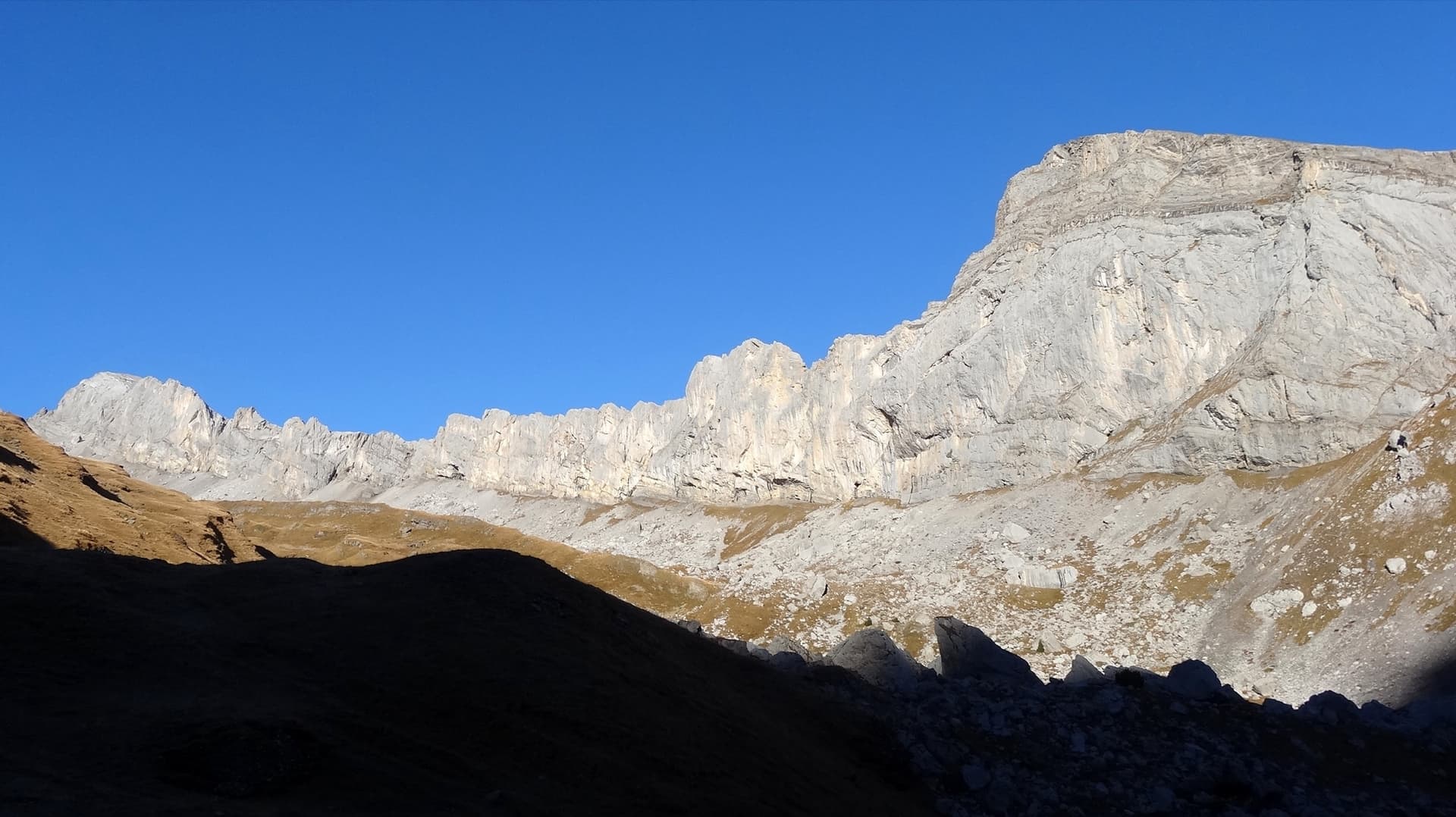
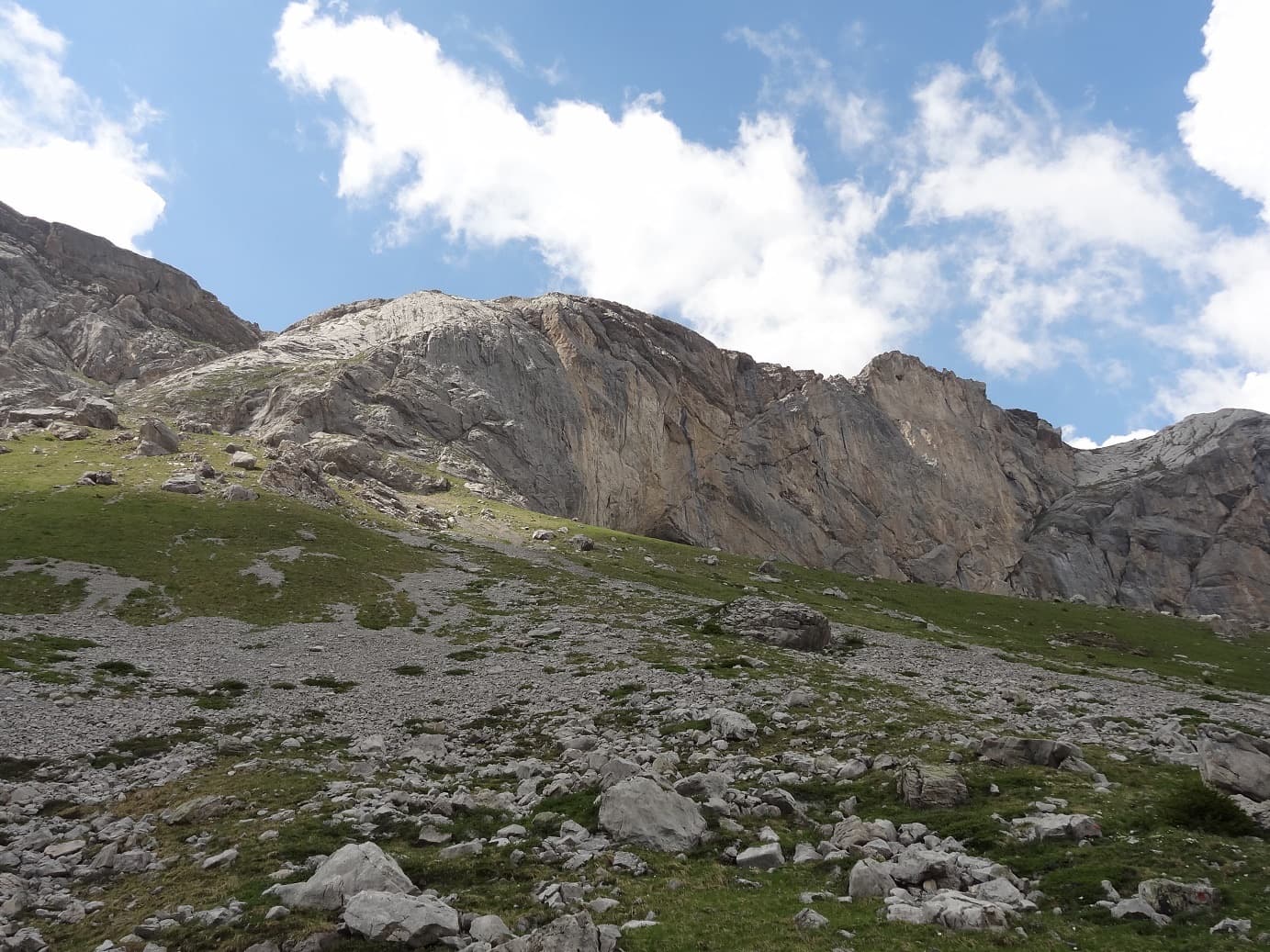
The Montons wall at Sanetsch from the south, from the Pointe Maurice Brandt on the left to the main Montons face; the line is not marked

Switzerland · Sanetsch

Hara qui pleure

A varied, approachable route on the sculpted grey limestone of the Montons: a flake and corner first pitch that wakes you up, runnels and a carved wall in the middle, and a short athletic overhang near the top. Well bolted since 2015 and quick, with a walk-off.

6a+5 pitches180 m

The Petit Monton dome above the Lac de Sénin; Silence bavard climbs the lower tier and then the compact upper wall. The line is not marked

Switzerland · Sanetsch

Silence bavard

Two tiers ten minutes from the road: a lower plinth of easier, less memorable pitches, then a splendid compact dome where the route climbs 6a, 6b and a 50 m 5c. Nine routes share the upper wall, so you can pick a different finish. Well bolted since 2016.

6b7 pitches250 m

The sector of Les Montons climbed by Pas Perdus and its neighbours, seen from the approach; the line is not marked

Switzerland · Sanetsch

Pas Perdus

A Remy classic from 1985 on very compact, abrasive limestone: a fine straight-up 6a wall, a superb 5c+ pitch and a 6a pitch up a big water groove, followed by two easy pitches of runnels. Every pitch is different. Technical for the grade.

6a6 pitches160 m

Read the cautions

Around 6c · about 9 pitches

Similar elsewhere

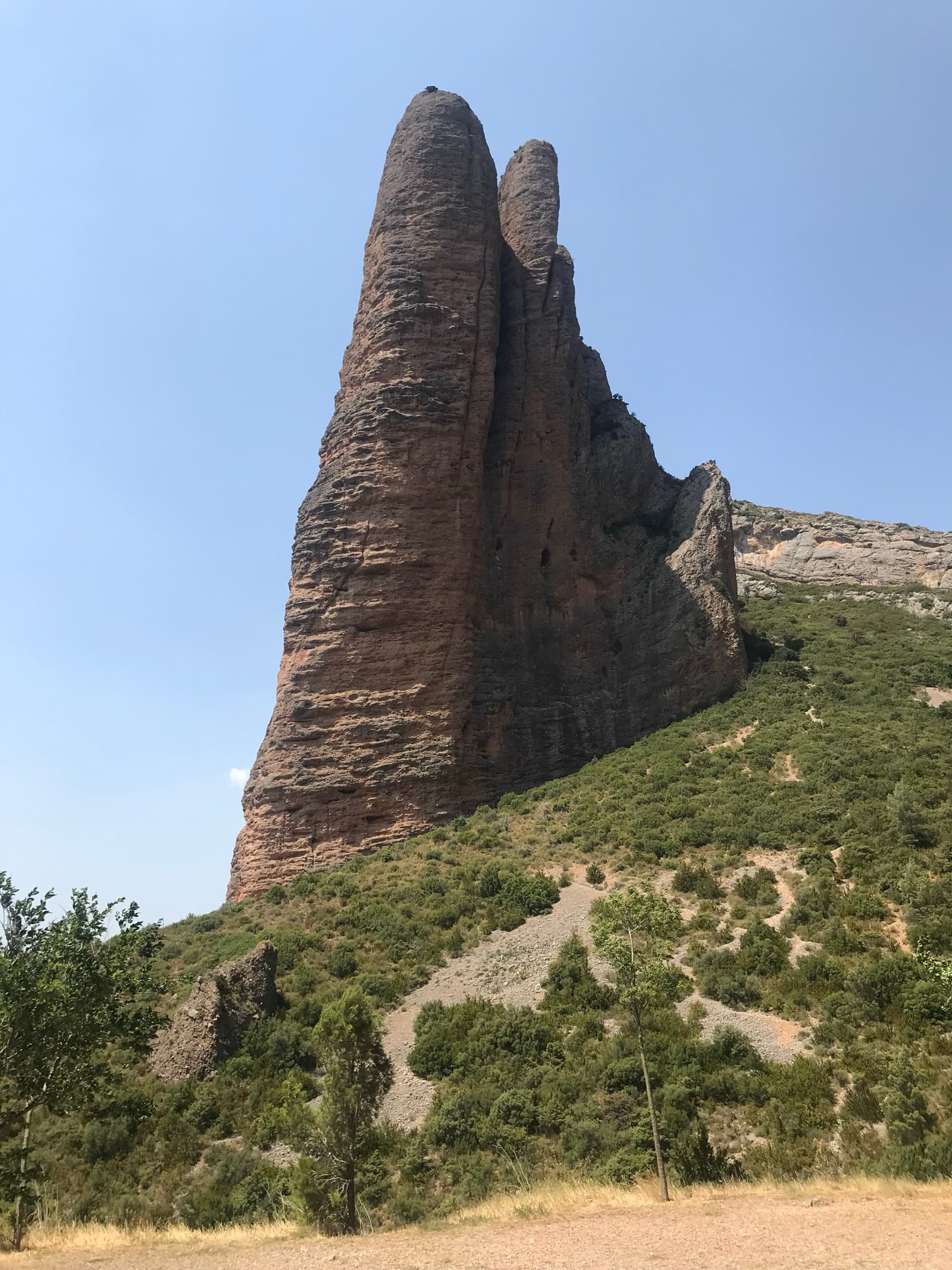
The Mallo Firé at Riglos, the pointed tower that Directa As Cimas climbs to its summit

Spain · Riglos & Agüero (Mallos)

Directa As Cimas

The modern way up the Firé: nine pitches to a pointed summit among the vultures, more technical and less overhanging than the routes on the Visera. Two pitches of 6c, each with a bulge or a hard move off the belay, sit in the middle of sustained 6a+ to 6b+ climbing. 6b is obligatory.

6c9 pitches300 m

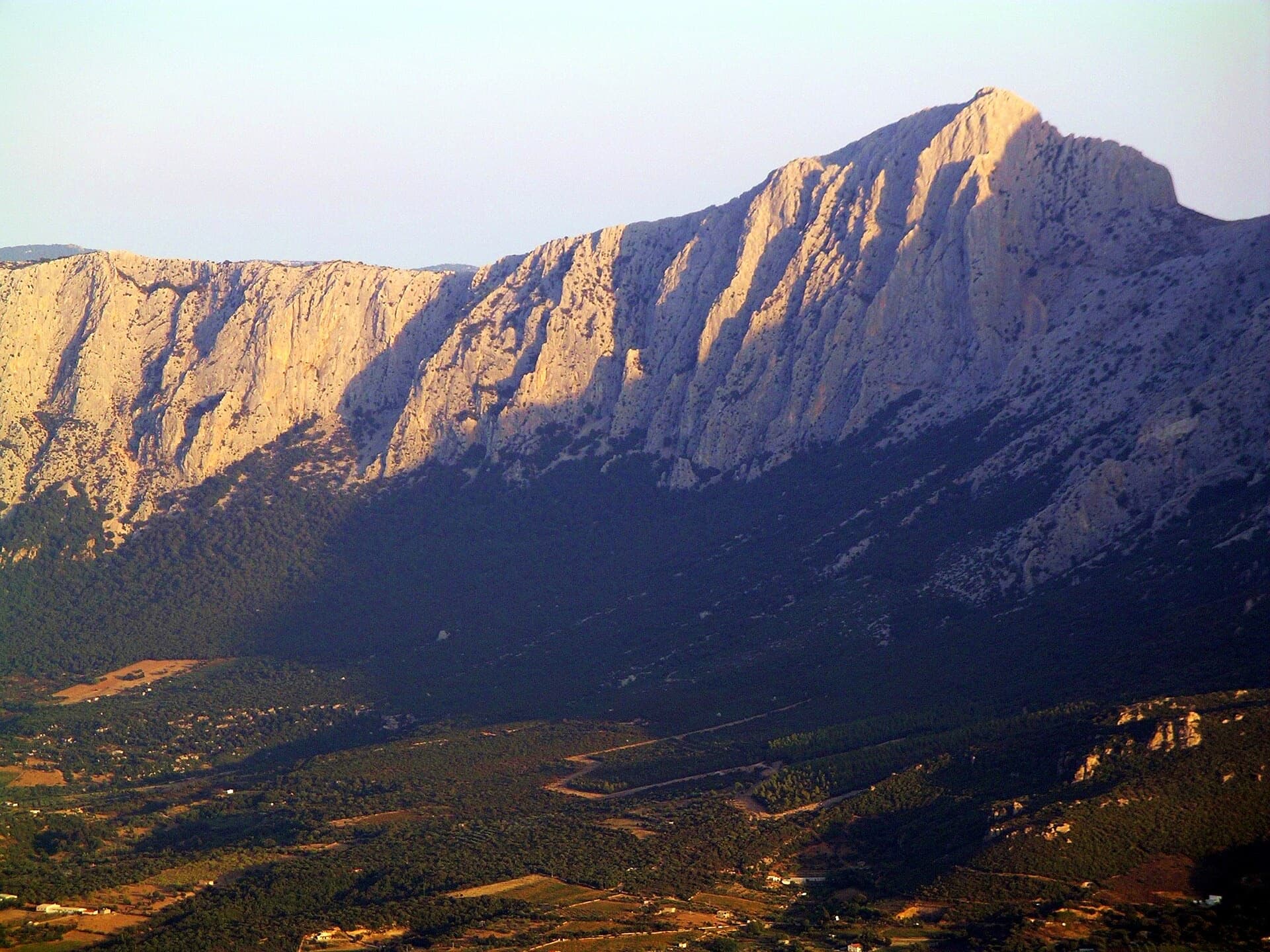
Punta Cusidore (1147 m) and the limestone wall of the Supramonte di Oliena in evening light, seen from the Oliena side.

Italy · Sardinia

L'Ombra della Mia Mano

A 300 m pillar on the 'Dolomite of Sardinia': a hard, smooth first pitch in a north-facing gully, long grey slabs and walls, a demanding technical crux on pitch 6, then exposed climbing on the crest of the pillar on big sculpted holds. Mountain atmosphere with sport protection.

6c9 pitches300 m

Read the cautions

The Himmelwand in the Kötschachtal near Bad Gastein, seen from the valley road by the Himmelwandhütte; the Kleine Himmelwand lies further up the valley

Austria · Gastein (Hohe Tauern)

JKF Happiness

A long, modern slab and wall route beside the waterfall on the Kleine Himmelwand, with six independent 50 m pitches before it joins the last two pitches of Father and Son. Three pitches have technical, bouldery passages at UIAA 7+ and the obligatory grade is high for the area, but the bolts are close.

6c9 pitches350 m

The south face of the Petite Aiguille de l'Arcelin above the Cirque de l'Arcelin

France · Vanoise (Grand Bec)

Voie Vion

The classic hard line of the south face of the Petite Aiguille de l'Arcelin, in a high cirque above Pralognan. Nine varied pitches on good grey limestone: corners, slabs, short overhangs and a technical 6c crux pitch with at least one obligatory move of 6b. Every pitch climbs, and the descent is a small mountain trip of its own.

6c9 pitches220 m

Read the cautions

Compiled from published sources and last verified October 2026. Bolts, anchors and access change. Climbing is dangerous and you are responsible for your own decisions: check a current topo and read the disclaimer.