Multipitch Atlas

Voie Vion

Petite Aiguille de l'Arcelin – south face (Pralognan) · Vanoise (Grand Bec) · France

Read the cautionsBail not documentedBolting confidence: medium

The classic hard line of the south face of the Petite Aiguille de l'Arcelin, in a high cirque above Pralognan. Nine varied pitches on good grey limestone: corners, slabs, short overhangs and a technical 6c crux pitch with at least one obligatory move of 6b. Every pitch climbs, and the descent is a small mountain trip of its own.

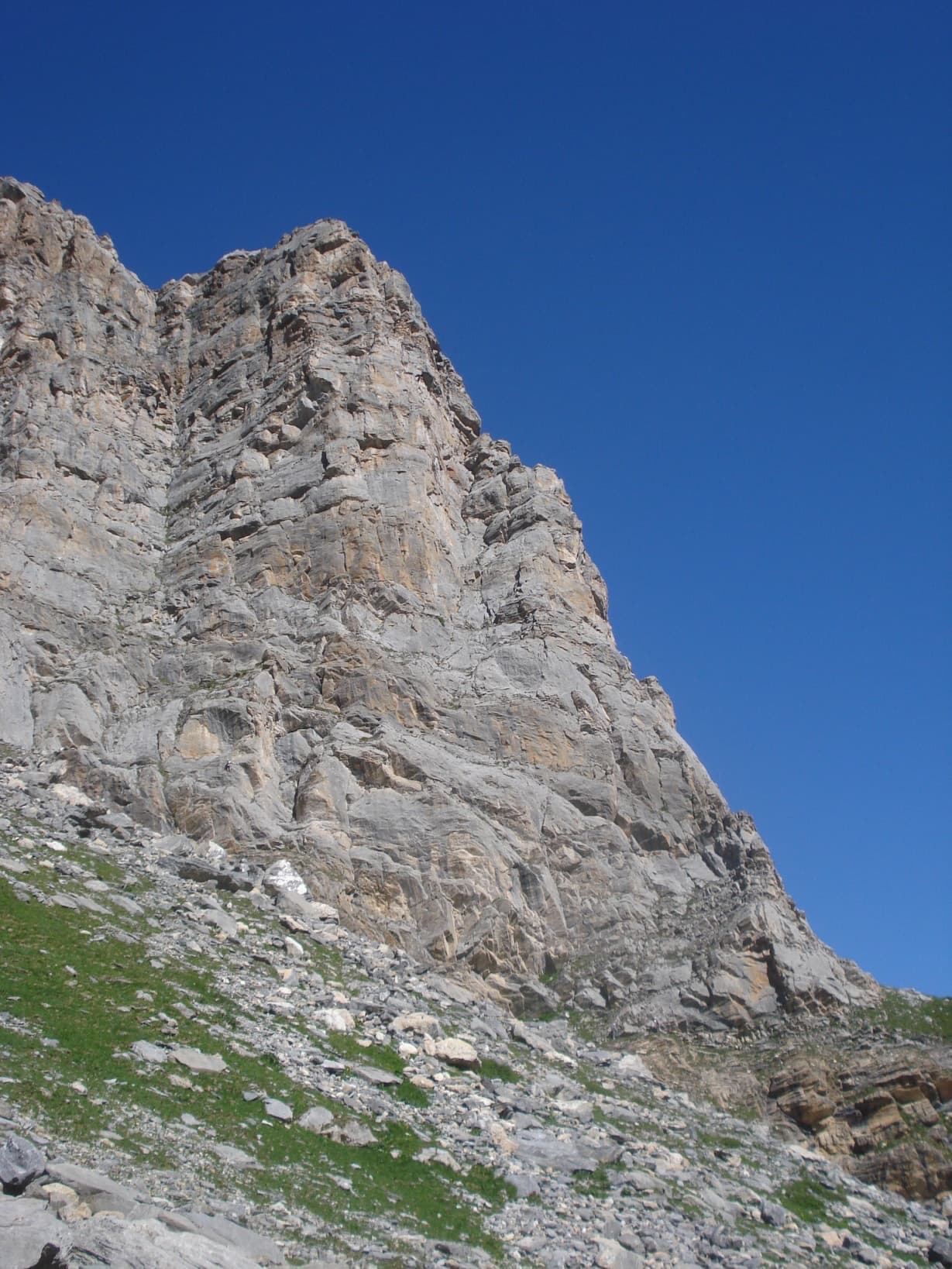
The south face of the Petite Aiguille de l'Arcelin above the Cirque de l'ArcelinPhoto: Thibaud · CC BY-NC-ND 3.0

Photo

The south face of the Petite Aiguille de l'Arcelin above the Cirque de l'ArcelinPhoto: Thibaud · CC BY-NC-ND 3.0
Hardest pitch
6c
Pitches
9
Length
220 m
Approach
80 min
Aspect
S
South-facing
Rope
1×50 m
2×50 m only if you choose the 50 m abseil from the thread
Read before you go

Bolted and popular, but with spaced bolts on the easier ground, a last pitch on mixed pegs and bolts, and an exposed scrambling descent.

The route

Overview

The Voie Vion climbs 220 m up the south face of the Petite Aiguille de l'Arcelin (2516 m) and joins the classic west ridge for its last pitch. It is the most travelled hard route of the sector, with more than forty logged outings on camptocamp, and recent parties are unanimous about the quality of the rock and the variety of the climbing. Five pitches are 5b to 5c, three are 6a and the sixth is 6c, slabby at first and then physical and technical; the bolts on the crux are well placed for a pull, but camptocamp gives 6b as obligatory. The bolting is mountain-style, not crag-style: fine where it is hard, spaced where it is not. The way down takes care and about 1 h 30.

The climbing

Pitch by pitch

Pitches of Voie Vion
PitchGradeLengthNotes
P15c–The corner, then a ramp to the right. One delicate and fairly exposed move just before the last bolt. Not over-bolted.
P25c–A steep wall, a short overhang, then an easier gully-chimney on the right. Pitches 1 and 2 have been linked on a 50 m rope with extendable quickdraws.
P36a–Straight up, then a thin, technical crack. Traverse right across a slab before coming back left to the belay on a ledge.
P45b–A short wall, a little right, then straight up.
P55c–A fine rising traverse right across an easy-angled slab with very little for hands or feet.
P66c–The crux pitch: slab at first, then a physical and technical finish through an overhang, up a steep smooth slab and over an awkward mantel. At least one obligatory move of 6b or 6b+; the bolts are placed so that part of it can be aided.
P76a–Sustained: a short overhang, a physical crack and a delicate traverse left. The belay is just right of the exit from the short chimney.
P86a–Straight up through a short, physical overhang.
P94c50 mShared with the classic west ridge: follow the crest as best you can, on more polished rock at III to IV+, with pegs and bolts that you cannot see from the belay. A full 50 m with rope drag; an intermediate belay is possible. A bolted 6a+ variant further right is described by a 2024 party as loose and run-out.

Getting there

Approach

To the parking

Drive up the Tarentaise to Moûtiers, then the Bozel valley to Pralognan-la-Vanoise, and take the Fontanettes road to the car park at its end (1640 m), at the foot of the Génépi lift. Camptocamp notes that this car park has been pay parking since 2025 (10 euros for 24 hours). Without a car: train to Moûtiers, bus to Pralognan, then a half-hour path from the tourist office to the car park; free summer shuttles run in July and August.

On foot · about 80 min

From Les Fontanettes walk up into the Cirque de l'Arcelin. At 1881 m bear right towards the Col du Grand Marchet. At about 2250 m traverse horizontally to the foot of the south face. The route starts up a big corner with bolts, 20 m right of the start of the west ridge; from below you can usually see the first belay. Parties report 1 h 10 to 1 h 30. A footbridge on the approach was washed away by a storm on 13 August 2023 and parties that summer forded the torrent a little higher up.

Map of the walk-in

  • Crag
  • Parking

Loading map

The point marks the crag, not the exact start of the route.

Coordinates · crag

45.37596, 6.76194

Parking

45.38213, 6.73687

Les Fontanettes car park above Pralognan, 1640 m (camptocamp access waypoint 104461); pay parking since 2025

Point from camptocamp waypoint 40569 (Petite Aiguille de l'Arcelin summit; the route climbs the south face below it)

For your phone or watch

Download GPX

Contains the route point and parking. Opens in most mapping apps and GPS watches.

Points are compiled from published sources, with the precision stated above. They were not surveyed on the ground: check them against a current topo.

Getting down

Descent

From the summit follow a path near the ridge to a small col. Two options from there. The one recent parties recommend: turn the gendarme on the north side, 3 m below the crest (4 or 5 bolts, a passage of grade III), regain the ridge and follow it to a notch marked by a large home-made peg. From the notch descend exposed, stony ledges (cairns and a few bolts, not hard but needing attention) to a fixed rope and, just after it, a chain for a single abseil of 12 to 15 m down a chimney. An easy path then leads quickly back to the foot of the route. The other option is a 50 m abseil from a thread 10 m along the crest beyond the small col, landing at the top of a chimney: a 2021 party advises against it because they doubted the thread, and a 2024 party could not find it. Allow 1 h 20 to 1 h 30 from the summit to the foot.

Retreat

Bailing off the route

Bail not documented

Retreat is not documented, and the route has no abseil line: a 2020 party asks when one will be equipped on the south side. The belays are bolted but nobody describes how they are rigged. The neighbouring Stop ou Encore, 100 m to the right, is the route on this face that is set up for abseiling.

Retreat from
Not known. Pitches 3 and 5 traverse, which would complicate abseiling back down the line.
Point of no return
Not documented. The crux is pitch 6; the bolts there allow some aid, and above it two 6a pitches and an easy ridge lead to the top.
Carry
If you want the option, two ropes and maillons or cord to leave. The normal descent is on foot with one short abseil.
Basis
Inferred from the route factsNo source describes a retreat; the absence of an abseil line is from a 2020 trip report.

Partly inferred from the route facts

Safety

Hazards

  • Bolts are spaced on the easier ground, including a delicate, exposed move at the end of pitch 1.
  • The descent crosses exposed, stony ledges; a slip or a dislodged stone would be serious for parties below.
  • The 50 m abseil option relies on a slung thread of uncertain quality.
  • Some hollow-sounding rock in places.
  • When linking pitches 3 and 4 a 2023 party ended up on a belay made of one bolt and one peg, 5 m above the normal station: use the stations described.

Sun and weather

Conditions

South-facing between about 2250 and 2516 m, with the first two pitches turned to the south-west so that they get the sun later: expect cold fingers on a cool morning, and heat later in the day. Logged ascents run from mid-June to early September. In June the north-facing slopes of the cirque can be seeping and a large snow patch may remain below the descent, which a 2021 party enjoyed glissading.

Usual season · Jul to Sep

Sun on the wall · S-facing

Working out the sunlit hours for this month.

  • January: not yet worked out
  • February: not yet worked out
  • March: not yet worked out
  • April: not yet worked out
  • May: not yet worked out
  • June: not yet worked out
  • July (usual season): not yet worked out
  • August (usual season): not yet worked out
  • September (usual season): not yet worked out
  • October: not yet worked out
  • November: not yet worked out
  • December: not yet worked out

Sun on the wallDaylight, wall in shade● Usual season

Estimated from the wall's aspect only. Ignores surrounding terrain, gullies and the wall's exact shape. Clock times are local to the wall (Central European time), for the 15th of each month.

Monthly climate averages for Vanoise (Grand Bec), 1991-2020
MeasureJanFebMarAprMayJunJul (usual season)Aug (usual season)Sep (usual season)OctNovDec
Mean daily high °C−9−8−5−228111172−5−9
Mean daily low °C−16−16−13−9−6−122−2−6−12−16
Rain days 1 mm or more131213141618161413131313

● marks the usual climbing season. Averages for 1991-2020 at about 2779 m. Area climate from Open-Meteo reanalysis. Temperatures are adjusted to the height of the crag; rain comes from a grid cell of about 10 to 25 km, and summer highs on sea cliffs can read a few degrees low. The wall and valley can differ. Data: Open-Meteo, CC BY 4.0.

What to carry

Gear

10 quickdraws, including some extendable ones, and a 50 m rope; helmet. Camptocamp lists a 50 m abseil rope for the thread option. Some parties carry three small cams or a few wires and report not placing them; a 2020 party suggests a small cam or two if you are short of margin on the easier pitches. Carry approach shoes for the descent.

Checklist

Quickdraws
10
Rope
1×50 m (2×50 m only if you choose the 50 m abseil from the thread)
Helmet
One each
Abseil device and prusik
The descent or the retreat involves abseiling
Maillons or spare karabiners
To leave behind if you retreat
Cord
Mentioned for retreat

Derived from the route data; check it against a current topo

From climbers

Reader reports

Reader reports are not being collected yet. Until they are, check a current topo and the local club or guidebook publisher for recent changes to Voie Vion.

Worth knowing

Tips

  • Allow 3 h 30 to 5 h on the route.
  • The crux moves are concentrated in two moves of the 6c pitch and the bolts are well placed for aiding them.
  • If the route is busy, the west ridge next door (5c, rated less well bolted) and Stop ou Encore 100 m to the right are the alternatives.
  • There is a spring at the foot of the west ridge.

Open questions

Where sources disagree

  • Crux grade: 6c on camptocamp; a 2020 party hesitates between 6b+ and 6c.
  • A 2021 party felt the pitches as 5c, 5c+, 6a+, 5c, 5b+, 6c, 5c+, 6a+, then IV+ and IV, slightly different from the published 5c, 5c, 6a, 5b, 5c, 6c, 6a, 6a, 4c.
  • Bolting: 'rather well bolted for Pralognan' (2021), 'airy but sufficient' (2024) and 'good but mountain-style, even on the hard pitches' (2020).
  • The final abseil in the chimney is given as 15 m in the route text and 12 m by a 2021 party.

Provenance

Sources

Same area

More in Vanoise (Grand Bec)

All routes in Vanoise (Grand Bec)
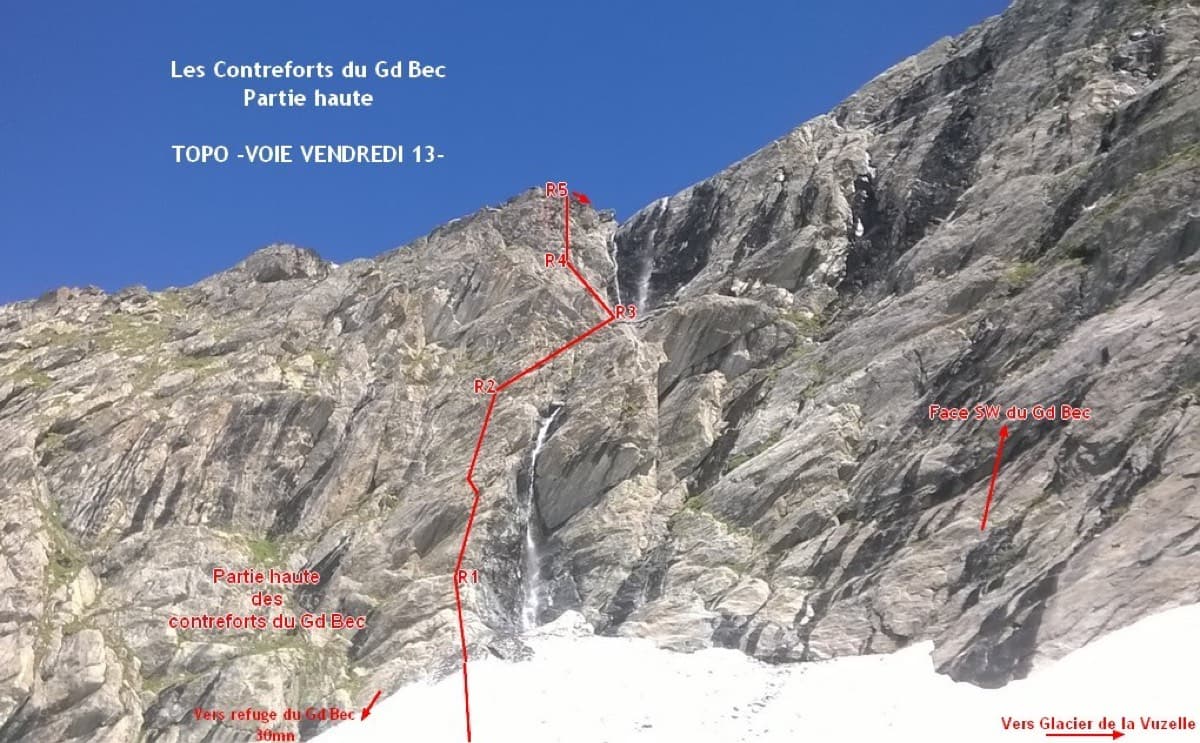
Photo-topo of Vendredi 13 on the upper Contreforts du Grand Bec, with belays R1 to R5

France · Vanoise (Grand Bec)

Vendredi 13

A short, sunny high-mountain route at 2800 m in the Vanoise: five 25 to 30 m pitches of 4b to 5b with one or two moves of 5c that can be pulled through, then an easy scramble. The bolting is generous enough that parties with little experience enjoy it. The setting, below the south-west face of the Grand Bec, is the reason to walk up.

5c6 pitches180 m
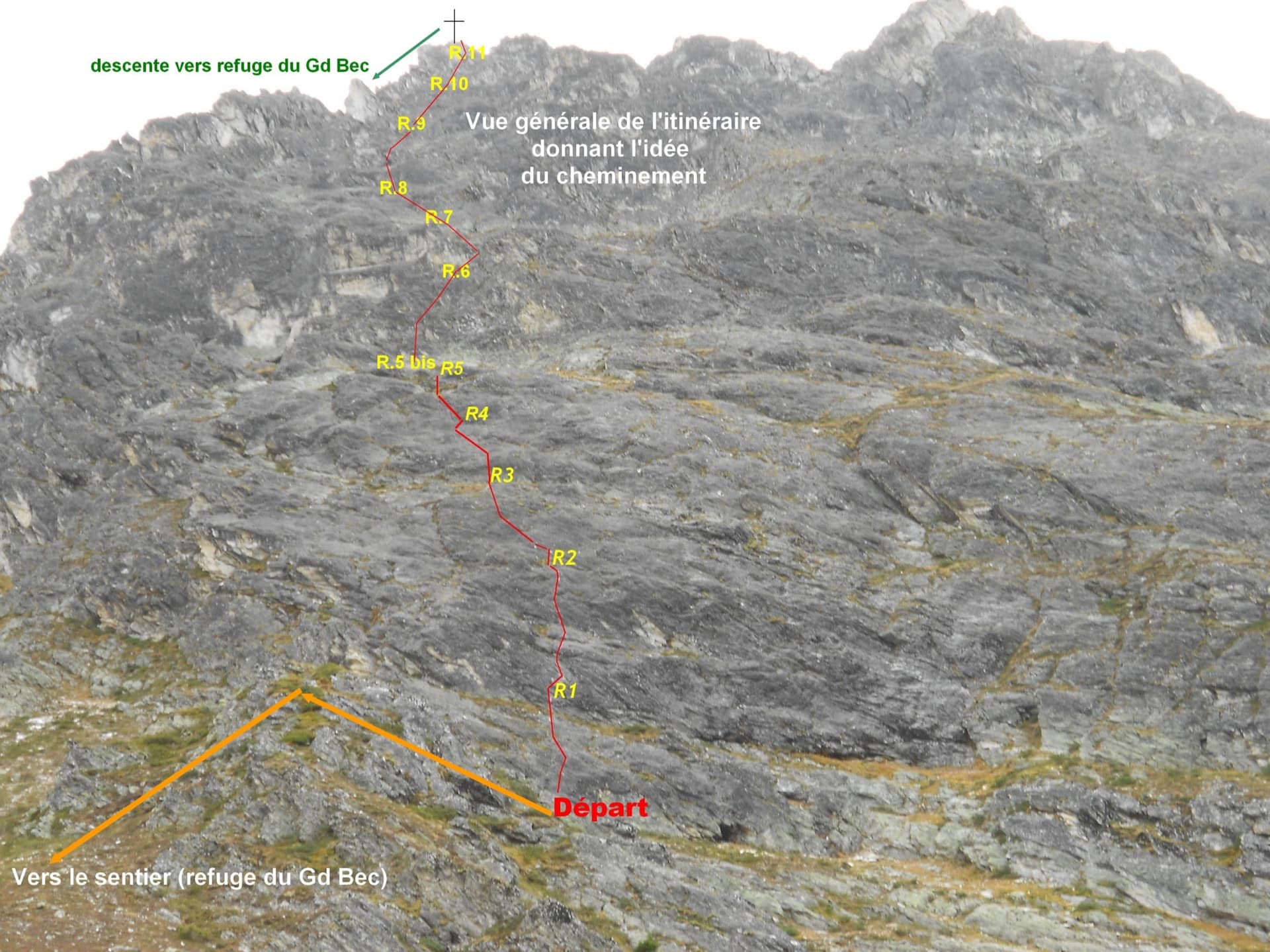
General view of Eau de mai on the north face of the Pointe de la Vuzelle, with the start and belays R1 to R11 marked

France · Vanoise (Grand Bec)

Eau de mai

A long, easy mountain route up the shady north face of the Pointe de la Vuzelle, finishing at a summit cross above the Refuge du Grand Bec. The climbing is in the first two pitches and the seventh; the rest is short steps of 3b to 5a linked by walking pitches over grass and unstable scree. Go for the outing and the summit, not for sustained rock.

5c12 pitches300 m

Read the cautions

The east pillar of the Grand Marchet, seen face on in the centre; the abseil line comes down the corner on the left

France · Vanoise (Grand Bec)

Pilier Est

The leftmost route on the steep south-east face of the Grand Marchet, in the Cirque du Dard above Pralognan. Short but varied limestone climbing with a lot of air for the grade: slabs, steps, a superb corner, an old-style chimney and a vertical wall, getting harder as you go. The two 6a pitches are closely bolted and go at about 5c with a pull.

6a7 pitches180 m

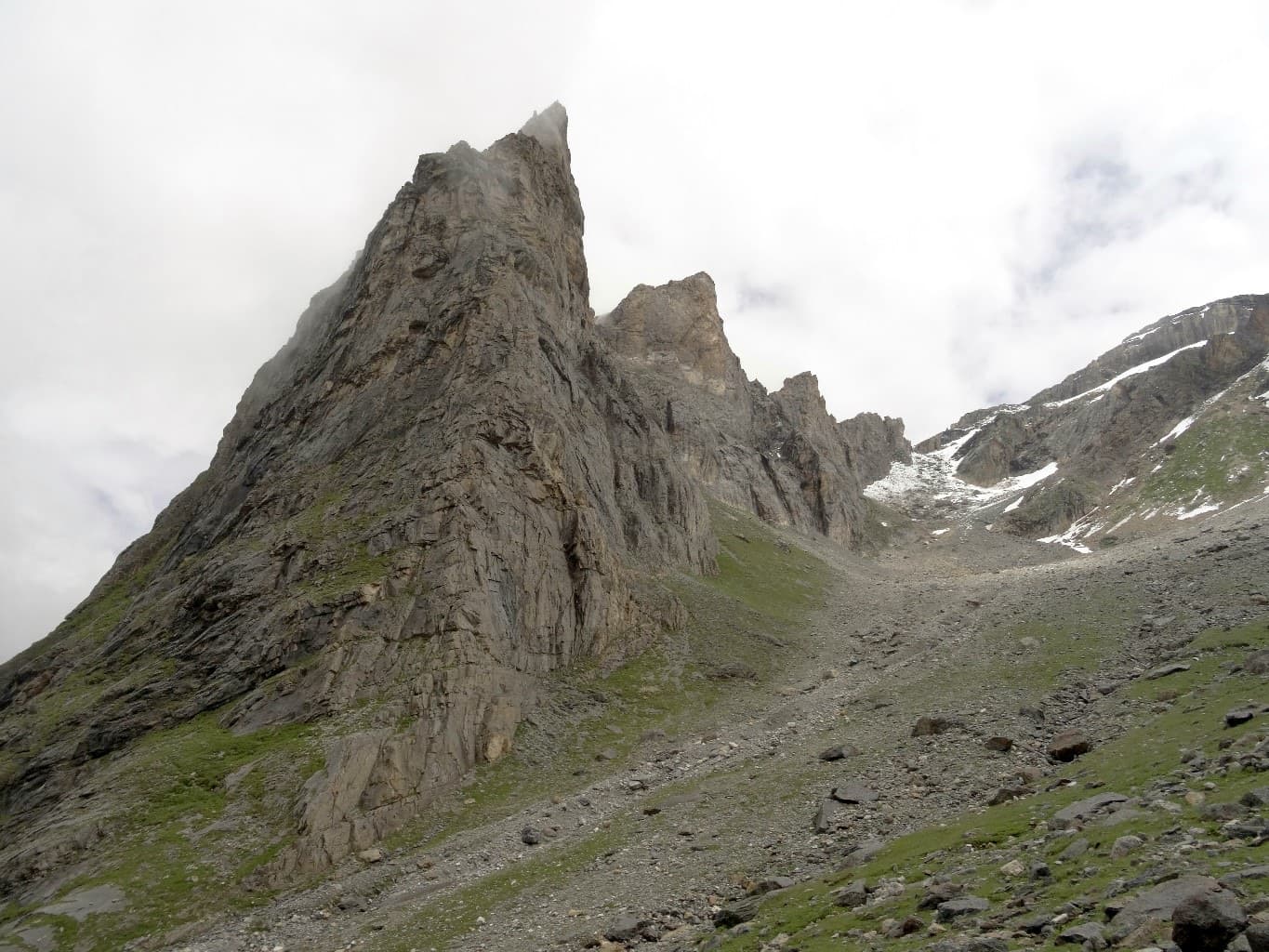
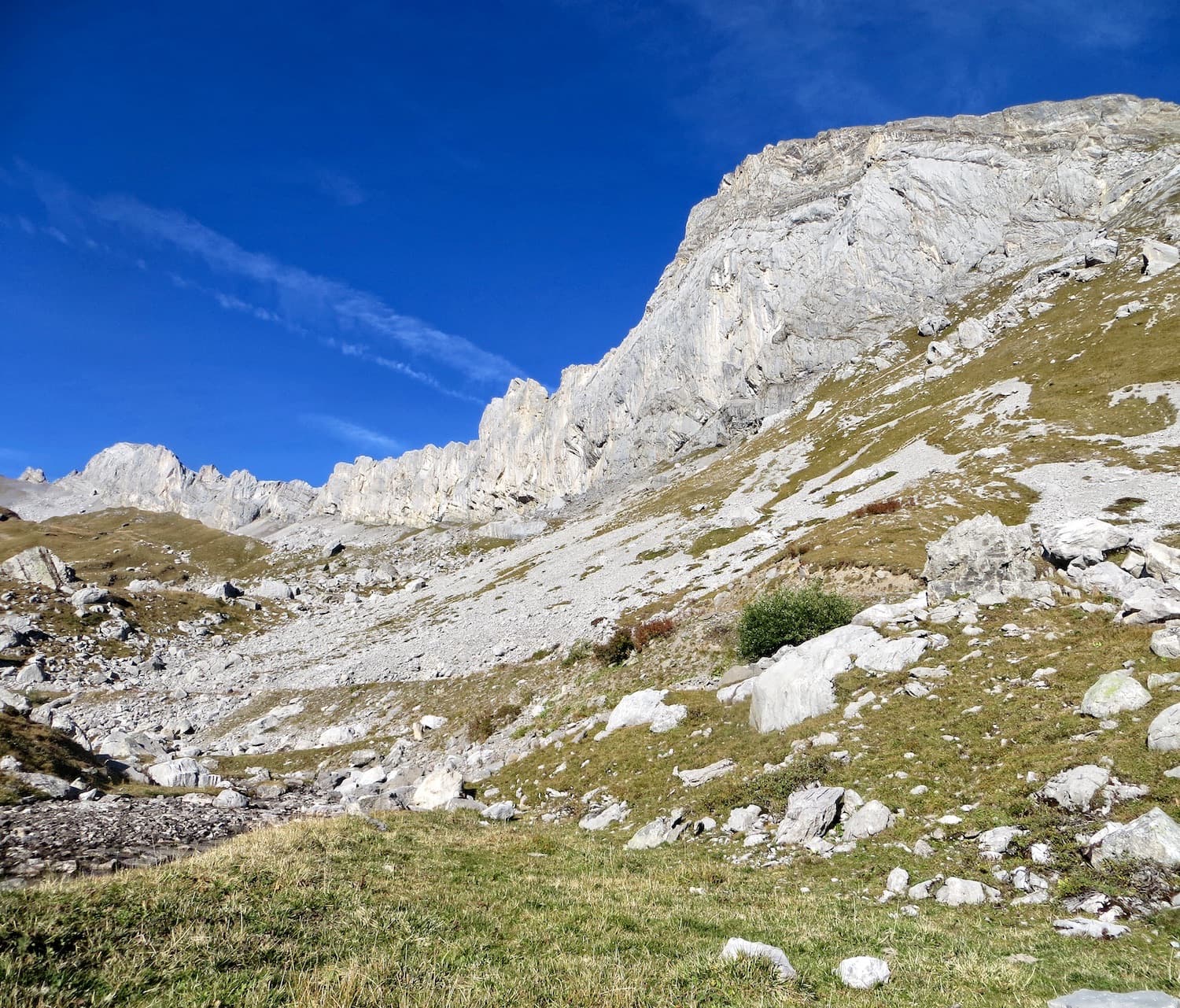
The Petite Aiguille de l'Arcelin from the approach through the Cirque de l'Arcelin

France · Vanoise (Grand Bec)

Stop ou Encore

A short, wild, modern route on the grey limestone of the Petite Aiguille de l'Arcelin, in two halves: thin, technical slab low down, including a sustained 6b+ with obligatory moves, then steep walls with a very sustained 7a pitch of two bouldery cruxes. Seldom climbed for its quality.

7a6 pitches190 m

Read the cautions

Around 6c · about 9 pitches

Similar elsewhere

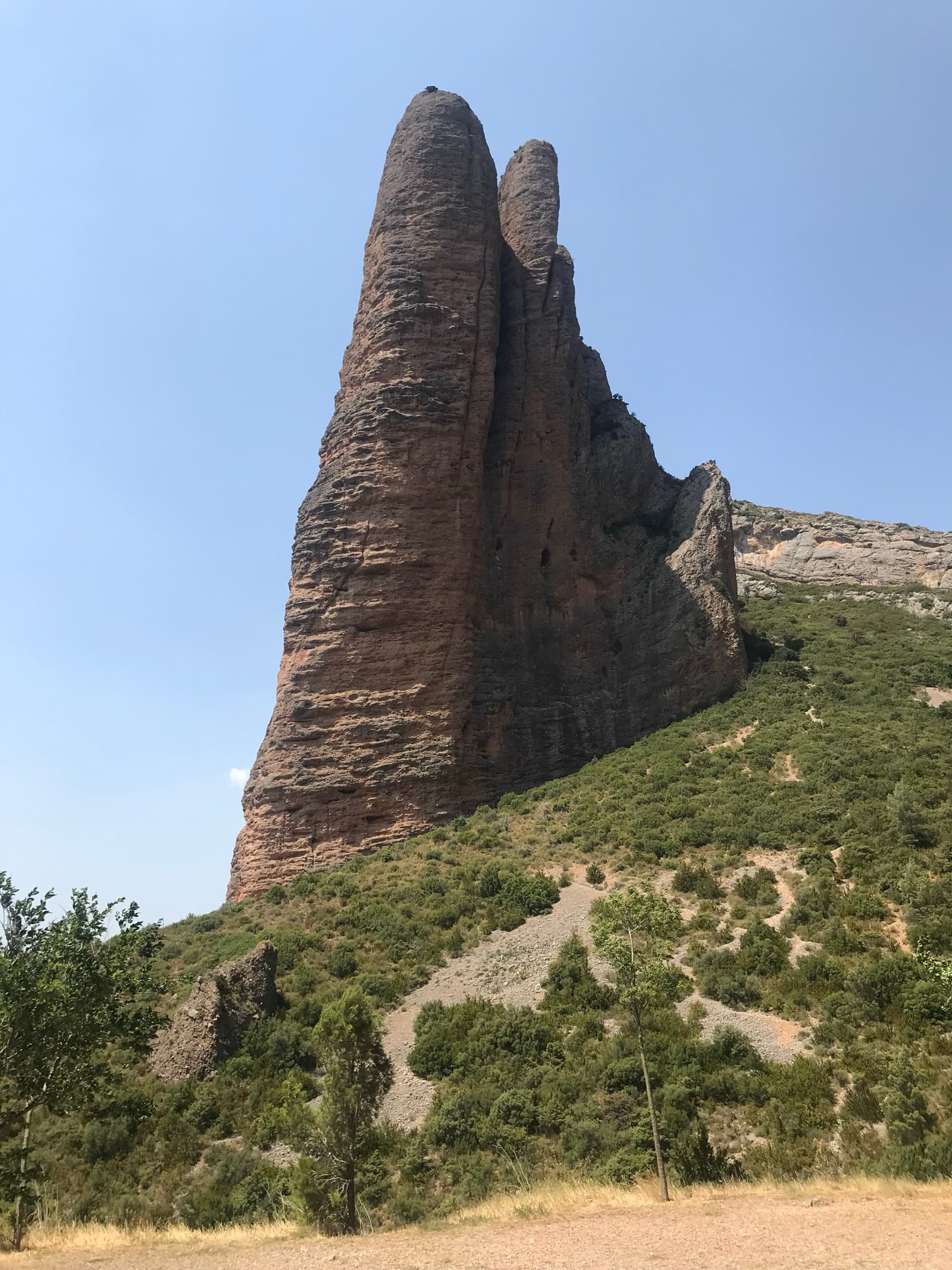
The Mallo Firé at Riglos, the pointed tower that Directa As Cimas climbs to its summit

Spain · Riglos & Agüero (Mallos)

Directa As Cimas

The modern way up the Firé: nine pitches to a pointed summit among the vultures, more technical and less overhanging than the routes on the Visera. Two pitches of 6c, each with a bulge or a hard move off the belay, sit in the middle of sustained 6a+ to 6b+ climbing. 6b is obligatory.

6c9 pitches300 m

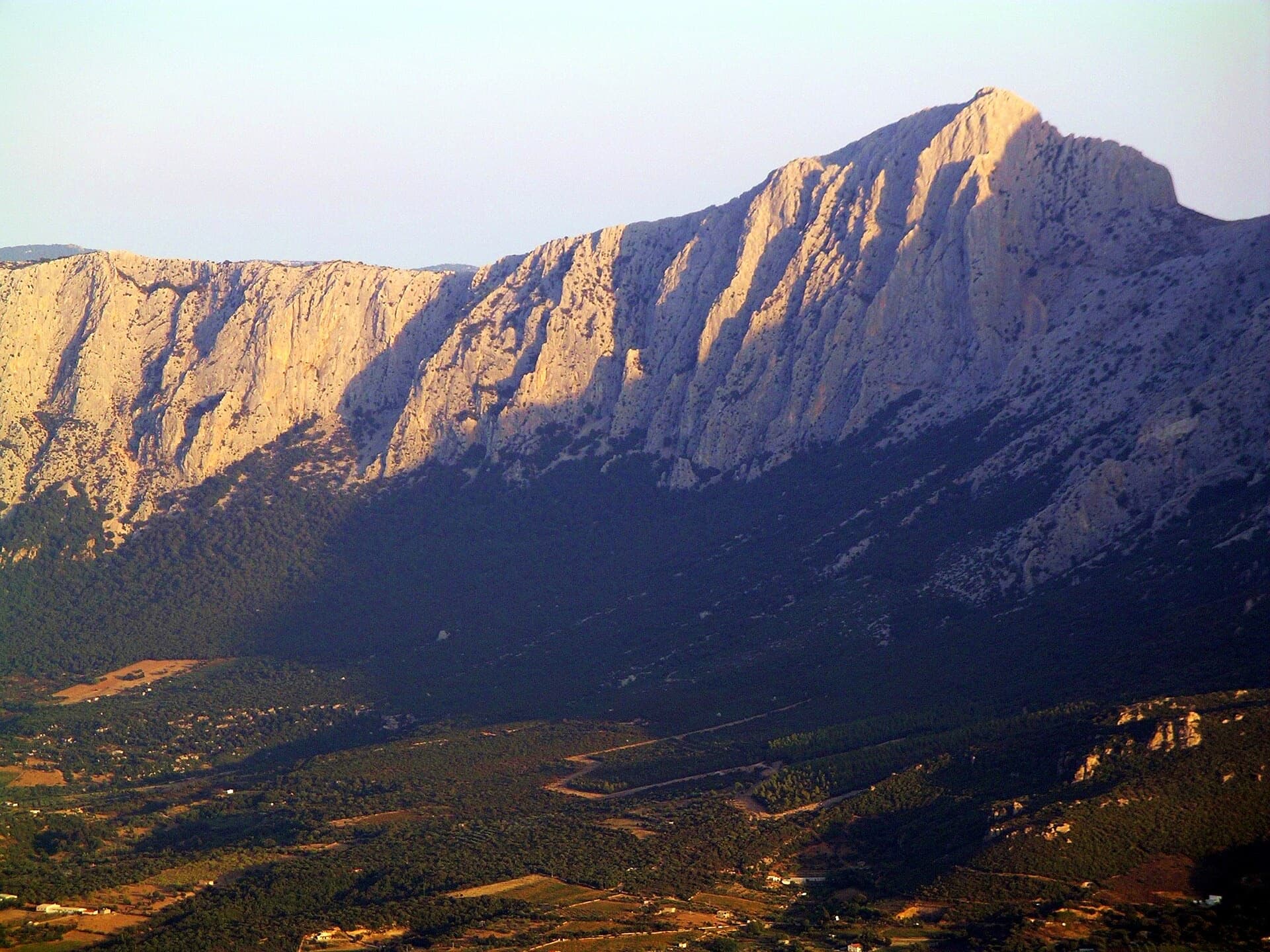
Punta Cusidore (1147 m) and the limestone wall of the Supramonte di Oliena in evening light, seen from the Oliena side.

Italy · Sardinia

L'Ombra della Mia Mano

A 300 m pillar on the 'Dolomite of Sardinia': a hard, smooth first pitch in a north-facing gully, long grey slabs and walls, a demanding technical crux on pitch 6, then exposed climbing on the crest of the pillar on big sculpted holds. Mountain atmosphere with sport protection.

6c9 pitches300 m

Read the cautions

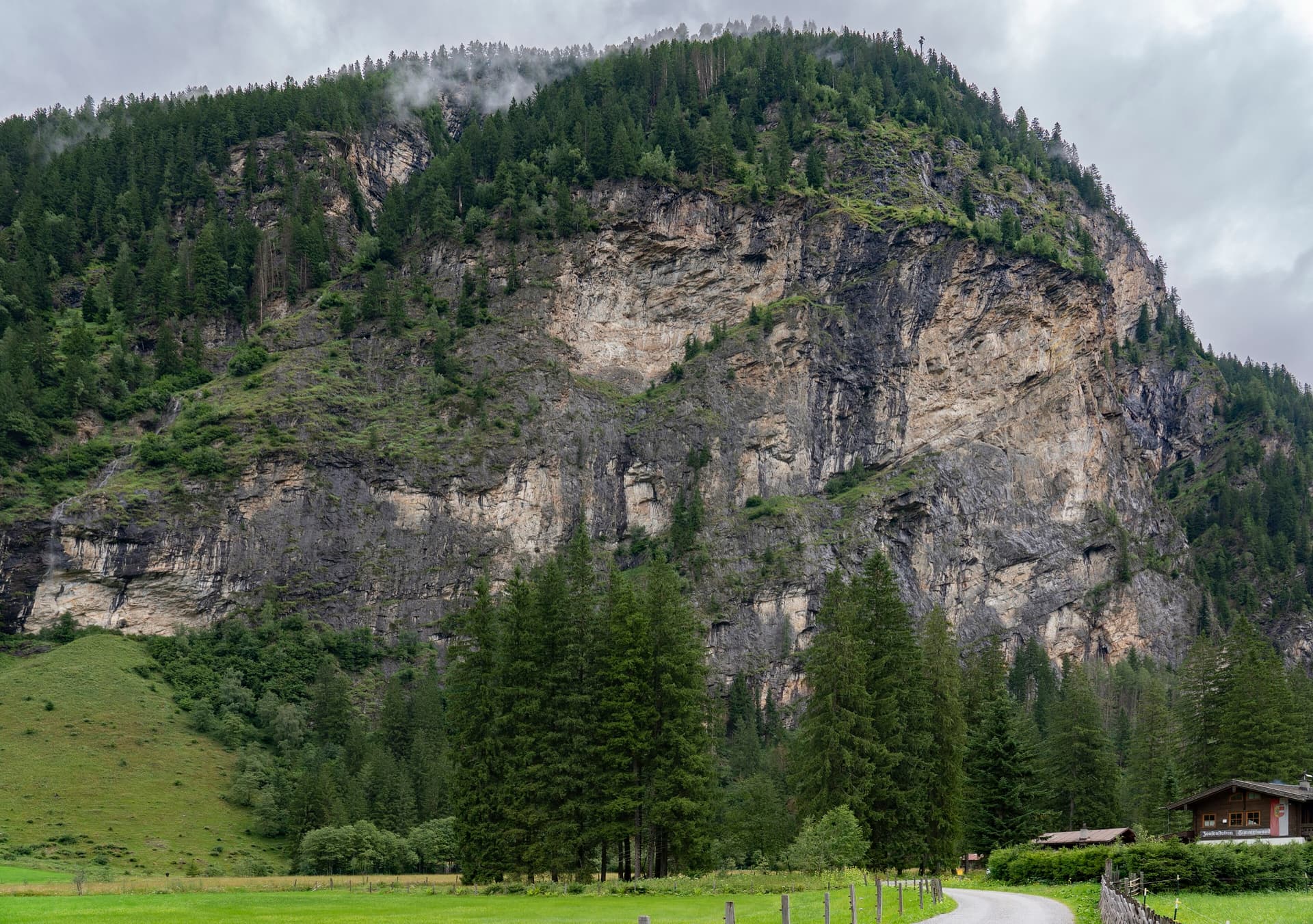
The Himmelwand in the Kötschachtal near Bad Gastein, seen from the valley road by the Himmelwandhütte; the Kleine Himmelwand lies further up the valley

Austria · Gastein (Hohe Tauern)

JKF Happiness

A long, modern slab and wall route beside the waterfall on the Kleine Himmelwand, with six independent 50 m pitches before it joins the last two pitches of Father and Son. Three pitches have technical, bouldery passages at UIAA 7+ and the obligatory grade is high for the area, but the bolts are close.

6c9 pitches350 m

Les Montons at Sanetsch, with the Pointe Maurice Brandt in the centre; La vita è bella climbs the main wall. The line is not marked

Switzerland · Sanetsch

La vita è bella

A long, homogeneous line up the full height of the Montons on excellent limestone: steep sculpted walls and fine slabs, mostly 6a to 6b, with two short 6c cruxes that can be pulled through on the bolts. The fifth pitch, a steep Verdon-style slab, is the one people remember.

6c9 pitches250 m

Compiled from published sources and last verified October 2026. Bolts, anchors and access change. Climbing is dangerous and you are responsible for your own decisions: check a current topo and read the disclaimer.