Spain · Collegats
Tanger
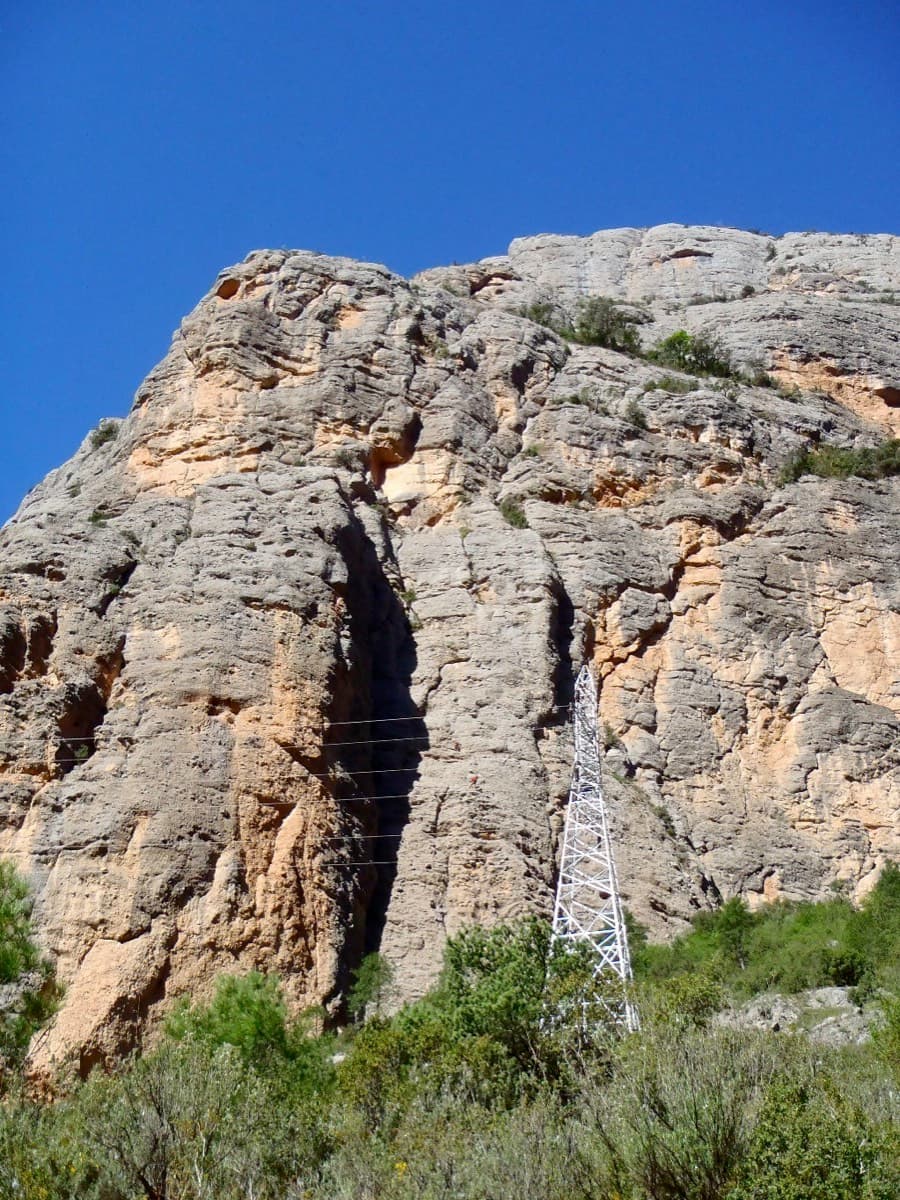
A consistent, well-bolted line starting with a crack under the big pylon. Ten pitches of 5b–6a+ are split by a 100 m scramble through a vegetated 'garden' before the final tier.
6a+10 pitches300 m
Read the cautions
Agulla del Gos (Paret del Pessó) · Collegats · Spain
Easy to bailBolting confidence: medium
Four steep pitches up the pinnacle that leans against the Paret del Pessó, five minutes from the car. Rounded bulges and big holds in the style of Riglos: an athletic first pitch, an overhanging jug traverse, then easier bellies to the top.
The route
The Agulla del Gos is less a needle than a 100 m pillar standing proud of the foot of the Paret del Pessó, at the point where the wall comes closest to the path. Matute takes its left side in four pitches and is the best short multipitch in the gorge: parties compare the overhangs and rounded bulges to Riglos and wish it were longer. The first pitch is the crux and is steep from the first moves. It is short enough to add to another route, or to climb with its neighbour Poppers in a day.
The climbing
| Pitch | Grade | Length | Notes |
|---|---|---|---|
| P1 | 6b | 40 m | Superb and covered in holds but athletic, with the hardest moves right at the start of the difficulties and a corner higher up. The printed guide gives 6a; camptocamp and Luichy give 6b and a 2019 party agreed, noting very rounded holds. Luichy gives 35 m. |
| P2 | 5+ | 20 m | Go right, then climb an overhanging wall on big jugs (V+), and traverse back left to the belay, which is hidden in a niche. Do not carry on up the obvious bolts on the right: they belong to Léon. Two parties ended up at Léon's second belay by mistake. 15 to 20 m. |
| P3 | 4+ | 30 m | Straight up well-featured rock over a series of entertaining bulges (IV+). It can be linked with pitch 2 if you manage the drag. Luichy gives 40 m. |
| P4 | 5+ | 40 m | Another fine pitch at V+ to the top of the pillar. Luichy's sketch marks a couple of points of A0 as an option on it. |
Getting there
From La Pobla de Segur take the N-260 north-east towards Sort into the Collegats gorge. About 100 m after the exit of the first tunnel there is a gap in the crash barrier on the left with room for two to four cars, at the sign for the Cova de la Serpent path. If it is full, park just before on the old road that bypasses the tunnel on the outside. There is a campsite at the gorge entrance near La Pobla de Segur, which one party found closing for the season in early November.
Five minutes. Take the Cova de la Serpent path from the parking. The route starts where the path brushes the wall, at the foot of the pinnacle on its left side, just left of an overhang at head height. An old hand-drilled bolt (buril) marks the start; you have to look for it.
Loading map
The point marks the crag, not the exact start of the route.
Parking
Small pull-in between the tunnels at the Cova de la Serpent path (camptocamp access waypoint 207056, Congost de Collegats)
Point from camptocamp waypoint 697864 (Collegats - Agulla del Gos)
Contains the route point and parking. Opens in most mapping apps and GPS watches.
Points are compiled from published sources, with the precision stated above. They were not surveyed on the ground: check them against a current topo.
Coordinates: 42.28538, 1.03544 (crag) · Parking: 42.28611, 1.03667
Getting down
From the top go left to reach a ramp equipped with ropes, cables and chains that brings you back down to the path; a 2015 party found the cables in very good condition and a 2014 party called this descent very quick. The belays are also equipped for abseiling, and a 2019 party abseiled after climbing both Poppers and Matute.
Retreat
Easy to bail
A 2014 party reports that all the belays are equipped for abseiling, and a 2019 party abseiled from this pinnacle after each of its two routes. The route is only four pitches and never far from the ground. The traverses on pitch 2 are the one place where abseiling the line is awkward.
Partly inferred from the route facts
Safety
Sun and weather
The pinnacle faces east (camptocamp lists E, NE and SE), so it has morning sun and afternoon shade. Reports come from January (a warm day, pleasant even in the shade), May, June and November. A November party describes it as very hot in the sun.
Sun on the wall · E-facing
Working out the sunlit hours for this month.
Sun on the wallDaylight, wall in shade● Usual season
Estimated from the wall's aspect only. Ignores surrounding terrain, gullies and the wall's exact shape. Clock times are local to the wall (Central European time), for the 15th of each month.
| Measure | Jan | Feb | Mar (usual season) | Apr (usual season) | May (usual season) | Jun (usual season) | Jul | Aug | Sep (usual season) | Oct (usual season) | Nov (usual season) | Dec |
|---|---|---|---|---|---|---|---|---|---|---|---|---|
| Mean daily high °C | 9 | 10 | 13 | 16 | 20 | 24 | 27 | 27 | 23 | 18 | 12 | 9 |
| Mean daily low °C | −1 | −1 | 2 | 5 | 9 | 13 | 16 | 16 | 12 | 8 | 3 | −0 |
| Rain days 1 mm or more | 7 | 6 | 9 | 12 | 12 | 9 | 7 | 9 | 9 | 9 | 8 | 6 |
● marks the usual climbing season. Averages for 1991-2020 at about 735 m. Area climate from Open-Meteo reanalysis. Temperatures are adjusted to the height of the crag; rain comes from a grid cell of about 10 to 25 km, and summer highs on sea cliffs can read a few degrees low. The wall and valley can differ. Data: Open-Meteo, CC BY 4.0.
What to carry
14 quickdraws. No cams or nuts are mentioned by any source. No source gives a rope length for this route; pitches are up to 40 m. The neighbouring route Poppers is described as abseiled in three with 50 m of rope, so take two ropes if you intend to abseil (inferred). Helmet.
Derived from the route data; check it against a current topo
From climbers
Reader reports are not being collected yet. Until they are, check a current topo and the local club or guidebook publisher for recent changes to Matute.
Worth knowing
Open questions
Provenance
Same area
Spain · Collegats
A consistent, well-bolted line starting with a crack under the big pylon. Ten pitches of 5b–6a+ are split by a 100 m scramble through a vegetated 'garden' before the final tier.
6a+10 pitches300 m
Read the cautions
Spain · Collegats
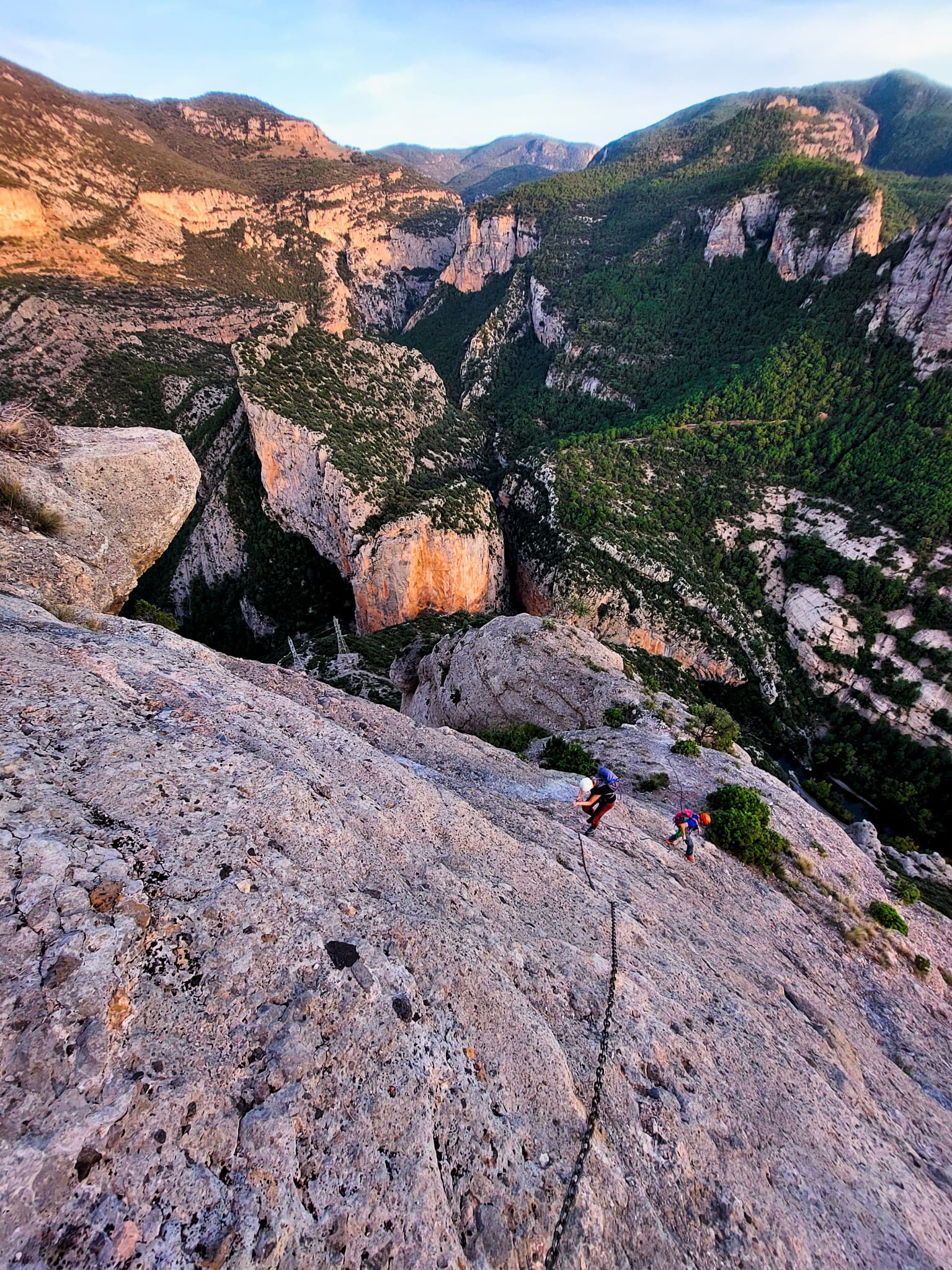
The friendly long route of Collegats: steep but juggy grey conglomerate above the Barranc de Sant Pere, with close bolts. It starts by squeezing between the wall and a leaning 50 m pinnacle, and saves its best for a sustained 40 m 6a wall at the top. A short garden pitch breaks the line before the finish.
6a6 pitches205 m
Spain · Collegats
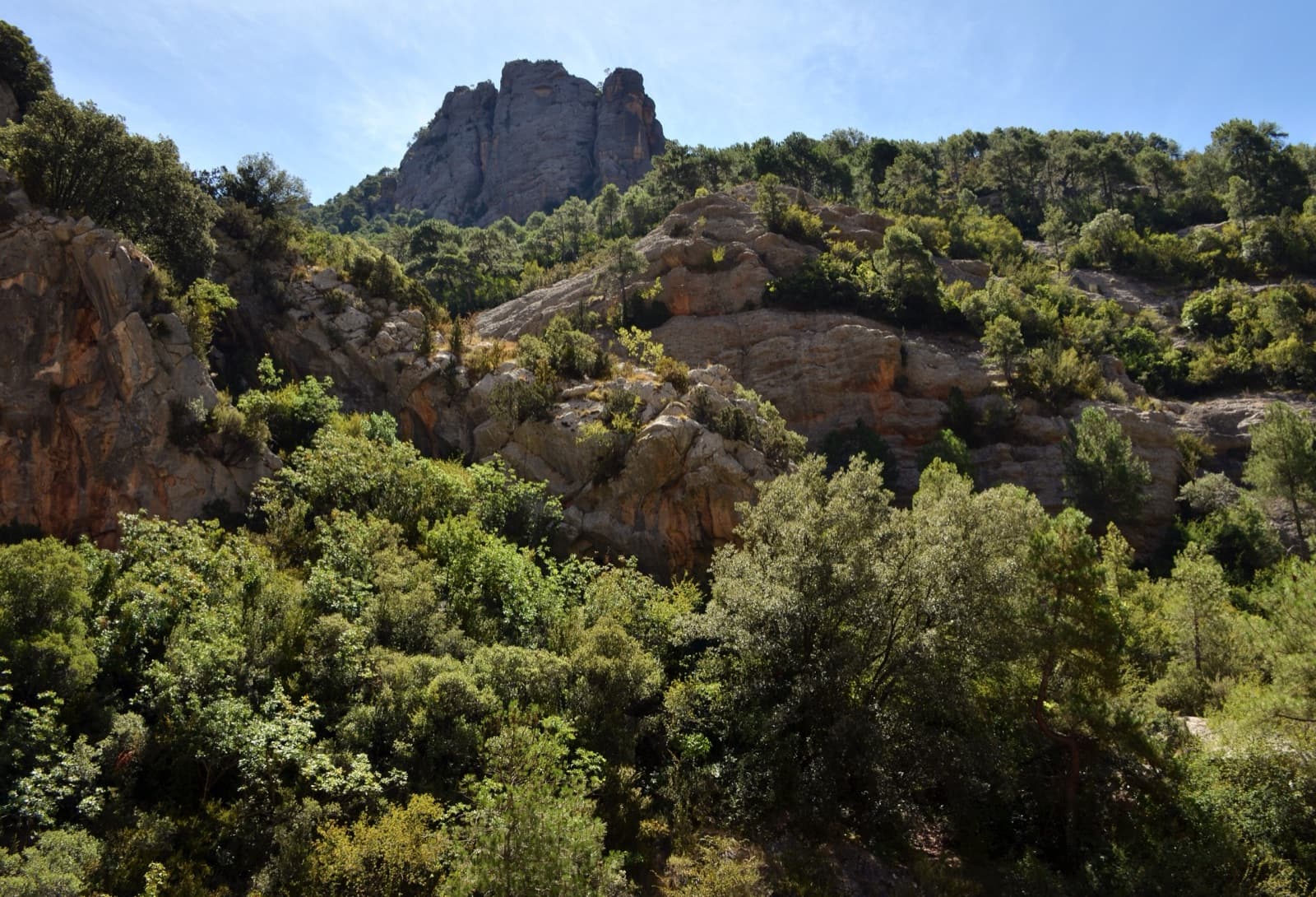
The right-hand line on the Agulla del Gos: a short, punchy first pitch that is harder than its guidebook 6a+, then a chimney and easier walls to the top of the pinnacle. Best climbed as a pair with Matute.
6b+4 pitches140 m
Read the cautions
Around 6b · about 4 pitches
Italy · Gaeta & Sperlonga
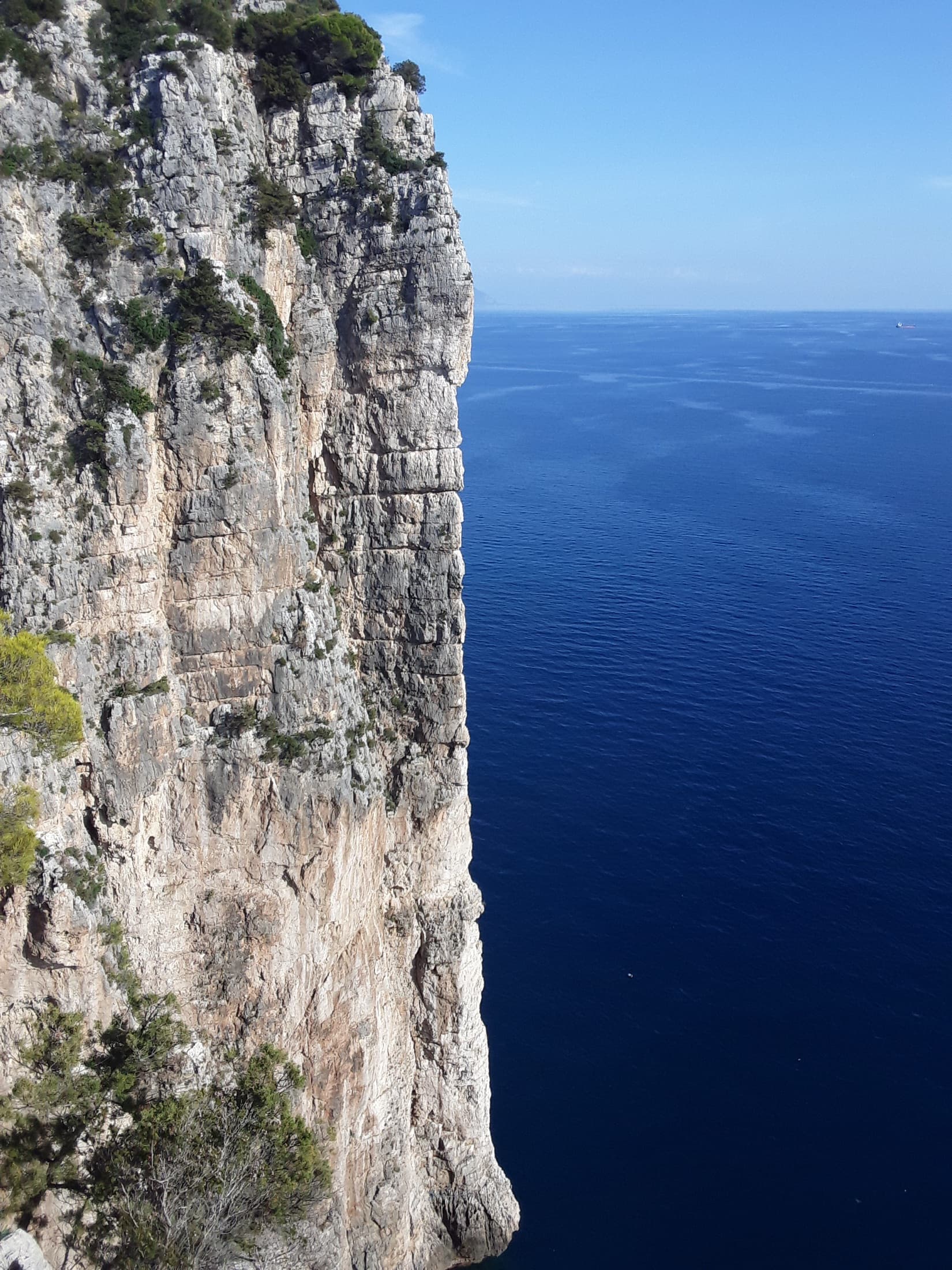
The showpiece of the Montagna Spaccata: four steep, exposed pitches up a knife-edge spur that drops straight into the sea, reached by abseil. Sustained around 6a+ on good holds, with an overhang at 6b to finish.
6b4 pitches120 m
Read the cautionsCommitting
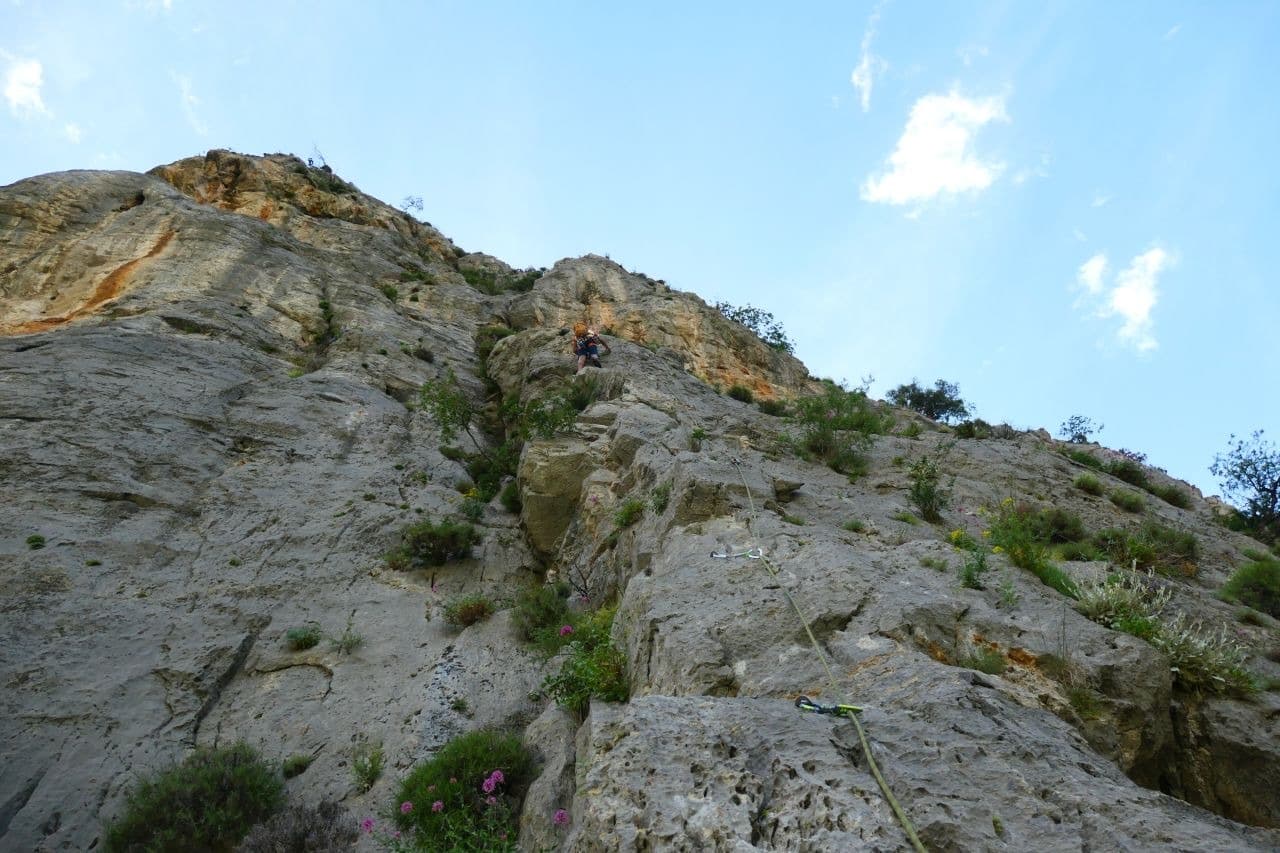
Greece · Manikia (Evia)
Four long pitches up the right-hand pillar of the Sentinelle buttress on excellent rock: a pillar, a pocketed wall, an overhanging crack with a stiff exit, and a final pillar. Easy to find, well bolted and finished off with a playful via ferrata descent.
6b4 pitches150 m
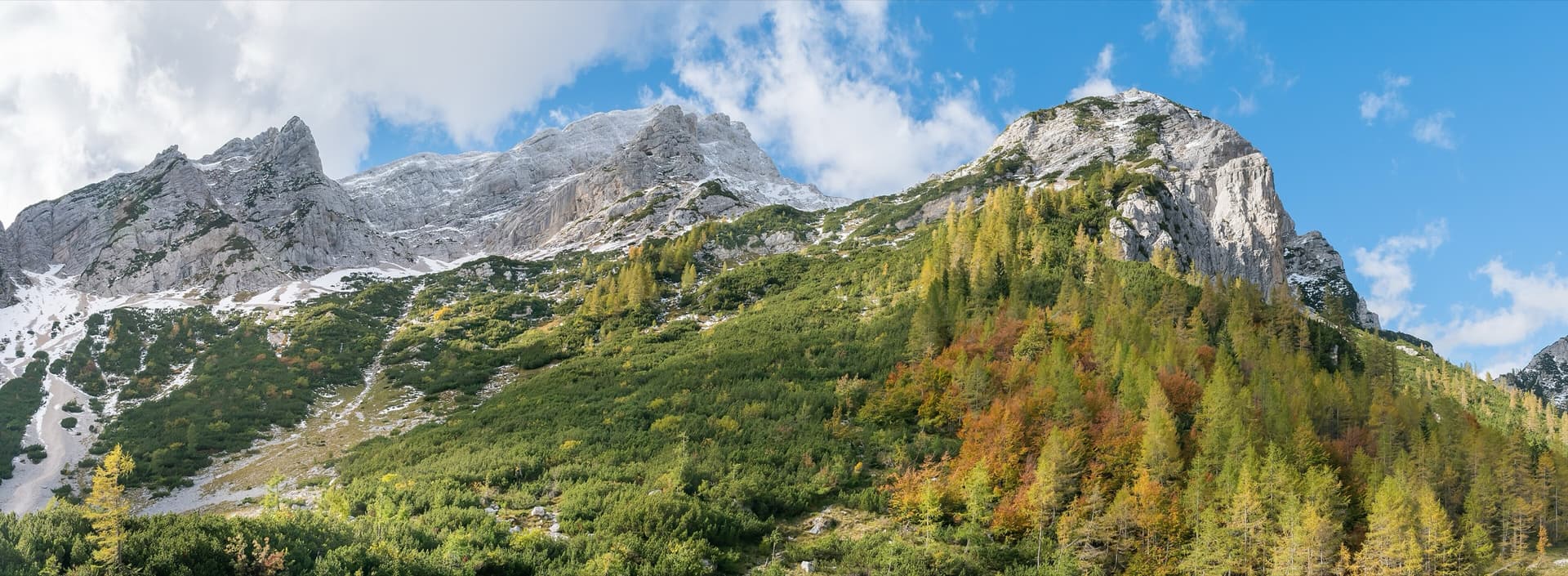
Slovenia · Vršič Pass (Julian Alps)
A compact modern sport multipitch by Tomo and Dragica Česen, front-loaded with its longest and hardest pitch. It is close to the road and good for a half-day.
6b4 pitches90 m
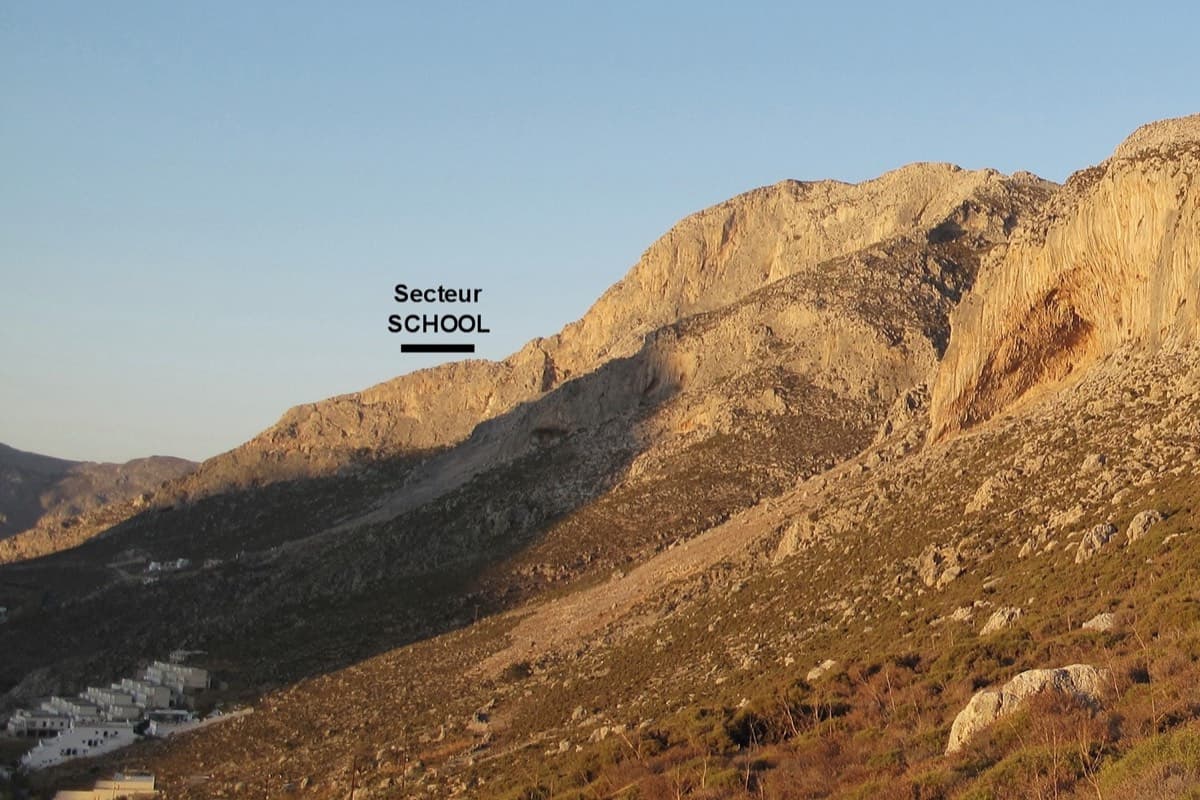
Greece · Kalymnos & Telendos
A short gem with slabs, crimps, water-drop pockets, a bulge and a traverse on superb rock, with the usual big Kalymnos view. It is the most popular guided 6a multi-pitch on the island.
6b4 pitches120 m
Read the cautions
Compiled from published sources and last verified October 2026. Bolts, anchors and access change. Climbing is dangerous and you are responsible for your own decisions: check a current topo and read the disclaimer.