Multipitch Atlas

Schwarze Mauer

Burgsteiner Wand, Längenfeld · Ötztal · Austria

Read the cautionsBail with caveatsBolting confidence: high

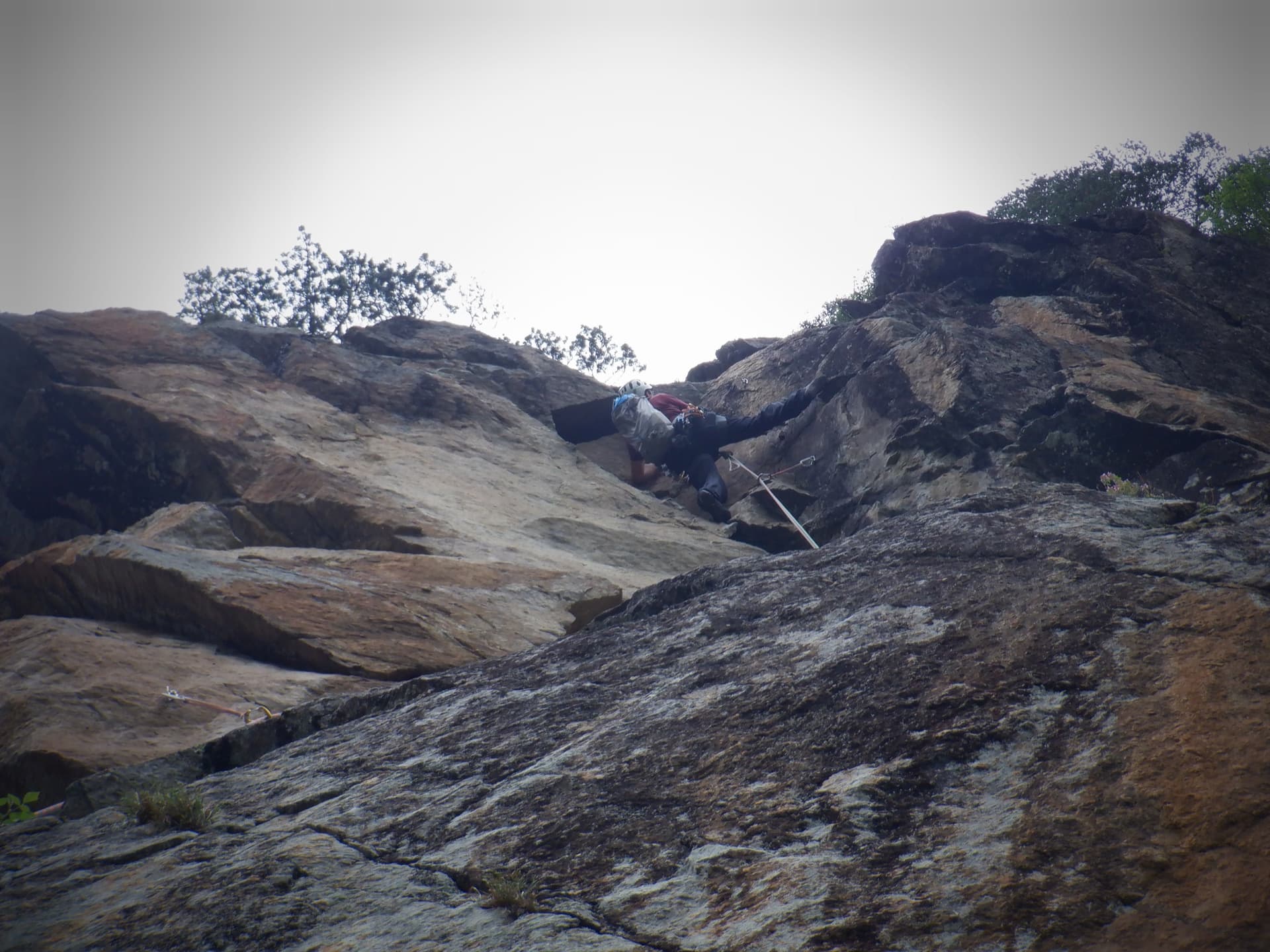
A demanding line through the huge roof zone of the Burgsteiner Wand above Längenfeld. Eight pitches with two at 7a, very steep, and a serious abseil descent. Only the first two pitches are a little loose.

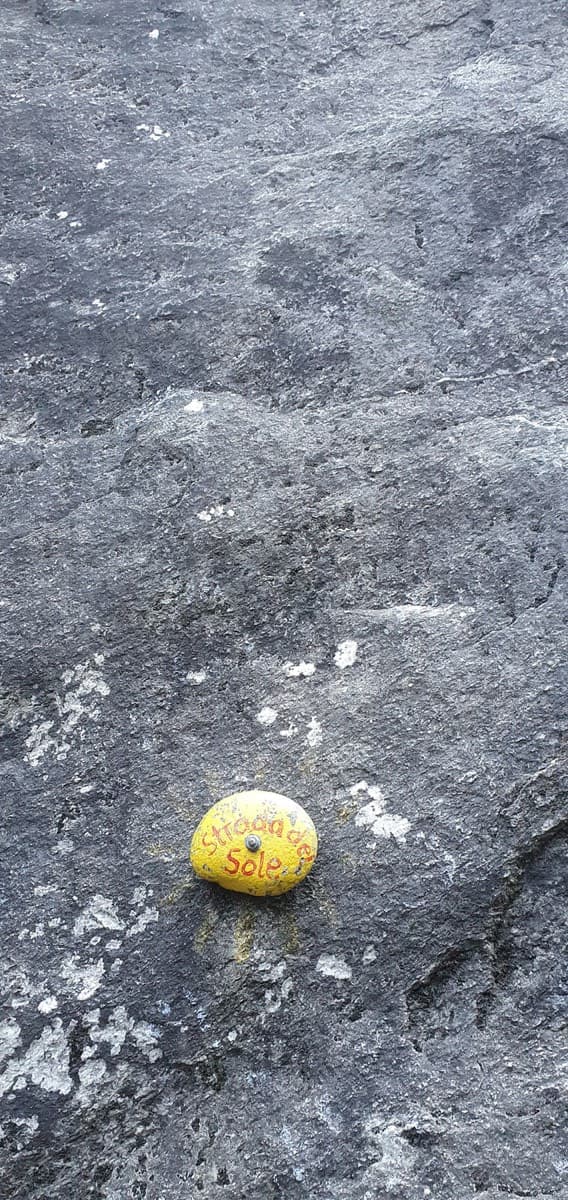
A view of the region, not this route's wall. The painted stone that marks the start of Strada del Sole at the foot of the NösslachwandPhoto: sissssou · CC BY-SA 3.0

Photo

A view of the region, not this route's wall. The painted stone that marks the start of Strada del Sole at the foot of the NösslachwandPhoto: sissssou · CC BY-SA 3.0
Hardest pitch
7a
Pitches
8
Length
225 m
Approach
15 min
Aspect
W
West-facing
Rope
2×60 m
Read before you go

Bolted and in good condition by both sources, but 7a with a high obligatory grade, loose opening pitches and a steep, committing abseil descent.

The route

Overview

The hardest route in this batch and at the top of the atlas range: eight pitches on steep gneiss with 7a on pitches 3 and 8 and an obligatory grade of about 6c (UIAA 7). It finds a way through the big roofs of the Burgsteiner Wand, five minutes from the main road. The two easy opening pitches are somewhat loose; above that the rock is good. Climbers Paradise stresses that you must be completely secure abseiling in extremely steep terrain. The start is about 15 m left of Schwalbennest.

The climbing

Pitch by pitch

Pitches of Schwarze Mauer
PitchGradeLengthNotes
P13c30 mEasy and somewhat loose.
P25a30 mStill a little loose.
P37a20 mThe first hard pitch.
P46a30 mNo pitch description in the free sources; the grade and length are from the Climbers Paradise table.
P56a+15 mNo pitch description in the free sources; the grade and length are from the Climbers Paradise table.
P66b40 mNo pitch description in the free sources; the grade and length are from the Climbers Paradise table.
P76a30 mOne of the flatter upper pitches, mossy and very unpleasant when wet.
P87a30 mThe second 7a pitch. A harder left-hand exit, the 'Schwaiger-Projekt' (UIAA 7+), is an alternative finish mentioned by bergsteigen.com.

Getting there

Approach

To the parking

Leave the A12 at the Ötztal exit and drive about 23 km up the valley to Längenfeld. From the roundabout at the far end of the village continue about 1 km towards Sölden and, below the Burgsteiner Wand (the big cliff left of the road), turn right towards the hamlet of Astlehn, signed for the Reinhard Schiestl via ferrata car park. Park in the car park before the first houses, not along the narrow road. By public transport, take the train to Ötztal-Bahnhof and the bus to Längenfeld.

On foot · about 15 min

Cross the main road and, right by the bus stop, cross the stream on a bridge. Follow the foot of the wall left to the via ferrata. Pass the start of the via ferrata and climb over a gate into a meadow. Immediately after the gate go up right on a path through bushes to the wall, and use the fixed rope to reach the start, about 15 m left of Schwalbennest. About 15 minutes.

Map of the walk-in

  • Route base
  • Parking

Loading map

The point marks the base of the route.

Coordinates · route base

47.05997, 10.96589

Parking

47.05800, 10.96292

Via ferrata car park at the Astlehn turn-off

Point from bergsteigen.com map marker (route start, approximate)

For your phone or watch

Download GPX

Contains the route point and parking. Opens in most mapping apps and GPS watches.

Points are compiled from published sources, with the precision stated above. They were not surveyed on the ground: check them against a current topo.

Getting down

Descent

Abseil from the end of the route with 60 m double ropes, following the topo. From the second-last belay abseil to a fixed rope and clip into it, then continue under a big roof and on down to the start. Allow about an hour.

Retreat

Bailing off the route

Bail with caveats

Abseiling the route is the normal descent, so the belays are rigged. The terrain is very steep with big roofs, a fixed rope has to be clipped on the way down, and Climbers Paradise insists on complete mastery of abseiling in extremely steep ground. Retreat from part-way up should follow the same line but is not described.

Retreat from
From the top by the described abseil line; from lower belays not documented.
Point of no return
Not documented. In the roof zone an abseil may hang free of the rock, so reaching the next belay can need a swing (inferred from the terrain).
Carry
Two 60 m ropes, prusiks and a lanyard for the fixed rope.
Basis
Part stated, part inferredThe abseil descent, rope length and fixed rope are stated by Climbers Paradise and bergsteigen.com; retreat from lower belays is inferred.

Partly inferred from the route facts

Safety

Hazards

  • The abseil descent is through very steep, partly overhanging ground and includes a fixed rope you must clip into; it is not a place to learn.
  • The first two pitches are somewhat loose.
  • Obligatory climbing of about 6c: you cannot aid your way past everything.
  • The neighbouring route Schwalbennest was closed for rebolting work in autumn 2023 and Climbers Paradise still showed it as closed until further notice when checked in October 2026. Check locally whether any restriction affects the shared approach.

Sun and weather

Conditions

West to north-west facing between about 1200 and 1380 m; Climbers Paradise gives May to October. Wait for two dry days: when wet, the flatter upper pitches are extremely unpleasant because of moss.

Usual season · May to Oct

Sun on the wall · W-facing

Working out the sunlit hours for this month.

  • January: not yet worked out
  • February: not yet worked out
  • March: not yet worked out
  • April: not yet worked out
  • May (usual season): not yet worked out
  • June (usual season): not yet worked out
  • July (usual season): not yet worked out
  • August (usual season): not yet worked out
  • September (usual season): not yet worked out
  • October (usual season): not yet worked out
  • November: not yet worked out
  • December: not yet worked out

Sun on the wallDaylight, wall in shade● Usual season

Estimated from the wall's aspect only. Ignores surrounding terrain, gullies and the wall's exact shape. Clock times are local to the wall (Central European time), for the 15th of each month.

Monthly climate averages for Ötztal, 1991-2020
MeasureJanFebMarAprMay (usual season)Jun (usual season)Jul (usual season)Aug (usual season)Sep (usual season)Oct (usual season)NovDec
Mean daily high °C−025813171919161251
Mean daily low °C−10−8−4−1379961−5−9
Rain days 1 mm or more121215162022222115131313

● marks the usual climbing season. Averages for 1991-2020 at about 1267 m. Area climate from Open-Meteo reanalysis. Temperatures are adjusted to the height of the crag; rain comes from a grid cell of about 10 to 25 km, and summer highs on sea cliffs can read a few degrees low. The wall and valley can differ. Data: Open-Meteo, CC BY 4.0.

What to carry

Gear

12 quickdraws (Climbers Paradise says about 15), two 60 m ropes, helmet. bergsteigen.com notes you can climb on a single rope but the abseils work better with doubles.

Checklist

Quickdraws
12
Rope
2×60 m
Helmet
One each
Abseil device and prusik
The descent or the retreat involves abseiling

Derived from the route data; check it against a current topo

From climbers

Reader reports

Reader reports are not being collected yet. Until they are, check a current topo and the local club or guidebook publisher for recent changes to Schwarze Mauer.

Worth knowing

Tips

  • Climbers Paradise allows 4 hours for the climbing, bergsteigen.com 3 hours.
  • Linas Traumreise (6c) on the same wall is the better choice if 7a is at your limit.

Open questions

Where sources disagree

  • Grade: 7a (6c obligatory) on Climbers Paradise; UIAA 8 (7 obligatory) on bergsteigen.com, which converts to about 7a to 7a+. No source says the hard pitches go at A0.
  • Quickdraws: 12 on bergsteigen.com, about 15 on Climbers Paradise.
  • Climbing time: 3 hours against 4 hours.
  • Aspect: west on Climbers Paradise, west to north-west on bergsteigen.com.

Provenance

Sources

Same area

More in Ötztal

All routes in Ötztal
The painted stone that marks the start of Strada del Sole at the foot of the Nösslachwand

Austria · Ötztal

Strada del Sole

The best-known long route at Nösslach: steep, well-travelled gneiss slabs low down, a zigzag through the big roof zone in the middle, and more slab to finish. Two pitches of about 6b to 6b+, the rest around 6a.

6b+7 pitches200 m
A view of the region, not this route's wall. The painted stone that marks the start of Strada del Sole at the foot of the Nösslachwand

Austria · Ötztal

Caipirinha

A mix of slabs and steep, juggy passages in the Sonnenblume sector, mostly around 5b to 5c+. The one hard move is a small roof on pitch 4 (6b+), which goes easily on aid.

6b+5 pitches170 m

A view of the region, not this route's wall. The painted stone that marks the start of Strada del Sole at the foot of the Nösslachwand

Austria · Ötztal

Linas Traumreise

Steep, exposed gneiss left of the Reinhard Schiestl via ferrata, finding a way between huge roofs. The cruxes are the steep slabs of pitches 5 and 6 (6c). Stiffly graded, and the abseil descent is not for everyone.

6c8 pitches195 m

Just below the hard moves of the final corner on Südwind, Nösslachwand

Austria · Ötztal

Südwind

Five pitches of juggy gneiss wall and arêtes on the left side of the Nösslachwand, finishing up a slightly overhanging corner that you bridge. Not very demanding but athletic for the grade, with the crux right at the top.

5c+5 pitches150 m

Around 7a · about 8 pitches

Similar elsewhere

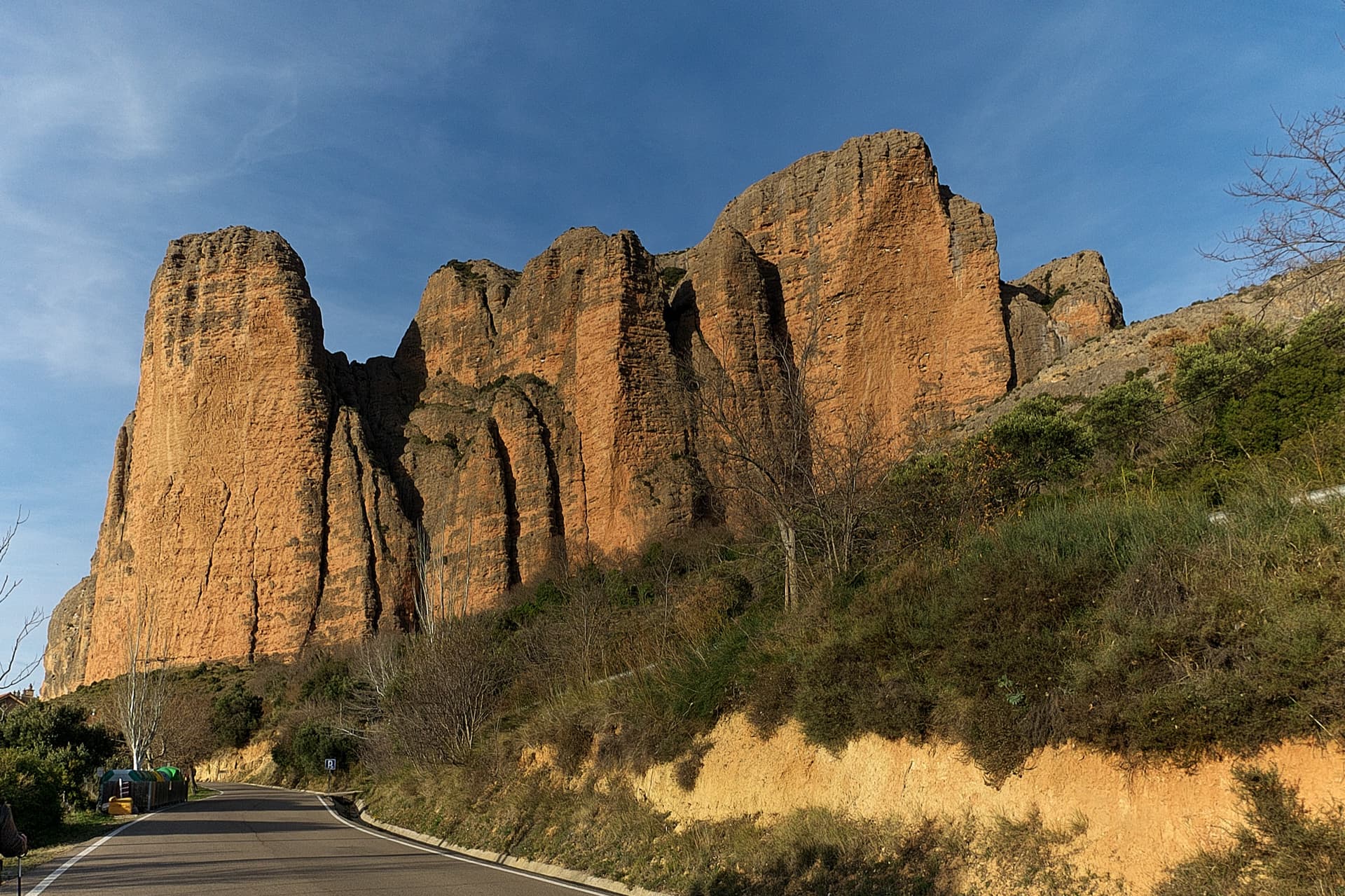
The south faces of the main Riglos wall in low sun, seen from the road into the village: Mallo Pisón on the left and the wall running right towards Mallo Frechín and La Visera at the right-hand end.

Spain · Riglos & Agüero (Mallos)

La Fiesta de los Bíceps

The famous overhanging line up the left side of the Visera, following the white chalk stripe you can see from the village. A polished, technical 7a pitch low down, then five pitches of ever steeper climbing on huge cobbles where the difficulty is staying un-pumped. Bolts are sound but spaced, and above the third belay the only practical way off is the top.

7a8 pitches250 m

Read the cautionsCommitting

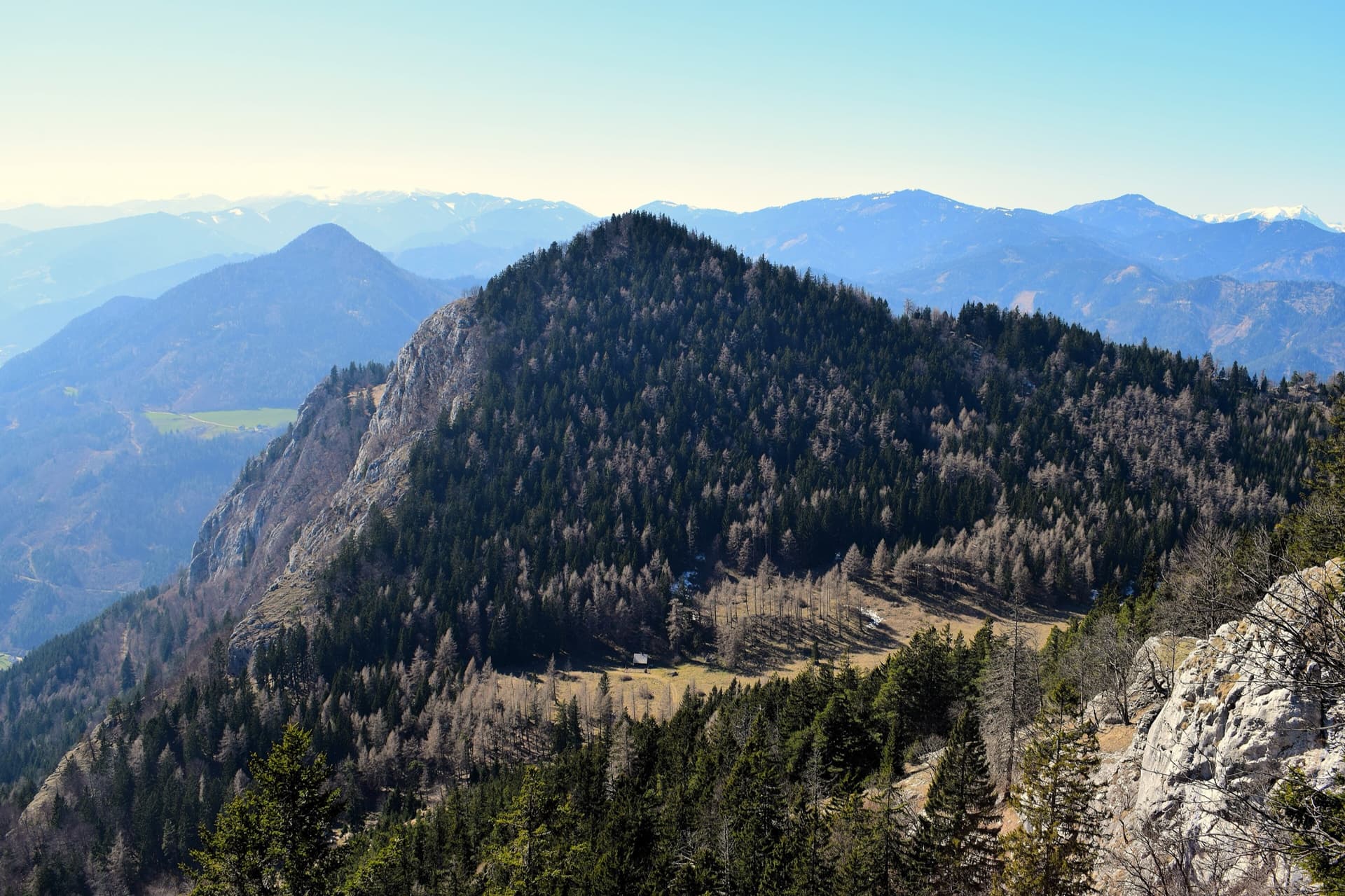
The Röthelstein seen from a spur of the Rote Wand, looking west across the Bucheben saddle; Plattenzauber is on the slabs of the south-east spur and the descent returns over this saddle

Austria · Grazer Bergland

Plattenzauber

Technical slab climbing up the central slab shield of the Röthelstein's south-east spur, getting better the higher you go. The hardest moves are UIAA 8- and about 6+/7- is obligatory, so this is the hard option on the spur, but the bolts are stainless and close together.

7a8 pitches230 m

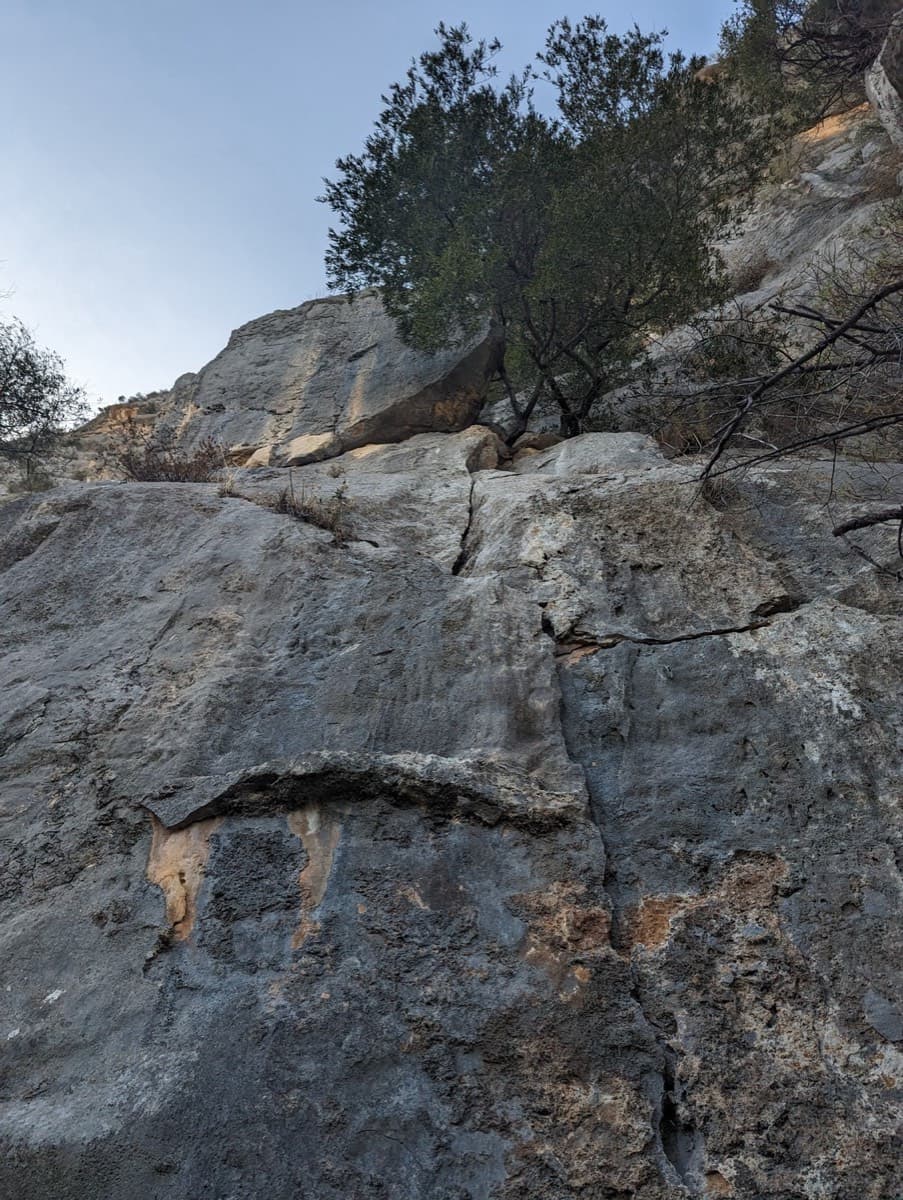
The start of Alfredo Alfredo at the foot of the east face of Monte Oddeu

Italy · Sardinia

Alfredo Alfredo

Two pitches of bridging up a 60 m corner hung with tufas and stalactites (6c+, 6c), then grey water-drop walls and a short roof at 7a that goes in three moves of aid. Seven pitches of varied climbing on perfect, unpolished rock.

7a7 pitches220 m

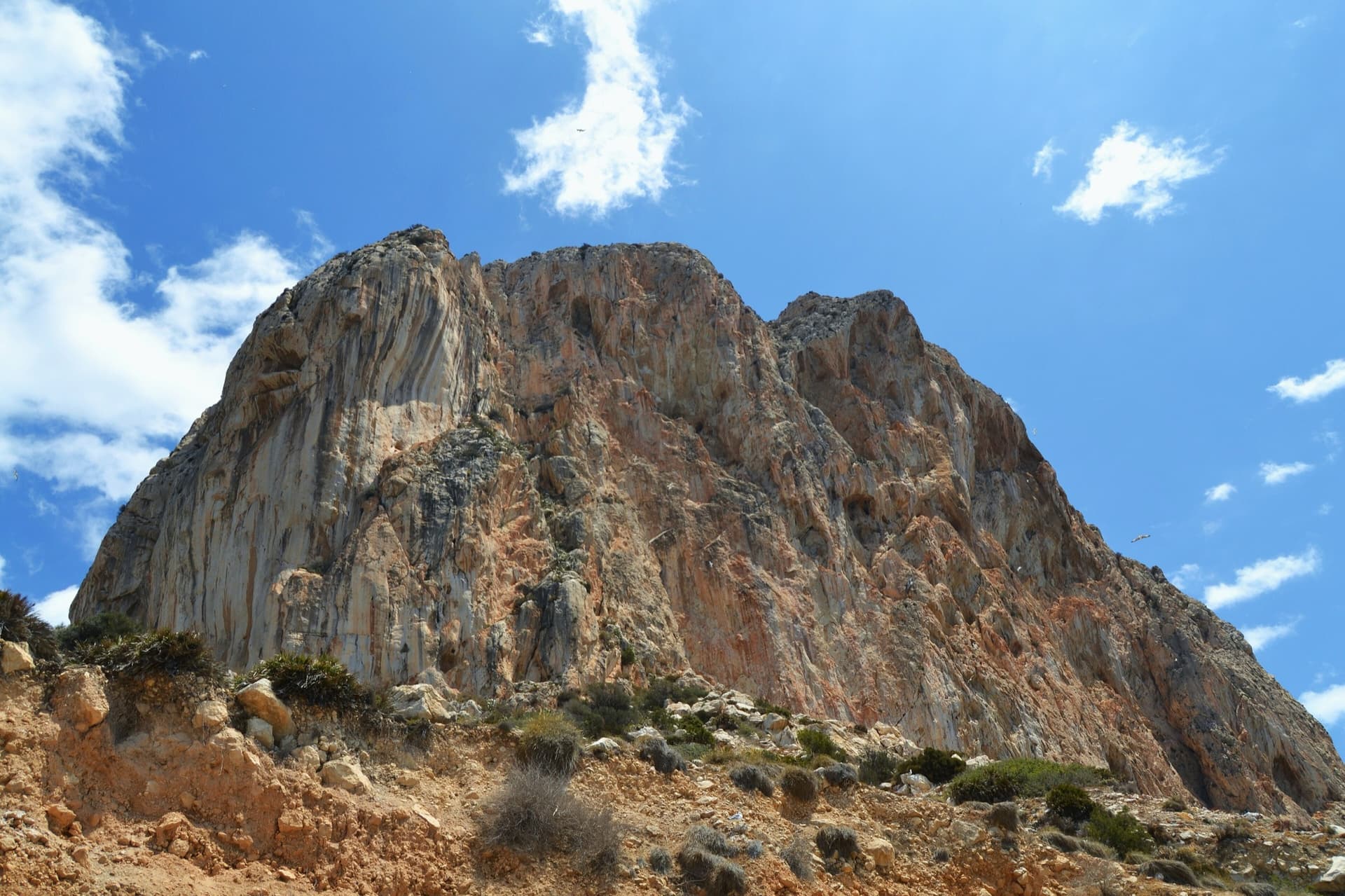
The south face of the Peñón de Ifach seen from the foot of the wall, Calpe. Mare Nostrum takes the right-hand side of this face.

Spain · Costa Blanca (Peñón de Ifach)

Mare Nostrum

Nine steep pitches up the wildly sculpted right side of the south face, overhanging almost throughout. Two long 7a pitches open the route and a third comes near the top, and even the 6a+ pitches are athletic. The rock is covered in holds and much less polished than the classics to the left.

7a9 pitches310 m

Read the cautions

Compiled from published sources and last verified October 2026. Bolts, anchors and access change. Climbing is dangerous and you are responsible for your own decisions: check a current topo and read the disclaimer.