Multipitch Atlas

Sonnenblume

Nösslachwand, Längenfeld (Au) · Ötztal · Austria

Bail with caveatsBolting confidence: medium

The multipitch classic of the Nösslachwand and the easiest line on its west face: seven short pitches of gneiss slab beside a water streak, improving with height, with a few steep wall moves and an arête crux. Polished in places.

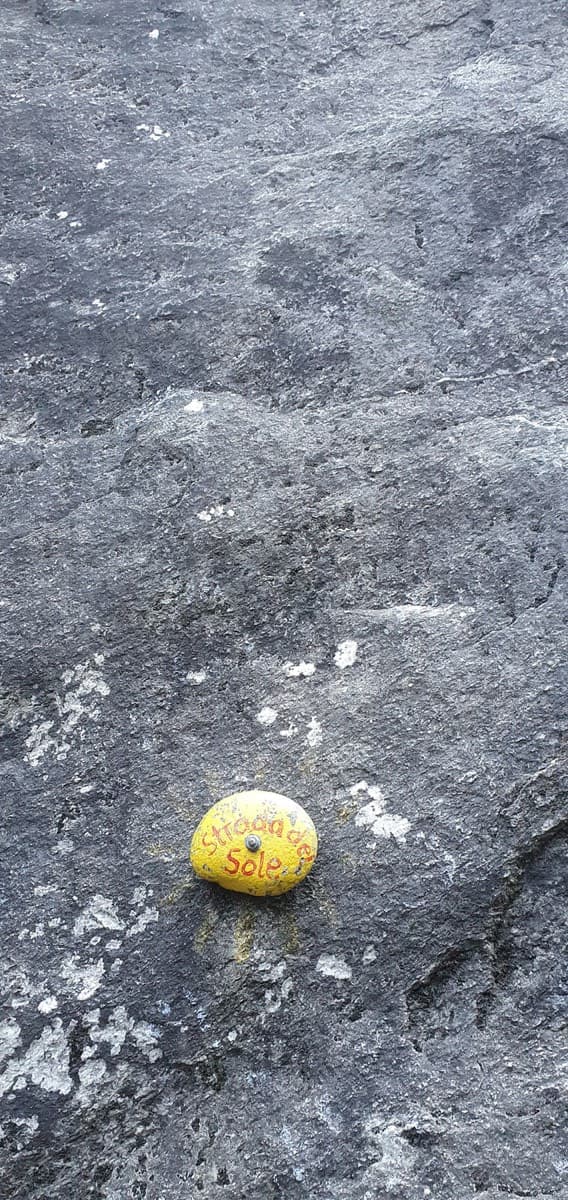
A view of the region, not this route's wall. The painted stone that marks the start of Strada del Sole at the foot of the NösslachwandPhoto: sissssou · CC BY-SA 3.0

Photo

A view of the region, not this route's wall. The painted stone that marks the start of Strada del Sole at the foot of the NösslachwandPhoto: sissssou · CC BY-SA 3.0
Hardest pitch
5c+
Pitches
7
Length
160 m
Approach
15 min
Aspect
SW
South-west-facing
Rope
1×60 m

The route

Overview

Seven pitches of slab climbing on solid gneiss, never harder than about 5c, right next to a water streak. The climbing improves as you gain height, and the best slabs are on pitches 6 and 7. Because it is the easiest route on the wall it sees a lot of traffic and some holds are polished. Approach and descent are easy to find. The lower pitches are often damp, and bergsteigen.com says the wet patches can usually be climbed without trouble.

The climbing

Pitch by pitch

Pitches of Sonnenblume
PitchGradeLengthNotes
P15a30 mSlab climbing.
P25a15 mNo pitch description in the free sources; the grade and length are from the Climbers Paradise table.
P35b20 mMore slabs.
P45c30 mOne of the two hardest pitches; the crux of the route is at an arête (bergsteigen.com photo caption, exact pitch not stated).
P55c25 mNo pitch description in the free sources; the grade and length are from the Climbers Paradise table.
P65b15 mFine slabs.
P75a20 mPerfect slabs to a ledge with the route book.

Getting there

Approach

To the parking

Leave the A12 at the Ötztal exit and drive up the valley through Umhausen. After the village the valley narrows; where it widens again, at Au just before Längenfeld, a small sewage works with a chapel stands on the left. Park on the signed gravel car park on the bank of the Ötztaler Ache, opposite the works; do not park at the chapel or the recycling yard. By public transport, take the train to Ötztal-Bahnhof and the bus to Au (Längenfeld).

On foot · about 15 min

From the car park go through the cycle-path underpass to the sewage works on the other side of the road, then left on the hiking path towards Wiesle. About 50 m after a wayside shrine, at a clearing, a clear track marked by a small cairn branches right to the foot of the wall and a rock platform. Climb onto the platform, pass the sunflower stone and cross to the other side of the water streak, where the route starts at two bolts. Camptocamp mentions a fixed rope to reach the start. About 15 to 20 minutes.

Map of the walk-in

  • Route base
  • Parking

Loading map

The point marks the base of the route.

Coordinates · route base

47.10930, 10.95380

Parking

47.10560, 10.95314

Signed car park by the Ötztaler Ache at Au

Point from bergsteigen.com map marker (route start, approximate)

For your phone or watch

Download GPX

Contains the route point and parking. Opens in most mapping apps and GPS watches.

Points are compiled from published sources, with the precision stated above. They were not surveyed on the ground: check them against a current topo.

Getting down

Descent

From the route book go right along a ledge at first, then after a step back left, so that you walk back above the exit. Follow the orange marks to the hiking path and take it back to the car park, about 30 minutes.

Retreat

Bailing off the route

Bail with caveats

Every belay has two bolts and a chain and the pitches are 15 to 30 m, so abseiling belay to belay on a 60 m rope should work (inferred). No source describes a retreat, and the normal descent is on foot.

Retreat from
Any belay (inferred from the chain belays).
Point of no return
None documented.
Carry
A 60 m rope.
Basis
Inferred from the route factsChain belays and pitch lengths are stated by Climbers Paradise; no source mentions abseiling.

Partly inferred from the route facts

Safety

Hazards

  • Often wet at the bottom because of the water streak; wait for a dry day.
  • Polished rock on the most-climbed passages.

Sun and weather

Conditions

West to south-west facing gneiss between about 1200 and 1370 m. Climbers Paradise gives June to September as the best season. The routes sit beside a water streak, so the lower pitches are often damp: start only after a dry day. Climbers Paradise says the west-facing Roxette sector of the same wall gets the sun from about 15:00 in summer, so expect shade in the morning here too (inferred).

Usual season · Jun to Sep

Sun on the wall · SW-facing

Working out the sunlit hours for this month.

  • January: not yet worked out
  • February: not yet worked out
  • March: not yet worked out
  • April: not yet worked out
  • May: not yet worked out
  • June (usual season): not yet worked out
  • July (usual season): not yet worked out
  • August (usual season): not yet worked out
  • September (usual season): not yet worked out
  • October: not yet worked out
  • November: not yet worked out
  • December: not yet worked out

Sun on the wallDaylight, wall in shade● Usual season

Estimated from the wall's aspect only. Ignores surrounding terrain, gullies and the wall's exact shape. Clock times are local to the wall (Central European time), for the 15th of each month.

Monthly climate averages for Ötztal, 1991-2020
MeasureJanFebMarAprMayJun (usual season)Jul (usual season)Aug (usual season)Sep (usual season)OctNovDec
Mean daily high °C−025813171919161251
Mean daily low °C−10−8−4−1379961−5−9
Rain days 1 mm or more121215162022222115131313

● marks the usual climbing season. Averages for 1991-2020 at about 1267 m. Area climate from Open-Meteo reanalysis. Temperatures are adjusted to the height of the crag; rain comes from a grid cell of about 10 to 25 km, and summer highs on sea cliffs can read a few degrees low. The wall and valley can differ. Data: Open-Meteo, CC BY 4.0.

What to carry

Gear

12 quickdraws (Climbers Paradise says 15), a 60 m single or double rope, helmet.

Checklist

Quickdraws
12
Rope
1×60 m
Helmet
One each

Derived from the route data; check it against a current topo

From climbers

Reader reports

Reader reports are not being collected yet. Until they are, check a current topo and the local club or guidebook publisher for recent changes to Sonnenblume.

Worth knowing

Tips

  • Träumerei, a little further down the wall foot, is the natural harder follow-up.
  • bergsteigen.com allows 3 hours for the climbing, Climbers Paradise 1 hour 45 minutes.
  • A bergsteigen.com contributor recommends it for hot days.

Open questions

Where sources disagree

  • Grade: 5c on Climbers Paradise (5b obligatory), 5c+ on camptocamp, UIAA 6 on bergsteigen.com with two pitches of 6. 5c+ is used for the card; the pitch list keeps the Climbers Paradise values.
  • Pitches: seven on Climbers Paradise and in the bergsteigen.com photos; the draft camptocamp page lists only four.
  • Climbing time: 3 hours on bergsteigen.com against 1 hour 45 minutes on Climbers Paradise.

Provenance

Sources

Same area

More in Ötztal

All routes in Ötztal
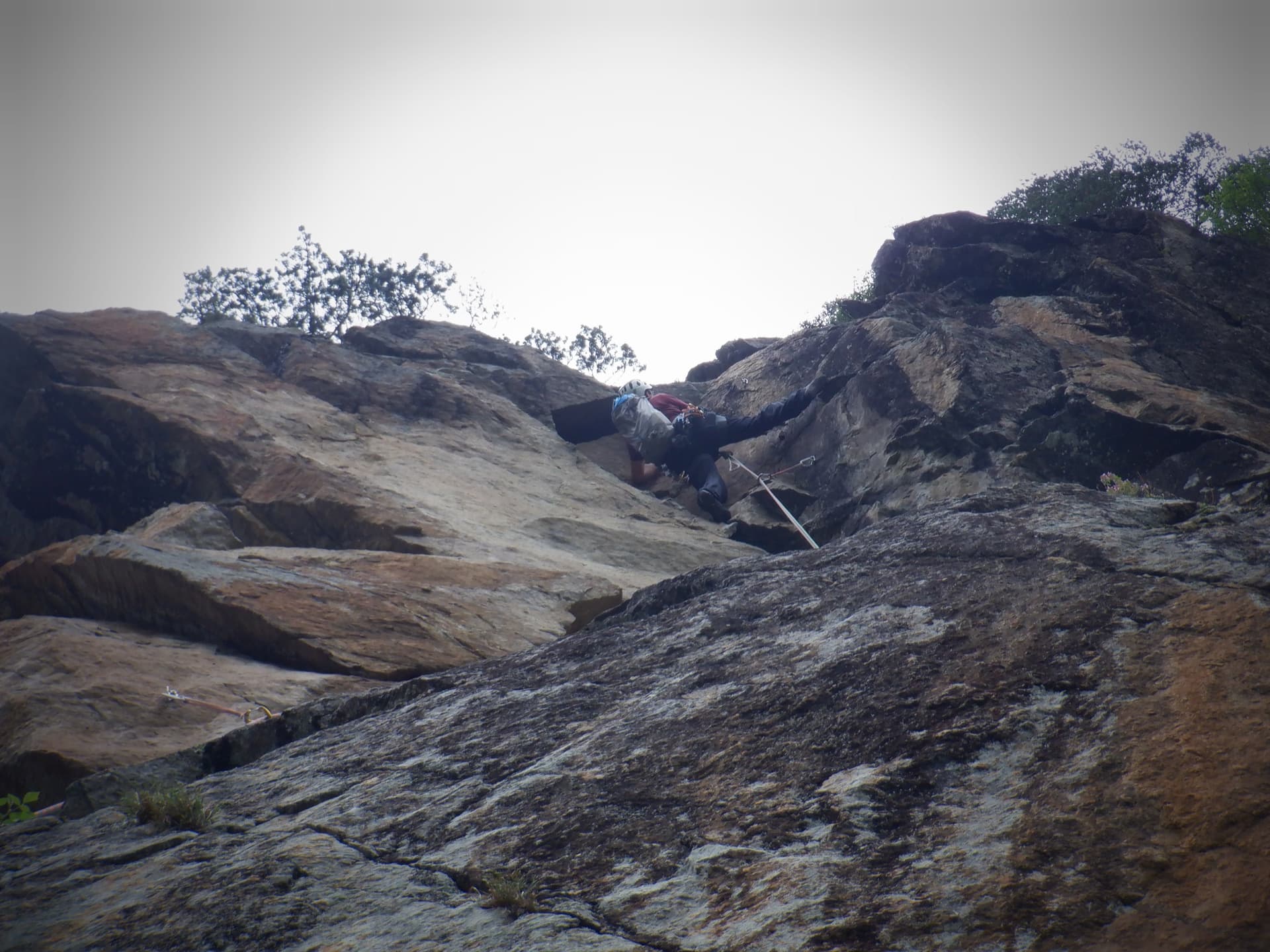
The painted stone that marks the start of Strada del Sole at the foot of the Nösslachwand

Austria · Ötztal

Strada del Sole

The best-known long route at Nösslach: steep, well-travelled gneiss slabs low down, a zigzag through the big roof zone in the middle, and more slab to finish. Two pitches of about 6b to 6b+, the rest around 6a.

6b+7 pitches200 m
A view of the region, not this route's wall. The painted stone that marks the start of Strada del Sole at the foot of the Nösslachwand

Austria · Ötztal

Caipirinha

A mix of slabs and steep, juggy passages in the Sonnenblume sector, mostly around 5b to 5c+. The one hard move is a small roof on pitch 4 (6b+), which goes easily on aid.

6b+5 pitches170 m

A view of the region, not this route's wall. The painted stone that marks the start of Strada del Sole at the foot of the Nösslachwand

Austria · Ötztal

Linas Traumreise

Steep, exposed gneiss left of the Reinhard Schiestl via ferrata, finding a way between huge roofs. The cruxes are the steep slabs of pitches 5 and 6 (6c). Stiffly graded, and the abseil descent is not for everyone.

6c8 pitches195 m

Just below the hard moves of the final corner on Südwind, Nösslachwand

Austria · Ötztal

Südwind

Five pitches of juggy gneiss wall and arêtes on the left side of the Nösslachwand, finishing up a slightly overhanging corner that you bridge. Not very demanding but athletic for the grade, with the crux right at the top.

5c+5 pitches150 m

Around 5c+ · about 7 pitches

Similar elsewhere

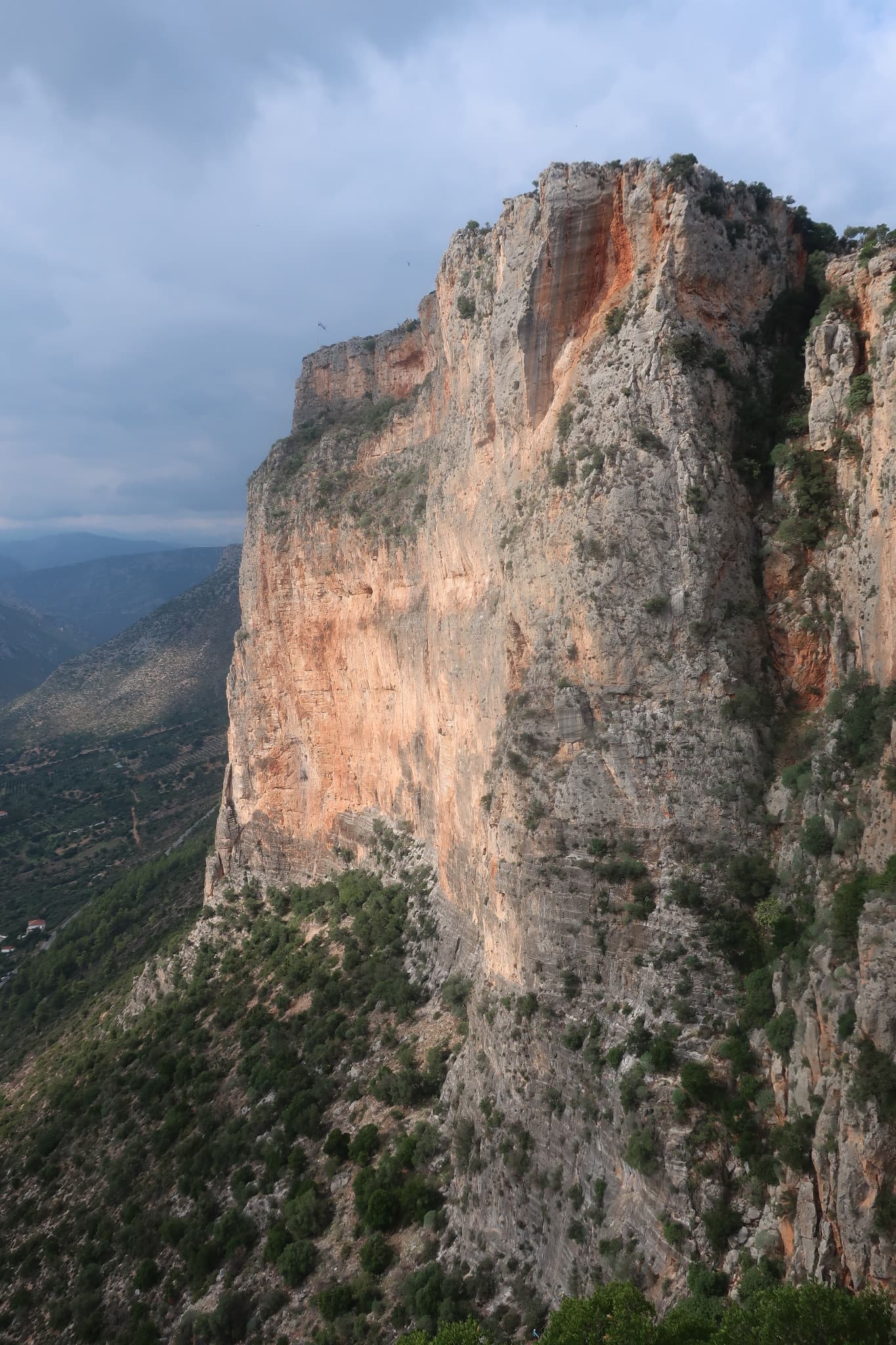
The orange pillar at the right end of the main Kokkinovrachos wall, Leonidio.

Greece · Leonidio & Kyparissi

Mignonette

The easiest multi-pitch on Kokkinovrachos, following the easy-angled arête and pillar above Leonidio, with tufas, crimpy walls and a great view of the town. Rock is good apart from the scrappy P2–P3.

5c+7 pitches175 m

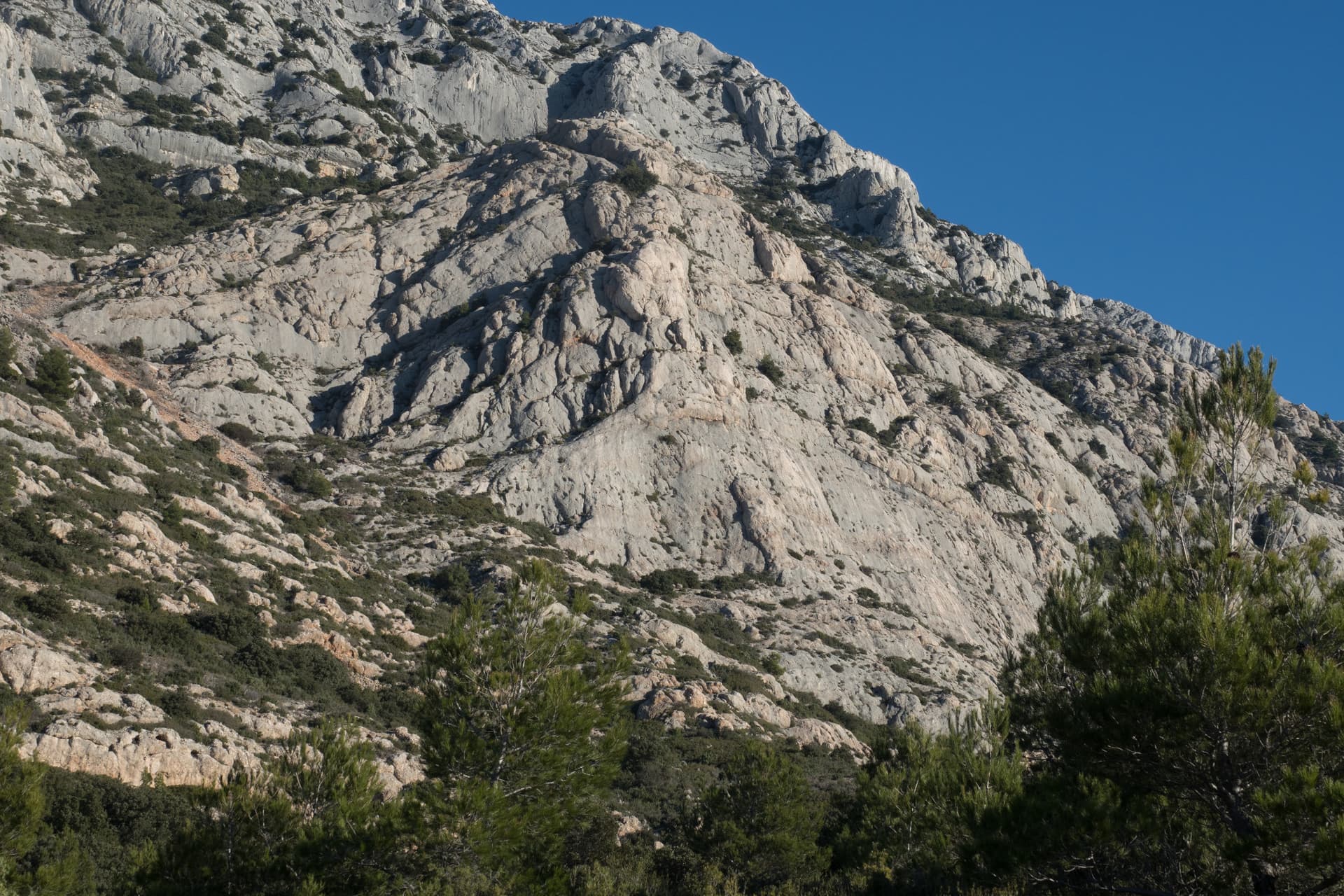
Le Socle de la Carrière, the pale limestone plinth at the foot of the south face of Sainte-Victoire.

France · Sainte-Victoire

La Marbrière

A sunny winter route on Sainte-Victoire's south-side socle. The highlight is a beautiful marbled slab on L5, and a stiff move off the last belay can be aided on a sling. Bring long slings to manage rope drag around the trees.

5c+7 pitches180 m

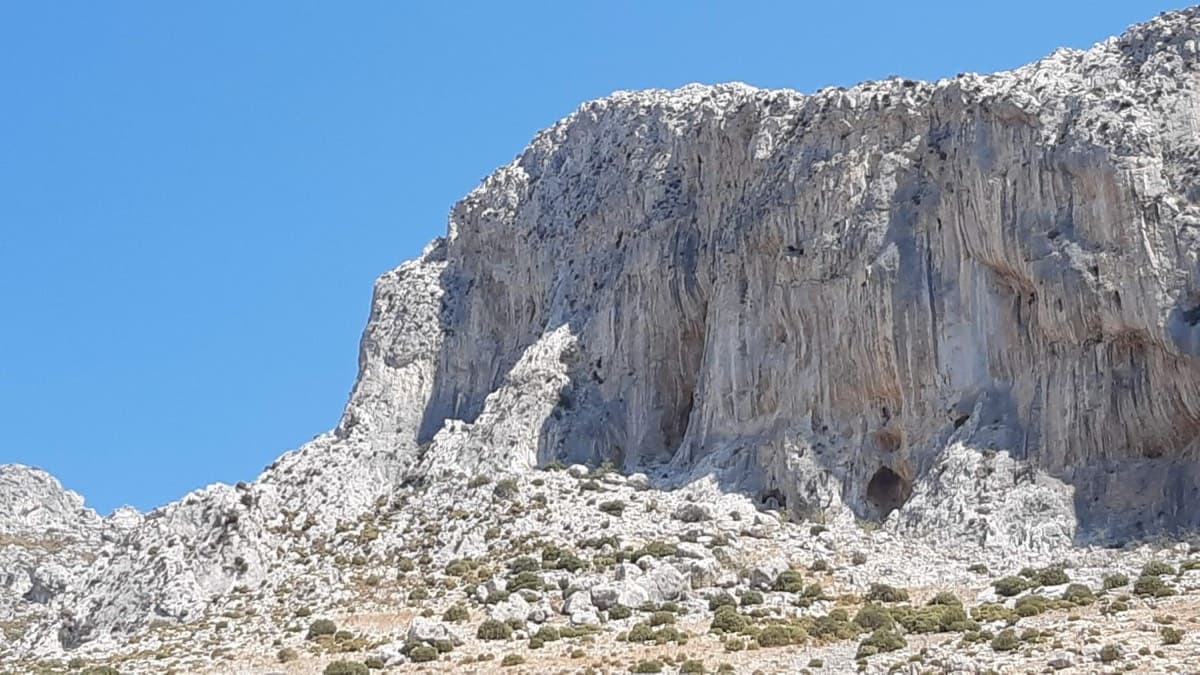
The cliff above the Grande Grotta: 3 Stripes starts on the second-to-last spur on the left and finishes up the shaded wall

Greece · Kalymnos & Telendos

3 Stripes

Kalymnos's best-known introduction to multi-pitch: a series of steps and slabs, always with plenty of holds, finishing on top of the Grande Grotta. The upper pitches feel very exposed. Real pitch lengths are shorter than the guidebook says (20–25 m).

5c+6 pitches175 m

Committing

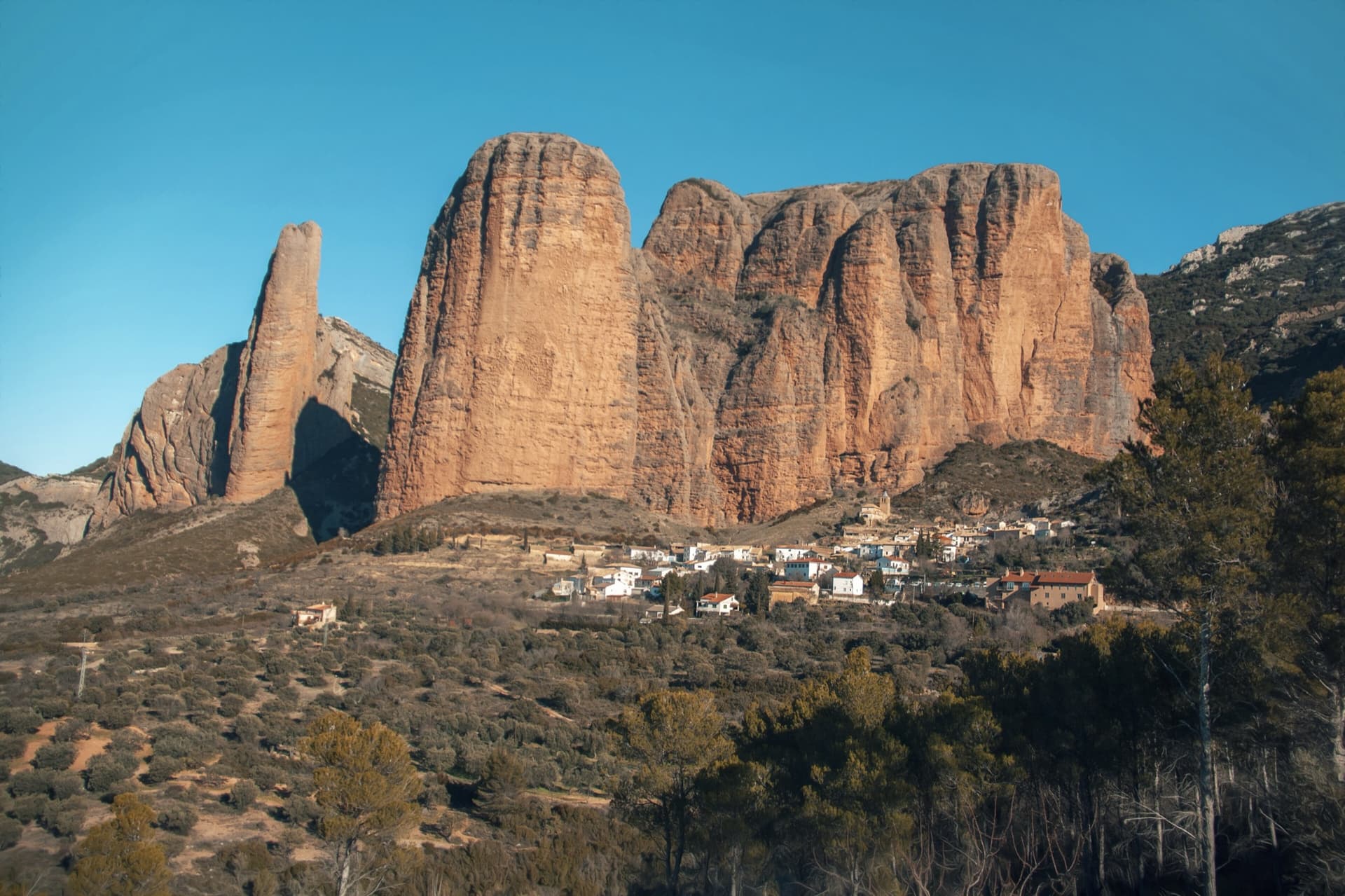
The classic view of Riglos from the south-west: the slender pinnacle of El Puro on the left, the great dome of Mallo Pisón beside it, and the main wall running right to La Visera above the village.

Spain · Riglos & Agüero (Mallos)

Espolón del Adamelo

This is the gentlest way to sample Riglos. Polished pockets and two bulging 'panzas' lead to a 6a crux that can be pulled through on the bolts (A0). The upper spur is easy, and the Pisón towers loom close by.

6a7 pitches175 m

Read the cautions

Compiled from published sources and last verified October 2026. Bolts, anchors and access change. Climbing is dangerous and you are responsible for your own decisions: check a current topo and read the disclaimer.