Multipitch Atlas

Tour für Abenteurer

Treffauer – south-west face plinth (Multerkarwand) · Wilder Kaiser · Austria

Bail with caveatsBolting confidence: high

Also listed as Sappl-Zott. The heart of the route is a deep chimney that takes you about 50 m inside the mountain, well bolted and enjoyable where chimneys usually are not. Slab and wall pitches before and after, a traverse and a big flake on the ridge make a varied eight-pitch outing, finished by an airy abseil.

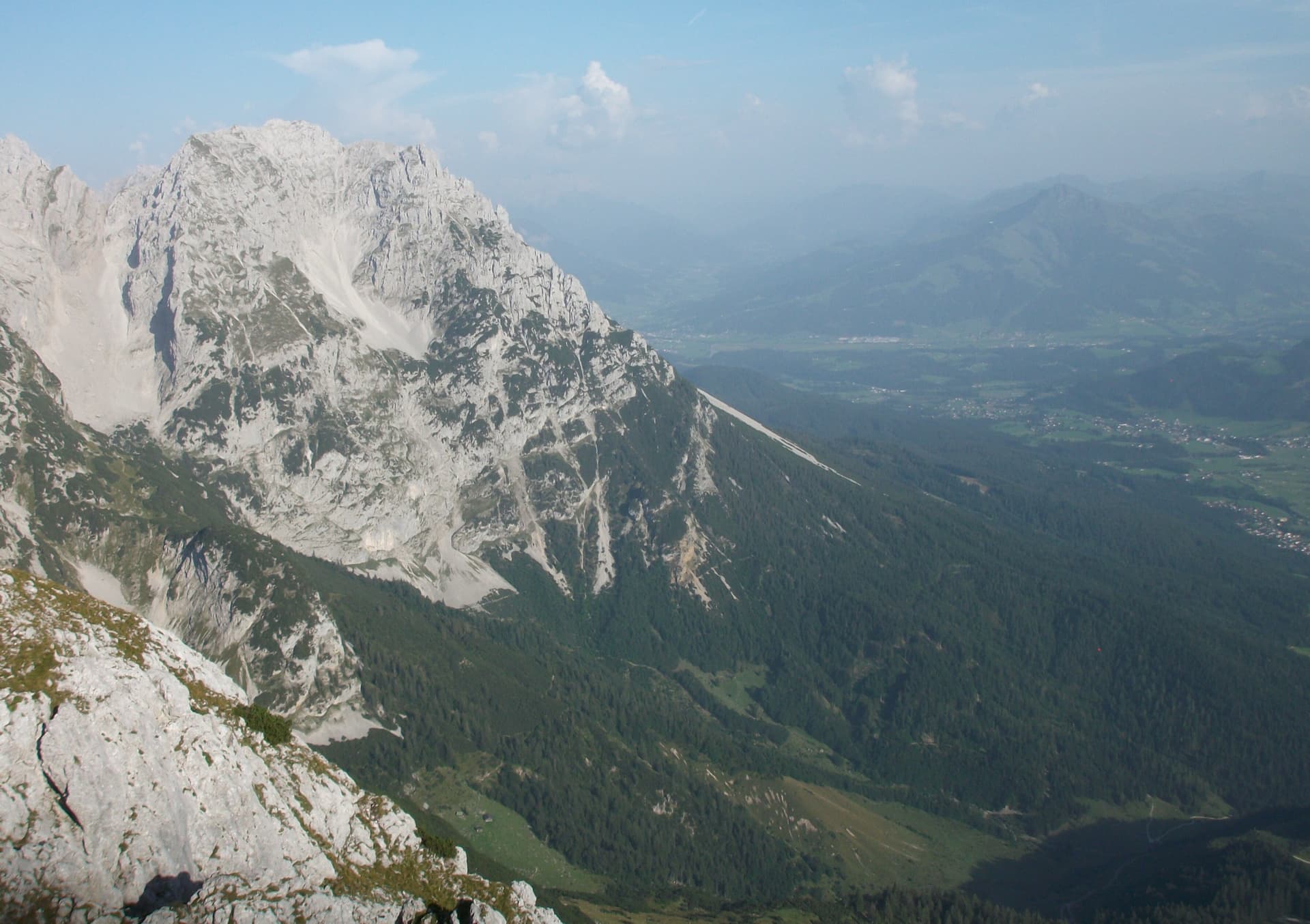
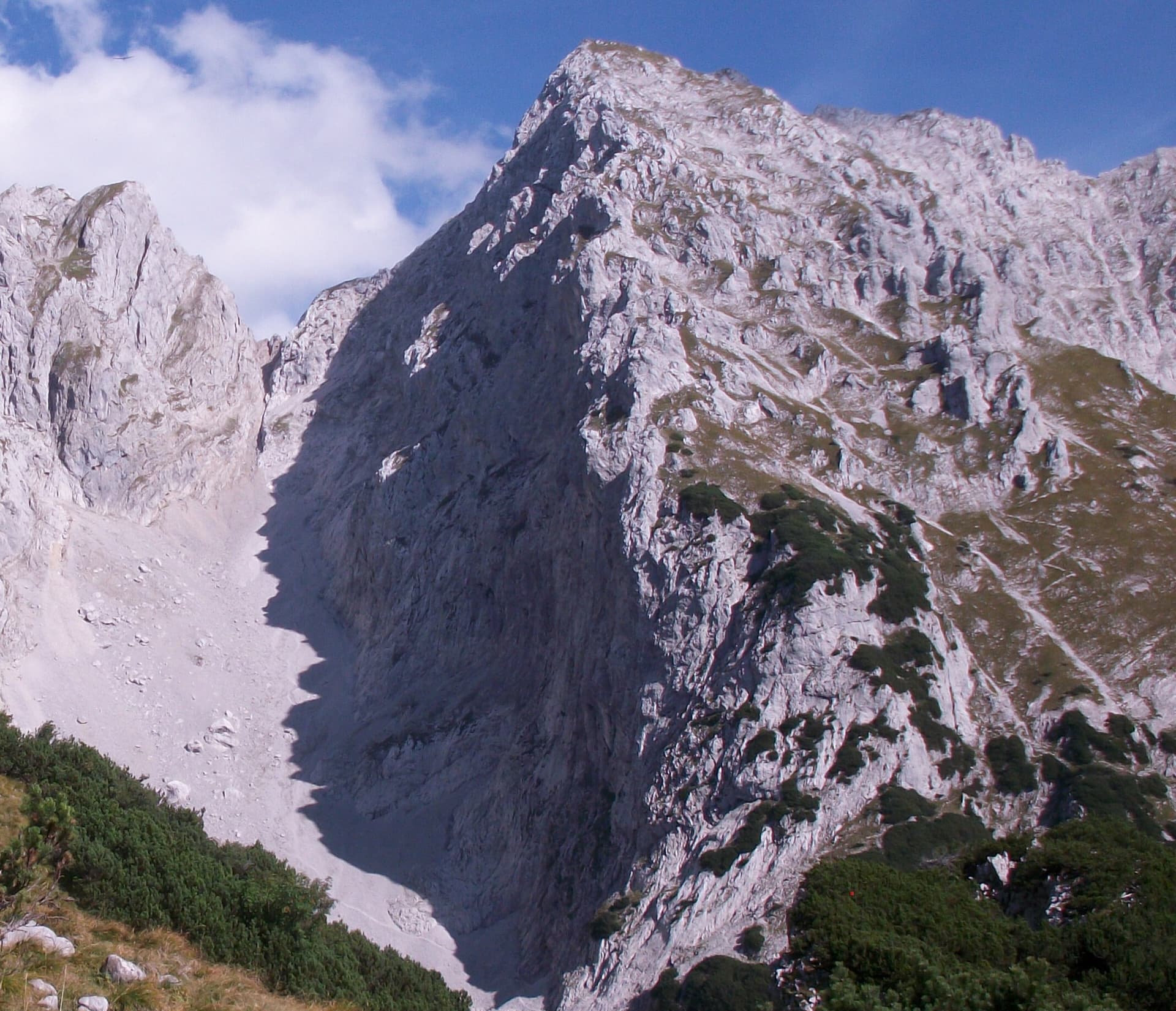
A view of the region, not this route's wall. The Schneekar cirque and the north side of the Treffauer in the Wilder Kaiser; the route climbs the lower rocks of this flank, but the exact line is not marked.Photo: Stefan.straub · CC BY-SA 4.0

Photo

A view of the region, not this route's wall. The Schneekar cirque and the north side of the Treffauer in the Wilder Kaiser; the route climbs the lower rocks of this flank, but the exact line is not marked.Photo: Stefan.straub · CC BY-SA 4.0
Hardest pitch
5c+
Pitches
8
Length
295 m
Approach
90 min
Aspect
SW
South-west-facing
Rope
2×60 m

The route

Overview

An unusual route up the middle of the Multerkarwand, the south-west plinth of the Treffauer, opened by Marcus Sappl and Hans Zott in August 2010. You can see the chimney from the approach, and it forms the centre of the climb: two pitches deep inside a cleft, protected by bolts at close intervals. The rest is slab and wall climbing at UIAA 4 to 5+, with one pitch of 6 low down and one pitch of walking. Climbers Paradise presents it as a good introduction to longer alpine routes. The descent is by abseil, with some free-hanging sections.

The climbing

Pitch by pitch

Pitches of Tour für Abenteurer
PitchGradeLengthNotes
P14b35 mUIAA 4.
P25c+45 mUIAA 6, the hardest pitch in the Climbers Paradise table, and a long one.
P35a30 mUIAA 5. The photo order on bergsteigen.com puts the two chimney pitches after the second pitch; the exact pitch numbers are not stated openly.
P45a20 mUIAA 5. The chimney runs about 50 m inside the mountain in all.
P5240 mEasy ground (UIAA 2).
P65+30 mUIAA 5+.
P75a35 mUIAA 5. bergsteigen.com shows a fine traverse after the chimney and a big flake on the ridge in the upper part; which numbered pitch each belongs to is not stated openly.
P85a50 mUIAA 5. A 50 m pitch to the end of the route.

Getting there

Approach

To the parking

Scheffau am Wilden Kaiser is on the B178 between Wörgl, Kufstein and St. Johann in Tirol. In the village turn off at Gasthof Maikircher towards the Jägerwirt and follow the road to the pay car park Wegscheid (883 m), just below the restaurant. By public transport, take the KaiserJet or the post bus to the stop Scheffau Dorf and walk about 30 minutes to the car park. Climbers Paradise also describes an e-bike approach from the free car park by the Scheffau council offices to the end of the forest road below the Wegscheid-Hochalm (4.4 km, 560 m of ascent), which leaves about 30 minutes on foot.

On foot · about 90 min

From the Wegscheid car park follow path 826 towards the Treffauer, past the Wegscheid-Niederalm and up to the Wegscheid-Hochalm. Below the slabby wall you reach the junction with the Wilder-Kaiser-Steig. Follow that path to the right for a very short way and, where it enters the scree, turn straight up left to the foot of the wall. Allow 1 h 15 to 1 h 30. The start is at the lowest point of the plinth, in the fall line of the obvious chimney corner, roughly in the middle of the Multerkarwand.

Map of the walk-in

  • Route base
  • Parking

Loading map

The point marks the base of the route.

Coordinates · route base

47.55420, 12.27870

Parking

47.53610, 12.26540

Pay car park Wegscheid below Gasthof Jägerwirt, Scheffau

Point from bergsteigen.com map marker (route base)

For your phone or watch

Download GPX

Contains the route point and parking. Opens in most mapping apps and GPS watches.

Points are compiled from published sources, with the precision stated above. They were not surveyed on the ground: check them against a current topo.

Getting down

Descent

Abseil from the end of the route. bergsteigen.com gives three abseils of 50 m and one of 20 m, partly very airy, on a line beside the climb; Climbers Paradise places the piste on the orographic right of the route. Then walk back down the approach path to the car park.

Retreat

Bailing off the route

Bail with caveats

The normal descent is an abseil piste beside the route, not down the pitches themselves, so a retreat from part-way up is not described. The belays are bolted and you carry two ropes, so abseiling from a belay should work, but the chimney pitches and the easy pitch 5 are poor ground for pulling ropes. Plan to retreat from below the chimney or to finish.

Retreat from
Bolted belays; the documented abseil line starts at the top and runs beside the route in 3×50 m and 1×20 m.
Point of no return
Not documented. Inside the chimney a retreat would be awkward.
Carry
Two ropes of at least 50 m, better 60 m.
Basis
Part stated, part inferredThe abseil descent is stated by both sources; retreat from intermediate belays is inferred.

Partly inferred from the route facts

Safety

Hazards

  • In spring the slabs lie in a dangerous wet-snow avalanche zone while snow remains above the wall.
  • Chamois above the wall can trigger stonefall. Wear a helmet from the foot of the wall.
  • The abseils are 50 m and partly free-hanging: knot the rope ends and check the next station before you leave the last one.

Sun and weather

Conditions

South-west and west facing, start at about 1430 m and top at about 1580 m (Climbers Paradise). The wall stays in shade until the afternoon, which makes it a reasonable choice in high summer as well as in spring and autumn; Climbers Paradise gives June to November. The chimney will hold damp after rain (inferred; not stated).

Usual season · Jun to Nov

Sun on the wall · SW-facing

Working out the sunlit hours for this month.

  • January: not yet worked out
  • February: not yet worked out
  • March: not yet worked out
  • April: not yet worked out
  • May: not yet worked out
  • June (usual season): not yet worked out
  • July (usual season): not yet worked out
  • August (usual season): not yet worked out
  • September (usual season): not yet worked out
  • October (usual season): not yet worked out
  • November (usual season): not yet worked out
  • December: not yet worked out

Sun on the wallDaylight, wall in shade● Usual season

Estimated from the wall's aspect only. Ignores surrounding terrain, gullies and the wall's exact shape. Clock times are local to the wall (Central European time), for the 15th of each month.

Monthly climate averages for Wilder Kaiser, 1991-2020
MeasureJanFebMarAprMayJun (usual season)Jul (usual season)Aug (usual season)Sep (usual season)Oct (usual season)Nov (usual season)Dec
Mean daily high °C−4−315101415151171−4
Mean daily low °C−14−13−9−6−13551−3−9−13
Rain days 1 mm or more131317162121211816141314

● marks the usual climbing season. Averages for 1991-2020 at about 1717 m. Area climate from Open-Meteo reanalysis. Temperatures are adjusted to the height of the crag; rain comes from a grid cell of about 10 to 25 km, and summer highs on sea cliffs can read a few degrees low. The wall and valley can differ. Data: Open-Meteo, CC BY 4.0.

What to carry

Gear

60 m double ropes and 15 quickdraws (bergsteigen.com); Climbers Paradise gives 50 m double ropes and 10 quickdraws. The abseils are 50 m and pitch 8 is 50 m, so 60 m ropes give a margin. Helmet. No nuts or cams are listed by either source.

Checklist

Quickdraws
15
Rope
2×60 m
Helmet
One each
Abseil device and prusik
The descent or the retreat involves abseiling

Derived from the route data; check it against a current topo

From climbers

Reader reports

Reader reports are not being collected yet. Until they are, check a current topo and the local club or guidebook publisher for recent changes to Tour für Abenteurer.

Worth knowing

Tips

  • Climbers Paradise allows 3 hours for the climb.
  • A small sack is easier in the chimney (inferred from the chimney's depth; not stated).
  • November Sun and RWI on the same wall make a second route for a long day.

Open questions

Where sources disagree

  • Name: 'Tour für Abenteurer' (bergsteigen.com) against 'Sappl-Zott Tour für Abenteurer' (Climbers Paradise).
  • Length: 295 m (bergsteigen.com) against 240 m of route for 150 m of wall (Climbers Paradise); the Climbers Paradise pitch lengths add up to 285 m.
  • Start altitude: 1925 m (bergsteigen.com, not plausible for this plinth) against 1430 m (Climbers Paradise).
  • Rope and quickdraws: 2×60 m and 15 against 50 m doubles and 10. With 50 m abseils the longer ropes are the safer choice.
  • Obligatory grade: 5+/6- against 6-.

Provenance

Sources

Same area

More in Wilder Kaiser

All routes in Wilder Kaiser
The Schneekar cirque and the north side of the Treffauer in the Wilder Kaiser; the route climbs the lower rocks of this flank, but the exact line is not marked.

Austria · Wilder Kaiser

König der Löwen

Nine pitches of easy slabs and water runnels beside the Treffauer normal route, UIAA 5 at most if you take the easy variant on pitch 4. Lots of bolts and friendly ground make it one of the most popular routes in the Schneekar. The rock is not solid everywhere and the walk-in is two hours.

5a9 pitches280 m
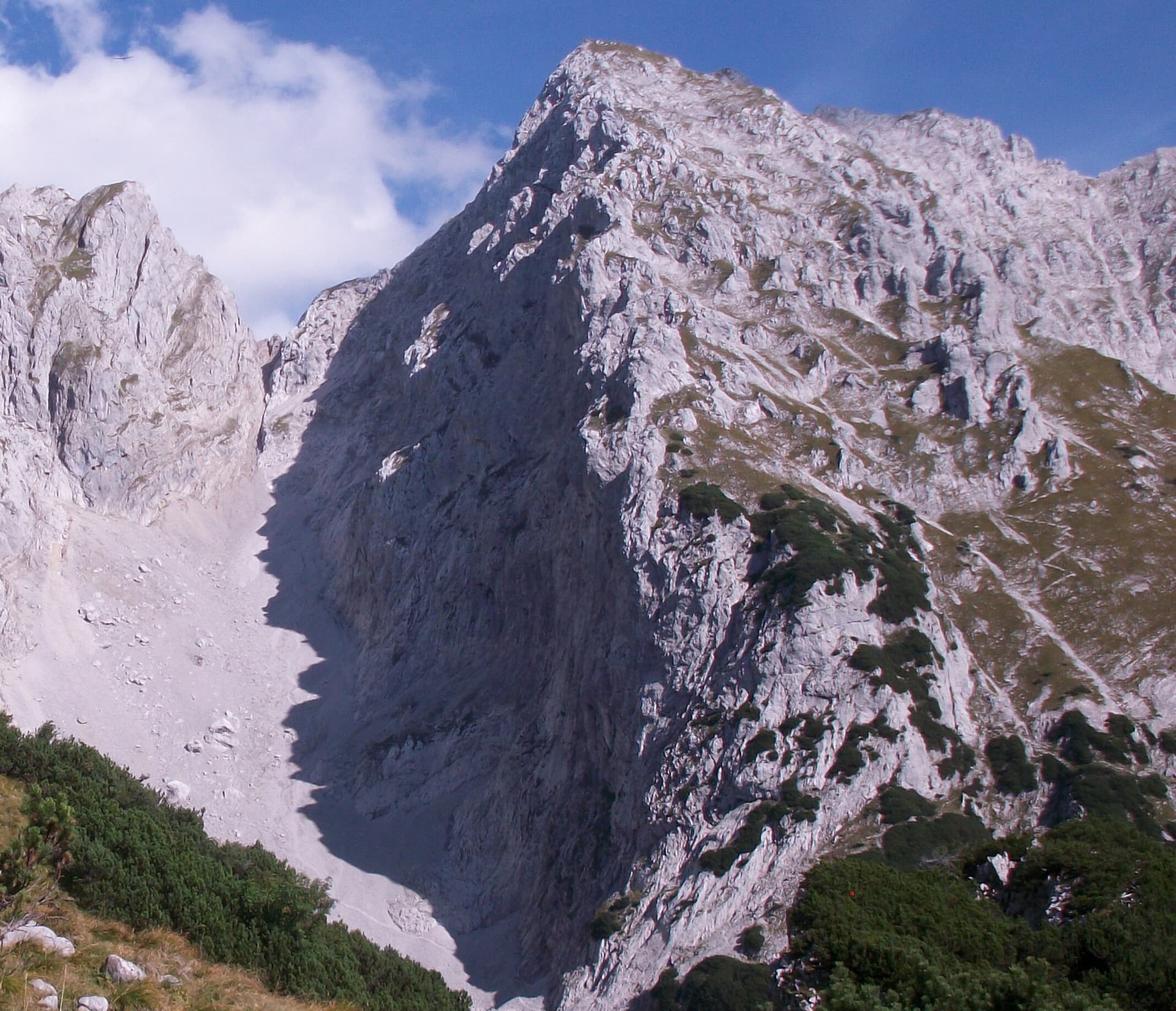
The Schneekar cirque and the north side of the Treffauer in the Wilder Kaiser; the route climbs the lower rocks of this flank, but the exact line is not marked.

Austria · Wilder Kaiser

Via Max

A short alpine sport route in the Schneekar that steepens as it goes: a scrambling start, fine water runnels on rough rock, then a smooth slab into an overhang on pitch 4. The crux is UIAA 7 to 7+ and can be aided on the bolts.

6c5 pitches180 m

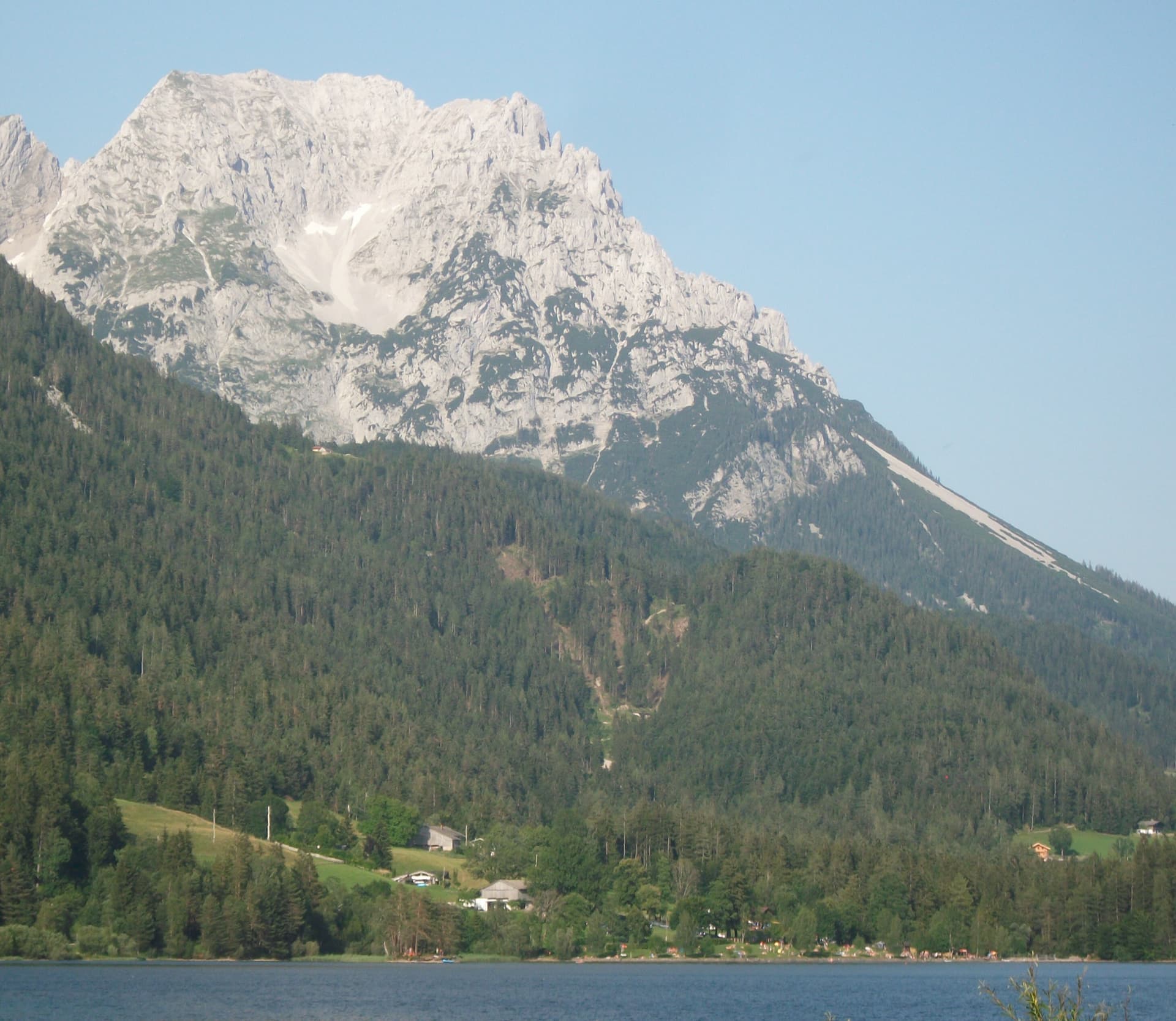
The Treffauer seen from the west, with the Wegscheid pastures below; the Multerkar plinth routes are on the lower rock band of this side

Austria · Wilder Kaiser

RWI

With König der Löwen, the most climbed route on the walls above Scheffau. Nine pitches of slabs, steep walls and small pillars at UIAA 5 to 6, with one short squeeze through a cleft and a walking pitch across a big ledge. It faces south-west and suits spring and autumn days.

6a9 pitches295 m

The Treffauer above the Hintersteiner See, seen from the west; the Multerkar plinth is the rock band low on the mountain

Austria · Wilder Kaiser

November Sun

A short plaisir route on the left side of the Multerkarwand that gets better the higher you go. A powerful start, an easy and rather grassy second pitch, then a perfect slab, a steep wall on jugs, a technical pitch round a small overhang and a harder final pitch added later. Best in spring and autumn; in dry years it goes into December.

6b6 pitches155 m

Around 5c+ · about 8 pitches

Similar elsewhere

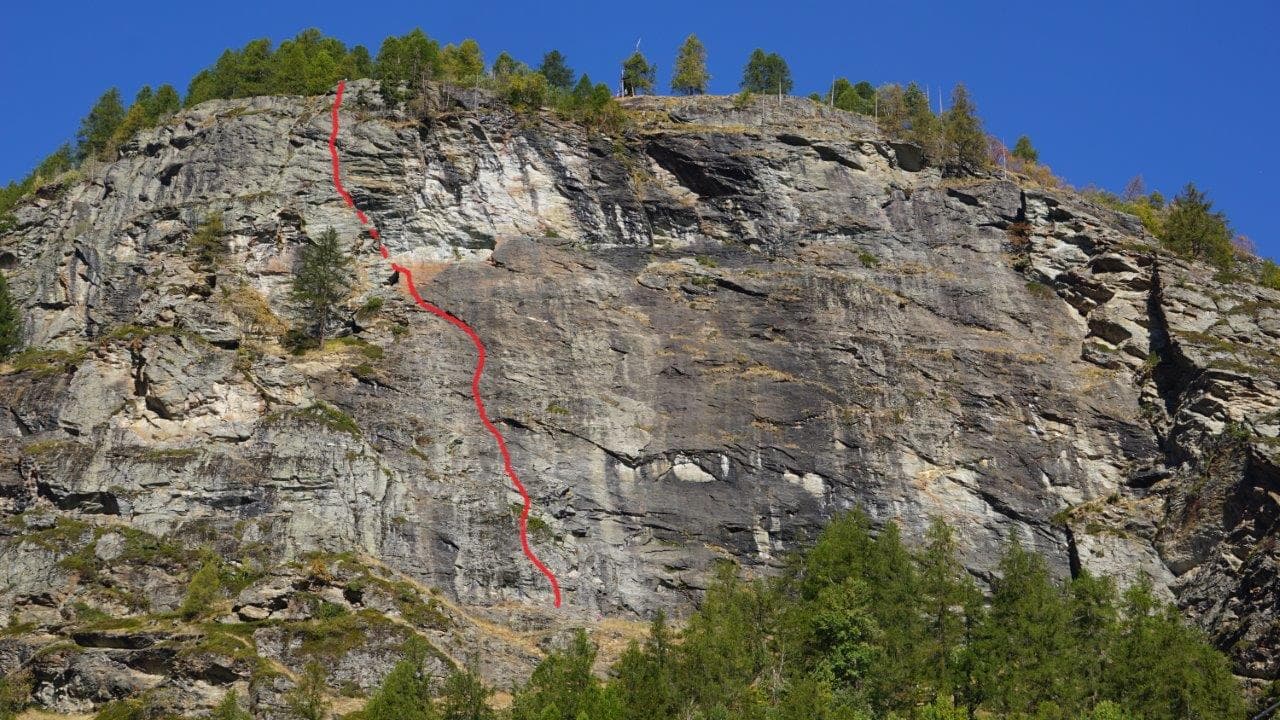
The wall above Planaval in the Valgrisenche with the line of Mario e Cecilia

Italy · Aosta Valley

Mario e Cecilia

Eight short, closely bolted pitches up the wall above the village of Planaval, with a wide view down the Valgrisenche. The hardest climbing comes first, on a steep and awkward wall, and again at two small overhangs on pitch 7; in between are easier slabs broken by ledges. A relaxed half-day at about 5c.

5c+8 pitches240 m

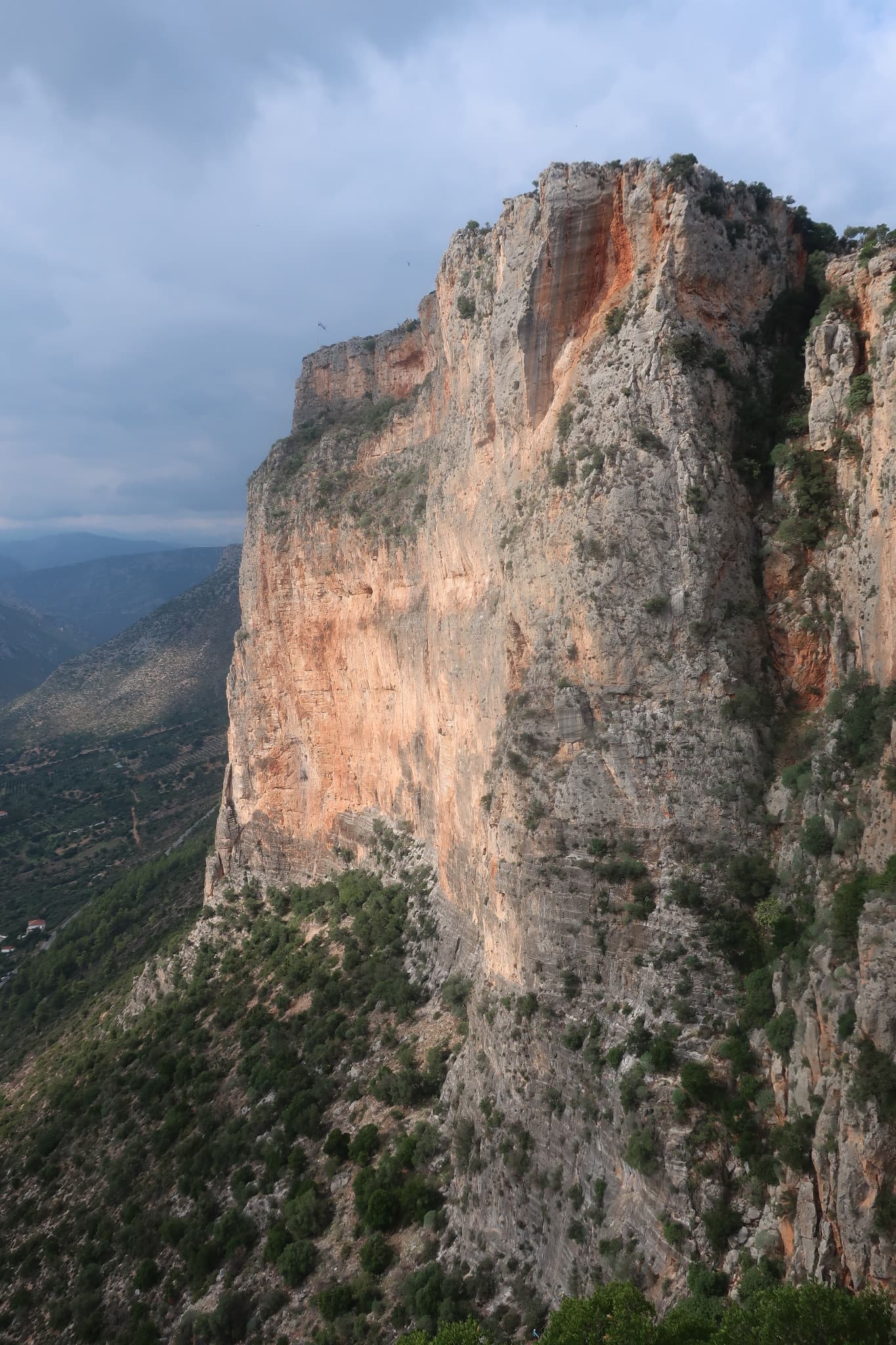
The orange pillar at the right end of the main Kokkinovrachos wall, Leonidio.

Greece · Leonidio & Kyparissi

Mignonette

The easiest multi-pitch on Kokkinovrachos, following the easy-angled arête and pillar above Leonidio, with tufas, crimpy walls and a great view of the town. Rock is good apart from the scrappy P2–P3.

5c+7 pitches175 m

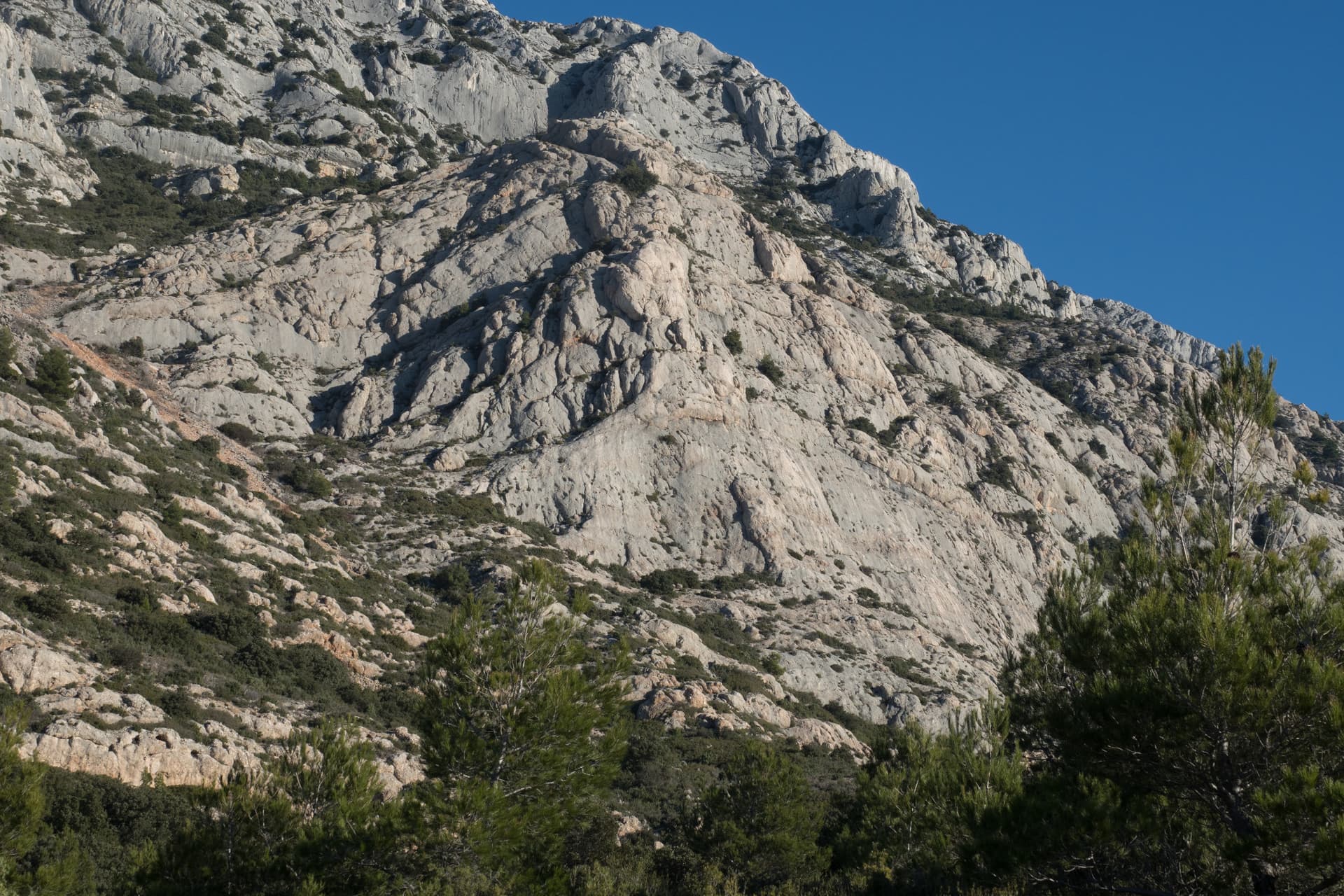
Le Socle de la Carrière, the pale limestone plinth at the foot of the south face of Sainte-Victoire.

France · Sainte-Victoire

La Marbrière

A sunny winter route on Sainte-Victoire's south-side socle. The highlight is a beautiful marbled slab on L5, and a stiff move off the last belay can be aided on a sling. Bring long slings to manage rope drag around the trees.

5c+7 pitches180 m

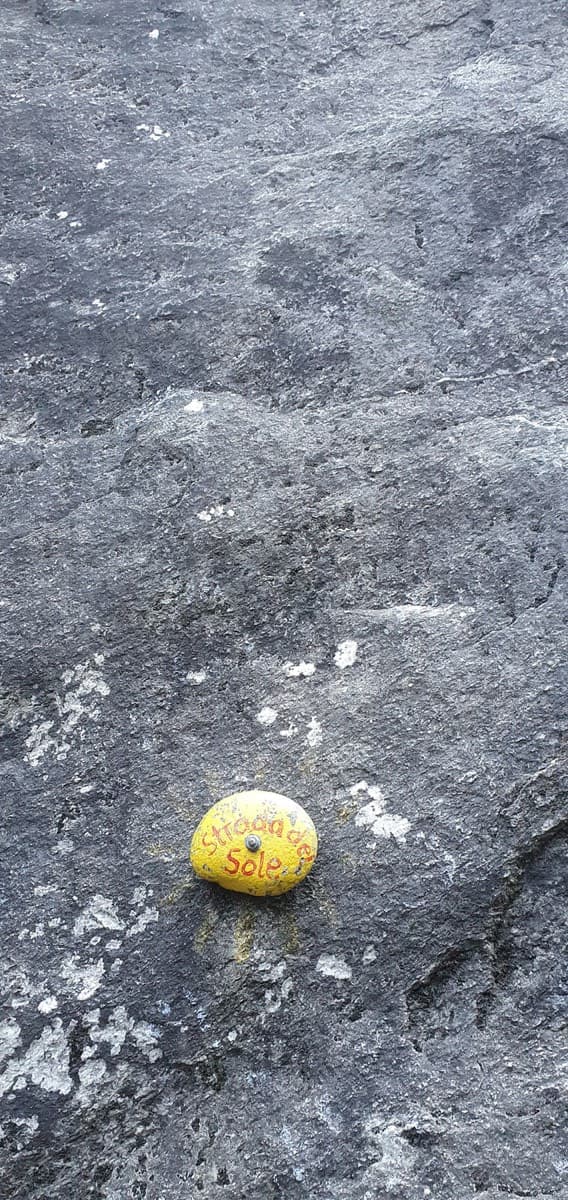
A view of the region, not this route's wall. The painted stone that marks the start of Strada del Sole at the foot of the Nösslachwand

Austria · Ötztal

Sonnenblume

The multipitch classic of the Nösslachwand and the easiest line on its west face: seven short pitches of gneiss slab beside a water streak, improving with height, with a few steep wall moves and an arête crux. Polished in places.

5c+7 pitches160 m

Compiled from published sources and last verified October 2026. Bolts, anchors and access change. Climbing is dangerous and you are responsible for your own decisions: check a current topo and read the disclaimer.