Menu

Via CAI Vedano

Pilastro di Prada (Pizzo dei Nibbi), Grigna Settentrionale · Lecco & Valsassina · Italy

Easy to bail

A short, sunny and very well protected route on a pale limestone pillar just past the Porta di Prada arch, at about 1700 to 1800 m. Easy pitches lead to one steep pillar pitch with a full 6a move (aidable). Belays were renewed with stainless chains in 2026.

Climbing mode: Big type, screen kept awake, tick pitches as you go.

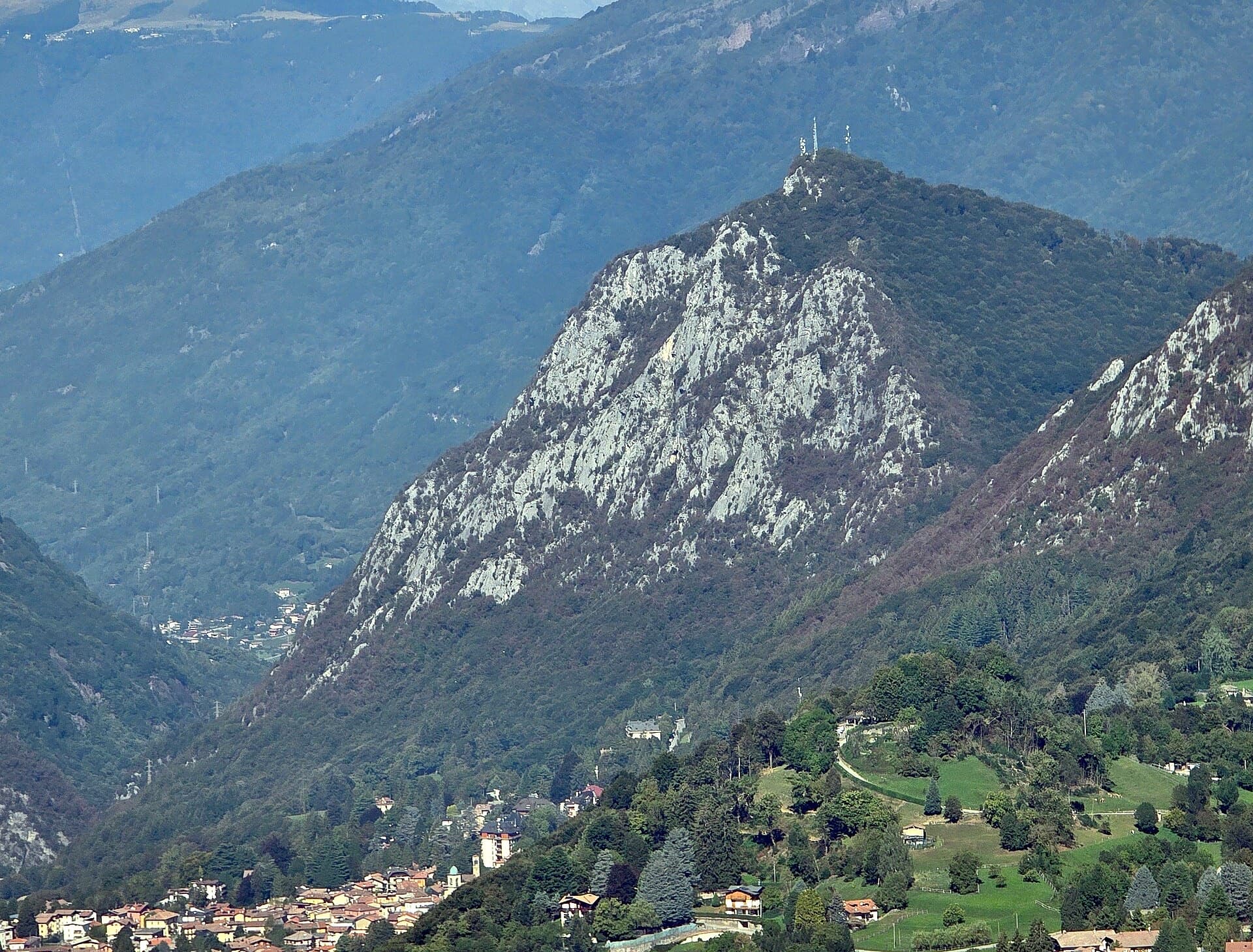
Pilastro di Prada with the line of Via CAI Vedano and its belaysPhoto: M4N · CC BY-SA 3.0
Hardest pitch
6a6a
Pitches
5
Length
130 m
Approach
60 min
Aspect
S
South-facing
Rope
2×60 m half ropes
1×60 m works with a short downclimb

Highest point 1811 m above sea level (camptocamp route 286445).

Rock
limestone
Season
Jun to Oct
Bolting confidence
Medium
Last verified
October 2026 · Aggregated by AI from published sources

Photo

Climbing modeBig type, screen kept awake, tick pitches as you go.

Overview

Via CAI Vedano climbs the south side of the Pilastro di Prada, a pale limestone pillar on the Pizzo dei Nibbi in the Grigna Settentrionale, right beside the path to the Rifugio Bietti. It is a short day: an hour's walk, about two hours of climbing and an easy descent. The first pitch is shared with Via della Libertà, then the route traverses right and climbs a compact pillar with pockets to the one hard move, a full 6a that can be aided on the bolts. Larioclimb, the Lecco topo site, reminds climbers that it is still a mountain multipitch, not a crag, despite the dense bolting.

Worth knowing

  • The crux on pitch 3 can be aided on the bolts.
  • The route takes about two hours; combine it with a visit to the Rifugio Bietti.

Pitch by pitch

The atlas doesn't show topos: they are the work of the people who bolt and document these routes. See the topo at Larioclimb – bacheca, 22 June 2026 note on Via CAI Vedano, or in Lario Rock Pareti.

Pitches of Via CAI Vedano
PitchGradeNotes
P14cShared with Via della Libertà: grassy ground then a slab with flakes to S1. UIAA III/IV to V-.
P24bAn easy traverse right on edges and pockets, over a small rib, to S2. UIAA IV+.
P36aUp a ramp and the compact pillar with pockets: the crux, a full 6a (UIAA VI+), aidable. Several parties call it the hardest move by a distance.
P44bShallow corners. UIAA IV to IV+.
P54bTwo short steps on the crest and a slab to the top belay. UIAA IV+; the rock is more friable near the exit.

Approach

To the parking

Lecco, then the lake road to Varenna and up to Esino Lario and the Cainallo. From the Cainallo a toll road continues to the large car park at the Vò di Moncodeno (1436 m); pay at the machine at the entrance of the Rifugio/albergo Cainallo.

On foot · about 60 min

Follow the path towards the Rifugio Bogani; after about 20 min leave it to the right for the Bocchetta di Prada (signs for the Rifugio Bietti). Go through the natural arch of the Porta di Prada and continue to the foot of the obvious pillar, below which the Bietti path passes. A little under an hour from the car.

Map of the walk-in

Point from camptocamp waypoint 286444 (Pilastro di Prada)

For your phone or watch

Download GPX

Contains the route point.

Points from published sources, not surveyed.

Descent

The original topo gives one 20 m abseil into the gully to the east. Camptocamp and a 2016 party recommend abseiling on the side opposite Via della Libertà, towards the Bocchetta di Piancaformia, to a tree about 10 m lower: with two 60 m half ropes you reach the grassy slopes, with a single rope you land on a big grassy ledge and downclimb a little. Then head down the scree to the right to rejoin the Bietti path. You can also abseil Via della Libertà. Since June 2026 the top belay has a double abseil ring.

Bailing off the route

Easy to bail

All five belays are bolted, and S1 to S4 have had stainless chains with rings since June 2026, so you can abseil the line from any of them. The pitches are short.

Retreat from
Any belay.
Point of no return
None.
Carry
A 60 m rope; half ropes make the final descent easier.
Basis
Part stated, part inferredLarioclimb states the new belays have rings for abseiling; abseiling the route itself is inferred from that, as sources describe the descent off the top.

Italy

In an emergency

In an emergency · Italy

112Emergency, where the single number is in service

Call 112

Emergency, where the single number is in service

Where 112 is not yet the single number, call 118 and ask for CNSAS.

Position of the crag

45.96700, 9.36800

Marks the crag, not the route: give route and pitch.

Say what happened, how many are hurt, and where you are. Checked October 2026 (source).

Hazards

  • The last pitches are on more friable rock; take care not to knock stones onto the busy path below.
  • Weekend crowds of walkers on the Bietti path beneath the pillar.

Gear

12 quickdraws (original topo). Two 60 m half ropes make the descent simplest.

Checklist

Quickdraws
12
Rope
2×60 m half ropes (1×60 m works with a short downclimb)
Helmet
One each
Abseil device and prusik
For abseiling

Conditions

Plan B nearby

Straight-line distances, up to 30 km.

Reader reports

No reports yet.

Report a problem with this route

Say what and where. Reports are checked before they appear; no name or email is stored.

Bolts and history

Bolting
Bolted ground-up in 1995 with all the gear left in place: parties describe it as very closely bolted (14 to 15 bolts in 30 m). In June 2026 the first four belays were replaced with stainless 10 mm bolts linked by chain and ring, and a bolt with ring was added at the top belay to make a double-ring abseil station. The bolts on the pitches are the 1995 originals.
History
Opened ground-up on 19 July 1995 by Lorenzo Cernuschi and Aldo Tagliabue, who left all the gear in place. Belays S1 to S4 replaced with stainless chains and rings by Gabriele Crippa and Michael Cogliati on 11 June 2026, in agreement with Cernuschi; a ring bolt was added at S5.
Guidebook
P. Corti, 'Arrampicate sportive e moderne fra Lecco e Como' (Versante Sud, 1997); the original hand-drawn topo is reproduced on larioclimb. Buy from versantesud.it.

Where sources disagree

  • Length: 130 m on the original topo, 150 m height on camptocamp.
  • Aspect: SSE on the original topo, SW on camptocamp.
  • Camptocamp's remarks list both 'traditional, R2' and 'modern bolted, S1' protection; the S1 description matches the topo and every report, and the R2 line appears to be a template error.
  • Pitch grades are read from the camptocamp sketch in UIAA and converted; no source gives pitch lengths or bolt counts.

Sources

More in Lecco & Valsassina

All routes in Lecco & Valsassina
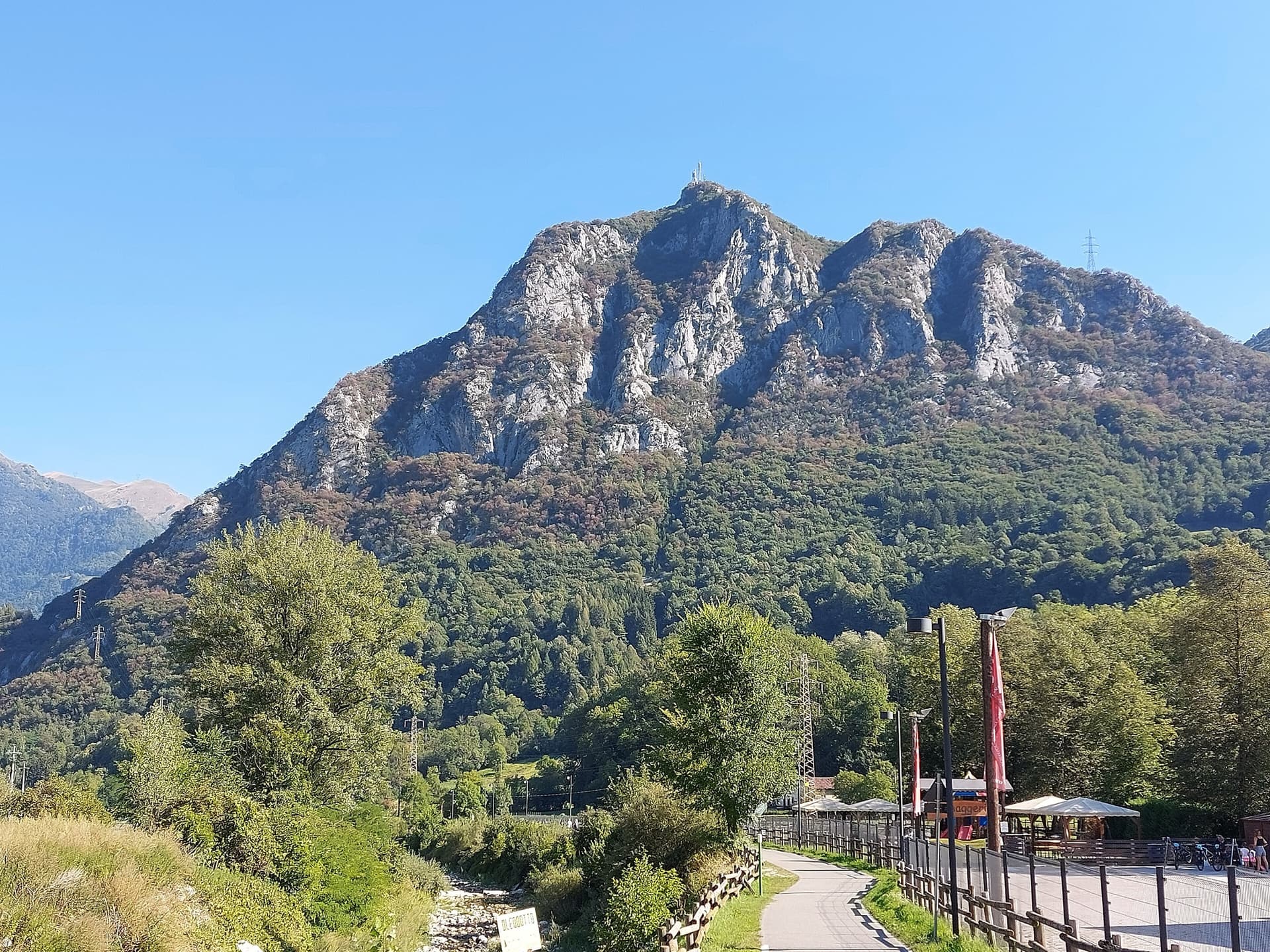
The south side of the Zucco dell'Angelone above Barzio, seen from the Zucco della Croce: the pale limestone spurs (speroni) that hold the multipitch routes run down from the antenna-topped summit. Condorpass is on the fourth spur; individual spurs are not labelled here.

Italy · Lecco & Valsassina

Condorpass

The first route opened on the Zucco dell'Angelone, following the natural line of the fourth spur by corners, cracks, a chimney and friction slabs. Eight varied pitches at 5a to 5b with an easy crest to finish. Never hard but never trivial either.

5b5b8 pitches220 m

The Zucco dell'Angelone above the Valsassina, seen from Pasturo, with the antenna on its summit. The climbing spurs are the pale limestone ribs on the sunny side of the mountain above Barzio; individual spurs and routes are not marked.

Italy · Lecco & Valsassina

La Lumaca di Vetro

A 1979 Ivan Guerini line up the big slab of the second spur: friction climbing on compact limestone with a few steeper steps, a fine third pitch and a corner to finish. Grades are even, around 5a to 5c, and the bolts are far enough apart that slab confidence matters. You abseil off.

5c5c6 pitches120 m

Read the cautions

The Zucco dell'Angelone above the Valsassina, seen from Pasturo, with the antenna on its summit. The climbing spurs are the pale limestone ribs on the sunny side of the mountain above Barzio; individual spurs and routes are not marked.

Italy · Lecco & Valsassina

Foto di Gruppo con Signorine

Three friendly pitches up a striking arched flake and compact slabs, then a short wall with one hard, reachy move that most people pull through. A 1980 route by the Savonittos and Alessandro Gogna, and the usual first half of a link-up with Gli Schiavi della Pietra on the spur above.

6b+6b+4 pitches90 m

Read the cautions

The Zucco dell'Angelone above the Valsassina, seen from Pasturo, with the antenna on its summit. The climbing spurs are the pale limestone ribs on the sunny side of the mountain above Barzio; individual spurs and routes are not marked.

Italy · Lecco & Valsassina

La Striscia della Citrosodina

The harder companion to La Lumaca di Vetro on the second spur. Delicate slabs with spaced bolts lead to cracks and flakes, then a strenuous last pitch through an overhanging corner and a bulge that goes at 6b+ or mostly on aid. Varied and less travelled than its neighbours.

6b+6b+6 pitches145 m

Read the cautions

Around 6a · about 5 pitches

Similar elsewhere

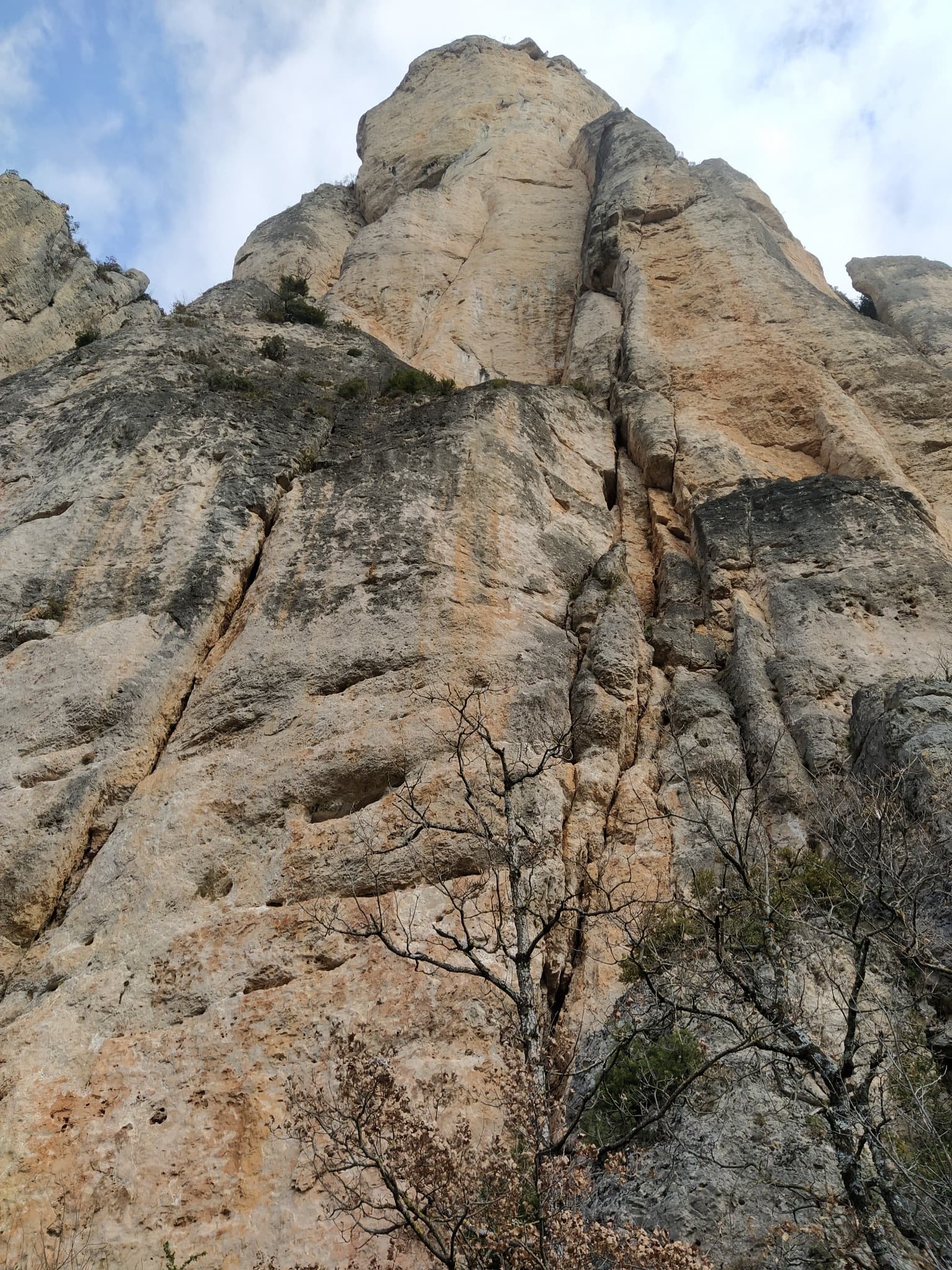
The wall of the Fusée sector seen from the foot of Gallo Loco

France · Gorges de la Jonte

Gallo Loco

Five pitches beside the Fusée monolith, built around a superb 35 to 40 m corner that ends under a big roof and escapes left across a wildly exposed but easy traverse. Rebolted in 2012 and better protected than most routes here. Rated a must at the grade by several recent parties.

6a6a5 pitches120 m

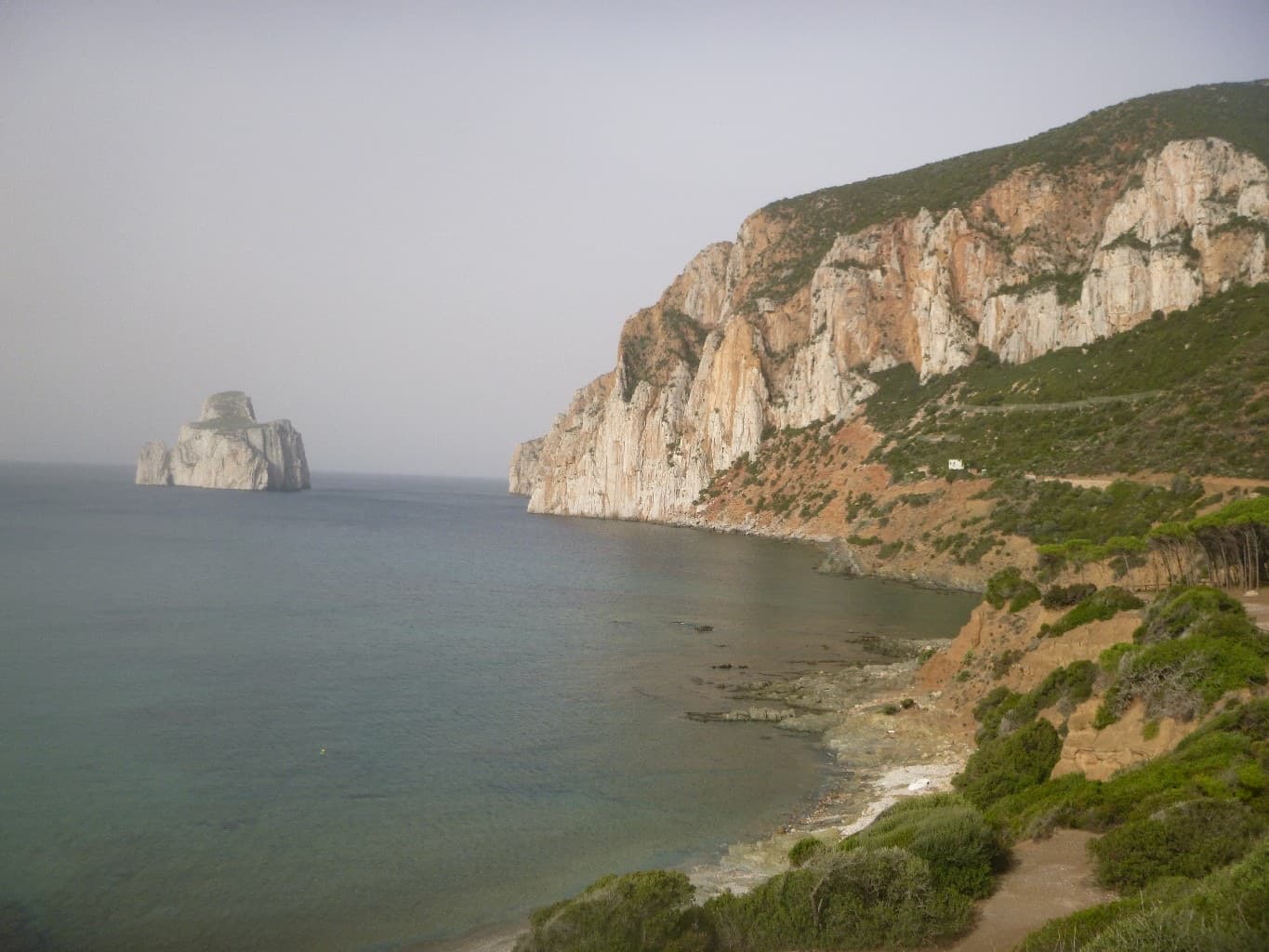
The Masua sea cliffs with the Pan di Zucchero stack offshore

Italy · Sardinia

Acciughe e Bottarga

An easy line up the edge of the tall sea cliff beside Porto Flavia, starting a few metres above the water. The lower half is broken and unremarkable; the upper arête and slab are on superb, very abrasive grey limestone with a view of the Pan di Zucchero stack. Almost plaisir, in a serious place.

6a6a5 pitches160 m

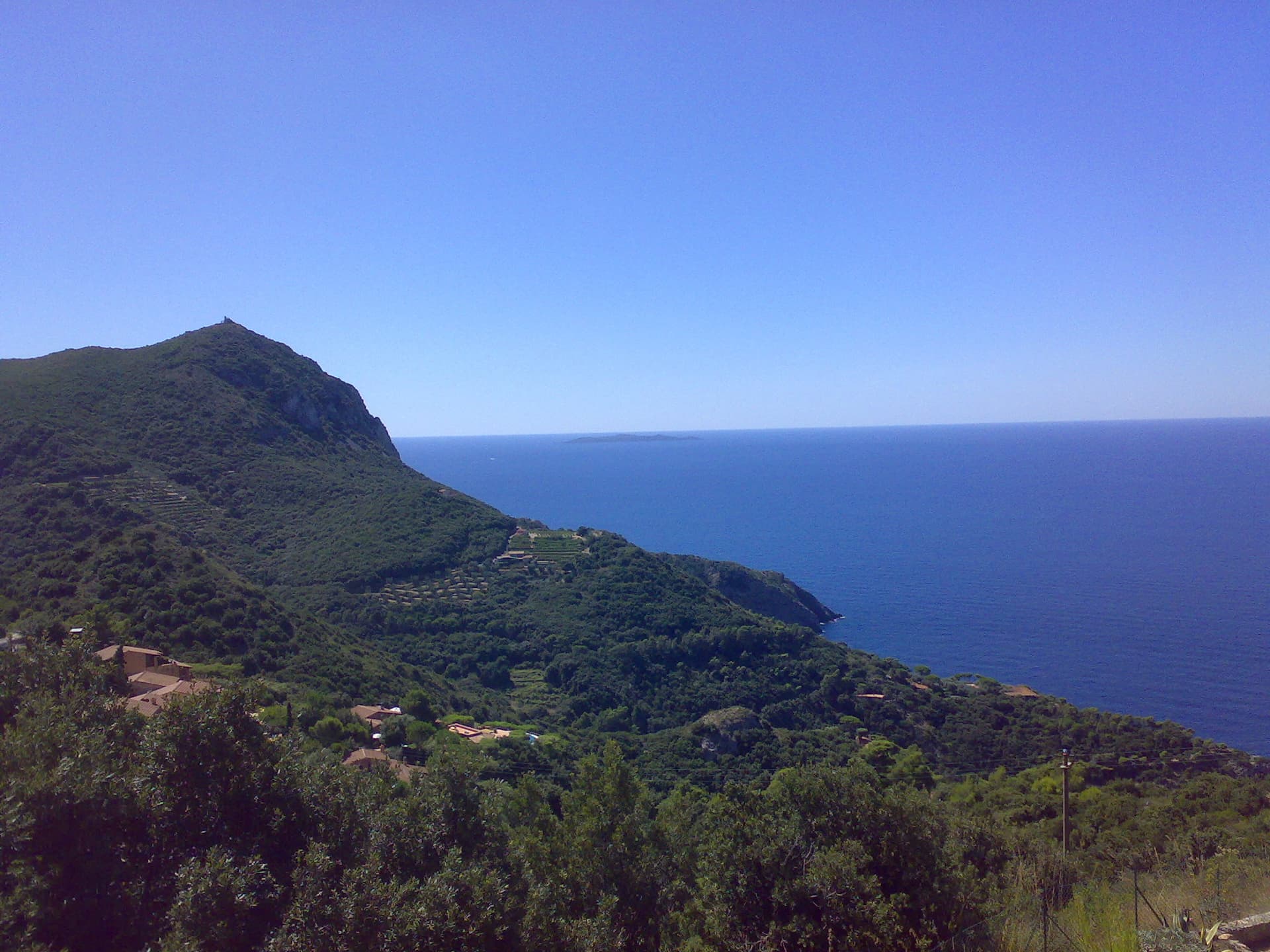
The headland of Capo d'Uomo on Monte Argentario with its watchtower on top, and the island of Giannutri on the horizon. The multipitch wall drops towards the sea below the tower; the routes are not visible in this view.

Italy · Monte Argentario

Argento Argentario (with the Spigolo Bonatti finish)

Three independent pitches on the wall below Capo d'Uomo, ending with a memorable 40 m wall of pockets, drips and flowstone at 6a. The route proper stops on the arête; the opener suggests carrying on up the last two pitches of the Spigolo Bonatti, an exposed 5c traverse and an easy ridge, to finish at the tower.

6a6a5 pitches200 m

Looking down the lichen-covered granite slab of Bügeleisen towards the forest at Handegg

Switzerland · Grimsel

Bügeleisen

A short, varied granite route up a pale, smooth pillar across the valley from the Handegg slabs: a corner crack, then friction and edge slabs that get harder pitch by pitch. Grades are stiff, and the last pitch is sustained and tricky. A good half day or uncertain-weather route with a 15-minute approach.

6a6a5 pitches200 m

Researched and aggregated by AI from published sources, last compiled October 2026. It can be wrong, and bolts, anchors and access change: check a current guidebook and read the disclaimer.